In this guide (13)
- Identify your hallmark from a photo
- What a silver hallmark tells you
- How to read a hallmark in five steps
- How to read a British hallmark
- Key marks
- Why the same letter can mean different years
- Marks that are not British hallmarks
- Sterling or silver plate? Read the marks
- Are the marks genuine?
- Not sure what your marks say?
- Thinking of selling?
- Key markings on British sterling silver (925 and crown marks)
- Questions
Read them in that order.
- Lion passant or 925 in a shield means sterling; Britannia or 958 means Britannia silver.
- The town mark names the assay office: leopard's head London, anchor Birmingham.
- A date letter only gives the year when read with its office, typeface and shield.
Identify your hallmark from a photo
Our AI reads the marks, shows the result here and emails you a copy.
What a silver hallmark tells you
A hallmark is a set of small stamps struck by an assay office after it has tested the metal. In Britain hallmarking has been a legal requirement since around 1300, one of the oldest forms of consumer protection in the world. The marks tell you who made or sent the piece, how pure the silver is, where it was tested and, on most pieces, when.
Today silver above 7.78 grams must be hallmarked to be sold as silver in the UK. Since 1999 three marks are compulsory: the sponsor's mark, the fineness mark and the assay office mark. The date letter and the traditional lion are optional but still widely used.
Sell to a specialist
Free valuation from your photographs. Paid the same day after inspection.
- Free insured FedEx collection
- Insured to £10,000
- No obligation
How to read a hallmark in five steps
Work through the marks in the same order every time, with a 10x loupe and good side light.
- Find the marks Look on the underside, on the back of a spoon or fork handle near the bowl, inside a rim, or on a clasp. Rings are marked inside the band.
- Find the standard mark A lion passant or 925 means sterling; Britannia or 958 means Britannia silver. No standard mark at all may mean the piece is not British, or not silver.
- Find the office The town mark names the assay office that tested the piece: see the marks below.
- Date it Match the date letter, its case, typeface and shield to that office's chart.
- Note the maker Record the sponsor's initials and look them up. A good maker adds value above the metal.
How to read a British hallmark
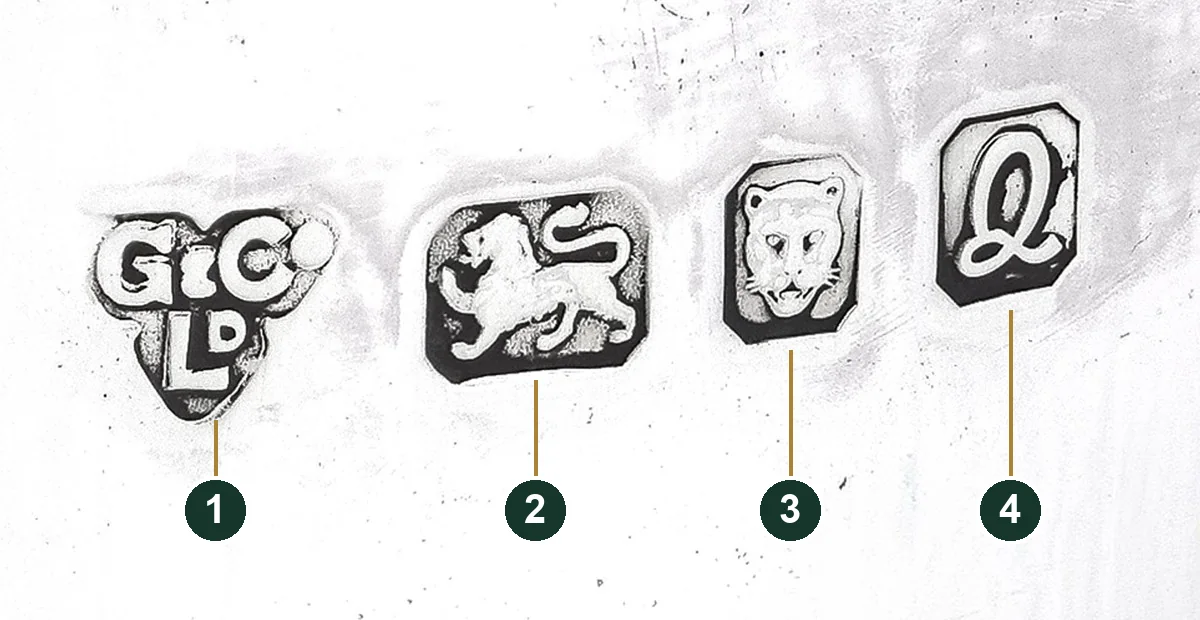
Maker's mark Properly the sponsor's mark: the initials of the silversmith or firm that sent the piece for assay, in a shaped punch. G&Co Ld is Garrard & Co; ET is Edward Thomason.
Standard mark The lion passant for sterling, 925, in England since 1544. Britannia for 958, compulsory 1697 to 1720. The thistle in Edinburgh 1759 to 1975, the lion rampant in Glasgow from 1819, and the crowned harp in Ireland. Since 1999 the fineness number in a shield is compulsory.
Town mark The assay office: the leopard's head for London (crowned until 1821), the anchor for Birmingham, the crown and later the rose for Sheffield, the castle for Edinburgh and Hibernia for Dublin. Chester, Exeter, Glasgow, Newcastle and York have closed, so their marks also set a latest date.
Date letter A single letter for the year of assay, in a set typeface and shield. Each office ran its own cycles; since 1975 all UK offices share one letter, changing on 1 January, and since 1999 it is optional.
Duty mark The sovereign's head in profile, struck from 1784 to 1890 to show that tax on silver had been paid. The monarch's profile helps to date the piece.
Import and convention marks Foreign silver assayed in Britain carried an F from 1867 and separate import marks from 1904. The Common Control Mark has been recognised in the UK since 1976.
Key marks
Why the same letter can mean different years
Each office reused its alphabet every twenty years or so, changing the typeface and the shield each time. The letter S shows why you need the office, the typeface and the shield together: a crowned S in an oval is Sheffield 1807, a capital S in a shield is London 1893, and a small s in a shield is London 1913. For London pieces, see every London date letter, cycle by cycle.
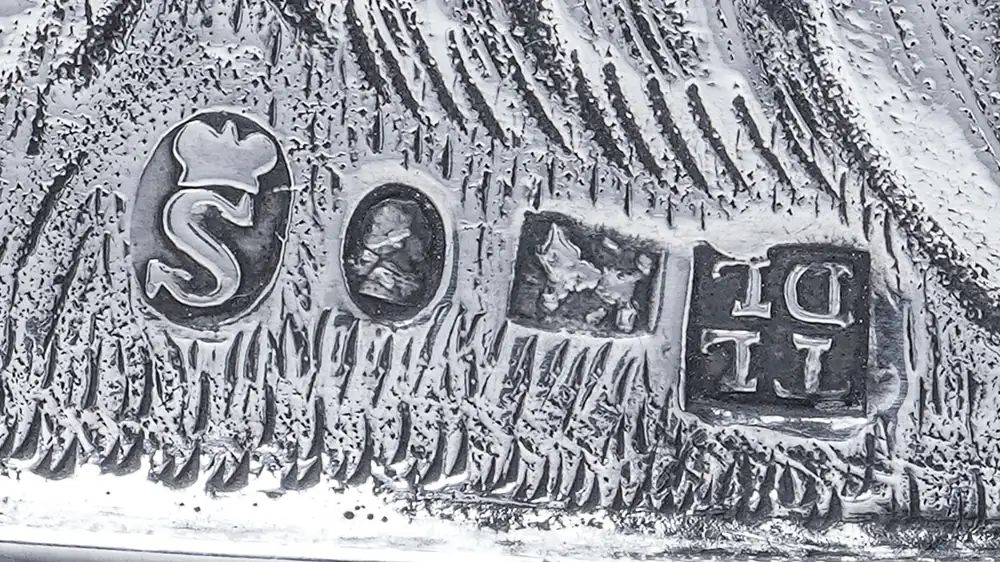
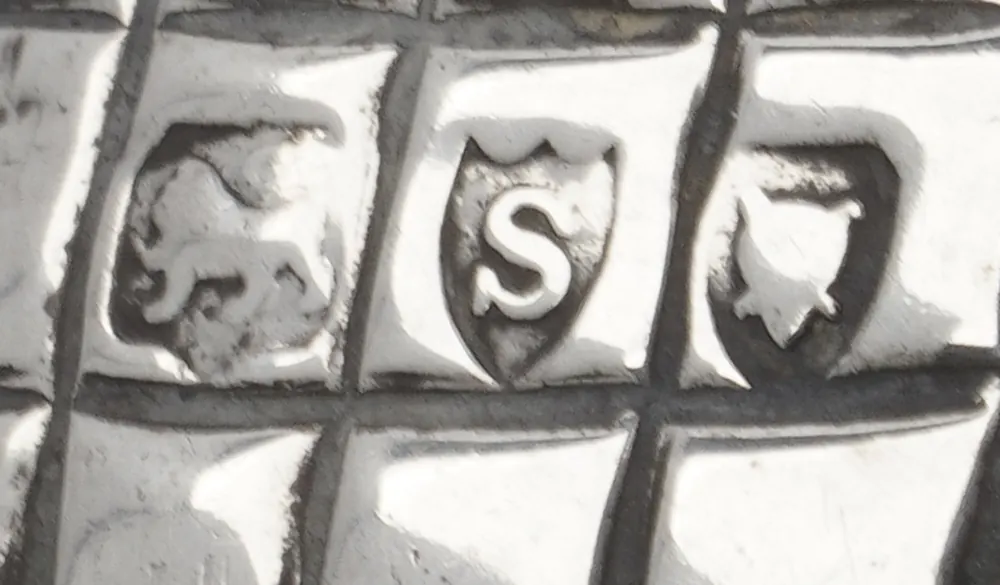
To find your year, match the letter, its case, typeface and shield against the chart for that office. Our assay offices guide links to each one, or let the identifier read it from a photo.
Marks that are not British hallmarks
- 925 or STERLING alone usually means silver made outside the UK, often American or modern.
- 800, 830 or 835 are continental standards, below sterling. See German and Italian marks.
- EPNS, EP and A1 are plating marks, not silver: see EPNS or sterling.
- Crude lions and odd letters on richly chased pieces may be imitation marks on Chinese export silver.
- No marks at all: have it tested. See how to tell if silver is real.
Worn or polished marks, partial strikes and later additions make reading harder. If marks look misaligned, doubled or out of place, ask a specialist before you rely on them.
Have a hallmarked piece to sell? Sell your silver to us and we will identify the marks as part of a free valuation.
Sterling or silver plate? Read the marks
Sterling silver carries a full set of hallmarks, with the lion passant as its standard mark. Silver plate never does. Plated pieces are base metal with a thin silver coating, and they carry the platers' own marks instead:
| Mark | What it means |
|---|---|
| Lion passant | Sterling silver, hallmarked |
| EPNS | Electroplated nickel silver |
| EP or EPBM | Electroplate, EPBM on Britannia metal |
| A1 | A platers' quality grade, not a silver standard |
Are the marks genuine?
Crisp, well-struck marks in the right order and the right shapes are strong evidence on their own, because British marks are hard to fake. Under the Hallmarking Act 1973 it is a criminal offence to apply false hallmarks or to sell counterfeit-marked goods as hallmarked. Worn, blurred or oddly shaped marks deserve a closer look; send us a clear photograph and we will read them for you.
Not sure what your marks say?
Upload a photo and our identifier reads the town, the standard, the date and the maker. Free, with the result on screen and by email.
Thinking of selling?
Send a few photos of the piece and its marks, and a specialist will value it, free and with no obligation. See how we buy antique and modern silver.
Thinking of selling? Find out how to sell your silver with a free valuation from photographs.
Key markings on British sterling silver (925 and crown marks)
When reading old silver marks, check all four punches together: the sponsor's (maker's) initials, the standard mark (lion passant for English sterling, or 925), the town mark (such as the Sheffield crown used until 1974 or the rose used from 1975) and the date letter. Together they date a piece to a single assay year.