Free tool
Silver Hallmark Identifier: find the year, town and standard
Pick the marks you can see, or upload a photo, and find out where and when your silver was hallmarked. Free.
Free to use. The reading is a guide: for a specialist's view and a free valuation, send us your photos.
How to take a good photo of your hallmarks
- Close, sharp and straight on Hold the camera square to the marks and move in until they fill the frame. Tap the screen to focus on the marks themselves.
- Raking light from one side Light from a window or lamp at a low angle throws the struck marks into relief. Turn the flash off: it bounces off polished silver and burns the marks out.
- Clean the marks first Wipe away dirt and polish residue with a soft dry cloth so the shapes and letter edges read clearly.
- Every group of marks Photograph each group, including the maker's mark, which is often struck apart from the others or on a different part of the piece.
The tool cannot identify marks that are blurred, dark, dirty or too small. If a reading looks wrong, take the photo again closer and in better light.
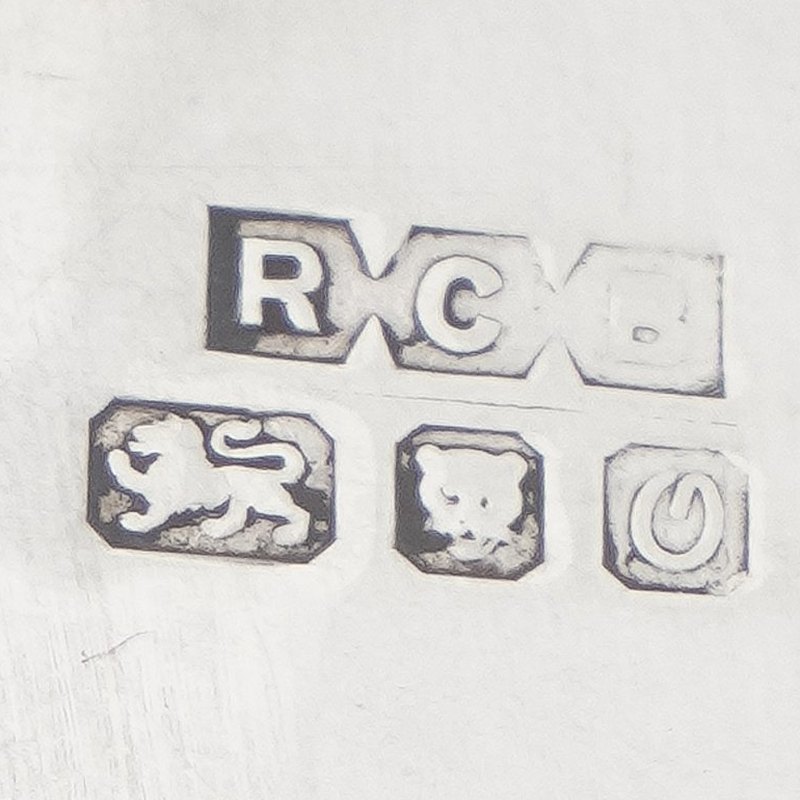
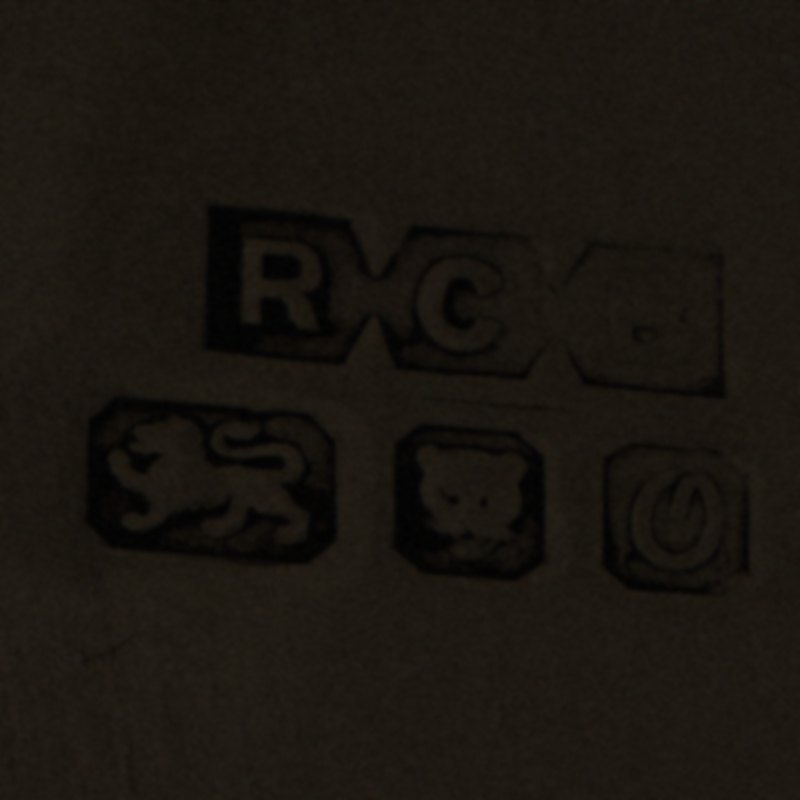
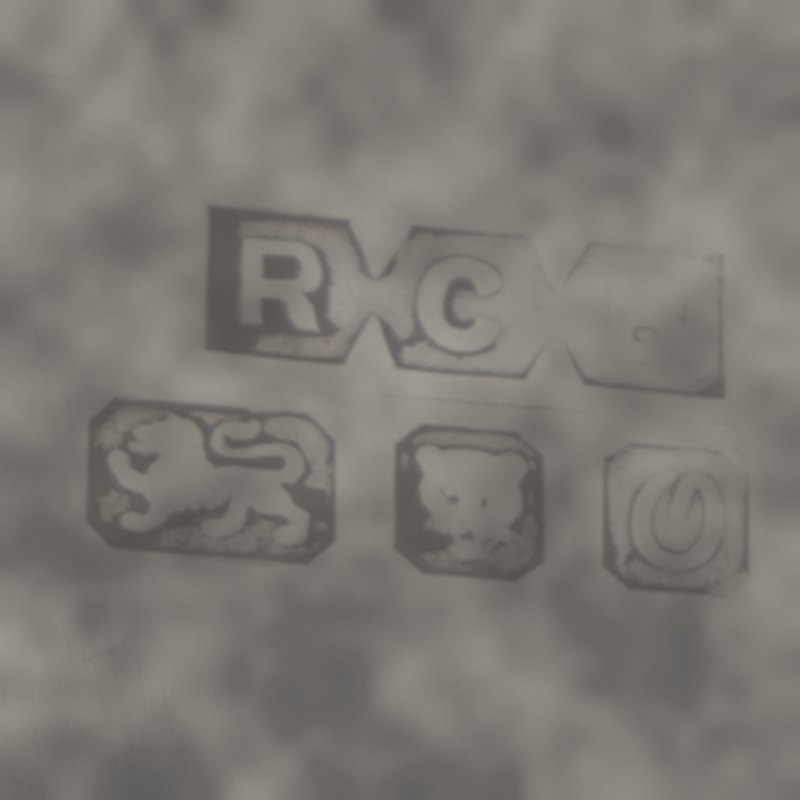
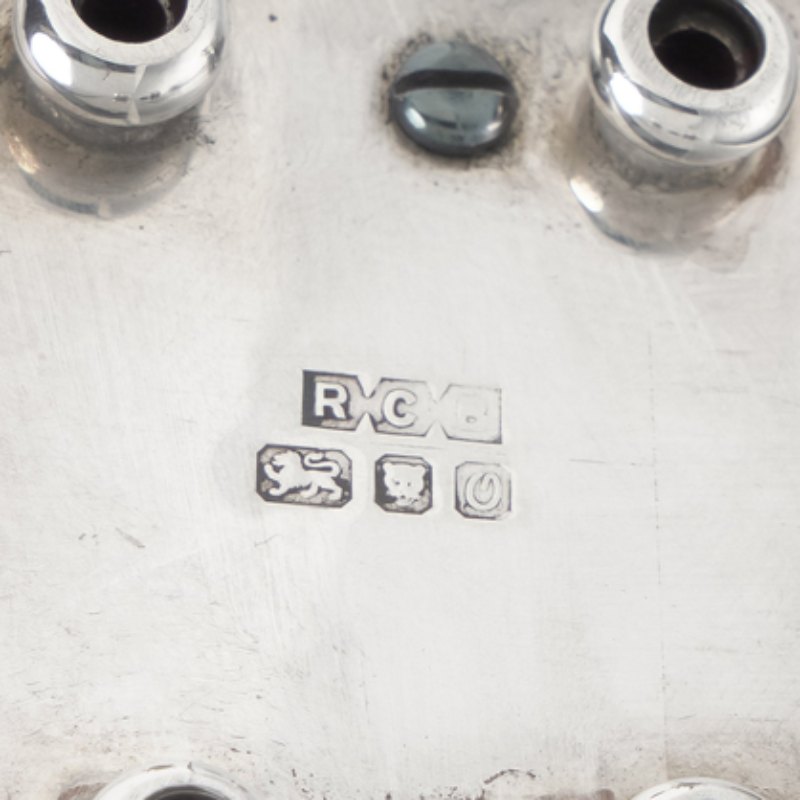
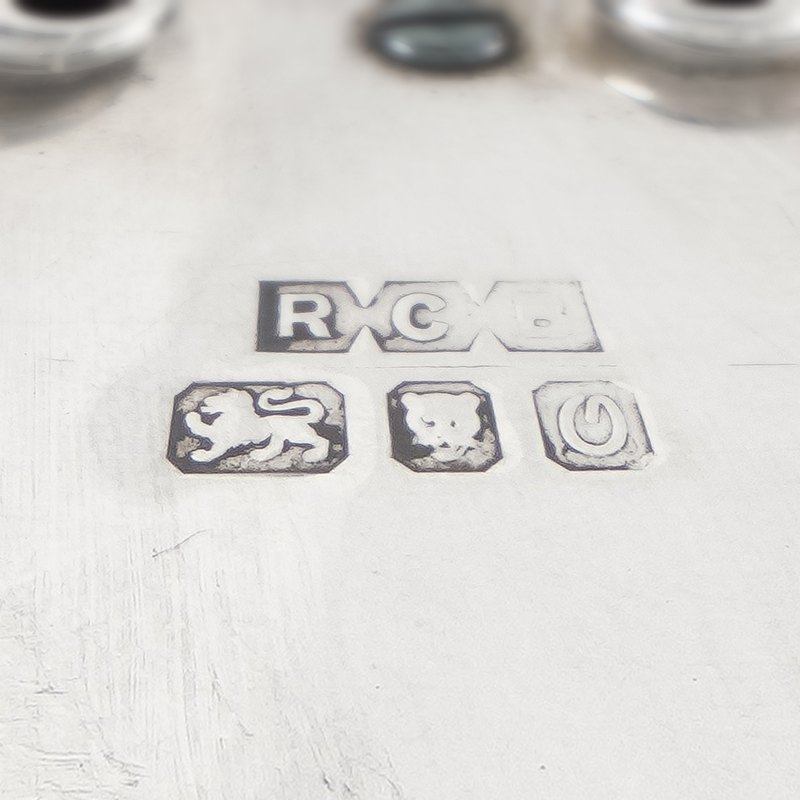
Our free silver hallmark identifier works two ways. Find by the marks: choose the town mark, standard mark, duty mark and date letter, and see the period they point to. Upload a photo (AI): send up to three close photos and we read the town, standard, date letter and maker's mark and email you the result.
Reviewed by Faustas Svencionis, Mozeris Fine Antiques, Mayfair and Braintree, since 2015 · Updated October 2026
Key takeaways
- A British hallmark has up to five parts. Sponsor's mark, standard mark, town mark and date letter, plus the sovereign's head duty mark from 1784 to 1890.
- The town mark names the assay office. London's leopard's head, Birmingham's anchor, Sheffield's crown or rose, Edinburgh's castle, Dublin's Hibernia and the closed offices of Chester, Glasgow, Exeter, Newcastle and York.
- The date letter gives the year only when it is read with its town mark, case, typeface and shield shape. Since 1975 all British offices share one letter.
- EPNS, EP and A1 are not hallmarks. They mark silver plate. A reading is a guide, not a certificate: confirm anything valuable with a specialist.
How to use the silver hallmark identifier
The identifier has two tabs. Find by the marks walks you through the marks you can see; Upload a photo (AI) reads them from your pictures. Both are free.
Find by the marks
- Town markPick the assay office mark: London's leopard's head, Birmingham's anchor, Sheffield's crown or rose, Edinburgh's castle and the others shown as icons.
- Standard markPick the purity mark, such as the lion passant for sterling or Britannia for 958 silver.
- Duty markSay whether there is a sovereign's head, which narrows the date to 1784 to 1890.
- Date letterPick the letter in the case, typeface and shield shape you see.
The result shows the town, the standard, the duty mark and the period those marks point to. Enter your email to see the exact year from the date letter and receive a copy of the report. If a combination has no date letter table yet, the finder says so and you can try the photo tab instead.
Upload a photo (AI)
Upload up to three close, sharp photos of the hallmarks as JPG or PNG files, add your email and agree to the privacy policy. The AI reads the town mark, standard mark, date letter and maker's mark, shows the result and emails you a copy. Maker readings are cross-checked against Jackson's tables.
Photo tips for a clear reading
- Sharp. Tap the marks on your phone screen to focus, hold still and check the photo before you upload it. A blurred letter cannot be read.
- Close. Fill the frame with the marks. Use your phone's close-up mode or step back slightly and crop, rather than zooming digitally.
- Straight-on. Hold the camera square to the marks. On a spoon or fork, photograph the back of the stem; on a cup or box, the base.
- Good light. Daylight from a window works best. Avoid the flash, which bounces off polished silver and hides the punch.
- All marks in frame. Include every punch in the group, even a faint one. If the marks are split, for example on a lid and a body, use one photo for each group.
- Leave them as they are. Do not polish or rub the marks to make them clearer: polishing wears hallmarks away.
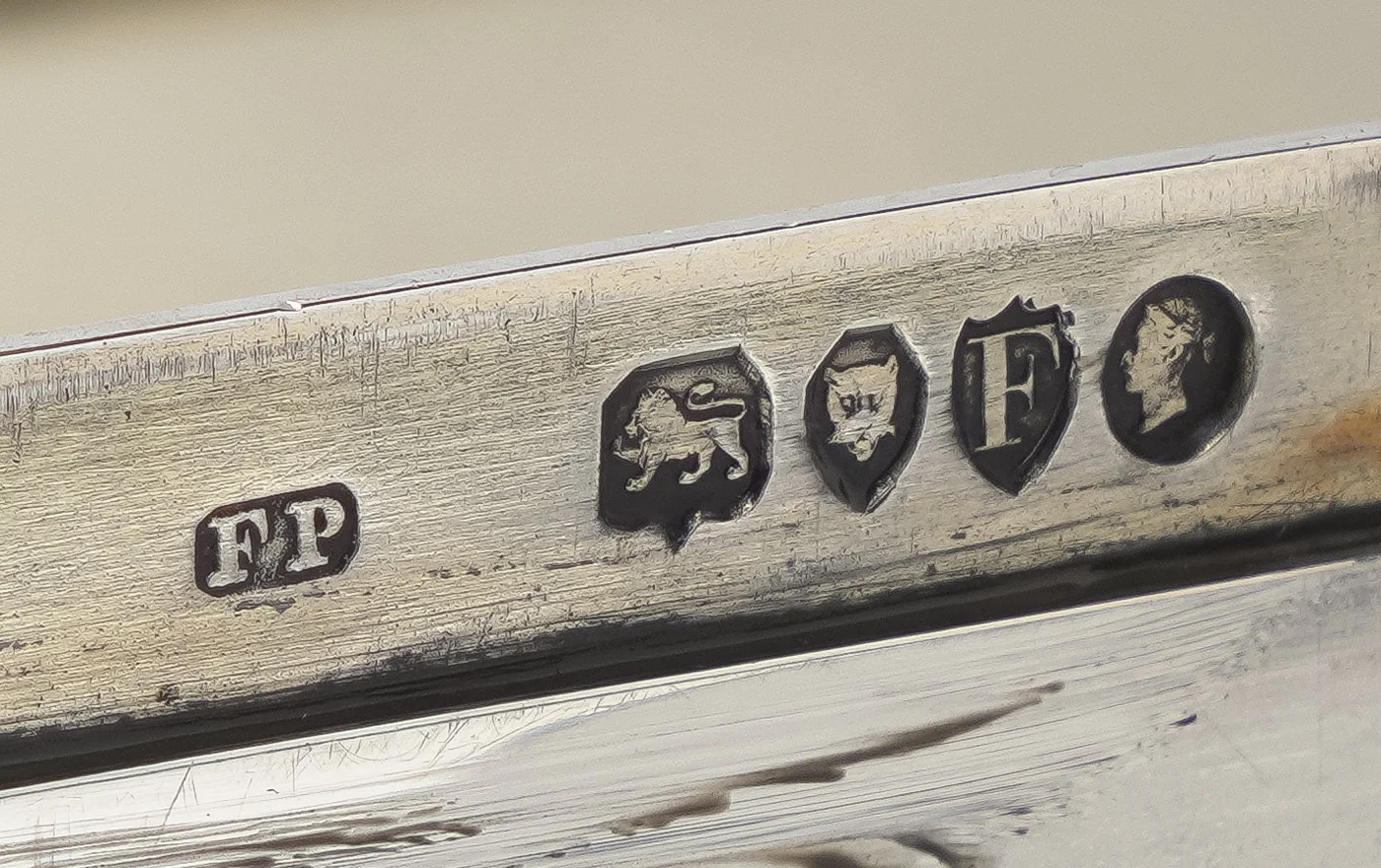
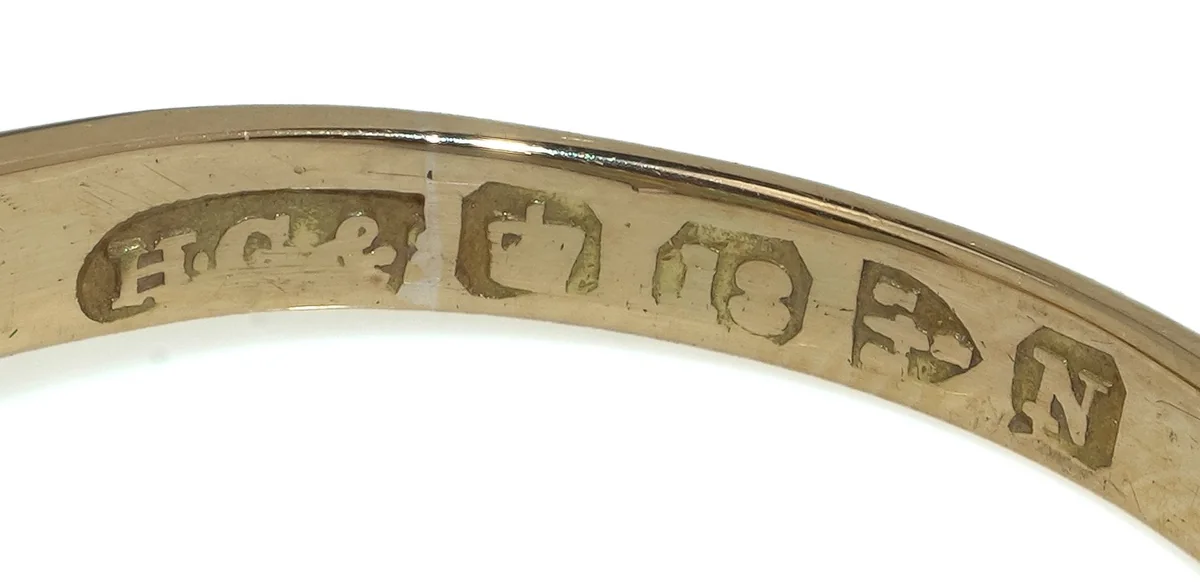
Hallmarks sit where they do the least harm to the design: under the base of a cup or box, on the back of a spoon or fork stem, inside a ring shank, on the bar of an Albert chain or inside a watch case. Our pocket watch hallmarks guide shows where to look on a case.
How to read a British hallmark
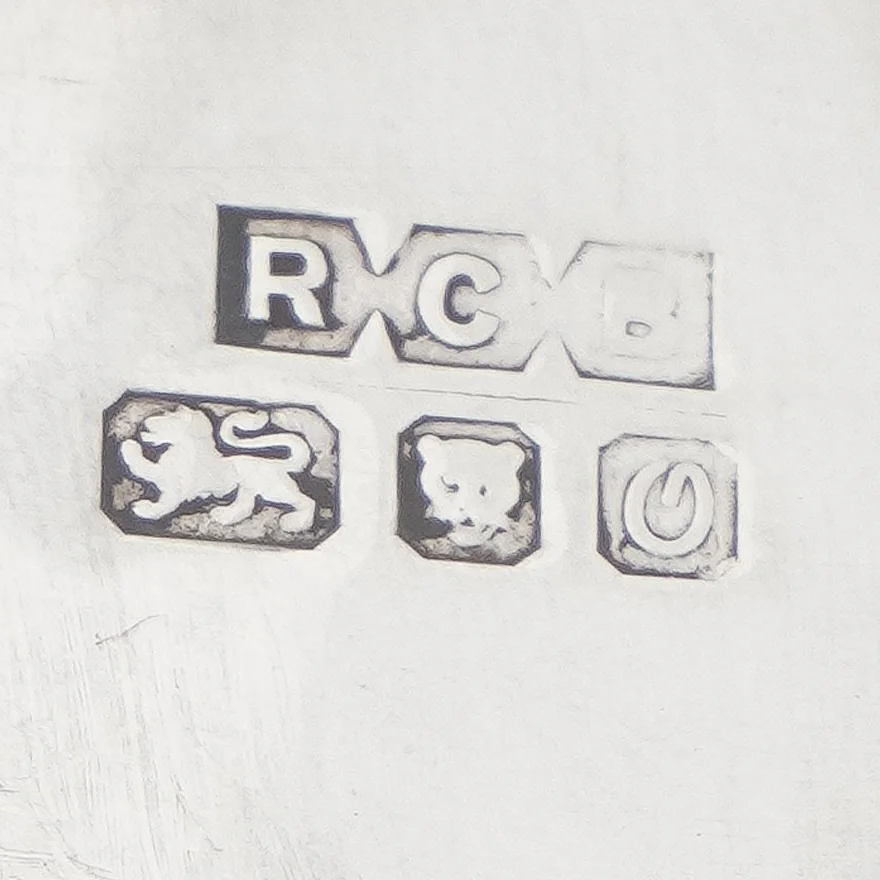
A British hallmark is a group of separate punches, each with one job: who sent the piece for testing, how pure the metal is, where it was tested and in which year. Read them in that order.
- AB1Sponsor's markWho sent it for assay: the maker, retailer or importer.
 2Standard markThe purity: lion passant for sterling, a crown for gold, or a number.
 3Town markThe assay office: London's leopard's head, Birmingham's anchor and others.
- F4Date letterThe year of assay, read with its shield shape and letter style.
 5Duty markThe sovereign's head, struck from 1784 to 1890 when tax was paid.
- Sponsor's mark (maker's mark)The initials of the maker, retailer or importer who sent the piece for assay, in a shaped surround. Compulsory in England since 1363. Many firms shared the same initials, so the shape of the surround matters. See hallmarks and maker's marks and our silver makers guide.
- Standard markThe purity of the metal: the lion passant for sterling silver in England since 1544, Britannia for the higher 958 standard, a crown with the carat for gold. From 1999 the number, such as 925, is the compulsory part.
- Town mark (assay office mark)The office that tested and marked the piece: a leopard's head for London, an anchor for Birmingham, a crown or rose for Sheffield, a castle for Edinburgh. The table below lists every office.
- Date letterA letter that changes every year at each office, used in London since 1478. The section on date letters below explains why the letter alone is not enough.
- Duty markThe sovereign's head in profile, struck from 1784 to 1890 to show that tax on silver had been paid. Its presence dates a piece between those years; its absence on its own proves nothing.
Sources: Assay Office London, history of hallmarking; Assay Office London, UK hallmarks; Wikipedia, Hallmark.
The assay offices and their town marks
Four British assay offices are open today: London, Birmingham, Sheffield and Edinburgh. Chester, Glasgow, Exeter, Newcastle and York have closed, so their town marks also set a latest date. In Ireland, Dublin still hallmarks.
| Mark | Office | Town mark | Status | Guide |
|---|---|---|---|---|
 | London | Leopard's head, crowned until 1821 | Open | London assay office guide |
 | Birmingham | Anchor | Open since 1773 | Birmingham assay office guide |
  | Sheffield | Crown, then a rose from the 1970s | Open since 1773 | Sheffield assay office guide |
 | Edinburgh | Castle | Open | Edinburgh assay office guide |
 | Chester | Three wheatsheaves and a sword | Closed 1962 | Chester assay office guide |
 | Glasgow | Tree, fish, bell and bird | Closed 1964 | Glasgow assay office guide |
 | Exeter | Castle with three towers | Closed 1883 | Assay offices guide |
 | Newcastle | Three castles | Closed 1884 | Newcastle assay office guide |
 | York | Cross with five lions; earlier half leopard's head and half fleur de lys | Closed in the 1850s | York assay office guide |
  | Dublin | Hibernia, with the crowned harp as the standard mark | Open (Ireland) | Dublin assay office guide |
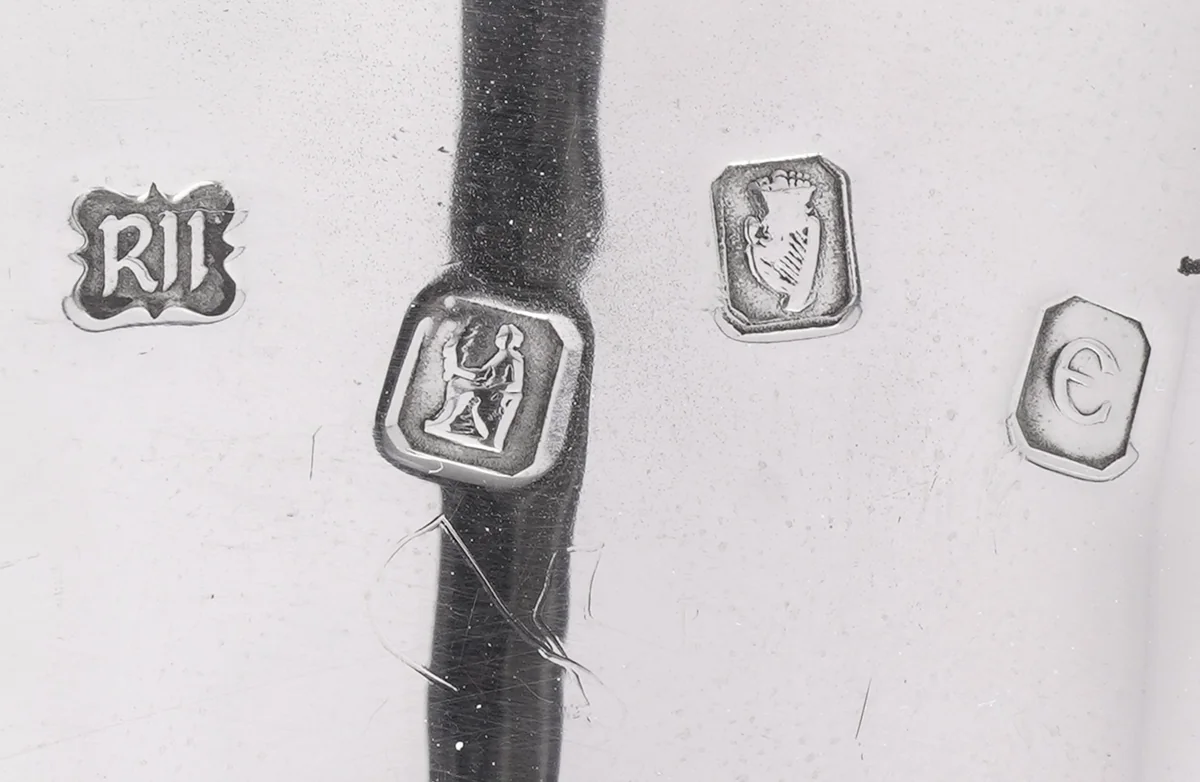
Scottish and Irish marks follow their own rules. Glasgow used a lion rampant as its standard mark, and Dublin uses the crowned harp as its standard mark and the seated figure of Hibernia as its town mark. Norwich also marked silver until 1702. Our assay offices guide covers every office in turn.
Sources: Wikipedia, Assay office; Wikipedia, Sheffield Assay Office; Wikipedia, Dublin Assay Office; Wikipedia, York Assay Office; Edinburgh hallmarks; Assay Office London, history of hallmarking.
Free valuation
Request a free valuation
Read your marks and want to know what the piece is worth? Send us photos of the piece and its hallmarks, and a specialist will check the reading and value it.
A specialist looks at every request personally and replies by email with an estimate within one working day. There is no obligation to sell.
What to photograph
- The whole piece. Front, back and base, in daylight.
- The marks. Every hallmark, as close as your camera allows.
- Any damage. Dents, repairs or worn areas.
Prefer email? Send photos to info@mozerisfineantiques.com, call 01376 334482 or WhatsApp us.
Standard marks, and the silver plate trap
The standard mark tells you the metal and its purity. The lion passant means sterling silver, 925 parts per thousand; Britannia means 958. Scotland used the thistle and the lion rampant, Ireland the crowned harp, and from 1999 the number is the compulsory part of every British standard mark.
- Lion passantSterling, England
 BritanniaBritannia silver, 958
 Lion's head erasedBritannia silver, London
 ThistleSterling, Edinburgh to 1975
 Lion rampantSterling, Scotland
- Crowned harpSterling, Dublin
 CrownGold, with the carat
| Metal | Mark | Dates |
|---|---|---|
| Sterling silver | Lion passant (England); 925 from 1999 | From 1544 |
| Britannia silver | Figure of Britannia and lion's head erased; 958 from 1999 | From 1697 |
| 18 carat gold | Crown and 18; crown and 750 from 1975 | From 1798 |
| 22 carat gold | Crown and 22; crown and 916 from 1975 | From 1844 |
| 15 and 12 carat gold | 15 .625 and 12 .5 | 1854 to 1932 |
| 9 carat gold | 9 .375; crown and 375 from 1975 | From 1854 |
| 14 carat gold | 14 .585; crown and 585 from 1975 | From 1932 |
| Platinum | Orb and 950 | From 1975 |
| Palladium | Pallas Athene head and 950 | From 2009 |
Gold standards changed by law over the years, so the carat mark also narrows the date. Our gold hallmarks and stamps decoded guide reads every gold mark, and silver purity marks explained covers every silver standard.
EPNS, EP and A1 are not hallmarks
Electroplated wares carry their own stamps: EPNS (electroplated nickel silver), EP, EPBM and A1, often in small shields that imitate a hallmark. None of them is an assay office mark, and plated pieces have no town mark or date letter. Our guide to EPNS vs sterling silver shows the difference, and how to tell if silver is real covers the other tests.
Sources: Assay Office London, history of hallmarking; Birmingham Assay Office; Hallmarking Act 1973, Schedule 2; Assay Office London, UK hallmarks.
Date letters: why the letter alone is not enough
A date letter gives the year only when you know which office struck it and which cycle it belongs to. Each office ran its own alphabet cycles, and the same letter returns in each new cycle.
- Office. Read the town mark first: London, Birmingham, Sheffield and the other offices each kept their own tables until 1975.
- Case. Capital and lower case letters belong to different cycles.
- Typeface. Roman, italic, Old English and script letters each mark a different cycle.
- Shield shape. The outline around the letter changed between cycles and is often the deciding clue.
Since 1975 every British office uses the same date letter, changing on 1 January, and since 1999 the date letter is optional, so a modern piece may have none. On jewellery the hallmark is the most precise clue to age: how to date antique jewellery sets out the earliest date for each mark, metal and fitting, and how to read silver hallmarks walks through the silver tables.
Sources: Assay Office London, history of hallmarking; Birmingham Assay Office; Wikipedia, Hallmark.
What the hallmark identifier can and cannot tell you
The identifier gives you a fast reading of clear marks: the metal standard, the assay office and the year they point to. It cannot handle the piece, test the metal or see what the photo does not show, so treat its answer as a guide and confirm anything valuable with a specialist.
- Worn marks. Polishing and wear soften punches until letters and shields blur. A worn date letter can match more than one year, and a reading from a worn mark needs checking in hand.
- Fakes and altered marks. A genuine hallmark cut from a small piece can be let into a larger fake, and forged punches exist. A soldered seam around the marks, or marks that look cast rather than struck, are warning signs a photo can miss.
- Later additions. A spout, handle or lid added later should carry its own marks. Marks that do not match across the parts need a specialist to explain them.
- Foreign and unmarked pieces. The identifier is built for British and Irish marks. Pieces from other countries, and small items below the legal weight for hallmarking, may carry no British hallmark at all.
- Makers. The same initials were registered by many makers over the centuries, so a maker's name from the initials alone is a suggestion to check.
Where the mark data comes from
Date letters compiled from Sir Charles Jackson, English Goldsmiths and their Marks (1921, public domain), and assay office records. Mark artwork drawn for Mozeris.
Sources: Jackson, English Goldsmiths and their Marks (1921), Internet Archive.
When to ask a specialist
Ask a specialist when the marks are worn, when the reading surprises you, or when the piece may be valuable. Every piece is different, so we value each one individually.
- Maker. A known silversmith, read from a clear sponsor's mark.
- Date and office. An early date letter, or a closed office such as Chester, Exeter or Newcastle.
- Metal and standard. Sterling or Britannia silver, and whether every part is marked.
- Condition. Crisp marks, original parts, no repairs or later engraving removed.
- Design and rarity. Form, decoration and how seldom the type appears.
Send us a few photos and we will tell you what yours is worth, free and with no obligation.
How selling works
- Send photosUse the form on this page, or email them to us.
- A specialist reviews itMarks, maker, metal and condition.
- Free estimate by emailWithin one working day.
- You decidePaid once agreed. No obligation.
Ways to sell
- Mayfair, 47 Maddox Street (by appointment)
- Braintree, Essex (by appointment)
- Royal Mail Special Delivery
- Free FedEx collection
We buy directly, with payment once you accept our offer, and we can also sell for you by consignment or at auction. Five-star rated: read our Google reviews.
We buy hallmarked silver and gold every week: see sell your silver and sell your gold jewellery, or browse our antique silver.
Frequently asked questions
Is 925 a hallmark?
925 on its own is a purity stamp, not a full hallmark, and it can come from any country. A British hallmark adds the sponsor's mark and an assay office town mark; since 1999 the 925 in its shield is the compulsory standard mark inside it.
What does the lion mean on silver?
The walking lion, the lion passant, is the English standard mark for sterling silver, used since 1544. Scotland used the thistle and the lion rampant, and Dublin uses the crowned harp.
How do I date silver without a date letter?
Use the other marks. A sovereign's head duty mark dates a piece between 1784 and 1890, a closed office's town mark sets a latest date, and since 1999 the date letter is optional, so a 925 with no letter is often modern. The maker's mark and the style narrow it further.
Is my silver plated?
If the marks read EPNS, EP, EPBM or A1, or there is no assay office town mark, the piece is almost always silver plate. Plated wares often carry small marks that imitate hallmarks, so check for a real town mark and date letter.
What is the duty mark?
The duty mark is the sovereign's head in profile, struck on British silver from 1784 to 1890 to show that the tax on silver had been paid. George III, George IV, William IV and Queen Victoria each appear in turn.
Is the hallmark identifier free?
Yes. Both tabs are free to use. If you want a specialist to check the reading or value the piece, our valuation is also free, with no obligation.
Can it identify gold hallmarks too?
Yes. British gold carries the same town marks and date letters, with a crown and the carat as its standard mark. Our gold hallmarks guide explains every gold standard mark.
Can you value my silver?
Yes. Send us photos of the piece and its marks, and we will reply by email with a free, no-obligation valuation. You can also visit us in Mayfair by appointment or in Braintree.
Free valuation
Have your hallmarked silver or gold valued
Ready to find out more about your piece? Send us a few photos using the form below.
A specialist looks at every request personally and replies by email with an estimate within one working day. There is no obligation to sell.
Prefer email? Send photos to info@mozerisfineantiques.com, call 01376 334482 or WhatsApp us.