Antique Silver Sugar Casters
The elegant pierced-top caster — for sugar, and in smaller form for pepper and spice (the muffineer). From Queen Anne and Georgian baluster casters to Victorian sets. A guide to identifying, dating, valuing and selling antique silver sugar casters in the UK.
What Is Your Silver Sugar Caster Worth?
Send a photo — including the marks on the base — and we'll value it free, with no obligation. We reply within one working day.
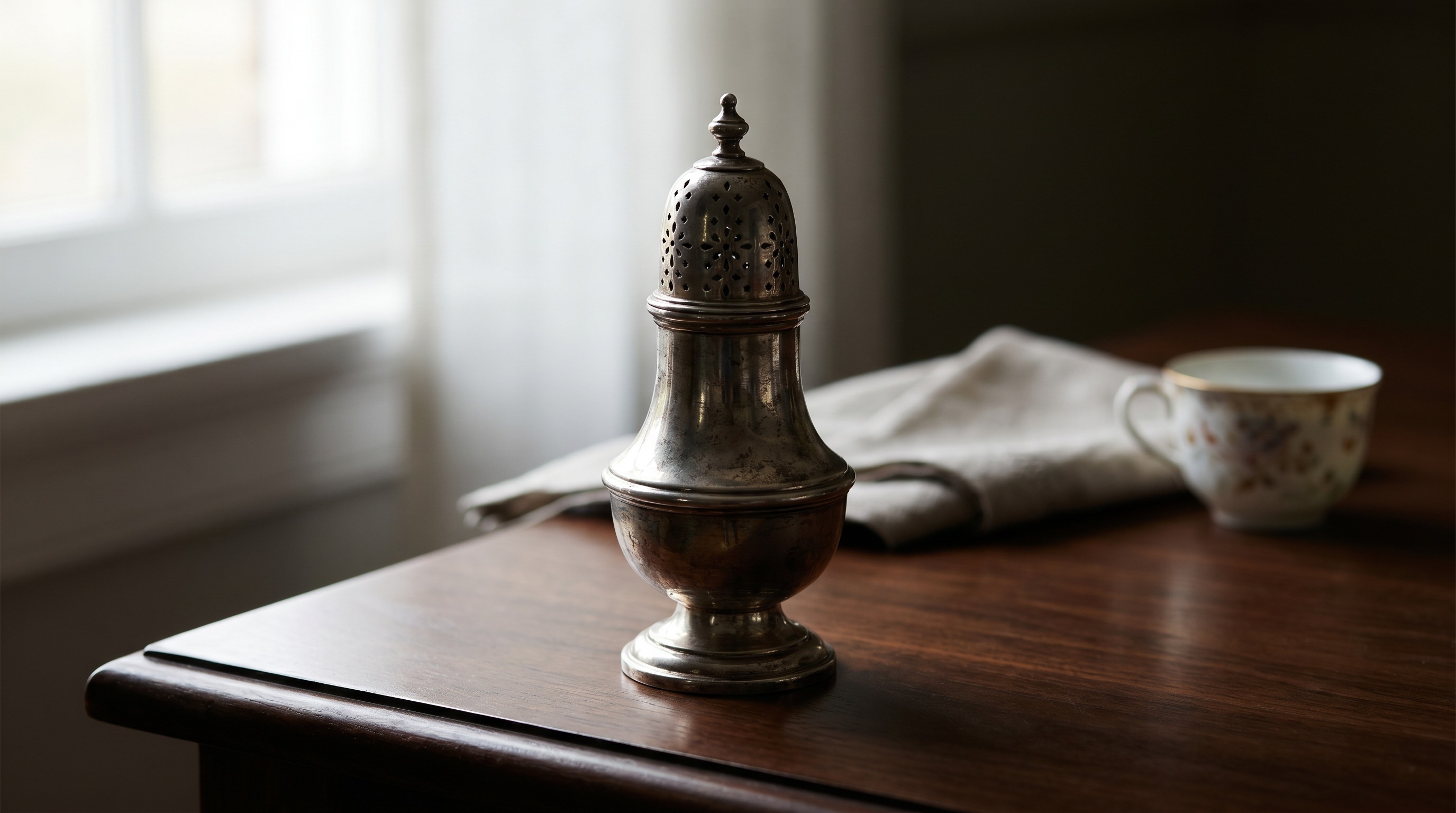
With its pierced domed top and graceful baluster body, the silver sugar caster is one of the most recognisable forms of antique table silver. The finest are Queen Anne and Georgian, by makers like Paul Storr; the same form in miniature served pepper or spice and is known as a muffineer — and a good caster can be a genuinely valuable piece.
Silver sugar casters: what they are
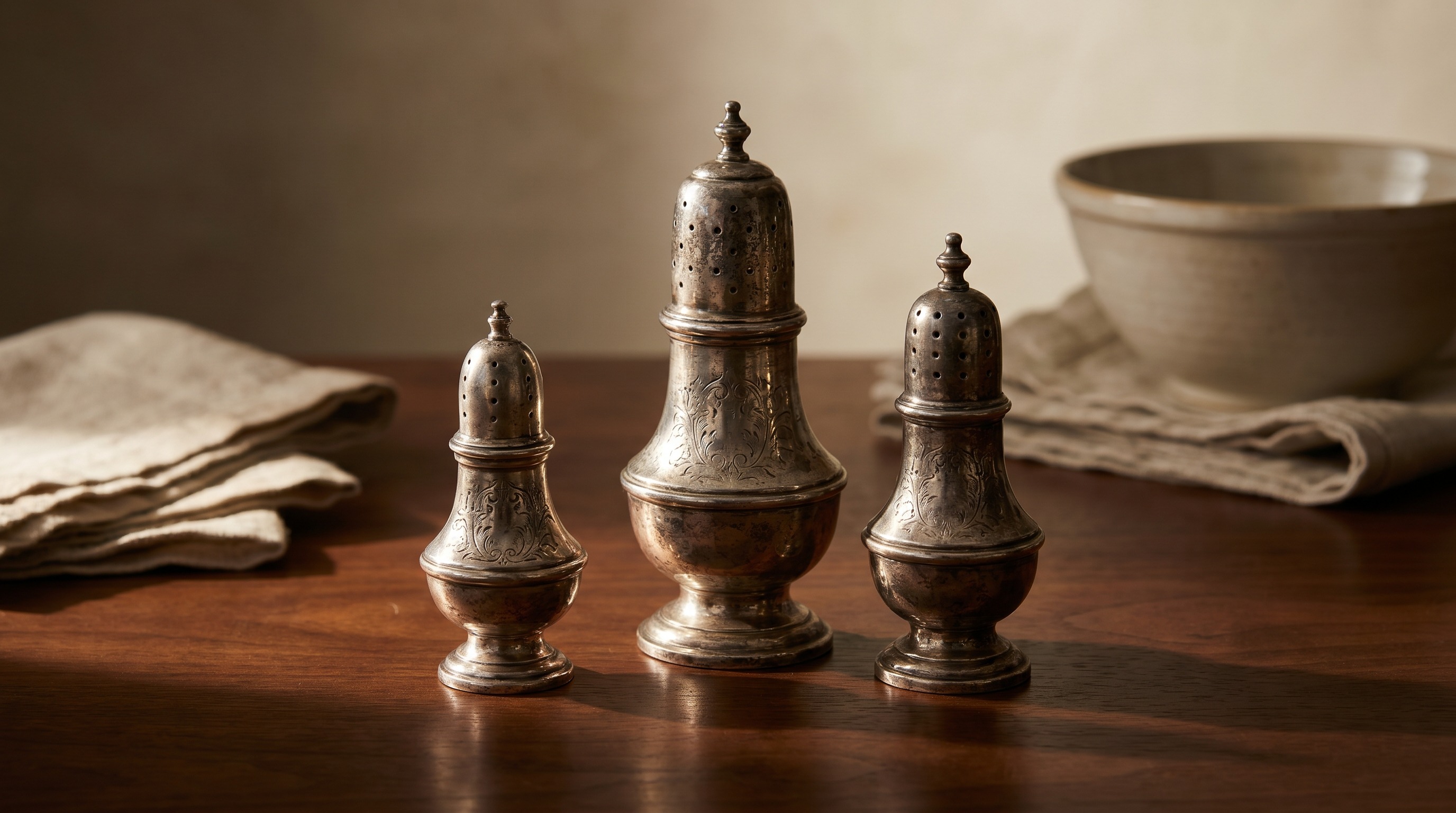
A sugar caster is a tall silver container with a detachable, pierced domed cover for sprinkling caster sugar. Classic forms are the Queen Anne and early-Georgian baluster (pear) shape and the lighthouse caster. Smaller versions used for pepper or cinnamon are called muffineers. Casters were often made in graduated sets of three (one large for sugar, two smaller for pepper and spice). Named makers such as Paul Storr and crisp pierced covers lift value considerably.
What collectors look for
Named makers
Paul Storr and noted Georgian makers carry a strong premium over later, lighter pieces.
Early date
Queen Anne and Georgian casters are the most prized; the hallmark pins down the year.
Graduated sets
A matched set of three (sugar, pepper, spice) is worth far more than a single caster.
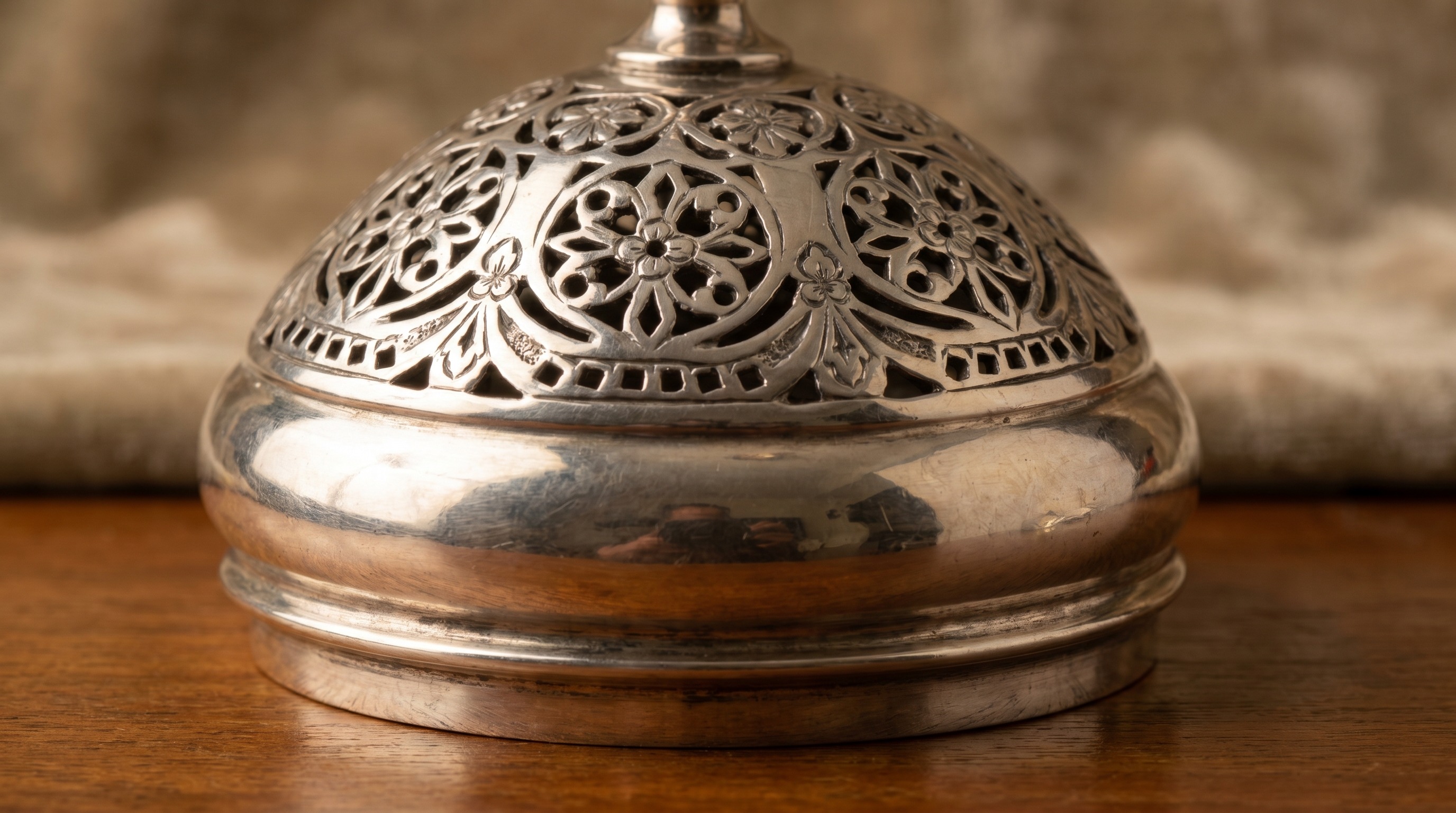
Crisp piercing
Fine, sharp fretwork on the cover and a heavy-gauge body signal quality.
What are antique silver sugar casters worth?
Value ranges widely with maker, date, weight and whether it's a set:
Indicative only — your caster depends on maker, hallmark date, weight and condition. Send a photo for a free, accurate valuation.
What Determines Value
The factors we assess on a silver sugar caster:
- Maker — Paul Storr and noted makers over unmarked pieces.
- Date — Queen Anne and Georgian casters most prized.
- Set — Graduated sets of three over single casters.
- Piercing — Crisp, fine fretwork on the cover.
- Weight — Heavy-gauge bodies carry more value.
- Condition — No splits, dents, repairs or worn piercing; covers fit.
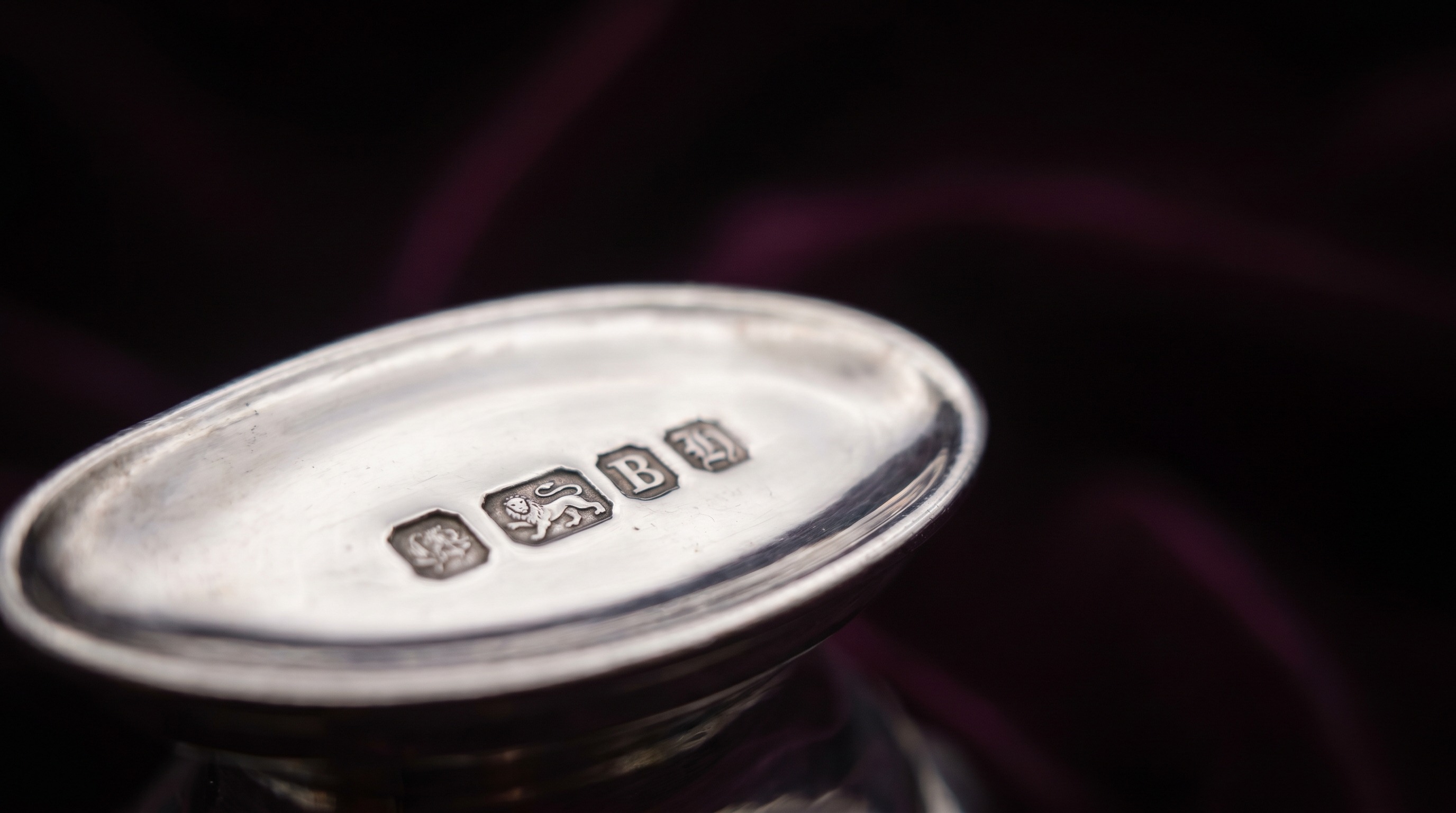
Marks are on the base and often the cover — look for the lion passant for sterling. Plate is marked EPNS.
How to identify and date your sugar caster
Turn the caster over and look on the base for the lion passant (sterling), town mark, date letter and maker's mark; the cover is often marked too, and matching marks confirm an original, un-married piece. Plated casters are stamped EPNS and worth far less — see our EPNS vs sterling silver guide. The date letter dates it precisely — use our how to read silver hallmarks guide — and the silver price valuation guide shows the metal value as a baseline.
Casters belong with the rest of the table and tea silver. See our guides to cruet & condiment sets, salt cellars & mustard pots and Paul Storr silver. When you're ready to sell, visit sell your silver.
Value Your Sugar Caster
Send photographs of the caster and the marks on the base, and we'll give you an honest, no-obligation valuation.
⚠️ Strictly by appointment only — no walk-ins at either showroom.
Frequently Asked Questions
Antique silver sugar casters — common questions.
What is a silver sugar caster?
A tall silver container with a pierced domed cover for sprinkling caster sugar. Classic forms are the Queen Anne and Georgian baluster and lighthouse shapes; smaller versions for pepper or spice are called muffineers.
How much is an antique silver sugar caster worth?
From near scrap silver for a plain single up to a strong premium for Georgian, named-maker or graduated sets of three. Maker, hallmark date, weight and condition decide. Send a photo for a free valuation.
What is a muffineer?
A small caster, the same form as a sugar caster, used to sprinkle pepper, cinnamon or sugar over muffins and food. They were often part of a graduated set with a larger sugar caster.
How do I tell sterling from plate?
Look for the lion passant hallmark on the base and cover. Plated casters are marked EPNS or A1 and are worth far less. Send a photo of the marks and we'll confirm.
Are sets of three worth more?
Yes, considerably. A matched, graduated set of three casters is far more desirable and valuable than three unrelated singles or a single caster.
Where can I sell an antique silver sugar caster in the UK?
Mozeris Fine Antiques are specialist silver buyers with showrooms in Mayfair, London and Braintree, Essex. We offer free, no-obligation valuations — send photos or visit by appointment.
Send Us Your Photographs
Attach photos of the caster and the marks on the base. We'll respond within one working day.