
Sell Your Silver Candlesticks
To Specialist Buyers
Georgian column candlesticks, Victorian cast pairs, Edwardian candelabra — we buy antique silver candlesticks at prices that reflect genuine collector demand, not just the weight of silver they contain.
Request Your Free Valuation
Send us photos of your candlesticks — including the hallmarks on the base — and we'll give you an honest, no-obligation assessment.
⚠️ Strictly by appointment only — no walk-ins at either showroom.
Why Silver Candlesticks Are Worth More Than Their Melt Value
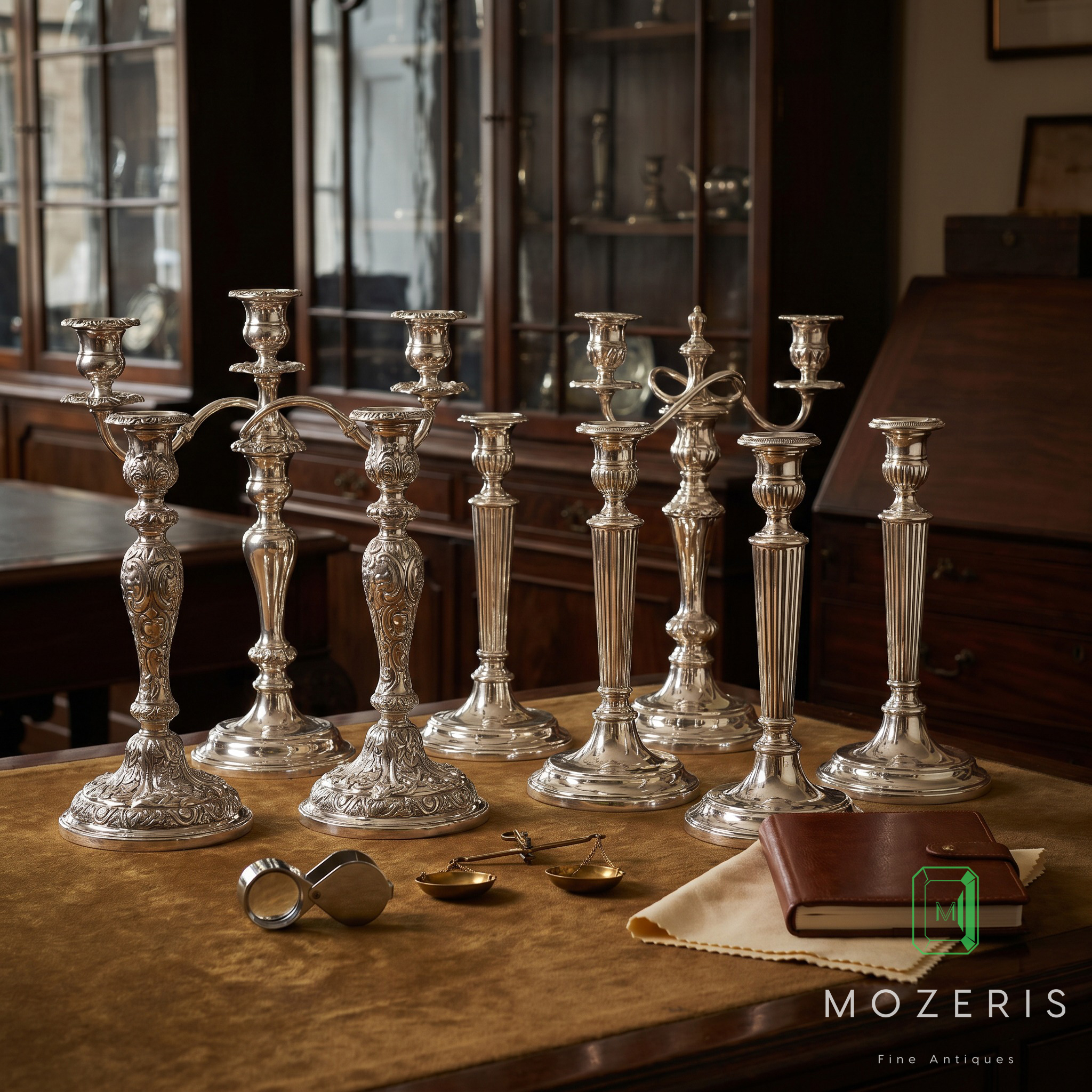
Antique silver candlesticks are among the most actively collected pieces of English domestic silver. Matched pairs in particular command strong prices at specialist auction and through private sale — often far exceeding what a simple weight-based assessment would suggest.
The value of a pair of Georgian column candlesticks lies in their age, their maker, the quality of the casting and the intactness of the loaded bases. A fine pair by a named London silversmith from the 1750s or 1760s can fetch sums that make melting them down quite literally criminal.
We buy single candlesticks as well as pairs, candelabra, chamber candlesticks and tapersticks — and we are experienced at identifying when pieces have been separated from a larger matched set.
Types of Silver Candlestick We Buy
From simple Georgian column sticks to elaborate Victorian candelabra — we buy antique silver candlesticks of all periods, styles and sizes.
Georgian Column Candlesticks
The most classically desirable form — fluted or plain Corinthian column shafts on square or circular loaded bases. Made from the 1720s through to the Regency period. Cast examples by named London makers are particularly sought after.
Victorian Cast Pairs
Heavy, ornate Victorian candlesticks in rococo, gothic or naturalistic styles. Often produced by Sheffield and Birmingham manufacturers. Quality varies — the best Victorian cast sticks are genuinely impressive objects with strong buyer interest.
Candelabra
Multi-branch candelabra — whether original or converted from single candlesticks — are actively bought. Grand Victorian and Edwardian examples with fitted cases are especially desirable. We buy pairs and single candelabra.
Chamber Candlesticks
Flat-based bedroom candlesticks with a carrying handle and often a snuffer. Georgian and early Victorian examples in sterling silver are collected in their own right — particularly those with matching conical snuffers and extinguishers.
Tapersticks
Miniature candlesticks made for holding wax tapers used to seal letters or melt wax. Georgian tapersticks in sterling silver are rare and actively collected — particularly matched pairs. Often overlooked but genuinely valuable.
Named Maker Examples
Candlesticks bearing the marks of celebrated silversmiths — John Carter, Matthew Boulton, Paul Storr, John Cafe — command considerable premiums. Even a single candlestick by a major maker has significant collector value.
How to Sell Your Silver Candlesticks
A straightforward four-step process from first contact to payment.
Photograph Your Pieces
Take clear photos of each candlestick from the side, from above, and close-ups of the hallmarks on the base. If it's a pair, photograph both individually. Avoid cleaning before sending photos — original patina is important.
Submit for Assessment
Use the form on this page or email your photos directly. We'll identify the hallmarks, research comparable sales and come back to you with an honest valuation range — no obligation, no pressure.
Visit Either Showroom
If our estimate looks encouraging, bring your candlesticks to our Mayfair or Braintree showroom by appointment. We'll examine them in person and make you a firm offer on the day.
Receive Payment
Accept our offer and we transfer payment immediately by bank transfer. No delays, no staged payments. If you don't wish to sell, we return your pieces at no charge.
What Determines the Value of Silver Candlesticks?
The factors our specialists consider when assessing every pair of antique silver candlesticks.
Pair vs Single
A matched pair is worth considerably more than twice the value of a single candlestick. Keeping pairs together is always advisable — never sell them separately if you can avoid it.
Maker's Mark
Candlesticks by known London silversmiths — particularly 18th-century makers — command the highest premiums. Sheffield and Birmingham makers also have strong followings for their Victorian work.
Period & Date
Georgian candlesticks (pre-1830) are consistently the most sought-after. Early Victorian pieces in classical form also perform strongly. The 1740–1800 period represents the golden age of English silver candlestick making.
Cast vs Loaded
Fully cast solid silver candlesticks are more valuable than loaded examples (which have a weighted base material beneath the silver). Cast pieces are heavier, stronger and rarer — and the market recognises this.
Condition of the Base
Loaded candlesticks are prone to damage to the base covering. Splits, holes or major dents to the base reduce value significantly. We look carefully at the integrity of the loading and the silver covering.
Original Nozzles & Accessories
Original detachable nozzles, matching snuffers and extinguishers all add value. If you have a fitted case or any original accessories, always include them in your enquiry.

Identifying Your Silver Candlesticks
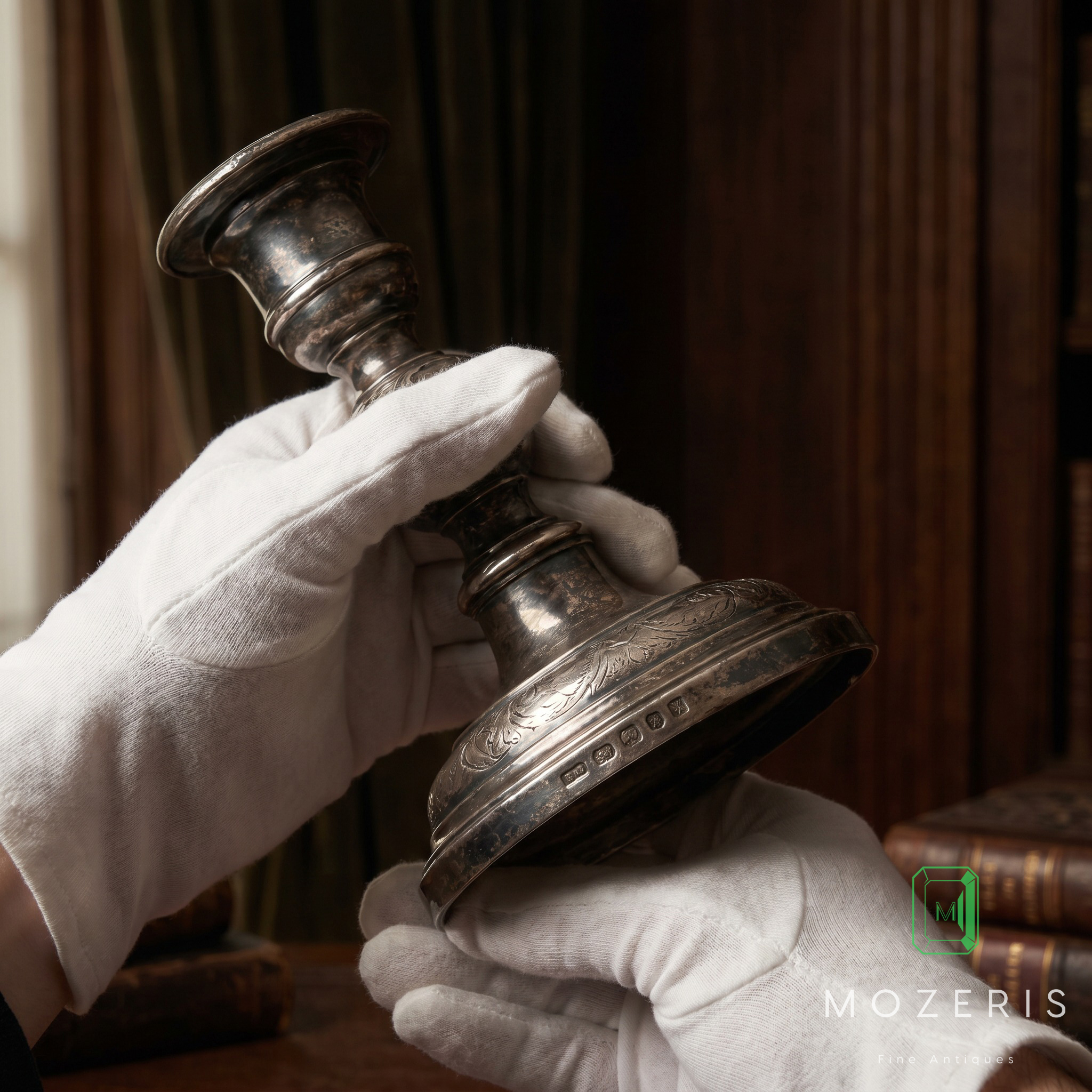
The hallmarks on the base or shaft of your candlesticks tell us everything we need to date and attribute them accurately. On loaded candlesticks, look inside the base plate; on cast pieces, the marks are usually struck on the underside of the foot.
We can identify candlesticks from photographs alone in the vast majority of cases — so don't worry if you can't read the marks yourself. Send us close-up photos and we'll do the research.
| Mark | Significance for candlesticks |
|---|---|
| Lion Passant | Confirms sterling silver (92.5%). Essential — without this, the piece may be plated |
| Date Letter | Year of making — crucial for establishing period and matching pairs |
| Maker's Mark | Often the most important mark — a named maker dramatically increases value |
| Assay Office | London (leopard's head), Sheffield (crown), Birmingham (anchor) |
| Armorial Engraving | A coat of arms or crest adds historical provenance and often collector interest |
Frequently Asked Questions
Common questions from clients looking to sell their antique silver candlesticks.
I only have one candlestick — is it worth selling?
Absolutely. A single candlestick by a named Georgian maker, or in an unusual or particularly fine form, can still be worth a substantial sum. We buy singles as well as pairs. That said, if you have both and they match, always keep them together.
My candlesticks have been repaired. Does that affect the value?
Minor repairs are common in pieces of this age and rarely destroy value entirely. Major structural repairs, welded cracks or significantly replaced sections do reduce value, but the extent depends heavily on the period and maker. Send us photos and we'll give you an honest assessment.
How do I tell if my candlesticks are silver or silver plate?
Sterling silver candlesticks carry a lion passant hallmark. Plated items often show marks such as EPNS or EP, and may show copper or base metal through worn areas, particularly at the edges of the base. If you're unsure, send us close-up photos and we'll identify them for you.
Can you collect my candlesticks from my home?
We can arrange FedEx home collection for clients who are unable to travel to our London or Essex showrooms. For very large or particularly valuable pieces, we may be able to visit in person — please call us to discuss your situation.
Do you buy candelabra as well as candlesticks?
Yes — we actively buy silver candelabra of all sizes. Whether your piece is a simple two-branch candelabrum or a grand six-light centrepiece, we're interested. Grand candelabra in fitted cases are among the most desirable items we encounter.
Send Us Your Photos
Clear photos of each candlestick plus close-ups of the hallmarks on the base — that's all we need to give you an initial valuation.