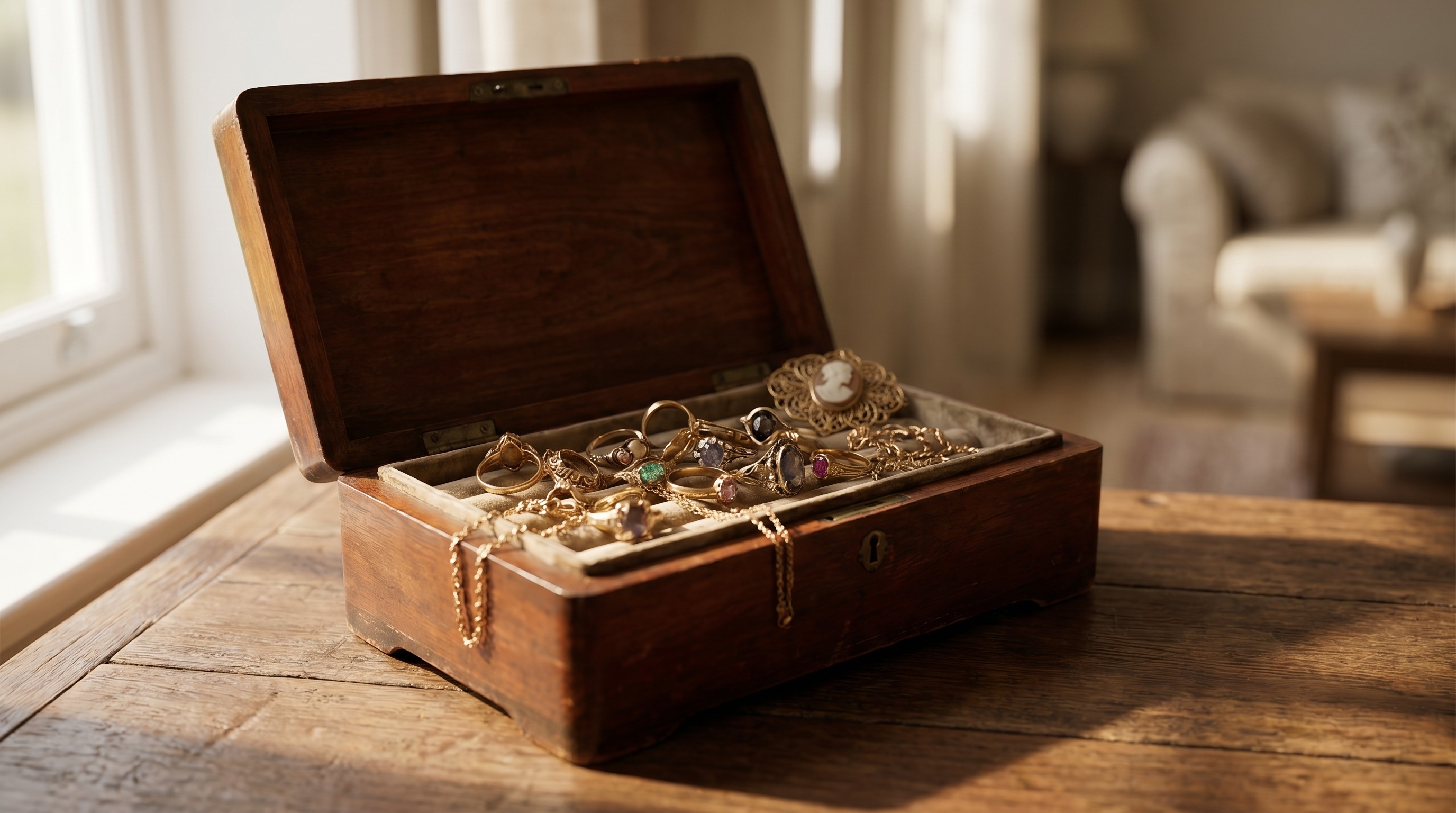
Selling Inherited Gold & Jewellery: a UK Probate Guide
Inheriting jewellery often comes at a difficult time, and the practical questions — valuation, probate, tax, selling — can feel overwhelming. This calm, step-by-step guide explains exactly what to do, and how to sell well when you're ready.
Need Inherited Jewellery Valued or Sold?
Send us a photo and we'll help — whether you need a figure for probate or you're ready to sell. Honest, discreet, no-obligation advice. Our specialists reply within one working day.
When jewellery passes to you after a loss, it carries both sentiment and, often, real value — and a set of practical responsibilities that can be hard to face. The good news is that the process is more straightforward than it looks once it's broken into steps. This guide walks you through valuation, probate and selling, calmly and in order, so you can make unhurried decisions.
First: do you need probate, and a valuation?
If you are the executor or administrator of the estate, the jewellery usually needs to be valued for probate — that is, assessed at its open-market value as at the date of death. This figure forms part of the estate's total value for inheritance tax, reported to HMRC. It is not the same as an insurance valuation, and using the wrong one can cost the estate money (more on that below).
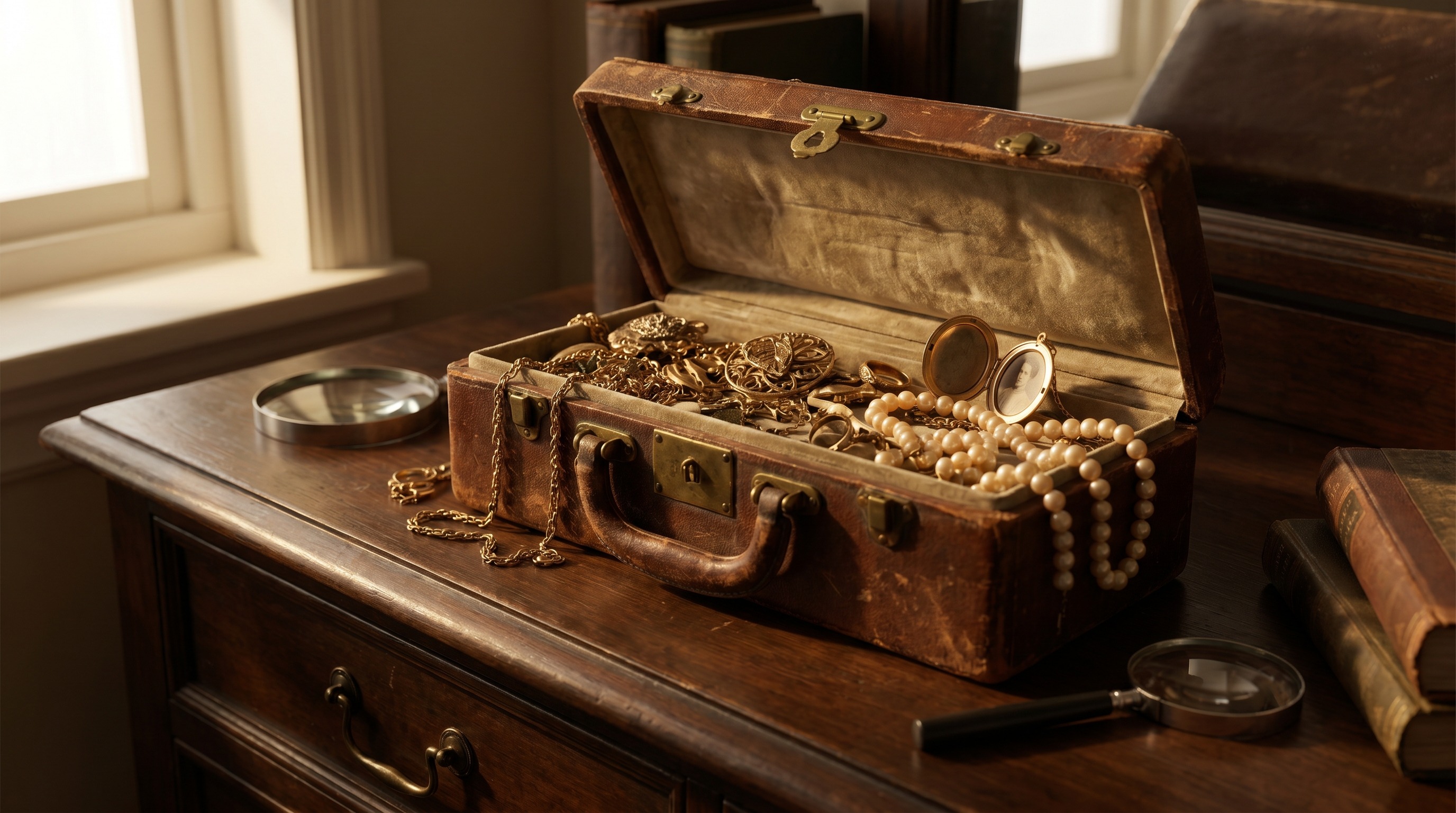
Probate value vs insurance value — the costly confusion
This catches many families out. An insurance valuation states what it would cost to replace a piece with a new equivalent — typically 30–50% higher than its real resale value. A probate valuation reflects what the piece would actually sell for. If you submit an inflated insurance figure for probate, you risk pushing the estate into paying unnecessary inheritance tax on value that isn't really there. Always use a proper probate valuation for the estate.
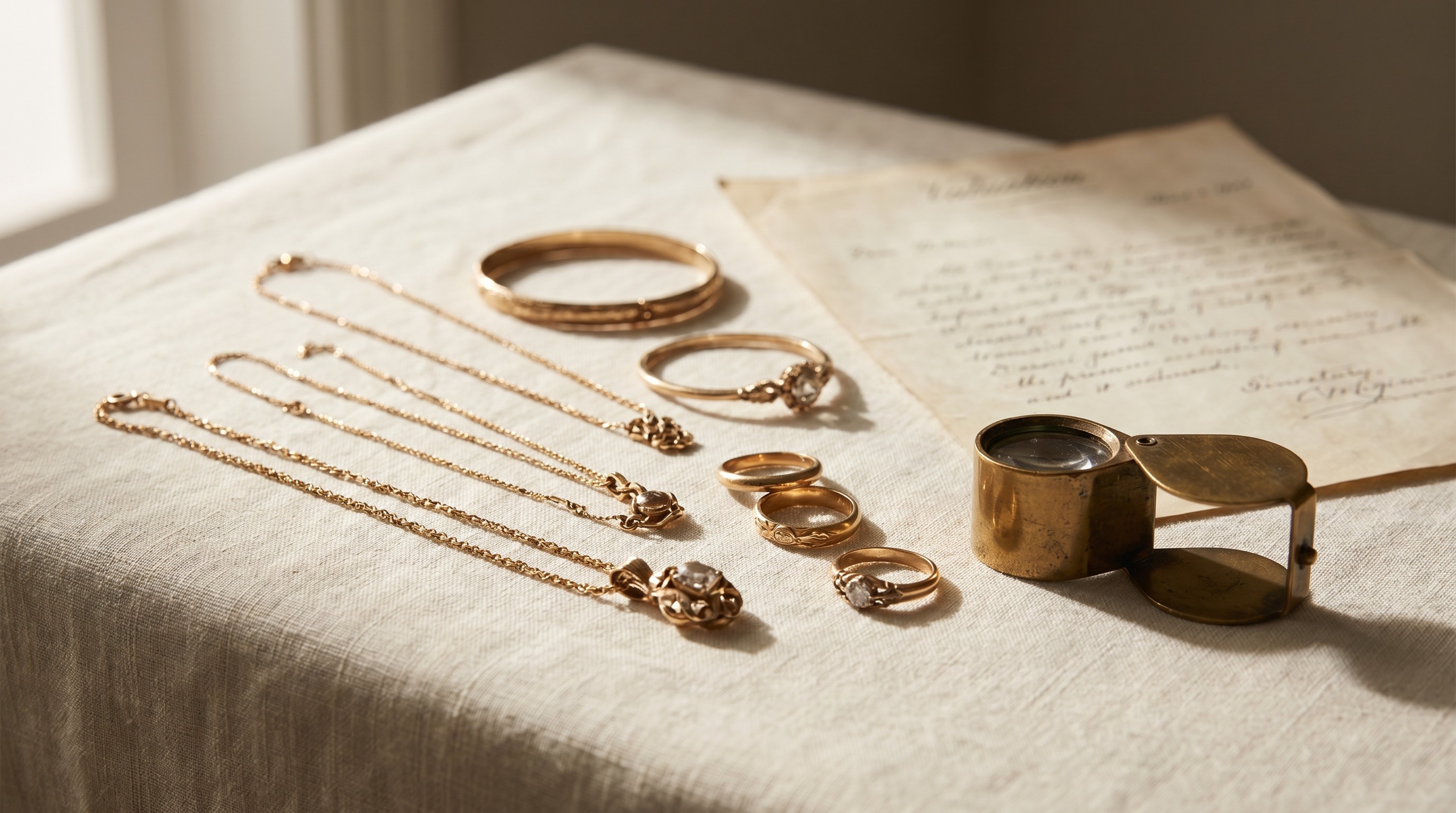
When You Need a Professional Valuer
HMRC has clear expectations for jewellery in an estate:
- Items over £1,500 — HMRC expects a written valuation from a qualified, independent valuer.
- No "too small" exemption — all jewellery in the estate should be accounted for, not just the valuable pieces.
- Gold valued at date of death — the gold price on that day is used, not today's price.
- Keep the written report — HMRC may ask to see it; file it with the estate papers.
- Valuation fees are deductible — a legitimate estate expense, deducted before inheritance tax.
We provide clear, professional valuations and can advise what's needed for probate.
The Process, Step by Step
A calm order of events, from first sorting to selling when you're ready.
Gather & Record
Collect all the jewellery together. Photograph each piece and note any hallmarks, inscriptions, maker's names and approximate weights. Don't clean or alter anything.
Value for Probate
Obtain a professional probate valuation (open-market value at date of death). Keep the written report with the estate papers for HMRC.
Settle the Estate
The valuation feeds into the inheritance tax calculation and the grant of probate. Distribution follows the will once the estate is settled.
Decide & Sell
Keep what's treasured; sell the rest when you're ready. A specialist buyer will value it honestly against the current market — with no pressure.
Selling, when the time is right
There is no rush, and no obligation to sell at all. When you are ready, selling inherited gold and jewellery to a specialist buyer is usually the most straightforward and rewarding route — you'll get an honest, market-based offer without the uncertainty of auction or the low figures of a quick scrap merchant. Because the probate value becomes your "base cost", any Capital Gains Tax would only apply to a gain above that value, which for most sales means none at all (see our guide to tax on selling gold).
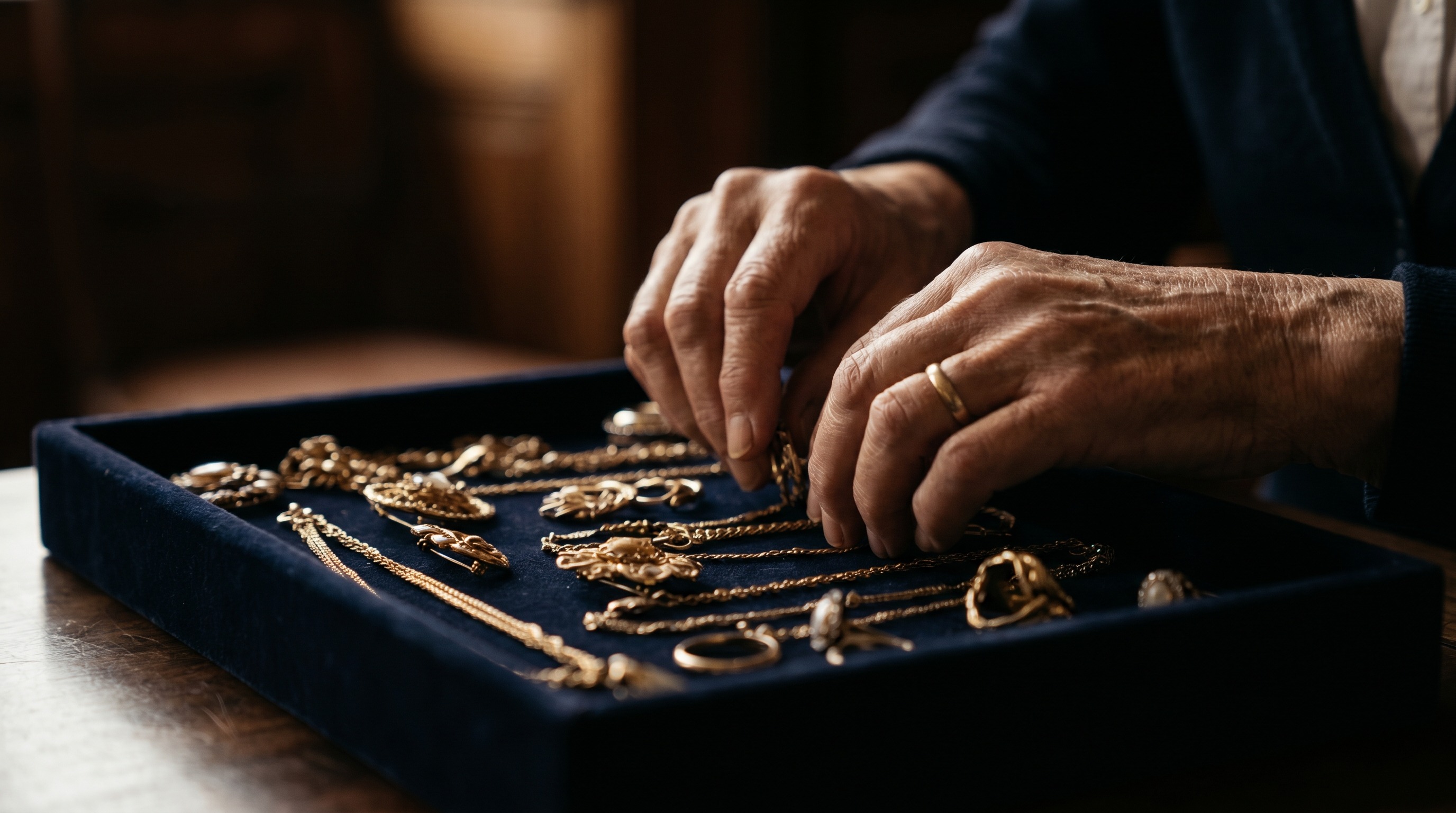
We handle inherited collections with discretion and care, valuing everything together — gold, silver, watches and stones. Start with our guides on how to tell if jewellery is worth money and what estate jewellery is, then sell via sell your gold jewellery or sell your antique jewellery.
Speak to Us — Discreetly & Without Obligation
Whether you need a probate figure or you're ready to sell, send us photographs and we'll help you understand what the pieces are worth.
⚠️ Strictly by appointment only — no walk-ins at either showroom.
Frequently Asked Questions
Selling and valuing inherited jewellery — common questions.
Do I need a valuation to sell inherited jewellery?
If the estate is going through probate, the jewellery usually needs a probate valuation (open-market value at date of death) for inheritance tax. Once the estate is settled and the pieces are yours, you're free to sell — and a specialist will value them at the current market for sale.
What's the difference between a probate and insurance valuation?
An insurance valuation is the cost to replace an item new — usually 30–50% higher than resale value. A probate valuation reflects what it would actually sell for. Use a probate valuation for the estate, or you risk overpaying inheritance tax.
When does HMRC require a professional valuation?
HMRC generally expects a written valuation from a qualified, independent valuer for any single item worth more than £1,500, and all jewellery in the estate should be accounted for. The valuation fee is a deductible estate expense.
Will I pay tax when I sell inherited gold?
Often not. Your "cost" for Capital Gains Tax is the probate value at the date of death, so you'd only be taxed on a gain above that — which for most sales is little or nothing. UK sovereigns and Britannias are exempt entirely. Always confirm with an accountant for larger estates.
Do I have to sell everything?
Not at all. Keep whatever is meaningful to you. We're happy to value a collection so you can decide which pieces to keep and which to sell — with no pressure and no obligation.
Send Us Your Photographs
Attach photos of the jewellery and any hallmarks. We'll respond within one working day, discreetly.