German silver hallmarks
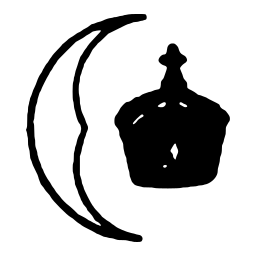
1,133 marks in our databaseFrom 1888 German silver carried a national mark, a crescent moon and an imperial crown, beside the fineness in thousandths, most often 800. Earlier pieces carry town marks, such as the pine cone of Augsburg or the N of Nuremberg, with a maker's mark.
Since 1888 German silver has been marked under one national law: a crescent moon and a crown beside a number for the standard, most often 800, with the maker's mark or trade mark. Before 1888 each town struck its own marks, so older German silver needs the town mark read first.
How to read German marks
- National mark
- From 1888 German silver carried a crescent moon and an imperial crown beside the fineness in thousandths. Silver of 800 or better could carry it.
- Standards
- The fineness is stamped as a number: 800 is the most common, with 835, 900 and 925 also seen.
- Gold
- From 1888 German gold carried a sun and crown with its fineness.
- Before 1888
- Each town struck its own mark, such as the pine cone of Augsburg or the N of Nuremberg, with the maker's mark.
- Maker's mark
- A maker's or retailer's name or initials, often with a trade mark.


A note from our specialists
A group of marks we see often on German pieces is not German in style at all. Silversmiths in Hanau, near Frankfurt, struck pseudo hallmarks from around 1870 to 1930 that imitate old English, French and Dutch marks: a crowned letter, a lion, a name punch. Georg Roth & Co used a crowned G and a crowned R in separate punches. There is no town mark, no date letter and no duty head, so the piece cannot be read as British.
Faustas Svencionis, Mozeris Fine Antiques
We hold 1,133 German marks for photo matching
Our identifier compares your photo with every German mark we hold, then reads the town, the standard, the date and the maker. Free, with the result on screen and by email.
Records you can browse
Questions
What does 800 mean on German silver?
800 parts of silver in 1,000. From 1888 German law let silver of 800 or better carry the crescent and crown.
What does the crescent and crown mean?
It is the German national silver mark, used from 1888 with the fineness number beside it.
What does the crescent and crown mean on silver?
It is the German national mark for silver from 1888. The number beside it gives the standard, most often 800, meaning 800 parts of silver in 1000.
What are Hanau pseudo hallmarks?
Marks struck by silversmiths in Hanau, Germany, from about 1870 to 1930 that imitate older English and European hallmarks. They identify the maker, not an assay office or a year.
Thinking of selling?
Send a few photos of the piece and its marks, and a specialist will value it, free and with no obligation.