French silver hallmarks
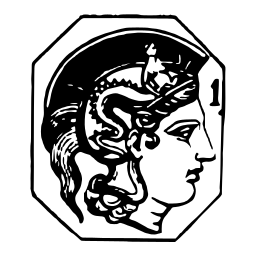
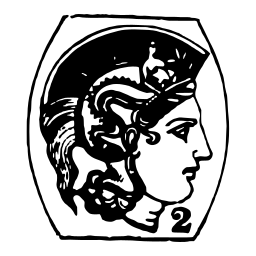
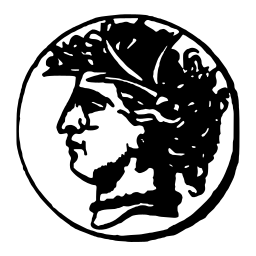
731 marks in our databaseSince 1838 French silver has carried the head of Minerva, with a 1 for 950 silver and a 2 for 800. Every maker struck initials and a symbol in a lozenge, and Paris and the departments used their own assay marks.
French silver has been marked with the head of Minerva since 1838: a 1 beside her for the first standard of 950, a 2 for the second standard of 800. With the maker's lozenge and, on older pieces, the Paris or departmental assay marks, those punches tell you the standard, the maker and roughly when and where the piece was assayed.
How to read French marks
- Standard marks
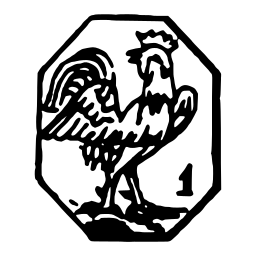
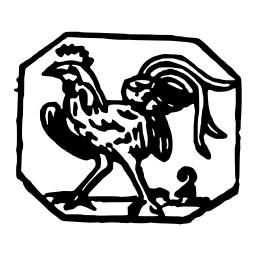
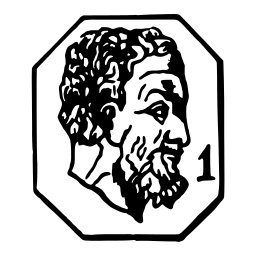
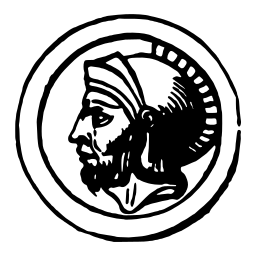
- From 1797 to 1809 Paris used a cock with a number for the standard. From 1819 to 1838 the head of an old man marked first standard Paris silver. Since 1838 the head of Minerva has marked all French silver: a 1 for 950, a 2 for 800.
- Assay marks
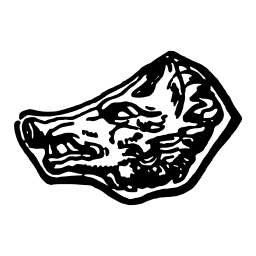
- Paris and the departments struck their own assay marks beside the standard, such as the boar's head of Paris and the crab of the departments from 1838.
- Gold
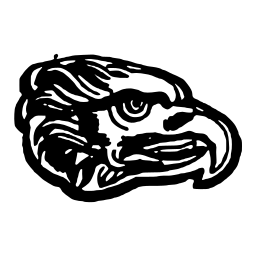
- From 1838 gold carried an eagle's head in Paris and a horse's head in the departments.
- Foreign wares
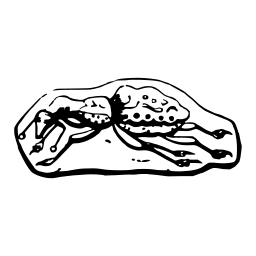
- From 1838 a weevil guaranteed imported gold and silver.
- Maker's mark
- Since 1797 every French maker has struck initials and a symbol inside a lozenge.


A note from our specialists
Check the shape of the maker's punch first. On solid French silver it is a lozenge, a diamond shape standing on its point, with the maker's initials and a symbol. A square maker's punch is the sign of French silver plate, so a piece that looks like silver but carries only a square punch is not solid.
Faustas Svencionis, Mozeris Fine Antiques
We hold 731 French marks for photo matching
Our identifier compares your photo with every French mark we hold, then reads the town, the standard, the date and the maker. Free, with the result on screen and by email.
Records you can browse
Questions
What does the Minerva head mean?
It is the French guarantee mark for silver since 1838. A 1 beside the face means 950 silver; a 2 means 800.
Is French silver dated?
Not by a yearly letter. The style of the guarantee marks narrows the period, and the maker's working years narrow it further.
What does the Minerva head mean on French silver?
It is the French guarantee mark for silver used since 1838. A 1 means 950 silver and a 2 means 800 silver.
Why is the maker's mark on French silver a diamond shape?
Since 1797 French makers of solid silver have struck their initials and a symbol inside a lozenge. A square punch is used on silver plate.
Thinking of selling?
Send a few photos of the piece and its marks, and a specialist will value it, free and with no obligation.