
In this guide (10)
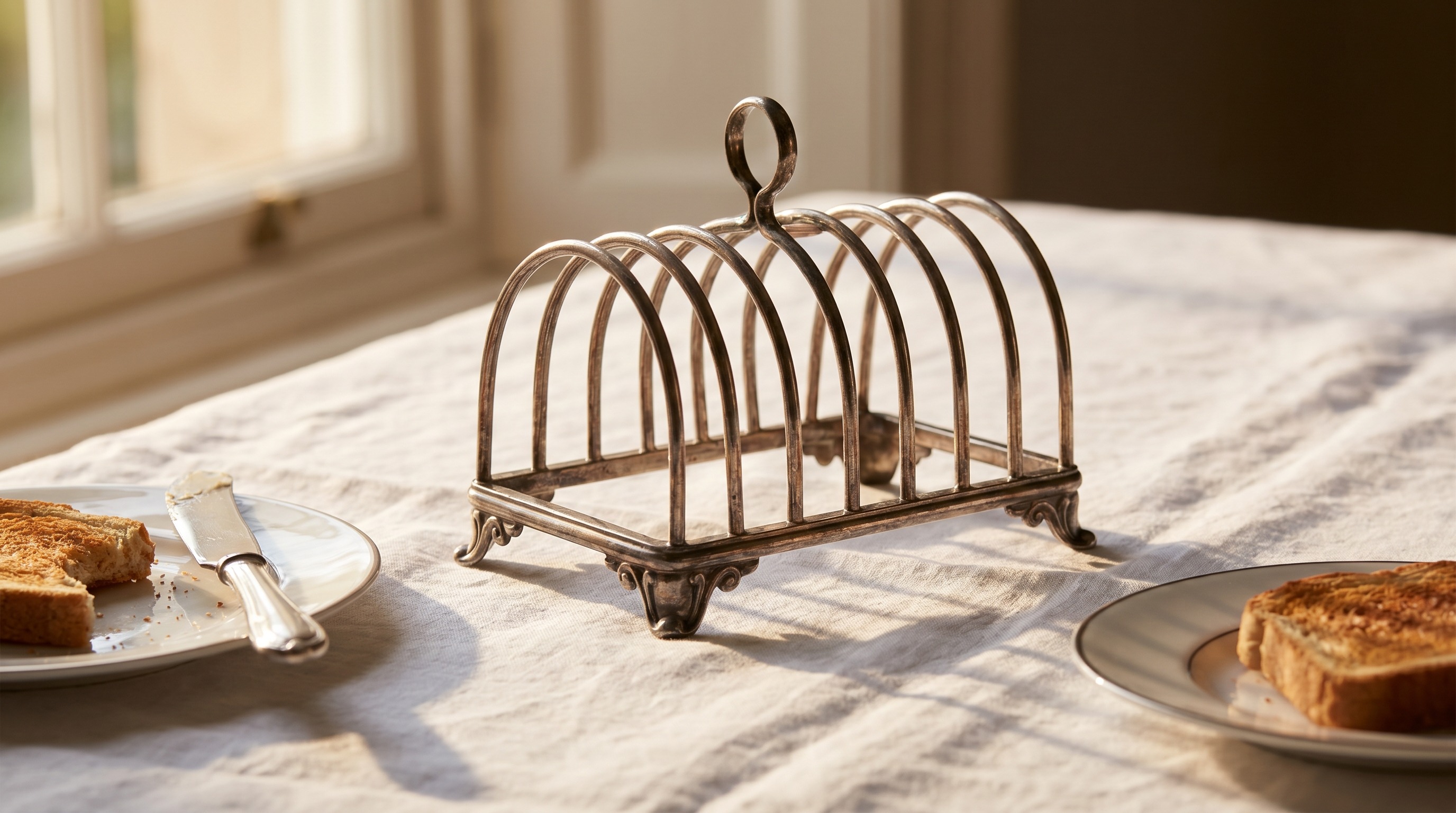
The maker, the date and the weight decide value; larger racks and matched pairs are scarcer.
A classic of the Georgian and Victorian breakfast table, the silver toast rack. From plain wirework to elaborate cast designs by Paul Storr and the great makers. A guide to identifying, dating and valuing antique silver toast racks.
Not Sure What Your Toast Rack Is Worth?
Send a photo, including the marks on the base, and we'll value it free, with no obligation. We reply within one working day.
No proper Georgian or Victorian breakfast table was complete without a silver toast rack: a row of arched silver bars holding slices of toast upright and crisp. Made from the 1770s onward, they range from simple wirework pieces to grand cast racks by the finest makers, and remain among the most charming and useful pieces of antique table silver.
What is a silver toast rack?
A silver toast rack is a small stand with arched dividers, usually for four, six or eight slices, on a base with feet and a carrying handle.
A small silver stand with a series of arched dividers (typically holding four, six or eight slices) set on a base with feet and usually a central carrying handle or loop. Forms range from light, elegant wirework to substantial cast racks with shell, gadrooned or beaded borders. Noted makers such as Paul Storr, Hester Bateman and the Victorian firms add considerably to value, and crisp Georgian examples are the most sought after.
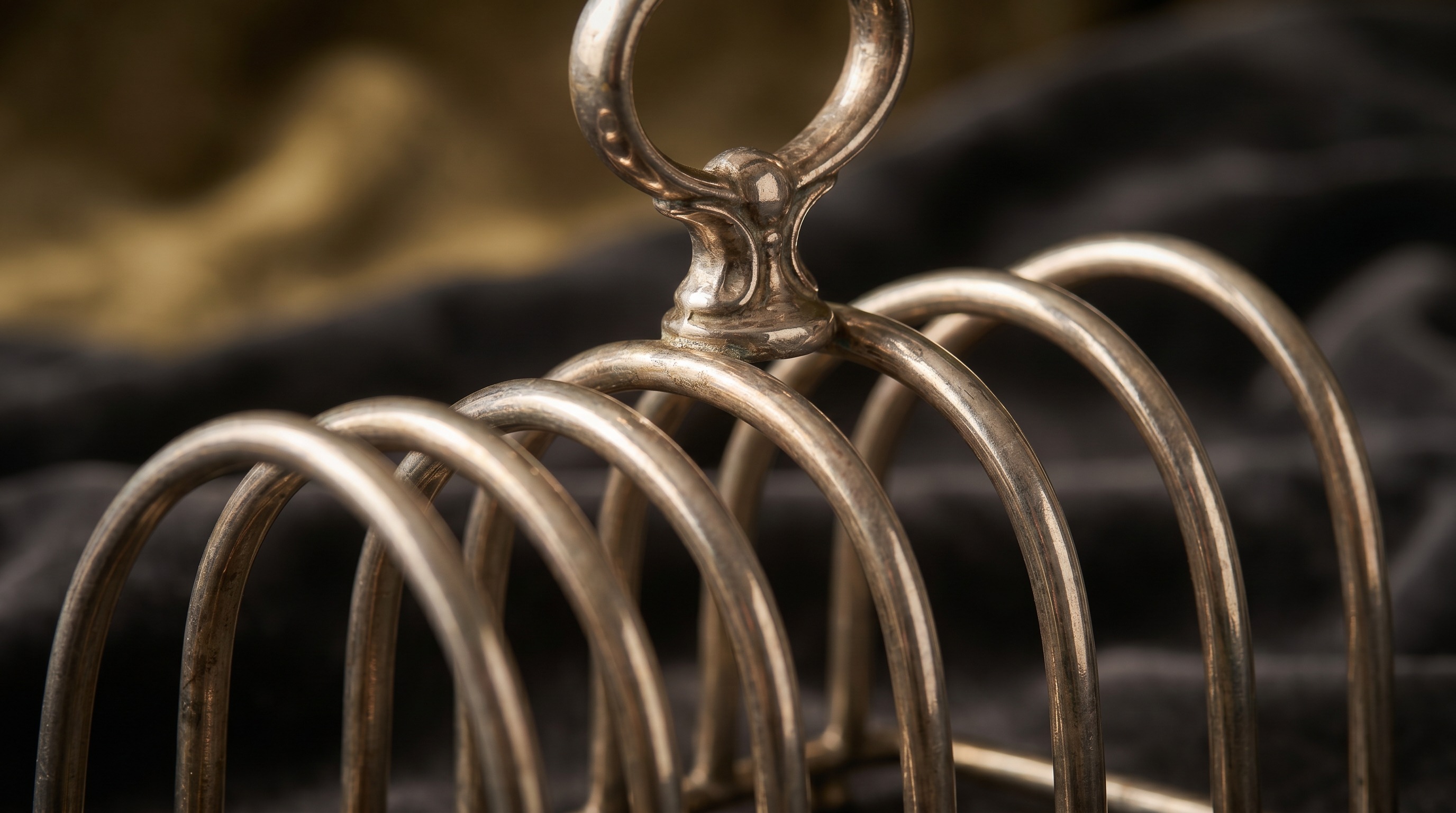
Sell Your Antique Silver Toast Rack
Free valuation from your photographs. Paid the same day after inspection.
- Free insured FedEx collection
- Insured to £10,000
- No obligation
What collectors look for
Collectors of toast racks look for a noted maker, a Georgian date, heavy cast quality, larger sizes and matched pairs.
- Named makersPaul Storr, Hester Bateman and the great Georgian and Victorian makers are keenly collected.
- Georgian dateLate-18th and early-19th century racks are most collected; the hallmark dates the piece precisely.
- Quality & formHeavy cast racks with fine borders over light wirework. Crisp, undamaged construction throughout.
- Number of divisionsLarger racks (six, eight slices) and matched pairs are scarcer and worth more than small singles.
What Determines Value
The value of a silver toast rack is decided by the maker, the date, the quality, the weight, the size and condition.
The factors we assess on a silver toast rack:
- Maker: Paul Storr, Bateman and noted makers over unmarked pieces.
- Date: Georgian examples most collected; the hallmark dates it.
- Quality: Heavy cast racks with fine borders over light wirework.
- Weight: Substantial gauge silver carries more value.
- Condition: Firm bars, no splits, repairs or pushed feet.
- Pairs & size: Matched pairs and larger racks are keenly collected.
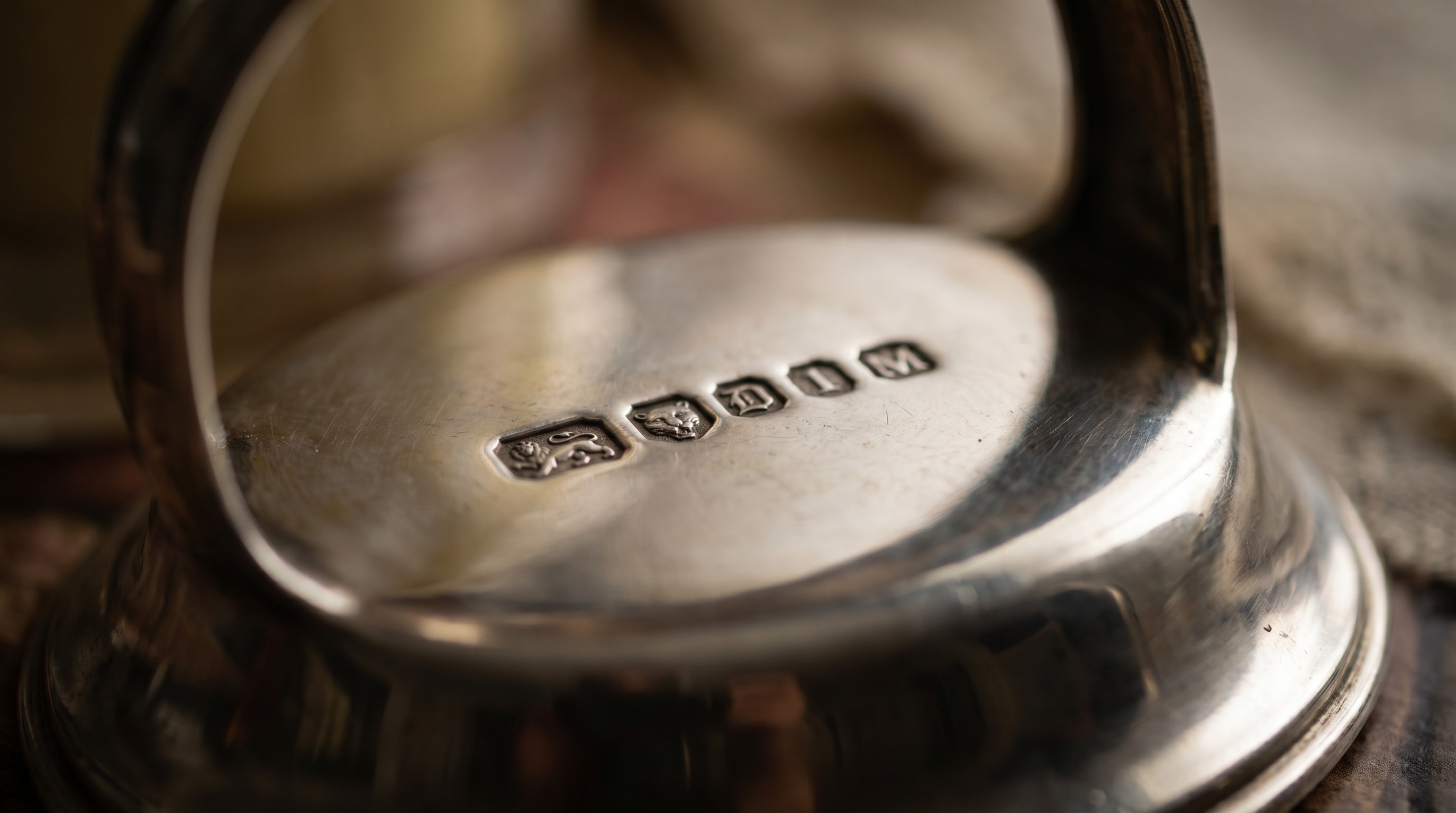
Marks are usually on the base. Find the lion passant for sterling.
What We Look For When a Toast Rack Arrives
When a toast rack arrives we read the marks on the base or handle, then count the divisions and check whether it is light wirework or a heavy cast rack.
Then we look for bent or broken bars, loose feet and repairs at the joins, and note the maker and date.
How selling works
- Send photos Use the form on this page, or email them to us.
- A specialist reviews it Maker, marks, age and condition.
- Free estimate by email Within one working day.
- You decide Paid once agreed. No obligation.
Free valuation
Request a free valuation
Send us a few photos of your toast rack. A specialist looks at every request personally and replies by email with an estimate within one working day. There is no obligation to sell.
What to photograph
- The whole piece. The rack from the side and from above.
- The underside. The base and the feet.
- The hallmarks, close up. On the base or the handle.
Prefer email? Send photos to info@mozerisfineantiques.com or call 01376 334 482.
Ways to sell
- Mayfair (by appointment)
- Braintree (by appointment)
- Royal Mail Special Delivery
- Free FedEx collection
We buy directly, with payment once you accept our offer, and we can also sell for you by consignment or in our own auctions.
Sterling, maker and weight
Confirm sterling by the lion passant, then judge the maker, the date and the weight: a heavy cast rack differs from thin wirework.
| Mark | What it tells you |
|---|---|
| Maker's mark | The initials of the maker or firm, in a shield. |
| Lion passant | The English mark for sterling silver. |
| Town mark | The assay office: leopard's head for London, anchor for Birmingham. |
| Date letter | The year of assay. The letter style and shield change with each cycle. |
Confirm sterling via the lion passant on the base; some breakfast pieces are silver plate (look for EPNS). Then the combination of maker, date and weight drives value: a heavy Georgian cast rack by a named maker far outvalues a thin late-Victorian wirework example. Our silver hallmark guide helps with the small marks.
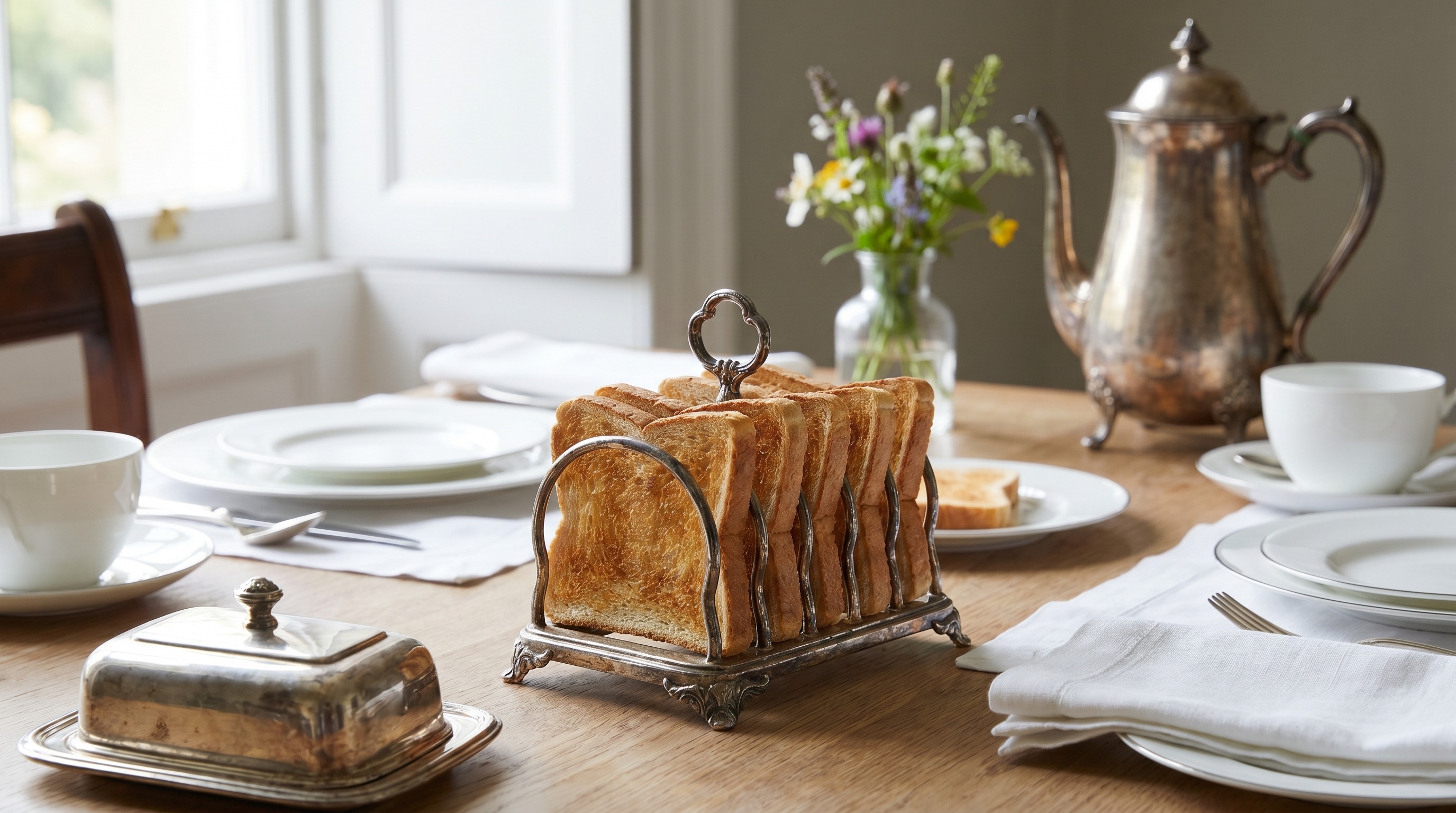
Sits with the rest of the breakfast and table silver. See your cruet & condiment sets guide. Related small silver: wine labels. Sell via sell your silver.
Sterling or plate?
Sterling silver
- Lion passant: the English sterling mark
- A town mark, a date letter and a maker's mark
- Valued as antique silver: maker, date, form and condition
Silver plate (EPNS)
- Stamped EPNS or A1, with no lion passant or date letter.
- The marks often imitate hallmarks, so check each one
- Worth far less: decorative value only
Value Your Toast Rack
Send photographs of the rack and the marks on the base, and we'll give you an honest, no-obligation valuation.
Strictly by appointment only: no walk-ins at either office.
Send Us Your Toast Rack Photographs
Attach photos of the rack and the marks on the base. We'll respond within one working day.