British silver hallmarks
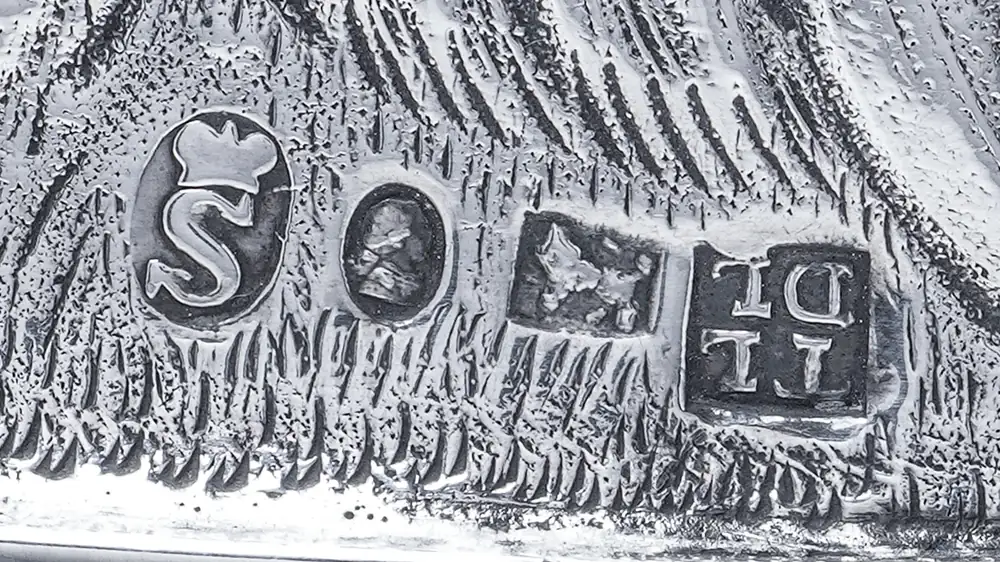
30,538 marks in our databaseA full British hallmark is a set of punches: the maker's mark, a standard mark such as the lion passant, the town mark of the assay office and a date letter that changes every year. From 1784 to 1890 the sovereign's head was added to show that duty had been paid.
British silver carries one of the most complete marking systems in the world: a single row of punches can name the maker, prove the standard, identify the assay office and give the year. That is why a British piece can usually be dated to within a year from its marks alone, once the office and the date letter are read together.
How to read British marks
- Standard marks
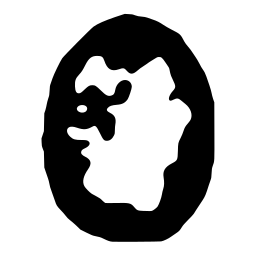
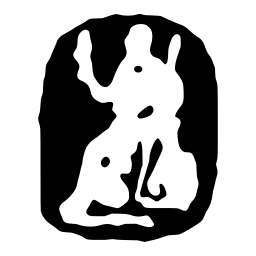
- The lion passant marks sterling silver, 925 parts in 1,000, in England since 1544. Britannia with a lion's head erased marks the higher 958 standard, compulsory from 1697 to 1720. Scotland used the thistle in Edinburgh from 1759 and the lion rampant in Glasgow from 1819.
- Town marks
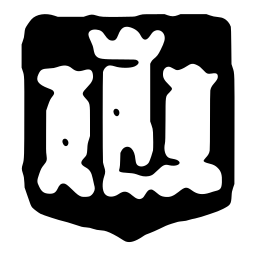
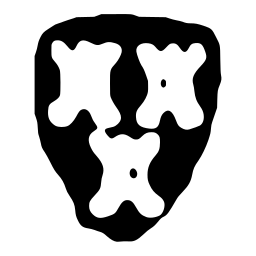
- Each assay office struck its own mark: the leopard's head for London (crowned until 1821), the anchor for Birmingham, the crown for Sheffield (a rose from 1975), the castle for Edinburgh, and the marks of Chester, Exeter, York, Newcastle and Glasgow, all now closed.
- Date letters
- A letter changed every year at each office, in cycles of different typefaces and shields. Since 1975 every British office has used the same letter.
- Duty mark
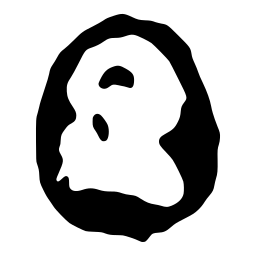
- The sovereign's head in profile shows that duty was paid, from 1784 to 1890.
- Import marks
- From 1904 imported silver was struck with special assay office marks and its standard as a decimal, such as .925.
- Maker's mark
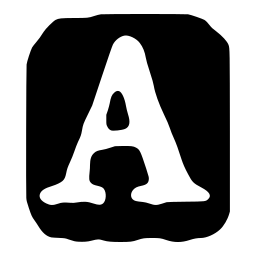
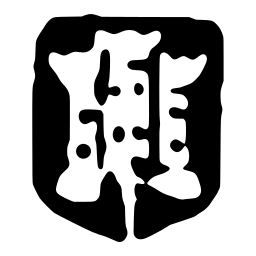
- The initials of the maker or sponsor, compulsory since 1363, in a shaped punch.













A note from our specialists
The mark we see misread most often is the date letter. People find the letter in a chart and stop, but the same letter recurs every twenty years or so in a different typeface and shield. Always read the town mark first, then match the letter's case, typeface and shield to that office's cycle. If the crown and the letter share one oval punch on a small Georgian piece, it is Sheffield, not a foreign imitation.
Faustas Svencionis, Mozeris Fine Antiques
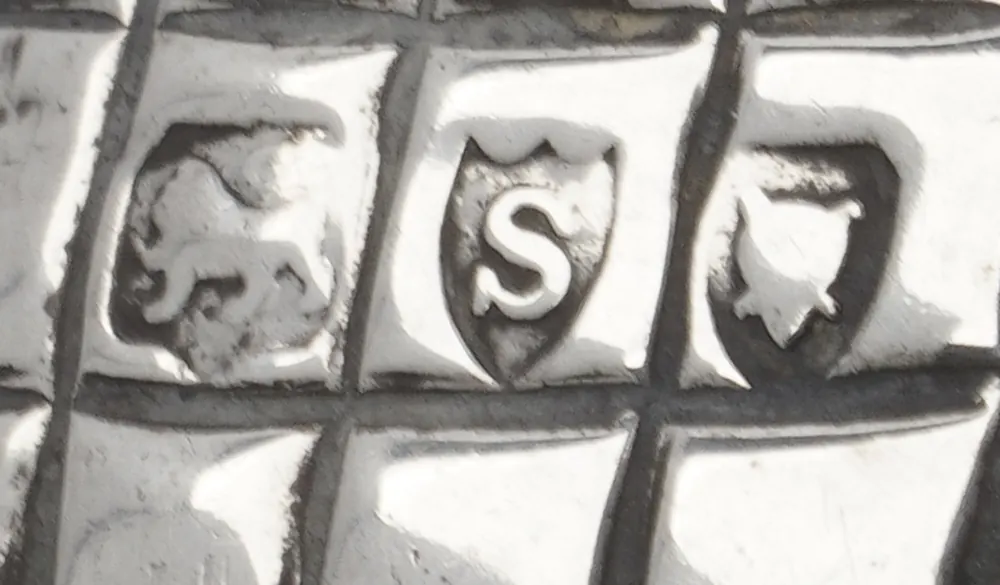
We hold 30,538 British marks for photo matching
Our identifier compares your photo with every British mark we hold, then reads the town, the standard, the date and the maker. Free, with the result on screen and by email.
Records you can browse
Questions
What does the lion passant mean?
It is the English standard mark for sterling silver, 925 parts of silver in 1,000, struck since 1544.
How do I find the year of British silver?
Match the date letter, with its case, typeface and shield shape, to the table of the town mark struck beside it. The date letter filter here shows each office's letters.
Why does my British silver have a king's or queen's head?
That is the duty mark, struck from 1784 to 1890 to show the tax on silver had been paid. The monarch's profile narrows the date before you read the date letter.
What does the anchor mark mean?
The anchor is the town mark of the Birmingham Assay Office, used since it opened in 1773.
Thinking of selling?
Send a few photos of the piece and its marks, and a specialist will value it, free and with no obligation.