Elkington & Co — Complete Silver Guide
A specialist's guide to Elkington & Co — the Birmingham firm that patented electroplating in 1840 and transformed the silver trade. Identify their marks, read the Elkington date-letter system, and tell sterling from electroplate accurately.
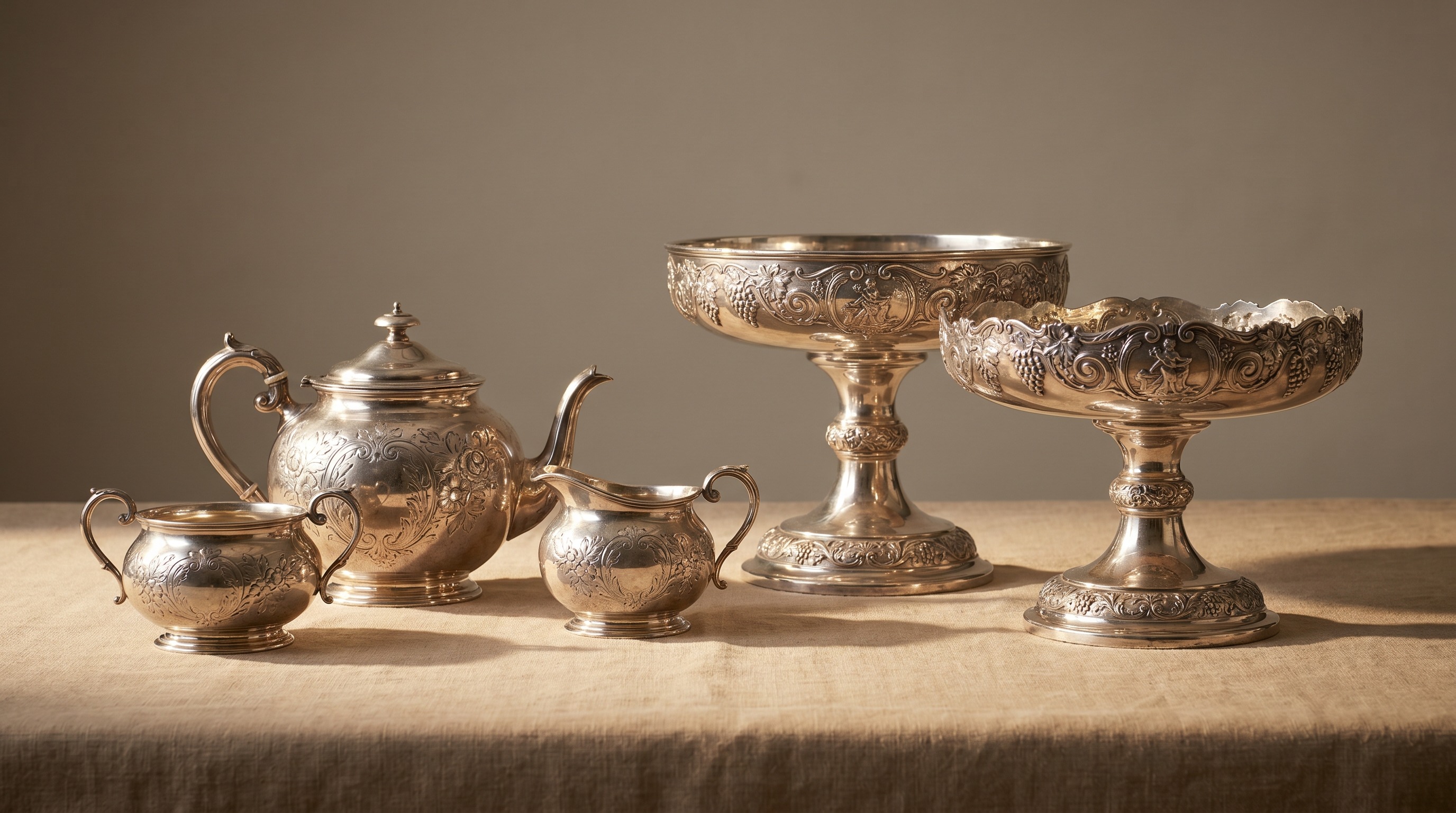 Elkington · Birmingham, electroplate patent 1840
Got Elkington Silver or Plate? We'll Identify and Value It Free
Send photos of the marks — we'll tell you whether it's sterling silver or electroplate and read the Elkington date code for you. Reply within one working day.
Elkington & Co changed the silver trade more than any single workshop. In 1840 the Birmingham firm patented the electroplating process — depositing a layer of pure silver onto a base metal by electric current — and effectively invented the industry of "EPNS" (electroplated nickel silver) that supplied middle-class Victorian dining rooms for a century. Elkington also produced fine sterling silver and spectacular electrotype reproductions of historic masterpieces. Their work is highly collectable, and — unusually for a plater — much of it can be dated to the exact year.
Who Were Elkington & Co?
The firm grew out of the Birmingham business of George Richards Elkington and his cousin Henry Elkington. In 1840 they secured the master patent for electroplating, building on experiments by John Wright and others. The patent gave Elkington control of commercial electroplating for years, and they licensed the process to other manufacturers. The result was a revolution: silver-coloured tableware that looked like solid silver but cost a fraction of the price, made on an industrial scale at their Birmingham works.
Elkington also exploited the related process of electrotyping (electroforming) to produce exact copies of famous antique and Renaissance silver — many made for museums, including the South Kensington (now Victoria & Albert) Museum. Alongside the plate, the firm made genuine sterling silver hallmarked at Birmingham. Few competitors matched Elkington's combination of technical innovation, design ambition and scale.
Elkington's Marks & Date System
| Mark | Meaning | Found on |
|---|---|---|
| E & Co in shields, often with a crown | Elkington & Co maker's mark | electroplate |
| Date letter / number in a small shield | Elkington's own year code | electroplate (dates the piece) |
| EP / EPNS | electroplate / electroplated nickel silver | base-metal plated wares |
| Birmingham anchor + lion passant + date letter | full hallmark | solid sterling silver only |
The crucial distinction: only solid sterling silver carries a full Birmingham hallmark (anchor, lion passant, date letter). Electroplate carries Elkington's own maker's marks and a separate firm date code, but no lion passant. Elkington was one of the few platers to date-mark systematically, so a marked piece of Elkington plate can usually be dated to the exact year — a real advantage for collectors.
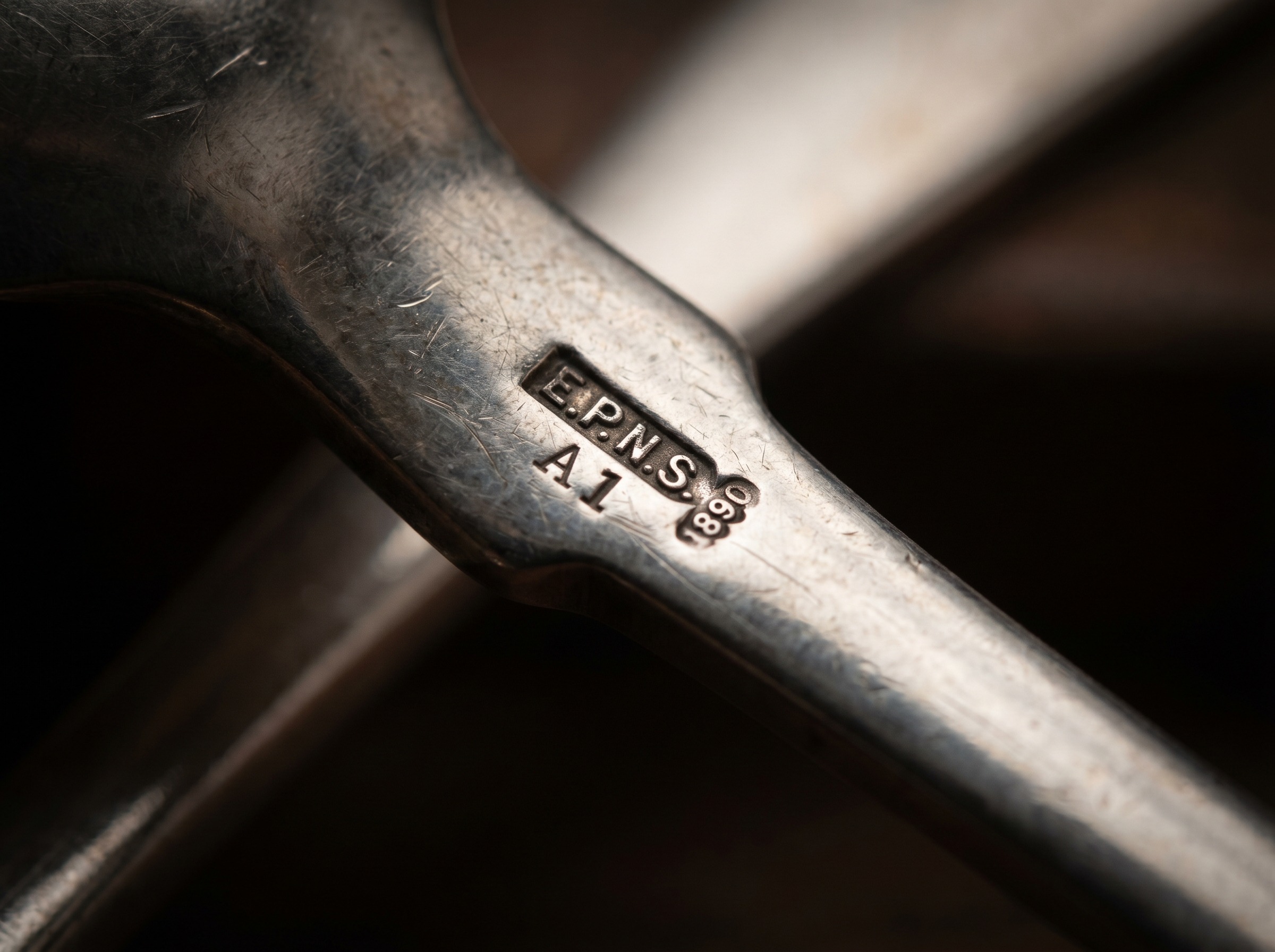
Elkington's maker's mark and date code — the firm's year system lets plate be dated precisely.
The Elkington Range
Elkington's output spanned three distinct categories:
- Electroplate (EPNS) tableware — tea and coffee services, trays, entrée dishes, candlesticks, cruets, flatware. The bulk of surviving Elkington.
- Electrotype reproductions — exact copies of Renaissance and antique masterpieces, many for museums; technically extraordinary and collected in their own right.
- Solid sterling silver — hallmarked Birmingham, including presentation and exhibition pieces of high quality.
- Art and exhibition pieces — Elkington showed ambitious work at the great 19th-century international exhibitions, sometimes in champlevé enamel and damascened steel.
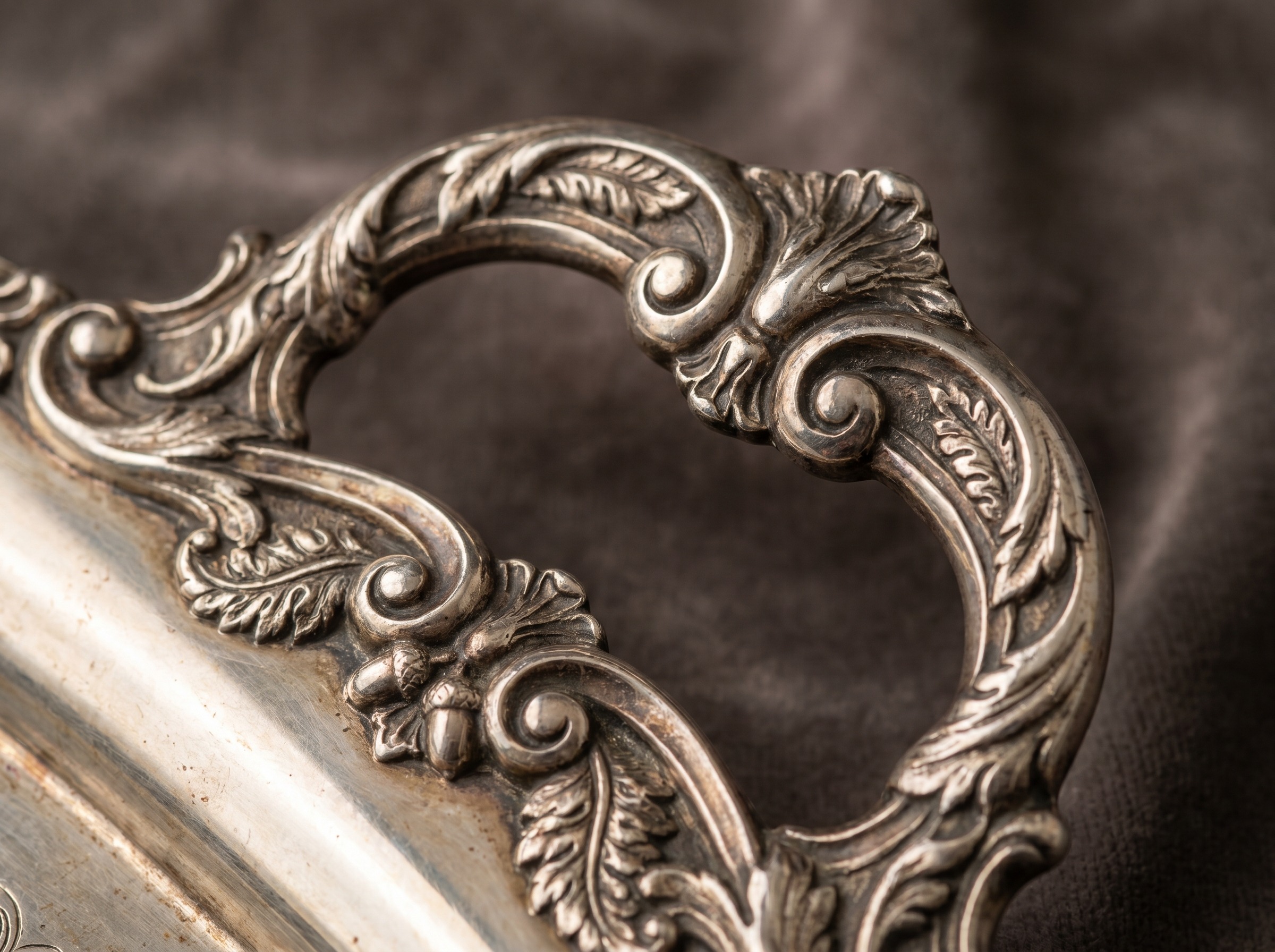
Crisp electroformed ornament — the technical precision that made Elkington's reputation.
What Elkington Is Worth
- Electroplate flatware / small wares: £20–£150.
- Electroplate tea service: £80–£400.
- Electroplate tray or entrée dishes: £100–£500.
- Fine exhibition-quality electroplate: £300–£2,000+.
- Electrotype reproduction (museum-quality): £500–£5,000+ depending on subject.
- Solid sterling silver, hallmarked: valued on weight plus quality — £200–£3,000+.
- Important sterling or enamelled exhibition pieces: £3,000–£20,000+.
Most Elkington is electroplate, valued on design, condition and rarity — not metal content, because the silver layer is microns thick. Solid sterling Elkington is valued like other hallmarked Victorian silver. The exception is the great electrotypes and exhibition pieces, which can be very valuable indeed.
Pitfalls
- "It's marked silver" — usually it isn't — Elkington's crown and E·&·Co marks look official but indicate electroplate. The lion passant is the only proof of solid silver.
- Worn plate — heavily worn EPNS with copper or nickel showing through is hard to sell and uneconomic to re-plate. Crisp, unworn plate is worth more.
- Re-plated pieces — modern re-plating can disguise wear but is generally disclosed and reduces originality.
- Confusing the date code — Elkington's year letters/numbers are not the same as assay date letters; they need the Elkington reference table to decode.
Got Elkington Silver or Plate to Sell?
Active buyer of Elkington solid sterling silver and the best Elkington electroplate, electrotypes and exhibition pieces. By appointment in Mayfair or by free insured nationwide courier. Same-day payment, fair offers for genuine Elkington pieces.
- Send photos of your piece and its marks via our online valuation form. Include a clear shot of the maker's mark and any date code.
- We email an instant indicative price (usually within one working day) and tell you whether it's sterling or plate.
- Visit our Mayfair showroom by appointment, or we book a free insured collection.
- Your piece is independently verified at our office.
- You're paid by same-day bank transfer once you accept our offer.
All courier collections insured up to £25,000 per parcel. Higher-value pieces collected by specialist secure courier at no cost.
Related Reading
Frequently Asked Questions
Is my Elkington piece solid silver or electroplate?
Check for a lion passant. A full Birmingham hallmark (anchor, lion passant, date letter) means solid sterling. Elkington's crown and E·&·Co marks without a lion passant indicate electroplate.
Can Elkington plate be dated?
Yes. Elkington was one of the few platers to use a systematic date code — a letter or number in a small shield — so most marked Elkington electroplate can be dated to the exact year using the Elkington reference table.
Did Elkington invent electroplating?
Elkington patented the commercial electroplating process in 1840, building on earlier experiments. The patent gave them control of the new industry and made EPNS tableware affordable across Victorian Britain.
Is Elkington electroplate worth anything?
It's valued on design, condition and rarity rather than metal content, since the silver layer is very thin. Crisp services and trays sell modestly; electrotypes and exhibition pieces can be valuable.
Will you tell me what my Elkington is worth?
Yes — free, no obligation. Email info@mozerisfineantiques.com with photos of the marks and the piece.
⚠️ Strictly by appointment only — no walk-ins at either location.
Antique Silver We Specialise In
Click any category for our specialist buying guide — then send photos for a free valuation. We also have a full Sell Your Silver overview.