
Sell Your Silver Salver
or Silver Tray
Georgian and Victorian silver salvers, waiters and presentation trays bought at genuine collector prices. We assess every piece on its period, maker and quality — not just the weight of silver it contains.
Request Your Free Valuation
Send us photos of your salver — including the hallmarks on the reverse — and we'll provide an honest, no-obligation assessment.
⚠️ Strictly by appointment only — no walk-ins at either showroom.
What Makes a Silver Salver Genuinely Valuable
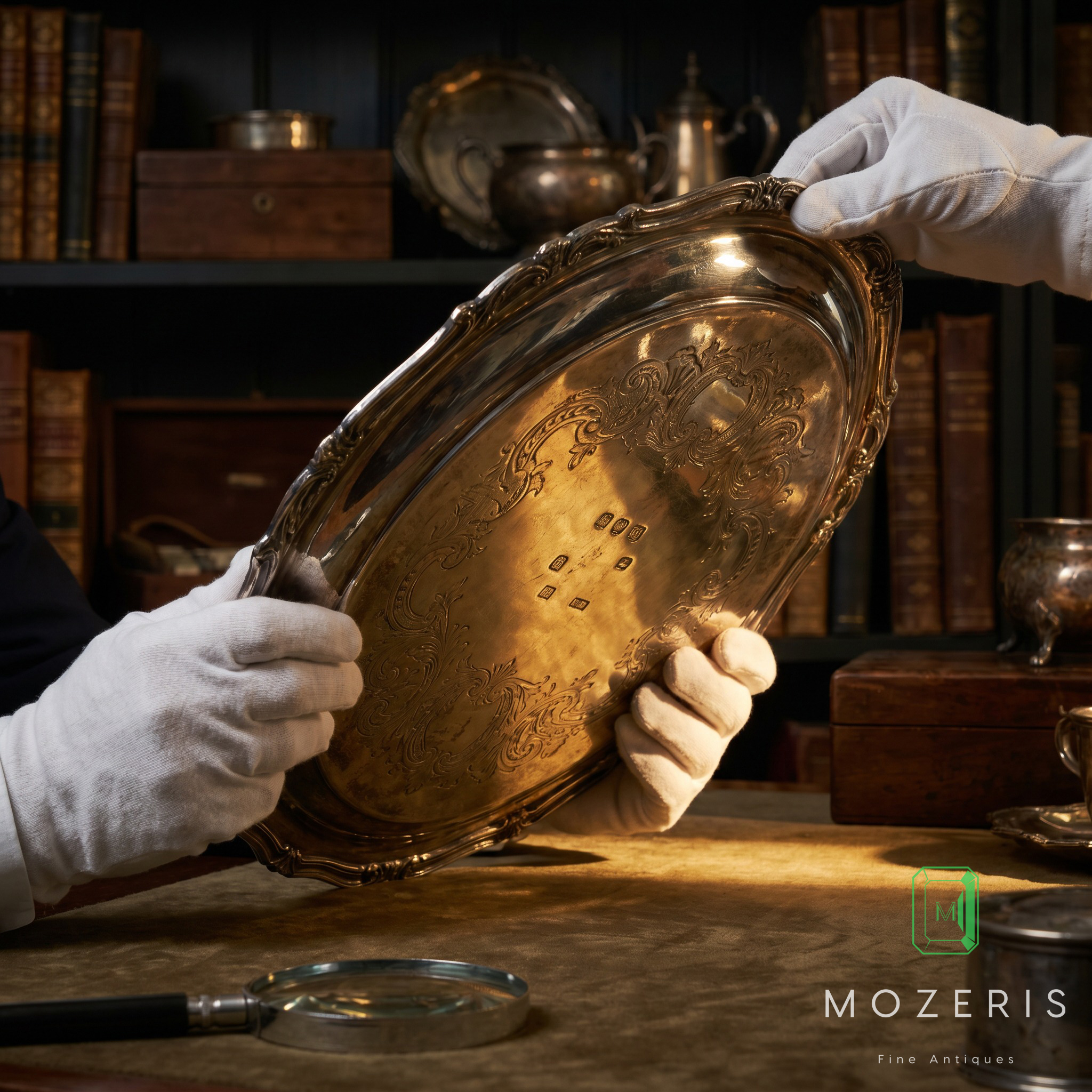
A silver salver is one of the most underappreciated pieces of English domestic silver. To a scrap dealer it is a weight of metal. To a specialist — or to a collector of Georgian and Victorian silver — a fine salver by a named London maker is a significant object with real market value.
The best Georgian salvers are among the finest examples of English silversmithing. Large, heavy, with beautifully cast gadrooned or shell-and-scroll borders, fine engraved armorials at the centre, and the marks of the greatest London silversmiths on the reverse — these are pieces that serious collectors compete for at auction.
We buy salvers and waiters of all sizes — from small two-handled waiters to grand circular presentation salvers over eighteen inches across — and we assess each one honestly against current market comparables.
Types of Silver Salver We Buy
We buy silver salvers, waiters and presentation trays from all periods — from early 18th-century waiter to grand Victorian presentation pieces.
Georgian Salvers & Waiters
Pre-1830 silver salvers are consistently the most valuable. Early examples with cast and applied borders — shell-and-scroll, gadrooned or beaded — by makers such as Paul de Lamerie, Paul Storr or Benjamin Smith are among the finest pieces of English silver ever made.
Victorian Presentation Salvers
Large silver salvers engraved with presentation inscriptions — to a retiring officer, a club president, a sporting champion — have a strong following among collectors of Victorian silver and social history. The inscription adds rather than detracts from value.
Armorial Silver Salvers
A salver with a finely engraved armorial — coat of arms, crest and supporters — is considerably more interesting to a collector than a plain equivalent. We actively seek armorial pieces and research the heraldry to identify the original owner family.
Two-Handled Trays
Oval or rectangular silver trays with handles — often part of a tea service — are bought both as standalone pieces and as matching complements to tea sets. Condition of the handles and feet is important. Original fitted case adds significant value.
Named Maker Salvers
Salvers bearing the marks of the great London silversmiths command significant premiums — Paul Storr, Benjamin Smith, Robert Garrard, Hester Bateman, Paul de Lamerie. Even an unmarked salver of fine quality can attract strong interest if the period is right.
Small Waiters
Small circular or square salvers — called waiters — used for presenting cards, glasses or letters. Georgian examples in good condition with original pad feet and clear hallmarks are consistently collected and bought at prices well above melt value.
How to Sell Your Silver Salver
A straightforward process from first enquiry to payment — no obligation at any stage.
Photograph Front & Back
Take a clear overhead photo of the salver face-up showing the full surface, border and any armorial. Then photograph the reverse clearly showing all hallmarks. Include a coin or ruler for scale if possible.
Submit Your Photos
Use the form above or email directly. We'll identify the maker, date and assess the quality against current auction comparables. You'll receive an honest estimate — not a reflexive low offer.
Visit Either Showroom
Bring your salver to our Mayfair or Braintree showroom by appointment. We'll examine it in person, confirm the hallmarks and make you a firm offer on the day. No pressure, no obligation.
Payment on Agreement
Accept our offer and we pay immediately by bank transfer. If you choose not to sell, your piece is returned at no charge. The valuation costs you nothing either way.
What Determines the Value of a Silver Salver?
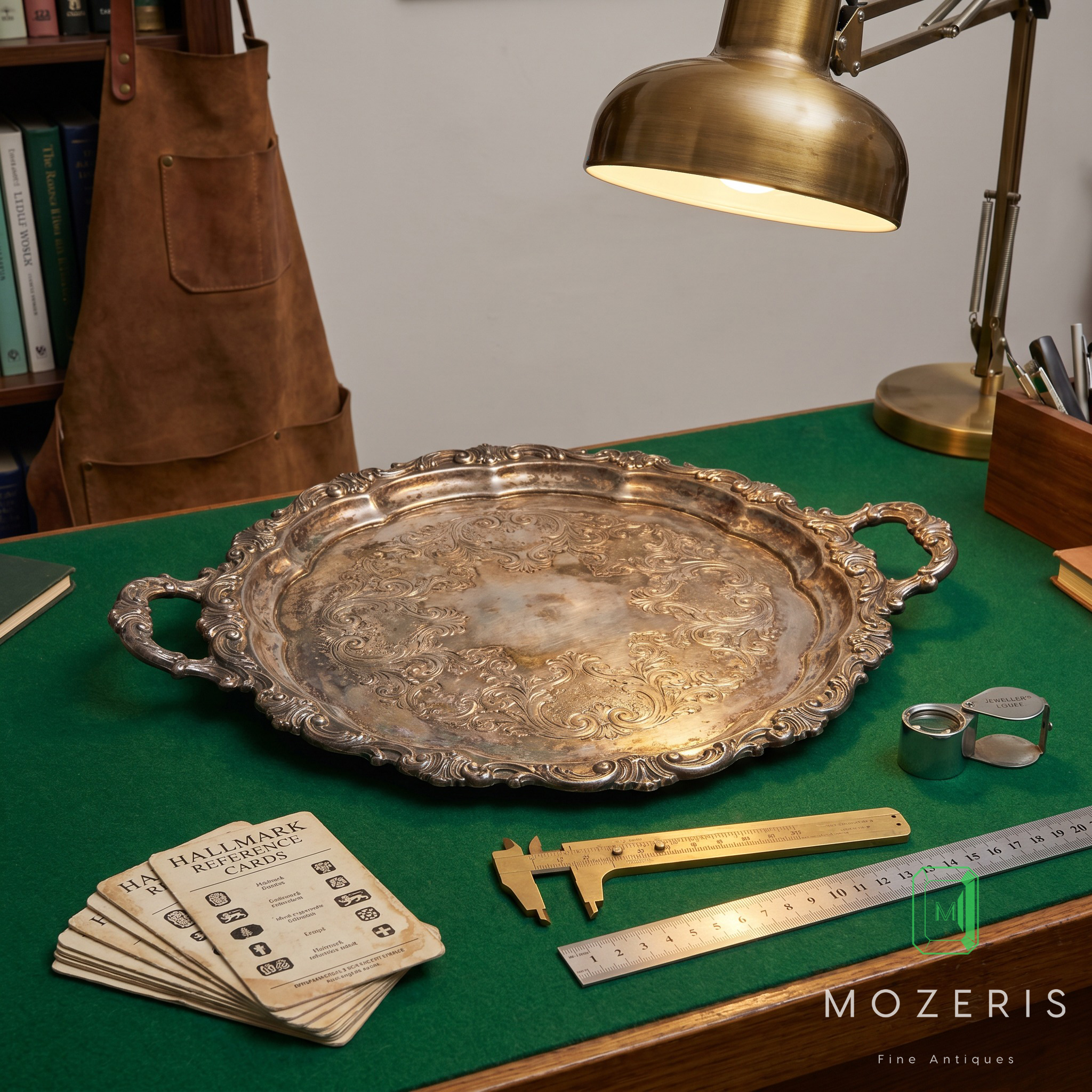
Six factors that make the biggest difference when we assess a silver salver or waiter.
The Maker's Mark
The single biggest driver of value after period. A salver by Paul Storr is worth dramatically more than an equivalent anonymous piece. We research every maker's mark thoroughly.
Period & Date Letter
Georgian salvers (pre-1830) consistently achieve the strongest prices. The date letter tells us the exact year — and some years are more desirable than others based on the quality of that period's output.
Weight & Size
Larger, heavier salvers are worth more — both in silver content and in collector appeal. A grand 18-inch salver with a heavy cast border is a far more impressive object than a small 8-inch waiter.
Armorial Engraving
A fine heraldic engraving adds historical interest, provenance and collector value. We research armorials to identify the original family — which can significantly enhance the story and value of the piece.
Border Quality
Cast and applied borders — shell-and-scroll, gadrooned, beaded or acanthus — indicate quality. Flat chased or engraved borders are secondary. The weight and quality of the casting tells you about the original commission.
Condition of the Surface
Surface scratches and minor wear are expected and acceptable. Later polishing that has removed engraving or hallmarks, significant denting or replaced feet all reduce value. We assess condition carefully and honestly.

Armorial Silver: Why the Engraving Matters
A coat of arms engraved on a silver salver is far more than decoration. It records ownership — and through the arms, we can often trace the exact family who commissioned the piece, the approximate date it was made and even the silversmith who engraved it.
Collectors of armorial silver actively seek pieces with clear, well-executed heraldic engraving. A grand Georgian salver with the full achievement of arms — shield, helm, crest, supporters and motto — is a significantly more desirable object than an equivalent plain piece.
We research every armorial we encounter, cross-referencing Burke's Peerage, the College of Arms records and specialist heraldic databases. If we can identify the family, we share that information with you — it forms part of the provenance that supports the value.
If your salver has been engraved with a later inscription or a private presentation text rather than heraldry, we assess this separately — presentation inscriptions from important institutions or events can also add rather than detract from value.
Frequently Asked Questions
Common questions about selling antique silver salvers and trays.
What is the difference between a salver and a waiter?
A salver is a flat silver tray on three or four feet, used for presenting items. A waiter is simply a smaller version — typically under ten inches — used for presenting cards, glasses or letters. Both are collected and both are bought by us. The terms are often used interchangeably.
My salver has a family crest engraved on it. Does that affect the value?
A fine heraldic engraving typically enhances value rather than reducing it. We research every armorial to identify the original family, which adds provenance. Later-added private inscriptions are assessed individually — they may be neutral or occasionally positive depending on the event or institution commemorated.
The feet on my salver have been replaced. Does that significantly reduce the value?
Replaced feet do reduce value, but rarely eliminate it. The extent depends on when the feet were replaced, how well it was done and how significant the piece is otherwise. Send us photos and we'll give you an honest view.
Can I send a large salver by post?
For a piece of significant value we strongly recommend an in-person appointment rather than postal submission. We can arrange FedEx home collection for clients who cannot travel. For very large or particularly fine pieces, we may be able to visit you — please call to discuss.
Do you buy silver-plated salvers?
Occasionally, for exceptional or early Old Sheffield Plate examples. However, the market for silver-plated salvers is very limited compared to sterling silver. Contact us with photos and we'll give you an honest assessment of whether your piece is likely to interest us.
Send Us Your Photos
Overhead shot of the surface and close-ups of the hallmarks on the reverse — that's all we need to get started.