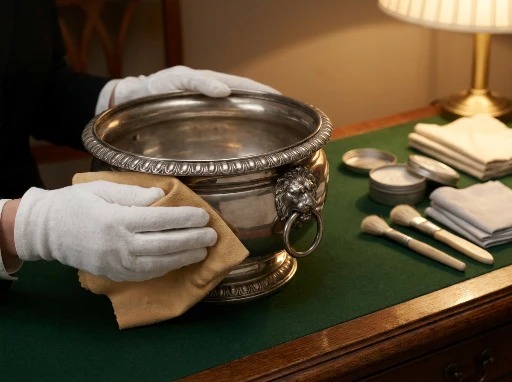
How to Clean Antique Silver Without Damaging It
Cleaning silver is one of those jobs where good intentions cause real harm. Here is what actually works, what destroys patina and value, and how to know when to stop.
For most antique silver, start with the gentlest option: warm soapy water and a soft cloth. Polish only when truly needed, using impregnated wadding or a silver cream, and stop the moment the piece looks clean. Avoid dip polishes, abrasives and the dishwasher, and never strip the dark patina from recessed decoration, because that patina is part of the value.
Antique silver rewards a careful hand. Whether you have a Georgian tea service, a set of Victorian flatware or a single piece passed down through the family, the way you clean it matters. It affects appearance, certainly, but it also affects character and value.
Over-cleaning is far more common than under-cleaning. Each unnecessary polish removes a thin layer of metal that can never be put back, and aggressive treatment can flatten fine engraving for good. This guide covers the methods that work, the ones to avoid completely, and the single judgement that protects a piece: knowing when to put the cloth down.
If your interest extends to long-term storage and display, our companion guide on how to care for antique silver covers conservation in more depth. This page focuses on the cleaning itself.
Key takeaways
- Tarnish is silver sulphide, a chemical reaction with the air, not dirt. That is why some methods work and others corrode.
- Warm soapy water clears light tarnish and grime. Reach for polish only when washing is not enough.
- Use impregnated wadding or a silver cream sparingly. Keep liquid dip polishes away from anything antique or decorative.
- Patina in recessed areas is intentional and adds value. Buff it away and you lower the worth of a piece, so check first with our guide on how to tell if silver is real.
- Plated items wear through under polishing. If you are unsure what you have, see EPNS vs sterling silver before you start, or ask us to value it.
What Tarnish Is and What Causes It
Tarnish is not dirt. It is silver sulphide, a compound that forms when silver reacts with sulphur in the air. The process is natural and affects all silver in time. Atmospheric pollution, rubber, wool, certain foods (eggs in particular) and some woods and fabrics all speed it up.
The dull, yellowish or brownish film you see on neglected pieces is that sulphide layer building on the surface. In small amounts it simply looks dull. Left for years it can darken to a deep, almost black coating. On genuinely old pieces, a degree of darkening in the recesses, the patina, is both natural and desirable.
Understanding that tarnish is a chemical reaction rather than surface grime matters, because it explains why gentle methods restore a piece while harsh ones strip and corrode it.
Start Simple: Warm Soapy Water
For light, recent tarnish, or simply to lift dust, fingerprints and surface residue, warm water with a little washing-up liquid is often all you need. Use a soft cloth or a natural-bristle brush; an old toothbrush works well for chased or engraved areas. Rinse thoroughly in clean warm water, then dry at once and completely with a soft, lint-free cloth.
This sounds almost too straightforward, yet many people reach for an abrasive polish when gentle washing would have done the job. Remember that each unnecessary polish takes away a sliver of silver you cannot replace.
Always dry silver fully after washing. Water left to evaporate can leave mineral deposits, and moisture trapped in hollow or joined parts causes problems over the long term.
Choosing the Right Polish
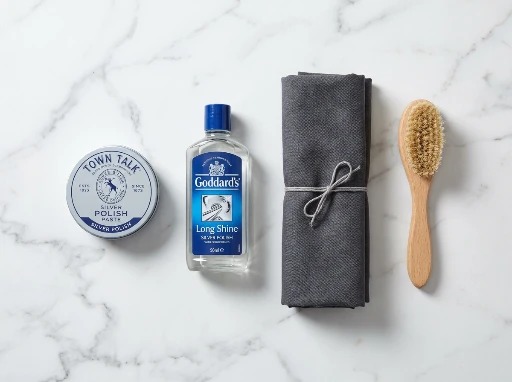
When warm water is not enough and polishing is genuinely necessary, choose your product with care. There are three main types of silver polish, and they are not equal.
Impregnated wadding
Products such as Goddard's Silver Polish Wadding or Duraglit are cotton wool soaked with a fine abrasive and cleaning agents. They are effective and reasonably gentle when used sparingly. Tear off a small piece, rub with light, even pressure, then buff off with a clean soft cloth. Widely available and a sensible choice for most solid silver.
Cream and paste polishes
Silver creams such as Town Talk or Goddard's Long Shine give good results and, because they go on as a liquid, they reach into decorative detail more easily than wadding. Apply with a soft cloth, let it haze, then buff off thoroughly. Residue left in crevices and engraving looks unsightly and can be stubborn, so a soft toothbrush helps work it out.
Dip polishes: use with extreme caution
Liquid dips work by chemical immersion: you dip the piece, the tarnish dissolves fast, and the silver emerges bright. On modern, plain sterling they can be convenient. On antique silver, avoid them in almost every case. Dips strip patina indiscriminately, attack gilt interiors (the kind found in sugar bowls and salt cellars) and can ruin oxidised decorative finishes. They also leave no protection behind, so the piece re-tarnishes quickly. If someone recommends a dip for a piece you value, treat that advice with scepticism.
| Method | Best for | Risk to antique silver |
|---|---|---|
| Warm soapy water | Dust, fingerprints, light tarnish | Very low; the safe first choice |
| Impregnated wadding | Most solid silver, moderate tarnish | Low if used sparingly |
| Cream / paste | Detailed, engraved or chased pieces | Low; rinse residue from crevices |
| Liquid dip | Plain modern sterling only | High; strips patina, harms gilt and oxidised finishes |
Not sure if it should be cleaned at all?
Send us a clear photo before you touch it. We handle antique silver every day and will advise at no charge.
The Aluminium Foil Method
You may have seen the suggestion of placing silver in hot water with aluminium foil and bicarbonate of soda. This is an electrochemical reaction: the sulphur in the silver sulphide is drawn to the aluminium, so the tarnish migrates off the silver. It is genuinely effective for heavily tarnished pieces such as cutlery, and it does not abrade the surface the way polishing does.
There are, though, several situations where you must not use this method:
- Gilt or parcel-gilt pieces: the process can strip gold washes from interiors and decorative highlights.
- Oxidised or darkened decorative finishes: much antique silver uses intentional blackening in recesses for contrast, and the foil bath removes it.
- Enamelled silver: any piece with enamel work, whether cloisonné, champlevé or guilloché, should never be submerged.
- Pieces with non-silver components: handles set with ivory, bone, tortoiseshell, mother of pearl or wood should not be immersed.
- Anything where you are unsure of the finish: if in doubt, do not do it.
For plain sterling cutlery that is heavily tarnished, the foil method saves real time and effort. For anything decorative or of significant age, proceed with caution or not at all.
When to Stop Polishing
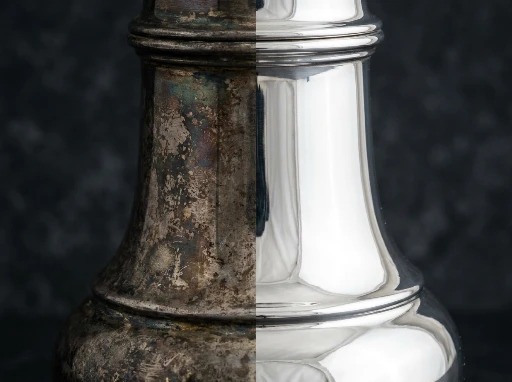
This is the most important point in the guide: antique silver should not look like new silver. The patina that gathers on genuine old pieces, the slight softness to the surface, the gentle darkening in recesses, the lived-in quality of hand-worked metal, is a direct result of age and honest use. It separates a real antique from a modern reproduction, and it carries value.
Polish aggressively or too often and you remove that patina. You also wear away the fine detail of engraving, chasing and casting. A piece polished to a mirror shine every week for thirty years will show noticeably softer detail than one cleaned carefully and rarely. For armorials, crests, bright-cut engraving and fine decorative work, over-polishing is a serious risk.
A useful rule: if a piece looks clean and presentable, stop. The aim is to remove tarnish, not to chase maximum brightness. For display pieces, a light clean once or twice a year is usually enough.
The dark areas are often intentional
Dealers know the disappointment of seeing a fine piece of Georgian silver buffed uniformly bright by someone who thought they were helping. The dark recesses in a chased border, the shadows in a coat of arms, are not dirt. They give the decoration its depth and contrast. Polish them away and you flatten the piece entirely. If you cannot tell whether dark areas are genuine patina and intentional oxidation or simply dirty tarnish, seek advice before cleaning.
What to Avoid Entirely
- The dishwasher: heat, steam, detergent and contact with other metals will damage silver. Never put antique silver in one.
- Bleach or household cleaners: corrosive and damaging to silver surfaces.
- Salt: a common folk remedy, but salt is abrasive and corrosive and should not touch silver.
- Rubber: it accelerates tarnishing dramatically, so avoid rubber gloves, bands and rubber-lined drawers.
- Newspaper: the ink contains sulphur compounds that cause tarnishing.
- Steel wool or abrasive pads: these scratch and destroy the surface.
- Toothpaste: frequently suggested online, it is far too abrasive for antique silver and will scratch it.
When to Call a Professional
There are cases where home cleaning is simply not appropriate, and where attempting it could reduce a piece's value considerably:
- Pieces with enamel work, inlay or mixed materials.
- Items with real corrosion rather than surface tarnish: deep pitting, flaking or structural damage.
- Silver mounted with organic materials such as ivory, tortoiseshell, bone or horn.
- Pieces you suspect are plated rather than solid, where polishing will wear through the plating.
- Anything you think may be particularly valuable or rare.
- Pieces where earlier cleaning has already caused visible damage.
A conservator can treat deeply tarnished or damaged pieces with methods and materials the public cannot buy, and, crucially, they know when to stop.
Be honest with yourself about value, too. If you have an interesting piece you cannot identify, cleaning it before having it assessed is a mistake. Tarnish can help an expert date and authenticate a piece, and once it is gone that evidence goes with it. If you are unsure what you have, read our guide on how to read silver hallmarks, then consider an assessment before you clean.
If a piece has recently come to you through inheritance, our guide to inherited antique silver explains what to do first, including why cleaning should often wait.
Frequently Asked Questions

Faustas has over ten years' experience in antique silver and jewellery, specialising in Georgian, Victorian and Regency pieces. He works with private clients and estates from the Mozeris showrooms in Mayfair and Braintree, Essex.
Unsure Whether to Clean It?
Send us a few photographs, including any hallmarks, and our specialists will tell you honestly whether cleaning is wise and what your piece may be worth. Free valuation, same-day payment, showrooms in Mayfair and Braintree.
Thinking of Selling Antique Silver?
Mozeris Fine Antiques are specialist buyers of antique and sterling silver. Send us photographs — including the hallmarks — for a free, no-obligation valuation. Payment on agreement.
📍 47 Maddox Street, Mayfair · Braintree, Essex · 📞 01376 334 482 · Strictly by appointment