
In this guide (9)
New pieces reach our list first: join the Mozeris list.
If your sovereigns came with other old coins, read which old British coins are worth money. For proof sovereign sets, see our proof coin sets guide. Set in a ring? See the sovereign rings guide before removing the coin. Other gold coins are covered in our gold coins guide.
What makes a gold sovereign valuable?
Every full sovereign holds 7.32 g of fine gold, so its base value follows the gold price. Rarity adds to that: low-mintage dates, branch-mint marks such as Sydney, Melbourne or Perth, and coins in exceptional condition are sought by collectors. Cleaning a sovereign damages its surface and lowers its value.
What makes one sovereign worth more than another: the years and mints collectors want, how to read the mint mark, how condition counts, and how to spot a fake.
By Mozeris Fine Antiques coin desk Updated 2 October 2026 8 min read
Quick answer
How much is a gold sovereign worth?
- Every sovereign is 22ct gold; the date, mint mark, condition and finish decide what it is worth.
- A few key dates are worth far more: a 1920 Sydney sovereign sold for €942,400 in 2021.
- Check the date and the mint letter above it, keep proofs in their cases, and never clean a coin.
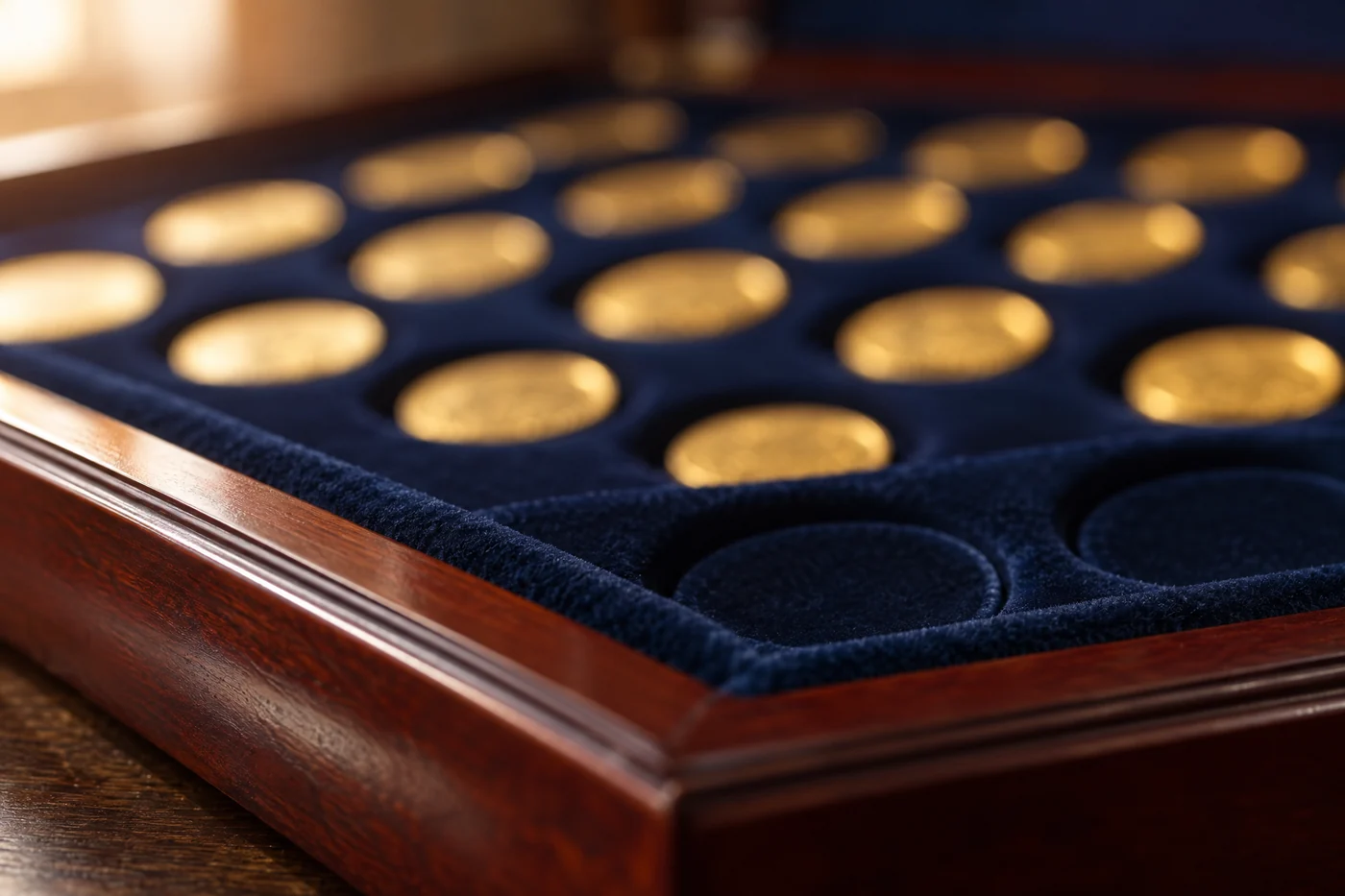
What decides what a gold sovereign is worth
Every sovereign is struck in 22ct gold, 916.7 parts per thousand, so the gold price is always part of its value. What lifts one coin above another is everything else:
- Date
A handful of years were struck in tiny numbers, or melted almost entirely. Those dates are wanted by collectors.
- Mint
A small letter shows a branch mint. It matters most when it matches a scarce date.
- Condition
Crisp detail and original lustre count, above all on a key date.
- Finish and paperwork
A proof in its case, with its certificate, is valued as a collector's piece.
| Full sovereign | Half sovereign | |
|---|---|---|
| Weight | 7.98 g | 3.99 g |
| Diameter | 22.05 mm | 19.30 mm |
| Thickness | 1.52 mm | |
| Gold | 22ct, 916.7 | 22ct, 916.7 |
Specifications: Royal Mint and Royal Mint half sovereign; thickness from MJ Hughes. Useful for checking a coin is genuine.
What is yours worth?
Every coin is different. Send us a few photos of both sides and we will tell you what yours is worth, free and with no obligation. Ask for a free valuation.
Selling gold sovereigns?
Free valuation from your photographs. Paid the same day after inspection.
- Free insured FedEx collection
- Insured to £10,000
- No obligation
Sovereign value by year: the dates worth more
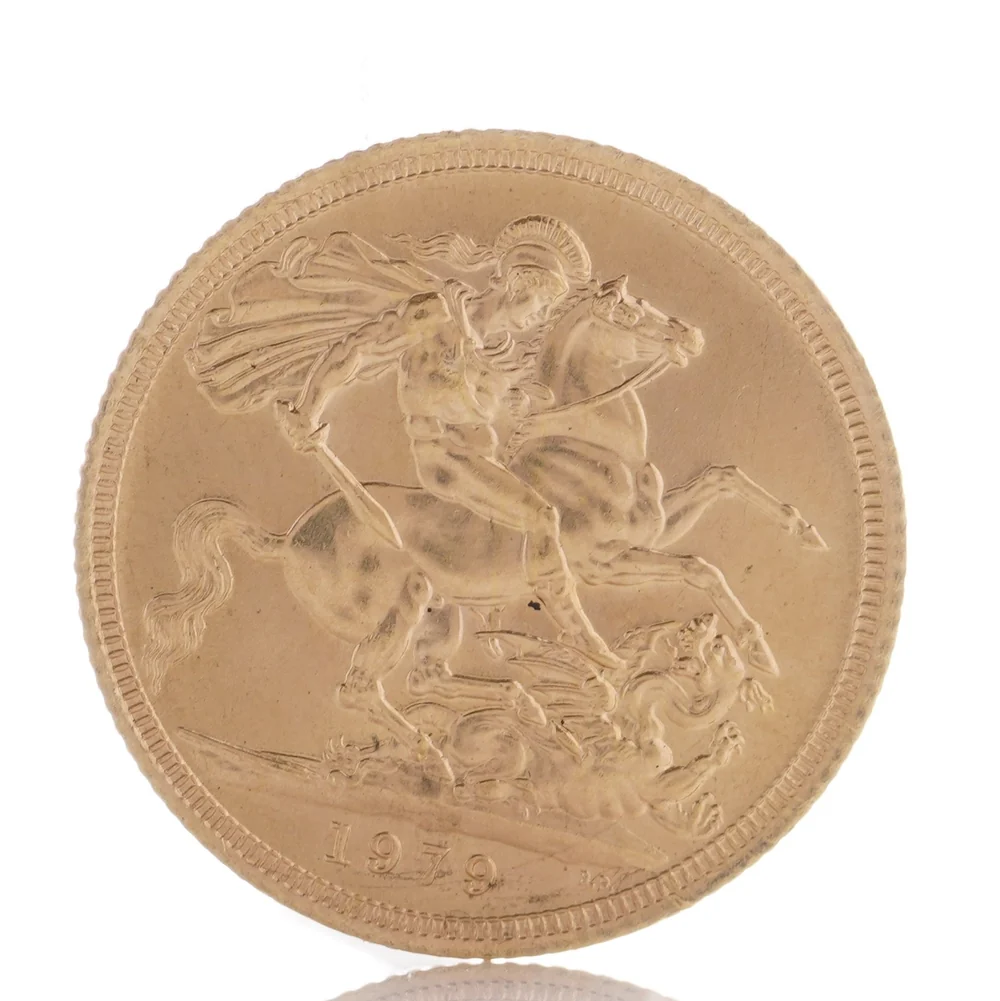
Two centuries of St George
The modern sovereign was first struck in 1817, with Benedetto Pistrucci's St George on the reverse, and it is still made today.
Across two centuries a few dates were struck in tiny numbers, or melted almost entirely. Collectors pay far more for those: the key dates are in the table below.
| Date and mint | Why it is wanted |
|---|---|
| 1819, London | 3,574 struck; the Royal Mint believes about ten survive |
| 1828, London | George IV; listed among the most valuable sovereigns |
| 1841, London | 124,054 struck: the Royal Mint calls it a low-mintage key date. Rare in all grades |
| 1879, London | 20,013 struck, Victoria young head: low mintage for the reign |
| 1916, Ottawa (C) | 6,111 struck but only about 50 known: the rarest Canadian sovereign |
| 1917, London | 1,014,999 struck, then held, exported and largely melted in the 1930s. Rarely seen |
| 1920, Sydney (S) | About four in private hands |
| 1937, Edward VIII | Trial coins only: he abdicated before issue |
| 1953, Elizabeth II | Struck for a few proof sets given to national collections, never issued |
Three sales show what the very top of the market looks like. In 2013 the finest known 1819 sovereign made £186,000 at auction. In January 2020 the Royal Mint sold an Edward VIII sovereign for £1 million, Britain's first million-pound coin. And in June 2021 a 1920 Sydney sovereign sold in Monaco for €942,400, a record for a sovereign at auction.
Sources: Royal Mint, 7 Significant Sovereigns, Royal Mint (1841), Royal Mint press release, January 2020, via CoinsWeekly, Drake Sterling (1819 and 1920 Sydney), Ottawa Mint sovereign and the Heritage catalogue note on the 1917. Checked October 2026. Prices are past sales, not offers.
Dates that never existed
No sovereigns were struck with any date from 1933 to 1956 except the 1937 and 1953 coins above. A sovereign dated 1950 is not genuine. The one quirk: the Royal Mint struck coins dated 1925 again in 1949 to 1951, goldsovereigns.co.uk notes, and those are real.
Find out what your sovereign is worth
Which sovereign do you have?
Four kinds of sovereign, each valued a little differently. Every coin shown is from our own collection.
An everyday date
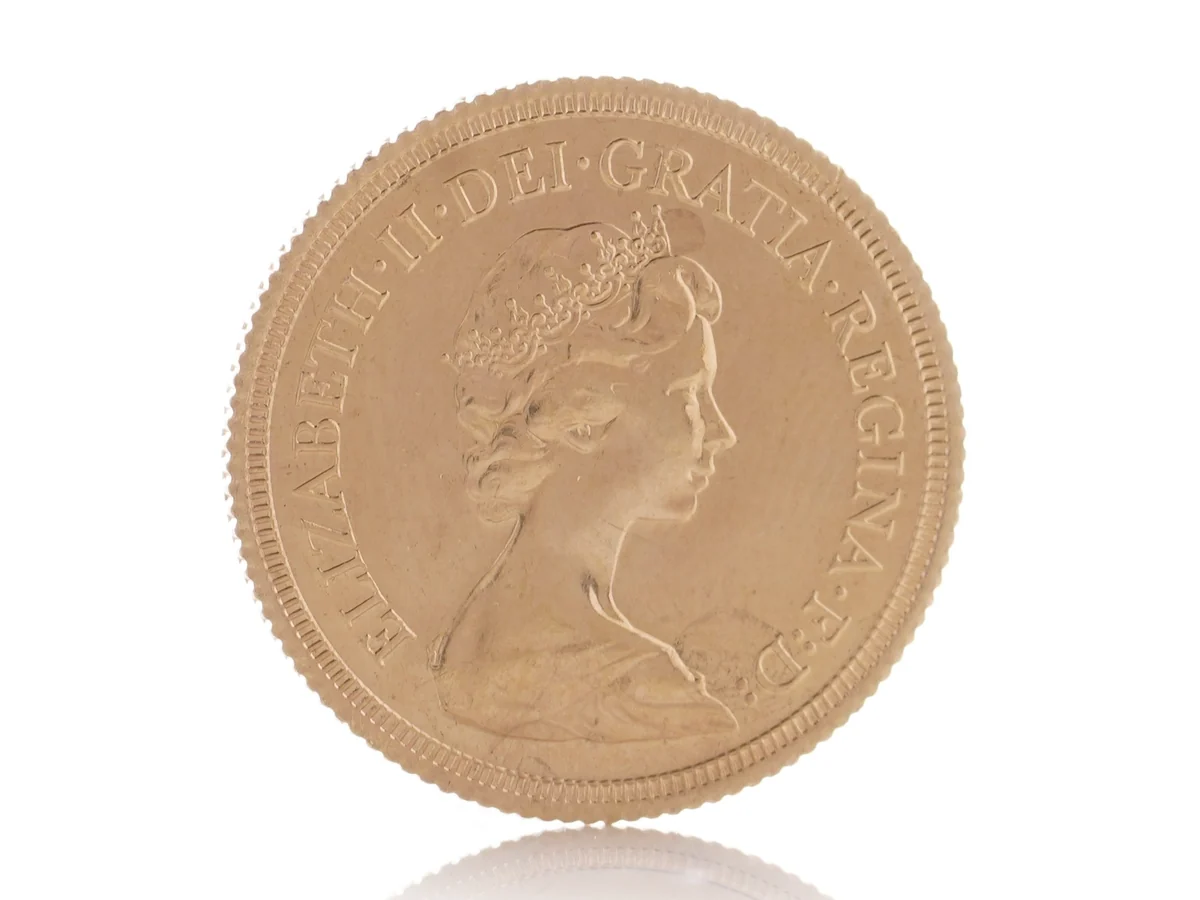
Most sovereigns you will find were struck in their millions: the Jubilee and Old Head Victoria coins, Edward VII, nearly all George V dates, the Elizabeth II coins of 1957 to 1968, and the annual coins from 1974. For these, the gold price and the condition decide the value.
A half sovereign
Struck in the same 22ct gold, a half sovereign holds exactly half the gold of a full one. It measures 19.30 mm across, against 22.05 mm for the full coin, and the same rules apply: date, mint, condition and finish decide whether it is worth more.
A proof in its case
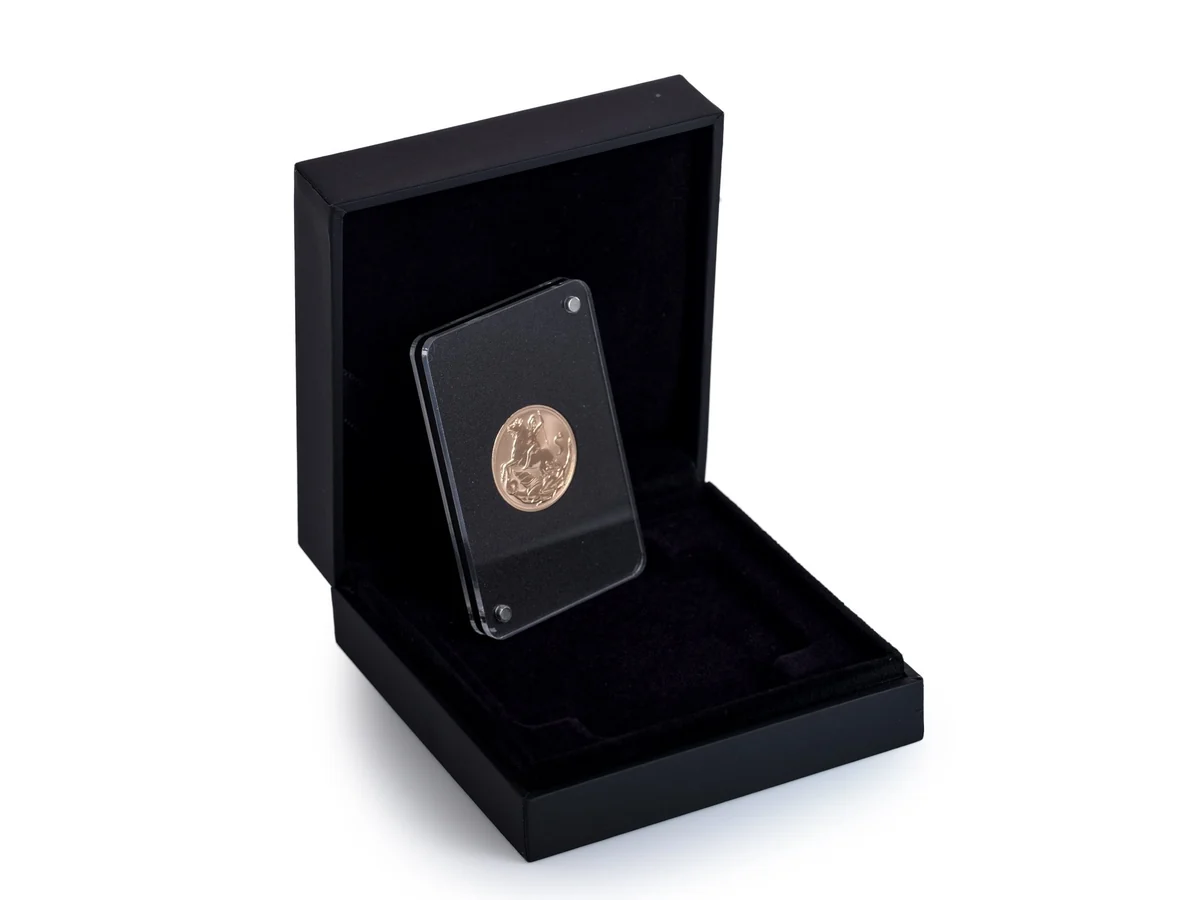
Bullion sovereigns are struck for investors, and circulated coins have been through many hands. Proofs are struck slowly from polished dies and sold in cases with a certificate stating the mintage.
They are valued as collectors' pieces, so the case, the certificate and the mintage all count. A proof without its paperwork is harder to sell.
A Gibraltar issue
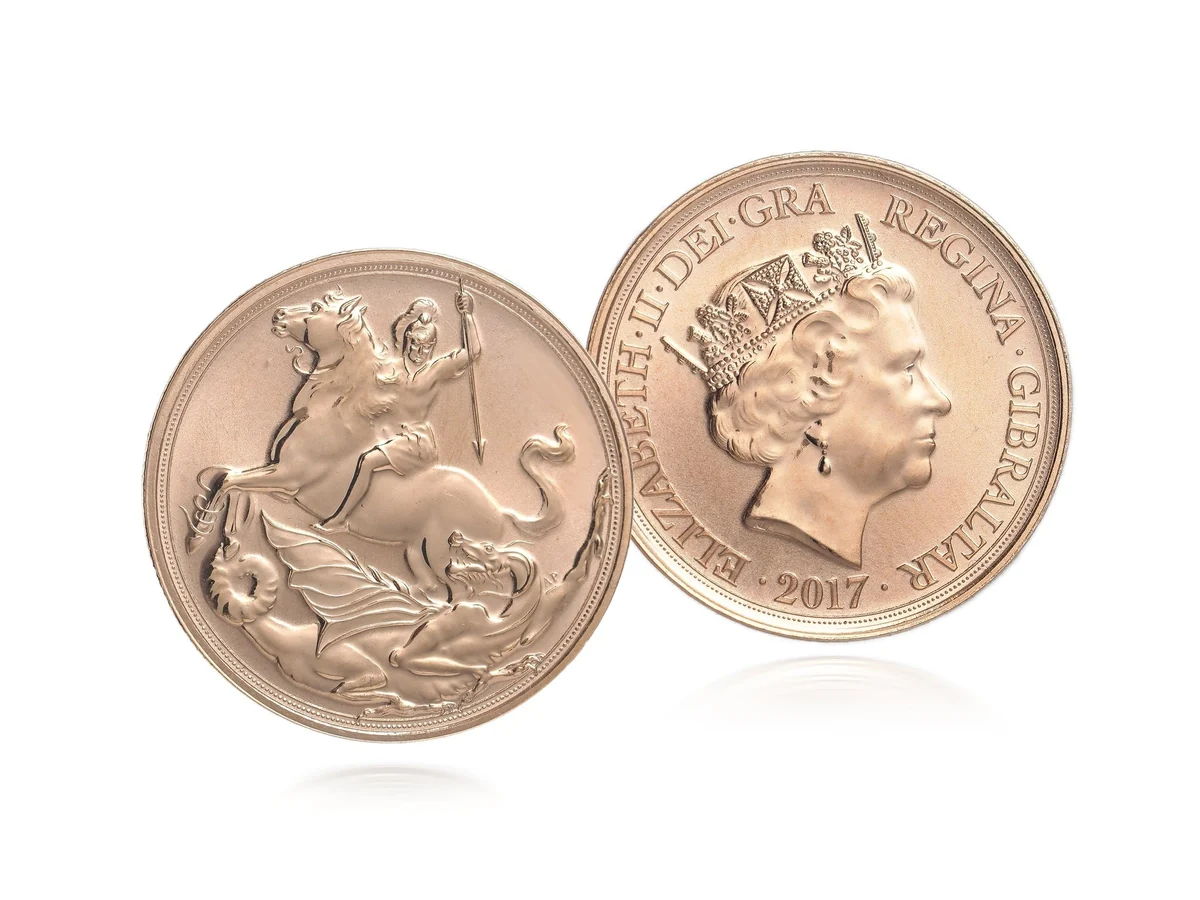
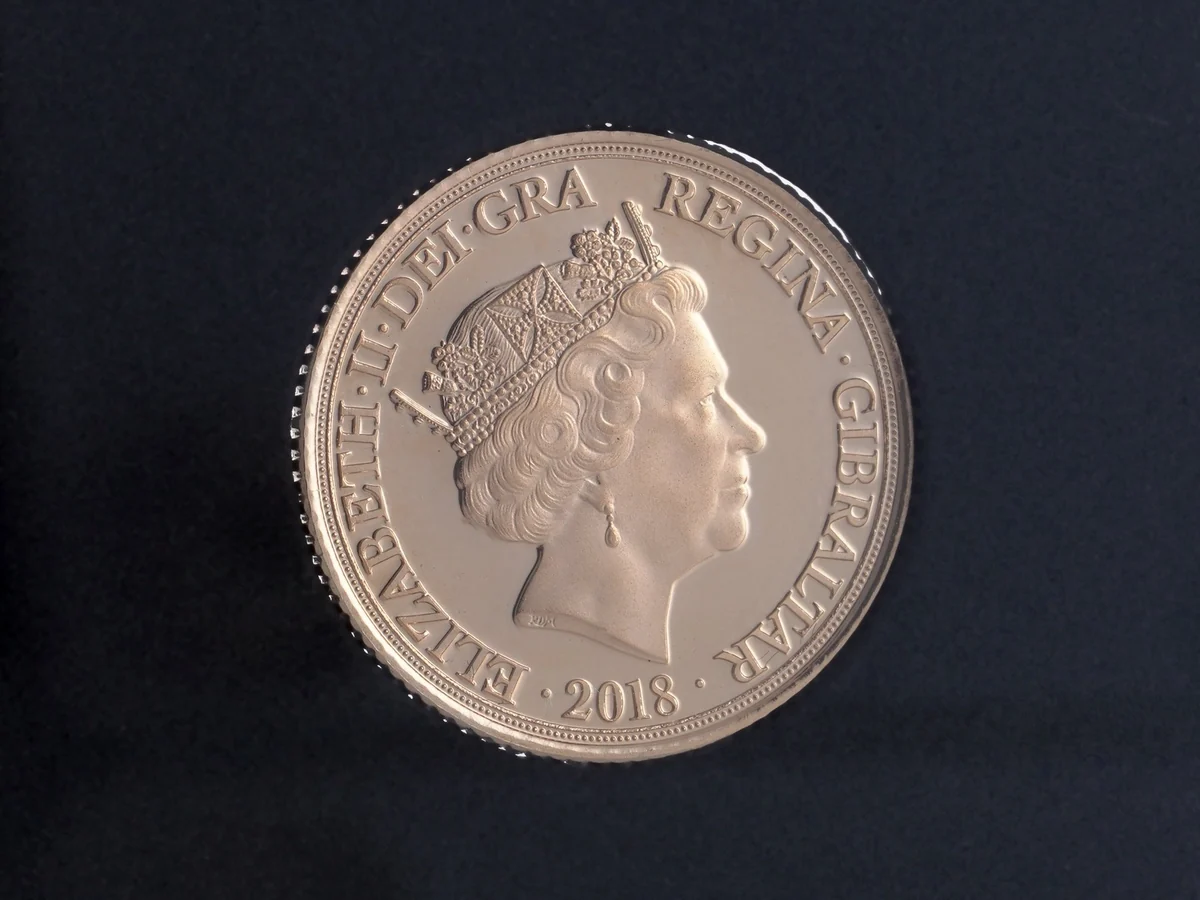
Look at the legend on the portrait side. Coins ending GIBRALTAR were issued for Gibraltar, many of them sold by the London Mint Office. They are struck in the same 22ct gold to the sovereign weight, but they are not Royal Mint sovereigns and are valued on their own merits.
On tax, the Royal Mint states that its gold bullion coins are exempt from VAT and Capital Gains Tax. Read do you pay tax when you sell gold in the UK for how that works, and how much gold you can sell without ID.
Mint mark and condition
How to find the mint mark
Sovereigns were struck in London and at branch mints across the Empire. London coins carry no mint mark; branch coins carry a small letter. Under a x10 loupe it takes seconds to find once you know where to look.
| Mark | Mint | Sovereigns struck |
|---|---|---|
| None | London (Royal Mint) | 1817 onwards |
| S | Sydney | 1871 to 1926 (its own Sydney Mint design from 1855 to 1870) |
| M | Melbourne | 1872 to 1931 |
| P | Perth | 1899 to 1931 |
| C | Ottawa | 1908 to 1919 |
| I | Bombay | 1918 only |
| SA | Pretoria | 1923 to 1932 |
Sources: goldsovereigns.co.uk, mints and mint marks and Royal Mint.
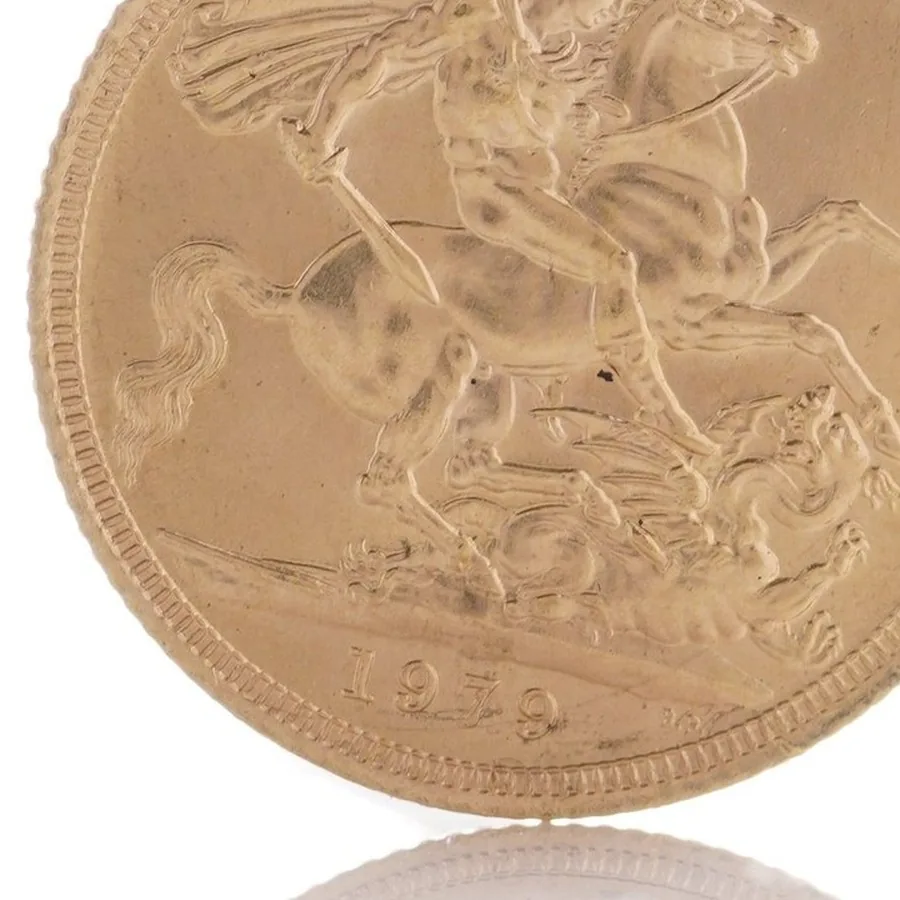
Where to look for the letter
- St George reverse, 1887 to 1932 (Jubilee and Old Head Victoria, Edward VII, George V): on the ground, above the centre of the date.
- Shield reverse (Victoria, Sydney and Melbourne): below the wreath, above the small rose.
- Young head with St George: on the portrait side, under the head.
No letter means London. The small initials to the right of the date are Pistrucci's, the designer's: they are on every St George sovereign and are not a mint mark.
A branch mint letter on its own does not make a coin rare: most Sydney, Melbourne and Perth dates are as common as London ones. It matters when it matches a key date, such as 1916 C or 1920 S.
Condition: how the grade changes the price
For a key date, condition can multiply the value; for an everyday date it adds a little. UK dealers describe wear with these grades:
| Grade | What you see |
|---|---|
| Fine (F) | Heavy wear: St George's muscles and the hair are flat, the legend is clear |
| Very Fine (VF) | Moderate wear on the high points; most detail visible |
| Extremely Fine (EF) | Light wear on the highest points only; much of the original lustre |
| Uncirculated (UNC or BU) | No wear at all; bag marks from storage are normal |
| Proof | A separate finish, not a grade: mirror fields and frosted design, struck for collectors |

Before you sell: never clean a coin
Never clean, polish or dip a sovereign. Cleaning leaves fine hairlines that any buyer sees, and it can turn a collectable coin back into gold value.
Graded coins sealed in plastic slabs by PCGS or NGC carry a number from the American 70-point scale, such as MS63. Keep slabbed coins sealed.
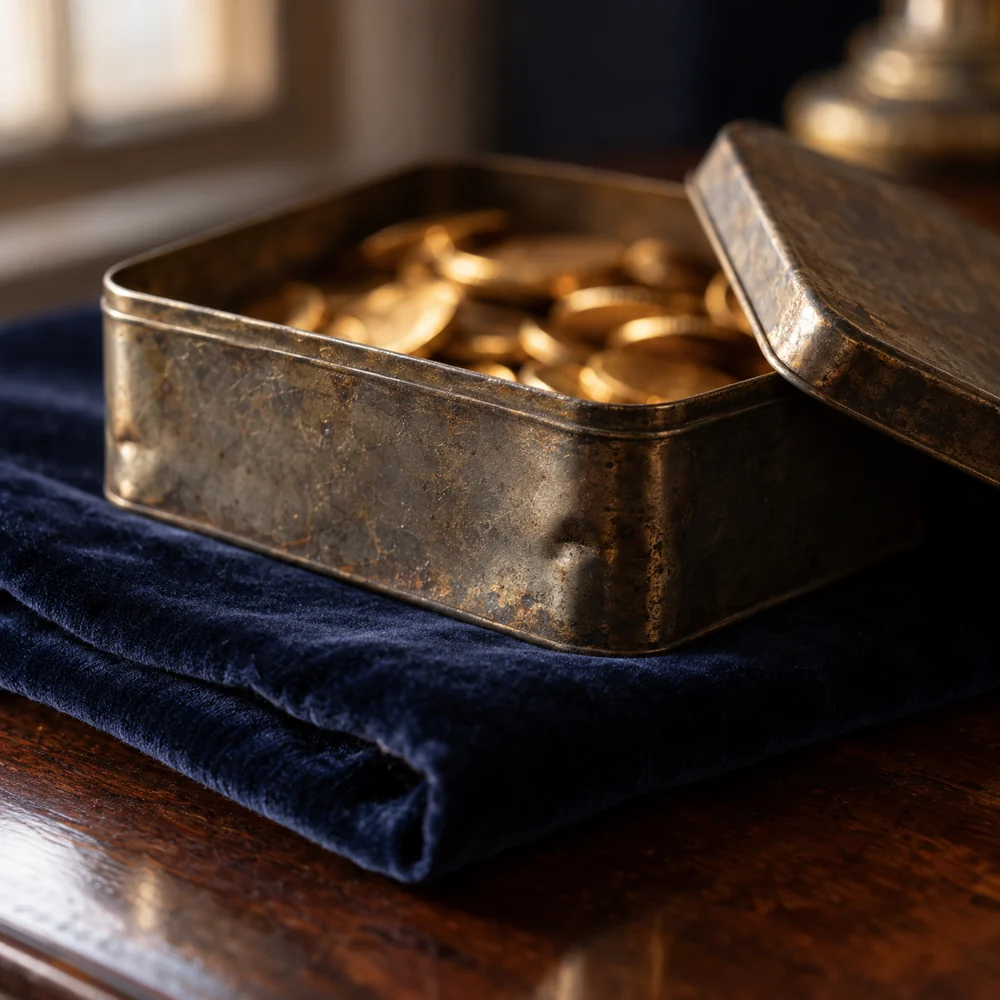
Have a tin of sovereigns? Send photos of both sides of each coin. We tell you which, if any, are worth more than gold.
How to spot a fake sovereign
Sovereigns have been forged for as long as they have existed, and not only in base metal. After Britain stopped making them, clandestine mints in Syria, Italy and Switzerland struck copies for the Middle East, NGC records. When Britain sued, foreign courts asked what law was broken by copying a coin Britain no longer made. Part of the answer was to make sovereigns again: more than 45 million were struck from 1957 to 1968.
| Check | Genuine | Warning sign |
|---|---|---|
| Weight | 7.98 g full, 3.99 g half, on a 0.01 g scale | Clearly under weight: wear takes off only a little |
| Size | 22.05 mm across, 1.52 mm thick | Thicker or wider to make up the weight in a lighter metal |
| Magnet | No pull: gold and copper are not magnetic | Any pull at all |
| Ring | A long, clear ring when balanced on a fingertip and tapped | A dull, short clunk |
| Date and mint | A date and letter the mint really struck | 1950, or an I on anything but 1918 |
| Detail | Crisp milling, sharp lettering, smooth fields | Soft detail, pitting or a seam on the edge |
A forgery struck in gold can pass the weight and magnet tests, so a coin worth a premium should be checked by someone who handles sovereigns every day. More on testing: how to tell if gold is real.
How to sell your sovereigns
Start by sorting them
Separate full and half sovereigns, and put aside any key date, any coin with a mint mark, and any proof in its case.
Leave every coin as it is: do not clean, polish or dip any of them. Then:
- Send photos Both sides of each coin, with the date and the ground line in focus. Use the form below or our free valuation form.
- Get an offer We check the date, mint and condition, and reply with a figure that takes in the gold and anything a collector would pay for. Free, with no obligation.
- Get paid Bring them to Mayfair or Braintree by appointment, or send them fully insured. Payment by bank transfer once checked.
More on selling: sell gold sovereigns, sell Krugerrands, sell your gold and selling gold by post. Inherited coins: see selling inherited gold. For silver coins, see the silver coins value guide and selling pre-1947 silver coins.
Get an offer for your sovereigns
The bottom line
- Every sovereign is 22ct gold; date, mint, condition and finish decide what it is worth.
- Key dates such as 1819, 1916 Ottawa, 1917 London and 1920 Sydney are worth far more than their gold.
- The mint letter sits above the date on most coins; no letter means London.
- Weigh, measure and check the date before you trust a coin, and never clean one.
What decides a gold sovereign's price
Every gold sovereign contains 7.32 grams of fine gold, so the gold sovereign price starts with the live gold price. On top of that, the date, the mint mark and the condition decide whether a coin is worth more to a collector. Most sovereigns are bullion coins; a small number of years and branch mints are scarce.