Old British Coins Worth Money: Silver, Crowns, Pennies and Sovereigns
A dealer's checklist for the coin tin: which dates are silver, which crowns and pennies are rare, which modern coins to keep, and how to sell.
Which old British coins are worth money?
- Silver coins dated 1946 or earlier contain silver; 1919 or earlier are sterling.
- Gold sovereigns and half sovereigns are always worth more than face value.
- Churchill, 1977 Jubilee and most crowns from 1951 are cupronickel and common.
- The 1933 penny is the famous rarity: about seven are known.
In this article
Which old British coins are worth money?
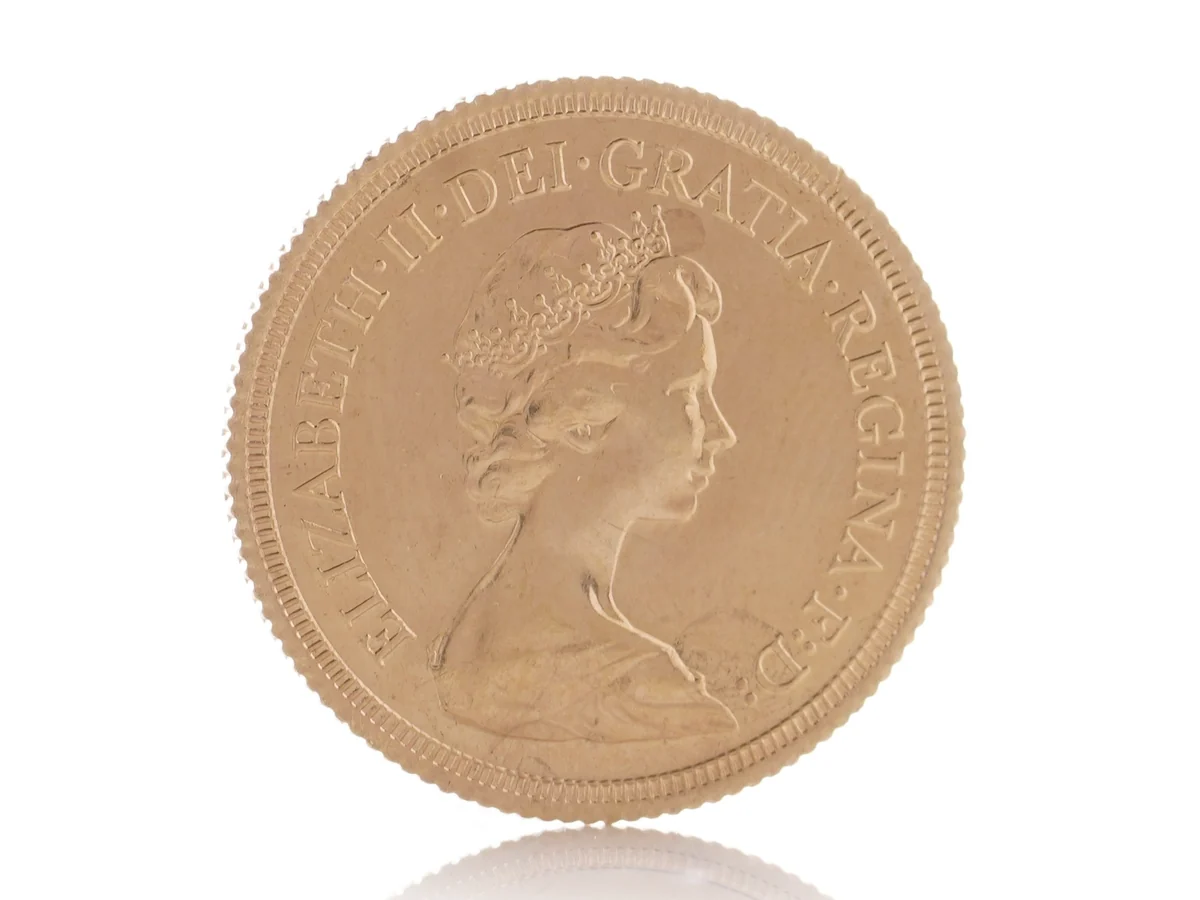
British silver coins dated 1946 or earlier contain silver, and those dated 1919 or earlier are sterling, so old half crowns, florins, shillings and sixpences are worth more than face value. Gold sovereigns and half sovereigns carry their gold and more for rare dates. Most crowns from 1951 onwards, and most modern coins, are worth face value.
| What you have | Why it can be worth more | Read more |
|---|---|---|
| Gold sovereigns and half sovereigns | Gold content, plus rare dates and mint marks | Sovereign value by year |
| Silver coins dated 1919 or earlier | Sterling silver, 92.5% | Pre-1920 silver coins |
| Silver coins dated 1920 to 1946 | Half silver, 50% | Pre-1947 silver coins |
| Maundy money, any date | Struck in sterling silver every year | Maundy money |
| Crowns of 1935 and earlier | Silver, and lower mintages | See crowns below |
| 1933 and 1952 pennies | A handful exist | See pennies below |
| Low-mintage modern coins | Few made for circulation | Rarest UK coins by mintage |
Start with the metal
Before rarity, check what the coin is made of. Gold and silver coins have a value that copper, bronze and cupronickel coins do not, whatever their date.
Our silver coins value guide explains the silver content of every British date range in full.
How do I know if a British coin is silver?
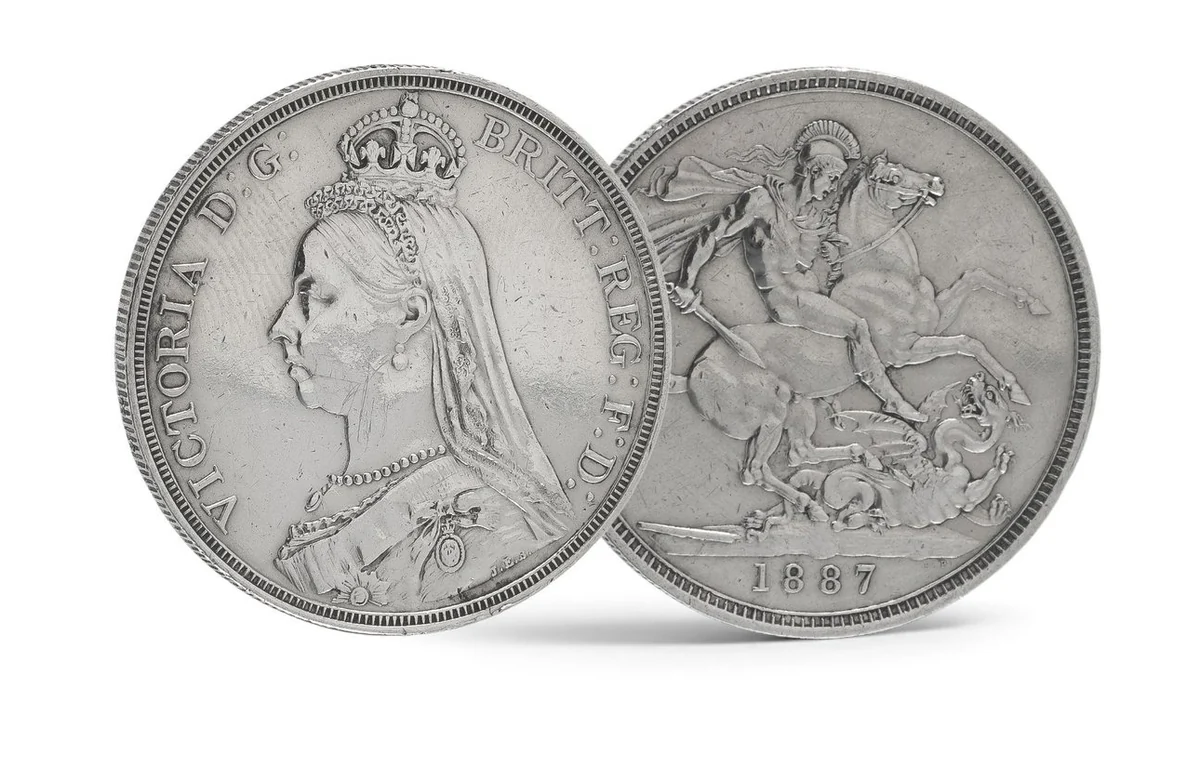
Check the date. British silver coins from 1816 to 1919 are 92.5% silver, those from 1920 to 1946 are 50% silver, and coins from 1947 onwards are cupronickel with no silver, except proofs and Maundy money. A heavy, bright ring when dropped is not a reliable test; the date is the quickest and surest guide.
| Date on the coin | Metal | Silver content |
|---|---|---|
| 1816 to 1919 | Sterling silver | 92.5% |
| 1920 to 1946 | Silver alloy | 50% |
| 1947 to 1970 | Cupronickel | None, except proofs and Maundy money |
| Decimal, from 1968 | Cupronickel, bronze, steel | None, except silver proofs |
Sources: Crown (British coin); Threepence. The silver threepence was issued for circulation in Britain until 1941; the twelve-sided brass threepence from 1937 contains no silver.
Silver coins from 1920 to 1946 can look darker or yellower than older sterling coins because of the lower silver content. That is normal and does not mean they are fake.
Crowns: Churchill, Jubilee and Coronation
The crown, five shillings, is the coin most often kept in drawers, because from 1935 it became the coin struck to mark royal events. Most commemorative crowns were made in millions.
Is a 1965 Churchill crown worth anything?
Usually not much above face value. More than 19.6 million 1965 Churchill crowns were struck in cupronickel, with no silver, so they are very common. The crown remains legal tender at 25p. The exceptions are rare proof and specimen strikes, which a specialist can tell apart from the everyday coin by their mirror finish and sharp detail.
It was the first time a commoner appeared on a British coin (The Royal Mint), which is why so many families kept one.
Is a Jubilee crown worth anything?
It depends on the year. The 1935 George V Jubilee crown is half silver and only 714,769 were made, so it is worth its silver and often more. The 1977 Silver Jubilee crown is cupronickel, over 37 million were struck, and it is usually worth face value unless it is a silver proof in its case.
| Crown | Metal | Number struck |
|---|---|---|
| 1935 George V Silver Jubilee | 50% silver | 714,769 |
| 1951 Festival of Britain | Cupronickel | 1,983,540 |
| 1953 Coronation of Elizabeth II | Cupronickel | 5,962,621 |
| 1960 British Exhibition, New York | Cupronickel | 1,024,038 |
| 1965 Churchill | Cupronickel | 19,640,000 |
| 1972 Silver Wedding (25p) | Cupronickel | 7,452,100 |
| 1977 Silver Jubilee (25p) | Cupronickel | 37,061,160 |
| 1980 Queen Mother (25p) | Cupronickel | 9,306,000 |
| 1981 Royal Wedding (25p) | Cupronickel | 26,773,600 |
Source: Crown (British coin). Silver proof versions of the later crowns were also sold in cases; they contain silver and are a different coin from the everyday one.
Condition decides the rest
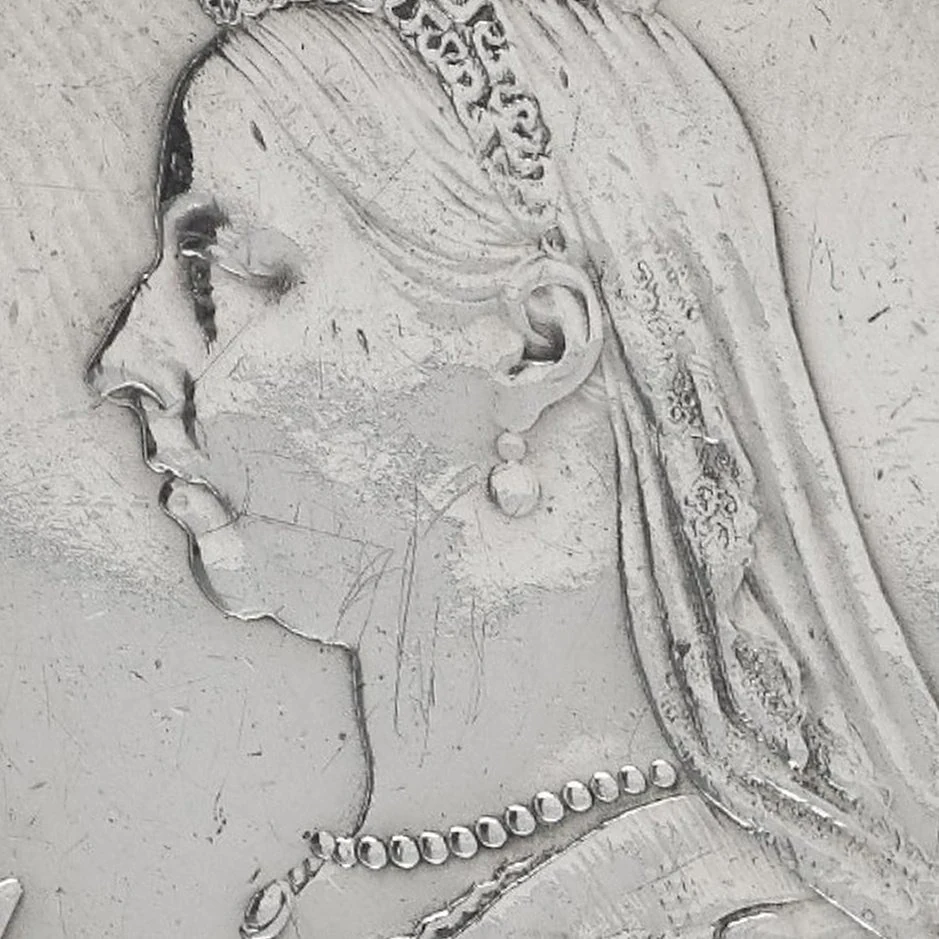
On the older silver crowns, condition matters as much as the date. Look at the highest points of the portrait: the cheek, hair and crown wear first.
A coin with full detail there, and its original lustre, is sought by collectors.
Old pennies, threepences and farthings
Most old bronze pennies are common and worth little. The rare ones are the 1933 penny, of which only about seven are known because none were made for circulation, the unique 1952 penny, and early dates and varieties in exceptional condition. Pennies with full lustre and sharp detail are always worth more than worn ones.
- The 1933 penny: no pennies were struck for circulation in 1933. A few were made for foundation stones and museums, and about seven are known (Wikipedia).
- The 1952 penny: a single example struck by the Royal Mint, believed unique.
- Copper and bronze: pennies were copper until 1860 and bronze from 1860 (Wikipedia). Victorian bronze pennies were made in huge numbers.
- Threepences: the small silver threepence contains silver; the twelve-sided brass one, made from 1937, does not (Wikipedia).
- Farthings: last struck in 1956 and withdrawn in 1960 (Wikipedia); everyday dates are common.
One of the privately owned 1933 pennies sold at auction in 2016 (Wikipedia). Coins claiming to be 1933 pennies turn up often, usually altered dates, so any example needs a specialist.
Send us photos of your coins
Decimal coins: which are rare?
A few are. The rarest coins in change are low-mintage designs such as the 2009 Kew Gardens 50p and the 2023 Atlantic Salmon 50p, the 1983 2p struck in error with NEW PENCE, and the undated 20p. The 1983 round pound and most two pound coins, including the 2016 Shakespeare designs, are common.
Our rarest UK coins by mintage ranks every circulating 50p, two pound, one pound and 10p coin by the Royal Mint's own figures, and the Cluedo 50p page covers the newest collectable 50p. The Royal Mint confirms a small number of 1983 2ps were struck with NEW PENCE (Royal Mint).
Gold coins: sovereigns and older gold
Sovereigns
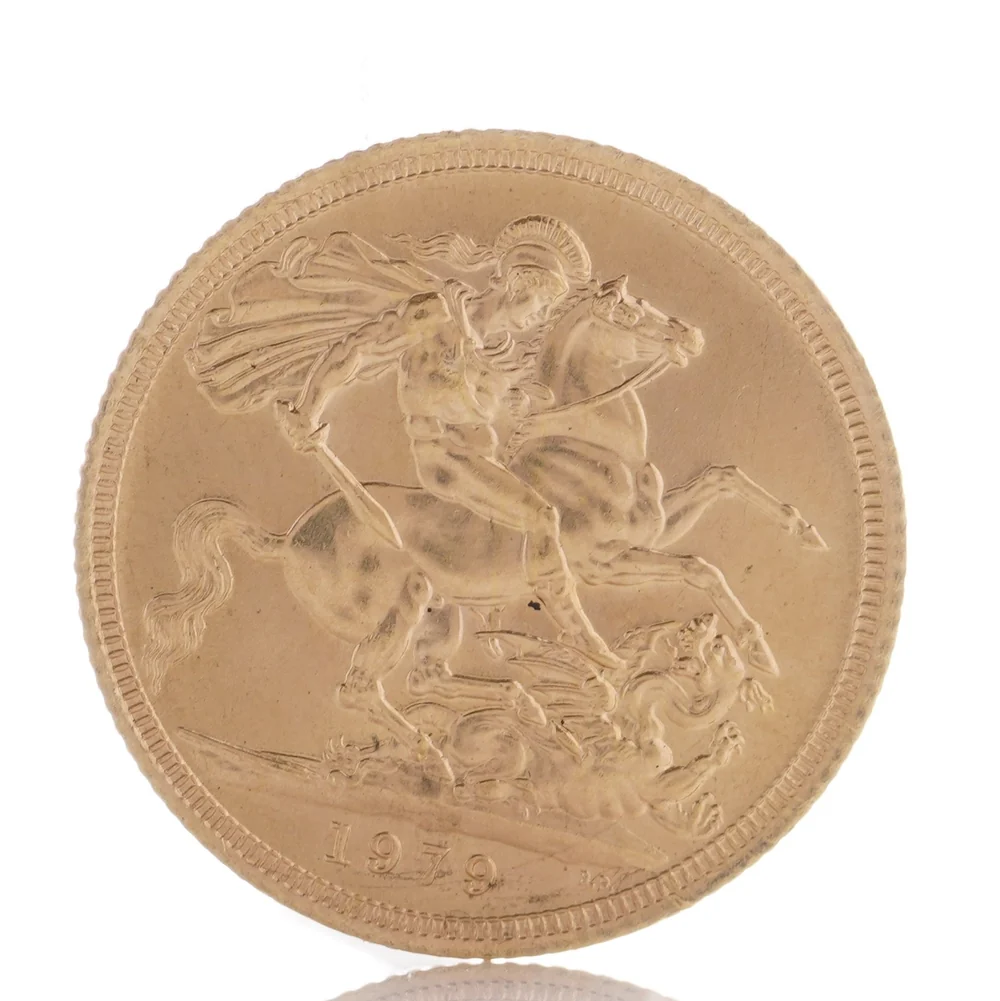
Every full sovereign is 22KT gold, so it is always worth more than any base-metal coin. Dates, mint marks and condition decide whether it is worth more than its gold.
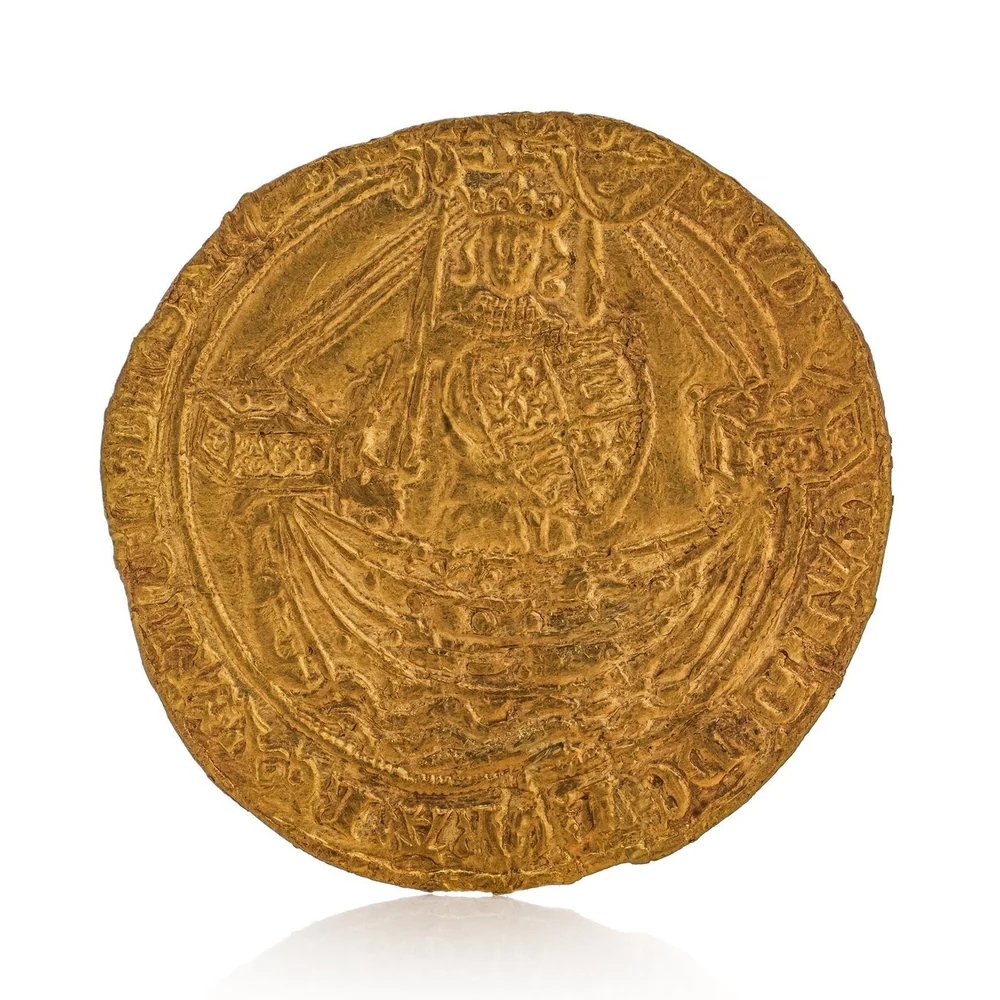
Hammered gold and silver
Medieval and Tudor hammered coins, such as the noble, turn up in old collections and on detector finds. They are valued by type, ruler and condition.
If a coin was found in the ground, read found buried treasure first: the law may require you to report it.
Cleaning, storing and selling old coins
Should I clean old coins?
No. Cleaning, polishing or dipping a coin removes its original surface and leaves fine scratches that collectors see at once, and it lowers the value of any coin with collector interest. Hold coins by the edge, keep them dry in paper envelopes or a coin album, and send them to be seen as they are.
How do I sell old coins?
Sort the coins by metal and date, then photograph both sides of anything gold, silver or unusual. Send the photos for a free valuation within one working day. We buy sovereigns, pre-1947 silver and collections, pay the same day by bank transfer, and offer insured postage, free collection or an appointment in Mayfair or Braintree.
Every coin is different. Send us photos of both sides and we will tell you what yours are worth, free and with no obligation. Request a free valuation.
- Sell gold sovereigns and tax when you sell gold
- Sell pre-1920 silver coins and sell pre-1947 silver coins
- Sell your silver and inherited silver
Request a free valuation
- Check the metal first: gold and pre-1947 silver always beat face value.
- Most commemorative crowns from 1951 onwards are cupronickel and common.
- True rarities, such as the 1933 penny, are few and often faked.
- Never clean a coin; send photos of both sides for a free valuation.
Questions we are asked
Which old British coins are worth money?
British silver coins dated 1946 or earlier contain silver, and those dated 1919 or earlier are sterling, so old half crowns, florins, shillings and sixpences are worth more than face value. Gold sovereigns and half sovereigns carry their gold and more for rare dates. Most crowns from 1951 onwards, and most modern coins, are worth face value.
How do I know if a British coin is silver?
Check the date. British silver coins from 1816 to 1919 are 92.5% silver, those from 1920 to 1946 are 50% silver, and coins from 1947 onwards are cupronickel with no silver, except proofs and Maundy money. A heavy, bright ring when dropped is not a reliable test; the date is the quickest and surest guide.
Is a 1965 Churchill crown worth anything?
Usually not much above face value. More than 19.6 million 1965 Churchill crowns were struck in cupronickel, with no silver, so they are very common. The crown remains legal tender at 25p. The exceptions are rare proof and specimen strikes, which a specialist can tell apart from the everyday coin by their mirror finish and sharp detail.
Is a Jubilee crown worth anything?
It depends on the year. The 1935 George V Jubilee crown is half silver and only 714,769 were made, so it is worth its silver and often more. The 1977 Silver Jubilee crown is cupronickel, over 37 million were struck, and it is usually worth face value unless it is a silver proof in its case.
Are old pennies worth anything?
Most old bronze pennies are common and worth little. The rare ones are the 1933 penny, of which only about seven are known because none were made for circulation, the unique 1952 penny, and early dates and varieties in exceptional condition. Pennies with full lustre and sharp detail are always worth more than worn ones.
Are any decimal coins rare?
A few are. The rarest coins in change are low-mintage designs such as the 2009 Kew Gardens 50p and the 2023 Atlantic Salmon 50p, the 1983 2p struck in error with NEW PENCE, and the undated 20p. The 1983 round pound and most two pound coins, including the 2016 Shakespeare designs, are common.
Should I clean old coins before selling?
No. Cleaning, polishing or dipping a coin removes its original surface and leaves fine scratches that collectors see at once, and it lowers the value of any coin with collector interest. Hold coins by the edge, keep them dry in paper envelopes or a coin album, and send them to be seen as they are.
How do I sell old coins?
Sort the coins by metal and date, then photograph both sides of anything gold, silver or unusual. Send the photos for a free valuation within one working day. We buy sovereigns, pre-1947 silver and collections, pay the same day by bank transfer, and offer insured postage, free collection or an appointment in Mayfair or Braintree.
Are Queen Elizabeth II coins still legal tender?
Yes. Coins with Queen Elizabeth II's portrait remain legal tender and circulate alongside King Charles III coins. They have no expiry date: the Royal Mint replaces them gradually as they wear out or are damaged, so they will stay in change for many years.
Are any Queen Elizabeth II coins silver?
Not in everyday change. British circulating coins stopped containing silver in 1947, before her reign began in 1952. Her Maundy money is sterling silver, and silver proofs, piedforts and Britannia bullion coins were made for collectors and investors. Her gold sovereigns are 22KT gold.
How can I identify rare Queen Elizabeth II coins?
Check the design and date against the Royal Mint's mintage figures, ranked on our rarest UK coins page: the lowest circulation mintages are the rare ones. Look for known errors, such as the undated 20p and the 1983 NEW PENCE 2p, and for coins in perfect condition. Most other dates are common.
When did King Charles III coins come out?
The first coins with King Charles III's portrait, a memorial 50p, entered circulation in December 2022. Coins in his new definitive series, with nature designs such as the Atlantic salmon 50p and bees on the one pound coin, followed from late 2023, and more denominations, including the 10p, have been added since.
Who designed the King Charles III coin portrait?
The King's coin portrait was sculpted by Martin Jennings and approved by the King. Following tradition, the King faces left, the opposite direction to Queen Elizabeth II. The reverse designs of the definitive series show British plants and animals, chosen to reflect his interest in nature.
Which King Charles III coins are rare?
King Charles III coins are still a small share of the coins in circulation, so some designs are hard to find in change while they are new. Our rarest UK coins page lists his coins in circulation and their official mintages. Most will become common as more are struck.
What is the King Charles bee coin?
The bee coin is the King Charles III one pound coin, whose reverse shows bees, part of his definitive series celebrating British wildlife. It is a circulating coin made in large numbers and worth face value; silver and gold proof versions were sold to collectors.
Are King Charles coins worth collecting?
They are worth collecting for interest: the first coins of a new reign are popular, and finding each new design in change is a hobby for many. Circulating examples are worth face value, so collecting them costs little. Silver and gold proofs carry metal value.
Which Queen Victoria coins are valuable?
All Victorian gold and silver coins have metal value: sovereigns and half sovereigns are 22KT gold, and crowns, half crowns, florins, shillings, sixpences and silver threepences are sterling silver. Rare dates, the 1847 Gothic crown and coins in fine condition are sought by collectors. Worn bronze pennies are common.
Are Queen Victoria pennies worth anything?
Most are common. Victorian pennies were copper until 1860 and bronze from 1860, the bronze bun head pennies being made in huge numbers, so worn examples are worth little. Rare dates and varieties, and pennies with sharp detail and original colour, are collected. Never clean them.
How can I tell which Queen Victoria portrait my coin has?
Victorian coins show three main portraits: the young head from 1838, the jubilee head from 1887, wearing a small crown, and the veiled old head from 1893 to 1901. Bronze coins from 1860 show the bun head. The portrait narrows the date, which helps identify the coin.
Are old Irish coins worth anything?
Irish coins dated 1928 to 1943 in silver denominations, the half crown, florin, shilling, sixpence and threepence, are 75% silver and worth more than face value. Later Irish coins are cupronickel or bronze and common. The 1943 florin is the best known rarity, because most of those struck were melted.
What do old Irish coins look like?
Irish coins from 1928 show a harp on one side and animals on the other, designed by Percy Metcalfe: a horse on the half crown, a salmon on the florin, a bull on the shilling, a wolfhound on the sixpence, a hen on the penny and a woodcock on the farthing. They read SAORSTAT EIREANN until 1937, then EIRE.
Can you exchange old Irish coins?
Yes. The Central Bank of Ireland exchanges Irish pound notes and coins for euro free of charge, with no time limit, by post or in person in Dublin. Silver coins dated 1943 or earlier are worth more than their exchange value, so have them checked before exchanging.
Want to know what your old coins are worth?
Send photos of both sides. We buy sovereigns, silver coins and collections directly, and the valuation is free.
- We buy directly
- Free valuation from photos
- Appointments in Mayfair and Braintree
- Insured postage or collection
New pieces reach our list first: join the Mozeris list.
Keep reading
How coins are graded and stored is explained in our coin collecting guide. Every commemorative crown is covered in our commemorative crowns guide. For half crowns, florins, shillings and sixpences in detail, see the pre-decimal coins guide. For older coins, read our Roman and ancient coins guide.