Guide · Sell gold sovereigns

Gold Coins in the UK: Types, Purity, Tax and Selling

A guide to the gold coins found and bought in Britain: what each is made of, how tax treats them, how to store them, and how to sell.

By the Mozeris specialistsUpdated 4 min read

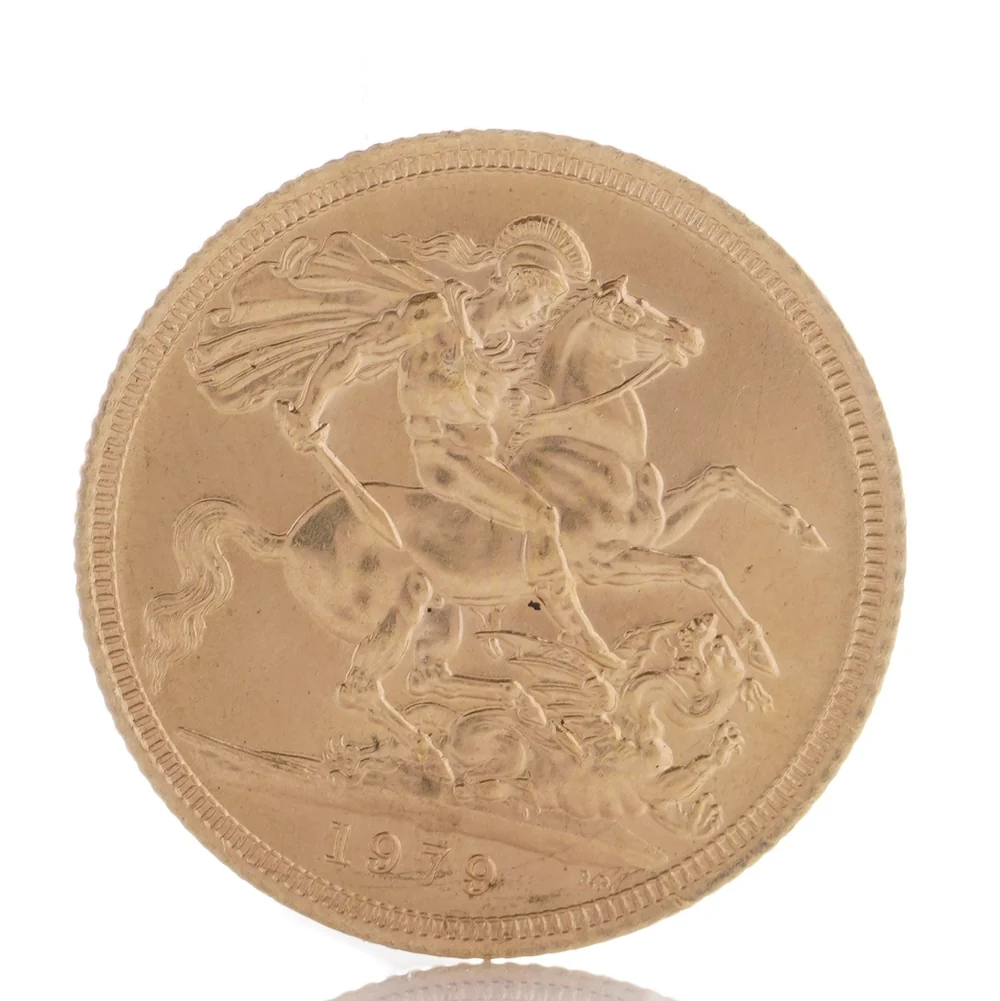
The reverse of a 1979 gold sovereign: Pistrucci's St George on horseback slaying the dragon, with the date below the ground line
Pistrucci's St George on a 1979 gold sovereign, from our collection

The short answer

The gold coins most often found in Britain are sovereigns and half sovereigns, Britannias, and foreign bullion coins such as the Krugerrand, Canadian Maple Leaf, American Eagle and Austrian Philharmonic. Older collections also hold Victorian and Edwardian sovereigns, guineas, hammered gold and foreign gold such as French francs.

  • Sovereigns and most older coins are 22 carat; Britannias since 2013 and Maple Leafs are 24 carat.
  • UK legal tender gold coins, sovereigns and Britannias, are free of Capital Gains Tax.
  • Investment gold coins are free of VAT in the UK, but not of Inheritance Tax.

What gold coins are there?

The gold coins most often found in Britain are sovereigns and half sovereigns, Britannias, and foreign bullion coins such as the Krugerrand, Canadian Maple Leaf, American Eagle and Austrian Philharmonic. Older collections also hold Victorian and Edwardian sovereigns, guineas, hammered gold and foreign gold such as French francs.

CoinCountryPurityUK legal tender
Sovereign, half and quarterUnited Kingdom22 carat (916.7)Yes
BritanniaUnited Kingdom22 carat to 2012, 24 carat (999.9) from 2013Yes
KrugerrandSouth Africa22 carat (916.7)No
Maple LeafCanada24 carat (999.9)No
American EagleUnited States22 carat (916.7)No
PhilharmonicAustria24 carat (999.9)No

Which gold coins are 24 carat?

The Canadian Maple Leaf, the Austrian Philharmonic, the Australian Kangaroo and the British Britannia since 2013 are 24KT gold of 999.9 fineness. Sovereigns, Krugerrands and American Eagles are 22 carat, alloyed with copper or silver to make them harder wearing. All carry the same weight of fine gold as stated.

Gold sovereigns, half and quarter sovereigns, and gold Britannias are UK legal tender, struck by the Royal Mint with a face value, though they are worth far more than face value for their gold. Foreign coins such as Krugerrands and Maple Leafs are not UK legal tender, which matters for tax.
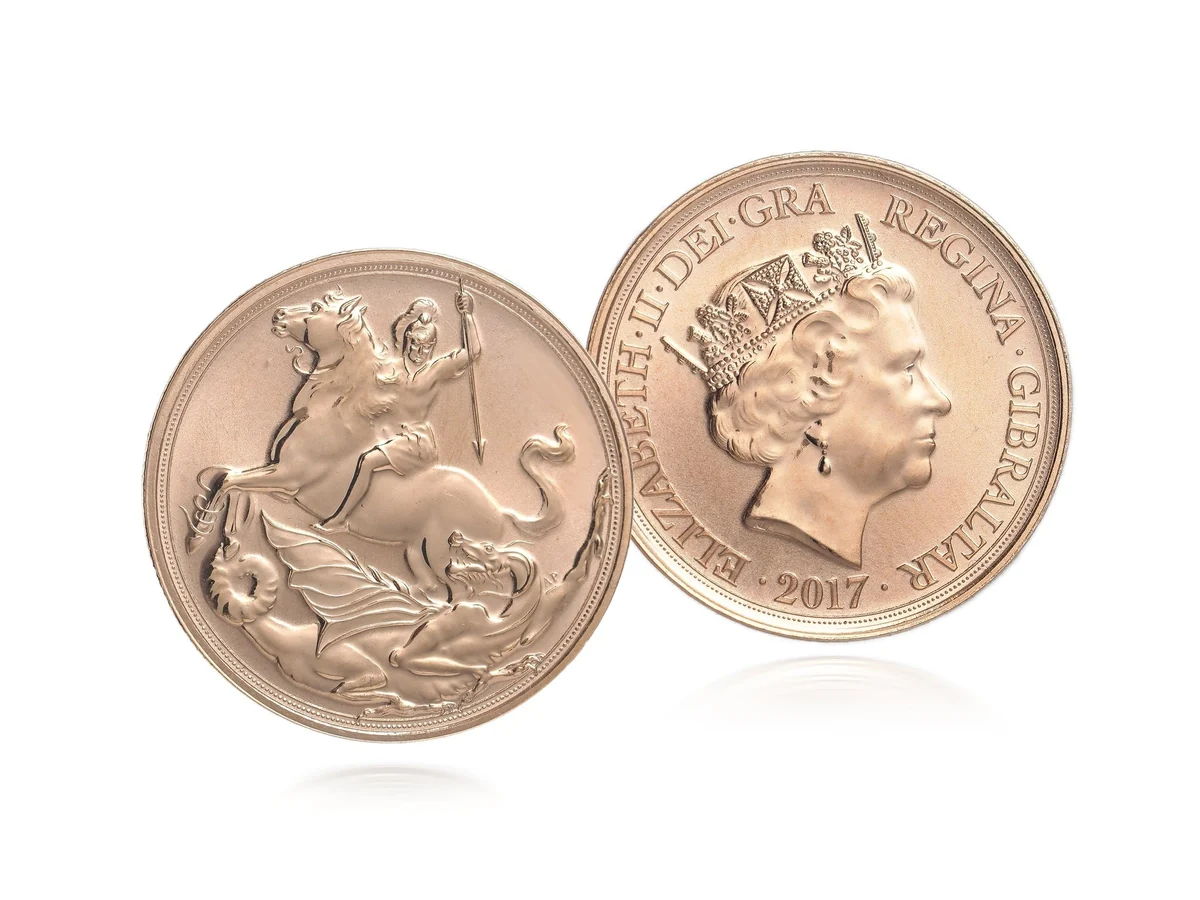
Both sides of a 2017 reverse proof gold sovereign, Gibraltar issue: St George and the dragon, and the portrait with the legend ending GIBRALTAR
A 2017 reverse proof gold sovereign, Gibraltar issue, from our collection

Proofs and bullion

Sovereigns are struck both as bullion coins and as proofs for collectors, like this 2017 reverse proof. Both are legal tender.

Send us photos for a free valuation

Which gold coins are tax free in the UK?

UK legal tender gold coins, sovereigns and Britannias, are exempt from Capital Gains Tax for UK residents. All investment gold coins, including Krugerrands and Maple Leafs, are free of VAT. No gold coin is exempt from Inheritance Tax: coins form part of an estate and are valued with everything else.

Do gold coins have hallmarks or serial numbers?

No. Legal tender and bullion gold coins are not hallmarked: the mint's design, date and inscriptions stand in for a hallmark, and some bullion coins state their weight and fineness. Bullion coins carry no serial numbers; proofs come with numbered certificates. Genuine coins are checked by weight, size and testing.

Are gold coins real gold?

Coins from national mints are. Sovereigns, Britannias, Krugerrands, Maple Leafs and Eagles contain the fine gold stated. Medals, tokens and souvenir coins, such as many Masonic or commemorative pieces, may be gold plated base metal instead. A real gold coin is not magnetic and matches the official weight and size.

Do gold coins tarnish?

Pure gold does not tarnish. 24 carat coins keep their colour, while 22 carat coins, which contain copper or silver, can tone slightly over decades, gaining a reddish or darker tint. Toning is natural and should not be cleaned off, because cleaning scratches the surface and lowers a coin's value.

Do gold coins increase in value?

A gold coin's base value moves with the gold price, which can rise or fall. Rare dates, proofs and coins in exceptional condition carry a collector value on top. No one can predict either with certainty, and buying and selling prices differ. A free valuation tells you what yours are worth today.

Are gold coins or gold bars better?

Coins are easier to sell in small amounts and, if they are UK legal tender such as sovereigns and Britannias, free of Capital Gains Tax. Bars usually cost less above the gold price for the same weight, especially in larger sizes, but gains on them are taxable. Both are free of VAT as investment gold.

How are gold coins made?

Modern gold coins are struck by machine: gold is alloyed, rolled into strip, punched into blanks, and each blank is struck between two dies under great pressure. Proofs are struck more than once from polished dies. Ancient and medieval gold coins were struck by hand with a hammer.
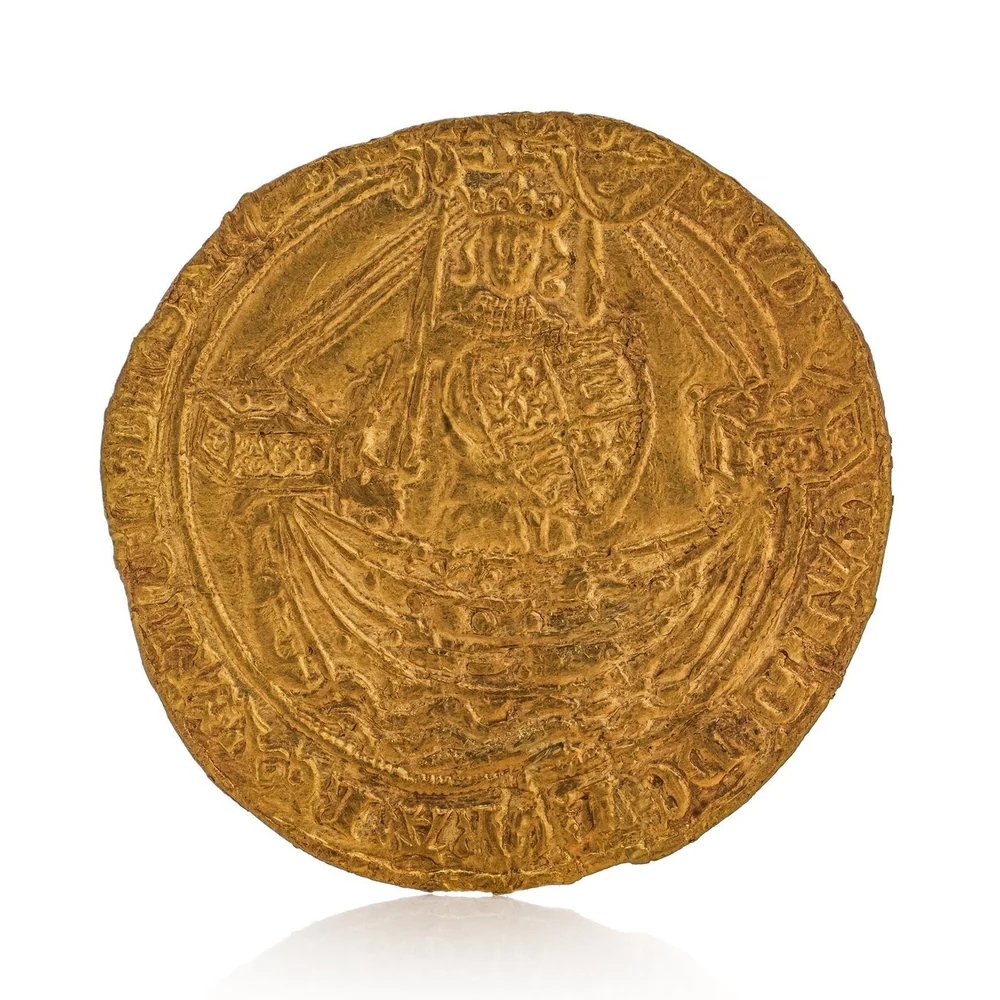
An Edward III gold noble of 1361 to 1369, showing the king standing in a ship
A hammered gold noble of Edward III, 1361 to 1369, from our collection

Hammered gold

This Edward III noble was struck by hand between two dies, the method used before machine striking. Our Roman and ancient coins guide explains it.

Can gold coins be melted down?

Yes, gold coins can be melted and refined, but melting destroys any collector value, and legal tender coins lose their tax advantages once they are no longer coins. Common bullion coins are bought for their gold, so there is no reason to melt them before selling. Rare coins should never be melted.

Why were coins placed on the eyes of the dead?

In ancient Greek custom a coin, known as Charon's obol, was buried with the dead as the fare for the ferryman Charon to carry the soul across the river Styx; it was usually placed in the mouth. Coins on the eyes appear in later burial traditions in many parts of Europe.

How do I sell gold coins?

Photograph both sides of each coin and any cases or certificates, and send them for a free valuation within one working day. We buy sovereigns, Britannias, Krugerrands and other gold coins, pay the same day by bank transfer after inspection, and offer insured postage, free collection or an appointment in Mayfair or Braintree.
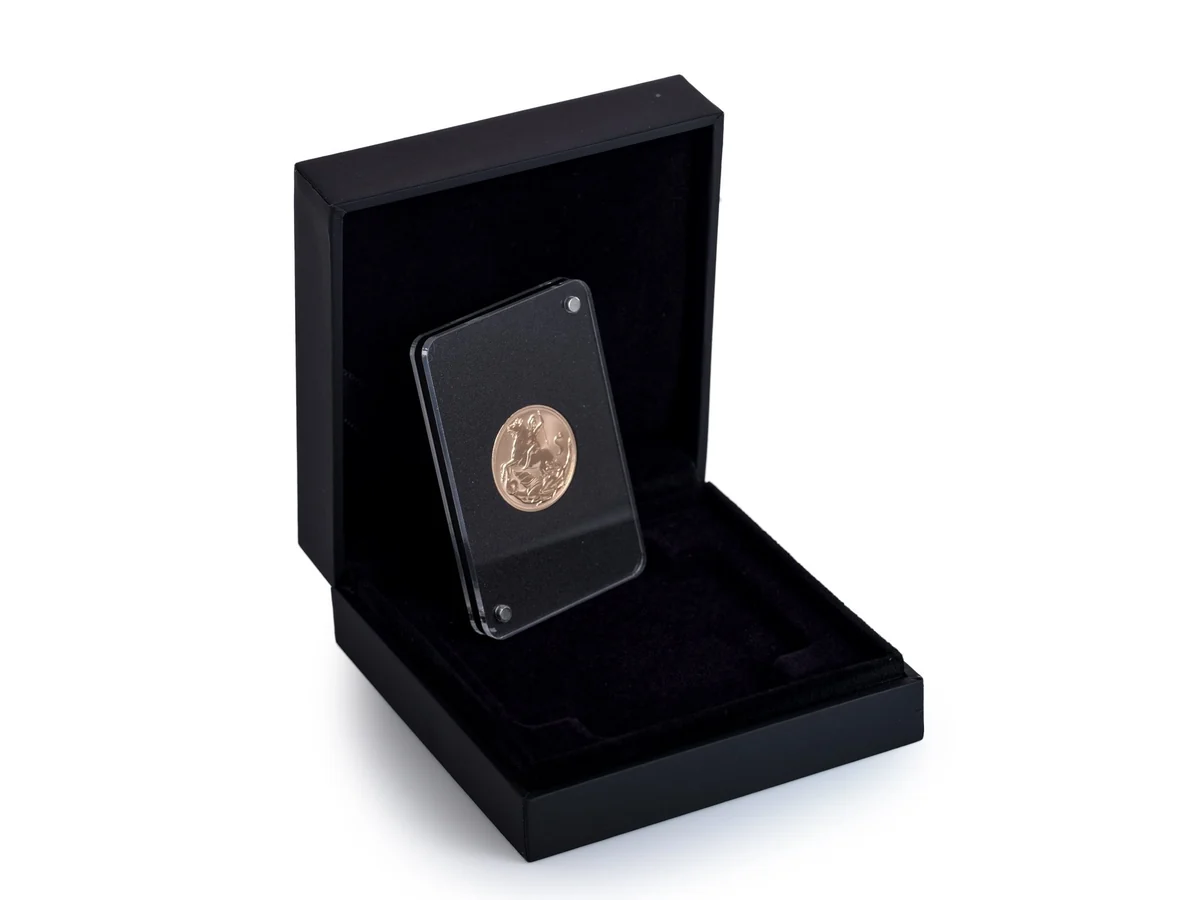
A 2017 reverse proof gold sovereign, Gibraltar issue, in its capsule inside an open black presentation case
A proof gold sovereign in its capsule and case, from our collection

Keep the case

Proof coins are worth most in their original capsules and cases with certificates.

Free valuation

Every piece is different. Send us a few photos and we will tell you what yours is worth, free and with no obligation. Request a free valuation.

Request a free valuation

Browse our gold and silver coins in stock.

Sources

Questions

What gold coins are there?

The gold coins most often found in Britain are sovereigns and half sovereigns, Britannias, and foreign bullion coins such as the Krugerrand, Canadian Maple Leaf, American Eagle and Austrian Philharmonic. Older collections also hold Victorian and Edwardian sovereigns, guineas, hammered gold and foreign gold such as French francs.

Which gold coins are 24 carat?

The Canadian Maple Leaf, the Austrian Philharmonic, the Australian Kangaroo and the British Britannia since 2013 are 24KT gold of 999.9 fineness. Sovereigns, Krugerrands and American Eagles are 22 carat, alloyed with copper or silver to make them harder wearing. All carry the same weight of fine gold as stated.

What gold coins are legal tender in the UK?

Gold sovereigns, half and quarter sovereigns, and gold Britannias are UK legal tender, struck by the Royal Mint with a face value, though they are worth far more than face value for their gold. Foreign coins such as Krugerrands and Maple Leafs are not UK legal tender, which matters for tax.

Which gold coins are tax free in the UK?

UK legal tender gold coins, sovereigns and Britannias, are exempt from Capital Gains Tax for UK residents. All investment gold coins, including Krugerrands and Maple Leafs, are free of VAT. No gold coin is exempt from Inheritance Tax: coins form part of an estate and are valued with everything else.

Do gold coins have hallmarks or serial numbers?

No. Legal tender and bullion gold coins are not hallmarked: the mint's design, date and inscriptions stand in for a hallmark, and some bullion coins state their weight and fineness. Bullion coins carry no serial numbers; proofs come with numbered certificates. Genuine coins are checked by weight, size and testing.

Are gold coins real gold?

Coins from national mints are. Sovereigns, Britannias, Krugerrands, Maple Leafs and Eagles contain the fine gold stated. Medals, tokens and souvenir coins, such as many Masonic or commemorative pieces, may be gold plated base metal instead. A real gold coin is not magnetic and matches the official weight and size.

Do gold coins tarnish?

Pure gold does not tarnish. 24 carat coins keep their colour, while 22 carat coins, which contain copper or silver, can tone slightly over decades, gaining a reddish or darker tint. Toning is natural and should not be cleaned off, because cleaning scratches the surface and lowers a coin's value.

Do gold coins increase in value?

A gold coin's base value moves with the gold price, which can rise or fall. Rare dates, proofs and coins in exceptional condition carry a collector value on top. No one can predict either with certainty, and buying and selling prices differ. A free valuation tells you what yours are worth today.

Are gold coins or gold bars better?

Coins are easier to sell in small amounts and, if they are UK legal tender such as sovereigns and Britannias, free of Capital Gains Tax. Bars usually cost less above the gold price for the same weight, especially in larger sizes, but gains on them are taxable. Both are free of VAT as investment gold.

How are gold coins made?

Modern gold coins are struck by machine: gold is alloyed, rolled into strip, punched into blanks, and each blank is struck between two dies under great pressure. Proofs are struck more than once from polished dies. Ancient and medieval gold coins were struck by hand with a hammer.

Can gold coins be melted down?

Yes, gold coins can be melted and refined, but melting destroys any collector value, and legal tender coins lose their tax advantages once they are no longer coins. Common bullion coins are bought for their gold, so there is no reason to melt them before selling. Rare coins should never be melted.

Why were coins placed on the eyes of the dead?

In ancient Greek custom a coin, known as Charon's obol, was buried with the dead as the fare for the ferryman Charon to carry the soul across the river Styx; it was usually placed in the mouth. Coins on the eyes appear in later burial traditions in many parts of Europe.

How do I sell gold coins?

Photograph both sides of each coin and any cases or certificates, and send them for a free valuation within one working day. We buy sovereigns, Britannias, Krugerrands and other gold coins, pay the same day by bank transfer after inspection, and offer insured postage, free collection or an appointment in Mayfair or Braintree.

Can gold coins be pawned or exchanged for cash?

Pawnbrokers lend against gold coins, charging interest until you repay, and keep the coins if you do not. Selling to a dealer gives you the full agreed price instead. We pay the same day by bank transfer after inspecting the coins, never in cash, and there is no obligation after a valuation.

Are Roman gold coins valuable?

Roman gold coins, the aureus and later the solidus, are collected worldwide as the main gold coins of Rome, valued by emperor, rarity, condition and provenance. Finds in the UK fall under the treasure rules. Our Roman and ancient coins guide explains how to identify them.