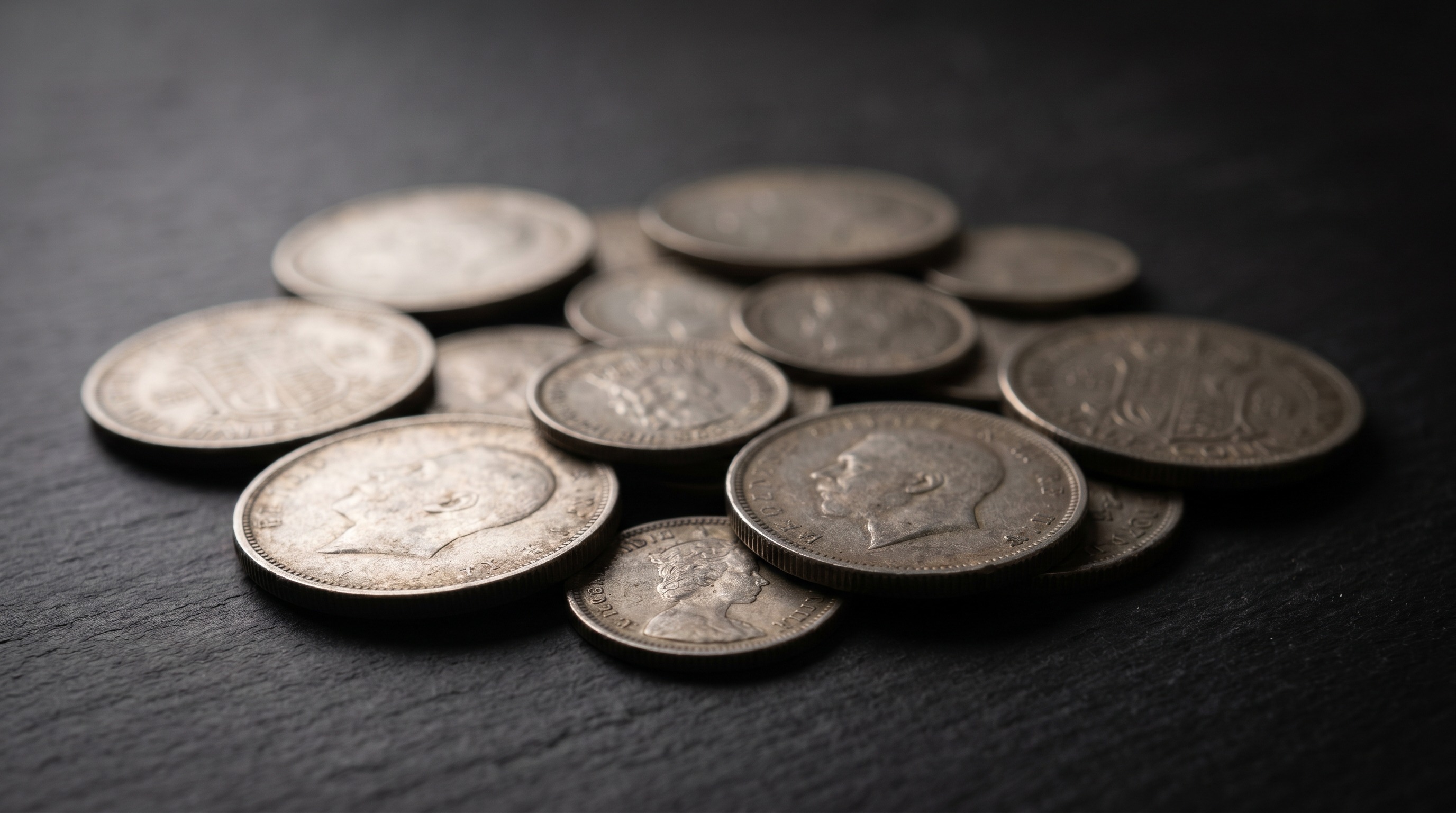
Selling Pre-1947 Silver Coins in the UK
Old British coins dated 1946 or earlier contain real silver — and at today's prices, even a jar of "loose change" can be worth a surprising amount. Here's how pre-1947 silver coins are valued and how to sell them.
Got a Jar of Old Silver Coins?
Send us a photo and rough quantity and we'll value your pre-1947 silver coins against today's market — free, with no obligation. Our specialists reply within one working day.
Most people don't realise the old coins in the drawer are part-silver. Until 1947, British "silver" coinage really did contain silver — and while no longer spendable at a bank for more than face value, that silver content gives them a genuine bullion value today. Multiply it across a jar of half crowns, florins and shillings and it can add up fast.
The two pre-1947 silver standards
There's one date that matters above all others — 1947 — and a second, 1920, that splits the silver coins into two grades:
| Date range | Silver content | Notes |
|---|---|---|
| 1919 & earlier | 92.5% (sterling) | Highest silver content — see our pre-1920 guide |
| 1920–1946 | 50% silver | Debased after WWI; still valuable in quantity |
| 1947 onwards | No silver | Cupronickel — face value only (except Maundy) |
So the simple rule: a British coin dated 1946 or before contains silver; 1947 or later does not. The 1920–1946 coins are 50% silver, and the 1919-and-earlier coins are full sterling (92.5%) — worth proportionally more.
Which coins to look for
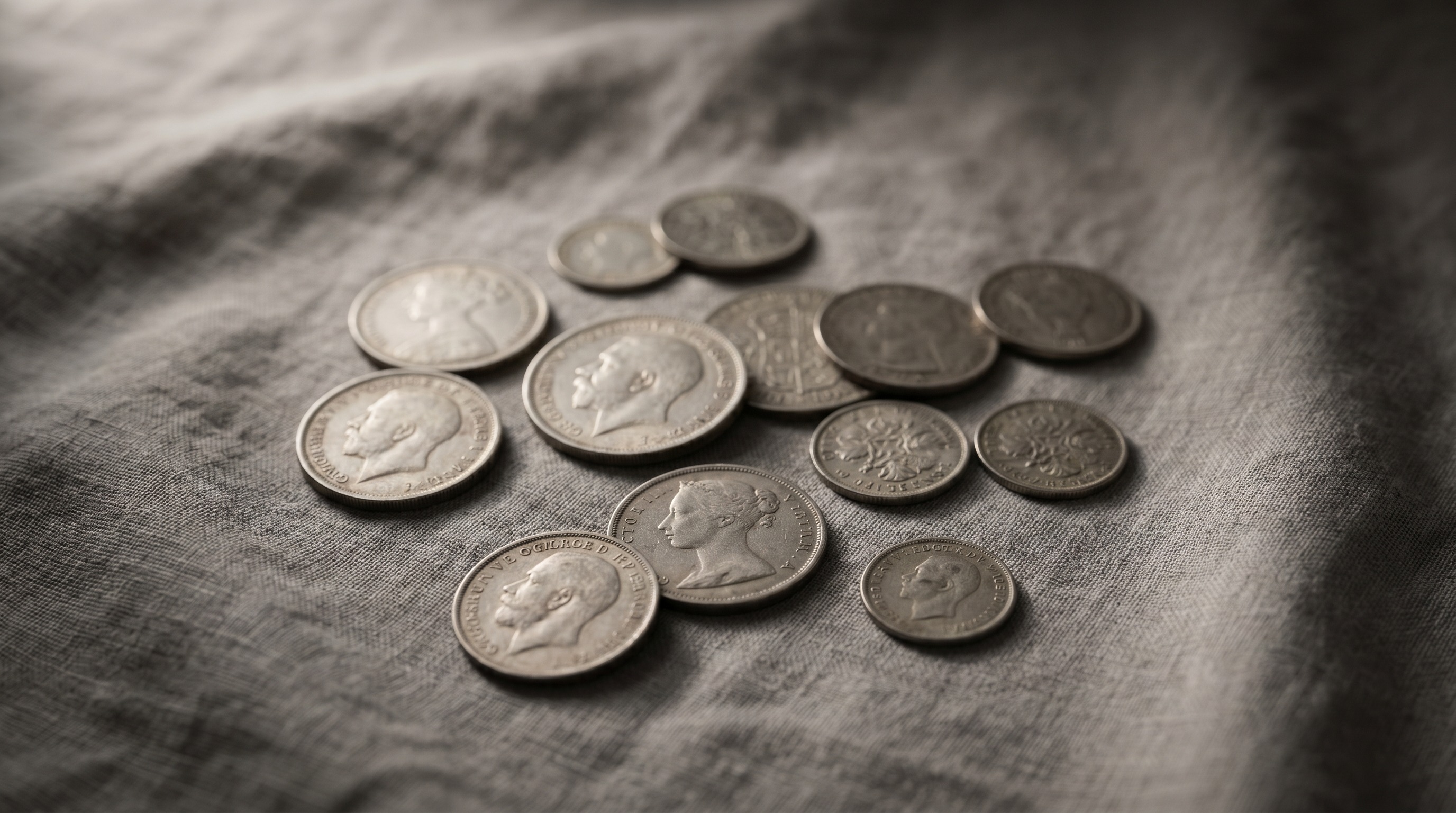
Half crowns & florins
The heaviest everyday silver coins, so the most silver value per coin. Always worth checking the date.
Shillings & sixpences
Common but plentiful — quantity adds up. The "lucky sixpence" is a frequent find.
Threepences & crowns
Small silver threepences and large commemorative crowns both count, by silver content and sometimes collector interest.
How We Value Them
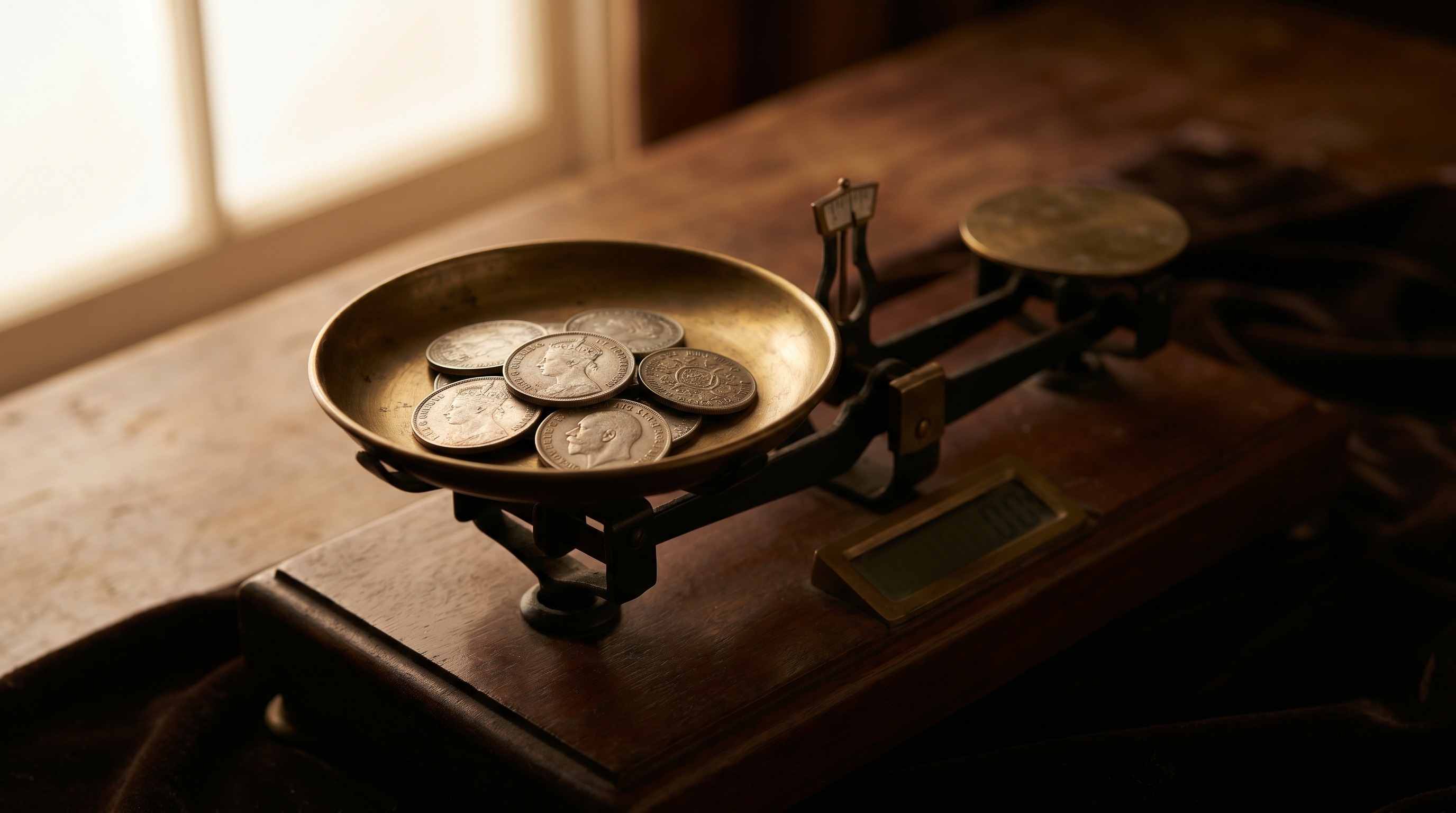
Most pre-1947 coins sell for their silver content, valued simply and transparently:
- Date sorted — Split into 1919-and-earlier (sterling) and 1920–1946 (50%).
- Weighed in bulk — No need to count; we weigh and calculate the fine silver.
- Live silver price — Valued against the current market on the day.
- Collector check — Rare dates, errors and high-grade coins flagged for extra value.
- Bags & jars fine — Bring them as they are; we'll do the sorting.
See today's metal value on our live silver price page.
Silver value or collector value?
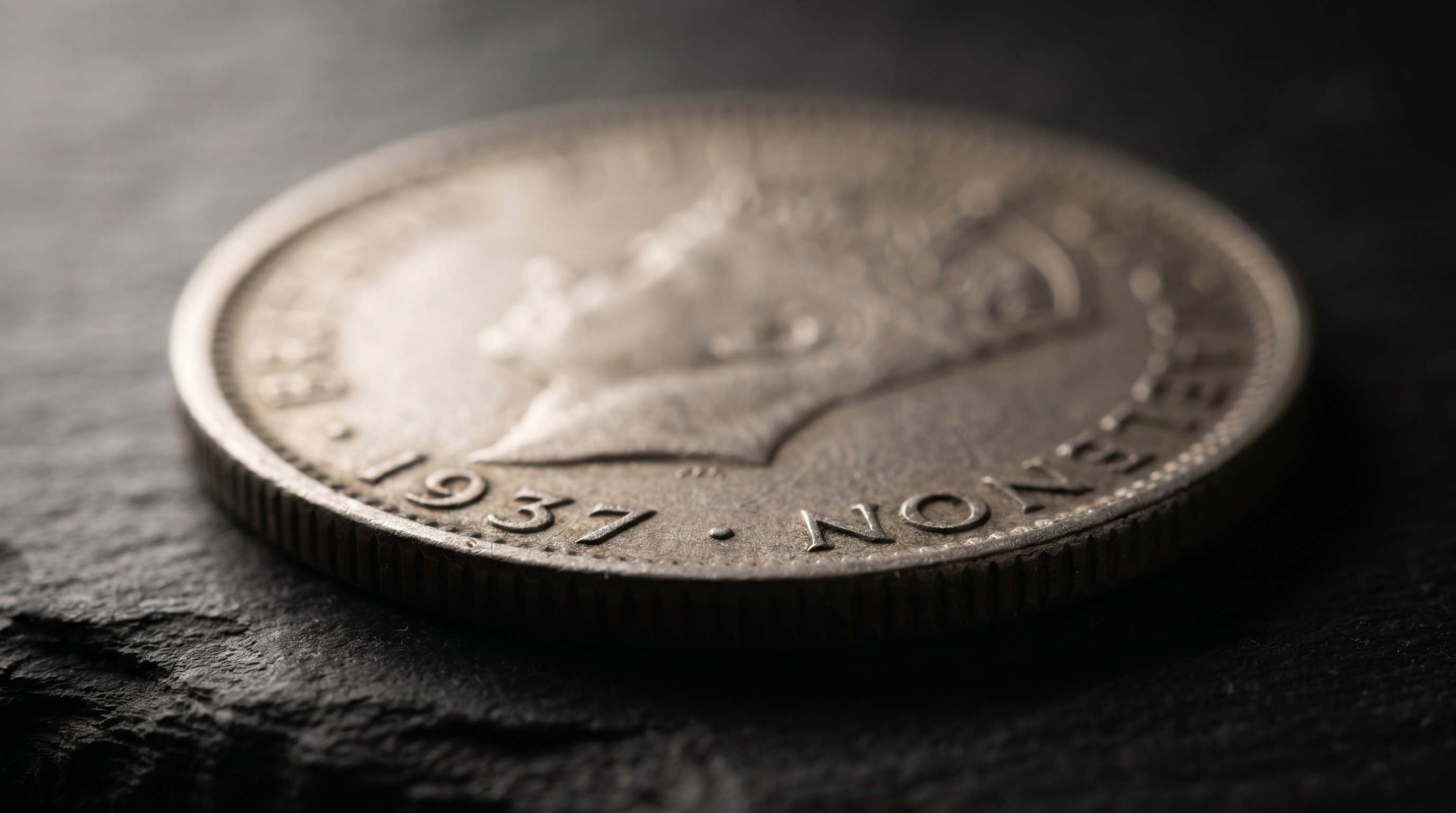
For most circulated pre-1947 coins, the value is the silver. But always check before melting: certain dates, mint errors and coins in exceptional condition carry a collector premium well above bullion. We assess every lot for both, and never melt a coin that's worth more to a collector. For the full picture on UK silver coins, see our silver coins value guide, and for the higher-purity older coins our pre-1920 silver coins guide.
When you're ready, sell via sell your silver, and the Maundy money guide covers the one post-1947 exception that's still sterling.
Value Your Pre-1947 Silver Coins
Send photographs and a rough quantity and we'll give you an honest, no-obligation valuation against today's silver market.
⚠️ Strictly by appointment only — no walk-ins at either showroom.
Frequently Asked Questions
Selling pre-1947 British silver coins — common questions.
Which British coins contain silver?
British coins dated 1946 or earlier contain silver. Those from 1920–1946 are 50% silver; 1919 and earlier are 92.5% sterling silver. From 1947 onwards UK coins switched to cupronickel and contain no silver (the exception being Maundy money).
Are pre-1947 silver coins worth more than face value?
Yes — their silver content is worth far more than the old face value today. Even common circulated coins have real bullion value, especially in quantity. Rare dates and high grades can be worth more still to collectors.
Do I need to sort or count them first?
No. Bring them as they are — a jar, a bag, a tin. We sort by date and silver standard and weigh them for you.
How is the value worked out?
We separate the 50% and sterling coins, weigh each, and calculate the fine silver content against the live silver price — then flag any coins worth more to a collector than as bullion.
Should I clean my old coins before selling?
Please don't. Cleaning can damage coins and reduce any collector value. Leave them exactly as they are and let us assess them.
Send Us Your Coin Photographs
Attach photos and a rough quantity of your old silver coins. We'll respond within one working day.