
In this guide (10)
- How can I tell platinum from white gold?
- Not Sure What Your Ring Is: or What It's Worth?
- 1. Check the hallmark (the definite answer)
- No Hallmark? Use These Four Tells
- Why it matters: and why it's worth checking
- Let Us Confirm It For You: Free
- Frequently Asked Questions
- Confirm Your Ring: and What It's Worth
- Send Us Your Ring Photographs
- Questions
How can I tell platinum from white gold?
Check the hallmark: 950 or PLAT means platinum, while 375, 585 or 750 means white gold of 9, 14 or 18 carat. Platinum feels noticeably heavier for its size and keeps its grey-white colour, whereas white gold is rhodium plated and can turn slightly yellow as the plating wears.
They look almost identical: but platinum and white gold are very different metals, with very different values. Here are five quick ways to tell which one your ring is, right now, with the ring in your hand.
Free & no-obligation Precious metal specialists London & Essex
Not Sure What Your Ring Is: or What It's Worth?
Send us a photo of your ring and its hallmark and we'll tell you whether it's platinum or white gold, and what it's worth: free, with no obligation. Our specialists reply within one working day.
It's one of the most common questions we're asked, and almost nobody knows the answer with confidence: is this ring platinum or white gold? They can look identical across a room: both are bright, white, precious. But platinum is rarer, denser and more valuable, and telling them apart changes what your ring is worth. The good news is you can usually settle it yourself in under a minute.
At Mozeris Fine Antiques we identify and value both metals every week. Here are the five checks we use, in the order we use them, starting with the one that gives a definite answer.
Sell to a specialist
Free valuation from your photographs. Paid the same day after inspection.
- Free insured FedEx collection
- Insured to £10,000
- No obligation
1. Check the hallmark (the definite answer)
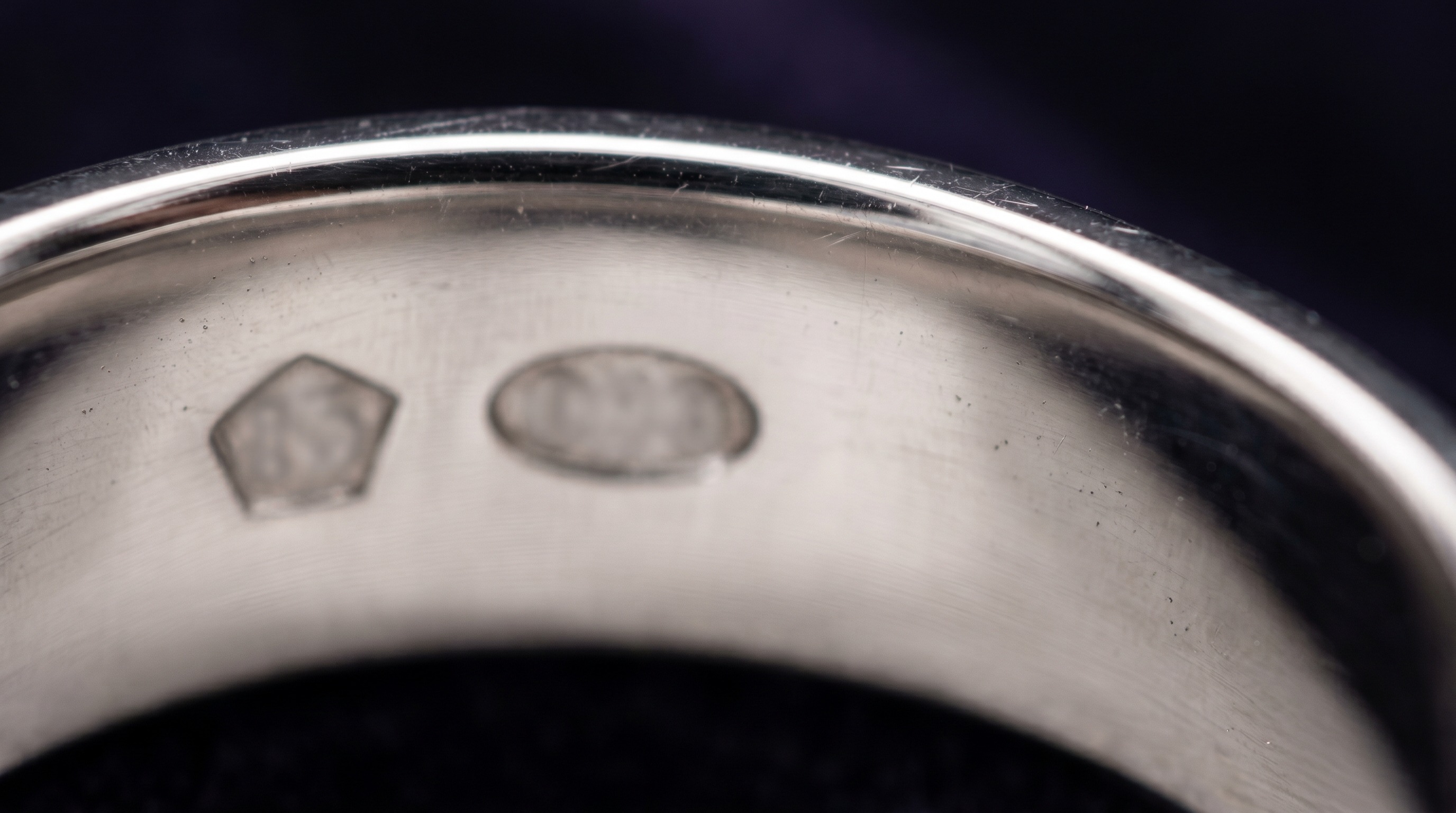
The fastest, surest test is the stamp inside the band. In the UK, platinum and gold are hallmarked differently: and not just with different numbers, but in different shapes:
Platinum marks
Look for 950 (or 900, 850, 999), often with PLAT or PT. The fineness number sits in a five-sided (pentagon) shape. Older pieces may just say "PLAT".
White gold marks
Look for gold fineness numbers 750 (18ct), 585 (14ct) or 375 (9ct): in an oval shape. White gold is simply gold alloyed white and usually rhodium-plated.
If you can read the mark, you have your answer. Our companion guide to platinum hallmarks explained decodes every platinum stamp in detail, and gold hallmarks explained covers the gold side.
No Hallmark? Use These Four Tells
If the mark is worn, foreign or absent, these physical signs build a confident answer:
- Weight: Platinum is noticeably denser. A platinum ring feels heavier than an identical white gold one.
- Colour: Platinum is a naturally cooler, slightly greyish white. Bright "mirror" white often means rhodium-plated white gold.
- Yellowing: If you see any warm or yellow tinge, especially at worn edges, it's white gold whose plating is thinning. Platinum never turns yellow.
- Wear pattern: Platinum displaces rather than losing metal (it develops a patina); white gold plating wears through.
Neither metal is magnetic, so a magnet only rules out base metal: it won't separate platinum from white gold.
Why it matters: and why it's worth checking
Platinum is rarer and denser than gold, and is hallmarked at 95% purity (950) versus 75% for 18ct white gold (so a platinum ring usually carries significantly more intrinsic value than a white gold one of the same size. Many people sell a platinum ring believing it's "just white gold", and lose out. Equally, white gold is very much worth selling in its own right) the point is simply to know which you have.
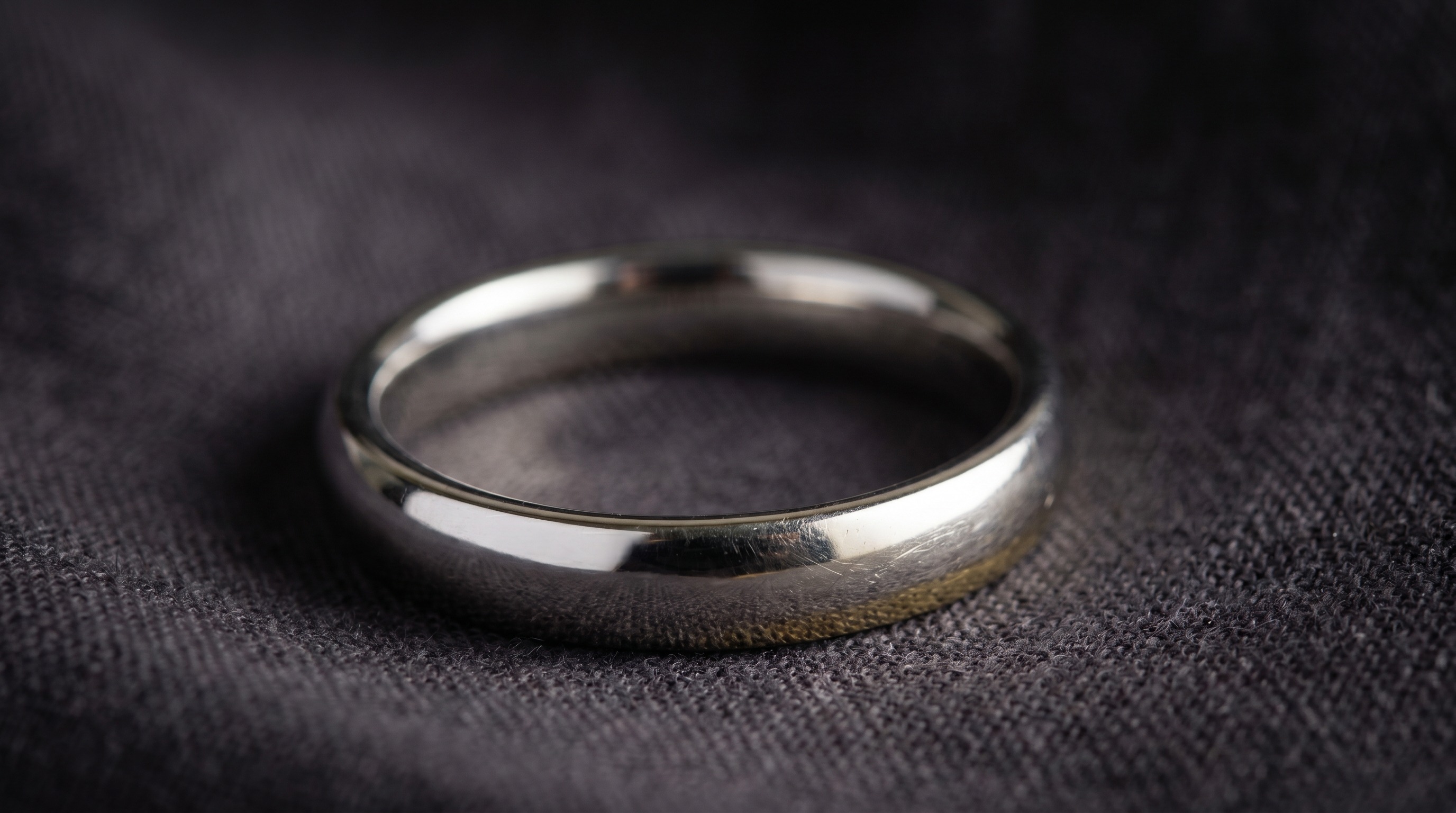
A tell-tale sign: a warm tinge at a worn edge means white gold with thinning rhodium plate: platinum stays white throughout.
If you're thinking of selling (a wedding ring after a divorce, an inherited piece, or simply jewellery you no longer wear) it pays to confirm the metal first. See our sell your platinum jewellery page for platinum, or sell your gold jewellery for white gold. If your ring is set with diamonds, our guide on how to know if your diamond is real may also help.
Let Us Confirm It For You: Free
Send a clear photo of your ring and the hallmark inside the band. We'll confirm platinum or white gold and give you an honest, no-obligation valuation.
⚠️ Strictly by appointment only, no walk-ins at either office.
Frequently Asked Questions
Platinum vs white gold, the questions people ask most.
Is platinum heavier than white gold?
Yes. Platinum is denser than gold, so a platinum ring feels noticeably heavier than an identical white gold one. If you can compare two similar rings, the heavier one is almost certainly platinum.
Does platinum turn yellow like white gold?
No. Platinum is naturally white all the way through and never turns yellow. White gold is yellow gold alloyed white and plated with rhodium; as that plating wears, a warm or yellowish tinge shows through: a reliable sign it's white gold, not platinum.
How can I tell platinum from white gold without a hallmark?
Use the physical tells: platinum is heavier, a cooler greyish-white, and never yellows, while white gold is brighter (from rhodium plating) and warms at worn edges. For certainty, a jeweller can perform a density or touchstone test.
What does a "950" stamp mean?
950 means platinum that is 95% pure, the UK standard for fine platinum jewellery. It's often shown with "PLAT" or "PT" and sits in a five-sided hallmark shape. Gold marks (750, 585, 375) sit in an oval shape instead.
Is platinum worth more than white gold?
Usually, yes. Platinum is rarer and denser and is hallmarked at 95% purity, so a platinum ring generally carries more intrinsic metal value than a white gold ring of similar size. The surest way to know your ring's worth is a free valuation.
What is white gold made of?
White gold is gold alloyed with white metals, usually palladium or nickel, often with silver or zinc. 18KT white gold is 75% gold, 9 carat is 37.5%. It does not occur in nature; it is made by melting the metals together. Most white gold is then plated with rhodium for a brighter white.
Does white gold turn yellow?
Yes, a little, over time. Most white gold is rhodium plated, and as the plating wears, the warmer, slightly creamy colour of the alloy shows through, first on the underside of a ring. A jeweller can replate it with rhodium to restore the white. Platinum does not need plating and does not change colour.
Does white gold hold its value?
White gold keeps its gold value: 18KT white gold contains as much gold as 18KT yellow, and that value moves with the gold price. It does not rise or fall separately from gold. Diamonds, signed makers and antique work can make a white gold piece worth more than its metal.
How strong is white gold?
White gold is hard and durable, often harder than yellow gold of the same carat because of the white metals in the alloy. Platinum is softer but denser: it scratches more easily, yet the metal moves rather than wears away, so platinum claws hold stones for longer. Both suit everyday rings.
Can you swim with white gold?
It is better not to. Chlorine in swimming pools and hot tubs can attack the alloy metals in white gold over time, weakening claws and solder, and it wears rhodium plating faster. Sea water and sun cream dull the finish. Take rings off before swimming, and rinse and dry them if they get wet.
Can I sell white gold and platinum jewellery?
Yes. We buy white gold and platinum jewellery, including diamond rings, Art Deco platinum pieces and broken items. Platinum is valued on its own metal price and white gold on its gold content, with any stones, maker and age on top. Send photos and the marks for a free valuation within one working day.
When did jewellers start using platinum?
Platinum came into fine jewellery around 1900, in the Edwardian period, when jewellers learned to work it at high temperature; it is strong enough for fine, lacy settings. It defined Art Deco jewellery in the 1920s and 1930s. British platinum has been hallmarked since 1975, so older pieces are often stamped PLAT or PT.
Why is sterling silver rhodium plated?
Sterling silver is rhodium plated to stop it tarnishing and to give it a brighter, whiter finish that looks like white gold or platinum. Rhodium is a very hard platinum group metal. The plating is thin and wears with use, after which the silver beneath can tarnish again.
Are pure rhodium rings real?
Rings described as rhodium are almost always rhodium plated over silver, white gold or base metal. Pure rhodium is hard, brittle and extremely difficult to work, so it is not used to make solid rings. Check the stamps inside: 925, 750 or 950 tell you the metal beneath the plating.
Is white gold the same as diamond?
No. White gold is a metal, an alloy of gold with white metals, used to make settings. A diamond is a gemstone of crystallised carbon. White gold is often chosen to set diamonds because its colour does not tint a white stone, as platinum also does.
Was platinum used in Victorian jewellery?
Rarely. Platinum was hard to work at the temperatures Victorian jewellers could reach, so they set diamonds in silver over gold instead. Platinum came into wide use around 1900, in Edwardian jewellery, once oxy-hydrogen torches made it workable, and it then defined the Art Deco period.
Did the Georgians use white gold?
No. White gold was developed in the early 20th century, after the Georgian and Victorian periods. Georgian jewellers set diamonds in silver, often backed with gold, to give a white setting. A white metal Georgian ring is usually silver or silver-topped gold.
Can a white gold ring be changed to yellow gold?
A jeweller can plate a white gold ring with yellow gold, but the ring itself stays white gold underneath and the plating wears through with use, especially on the palm side. A permanent change means remaking the ring in yellow gold, often reusing the stones.
Does white gold need to be replated?
Most white gold is rhodium plated to make it bright white, and the plating wears away with daily wear, letting the warmer colour of the gold show through. Rings usually need replating more often than earrings or pendants. Replating is routine: a jeweller cleans, polishes and replates the piece.
Do platinum rings need rhodium plating?
No. Platinum is naturally white all the way through, so it does not need rhodium plating and never turns yellow. With wear it develops a soft grey sheen called a patina, which a jeweller can polish back to a bright finish if preferred.
Is white gold as valuable as yellow gold?
White and yellow gold of the same carat contain the same proportion of pure gold, so 18KT white gold holds the same gold content as 18KT yellow gold. The difference is the other metals in the alloy. Value depends on carat, weight, stones, maker and condition, not colour.
Can silver jewellery be replated?
Yes. Sterling silver jewellery that was rhodium plated can be cleaned and replated by a jeweller to restore its bright finish, and silver-plated pieces can be stripped and replated by a silversmith. Solid sterling silver never wears through, so it can always be polished instead.
Confirm Your Ring: and What It's Worth
Whether it turns out to be platinum or white gold, we'll value it honestly with no obligation. Specialist buyers of platinum, gold and diamond jewellery.
Send Us Your Ring Photographs
Attach photos of the ring and the hallmark inside the band. We'll respond within one working day. If the answer is white gold, our antique white gold jewellery is set in exactly the same 9KT and 18KT alloys.