Filigree Jewellery: History, How It's Made and How to Spot Quality
What filigree is, how goldsmiths make it from twisted wire, where it comes from, and how to tell fine handmade work from cast copies.
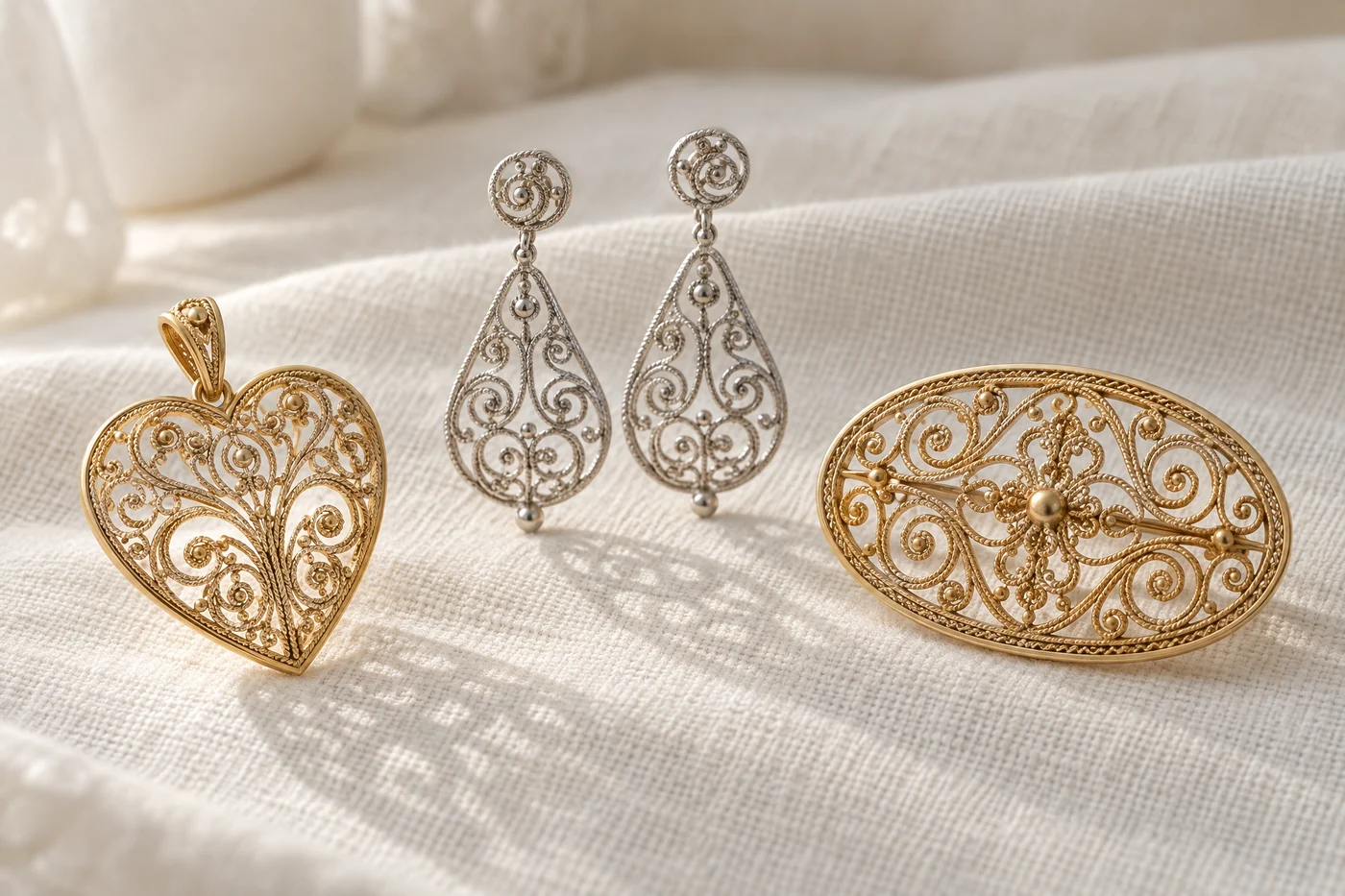
Filigree is lace-like ornament made from fine gold or silver wire, twisted, bent into scrolls and soldered together.
- The word comes from the Latin filum, thread, and granum, grain.
- Cannetille, popular about 1815 to 1840, is raised coiled wire; filigree is a flat layer of scrolls.
- Most 1920s "filigree" engagement rings are die-struck, not built from wire.
- Handmade filigree shows twist lines and tiny solder joints under a loupe; cast copies do not.
In this article
What does filigree mean?
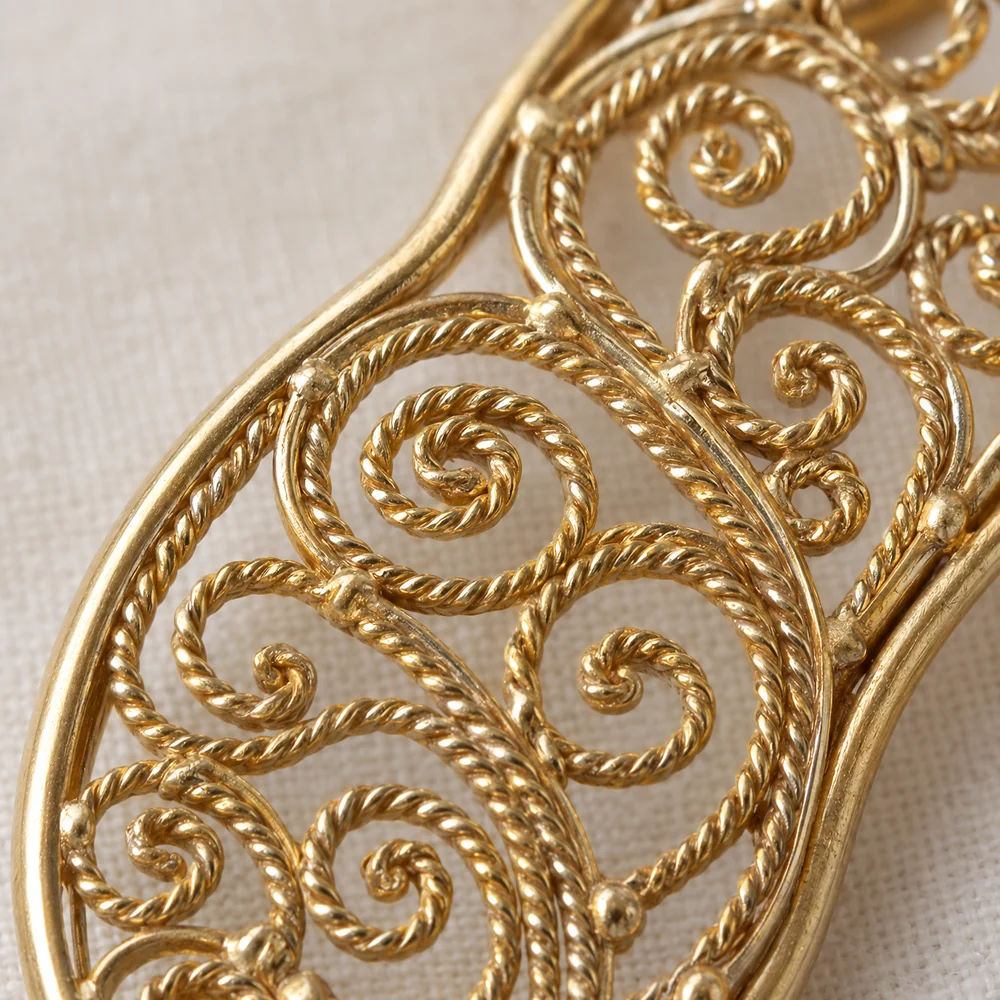
Filigree is ornament made from fine wire. The goldsmith draws gold or silver into a thread, often twists and flattens it, bends it into scrolls, spirals and loops, and solders the pieces together where they touch.
The result is metal that looks like lace: light, open and full of small reflections.
The word comes from the Latin filum, thread, and granum, grain, because early work combined wire with tiny gold beads, or grains. Latin gave Italian filigrana, French filigrane and the old English form filigreen, later shortened to filigree.
Three terms you will meet
- Openwork filigree: wire scrolls joined only to each other and to a frame, so light passes through.
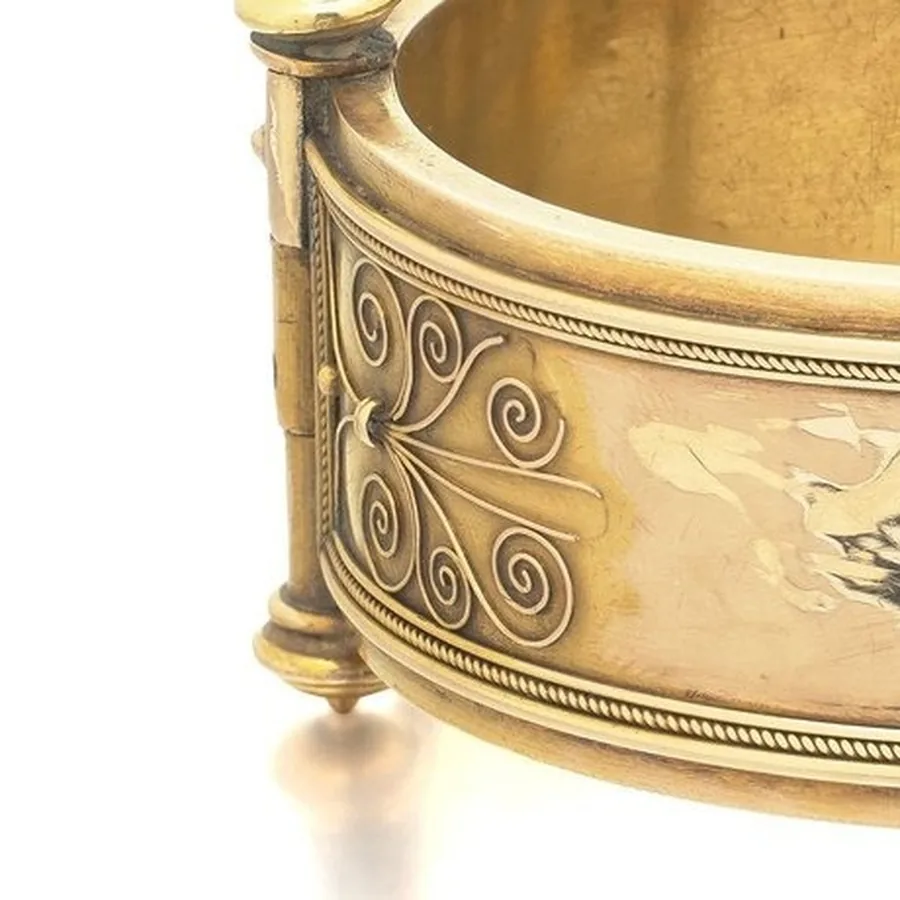
- Applied filigree: wire scrolls soldered onto a sheet of metal as surface decoration, as on the reverse of our micromosaic bangle.
- Filigree style: a modern trade term, often used for cast or stamped metal that only imitates wire.
Our filigree glossary entry gives the one-line definition.
How filigree is made, step by step
Every step is done by hand, and the wire is heated between steps to keep it soft enough to work.
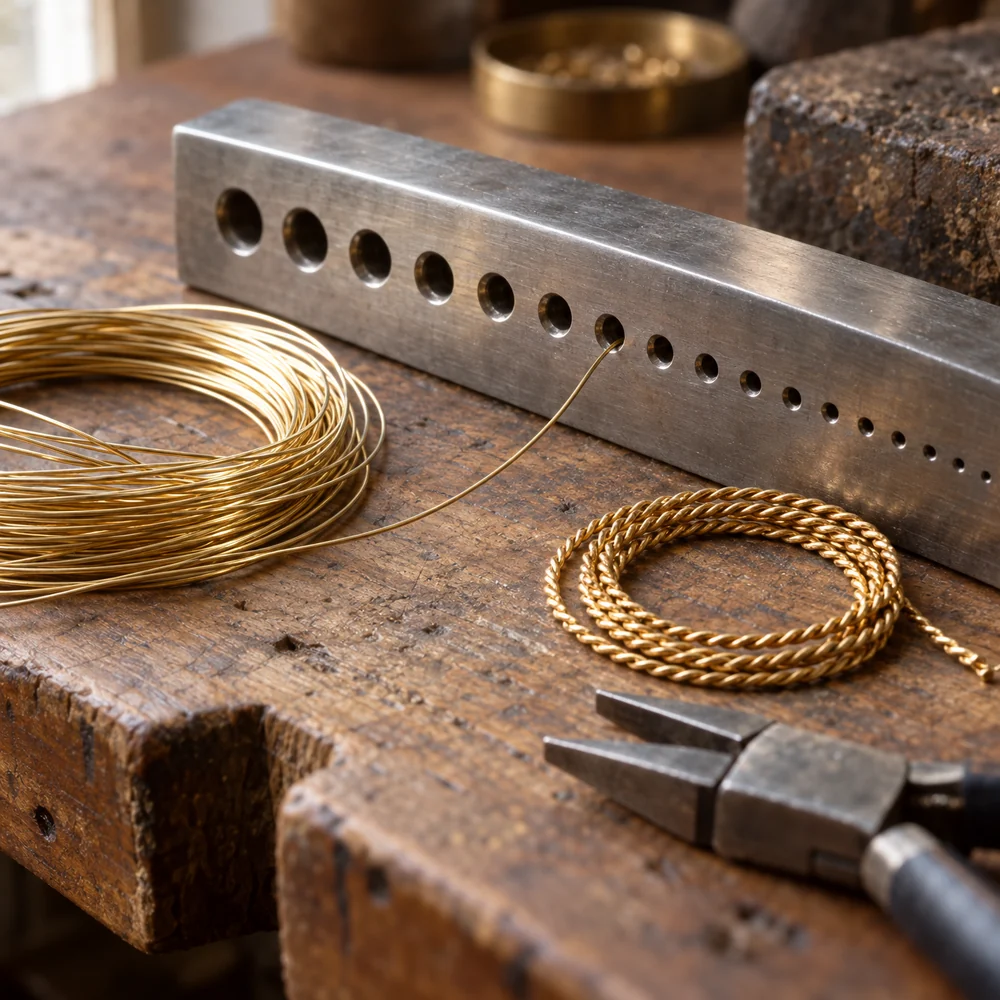
Draw, twist, flatten
1. Draw the wire. Gold or silver is pulled through ever smaller holes in a steel drawplate until it is about a quarter of a millimetre thick, according to the Goldsmiths' Centre.
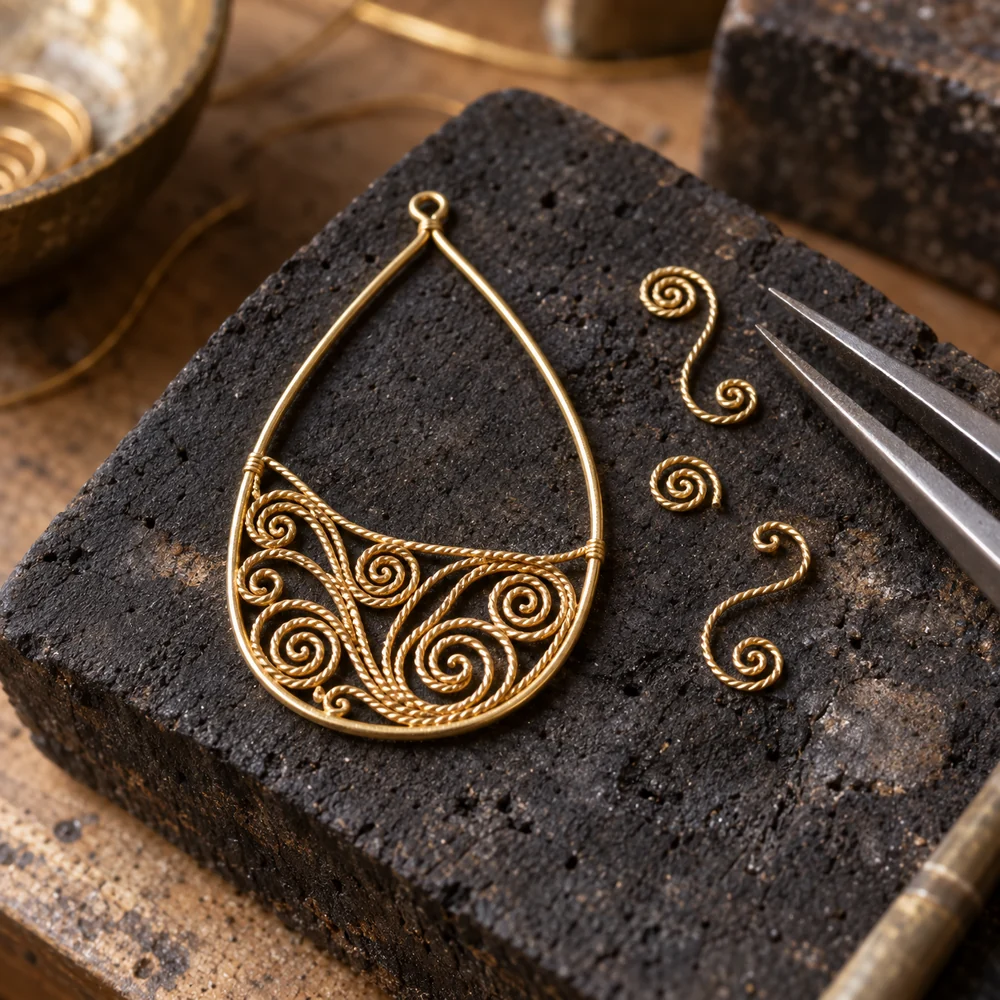
2. Twist and flatten. Two strands are twisted into a fine rope, then rolled flat, so the twists catch the light like a row of beads.
Frame, fill, solder
3. Build the frame. A heavier plain wire is bent into the outline: a leaf, a heart, a teardrop.
4. Fill it. The fine wire is coiled into spirals and S-scrolls with tweezers and packed into the frame, each touching its neighbours.
5. Solder. Solder dust and flux are sprinkled over the panel, which is heated until the solder flows into every point of contact. Then it is cleaned, shaped and polished.
Five filigree traditions to know
The earliest known filigree is Mesopotamian, about 2600 to 2500 BC: a gold sheath on a dagger and pendants from the Royal Tombs of Ur, in modern Iraq. These are the traditions you are most likely to meet today.
Etruria and the archaeological revival
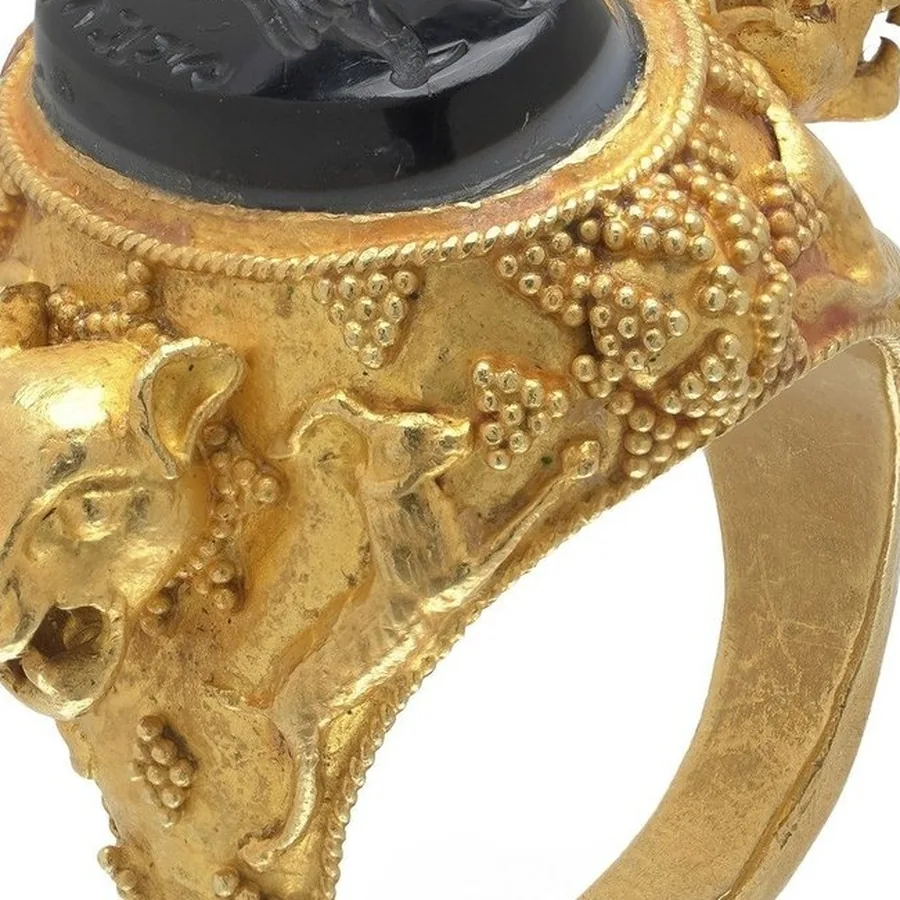
In the 7th and 6th centuries BC, Etruscan goldsmiths in central Italy combined fine wire with granulation so small it reads as velvet. After Etruscan tombs such as the Regolini-Galassi, opened in 1836, the Castellani workshop in Rome revived ancient wirework and granulation from the 1850s.
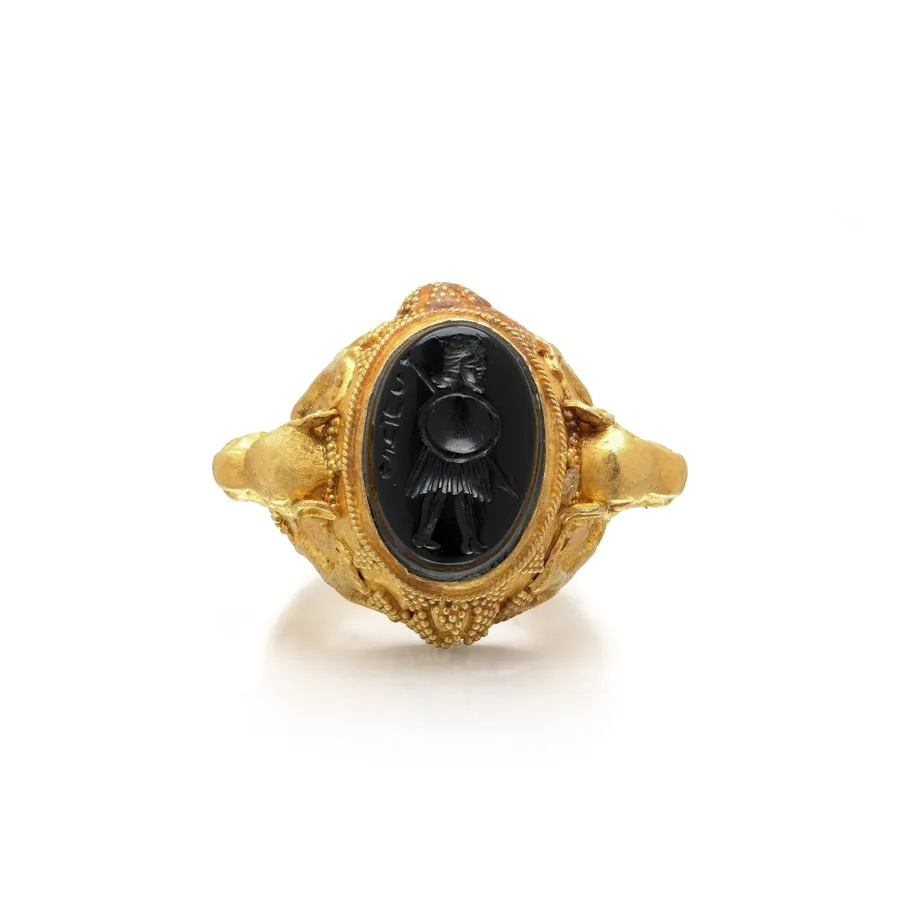
Our archaeological revival ring pairs granulation with a twisted wire collet, as Etruscan goldsmiths did. See our ancient Greek jewellery guide.
Georgian cannetille, about 1815 to 1840
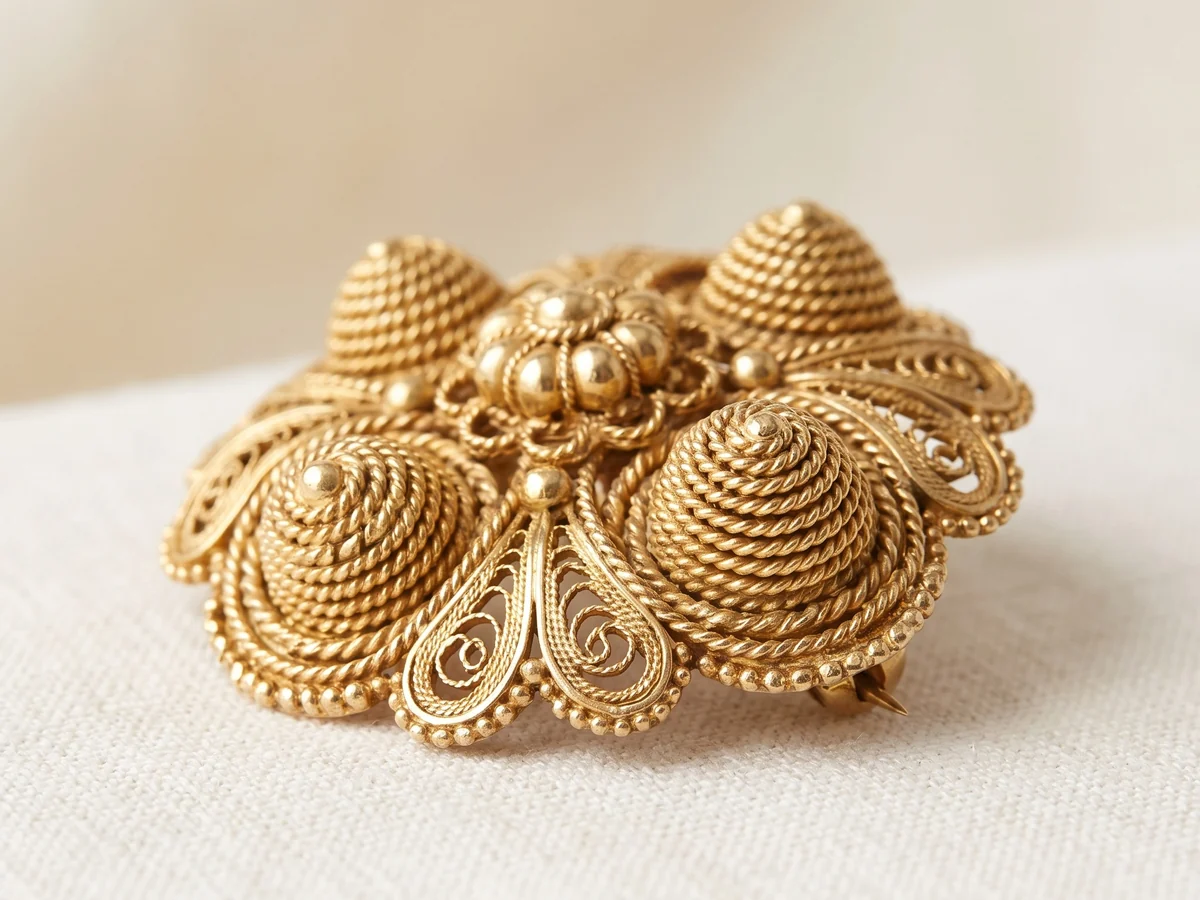
Cannetille, first in England, then in France, raises gold wire into coils. It is named after a French embroidery worked in twisted gold thread, and it looks stitched rather than cast. Raised and springy, it dents easily, so crisp examples are the ones collectors want. See Georgian jewellery.
Portugal: the Viana heart
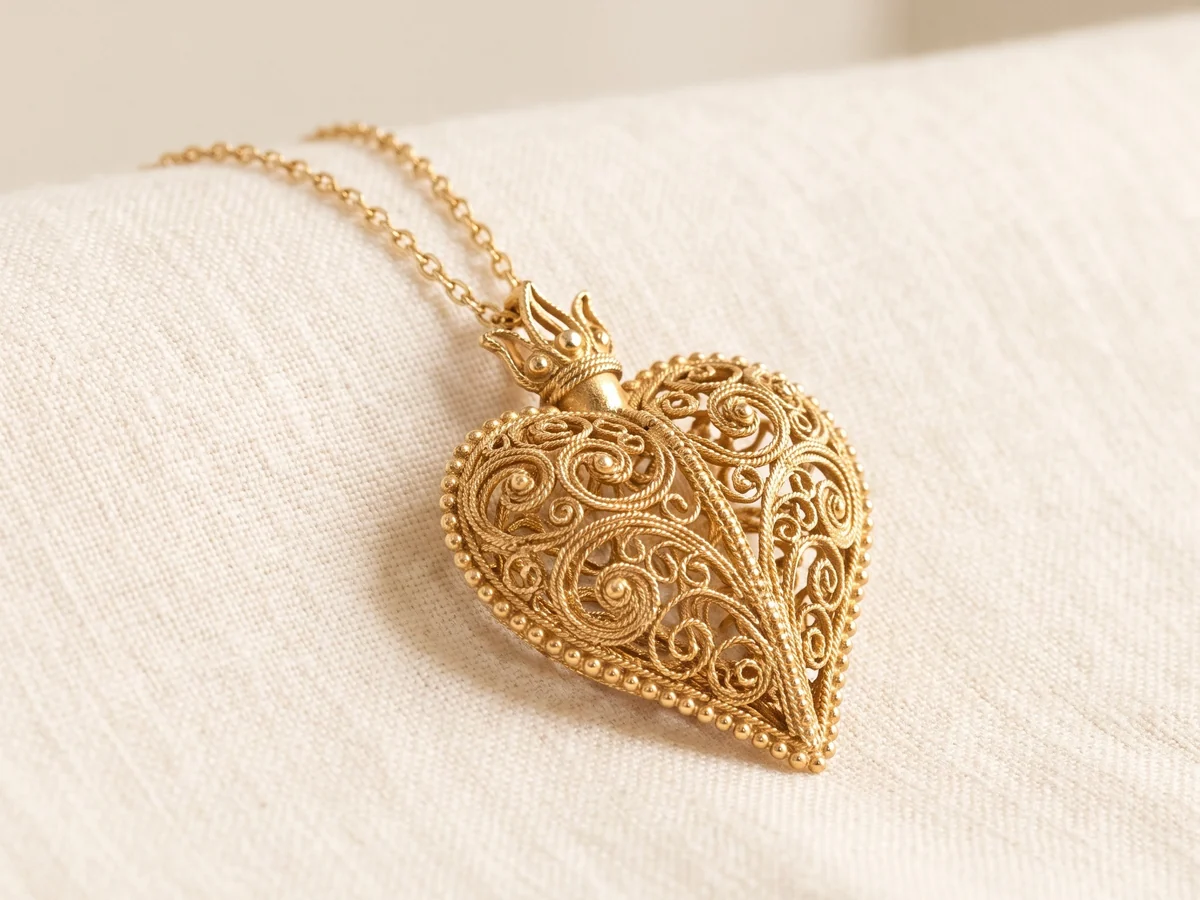
Northern Portugal still makes filigree today, in Gondomar, Póvoa de Lanhoso and Viana do Castelo, home of the filigree Viana heart: a heart built entirely of wire scrolls.
India: silver filigree
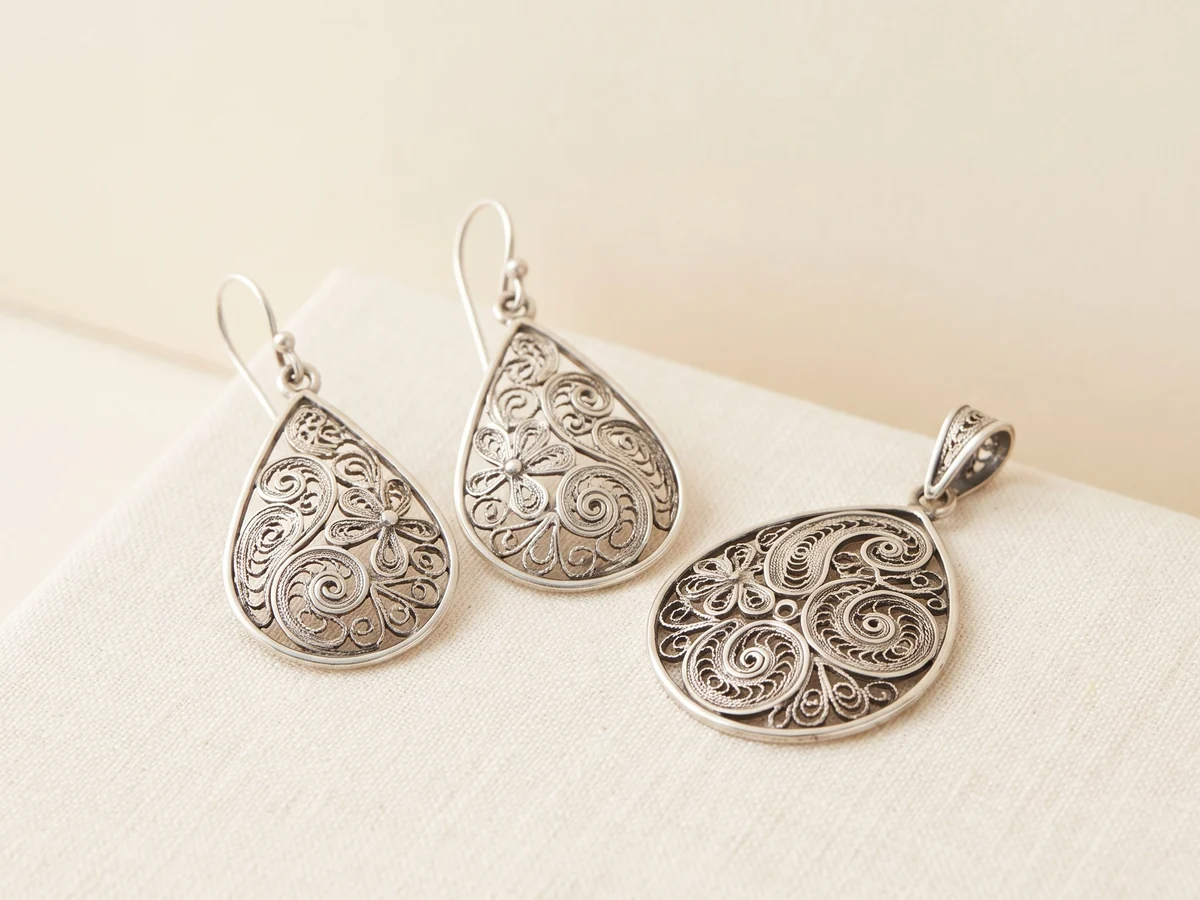
Indian filigree is centuries old and still made. Cuttack silver filigree, Rupa Tarakasi, received a geographical indication tag in 2024; Karimnagar is another centre.
Filigree engagement rings: Edwardian and Art Deco
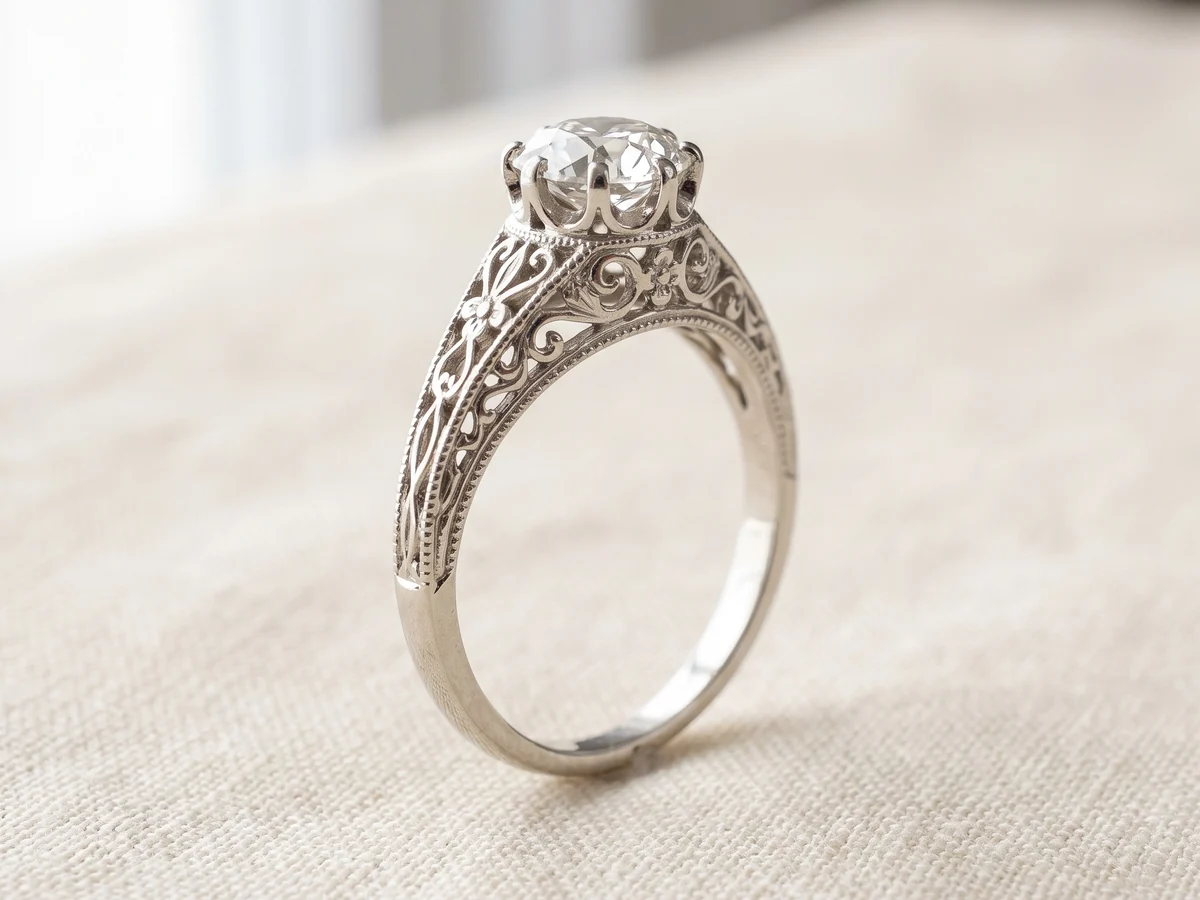
Many rings sold as "filigree engagement rings" are not wire filigree at all, but lace-like mounts made in other ways:
- Edwardian, about 1901 to 1915: platinum allowed very fine mounts, often pierced with a saw and edged with millegrain beading.
- 1910s to 1930s: many white gold and platinum rings, above all American ones, were die-struck: stamped by a steel die, then finished by hand. David Belais patented a white gold alloy in 1917, and his rings are typical of the look.
- Real wire filigree rings: less common and usually lighter. Underneath you see separate wires and solder joints, not one continuous sheet.
Die-struck and pierced mounts are genuine period work, not fakes, but a seller should name the technique. Sharp detail that has not been worn smooth is what to look for. Browse Art Deco engagement rings, or read our antique engagement ring buying guide.
Cannetille vs filigree vs granulation
| Filigree | Cannetille | Granulation | |
|---|---|---|---|
| Made from | Fine wire, often twisted and flattened | Wire coiled tightly like a spring | Tiny spheres of gold |
| Shape | Flat: a single layer of scrolls | Raised: domes, rosettes, beehive coils | A dotted or velvet-like surface |
| Height of fashion | All periods | About 1815 to 1840 | Ancient work and the revival from the 1850s |
How to spot handmade filigree vs cast "filigree-look"
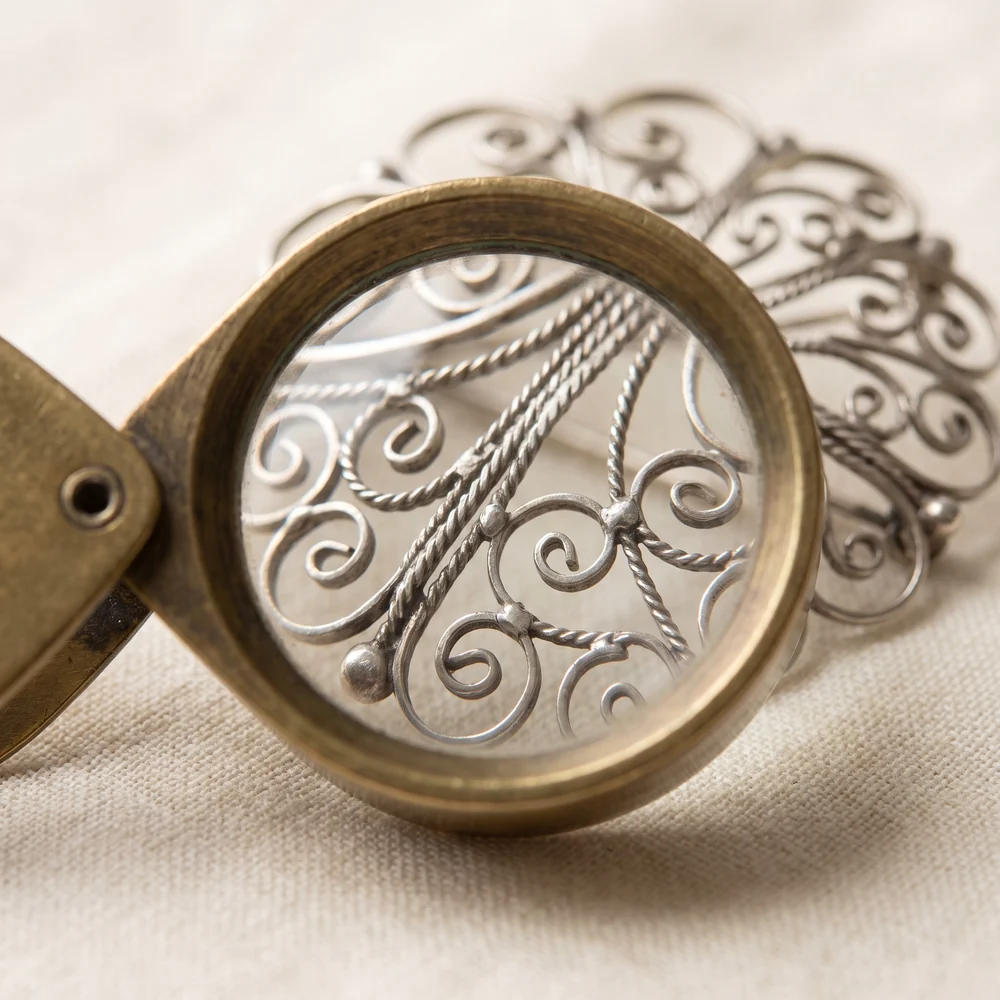
Much modern "filigree" is cast in a mould or stamped from sheet, which is cheaper to make. A 10x loupe settles most cases.
Handmade wire shows twist lines along each strand, spirals that stay open and slightly irregular, and tiny joints where the wires touch. A cast copy shows thick, smooth lines, gaps filled solid and identical repeats.
| Check | Handmade filigree | Cast or stamped |
|---|---|---|
| The wire | Visible twist lines or a beaded edge along each strand | Smooth, rounded lines with no twist |
| Junctions | Tiny solder joints where wires touch | Gaps filled solid, corners softened |
| Spirals | Slightly irregular, each one bent by hand | Identical repeats |
| Surface | Crisp edges, bright where polished | Small pits or a grainy skin from the mould |
| The back | Shows the same wires from behind | Cast: flat or hollowed out. Stamped: a mirror image of the front in thin sheet |
| Weight | Light for its size | Heavier for the same size |
Hallmarks tell you the metal, not the technique. A cast copy can be properly hallmarked silver or gold. See hallmarks vs maker's marks, and how to tell if gold is real.
Is filigree jewellery valuable?
Filigree uses little metal, so the gold or silver alone is rarely most of a piece's value. Collectors pay for the work, the age and the condition.
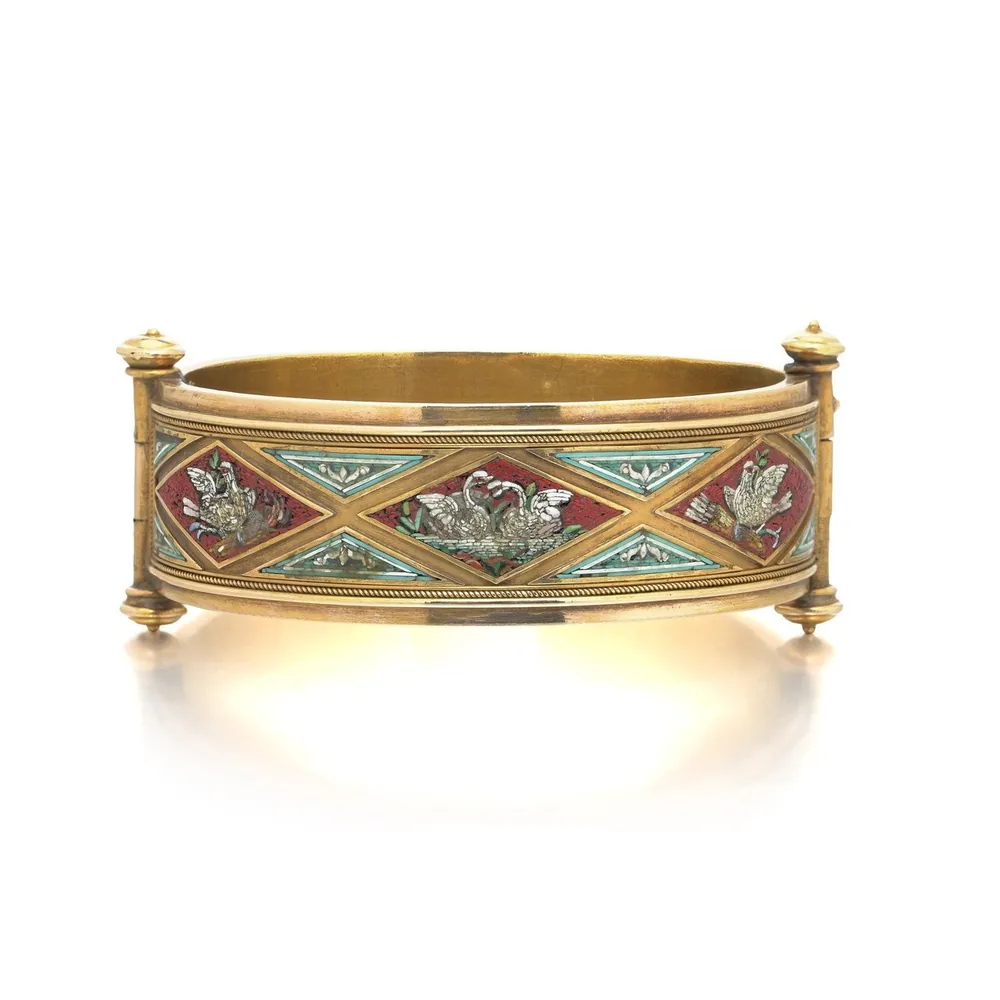
What decides the price
Adds value: fine handmade wirework, gold, a clear period such as Georgian cannetille or the archaeological revival, a known maker, crisp undamaged wires.
Holds it back: cast or stamped "filigree-look" metal, crushed or repaired areas, missing sections, modern souvenir silver.
Our micromosaic bangle is an example of the first kind.
Gold vs silver filigree
| Silver filigree | Gold filigree | |
|---|---|---|
| Where you find it | Most Indian and Portuguese work, and much souvenir jewellery | Portuguese hearts and earrings, archaeological revival, Georgian cannetille |
| Wear | Tarnish collects between the wires | Does not tarnish, but high carat gold is soft |
| Value | Mostly the workmanship: silver filigree contains very little silver | Workmanship plus gold, and the gold in a light piece is modest |
Indian gold jewellery, filigree included, is often 22ct. If you have family pieces, see selling 22ct Asian gold. For silver jewellery, see sell your silver jewellery.
As a guide, a 5 gram piece of 9ct gold contains 1.875 grams of pure gold, worth … at today's price. A good antique piece is worth more than that, which is why it pays to have it valued before selling it for scrap.
Loading the live gold price…
Enter the weight of the gold piece. This is the value of the gold at the spot price, not an offer for the jewellery.
Care and repair
- Clean gently: a soft brush, lukewarm water and a drop of mild washing-up liquid; rinse, then dry with a hairdryer on a cool setting so no water stays between the wires.
- No dips or abrasive polish: they lodge in the gaps and wear the twist off the wire.
- No ultrasonic cleaner: we do not use one on filigree, as the vibration can loosen fine joints.
- Store flat and on its own, so nothing catches the wires.
Bent or broken wires can be repaired, but it is specialist work. A torch flame near fine wire risks melting the work around the repair, which is why filigree repairs are often done with a laser welder. Ask to see examples of filigree repairs before you leave a piece.
Get a free quote for your filigree
How we can help
We buy and sell antique jewellery, including filigree, cannetille and archaeological revival gold, from our showrooms in Mayfair and Braintree. We judge the technique, the period and the metal, and we tell you what the piece is before we tell you what it is worth.
- Send photos
The front, the back and any marks. A close-up of the wirework helps. Use the form below or our free valuation form.
- Get an offer
We reply with a figure, usually within 24 hours. No obligation.
- Send or bring it
Insured postage, or an appointment at 47 Maddox Street, Mayfair or in Braintree, Essex. Call 01376 334482 or WhatsApp us.
- Get paid
By bank transfer the same day we receive and check the piece.
In our collection
Our archaeological revival gold ring sets an onyx intaglio between lion head shoulders, with granulation and a twisted wire collet.
Browse antique gold jewellery, Victorian and Edwardian pieces and bracelets, or see sell Georgian jewellery.
Send us photos for a quote
- Filigree is fine wire, twisted, scrolled and soldered into an open, lace-like pattern.
- Value lies in the workmanship, so have a piece valued before you sell it by weight.
Questions we are asked
What does filigree mean?
Filigree is decoration made from fine gold or silver wire, often twisted and flattened, bent into scrolls and spirals and soldered together to look like lace. The word comes from the Latin filum, thread, and granum, grain.
Is filigree real gold?
Filigree is a technique, not a metal. It is made in gold, silver and base metals. Check the hallmark or a fineness stamp such as 375, 750 or 925, or have the piece tested.
How can you tell if filigree is handmade?
Look with a 10x loupe. Handmade filigree shows twist lines along the wire, tiny solder joints and slightly irregular spirals. Cast copies have smooth, thick lines, filled-in junctions and identical repeats.
What is the difference between filigree and cannetille?
Filigree is a flat layer of wire scrolls. Cannetille, popular from about 1815 to 1840, is raised and three-dimensional, built from tightly coiled wire in rosettes, domes and beehive shapes.
Are Art Deco filigree rings handmade?
Most 1910s to 1930s filigree rings, above all American white gold ones, were die-struck: the pattern was stamped by a steel die and then finished by hand. They are genuine period work, but not wire filigree.
Is filigree jewellery valuable?
It depends on the workmanship, age, metal and condition. Filigree uses little metal, so fine handmade antique pieces are worth far more than their weight, while cast and souvenir pieces sell for modest sums.
Selling filigree or antique gold?
Send photos of the piece, the back and any marks. We buy antique and vintage jewellery directly, and the valuation is free.
- We buy directly
- Free valuation from photos
- Appointments in Mayfair and Braintree
- Insured postage or collection
New pieces reach our list first: join the Mozeris list.