Ancient Greek Jewellery: What They Actually Wore in Homer's World
Christopher Nolan's The Odyssey landed on 17 July and put Bronze Age Greece back on every screen. So what did people in Homer's world actually wear, and can you still buy any of it?
The Odyssey is set roughly in the Late Bronze Age, the Mycenaean world of around 1200 BC. That is a very long way from the classical Greece of the Parthenon, and the jewellery is completely different. Here is what people actually wore, how to tell Greek from Roman, and what is realistically collectable today.
Quick answer: what did ancient Greeks wear?
Gold, almost entirely: and worked incredibly thin. Greek goldsmiths were masters of granulation and filigree, building elaborate pieces from tiny beads and wires rather than carving heavy metal.
The signature items: fibulae (the safety-pin brooches that actually held clothing together), gold wreaths, hoop earrings ending in animal heads, and later the carved gemstones that Rome would take and run with.
Homer's world is not the Greece you're picturing
The Odyssey is set in the Mycenaean period, around 1200 BC. Most people picture classical Athens (marble columns, the Parthenon) but that is 700 years later. The gap between Odysseus and Socrates is bigger than the gap between us and the Norman conquest.
Mycenaean jewellery is heavier, more Minoan-influenced, and often mould-made: gold discs and rosettes sewn onto clothing, thick beaten bands, and the famous gold masks from the shaft graves. Classical and Hellenistic work is finer and more technically dazzling: that's the granulation and filigree Greek goldsmithing is famous for.
The pieces that defined Greek jewellery
| Item | What it was | Why it mattered |
|---|---|---|
| Fibula | A pin-and-catch brooch, effectively an early safety pin | Clothing had no buttons. The fibula literally held your outfit together, the most common ancient find. |
| Gold wreath | Laurel, olive, oak or myrtle leaves in thin sheet gold | Victory, honour and burial. Extremely fragile, intact ones are museum pieces. |
| Hoop earrings | Tapering hoops ending in a lion, ram or bull's head | The signature Hellenistic look, endlessly copied in the 19th century. |
| Granulation work | Thousands of tiny gold spheres fused into patterns | The technical peak. Victorians spent decades trying to rediscover how it was done. |
| Engraved gems | Carved scarabs and later intaglios in carnelian and agate | Began as Egyptian-influenced seals; Rome inherited the form wholesale. |
Silver and bronze were used too, but gold survives, which skews what we see in collections and museums.
Greek or Roman? The quick test
Most "ancient" jewellery on the market is Roman, not Greek: Rome produced vastly more of it, over a longer period, across a bigger empire. A few honest pointers:
- Granulation and filigree that looks almost impossibly fine leans Greek/Hellenistic or Etruscan.
- Heavy, solid gold rings with a large flat bezel lean Roman: Romans wore chunkier, more architectural jewellery.
- Animal-head terminals on hoops and bracelets are a Hellenistic signature.
- Carved intaglios set into substantial rings are overwhelmingly Roman, and the most collectable ancient pieces still available at sensible money. See our intaglio guide.
What you can realistically buy
Three honest tiers, from most to least attainable:
- Roman intaglios and rings, genuinely ancient, genuinely wearable, and available from a few hundred to a few thousand pounds depending on carving and setting.
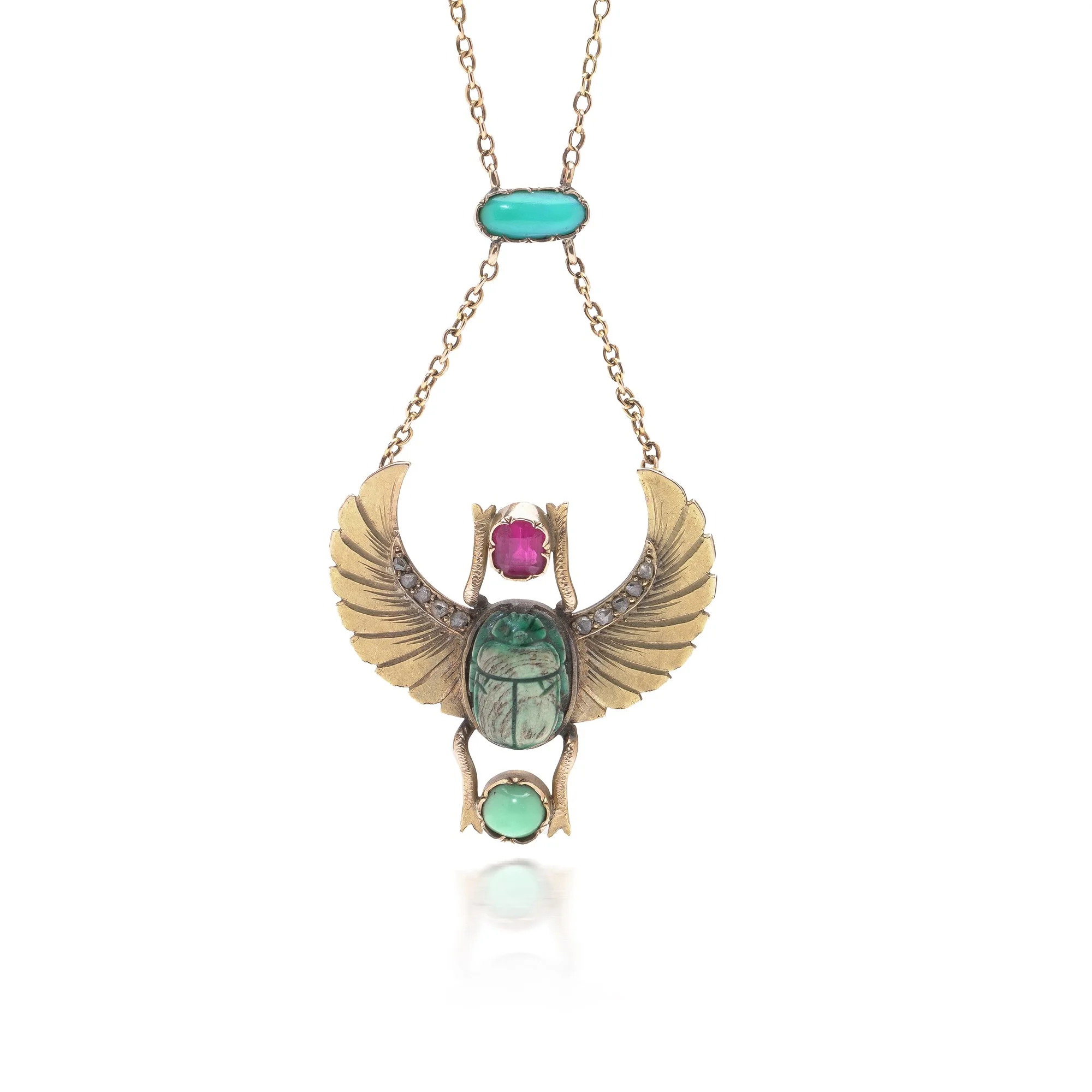
- 19th-century archaeological revival: Victorian goldsmiths like Castellani obsessively recreated Greek and Etruscan granulation. These are Victorian, should be described as Victorian, and are superb pieces in their own right.
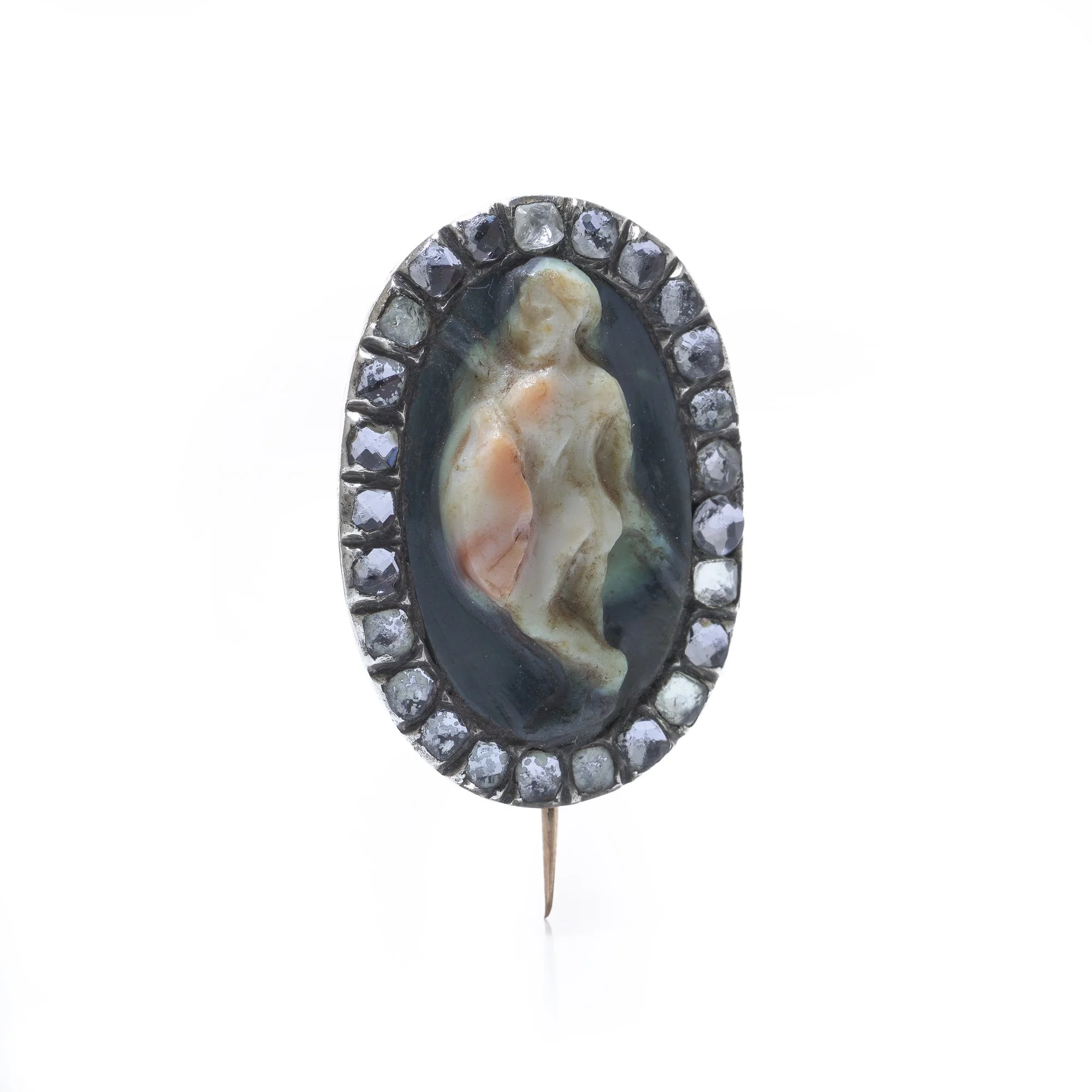
- Grand Tour souvenirs, micromosaics and carved shell cameos of classical subjects, bought by wealthy travellers in the 1800s. Charming, collectable, and honest about what they are.
Below: a genuinely ancient Roman carnelian intaglio alongside 19th and early-20th-century revival pieces. Seeing them together is the quickest way to learn the difference:


The Greek key: the pattern that outlived everything
One Greek motif never went away: the meander, or Greek key. It borders Athenian pottery, runs along temple friezes, edges Regency silver, frames Art Deco brooches and became Versace's signature in 1978. An unbroken line with no beginning and no end, read as eternity and unity. More in what the Greek key means.
Think you own one? Find out what it’s worth.
Inherited something classical-looking and not sure whether it's ancient, Victorian revival or a holiday souvenir? Send photographs: we'll tell you straight, including when the honest answer is "we can't be certain".
✓ Free expert valuation in 24h ✓ Same-day payment ✓ 10,000+ items traded · 5★ rated
Explore Further
Frequently Asked Questions
Ancient Greek jewellery, answered.
What jewellery did ancient Greeks actually wear?
Mostly gold, worked very thin: fibulae (pin brooches that fastened clothing), gold wreaths of laurel or olive leaves, hoop earrings with animal-head terminals, and elaborate granulation and filigree work. Silver and bronze were used too, but gold is what survives.
Is The Odyssey set in classical Greece?
No. It's set in the Late Bronze Age, around 1200 BC, the Mycenaean world. Classical Athens and the Parthenon are roughly 700 years later, and the jewellery of the two periods looks completely different.
What is a fibula?
An ancient brooch that works like a safety pin. Because clothing had no buttons, fibulae physically held garments together, which is why they're among the most common surviving ancient metal objects.
Can you buy genuine ancient Greek jewellery?
Rarely, and carefully. Genuine Greek gold is scarce, mostly museum-held, and Greece enforces strict export controls. Roman pieces are far more available. Anything ancient should come with documented provenance.
How do I tell Greek jewellery from Roman?
Exceptionally fine granulation and filigree, and animal-head terminals on hoops, lean Greek or Hellenistic. Heavy solid rings with large flat bezels and carved intaglios lean Roman. Roman pieces are far more common on the market.
What is archaeological revival jewellery?
19th-century work, Castellani and others: that recreated ancient Greek and Etruscan techniques, especially granulation. It's Victorian, not ancient, and should be described as such, but it's highly collectable in its own right.
Is ancient jewellery safe to wear?
Ancient gold is often high-carat and soft, and settings can be fragile. Most collectors wear Roman intaglio rings occasionally rather than daily, and keep wreaths and thin sheet-gold pieces purely as collection items.