Jewellery history
Famous Jewel Heists in the UK: The British Jewel Theft Register, 1671 to Today
Britain's most famous jewel heists run from Colonel Thomas Blood's raid on the Crown Jewels in 1671 to the Hatton Garden vault burglary of 2015 and the Portland Tiara theft of 2018. Our register lists 60 cases with sources: what was taken, whether it came back and whether anyone was convicted. Everything was recovered in only 4 of them.

- 60 cases, 1671 to 2024: every row links its source.
- Recovery is rare: everything came back in 4 cases, part in 12.
- Jewellers are the main target: 24 cases, most since 2000.
- Records help: photographs, hallmark close-ups and paperwork make a stolen piece identifiable.
In this article
- The register: British jewel thefts since Colonel Blood
- What the register shows: recovery, convictions and targets
- Five cases in brief
- Why stolen jewels are broken up
- How to record your jewellery so it can be identified
- Buying safely: provenance and stolen property registers
- Selling family jewellery safely
- Questions
The register: British jewel thefts since Colonel Blood
The register lists 60 jewel thefts and attempts in Britain and Ireland from 1671 to 2024, each with its date, place, what was taken, whether it was recovered and whether anyone was convicted, and a link to the source. Dublin is included for 1907, when Ireland was part of the United Kingdom.
On 19 October 2025 thieves took eight pieces of the French crown jewels from the Louvre in Paris. As the first anniversary comes round, this register sets out the British record. The Paris theft itself is told in our Louvre crown jewels heist guide.
| Date | Place | What was taken | Recovered | Conviction | Source |
|---|---|---|---|---|---|
| 9 May 1671 | Tower of London | The crown and orb of the Crown Jewels; the sceptre was left partly filed through | All | No: pardoned | The National Archives |
| 15 May 1855 | London to Folkestone train, Kent | Gold bars and coin bound for Paris, swapped for lead shot | Not reported | Yes | Historic UK |
| 12 Dec 1874 | Paddington station, London | The Countess of Dudley's jewel case | None | Not reported | Wikipedia |
| Found missing 6 Jul 1907 | Dublin Castle, Dublin | The Irish Crown Jewels: insignia of the Order of St Patrick | None | No | Dublin Castle |
| 16 Jul 1913 | Post from Paris to Hatton Garden, London | A necklace of 61 pink pearls, replaced in the parcel with lumps of sugar | Part: all but one pearl | Yes | Lloyd's |
| Dec 1937 | Hyde Park Hotel, Knightsbridge | Cartier diamond rings, taken from a salesman in a hotel room | Not reported | Yes | Johns Hopkins University Press |
| 16 Oct 1946 | Ednam Lodge, Sunningdale, Berkshire | The Duchess of Windsor's jewel case | Part | No | Yorkshire Evening Post |
| 1948 | Victoria and Albert Museum, London | Two jewelled swords presented to the Duke of Wellington | Not reported | Not reported | Wikipedia |
| 1951 | National Maritime Museum, Greenwich | Nelson's diamond chelengk, a gift from the Ottoman Sultan | None | Not reported | The History Press |
| 1960 | Elstree, Hertfordshire | Sophia Loren's jewellery, taken while she was filming in England | None | No | Deseret News (AP) |
| 9 Dec 1965 | Apsley House, London | A Garter jewel, a Golden Fleece jewel and a jewelled Russian field marshal's baton; the baton is still missing | Not reported | Not reported | Wikipedia |
| 20 Mar 1966 | Central Hall, Westminster | The Jules Rimet (World Cup) Trophy, on show at a stamp exhibition | All: found by a dog, Pickles | Yes: one man, over the ransom demand | History |
| 11 Sep 1971 | Lloyds Bank, Baker Street, London | The contents of safe deposit boxes, reached by a tunnel | Part | Yes | History.com |
| Sep 1980 | Graff, Sloane Street, London | Jewellery including the Marlborough Diamond, which is still missing | Not reported | Yes | Luxury London |
| 1983 | Waddesdon Manor, Buckinghamshire | Eighty gold boxes from the Rothschild collection | All | Not reported | Antiques Trade Gazette |
| 26 Nov 1983 | Brink's-Mat warehouse, Heathrow | Gold bullion, diamonds and cash | Part | Yes | World Gold Council |
| 12 Jul 1987 | Knightsbridge Safe Deposit Centre, London | The contents of more than 120 safe deposit boxes | Not reported | Yes | Wikipedia |
| 1993 | Graff workshop, Hatton Garden, London | Jewellery | Not reported | Not reported | Evening Standard |
| 7 Nov 2000 | Millennium Dome, Greenwich | An attempt on the De Beers diamond display; the stones had already been replaced with replicas | Nothing taken | Yes | Wikipedia |
| May 2003 | Graff, New Bond Street, London | 47 pieces of jewellery | Part | Yes | Jeweller Magazine |
| 10 Jun 2003 | Waddesdon Manor, Buckinghamshire | More than 100 gold boxes and other objects from the Rothschild collection | Part: one box, in 2021 | No | Waddesdon Manor |
| 2003 | Hatton Garden Safe Deposit, London | Jewellery and cash from safe deposit boxes | Not reported | Not reported | IDEX |
| May 2005 | Graff, Sloane Street, London | Jewellery, taken by three armed men | Not reported | Not reported | Wikipedia |
| 5 Jul 2007 | Graff, Sloane Street, London | Jewellery, taken at gunpoint by two men posing as buyers | Not reported | Not reported | Courthouse News |
| 6 Aug 2009 | Graff, New Bond Street, London | 43 rings, bracelets, necklaces and watches | None | Yes | Nation News (AP) |
| Oct 2009 to 2010 | Roads in England, the first near Barnsley | Jewellery taken from travelling dealers in nine robberies | Not reported | Yes | Yorkshire Post |
| Aug 2010 | Chatila, Old Bond Street, London | Jewellery stock and cash, taken by burglars posing as workmen | Not reported | Yes | BBC News |
| Apr 2012 | Oriental Museum, Durham | An 18th-century jade bowl and a porcelain figure | All | Yes | The Art Newspaper |
| 13 Apr 2012 | Fitzwilliam Museum, Cambridge | 18 Chinese jade objects | None | Yes | Museums Association |
| Nov 2012 | Fraser Hart, Brent Cross, London | Jewellery and watches, taken by raiders on motorcycles | Not reported | Not reported | Jeweller Magazine |
| Jun and Jul 2014 | The Dorchester, Park Lane, London | Jewellery and watches from the hotel boutique, in two moped raids | Not reported | Yes | The Caterer |
| Jun 2014 | Hamilton & Inches, George Street, Edinburgh | Watches and gem-set jewellery | Not reported | Yes | Edinburgh Evening News |
| Jul 2014 | Lochiehead House, Auchtermuchty, Fife | Family jewellery from a safe, later sold to jewellers | Not reported | Yes: for resetting the jewellery | The Courier |
| Sep 2014 | Rox, Argyll Arcade, Glasgow | 21 watches from a jeweller's shop | None | Yes | The Scotsman |
| 4 Dec 2014 | Fattorini, Parliament Street, Harrogate | Jewellery and watches from an open safe | Not reported | Yes | Ripon Gazette |
| Feb to Aug 2015 | Tunbridge Wells, Kent, and Halifax, West Yorkshire | Jewellery from a Tunbridge Wells shop; a planned raid in Halifax was stopped by police | Not reported | Yes | Halifax Courier |
| 2 Mar 2015 | Laing, Frederick Street, Edinburgh | 27 watches; the robber dropped three as he fled | Part | Yes | Jewellery Focus |
| Mar 2015 | Mappin & Webb, Old Course Hotel, St Andrews | A planned raid, stopped by police before it began | Nothing taken | Yes | The Courier |
| 24 Mar 2015 | Berry's, Albion Street, Leeds | Watches; 64 were later recovered | Part | Yes | Yorkshire Post |
| Easter, Apr 2015 | Hatton Garden Safe Deposit, London | Jewellery, gems, gold and cash from 73 safe deposit boxes | Part | Yes | Judiciary of England and Wales |
| 13 Jan 2016 | Goodwood House, West Sussex | Jewellery from a safe, including a tiara and an emerald intaglio ring linked to Charles II | Not reported | Not reported | Sussex Express |
| Mar 2016 | Boodles, Mayfair, London | Seven diamonds, swapped for pebbles by sleight of hand | None | Yes | Yahoo News (PA) |
| 6 Jan 2017 | SP Green, Jewellery Quarter, Birmingham | Jewellery, taken in an armed raid | Part | Yes | LBC |
| Jun 2017 | Grey-Harris and Co, Clifton, Bristol | Jewellery, taken in an armed smash and grab | Not reported | Not reported | Jewellery Focus |
| 16 Aug 2017 | Boodles, Basil Street, Knightsbridge | Jewellery from the window displays, in a moped raid | Not reported | Yes | Islington Tribune |
| 16 May 2018 | Sunny Jewellers, Newcastle | Jewellery from smashed display cabinets | Not reported | Yes | Oldham Chronicle |
| 9 Jul 2018 | Glebe House, Bibury, Gloucestershire | Diamond rings, a tiara, a Cartier bracelet and antique silver | Not reported | Not reported | Antiques Trade Gazette |
| Jul 2018 to Jan 2019 | Homes in Swansea, Neath, Port Talbot and Llanelli | Family gold and jewellery from more than 70 houses | Not reported | Yes | Glamorgan Gazette |
| 20 Nov 2018 | Harley Gallery, Welbeck, Nottinghamshire | The Portland Tiara, made by Cartier in 1902, and a diamond brooch | None | Yes | Forres Gazette (PA) |
| 13 May 2019 | Elmsleigh Centre car park, Staines, Surrey | A suitcase of jewellery, taken from a salesman | Not reported | Yes | Surrey Live |
| 31 Aug 2019 | Miena Jewellery, Edinburgh | Gold and silver jewellery, gold bars, coins and watches | Not reported | Yes | Crown Office (COPFS) |
| 8 Sep 2019 | Sudeley Castle, Gloucestershire | A Fabergé gold cigarette case, a Cartier watch and a gold box from a display | Not reported | Yes: one man | Daily Express |
| 14 Sep 2019 | Blenheim Palace, Oxfordshire | America, an 18ct gold toilet by Maurizio Cattelan | None | Yes | CBS News (AP) |
| 23 Sep 2019 | Walker the Jeweller, Union Street, Dundee | Two Rolex watches | Not reported | Yes | Crown Office (COPFS) |
| Dec 2019 | Homes in Kensington and Chelsea, London | Jewellery, diamonds and cash from three houses | Not reported | Yes | ITV News |
| 21 May 2021 | Arundel Castle, West Sussex | Gold rosary beads of Mary, Queen of Scots, and gold and silver coronation cups | Not reported | Not reported | Smithsonian Magazine |
| Made public Aug 2023 | British Museum, London | Items from the collection, mostly ancient gems and jewellery, found missing, stolen or damaged | Part: 654 items | Not reported | British Museum |
| Sep to Nov 2023 | Six family homes in Wrexham | Family gold jewellery | Not reported | Yes | Wrexham.com |
| Dec 2023 to Jul 2024 | Homes across south London | Gold jewellery, mainly from South Asian families | Part | Yes | Metropolitan Police |
| 7 Dec 2024 | Avenue Road, St John's Wood, London | Jewellery, handbags and cash from a private house | Not reported | Not reported | Westminster Extra |
How we built it: thefts of jewellery, gems and gold objects, and raids on jewellers, reported by court records, prosecutors, police, museums or the national and regional press. Values are left out because early estimates and insurance figures rarely agree. “Not reported” means our sources do not say. Compiled by Mozeris Fine Antiques, October 2026. Corrections with a source are welcome at info@mozerisfineantiques.com.
What the register shows: recovery, convictions and targets
Full recovery is rare. Everything came back in 4 of the 60 cases and part came back in 12. In 10 our sources say nothing was recovered, and in 32 they do not say. Someone was convicted in 39 cases.
| Period | Cases | All back | Part back | Convicted |
|---|---|---|---|---|
| To 1899 | 3 | 1 | 0 | 1 |
| 1900 to 1999 | 15 | 2 | 4 | 7 |
| Since 2000 | 42 | 1 | 8 | 31 |
| Total | 60 | 4 | 12 | 39 |
| Target | Cases | Convicted |
|---|---|---|
| Jeweller or dealer | 24 | 19 |
| Private home | 9 | 5 |
| Museum or exhibition | 9 | 5 |
| Country house | 6 | 2 |
| In transit | 5 | 4 |
| Vault, bank or warehouse | 5 | 4 |
| Royal regalia | 2 | 0 |
Jewellers and dealers are the most frequent target, with 24 cases, most of them since 2000. Private homes and museums follow with 9 each, then country houses with 6: Waddesdon Manor twice, Goodwood, Sudeley, Blenheim and Arundel. Graff's London premises appear six times between 1980 and 2009, and Hatton Garden in four rows.
Convictions are more common than recoveries. Cases solved by the police often still end with the jewels missing, as at Graff in 2009, Boodles in 2016 and Welbeck in 2018.
Five cases in brief
These five cases cover the range: a raid on the royal regalia, an unsolved disappearance, a country house, a jeweller's showroom and a safe deposit vault.
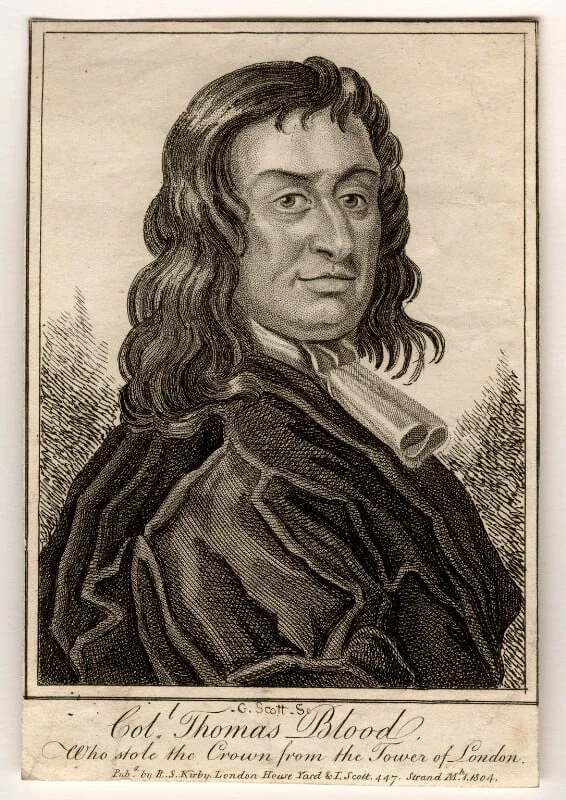

1671: Colonel Blood and the Crown Jewels
In May 1671 Colonel Thomas Blood and his accomplices attacked the Keeper of the Jewel House at the Tower of London and made off with the crown and the orb, leaving the sceptre partly filed through. They were caught at the Tower and the regalia were recovered, with some stones loose or missing.
Charles II pardoned him. The diarist John Evelyn wrote that he “could never come to understand” why.
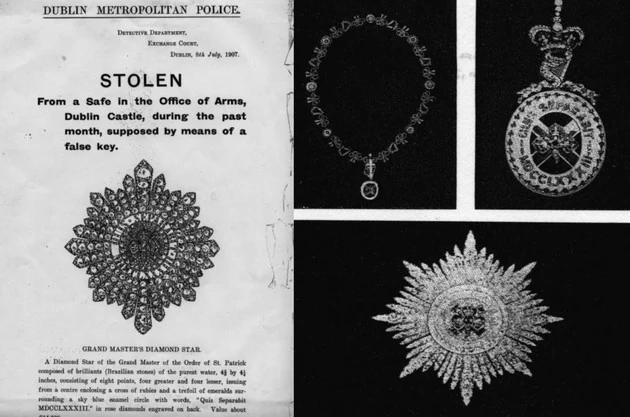

1907: the Irish Crown Jewels
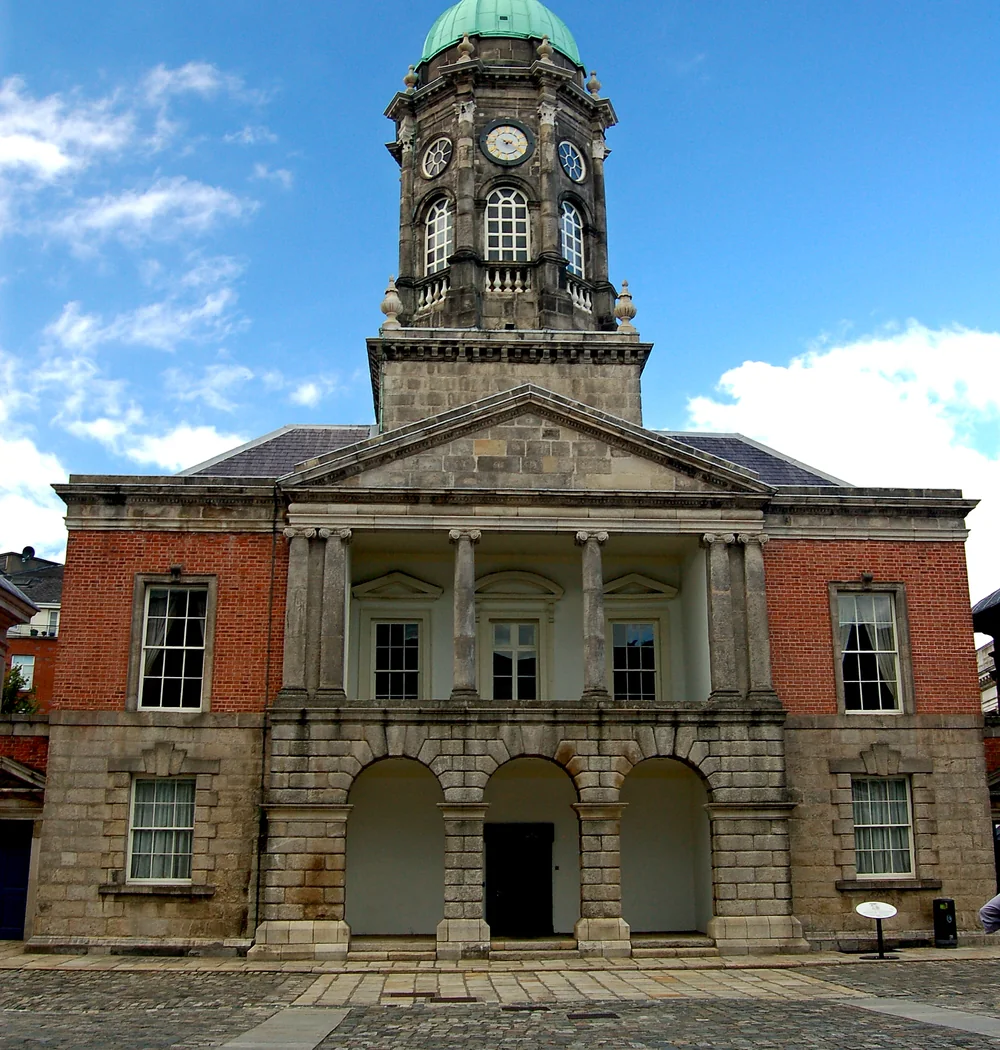
The insignia of the Order of St Patrick, including the Grand Master's diamond star and badge, were kept in a safe in the Office of Arms at Dublin Castle. They were found to be missing on 6 July 1907, days before King Edward VII arrived in Dublin.
The police notice said they were taken “by means of a false key”. The case was never solved and the jewels have never been found.
_-_geograph.org.uk_-_3689951.jpg)
2003: the Waddesdon gold boxes
At about 2am on 10 June 2003 a masked gang broke a window at Waddesdon Manor in Buckinghamshire and, within minutes, took more than 100 gold boxes and other objects from the Rothschild collection, most of them 18th-century French. In August 2021 the Art Loss Register identified one of the boxes when it was offered at a UK auction house, and it went back on display at Waddesdon in 2022.
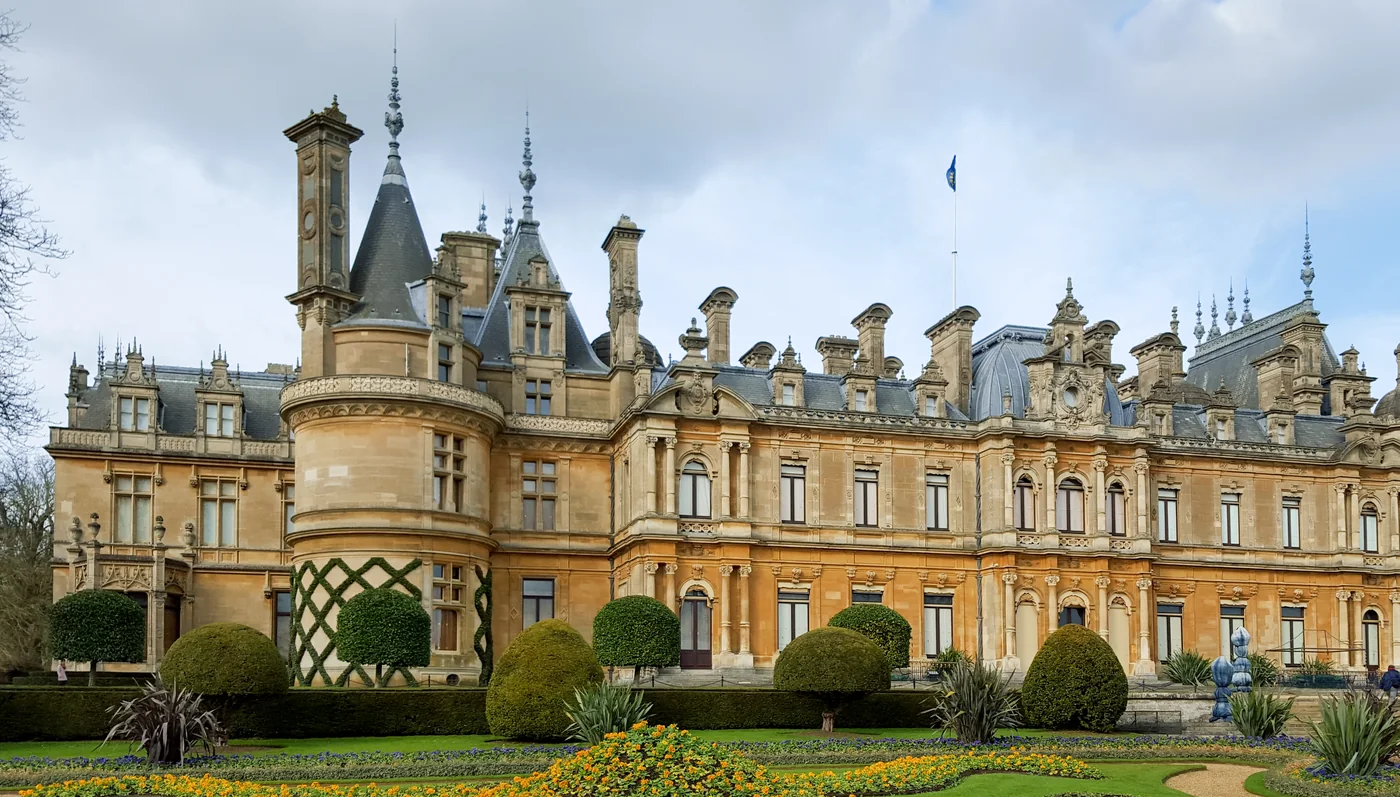

2009: Graff, New Bond Street
On 6 August 2009 two men posing as customers took 43 rings, bracelets, necklaces and watches from Graff in New Bond Street at gunpoint. Men were convicted and jailed in 2010. None of the jewellery has been recovered.
2015: the Hatton Garden vault
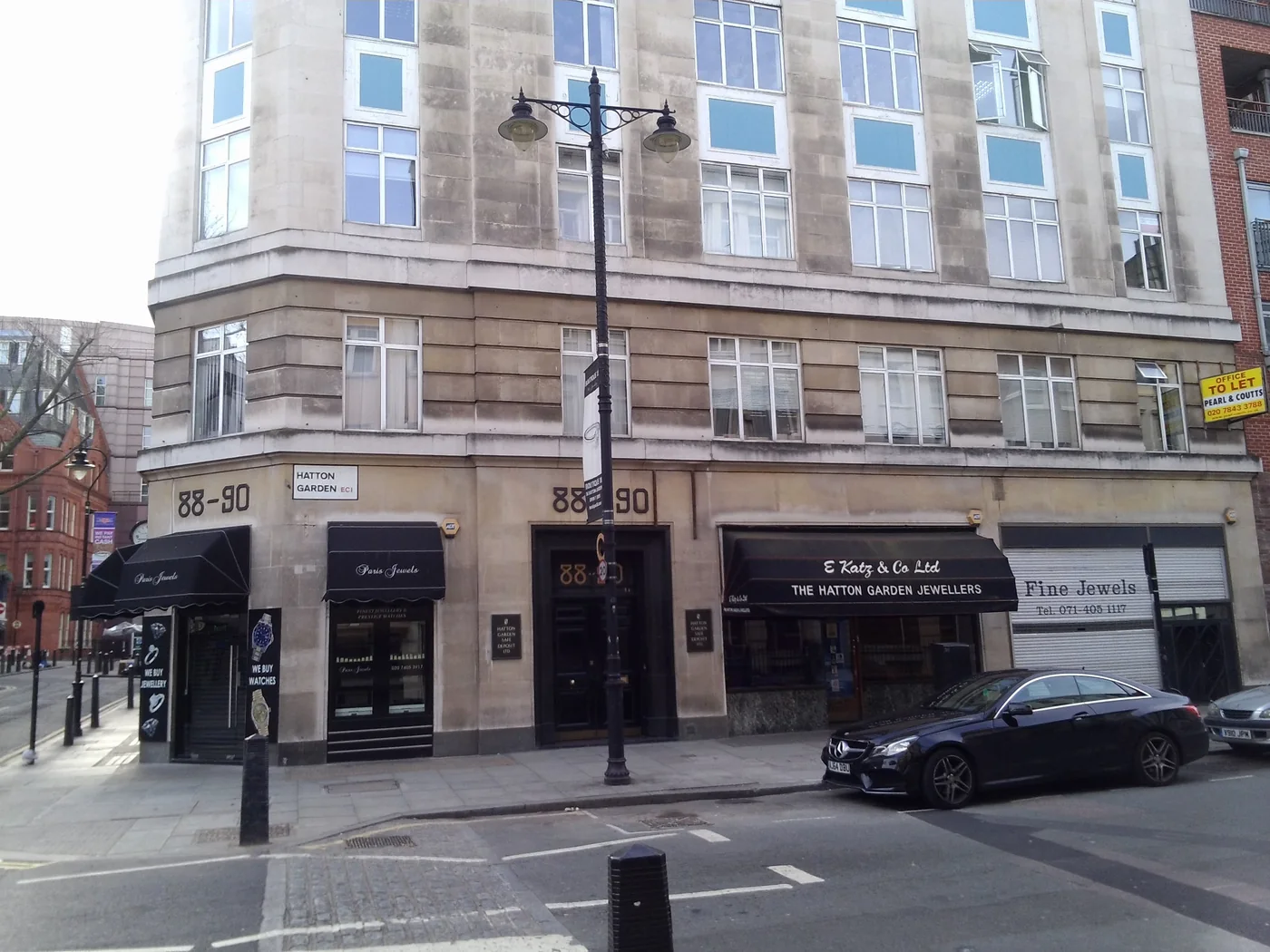
Over the Easter weekend of 2015 a gang got into 88-90 Hatton Garden, drilled through the vault wall of Hatton Garden Safe Deposit Ltd and broke into 73 boxes. The judge said the loss was “on an unprecedented scale” when he sentenced them in March 2016. Part of the haul was recovered; about two thirds of the valuables have not been found.
Why stolen jewels are broken up
A famous jewel is easy to recognise, but its loose stones and melted metal are not. That is why so many rows in the register end in “None”.
- The Portland Tiara. Made by Cartier in 1902 and stolen from the Harley Gallery in 2018. Three men were convicted, and the tiara is thought to have been broken up for its stones. Our antique tiaras guide explains how tiaras of that period were made.
- The Blenheim gold toilet. The prosecution said none of the gold was ever recovered; it is believed to have been cut up and sold.
- Brink's-Mat. Much of the gold taken at Heathrow in 1983 is thought to have been melted, recast and returned to the market.
Our Louvre guide looks at why historic stolen jewels are almost impossible to sell whole. For how signed pieces are identified, see our signed jewellery guide.
Free valuation
Request a free valuation
If you own jewellery with a story of its own, send us a few photos and a specialist will reply by email with an estimate within one working day.
What to photograph
- The whole piece. Front on, in good daylight.
- The marks. Hallmarks, signatures or numbers, close up.
- Any paperwork. Receipts, certificates or an old valuation.
Prefer email? Send photos to info@mozerisfineantiques.com or call 01376 334482. There is no obligation to sell.
How to record your jewellery so it can be identified
Photograph each piece, close up its marks, write down the details and keep the paperwork somewhere else. A record like this helps the police, insurers and stolen property registers match a recovered piece to its owner.
- Photograph the whole pieceFront, back and side, on a plain background, with a ruler beside it for scale.
- Close up the marksHallmarks, maker's marks, serial numbers and inscriptions, sharp enough to read.
- Write a descriptionMetal, stones and how many, measurements, repairs, damage and anything unique.
- Keep the paperworkReceipts, certificates, valuations and boxes, with copies stored away from the jewellery.
- Keep it currentAdd new pieces when you buy, inherit or alter them.
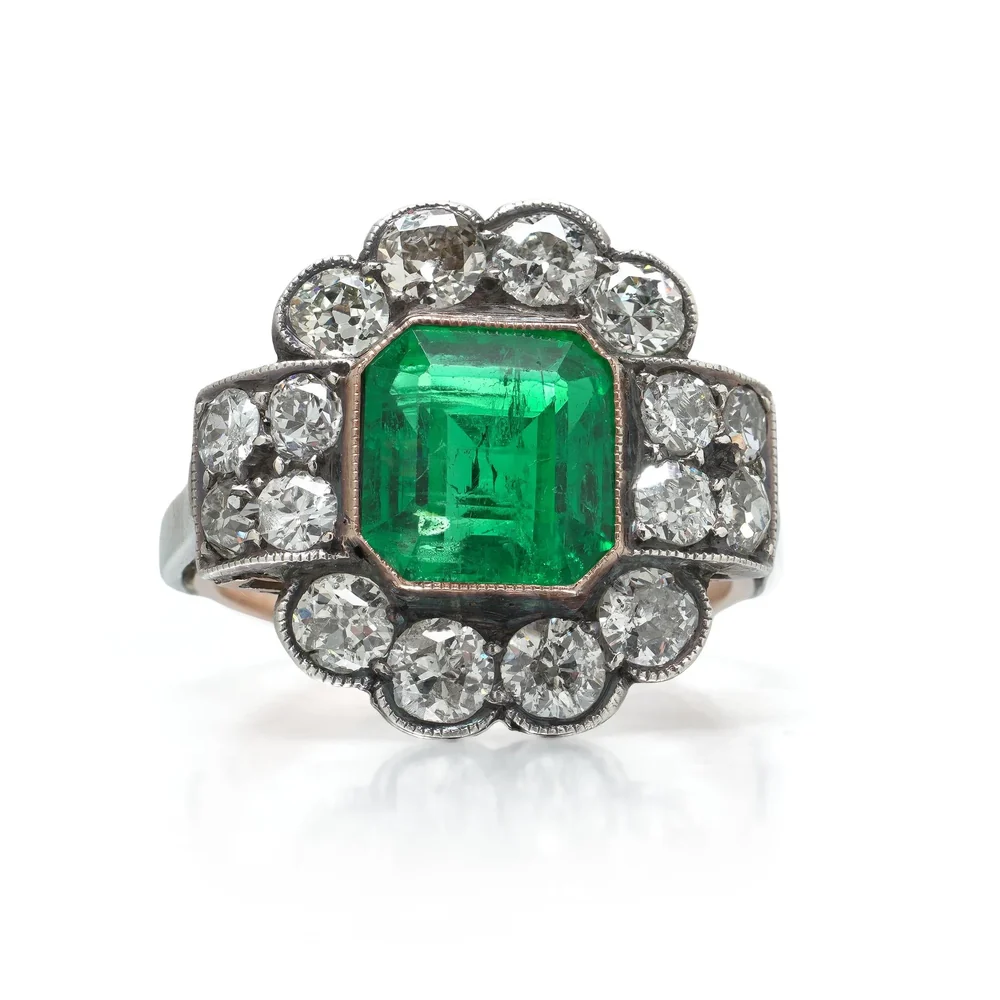
What a useful photograph looks like
Sharp, front on, on a plain background, with nothing else in the frame. Then the back, the side and every mark.
For reading the marks, see our guides to gold hallmarks and stamps, silver hallmarks and hallmarks and makers' marks.
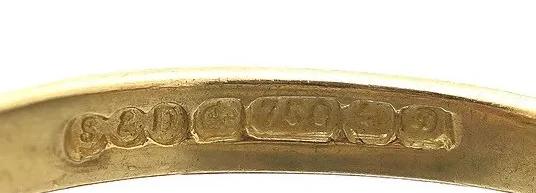
Inherited pieces deserve the same care: our inherited jewellery guide explains what to do first. If you would like a specialist description of a piece, send us photos for a free valuation.
Buying safely: provenance and stolen property registers
Ask where a piece has been, and check valuable items against a stolen property register before you buy. Due diligence works: the Waddesdon gold box came to light in 2021 because the auction house checked it with the Art Loss Register.
A reputable seller can explain a piece's marks, period and history. Our guides to how we authenticate antique jewellery and provenance set out what we check, and the Louvre guide covers stolen-art registers in more detail. Browse our jewellery collection and Victorian jewellery.
Selling family jewellery safely
Sell to an established buyer who checks where pieces come from and pays by bank transfer. Expect questions about how you came to own a piece: they protect you as well as the buyer.
How selling works
- Send photosUse the form on this page, or email them to us.
- A specialist reviews itMaker, marks, age and condition.
- Free estimate by emailWithin one working day.
- You decidePaid by bank transfer once agreed. No obligation.
Ways to sell
- Mayfair, 47 Maddox Street (by appointment)
- Braintree, Essex (by appointment)
- Royal Mail Special Delivery
- Free FedEx collection
We buy directly, with payment once you accept our offer, and we can also sell for you by consignment or at auction. Mozeris has traded since 2015 and is five-star rated: read our Google reviews.
More on selling: antique jewellery, Victorian jewellery, gold jewellery, designer jewellery and inherited gold and probate.
- Our register lists 60 British jewel thefts with sources, from Colonel Blood in 1671 to 2024.
- Convictions are more common than recoveries: stolen jewels are often broken up.
- Record your own jewellery with photographs, close-ups of the marks and paperwork kept elsewhere.
- Buy and sell through established dealers who check provenance.
Questions we are asked
What is the biggest jewel heist in British history?
The Hatton Garden burglary of Easter 2015 was described as the largest burglary in English legal history, and the 2009 Graff robbery in New Bond Street was reported at the time as Britain's largest gems robbery. Neither haul has been fully recovered.
Were the Hatton Garden jewels ever recovered?
Only in part. The gang was convicted in 2016, but about two thirds of the valuables taken from the safe deposit boxes have never been found.
Were the Irish Crown Jewels ever found?
No. They were found to be missing from Dublin Castle on 6 July 1907 and the theft has never been solved.
What happened to Colonel Blood after he stole the Crown Jewels?
He was caught at the Tower of London in 1671, but Charles II pardoned him. The regalia were recovered, with some stones loose or missing.
Has the Portland Tiara been found?
No. Three men were convicted in 2022 over its theft from the Harley Gallery in 2018, but the tiara and the brooch taken with it have not been recovered.
How should I record my jewellery in case it is stolen?
Photograph each piece front, back and side with a ruler for scale, photograph the hallmarks and any inscriptions close up, write a short description and keep receipts and valuations stored away from the jewellery.
What should I do if I am offered jewellery I think is stolen?
Do not buy it. Keep any details you have about the seller and report it to the police on 101.
Can you value a piece of jewellery with a history?
Yes. Send us photos of the piece, its marks and any paperwork and we will reply with a free estimate within one working day, with no obligation to sell.
Value or sell a piece of jewellery
Tell us about the piece in the form below and we will reply by email with a free, no-obligation estimate within one working day.
Or call 01376 334482, WhatsApp us, or book an appointment in Mayfair or Braintree.