In this guide (10)
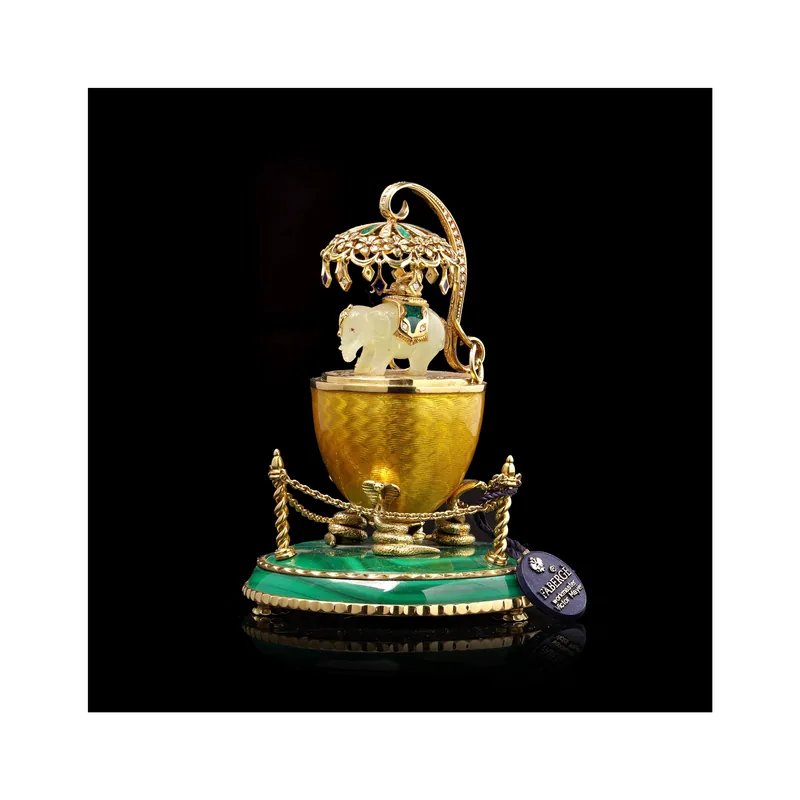
Fifty Imperial eggs followed for the last two Tsars, each with a surprise inside, until the revolution ended the series in 1917. This guide tells their story, from the first Hen Egg to the eggs still missing.
What is Fabergé?
Fabergé is a Russian jewellery house founded in St Petersburg in 1842 by Gustav Fabergé and made famous by his son Peter Carl Fabergé, jeweller to the Russian imperial court. It is best known for the 50 Imperial Easter eggs made for Tsars Alexander III and Nicholas II between 1885 and 1916.
The house before the eggs
Gustav Fabergé opened a jewellery shop in St Petersburg in 1842. His son Peter Carl took over in 1872 and turned it into a firm of many workshops, each run by a workmaster who signed his own work. The firm made jewellery, cigarette cases, frames and hardstone animals as well as eggs.
- 1842 Shop opens
- 1872 Carl Fabergé takes over
- 1885 First egg
- 1917 Last eggs
- 1918 Firm closed


Sell to a specialist
Free valuation from your photographs. Paid the same day after inspection.
- Free insured FedEx collection
- Insured to £10,000
- No obligation
The first egg, 1885
Alexander III ordered an Easter gift for the Empress Maria Feodorovna. The Hen Egg looks plain white enamel outside; it opens to a gold yolk, which opens to a gold hen. The Empress was delighted, and an egg each Easter became a tradition, with only one rule: every egg must hold a surprise.
- Egg
- Yolk
- Hen
- Surprise nesting inside one another


Fifty Imperial eggs
Alexander III gave an egg each year until his death in 1894. Nicholas II then gave two each Easter, one to his mother and one to his wife Alexandra. Fifty Imperial eggs were delivered between 1885 and 1916; two more, for 1917, never were. Most are now in museums in Moscow, St Petersburg and the United States.
- Where the Imperial eggs are held today
- By museum


The workmasters
- Perchin
- Wigström initials as they appear on the metal
- The eggs were made by the head The eggs were made by the head workmasters.
- Michael Perchin led the work from about Michael Perchin led the work from about 1886 until his death in 1903, and Henrik Wigström after him, so every signed egg after 1903 bears his initials.
- Enamellers Enamellers, stone carvers and goldsmiths worked on each one, often for a year or more.
Have a piece with Fabergé or Russian marks? Send photos of the piece and its marks for a free, honest check.

After 1917
The firm was nationalised in 1918 and Carl Fabergé died in Lausanne in 1920. The Soviet government sold many eggs abroad in the 1920s and 1930s, and some disappeared. The name later passed to other companies, which is why modern pieces signed Fabergé exist. Our guide to telling if a Fabergé egg is real explains how to tell them apart.
- 1918 Nationalised
- 1920s And 1930s sales
- Modern licensed pieces, linking to the authenticity guide
How are Fabergé and Russian pieces valued?
Whether a Fabergé or Russian piece holds its value comes down to whether it is genuine period work, the workmaster and marks, the design, the materials and enamel, its condition and its provenance. Modern licensed Fabergé is valued on the edition, completeness and condition. For important pieces we can also sell on consignment for you. We never publish figures.
- Period
- Workmaster and marks
- Design
- Enamel and stones
- Condition
- Provenance
How selling works
- Send photographs of the whole piece, close-ups of every mark, and any box, papers or history.
- Free value inspection We reply within one working day with an estimate, subject to inspection. If our offer differs, you can decline and we return it at our cost.
- Paid the same day after inspection by bank transfer, in Mayfair, at our Braintree office, by post or by free collection.
Insured up to £10,000 per parcel when you send to us. For important pieces, we can also sell on consignment for you.
Own a Fabergé or Russian piece?
Send photographs of it and its marks for a free value inspection, with no obligation.