In this guide (8)
Quick answer. An antique silver inkstand, or standish, is a desk stand holding an inkwell, a pounce pot and often a wafer box or bell, usually on a tray with pen grooves. Every removable silver part should be hallmarked. Completeness, original parts, the maker, the date and condition decide value.
- A pounce pot sprinkled fine powder to prepare paper so ink did not spread.
- Check marks on the tray and on each pot, cover and bottle mount.
- Capstan inkwells often have weighted bases, so they contain less silver than they look.
- Replaced bottles or mismatched parts reduce value.
What is a silver inkstand?
An inkstand, also called a standish, gathered everything a writer needed on one stand: an inkwell, a pounce pot, and often a wafer box for sealing letters, a bell to call a servant or a taperstick for melting sealing wax. Grooves in the tray held quill pens. Silver inkstands were made in England from the late 17th century, and they were popular presentation pieces through the 19th century.
Types of inkstand and inkwell
- Treasury inkstand: an oblong casket with two hinged lids over compartments, made in the late 17th and early 18th centuries.
- Georgian tray inkstand: a tray on feet with two or three pots, later with cut-glass bottles held in pierced silver galleries.
- Victorian inkstand: often larger, with cut-glass wells, cast decoration and presentation inscriptions.
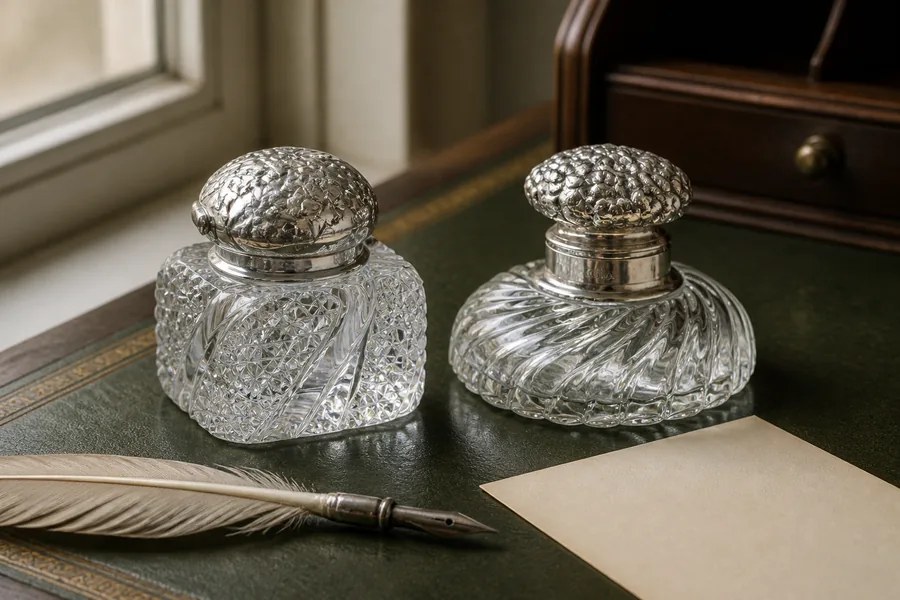
- Capstan inkwell: a squat, wide-based inkwell, common from the late Victorian period into the 1920s, often with a glass liner and a weighted base.
- Travelling inkwell: a small, tightly sealed inkwell for carrying.
Sell to a specialist
Free valuation from your photographs. Paid the same day after inspection.
- Free insured FedEx collection
- Insured to £10,000
- No obligation
What was a pounce pot for?
A pounce pot looks like a pepper pot with a pierced top. It held pounce, a fine powder usually made from cuttlefish bone or gum sandarac, which was sprinkled on paper to smooth it and stop ink from spreading. Writers also used fine sand, shaken from a similar pot called a sander, to blot wet ink. On a Georgian inkstand the pounce pot is usually one of the pair of pots, matched to the inkwell.
How to identify and date one: marks on every part
A British silver inkstand has a full hallmark on the tray, usually underneath or along the edge. Each removable silver component, such as the pots, their covers and the mounts of glass bottles, should carry its own marks, at least the lion passant and the maker's mark. If a pot carries a different maker or date letter from the tray, it is a later addition, which collectors call a marriage.
Capstan and desk inkwells are often marked on the rim or hinged lid. Many have a base loaded with a filler for stability, sometimes stamped LOADED or WEIGHTED, so only the outer skin is silver. Read date letters with our silver hallmark identifier.
What drives the value of a silver inkstand?
- Completeness: all original pots, covers and bottles, matching marks.
- Maker: known London makers such as Paul Storr or the Hennell family.
- Date and type: Treasury and fine Georgian inkstands are the most collected.
- Glass: original cut-glass bottles without chips or cracks.
- Inscriptions and arms: a presentation inscription linked to a notable person or event adds interest.
- Silver content: solid trays carry more silver than loaded inkwells.
How to sell a silver inkstand to us
Selling to us starts with photographs. Send clear pictures of the whole piece, the hallmarks close up and any damage through the photo form on this page, and we reply with a free valuation, subject to inspection. If you accept, post the piece by Royal Mail Special Delivery or book our free insured FedEx collection, insured to £10,000. We inspect it on arrival, confirm the offer, and pay the same day by bank transfer once you agree. Viewings are also available by appointment in Mayfair and Braintree.