I've Inherited Antique Silver: What Do I Do Next?
A calm, practical guide to inherited silver: how to work out what you actually have, what it is realistically worth, and whether to keep it or sell it. No pressure, no inflated promises.
Do not clean anything yet. Start by checking the hallmarks: a lion passant means genuine sterling silver, while marks like EPNS mean plate worth very little. Then get an honest assessment before you decide whether to keep, sell or simply hold on to it. Most inherited silver is modest in value, but some pieces are genuinely worth pursuing, and knowing the difference is the whole point.
Inheriting antique silver is more common than people expect, and it usually arrives with a mix of feelings and some very practical questions. A piece may matter to you for reasons that have nothing to do with money. It may also be a real asset. Or it may turn out to be decorative plate with limited resale value. Before you do anything, and especially before you reach for the polish, it pays to take stock of what is actually in front of you.
This guide walks through the sensible steps after an inheritance: identifying what you have, getting a realistic sense of value, and weighing up your options. The tone throughout is honest. Most inherited silver is not a hidden fortune. But some of it genuinely is worth something, and a little patience at the start saves disappointment later.
Key takeaways
- Do not clean it first. Tarnish and original patina help a specialist read age and authenticity, and aggressive cleaning can reduce value.
- Check the marks before anything else. Our guide to reading silver hallmarks shows you how to spot the lion passant and the assay office mark.
- A great deal of inherited "silver" is plate. See EPNS vs sterling silver to tell the two apart.
- Value rests on maker, period, weight, condition and rarity, not just the silver content. With prices firm, our silver vs gold in 2026 piece sets the wider context.
- A free, no-obligation assessment is the quickest way to know what you hold. Sell your silver with us, or simply find out where you stand.
What Might You Have Inherited?
Silver comes in a huge range of forms, and what you have shapes both its potential value and who might want it. Common inherited items include:
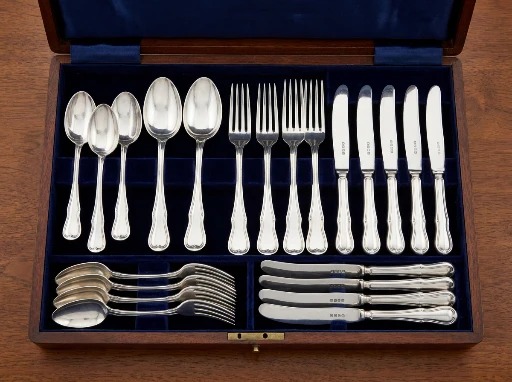
- Flatware and cutlery services: usually in canteens or cased sets. The most common inherited item, and frankly often the least valuable.
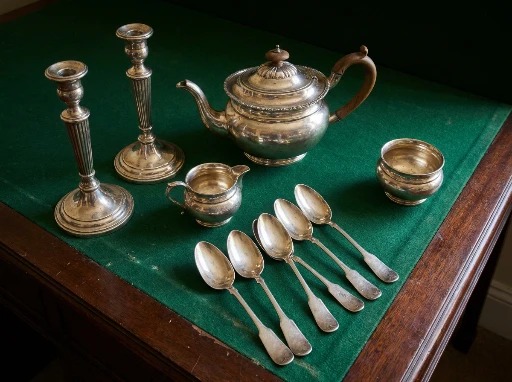
- Tea services: teapot, hot water jug, cream jug and sugar bowl. Genuine sterling sets can appeal to buyers, though the market is selective.
- Salvers and trays: flat serving pieces, often with engraved borders and armorials.
- Candlesticks and candelabra: anything from modest to very significant, depending on maker and period.
- Condiment sets, cruets and salt cellars.
- Entree dishes, vegetable dishes and meat covers: heavy, functional Victorian and Edwardian pieces.
- Claret jugs and wine accessories.
- Christening sets, dressing-table items and small decorative pieces.
- Photograph frames, inkstands and letter openers: typically lower value.
The variety makes broad statements about value almost impossible without seeing the actual pieces. What looks impressive may be plated. What looks modest may be by a significant maker.
The First Rule: Do Not Clean Anything
This deserves emphasis, because it is the most common mistake people make. Before you have any idea what you hold, cleaning silver, however well meant, can quietly reduce its value or remove information that would help identify it.
Tarnish built up over decades can actually help a specialist judge the age and authenticity of a piece. An experienced eye reads through tarnish to the quality beneath. Once you polish, or worse use a chemical dip, you risk stripping fine surface detail, original patina and any traces of gilding. Around the hallmarks, heavy cleaning can make the marks harder to read.
Leave everything as you found it until you have had a proper look or sought advice. A light wipe with a dry, soft cloth to lift dust is fine. Anything more can wait.
Identifying What You Have: Hallmarks and Plating
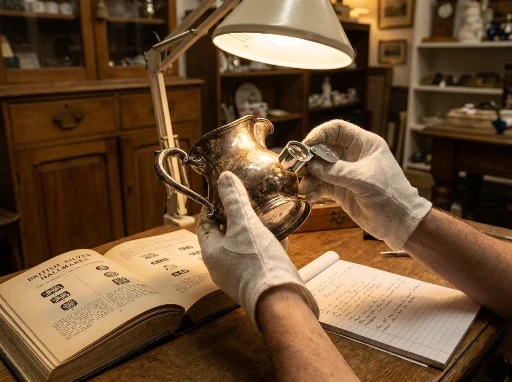
The single most useful step is checking the hallmarks. Genuine British sterling silver carries a set of official assay marks, usually a lion passant for sterling standard, a date letter, a town mark for the assay office, and a maker's mark. Reading these tells you roughly when and where a piece was made, and sometimes by whom.
Our detailed guide to how to read silver hallmarks covers this in full, and it is worth working through before drawing any firm conclusions.
Here is the part that surprises many families: a great deal of what gets handed down as "the silver" is not sterling at all. EPNS, short for Electroplated Nickel Silver, is a base metal (usually nickel silver or Britannia metal) with a very thin layer of silver deposited on the surface. It was made in vast quantities from the mid-Victorian period onwards and is still produced today. It looks like silver, tarnishes like silver, and often copies sterling styles, but it is not sterling, and its value is generally very modest.
Our guide on EPNS versus sterling silver explains how to tell them apart. In short, look for marks. EPNS pieces are typically stamped "EPNS", "EPBM", "A1" or a similar plating grade. Sterling carries a hallmark with the lion passant. Some pieces have no marks at all, which usually points to foreign manufacture or plating.
| Mark you might find | What it tells you |
|---|---|
| Lion passant | Genuine sterling silver, 92.5% pure throughout. The mark you most want to see. |
| EPNS | Electroplated nickel silver. Thin silver layer over a base metal; little intrinsic value. |
| EPBM / EP | Electroplate, often over Britannia metal. Plate, not solid silver. |
| A1 | A quality grade used by platers, not a silver standard. |
| No marks | Usually foreign silver or plate. Best assessed by hand. |
Realistic Values, Item by Item
This is where some people feel let down, and it is far better to know the reality early than to carry inflated hopes into a conversation with a dealer or auction house.
EPNS cutlery and flatware
The most common inherited "silver" is a canteen or cased set of EPNS cutlery: forks, knives, spoons and serving pieces. These were made in their millions from the late nineteenth century into the mid-twentieth. The honest reality is that a complete, well-kept EPNS canteen is worth relatively little today. Charity shops and resale platforms are full of them, and incomplete sets appeal even less. There simply is not the demand to support significant prices for everyday plated flatware.
Sterling silver cutlery
Sterling flatware is a different matter, though still not automatically valuable. The silver content sets a floor: the weight of the metal times the current spot price. Most dealers buying flatware will offer close to, or a little above, melt for ordinary patterns. Distinctive patterns, rare makers, or complete sets in exceptional condition achieve more. If you have a canteen to assess, our page on selling silver cutlery explains how we price it.
Tea services and holloware
Genuine sterling tea services (a matching teapot, hot water jug, cream jug and sugar bowl) can be worth several hundred to a few thousand pounds, depending on period, maker, weight and condition. Georgian and early Victorian sets in good order by known makers are the most desirable. Heavy plain Edwardian services can appeal for their silver content alone. The market is not as strong as it was a few decades ago, and condition matters enormously: dented, repaired or incomplete sets are worth considerably less.
Candlesticks and decorative pieces
Antique candlesticks vary widely. A pair of fine Georgian cast candlesticks by a documented maker could be worth several thousand pounds. A pair of late Victorian loaded candlesticks (filled with pitch or resin for weight, with a thin silver shell) may be worth far less. Weight, maker, period and original condition all play a part. To see how prices compare against the other precious metal, our silver vs gold in 2026 guide is a useful companion.
Not sure what you've inherited?
Send us clear photos, including the hallmarks. We assess inherited silver every day and will tell you honestly what you have, at no charge.
Getting a Valuation
There are several routes to a valuation, and they serve different purposes.
Probate valuation
If you need a formal figure for probate or insurance, you need a written valuation from a qualified valuer. This is a chargeable service. Make sure the valuer has real experience with antique silver specifically, as a generalist may not have the depth needed for accurate figures.
Auction house estimates
The major houses and regional salerooms often give free estimates. Remember these are estimates of what a piece might fetch at auction, not guaranteed prices. Sellers pay commission, often 15% to 25% of the hammer price, so the net you receive is meaningfully lower than the sale figure. Auction is also slow: consigning, waiting for a suitable sale and then being paid can take several months.
Specialist dealers
A specialist silver dealer gives you a direct buying price: what they will pay you today. This is usually lower than an optimistic auction estimate, but it is real money, quickly, with no commission, no waiting and no risk of an unsold lot. A good dealer will also be straight with you about what you have and why, which is worth a great deal in itself.
At Mozeris Fine Antiques we offer free, honest assessments of inherited silver with no obligation. We will tell you what you have, what it is worth in today's market, and what your realistic options are.
Your Selling Options
If you decide to sell, here is what each route means in practice:
- Selling to a dealer: immediate payment, no commission, honest advice. The price reflects the dealer's need to resell at a margin.
- Selling through auction: the potential for higher prices on the right pieces, balanced against commission, long timescales and no guarantee of sale.
- Online platforms: these can work for specific, identifiable pieces with collector appeal, but require your own time and skill to photograph, list, describe and ship fragile items, plus platform fees.
- Scrap or melt dealers: metal value only. Sensible for items damaged beyond repair, but wasteful for anything with collector or decorative worth.
For most people inheriting a mixed collection, the practical first move is a dealer's assessment. You will quickly learn which pieces, if any, are worth pursuing elsewhere and which are best sold directly. You can sell your silver to us across all periods, or send details through our quote form to start.
If You Want to Keep the Silver
Not everything inherited needs to be sold. If there are pieces you want to keep, use or display, the priority is simply looking after them well. Stored and handled correctly, good silver lasts for generations.
If your collection includes a tea service and you want to understand more about it, the same identification steps apply: check the marks, note the maker and period, and resist the urge to over-polish. Keeping a piece in the family is a perfectly good outcome, and there is no obligation to sell anything at all.
Frequently Asked Questions

Faustas has over ten years' experience in antique silver and jewellery, specialising in Georgian, Victorian and Regency pieces. He works with private clients and estates from the Mozeris showrooms in Mayfair and Braintree, Essex.
Inherited Silver You'd Like Assessed?
Bring it in or send a few photographs, including the hallmarks, and our specialists will give you an honest, no-obligation assessment. Free valuation, same-day payment, showrooms in Mayfair and Braintree.
Thinking of Selling Antique Silver?
Mozeris Fine Antiques are specialist buyers of antique and sterling silver. Send us photographs — including the hallmarks — for a free, no-obligation valuation. Payment on agreement.
📍 47 Maddox Street, Mayfair · Braintree, Essex · 📞 01376 334 482 · Strictly by appointment