Pocket Watch Hallmarks: How to Read and Date British Watch Cases
The marks inside a British pocket watch case, what each one means, and date letter tables for the three offices that marked most watch cases, 1824 to 1955.
Pocket watch hallmarks, in brief:
- A British case has four marks: sponsor, standard (metal), town (assay office) and date letter.
- Lion passant = sterling; crown and 18 = 18ct; 15 .625, 12 .5 and 9 .375 = lower golds; 14 .585 from 1932.
- Anchor = Birmingham, wheatsheaves and sword = Chester, leopard's head alone = London.
- .925 in an oval with an odd town mark = a foreign case imported after 1 June 1907.
In this article
- The four marks in a British watch case
- Gold and silver standard marks: 9ct to 22ct and sterling
- Assay office marks: Chester, Birmingham, London and the rest
- Pocket watch date letters: Chester, Birmingham and London tables
- Import marks on Swiss and American pocket watches
- No Queen's head? Duty, jubilee and other marks
- What the hallmarks mean for value, and how we can help
- Questions
The four marks in a British watch case
Open the back cover of an English gold or silver pocket watch and you should find a row of small punched marks. A complete British hallmark always has four of them, and each answers one question.
Where to look on the case
- Inside the back cover: the full set of four, struck on the main part of the case.
- The bezel, lid, inner dome and bow: each separately made gold or silver part was tested too, so these often carry smaller part marks.
The sponsor's mark is the one people most want to look up, and it is not a maker's signature: it shows who sent the case to be marked. It has its own page, pocket watch case makers marks.
Sources: David Boettcher, British hallmarks on watch cases; David Boettcher, marks in watch cases.
Gold and silver standard marks: 9ct to 22ct and sterling
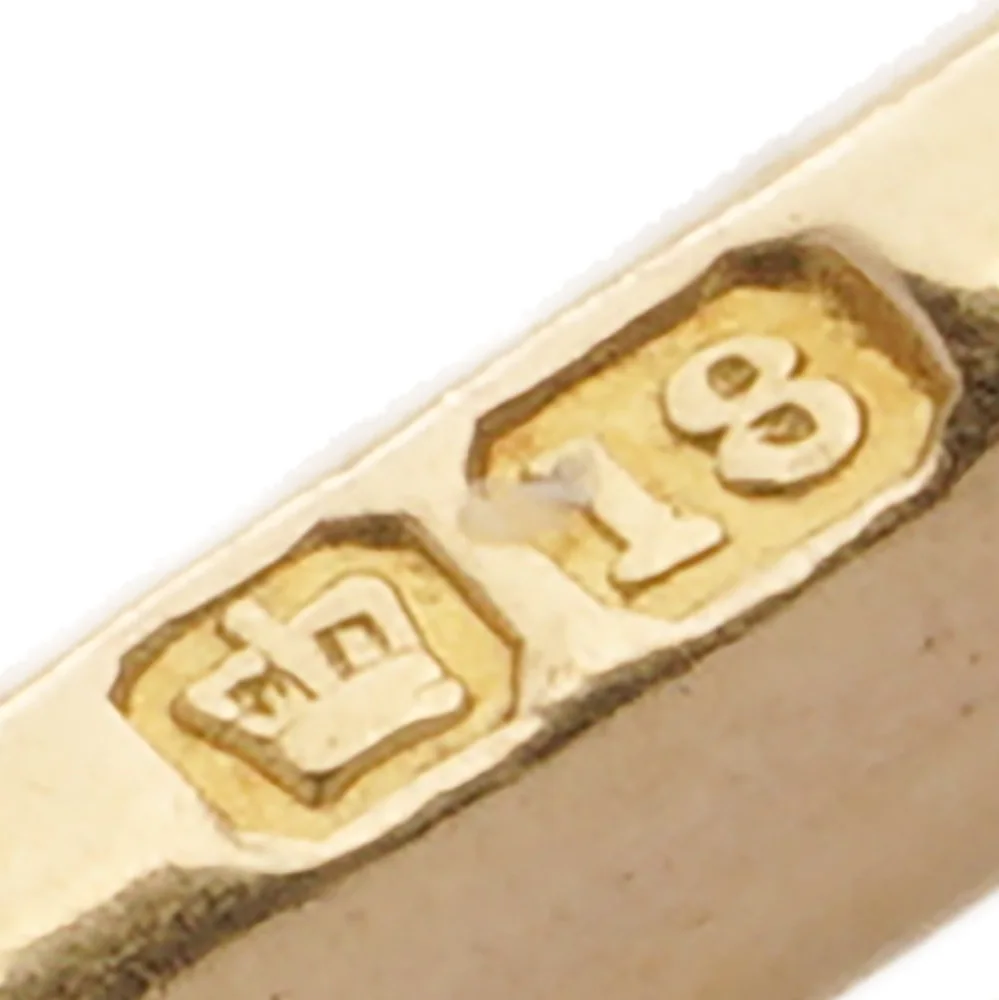
The crown means 18ct or 22ct
Only the two high gold standards carry a crown: 18ct from 1798 and 22ct from 1844. The lower standards introduced in 1854 show the carat beside its decimal, with no crown.
So a crown and 18 is 18ct gold, while 9 and ·375 is 9ct gold.
| Metal | Standard mark in a British case | In use |
|---|---|---|
| Sterling silver | Lion passant (England); lion rampant (Glasgow); thistle (Edinburgh); crowned harp (Dublin) | Throughout |
| 22ct gold | Crown and 22 | Lion passant until 1844, crown and 22 after |
| 18ct gold | Crown and 18 | From 1798 |
| 15ct gold | 15 and ·625 | 1854 to 1932 |
| 12ct gold | 12 and ·5 | 1854 to 1932 |
| 9ct gold | 9 and ·375 | From 1854 |
| 14ct gold | 14 and ·585 | From 1932, replacing 15ct and 12ct |
1932: goodbye 15ct and 12ct, hello 14ct
In 1932 the 15ct and 12ct standards were replaced by 14ct, marked 14 and ·585. A 15ct or 12ct case is therefore earlier than 1932, and a 14ct British case is 1932 or later.
In use22ct under the lion passant; rare composite 'Foreign' marks
For gold marks on jewellery in general, see gold hallmarks explained. If there is no standard mark at all, the case may be gold filled or plated: how to tell if a watch is solid gold.
Source: David Boettcher, British hallmarks on watch cases.
Assay office marks: Chester, Birmingham, London and the rest
The town mark tells you where the case was tested, not where it was made. Since 1854 a casemaker could send work to any office he chose, so the mark follows trade routes.
| Assay office | Town mark on British-made cases | Import mark from 1 June 1907 | Our guide |
|---|---|---|---|
| Chester | Upright sword between three wheatsheaves | Acorn and two leaves | Chester |
| Birmingham | Anchor | Equilateral triangle | Birmingham |
| London | Leopard's head, uncrowned after 1821 | Sign of Leo, struck upside down until 1950 | London |
| Glasgow | Tree, bird, bell and fish with a ring | Two opposed letters F, lying down | Glasgow |
| Sheffield | Crown on silver; a rose on gold, which it marked from 1903 | Sign of Libra | Sheffield |
| Edinburgh | Three-towered castle | St Andrew's cross | Edinburgh |
| Dublin | Seated Hibernia | Boujet (a water carrier) | Dublin |
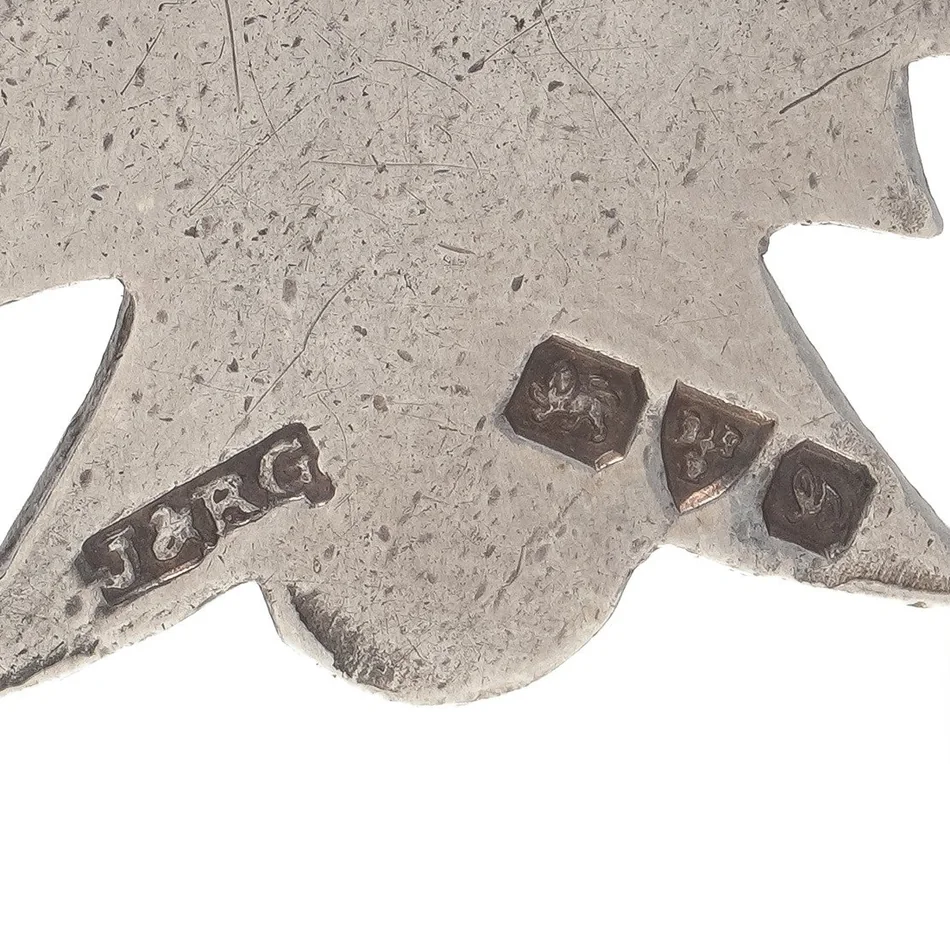
Why so many cases say Chester
Liverpool, a major centre of English watchmaking, had no assay office of its own, so its casemakers sent their work to Chester. That makes the wheatsheaves and sword one of the three town marks most often seen in English watches, with the anchor and the leopard's head.
Coventry makers often used Chester or London rather than nearby Birmingham. Chester's office closed on 24 August 1962.
Birmingham: the anchor
Birmingham was home to large casemakers. The Dennison Watch Case Company was founded there in 1874 to case movements imported from the Waltham Watch Company of America, which is why American movements turn up in Birmingham-marked cases.
Sources: David Boettcher, British hallmarks on watch cases; silvermakersmarks.co.uk, Chester.
Pocket watch date letters: Chester, Birmingham and London tables
Each office ran its own alphabet, and every letter comes round again every 20 to 26 years. Fix the office from the town mark first, then match both the letter and its style: at Chester a plain Roman capital A is 1884, a script A is 1901.
- Every letter spans two calendar years. The year shown is when the letter began: 1884 means the assay year 1884 to 1885.
- Changeover days: London on 29 May; Birmingham in July; Chester in July, moved to 5 August from 1839 and to 1 July from 1889.
- Ignore the shield shape. Offices often used different surrounds on gold, on small work and on watch cases, so trust the letter and its style.
| Letter | 1839 to 1863 | 1864 to 1883 | 1884 to 1900 | 1901 to 1925 | 1926 to 1950 |
|---|---|---|---|---|---|
| Style | Gothic capitals | Gothic small | Roman capitals | Script capitals | Gothic capitals |
| A / a | 1839 | 1864 | 1884 | 1901 | 1926 |
| B / b | 1840 | 1865 | 1885 | 1902 | 1927 |
| C / c | 1841 | 1866 | 1886 | 1903 | 1928 |
| D / d | 1842 | 1867 | 1887 | 1904 | 1929 |
| E / e | 1843 | 1868 | 1888 | 1905 | 1930 |
| F / f | 1844 | 1869 | 1889 | 1906 | 1931 |
| G / g | 1845 | 1870 | 1890 | 1907 | 1932 |
| H / h | 1846 | 1871 | 1891 | 1908 | 1933 |
| I / i | 1847 | 1872 | 1892 | 1909 | |
| J / j | 1934 | ||||
| K / k | 1848 | 1873 | 1893 | 1910 | 1935 |
| L / l | 1849 | 1874 | 1894 | 1911 | 1936 |
| M / m | 1850 | 1875 | 1895 | 1912 | 1937 |
| N / n | 1851 | 1876 | 1896 | 1913 | 1938 |
| O / o | 1852 | 1877 | 1897 | 1914 | 1939 |
| P / p | 1853 | 1878 | 1898 | 1915 | 1940 |
| Q / q | 1854 | 1879 | 1899 | 1916 | 1941 |
| R / r | 1855 | 1880 | 1900 | 1917 | 1942 |
| S / s | 1856 | 1881 | 1918 | 1943 | |
| T / t | 1857 | 1882 | 1919 | 1944 | |
| U / u | 1858 | 1883 | 1920 | 1945 | |
| V / v | 1859 | 1921 | 1946 | ||
| W / w | 1860 | 1922 | 1947 | ||
| X / x | 1861 | 1923 | 1948 | ||
| Y / y | 1862 | 1924 | 1949 | ||
| Z / z | 1863 | 1925 | 1950 |
| Letter | 1824 to 1848 | 1849 to 1874 | 1875 to 1899 | 1900 to 1924 | 1925 to 1949 |
|---|---|---|---|---|---|
| Style | Gothic capitals | Roman capitals | Gothic small | Roman small | Roman capitals |
| A / a | 1824 | 1849 | 1875 | 1900 | 1925 |
| B / b | 1825 | 1850 | 1876 | 1901 | 1926 |
| C / c | 1826 | 1851 | 1877 | 1902 | 1927 |
| D / d | 1827 | 1852 | 1878 | 1903 | 1928 |
| E / e | 1828 | 1853 | 1879 | 1904 | 1929 |
| F / f | 1829 | 1854 | 1880 | 1905 | 1930 |
| G / g | 1830 | 1855 | 1881 | 1906 | 1931 |
| H / h | 1831 | 1856 | 1882 | 1907 | 1932 |
| I / i | 1857 | 1883 | 1908 | ||
| J / j | 1858 | 1933 | |||
| K / k | 1833 | 1859 | 1884 | 1909 | 1934 |
| L / l | 1834 | 1860 | 1885 | 1910 | 1935 |
| M / m | 1835 | 1861 | 1886 | 1911 | 1936 |
| N / n | 1836 | 1862 | 1887 | 1912 | 1937 |
| O / o | 1837 | 1863 | 1888 | 1913 | 1938 |
| P / p | 1838 | 1864 | 1889 | 1914 | 1939 |
| Q / q | 1839 | 1865 | 1890 | 1915 | 1940 |
| R / r | 1840 | 1866 | 1891 | 1916 | 1941 |
| S / s | 1841 | 1867 | 1892 | 1917 | 1942 |
| T / t | 1842 | 1868 | 1893 | 1918 | 1943 |
| U / u | 1843 | 1869 | 1894 | 1919 | 1944 |
| V / v | 1844 | 1870 | 1895 | 1920 | 1945 |
| W / w | 1845 | 1871 | 1896 | 1921 | 1946 |
| X / x | 1846 | 1872 | 1897 | 1922 | 1947 |
| Y / y | 1847 | 1873 | 1898 | 1923 | 1948 |
| Z / z | 1848 | 1874 | 1899 | 1924 | 1949 |
| Letter | 1836 to 1855 | 1856 to 1875 | 1876 to 1895 | 1896 to 1915 | 1916 to 1935 | 1936 to 1955 |
|---|---|---|---|---|---|---|
| Style | Gothic capitals | Gothic small | Roman capitals | Roman small | Gothic small | Roman capitals |
| A / a | 1836 | 1856 | 1876 | 1896 | 1916 | 1936 |
| B / b | 1837 | 1857 | 1877 | 1897 | 1917 | 1937 |
| C / c | 1838 | 1858 | 1878 | 1898 | 1918 | 1938 |
| D / d | 1839 | 1859 | 1879 | 1899 | 1919 | 1939 |
| E / e | 1840 | 1860 | 1880 | 1900 | 1920 | 1940 |
| F / f | 1841 | 1861 | 1881 | 1901 | 1921 | 1941 |
| G / g | 1842 | 1862 | 1882 | 1902 | 1922 | 1942 |
| H / h | 1843 | 1863 | 1883 | 1903 | 1923 | 1943 |
| I / i | 1844 | 1864 | 1884 | 1904 | 1924 | 1944 |
| K / k | 1845 | 1865 | 1885 | 1905 | 1925 | 1945 |
| L / l | 1846 | 1866 | 1886 | 1906 | 1926 | 1946 |
| M / m | 1847 | 1867 | 1887 | 1907 | 1927 | 1947 |
| N / n | 1848 | 1868 | 1888 | 1908 | 1928 | 1948 |
| O / o | 1849 | 1869 | 1889 | 1909 | 1929 | 1949 |
| P / p | 1850 | 1870 | 1890 | 1910 | 1930 | 1950 |
| Q / q | 1851 | 1871 | 1891 | 1911 | 1931 | 1951 |
| R / r | 1852 | 1872 | 1892 | 1912 | 1932 | 1952 |
| S / s | 1853 | 1873 | 1893 | 1913 | 1933 | 1953 |
| T / t | 1854 | 1874 | 1894 | 1914 | 1934 | 1954 |
| U / u | 1855 | 1875 | 1895 | 1915 | 1935 | 1955 |
Sources: silvermakersmarks.co.uk date letter tables, checked year by year; Sir Charles Jackson, English Goldsmiths and Their Marks (1921), for the years it covers: London to 1919, Chester to 1921, Birmingham to 1924. Changeover dates: silvermakersmarks.co.uk.
Dating a watch without hallmarks, from its movement, serial and style, is covered in how to date a vintage gold watch.
Found your date? Send us photos of the case and marks for a free valuation
Import marks on Swiss and American pocket watches
Most foreign watches came into Britain before 1907 without British hallmarks, carrying only their own country's marks or the casemaker's stamps. The law then changed in three steps.
- About 1874 to 1887
Some Swiss gold and silver cases were marked at British offices with ordinary British hallmarks, until English watchmakers objected.
- From 1 January 1888
The Merchandise Marks Act 1887 required a composite mark with the word "Foreign" on any imported case sent for hallmarking. These marks are rare.
- From 1 June 1907
Every imported gold or silver watch case had to be assayed in Britain and struck with an import town mark (table above) and a decimal standard, such as ·925 in an oval for sterling or 9 and ·375 for 9ct gold.
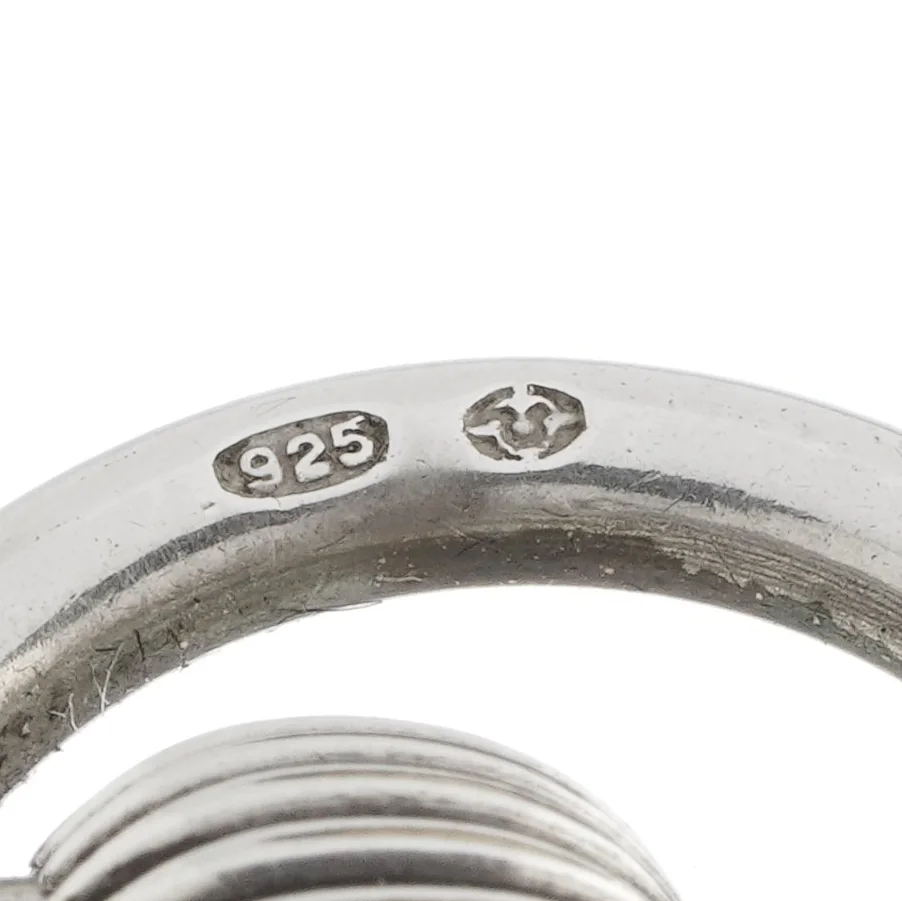
The ·925 oval: the quickest tell
A British-made silver case shows the lion passant. An imported one assayed after June 1907 shows ·925 in an oval and an import town mark instead.
London's import mark is the sign of Leo, struck upside down until 1950, which is why it often looks like an odd squiggle. The date letter follows the office's usual cycle.
Swiss marks you may find alongside
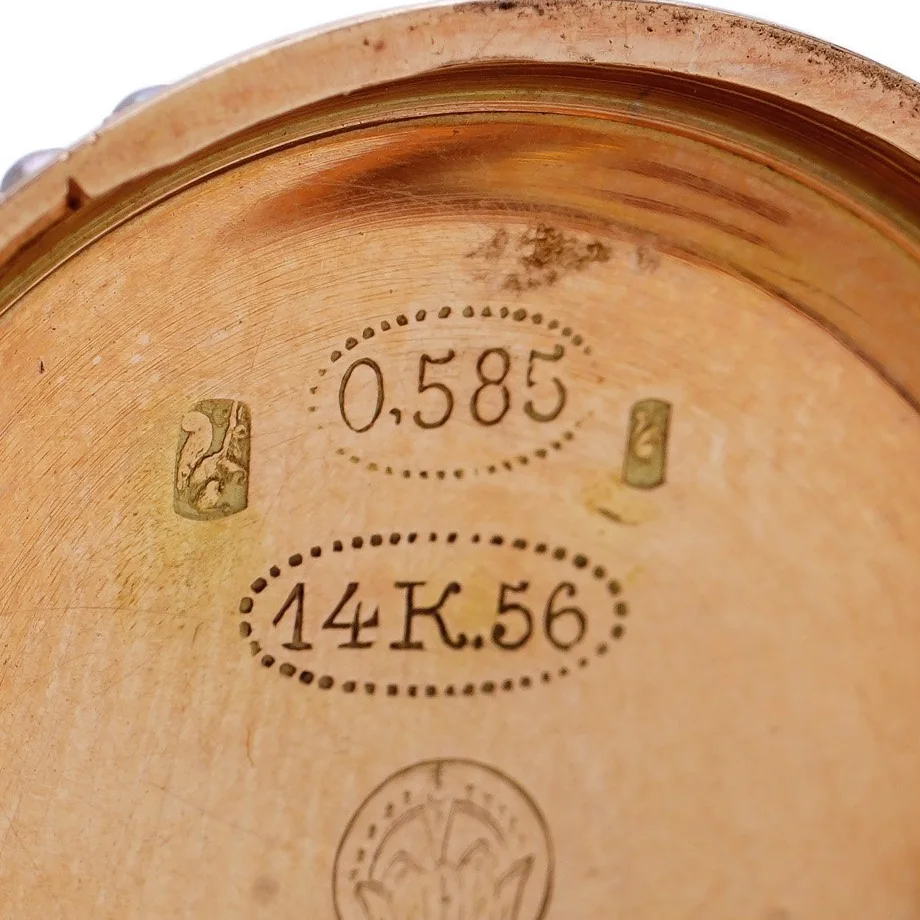
Switzerland hallmarked gold and silver watch cases from 1882:
- Helvetia's head: 18ct gold (0.750)
- Squirrel: 14ct gold
- Bear: 0.875 silver
- Grouse: 0.800 silver
- Three bears with 0.935: silver cases for the British market, after 1887
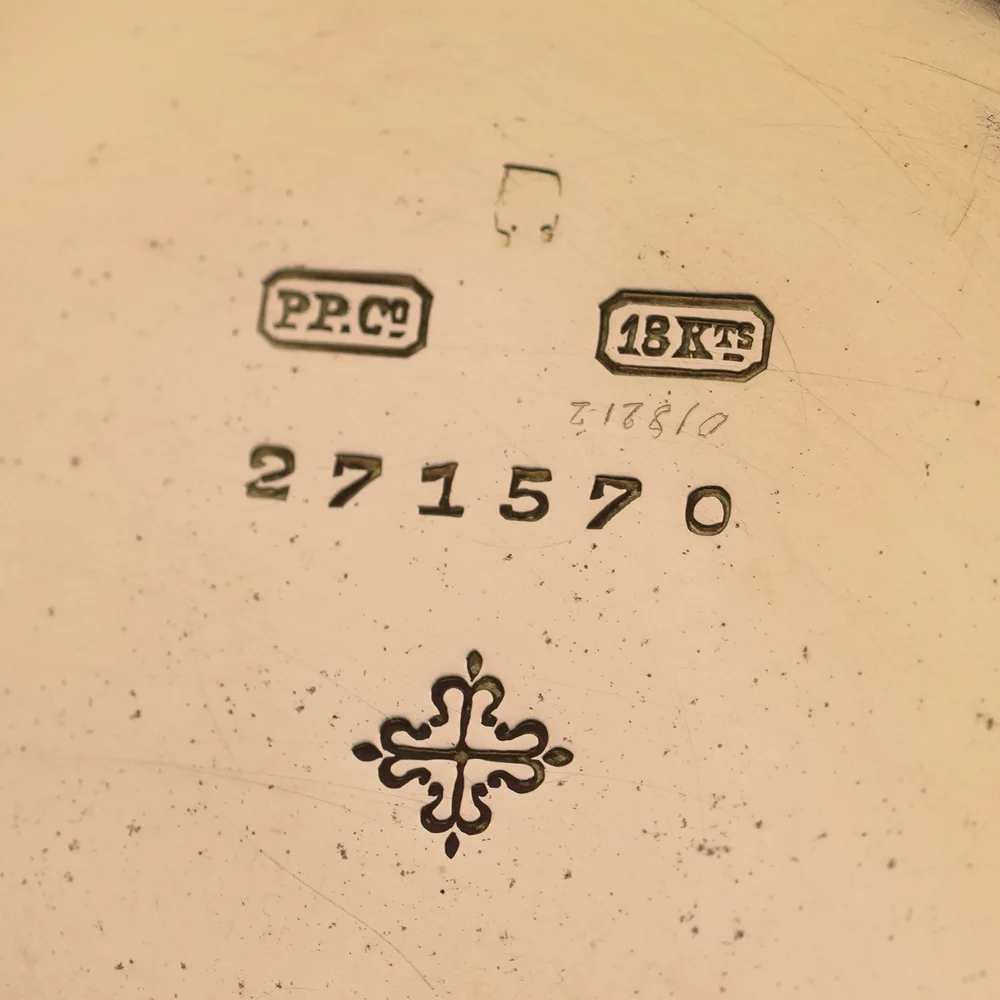
No British marks at all?
That is normal for a Swiss case sold before June 1907, and for American cases at any date: America never had a hallmarking system, so its cases carry makers' stamps and fineness claims instead.
The movement usually settles the origin; see English vs Swiss gold watches.
Sources: David Boettcher, marks in watch cases; Boettcher on the inverted Leo; David Boettcher, Swiss hallmarks.
No Queen's head? Duty, jubilee and other marks
Silver and gold paid duty, shown by the sovereign's head, from 1784 to 1890. Watch cases were exempt from 25 March 1798, so a Victorian case should not have a Queen's head.
In 1934 and 1935 an optional extra mark with the heads of George V and Queen Mary could be added for their Silver Jubilee.
Tiny scratched figures inside the case are repairers' notes, not hallmarks. They are explained with the case numbers on case makers marks.
Words such as "Sterling", "0.800", "14K" or "warranted" on their own are the maker's claims, not hallmarks. A valid British hallmark always has all four marks.
Sources: David Boettcher, British hallmarks on watch cases; silvermakersmarks.co.uk, London.
What the hallmarks mean for value, and how we can help
The hallmark proves the metal and gives a date, which sets a floor: an 18ct case is worth at least its gold, at today's gold price. The real value sits in the maker, the movement, the condition and whether the watch runs, which is why we value the whole watch, not just the case.
- Send photos
The dial, the open case back with the marks in focus, and the movement if it opens easily. Use the form below or WhatsApp.
- Free valuation
We read the marks, identify the watch and tell you what it is worth. See how we buy pocket watches: directly, paid by bank transfer.
- Or come in
Mayfair (47 Maddox Street, by appointment) or Braintree, Essex. Call 01376 334482 or WhatsApp us, or contact us.
Buying rather than selling? Browse our pocket watches and clocks.
Request a free pocket watch valuation
- Read the standard mark first: it tells you the metal before anything else.
- Fix the office from the town mark, then match the date letter and its style in that office's table.
- A date letter covers two calendar years, and watch cases carry no duty mark after 1798.
- Foreign cases after June 1907 show import town marks and decimal standards such as .925.
- We value and buy pocket watches from photos, and sell them in Mayfair and Braintree.
Questions we are asked
How do I read the hallmarks on a pocket watch?
Open the back cover and find the four marks. The standard mark gives the metal (a lion for sterling, a crown and 18 for 18ct, 9 and .375 for 9ct). The town mark gives the assay office. Then look up the date letter in that office's table, matching its style.
What does an anchor mean on a pocket watch case?
The anchor is the town mark of the Birmingham Assay Office. With a lion passant it is British sterling silver; with a carat mark it is gold of that standard.
What do three wheatsheaves and a sword mean on a pocket watch?
That is the Chester Assay Office, which marked a large share of English silver watch cases because the Liverpool watch trade had no assay office of its own. Chester closed in 1962.
What does .925 in an oval mean on a pocket watch?
It is the British import mark for sterling silver, struck on foreign-made cases assayed in Britain after 1 June 1907, usually with an import town mark such as London's sign of Leo.
Why is there no Queen's head on my Victorian silver watch?
Watch cases were made exempt from plate duty in 1798, so the duty mark of the sovereign's head is not found on cases after that, even though other Victorian silver carries it until 1890.
When did 15ct gold watch cases stop?
In 1932, when the 15ct and 12ct standards were replaced by 14ct. A British 15ct case dates from 1854 to 1932.
My pocket watch has no hallmarks. Is it gold?
It may still be. Swiss cases sold before 1907 and American cases often carry no British marks, only their own stamps. It may also be gold filled or plated, so have it checked before assuming either way.
Does the date letter give the exact year?
No, it gives an assay year that spans two calendar years, such as 1884 to 1885. The case was marked within that window; the movement may be a little older.
Know your marks? Find out what the watch is worth
Send photos of the case back, the marks and the dial for a free valuation, or browse the pocket watches in our collection.
- We buy directly
- Free valuation from photos
- Appointments in Mayfair and Braintree
- Insured postage or collection
New pieces reach our list first: join the Mozeris list.