Pocket Watch Chain Styles and Attachments
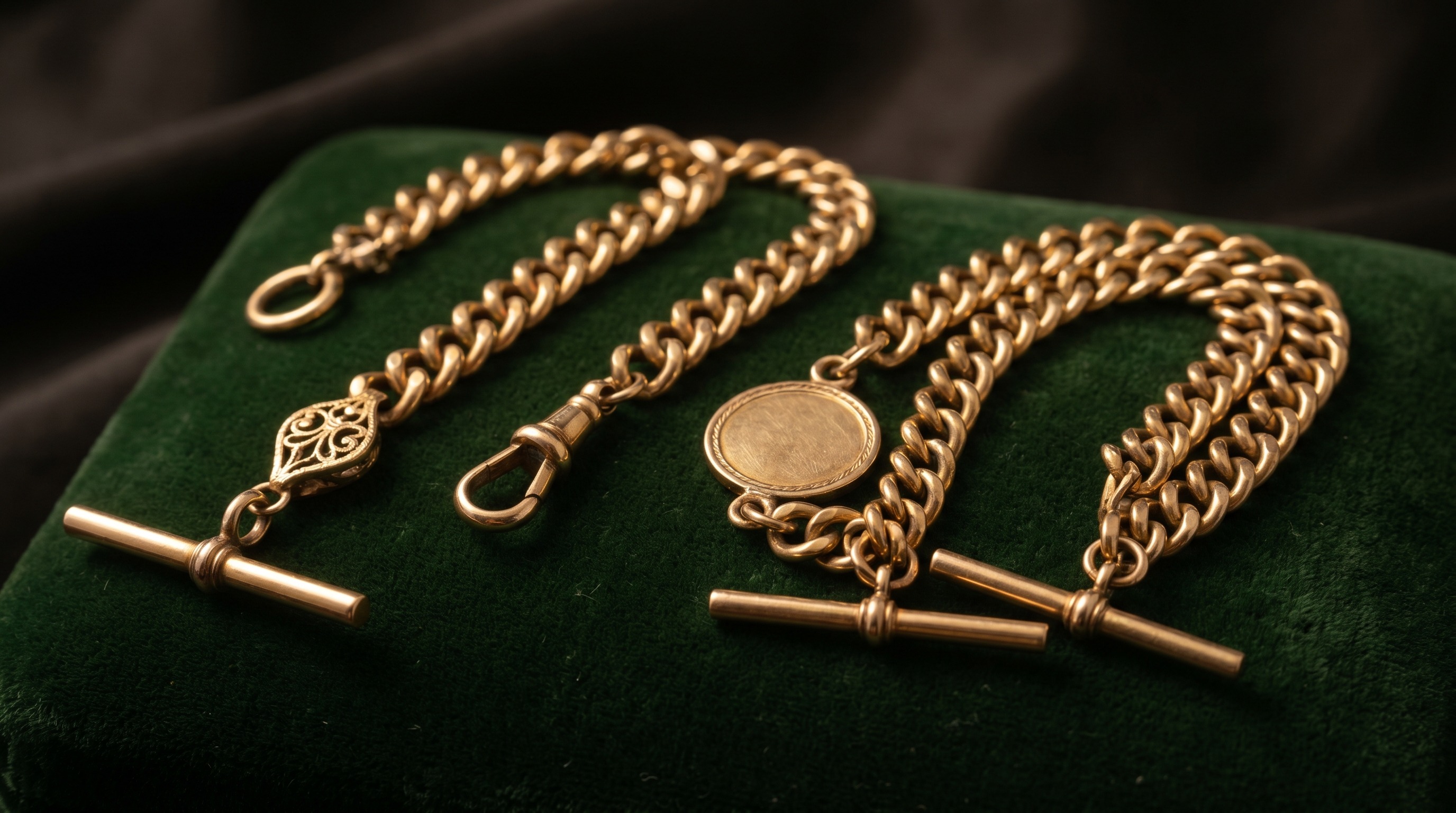
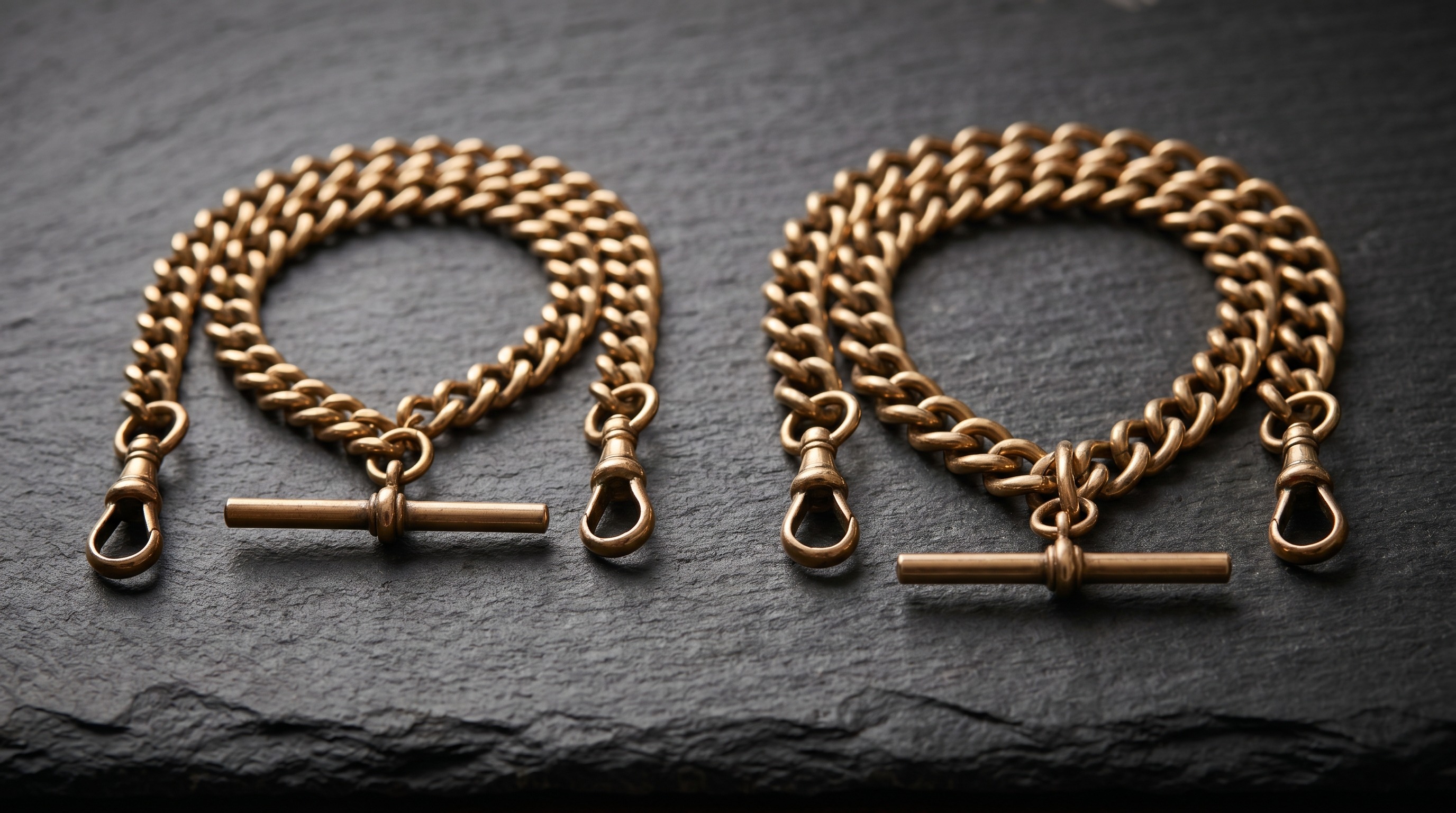
Find the T-bar and count the strands. One strand from the T-bar to a swivel clip is a single Albert; two strands, one for the watch and one for a fob, is a double Albert. Fob chains hang from a pocket without a T-bar, and long guard chains were worn round the neck. This guide explains each style, the link patterns and every attachment.
Have a watch chain to identify?
Free, no obligation, returned at our cost if you decline.
- Read our Google reviews (opens Google)
- Free, no obligation
- A reply within one working day
- Paid the same day after inspection
The four styles
- Single Albert. One strand, T-bar to swivel.
- Double Albert. A central T-bar with two strands, watch on one, fob or sovereign case on the other.
- Fob chain. A short chain hanging from the pocket, often ending in a seal.
- Guard or muff chain. A long, fine chain worn round the neck.
Link patterns
- Curb. Flattened, twisted ovals; the classic.
- Trombone and paperclip. Long, straight links.
- Belcher. Round, rolled links.
- Fetter and three. Long links alternating with short ones.
- Graduated. Links that grow larger towards the centre.
The attachments
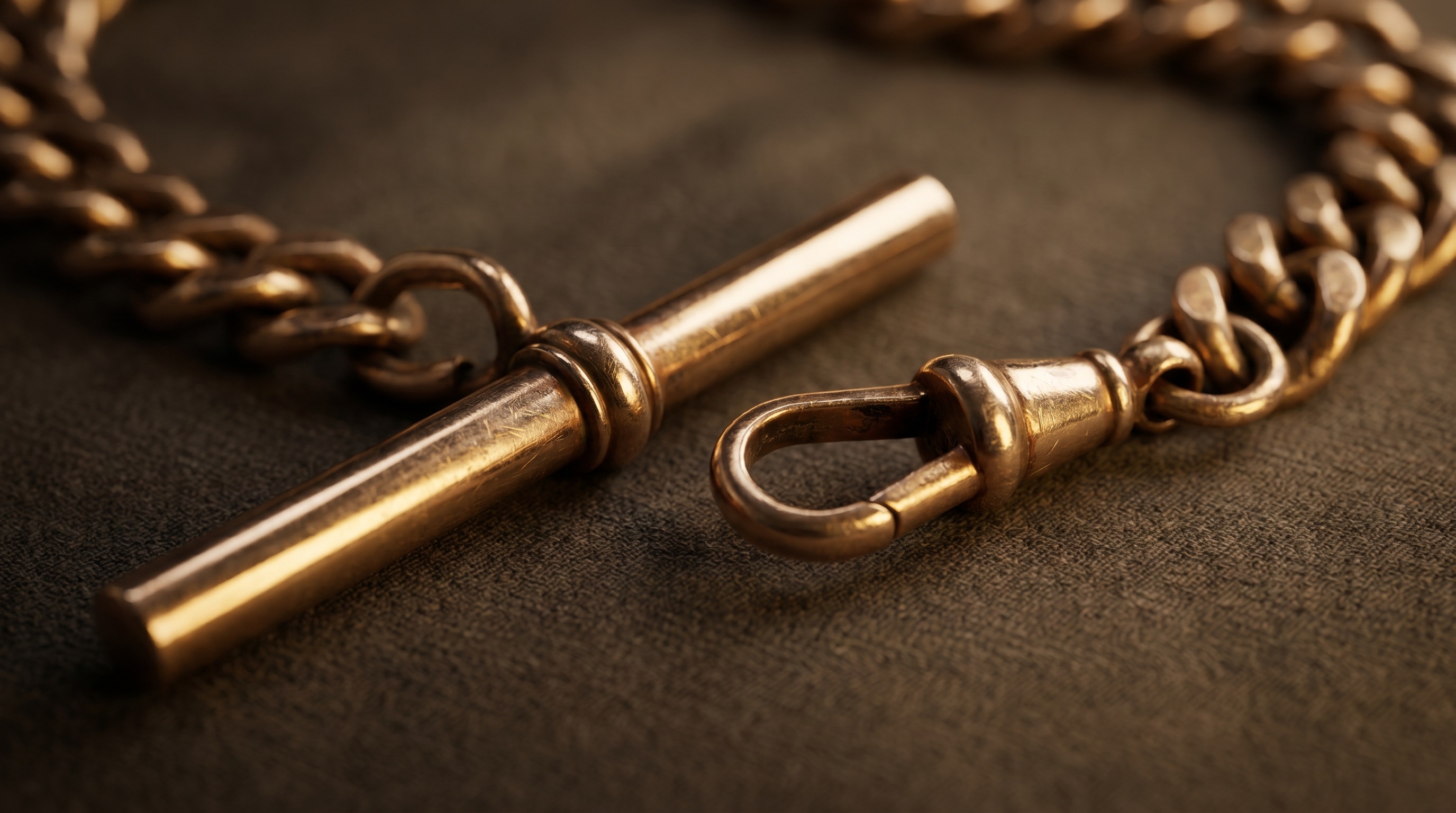
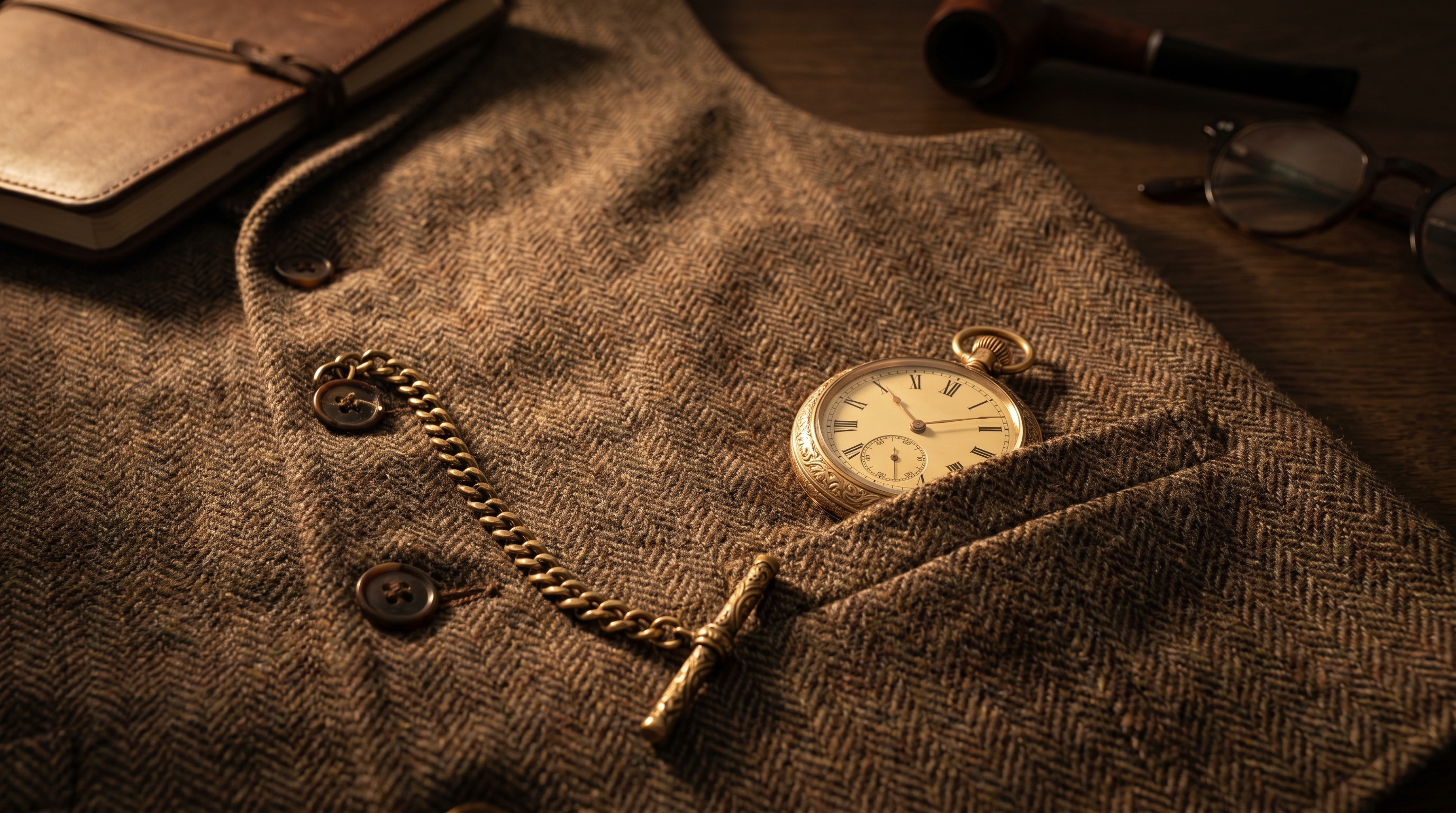
- T-bar. Passes through the waistcoat buttonhole.
- Swivel or dog clip. Turns freely on the watch bow.
- Bolt ring. A simpler sprung ring.
- Fob drop. A short hanging length for a seal or medallion.
- Sovereign holder. A sprung case for a coin.
- Seal. A carved or engraved charm.
Check yours: the marks
- 1Hallmarks on a T-bar
- 2Swivel
- 3Link
0 of 3 checked
1Gold and silver chains made in Britain
Gold and silver chains made in Britain are hallmarked, often on the T-bar, the swivel and individual links.
2Look for the fineness (9
Look for the fineness (9, 15, 18 or 375, 625, 750; silver lion or 925), an assay office mark and a date letter.
3Matching marks on every fitting show they
Matching marks on every fitting show they belong together.
Found the marks? Send close-ups of the T-bar, the swivel and any link marks for a free, honest check.
Free, no obligation, returned at our cost if you decline.
What is my watch chain worth?
Whether a watch chain holds its value comes down to the style, the link pattern and quality, whether the fittings are original and match, the marks, its condition, and what similar chains have sold for recently. Replaced or mismatched clips count against it. We never publish figures.
Free, no obligation, and returned at our cost if you decline.
Read our Google reviews (opens Google)
- Style
- Links
- Fittings
- Marks
- Condition
- Recent sales
How selling works
- 1
Send photographs
of the whole chain laid flat, the T-bar, the swivel or clip, and close-ups of any marks.
- 2
Free value inspection
We reply within one working day with an estimate, subject to inspection. If our offer differs, you can decline and we return it at our cost.
- 3
Paid the same day after inspection
by bank transfer or in cash, in Mayfair, at our Braintree office, by post or by free collection.
Insured up to £10,000 per parcel when you send to us.
Questions people ask
What is the difference between a single and a double Albert?
A single Albert has one strand running from a central T-bar to a swivel clip for the watch. A double Albert has two strands from the T-bar: one for the watch and one for a fob, seal or sovereign holder. The double is the more formal style.
What is the T-bar on a watch chain for?
The T-bar anchors the chain. It passes through a buttonhole on the waistcoat so the chain stays in place and the watch sits securely in the pocket. It is the defining feature of an Albert chain. Ask us if you would like to know more about your own piece.
What is a swivel or dog clip?
The small rotating spring clip at the end of the chain that fastens to the bow, the loop at the top of the watch. It turns freely so the chain does not twist when the watch is taken out of the pocket.
How do I wear a pocket watch chain?
Pass the T-bar through a waistcoat buttonhole and drop the watch into the pocket on one side. With a double Albert, a fob, seal or sovereign case goes in the opposite pocket. Our guide to wearing a pocket watch covers the details.
Does the link pattern affect value?
Yes, along with the quality of the links, the fittings and the marks. Well-made chains in good condition with original, matching fittings are what buyers look for. Send photographs and we will tell you what yours is. A short message with two or three photographs is all it takes to start.
Where can I sell a watch chain?
To a buyer who reads the marks and checks the fittings in person. We buy Albert, fob and guard chains directly: a free value inspection from photographs, then an appointment in Mayfair or at our Braintree office, post or free collection. You are paid the same day after inspection.
Related guides
Have a watch chain to identify?
Send a photograph of it laid flat and its marks for a free value inspection, with no obligation.
Free, no obligation, returned at our cost if you decline.