In this guide (11)

The effect, called adularescence, comes from light scattering between thin layers of two feldspars inside the stone. Moonstone has been set in jewellery since antiquity and was a favourite of Art Nouveau and Arts and Crafts jewellers around 1900. It is usually cut as a smooth domed cabochon to show the glow.
What is moonstone?
Moonstone is a variety of feldspar, the most common mineral group in the Earth’s crust. Most fine moonstone is orthoclase, a potassium feldspar, with very thin layers of albite, a sodium feldspar, grown inside it. It is not from the Moon: the name comes from its glow.
- Mineral Moonstone Feldspar (orthoclase with albite layers)
- Hardness Moonstone 6 to 6.5 on the Mohs scale
- Colours Moonstone Colourless to white, grey, peach, brown and green body colours
- Glow Moonstone White to blue adularescence
- Usual cut Moonstone Cabochon
- Birthstone Moonstone June (with pearl and alexandrite)
Why does moonstone glow?
The two feldspars separate into layers thinner than a wavelength of light as the stone cools. Light entering the stone scatters off these layers and comes back as a soft, milky sheen. Thinner layers give a blue glow, the most prized; thicker layers give a white one. Because the glow sits inside the stone, it moves as you tilt it. Some moonstones also show a cat’s eye or a star.
Sell to a specialist
Free valuation from your photographs. Paid the same day after inspection.
- Free insured FedEx collection
- Insured to £10,000
- No obligation
Rainbow moonstone and other names
- Rainbow moonstone is a white labradorite, a related plagioclase feldspar, that flashes blue and other colours. It is sold as moonstone in the trade, but it is a different feldspar.
- Blue moonstone describes a stone with a strong blue glow, classically from Sri Lanka.
- Peach, grey and black moonstone describe the body colour of the stone.
Where moonstone comes from
Sri Lanka is the classic source of fine blue moonstone, with mines around Meetiyagoda in the south of the island. Moonstone is also mined in India, Myanmar, Madagascar and Tanzania. Florida adopted moonstone as its state gem in 1970 to honour the Moon landings, even though it is not found there.
Moonstone in antique jewellery
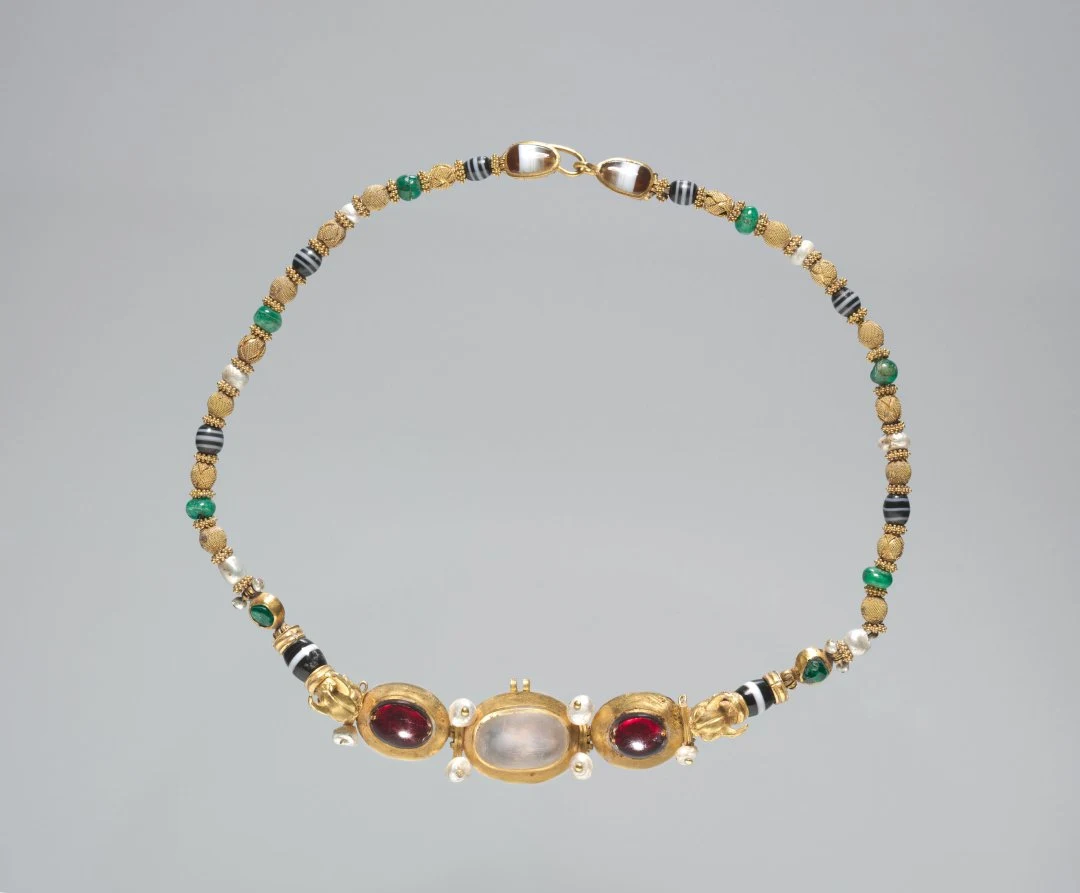
- Antiquity. Greek and Roman jewellers used moonstone; the Hellenistic gold necklace shown here is built around one.
- Art Nouveau, about 1895 to 1910. Jewellers such as René Lalique favoured moonstone for its soft, dreamy glow.
- Arts and Crafts. British makers and Liberty & Co. set moonstone cabochons in silver and gold.
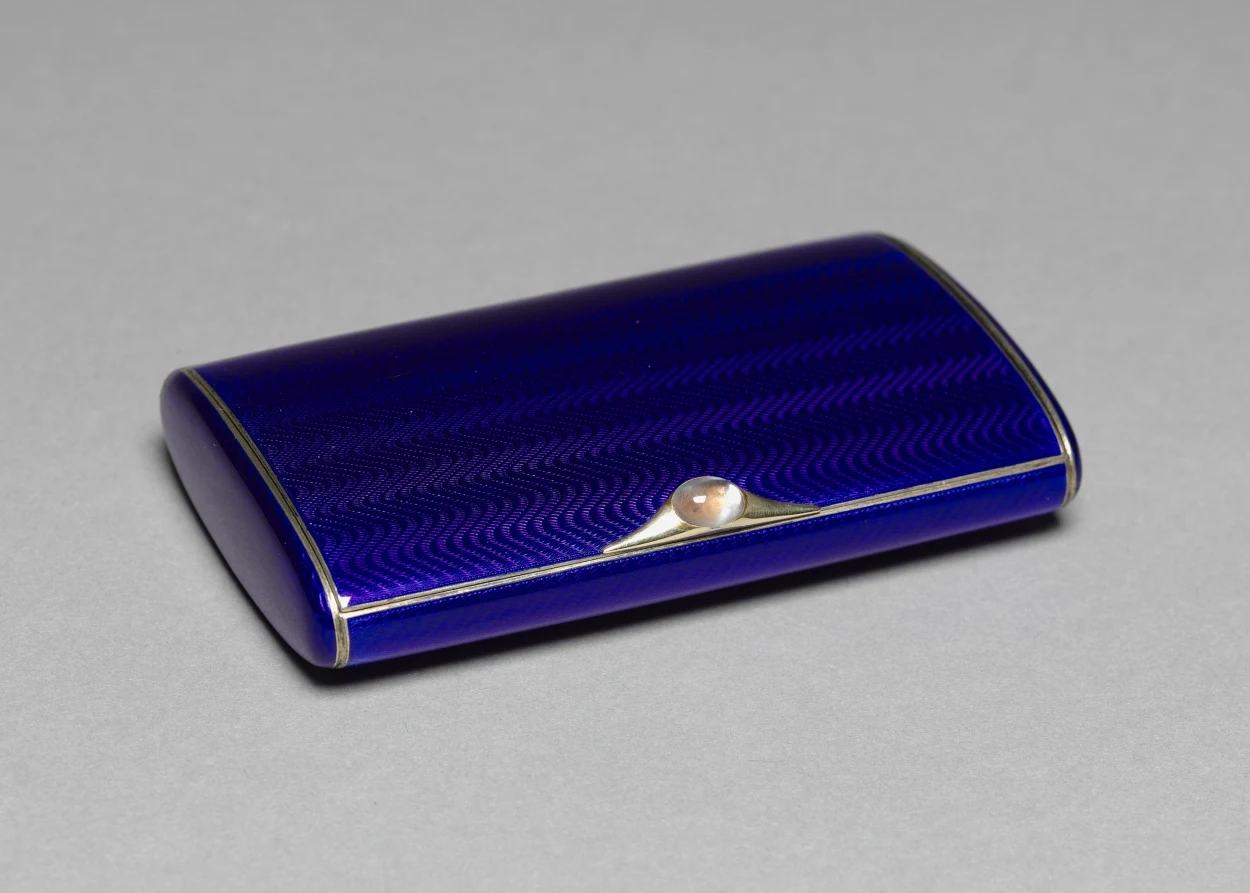
- Edwardian and Art Deco. Moonstones set with diamonds in platinum and white gold, like our ring; Fabergé used moonstone pushpieces on enamelled cases.
How to recognise a moonstone
- The glow A billowy sheen that moves inside the stone as you tilt it, not a surface reflection.
- The look of glass imitations The look of glass imitations "Opalite" and other glass show an even, bluish milkiness from every angle, often with bubbles.
- The setting Hallmarks and maker’s marks date the piece; closed backs on older pieces are worth noting.
- The condition Moonstone is soft and has cleavage, so check for chips, scratches and cracks.
Have a moonstone ring, brooch or necklace? Send clear photographs of the front, the back and any marks for a free, honest check.
How to care for moonstone
Moonstone scratches more easily than sapphire or diamond and can split along its cleavage. Store it apart from harder stones, avoid knocks, and clean it with warm soapy water and a soft brush. Do not use an ultrasonic or steam cleaner.
What makes moonstone jewellery valuable?
The strength and colour of the glow (a strong blue is prized), the clarity and size of the stone, the quality of the cut, the setting, maker and period, the condition and any provenance. We never publish figures; every piece is different.
- Glow
- Clarity
- Cut
- Setting and maker
- Period
- Condition
How selling works
- Send photographs of the front, the back and any marks, plus any box or papers.
- Free value inspection We reply within one working day with an estimate, subject to inspection. If our offer differs, you can decline and we return it at our cost.
- Paid the same day after inspection by bank transfer, in Mayfair, at our Braintree office, by post or by free collection.
Have a piece set with moonstones?
Send a few photographs and we will tell you what it is and what it is worth, free.