How a creature most people fear became jewellery's favourite symbol of love and eternity, and how to tell a genuine antique snake ring or bangle from a later copy.
Shop the pieces: antique and vintage brooches in our collection.
- Snakes stood for eternity, love, wisdom and protection long before Victoria.
- Victoria's 1839 emerald snake engagement ring made the motif fashionable.
- Most antique snake pieces for sale today are Victorian or Edwardian.
- Check hallmarks, hand-chased scales and how the eyes are set.
- Never polish or ultrasonic-clean an articulated snake before it is seen.
In this article
Why a snake?
Few animals frighten people more, yet few appear in more jewellery. The reason is what the snake came to mean. It sheds its skin and appears to begin again, so it became a sign of renewal. Coiled into a circle, it has no beginning and no end.
Across three thousand years, jewellers have used the serpent to say five things:
- Eternity. A snake biting its own tail, the ouroboros, is a circle without end.
- Love and fidelity. A ring that holds on forever made the perfect promise.
- Wisdom. The serpent has long been linked with knowledge and healing.
- Protection. A snake guarding the wearer kept harm away.
- Renewal. The shed skin stood for recovery and a fresh start.
Our short guide to what the ouroboros symbolises goes deeper into the tail-biting form.
The ancient world: Egypt, Greece and Rome
In ancient Egypt, the rearing cobra known as the uraeus sat on the brow of royal crowns. It marked the wearer as protected by the gods, and it appears across Egyptian royal jewellery and regalia.
The Greeks tied the serpent to healing. The rod of Asclepius, a single snake wound around a staff, is still the symbol of medicine today.
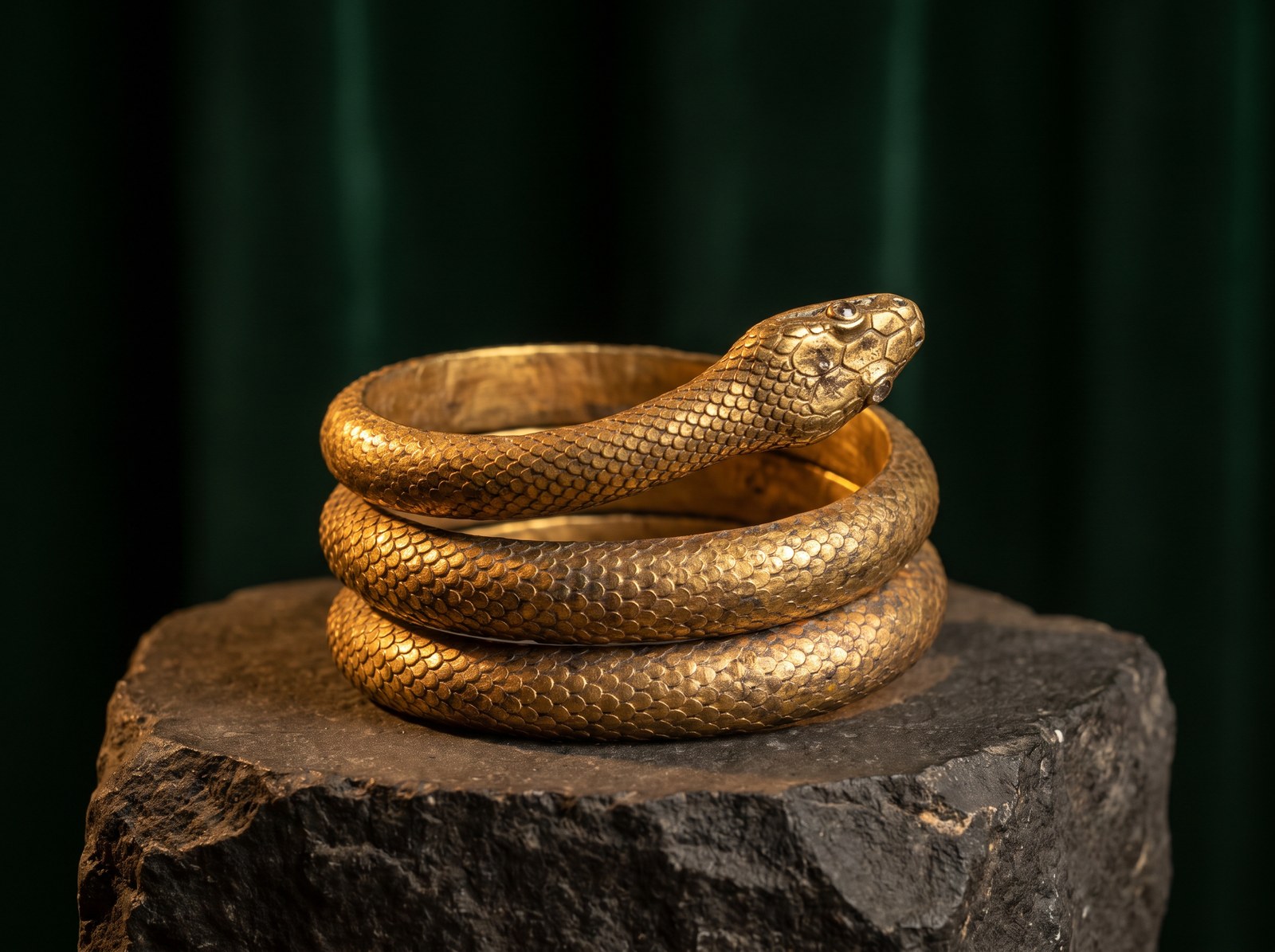
Roman and Hellenistic goldsmiths made the form their own. Spiral armlets and rings coiled around the arm or finger, often finishing in a finely chased head at each end.
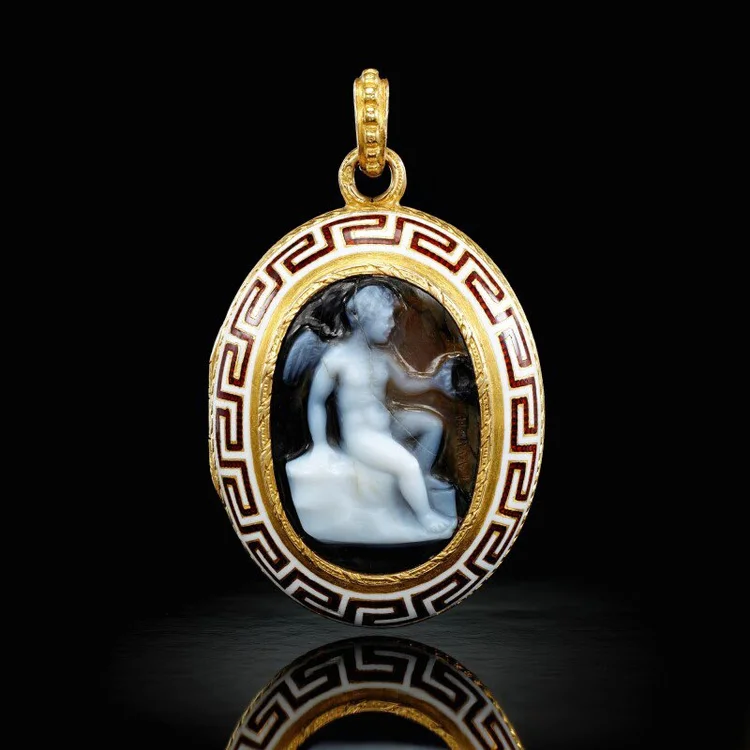
Classical designs returned again and again. The same taste for the ancient world drove the fashion for Roman intaglios in the eighteenth and nineteenth centuries.
Queen Victoria's ring and the Victorian craze
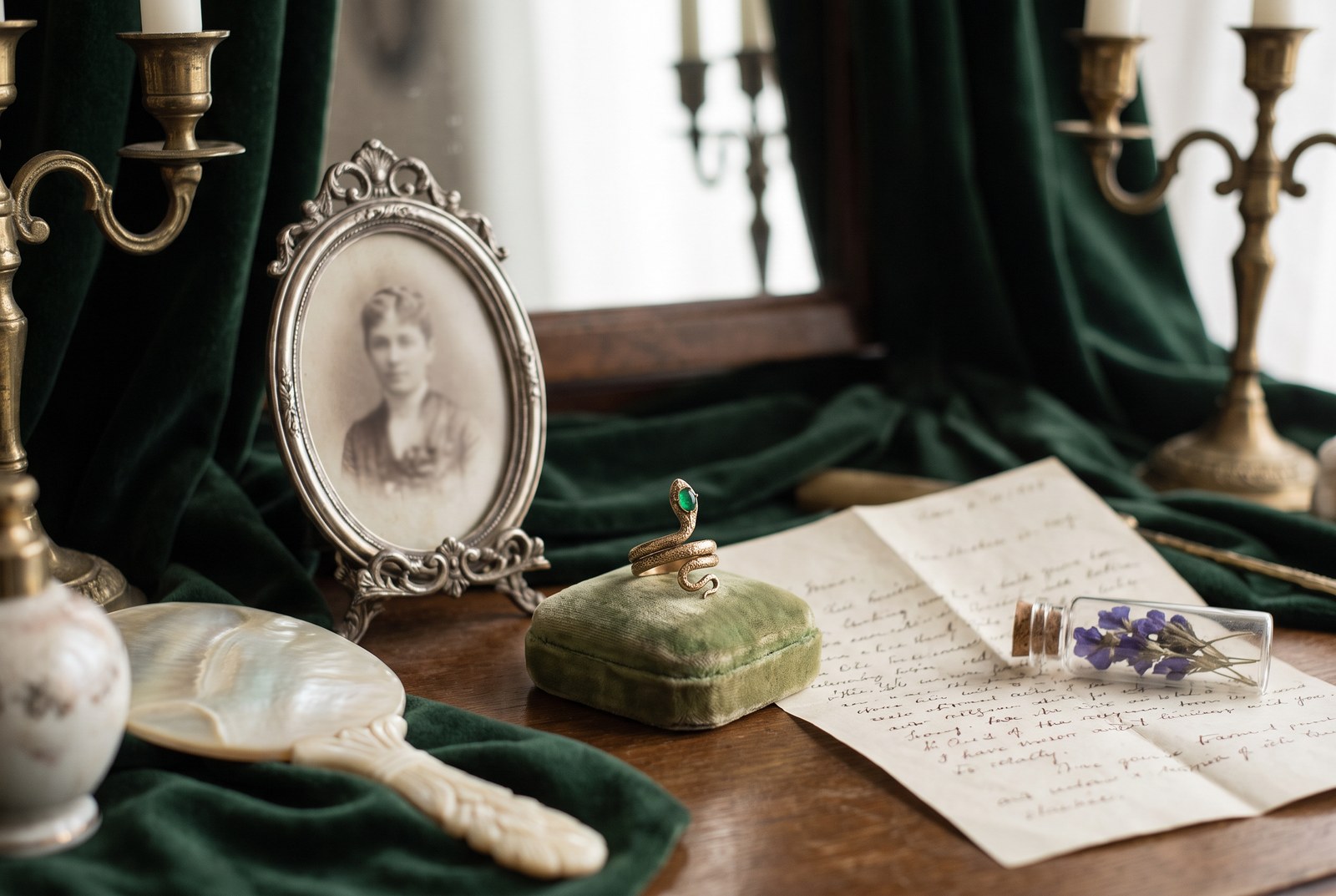
When Victoria and Prince Albert became engaged in 1839, his ring for her was a gold serpent set with an emerald, her birthstone. A young queen wearing a snake as a promise of love changed how the whole country saw the motif.
A snake that never lets go became the most romantic promise a Victorian could give.
Through the nineteenth century, snake rings, bangles and necklaces became some of the most popular jewellery made in Britain. They were given at engagements, anniversaries and, increasingly, in mourning.
Snakes in mourning jewellery
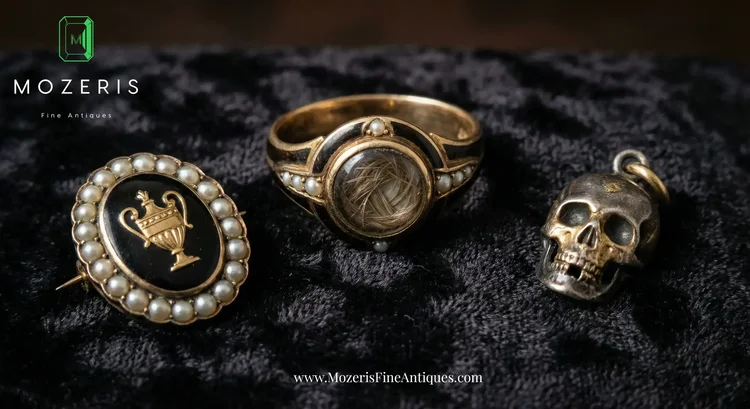
Because the snake stood for eternity, it suited remembrance. Some Victorian snake necklaces and lockets hold a plait of hair or a compartment for it. Pieces with their original hair and glazed compartments intact are the ones collectors look for.
If you are unsure which part of Victoria's long reign a piece belongs to, our guide to the periods of Victorian jewellery will help you place it.
Rings, bangles, necklaces and brooches
The snake suits almost every kind of jewellery, which is one reason so much survives. Each form has its own points to check.
Snake rings
The most common form. Some are simple bands with engraved scales. Others coil twice around the finger, with a gem-set head. Diamonds, rubies, emeralds and garnets were all used for heads and eyes.
Bracelets and bangles
Victorian snake bracelets show goldsmithing at its most skilled. Look for flexible, articulated bodies that move like the real thing, and heads set with stones or enamel.
Necklaces and brooches
Necklaces often take the ouroboros form, the snake closing the circle with its own tail. Brooches show snakes coiled, knotted, or wound around a flower or a heart.
A few of the snake pieces in our collection now:
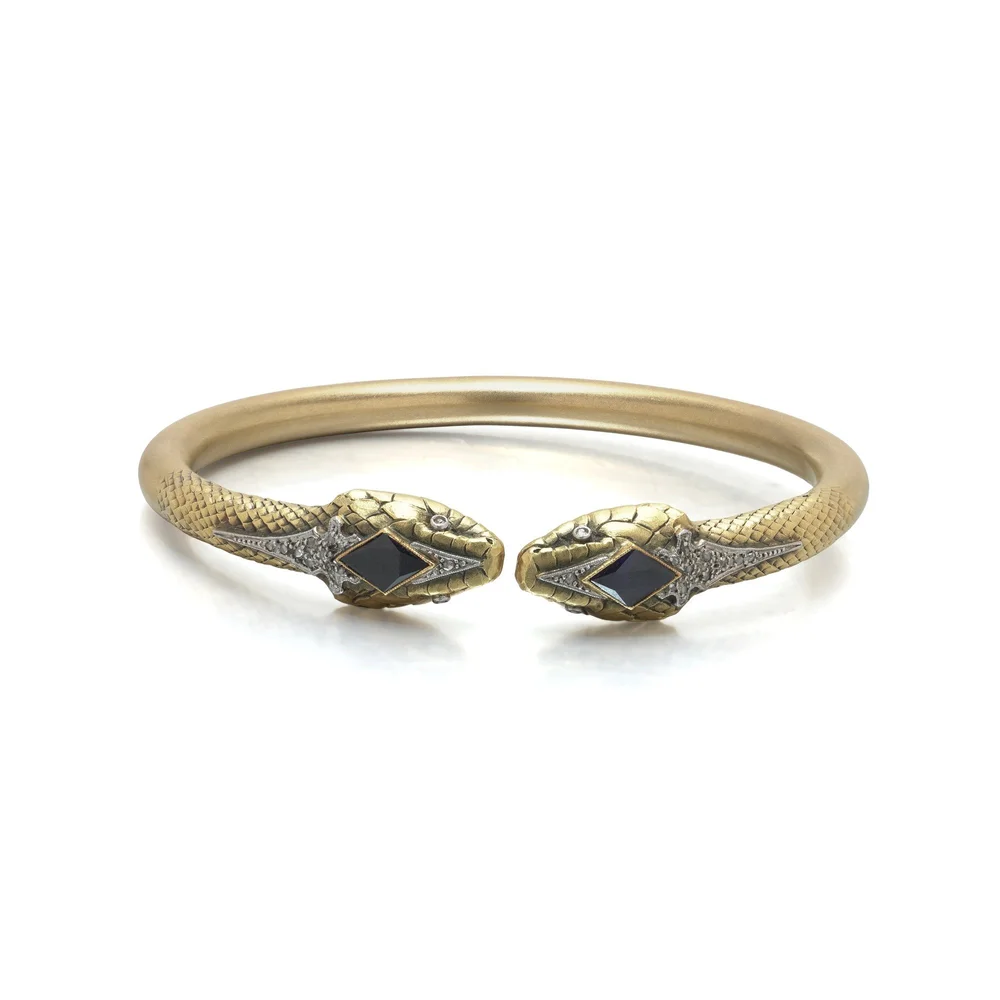
Victorian 18KT gold double snake bangle, sapphires and diamonds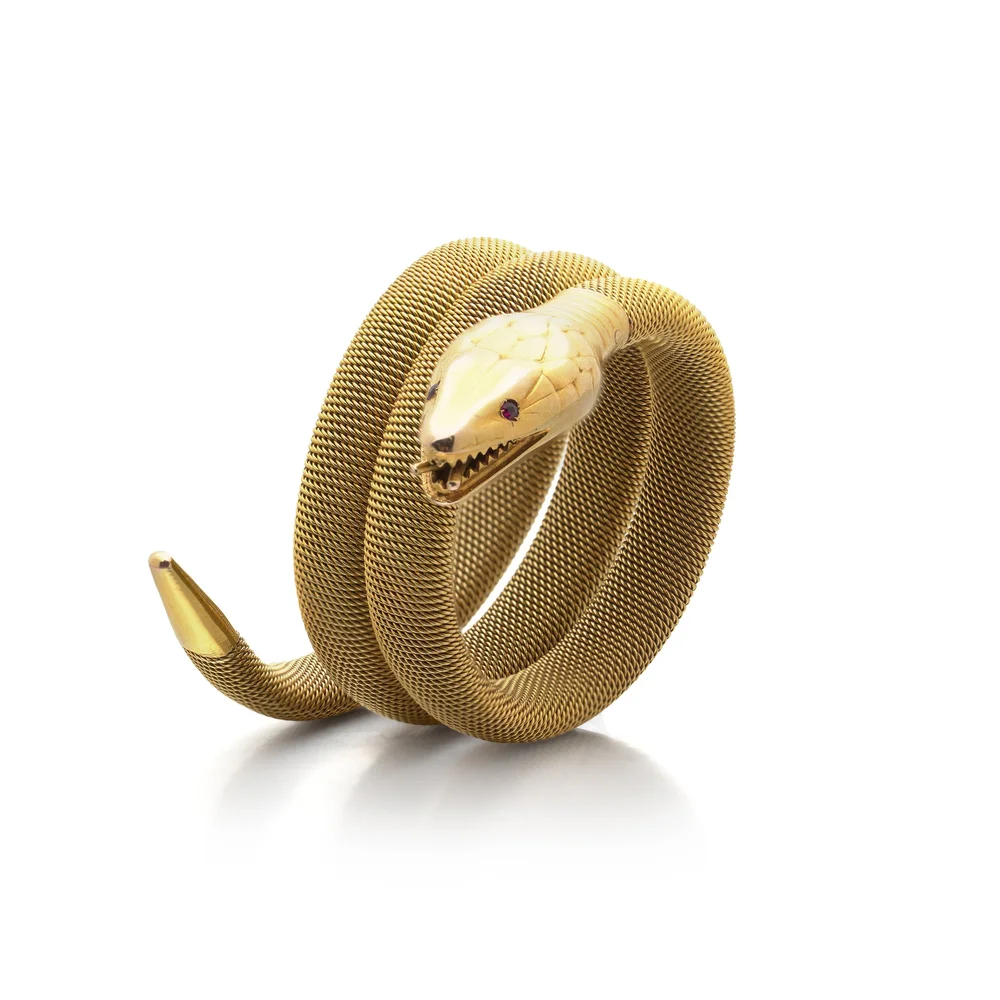 Antique 18KT gold serpent coil bracelet, ruby eyes
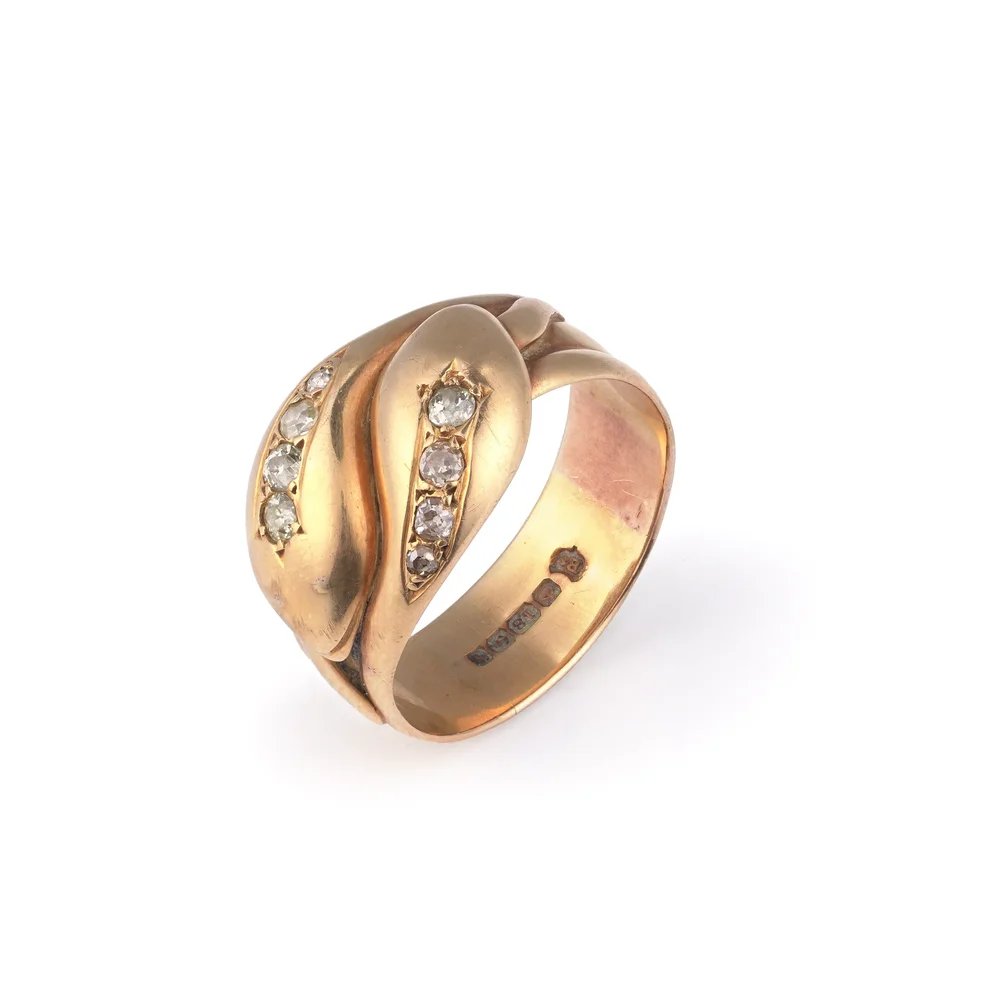 Edwardian 18KT gold snake ring, diamonds, Birmingham 1915
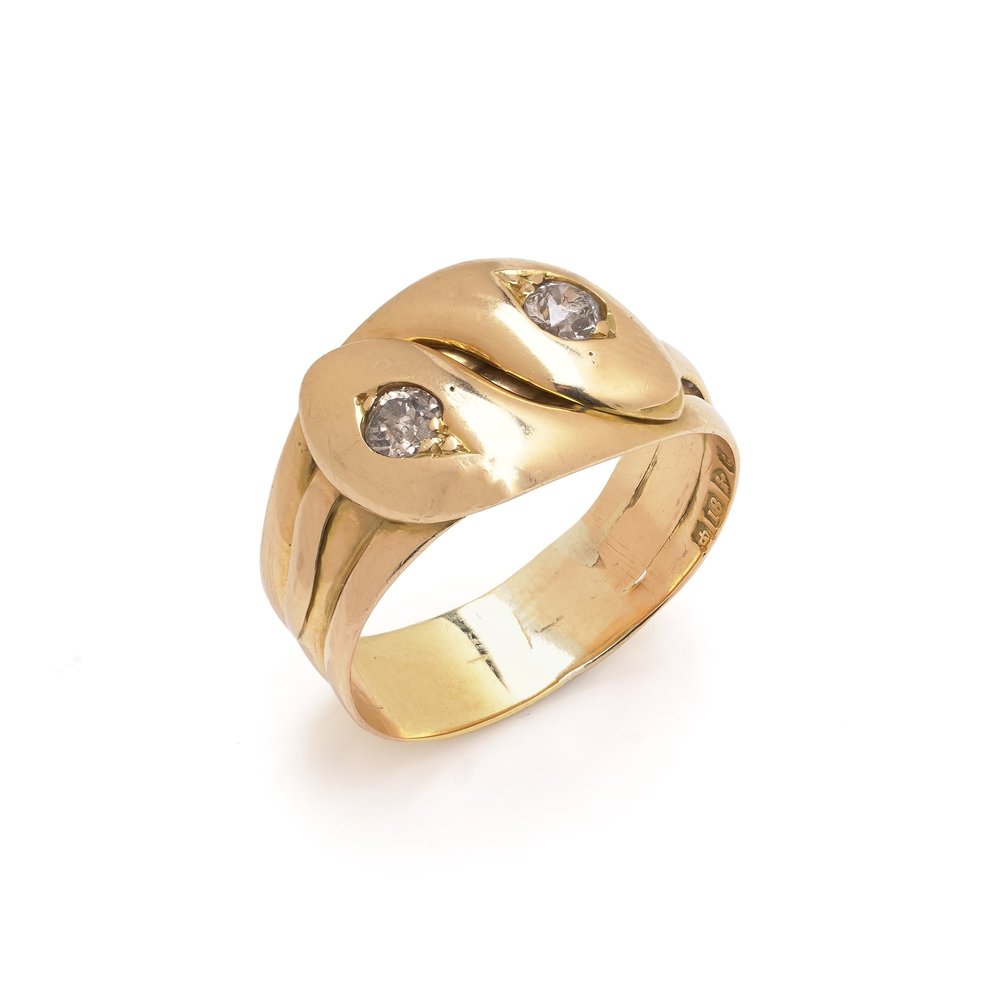 Antique 18KT gold diamond snake ring
See every ring we have in stock on our antique rings page, and bangles on bracelets and bangles.
From the Edwardians to the 1970s
The snake did not go out of fashion when Victoria died. Edwardian jewellers kept making snake rings in a lighter style, often set with diamonds. Our Edwardian snake ring carries a Birmingham hallmark for 1915.
In the twentieth century, the snake moved from sentiment to glamour. Bracelet watches hid a small dial inside a coiled gold body, and bold enamel snake bracelets suited the 1970s perfectly.
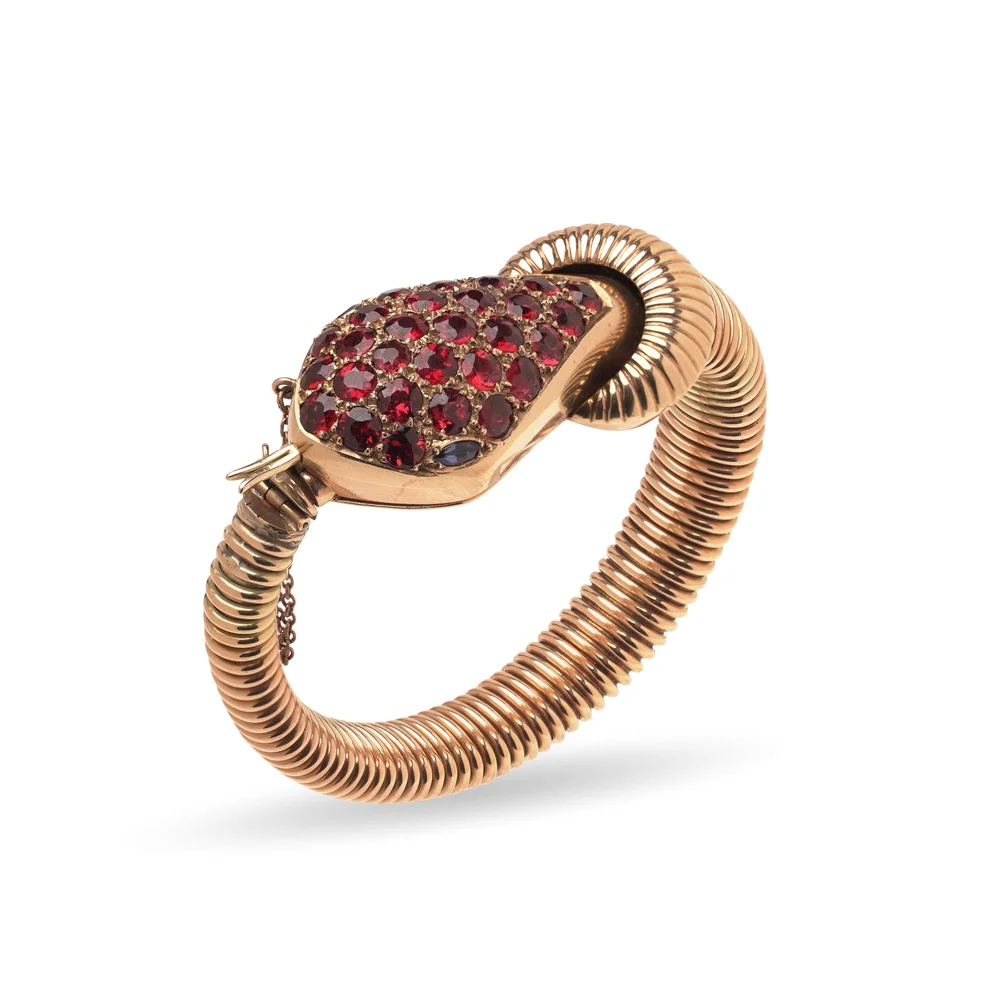 Vintage 9KT gold garnet-set snake bracelet watch, c. 1950s
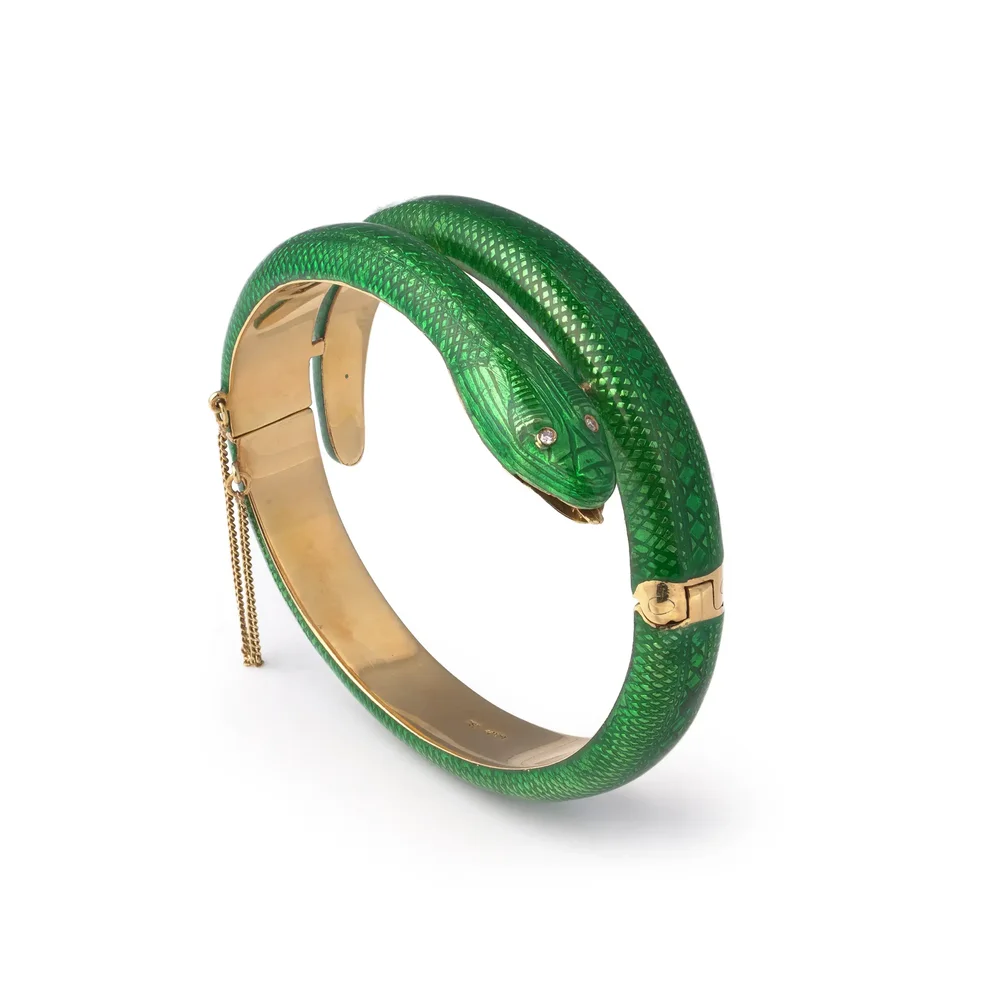 Vintage 18KT gold green enamel snake bracelet, c. 1970s
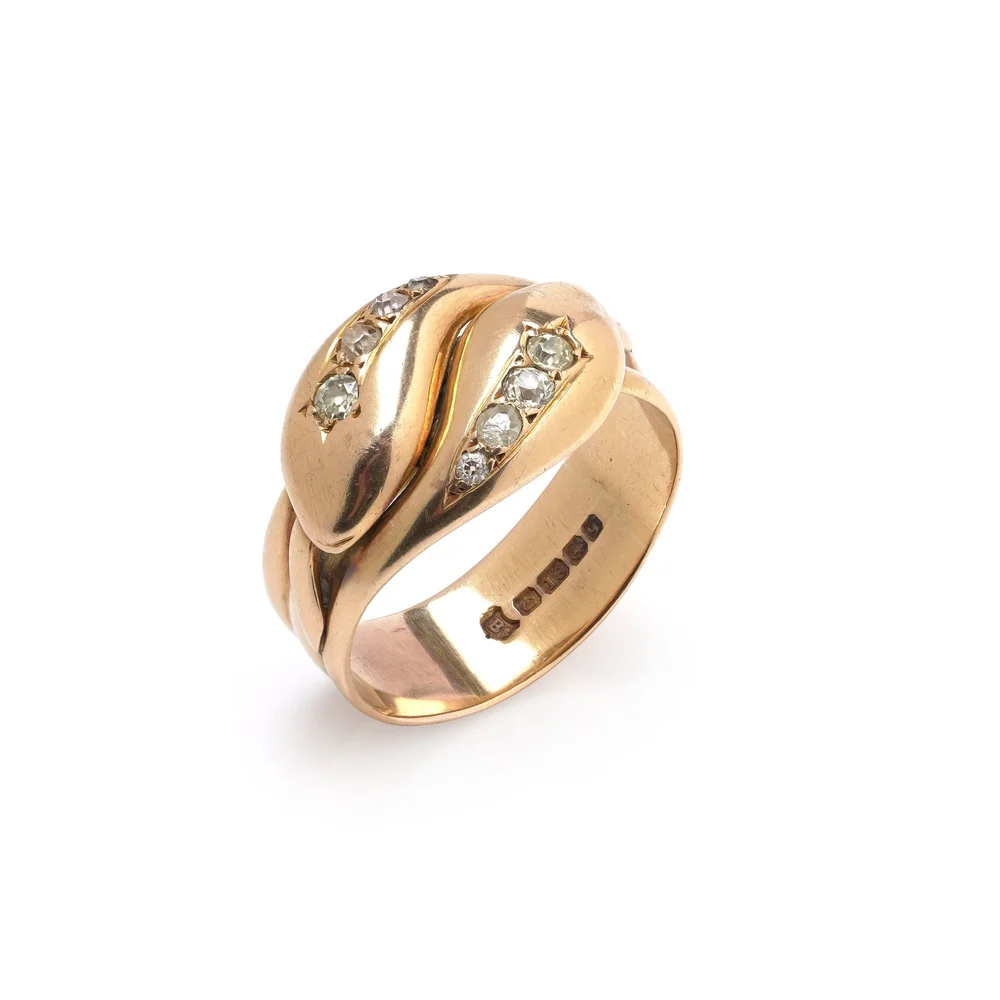 Antique 18KT gold diamond snake ring
The great jewellery houses took the motif furthest. Bulgari's Serpenti became one of the most recognised designs of the 1960s. Our guides to Bulgari Serpenti and Bulgari Tubogas cover how they are made and marked.
How to tell a genuine antique snake piece
Snake jewellery has been reproduced for well over a century. These are the checks a dealer makes, roughly in order.
| Check | What you want to see | Warning sign |
|---|---|---|
| Hallmarks | British gold marks, including 15ct (made 1854 to 1932) or 18ct | No marks at all, or a lone “18K” stamp on a piece sold as Victorian |
| Scales | Hand-chased or engraved, slightly irregular | Perfectly even, cast-in texture |
| Movement | Articulated links that flex smoothly | Stiff, hollow or rattling sections |
| Eyes and head | Stones held in individual settings | Glued stones or flat, glassy eyes |
| Wear | Softened edges where it touched skin | Crisp, sharp detail on every surface |
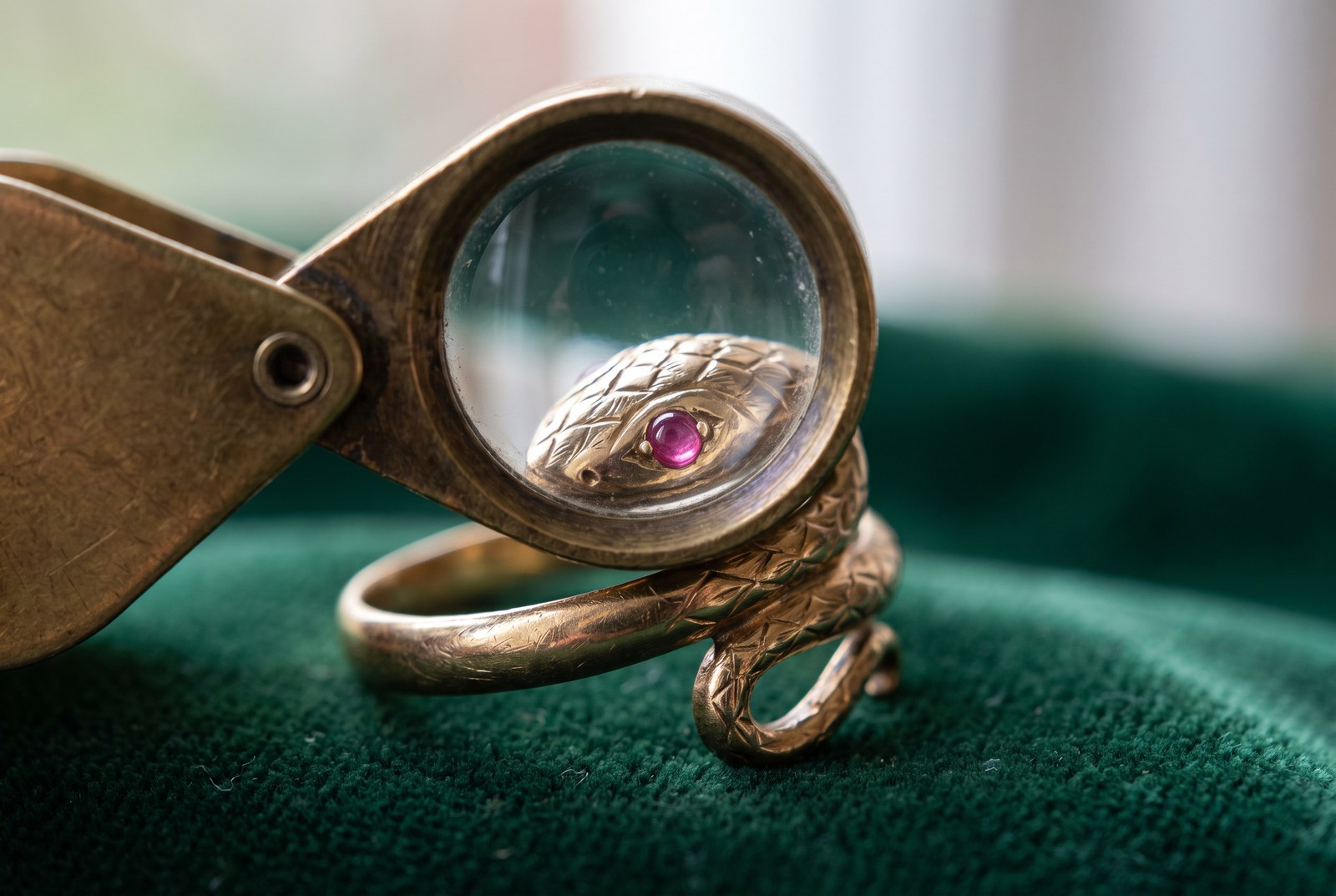
British hallmarks tell you the metal, the town and often the year. Our guide to hallmarks and makers' marks explains what each one means, and the Birmingham assay office guide covers the anchor mark on our 1915 ring.
An unmarked snake can still be genuine. Many Victorian pieces were exempt from hallmarking or lost their marks to wear and resizing. That is why the scales, construction and settings matter as much as the stamps.
You can read how we check every piece before it is listed in how we authenticate antique jewellery.
Caring for snake jewellery
Articulated snakes have many small joints, so they need gentle handling.
- Store each piece flat and separately, in a soft pouch or its own box.
- Clean with a soft brush and mild soapy water, then dry thoroughly.
- Avoid ultrasonic cleaners, which can loosen stones and damage joints.
- Have hinges, clasps and stone settings checked before daily wear.
If you are thinking of selling, leave it exactly as it is. Our guide to selling Victorian jewellery explains why cleaning first can cost you.
- The snake stands for eternity, love and protection, and has done for millennia.
- Victoria's 1839 emerald snake ring made it Britain's favourite romantic motif.
- Hand-chased scales, good articulation and set eyes point to a genuine antique.
- Keep an old snake piece as it is until someone has seen it.
Questions we are asked
What does a snake ring mean?
Most often eternity and lasting love. A snake coiled into a circle has no end, and Victorian snake rings were given as promises. It can also stand for wisdom, protection and renewal.
Is it lucky or unlucky to wear a snake ring?
In British jewellery tradition, the snake is a positive symbol of love, protection and renewal. Queen Victoria's own engagement ring was a snake.
What was Queen Victoria's engagement ring?
A gold serpent ring set with an emerald, her birthstone, given by Prince Albert when they became engaged in 1839.
How can I tell if a Victorian snake ring is real gold?
Look inside the band for British hallmarks such as 15ct or 18ct. If there are no marks, a dealer can test the metal without damaging it. Send us photos for a free opinion.
What is an ouroboros?
A snake biting its own tail, forming a circle. It is an ancient symbol of eternity. Read what the ouroboros symbolises.
Do you buy antique snake jewellery?
Yes. We buy antique and vintage snake rings, bangles, necklaces and brooches and pay on the day. Start with a free valuation.
Have a snake piece to value or sell?
Send us a photo of the piece and its marks. We will tell you what it is, when it was made and what we would pay, with no obligation.
New pieces reach our list first: join the Mozeris list.
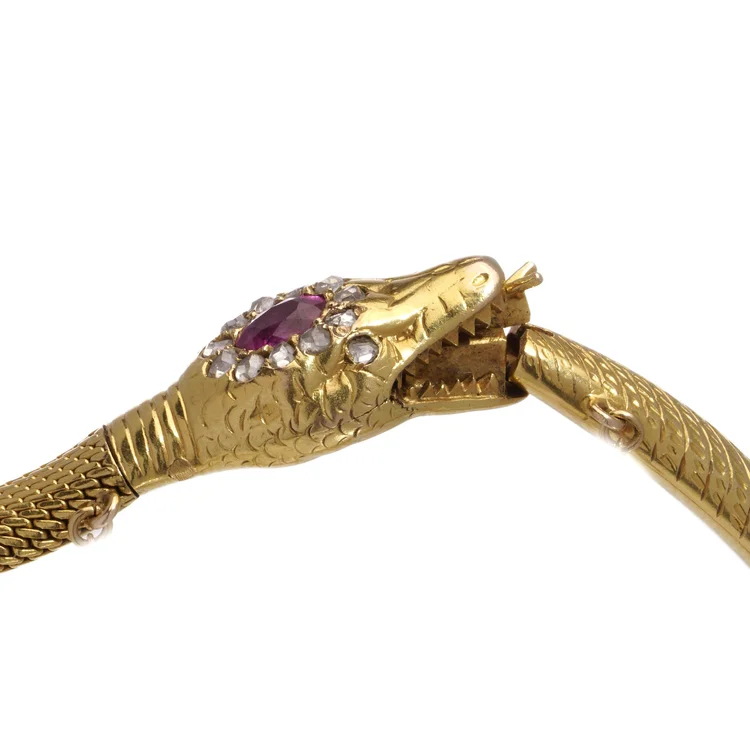 What does an ouroboros symbolise?
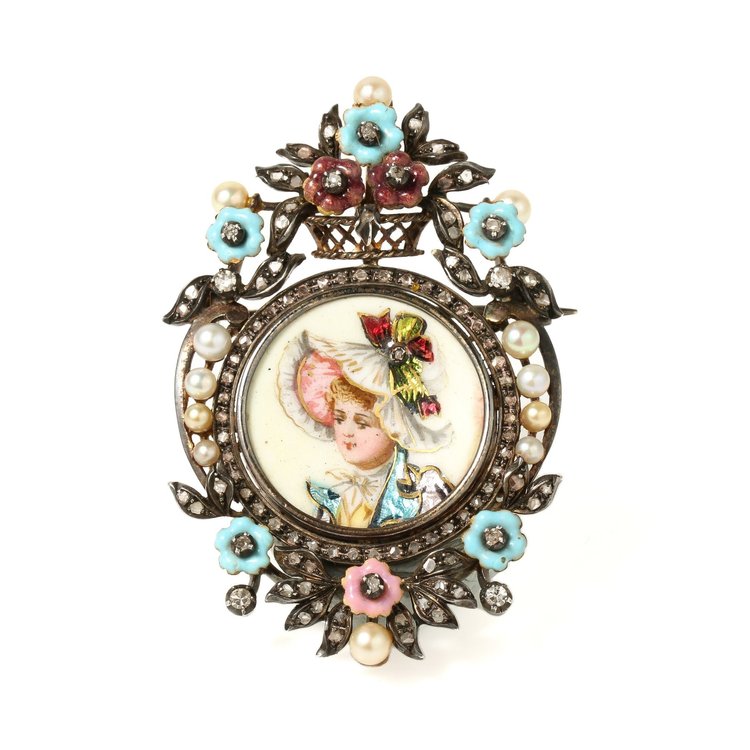 The periods of Victorian jewellery
 A guide to Georgian jewellery
 Roman intaglios
