UK Hallmark Authority · Five Lions Passant
The York Assay Office: Complete Guide
The York Assay Office was one of England's oldest provincial offices and closed in 1858. Its town mark is five lions passant on a cross. A full York hallmark shows the maker's mark, the five lions on a cross, the lion passant, a date letter and, from 1784, a duty mark.
Reviewed by Faustas Svencionis, Mozeris Fine Antiques, since 2015 · Updated October 2026
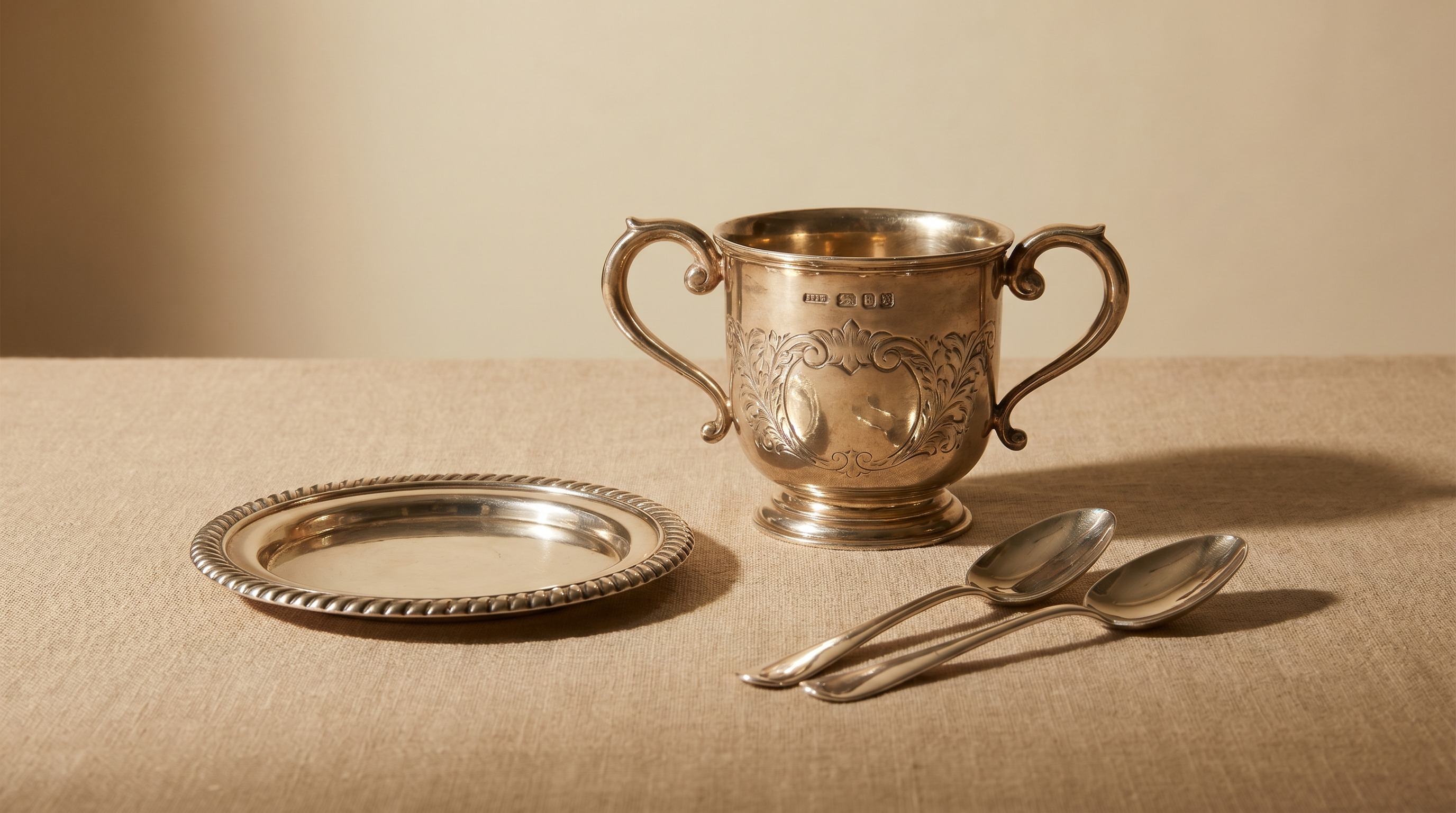
A specialist's guide to the historic York Assay Office, the five lions passant town mark, its closure in 1858, key date letters, notable York silversmiths and why collectors seek York-hallmarked silver today.
Got York-Marked Silver? We'll Identify and Value It Free
York silver closed in 1858: fewer than 170 years of production, a finite body of work. Send photos and we'll identify the date, maker and value with no obligation.
The York Assay Office was one of England's oldest provincial silver authorities, with a hallmarking tradition stretching back to the 15th century. Its closure in 1858 makes it the earliest of England's provincial offices to close, predating Newcastle (1884), Exeter (1883), and Chester (1962) by decades. The York town mark, half the cross of St George combined with five lions passant on a white cross background, is one of the most complex and historically rich in British hallmarking. A York-marked piece is relatively rare, is keenly collected, and always dates before 1858.
A Brief History
The York Assay Office hallmarked silver from the 15th century until it closed in 1858.
York's goldsmiths were active and organised from at least the early 15th century. The city was the commercial capital of northern England in the medieval period, and its craft guilds, including the goldsmiths, operated under royal charter. The formal Company of Merchant Taylors and Goldsmiths oversaw hallmarking from the 1550s.
York produced silver continuously through the Tudor, Stuart, Georgian and early Victorian periods. However, the rise of Birmingham and Sheffield as industrial silversmithing centres progressively undermined York's trade. By the mid-19th century, the volume of work presented for assay at York had become commercially unviable, and the office struck its last hallmark in 1858.
The result is a closed body of work spanning roughly four centuries, mostly domestic silver, ecclesiastical pieces, and the full range of Georgian forms. Because York is relatively small as a centre compared to London, Birmingham and Sheffield, York-hallmarked pieces are genuinely scarcer than those from the major offices, and specialist collectors actively seek them.
How to Read a Full York Hallmark
Read a York hallmark as the maker's mark, the five lions on a cross, the lion passant, the date letter and, from 1784, the duty mark.
| Mark | What it tells you |
|---|---|
| Maker's mark | The silversmith's registered initials. |
| Five lions on a cross | The York town mark. |
| Lion passant | Sterling (.925). |
| Date letter | The year of assay, from around 1559. |
| Duty mark | A sovereign's head, 1784 to 1858. |
The York sequence follows the standard English format. From left to right:
- Maker's mark: the silversmith's registered initials.
- Town mark: five lions passant on a cross (half the cross of St George with a lion in each quarter and one in the centre). The exact rendering varies by period and is the primary distinguishing mark.
- Standard mark: a lion passant (sterling .925). Used consistently from the 1700s.
- Date letter: a single letter in a shaped shield. York began using date letters from around 1559.
- Duty mark (1784 to 1858): a sovereign's head; present on all York pieces from 1784 until closure.
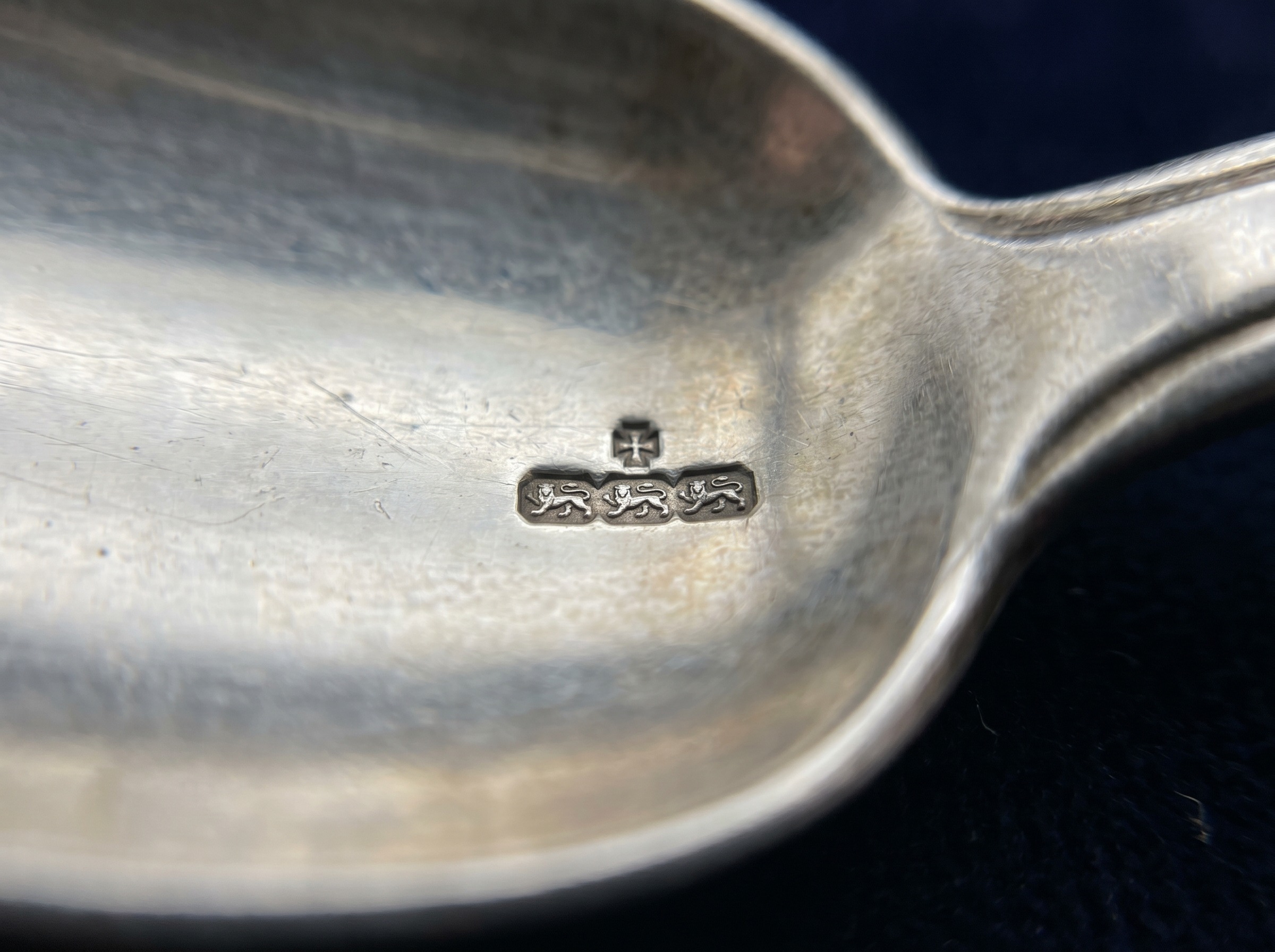
"Closed 1858. Older than Chester by a century. York silver is genuinely rare: four centuries of work, then silence."
The Five Lions Town Mark
Five lions passant on a cross is the York town mark, and its rendering varies by period.
The York mark combines half the cross of St George (the patron saint of England) with five lions passant: one in each quarter of the cross and one in the centre. This gives a total visual impression of a cross with a lion at each arm end and one central. The mark is heraldically complex and varies slightly in its engraving through different cycles, the shield shape around it also changes, which helps narrow the period.
Early York pieces (Tudor and early Stuart, pre-1700) use variants of this mark that differ from the standardised post-1700 version. Pre-1700 York attribution is specialist territory; if you have a piece you suspect is early York, professional identification is essential.
Date Letters
York used date letters from around 1559 until the office closed in 1858.
York used date letters from approximately 1559, though early cycles are incomplete and not all pieces from the 16th and 17th centuries carry a full mark sequence. From the early 18th century the system is regular and consistent.
The final cycle ran 1812 to 1856, using letters A through U. After U in 1856, the office continued briefly before closing in 1858, pieces with the final two date letters (V and W in some references, or simply the last two letters of that cycle) are the very last York silver ever assayed.
Rarity and Value
York closed in 1858 and was never a large-volume office, so York-marked silver is scarce and collectors seek it.
York silver is keenly collected for two compounding reasons. First, closure in 1858 makes it a closed set, like Chester and Glasgow, no new York silver can be created. Second, York was never a large-volume assay centre compared to Birmingham or Sheffield, so even within the closed set the total number of pieces is small.
In practice, York-marked silver is sought after, especially when the piece is by a known York maker, or in an ecclesiastical or distinctively northern form. Georgian York silver (1714 to 1830) is the period most actively sought by collectors. Silver by prominent York families (the Hampston and Prince partnership, the Cattle family, or Robert Cattle) is particularly desired.
Notable York Silversmiths
- Hampston, Prince & Co: leading York firm of the late 18th century.
- Robert Cattle: early 19th century York maker, prolific.
- Cattle & Barber: partnership, good-quality early Victorian York silver.
- James Barber & William North: later period York makers.
- John Langwith: early 18th century, fine Queen Anne work.
- William Williamson, Thomas Mangy: Restoration and early Georgian.
What York Silver Looks Like
York assayed the full domestic range, but is particularly associated with:
- Georgian domestic silver: tea services, cream jugs, sugar bowls, salvers and flatware are the most commonly encountered York pieces.
- Ecclesiastical silver: York Minster and the many historic churches of Yorkshire commissioned considerable silver from local makers.
- Presentation cups and two-handled cups: Yorkshire landed families and civic bodies commissioned presentation pieces in volume.
- Provincial flatware: York-marked fiddle and Old English pattern flatware is more affordable than equivalent London work but still carries the interest of the York mark.
Pitfalls
The common York pitfalls are worn town marks and confusion with other provincial marks.
- Confusing early York marks with London: pre-1700 York marks can be unclear on worn pieces. The cross-and-lions configuration is the key differentiator from the London leopard's head.
- Missing the duty mark: all York silver from 1784 to closure should have a sovereign's head. Absence is a red flag.
- Repair and re-marking: occasionally pieces were re-assayed after repair; this can produce mixed mark sequences that need careful reading.
- Post-closure fakes: rare, but known. York marks have been added to unmarked provincial pieces. The shield depth and letter quality are usually the giveaway.
What We Look For When York-Marked Silver Arrives
When York-marked silver arrives we check the five lions on a cross closely, since worn York marks are easily misread, and date the piece from the letter and duty mark.
Then we look at the maker, such as the Hampston and Prince partnership or the Cattle family, and at condition.
Got York-Hallmarked Silver to Sell?
Active buyer of York-assayed silver: Georgian domestic silver, ecclesiastical pieces, presentation cups, flatware by Hampston, Cattle and other York makers. By appointment in Mayfair or by free FedEx collection. Same-day payment.
- Send photosUse the form on this page, or email them to us.
- A specialist reviews itMaker, marks, age and condition.
- Free estimate by emailWithin one working day.
- You decidePaid once agreed. No obligation.
Four ways to sell: Mayfair (by appointment), Braintree (by appointment), Royal Mail Special Delivery, free FedEx collection.
Free valuation
Request a free valuation
Send us a few photos of your York silver. A specialist looks at every request personally and replies by email with an estimate within one working day. There is no obligation to sell.
What to photograph
- The whole piece. The whole piece, from the front and the side.
- The underside. The base or reverse, where the marks usually are.
- The hallmarks, close up. Every mark in the group, in focus, including the maker's mark.
Prefer email? Send photos to info@mozerisfineantiques.com or call 01376 334 482.
Ways to sell
- Mayfair (by appointment)
- Braintree (by appointment)
- Royal Mail Special Delivery
- Free FedEx collection
We buy directly, with payment once you accept our offer, and we can also sell for you by consignment or in our own auctions.
Related Reading
Frequently Asked Questions
What is the York Assay Office hallmark?
When did the York Assay Office close?
Is York silver rare?
What premium does York silver carry?
Who were the main York silversmiths?
Will you tell me what my York silver is worth?
Selling York-Hallmarked Silver?
Active buyer. Mayfair showroom by appointment or free FedEx collection. Same-day payment.
Strictly by appointment only: no walk-ins at either location.
Items we buy
Antique Silver We Specialise In
Click any category for our specialist buying guide, then send photos for a free valuation. We also have a full Sell Your Silver overview.