Antique Silver Guides · Mozeris Fine Antiques
Antique Silver Caddy Spoons
An antique silver caddy spoon is a small spoon made to measure tea from the caddy, mostly Georgian and often Birmingham marked. The shape of the bowl matters most: shell, leaf, eagle-wing, hand and jockey-cap forms, by makers such as Joseph Willmore, are the ones collectors look for.
Updated October 2026
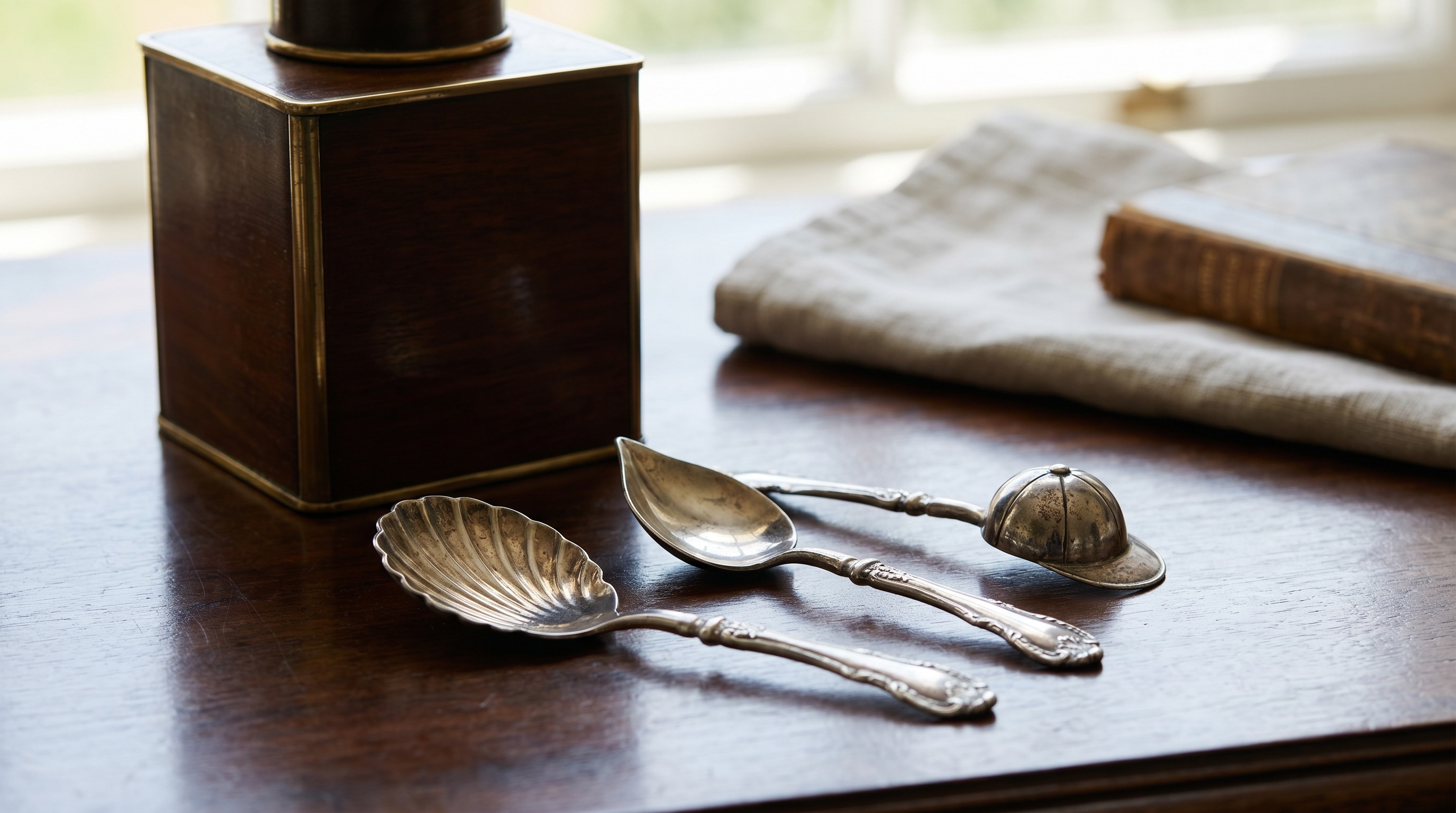
Small, charming and endlessly varied; the caddy spoon was made to measure tea from the caddy. Shell, leaf, hand and jockey-cap forms by celebrated Georgian makers make them a favourite with collectors. A guide to identifying, dating, valuing and selling antique silver caddy spoons in the UK.
What Is Your Silver Caddy Spoon Worth?
Send a photo, including the marks on the handle, and we'll value it free, with no obligation. We reply within one working day.
Few small pieces of antique silver are as collectable as the caddy spoon. Made to lift tea from the caddy, they came in a wonderful range of fanciful shapes (shells, leaves, eagle wings, hands and jockey-caps) and the rarest forms by Birmingham and Georgian makers are the most keenly collected.
Silver caddy spoons: what they are
A silver caddy spoon is a short-handled spoon with a broad bowl, made to lift loose tea from the caddy, chiefly in the Georgian period.
A caddy spoon is a short-handled spoon with a wide, shallow bowl, used to scoop tea leaves from a tea caddy. They appeared from the 1770s as tea drinking spread, and makers competed in novelty: shell, leaf, acorn, eagle-wing, hand and jockey-cap bowls are all known. Birmingham makers such as Joseph Willmore and Matthew Linwood were prolific, and rare die-stamped or cast forms are the most prized.
"Caddy spoons are bought for their form, not their weight: a rare shape by a sought-after maker is valued very differently from a plain one."
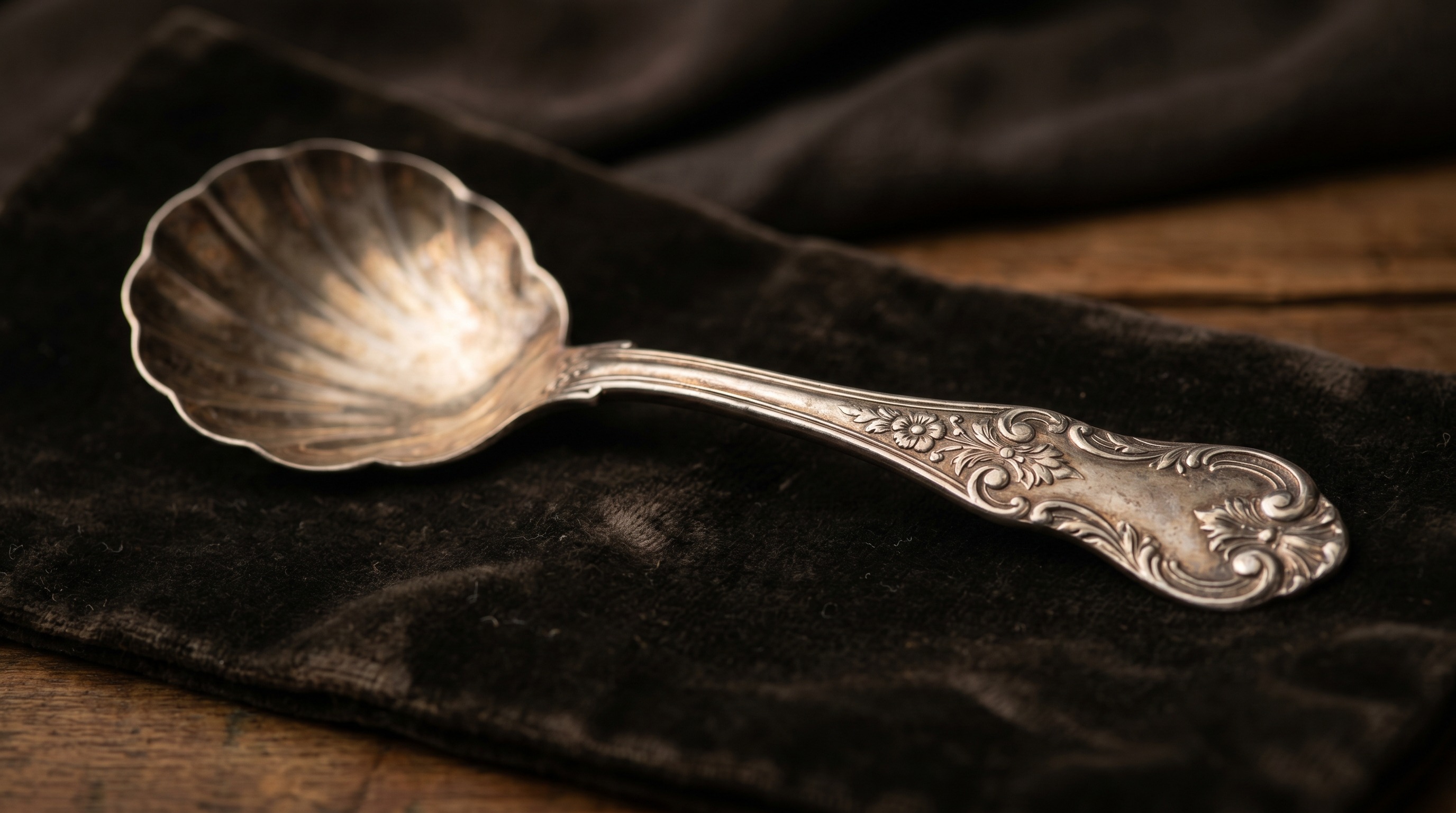
What collectors look for
Caddy spoon collectors look first at the form of the bowl, then at the maker, the date and the crispness of the die-stamping.
- Rare formsEagle-wing, hand, jockey-cap and figural bowls are keenly collected.
- Named makersJoseph Willmore, Matthew Linwood, Hester Bateman and other noted makers add value.
- Early dateGeorgian caddy spoons (1770s to 1830s) are the most collected; the hallmark dates the piece.
- Crisp conditionSharp die-stamping, no splits or wear to the bowl, and clear, undamaged hallmarks.
What are antique silver caddy spoons worth?
Every piece is valued individually. These are the things we look at:
What drives value
- FormRare eagle-wing, hand and jockey-cap shapes, against plain shell or fiddle bowls.
- MakerWillmore, Linwood, the Batemans and other noted makers.
- DateGeorgian spoons are the most collected. The date letter gives the year.
- ConditionSharp die-stamping and an undamaged bowl, with no splits, repairs or erased crests.
- Sterling or platePlated and plain modern spoons have decorative value only.
Every piece is different. Send us a few photos and we will tell you what your caddy spoon is worth, free and with no obligation. Get a free valuation
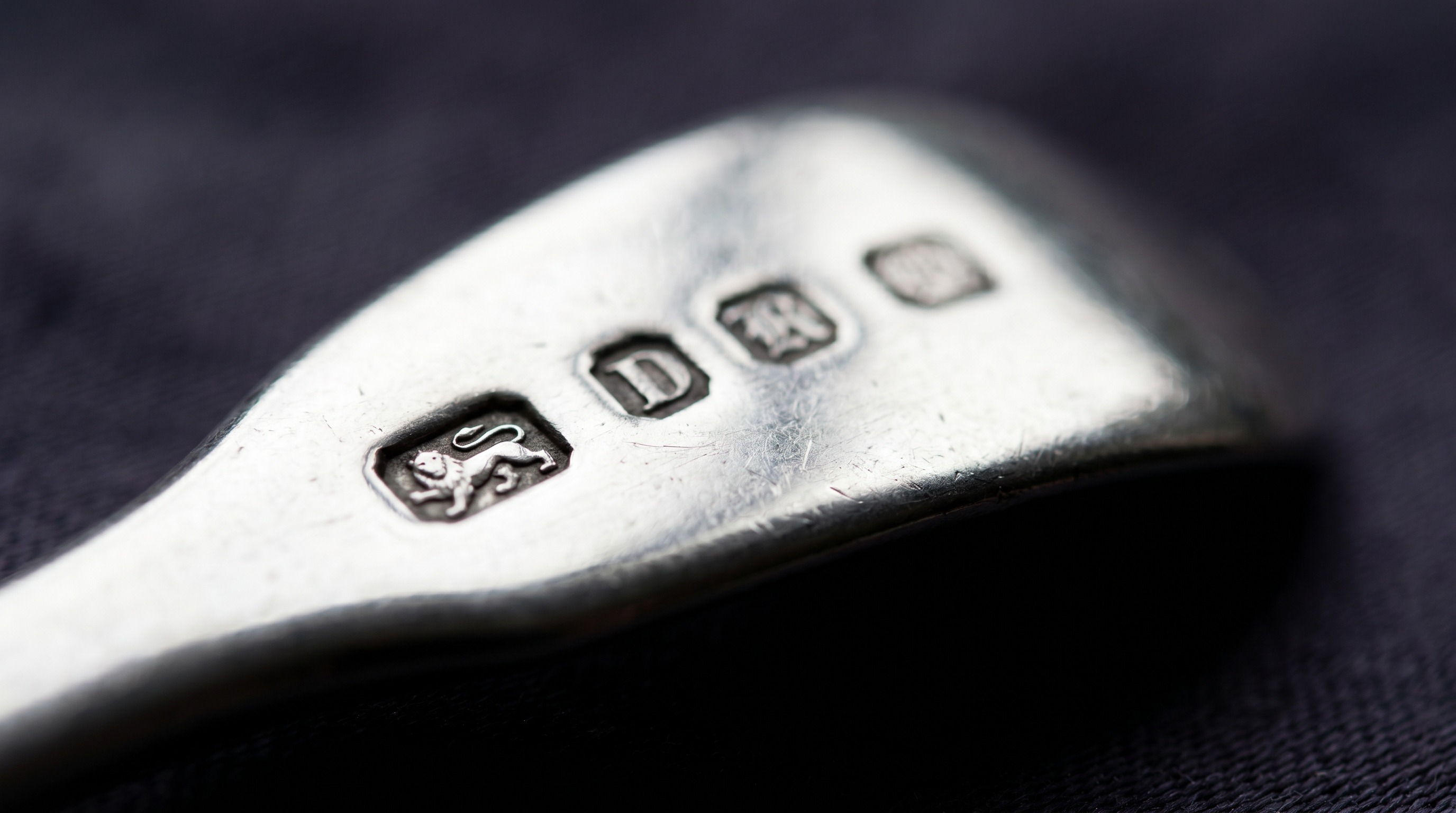
What Determines Value
The value of a silver caddy spoon is decided by its form, its maker, its date and its condition, rather than by its weight.
The factors we assess on a silver caddy spoon:
- Form: Rare eagle-wing, hand and jockey-cap over plain shell.
- Maker: Willmore, Linwood, Bateman and noted makers.
- Date: Georgian spoons most collected; the hallmark dates it.
- Crispness: Sharp die-stamping and undamaged bowl.
- Marks: Clear, complete hallmarks (often in the handle).
- Condition: No splits, repairs, erased crests or wear.
Marks are usually in the handle. Look for the lion passant for sterling. Plate is marked EPNS.
What We Look For When a Caddy Spoon Arrives
When a caddy spoon arrives we read the marks along the handle first: the lion passant, the town mark, the date letter and the maker's mark, which on many of the best spoons is a Birmingham maker.
Then we look at the bowl. We note its form, check how crisp the die-stamping still is, and look for splits, repairs, erased crests and wear, because condition and form together decide how a caddy spoon is valued.
How selling works
- Send photosUse the form on this page, or email them to us.
- A specialist reviews itMaker, marks, age and condition.
- Free estimate by emailWithin one working day.
- You decidePaid once agreed. No obligation.
Free valuation
Request a free valuation
Send us a few photos of your caddy spoon. A specialist looks at every request personally and replies by email with an estimate within one working day. There is no obligation to sell.
What to photograph
- The whole piece. The spoon from above, showing the shape of the bowl.
- The underside. The back of the bowl and the handle.
- The hallmarks, close up. Usually along the handle, sometimes on the back of the bowl.
Prefer email? Send photos to info@mozerisfineantiques.com or call 01376 334 482.
Ways to sell
- Mayfair (by appointment)
- Braintree (by appointment)
- Royal Mail Special Delivery
- Free FedEx collection
We buy directly, with payment once you accept our offer, and we can also sell for you by consignment or in our own auctions.
How to identify and date your caddy spoon
Look along the handle, and sometimes on the back of the bowl, for the lion passant, the town mark, the date letter and the maker's mark.
| Mark | What it tells you |
|---|---|
| Maker's mark | The initials of the maker or firm, in a shield. |
| Lion passant | The English mark for sterling silver. |
| Town mark | The assay office: leopard's head for London, anchor for Birmingham. |
| Date letter | The year of assay. The letter style and shield change with each cycle. |
Look along the handle (and sometimes the back of the bowl) for the lion passant (sterling), town mark, date letter and maker's mark; many of the best were marked at the Birmingham Assay Office (the anchor). Plated spoons stamped EPNS are worth far less; see our EPNS vs sterling silver guide.
The date letter dates it. Use our how to read silver hallmarks guide. Because caddy spoons are light, the silver price valuation guide matters far less here than the form and maker.
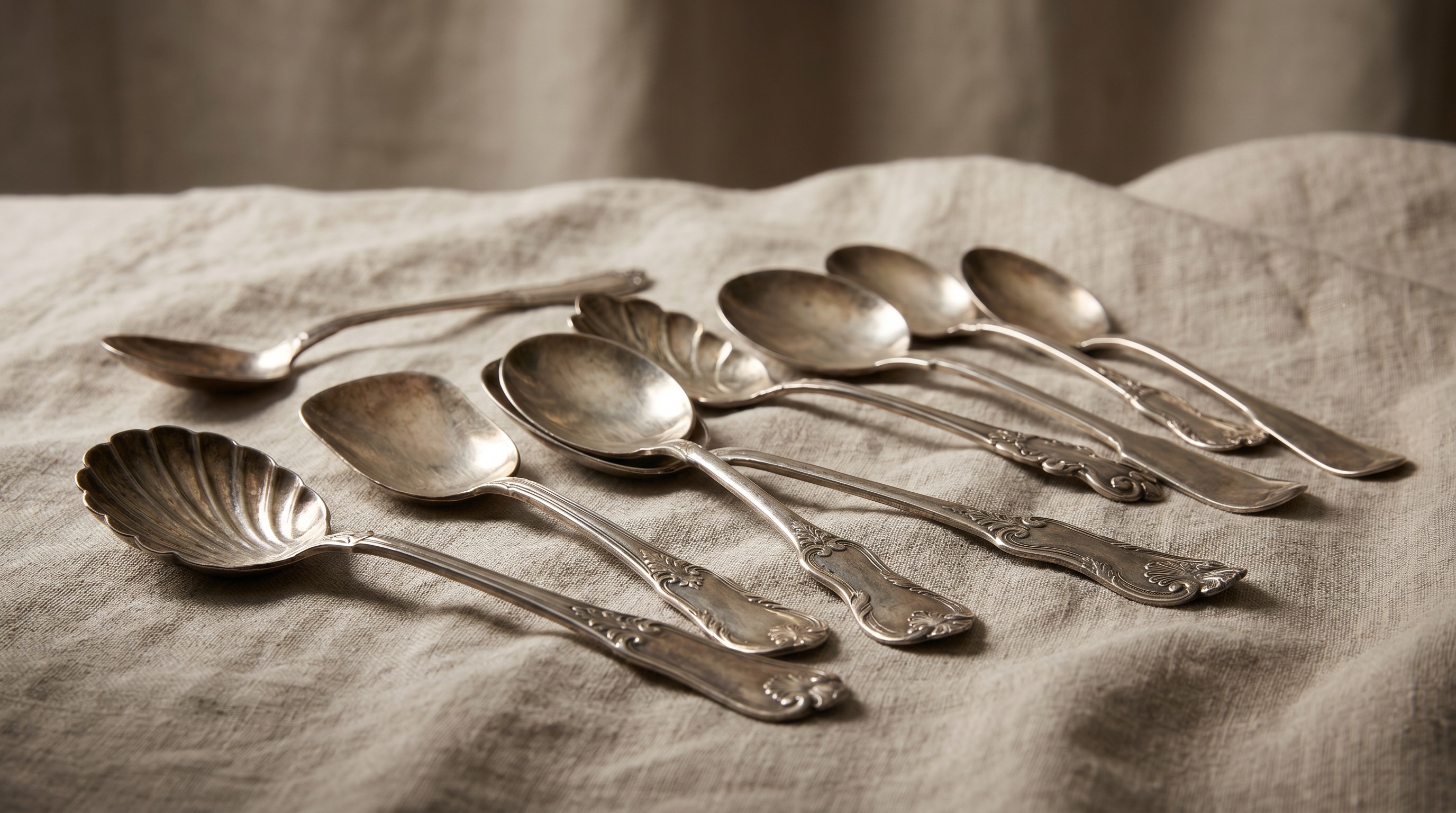
Caddy spoons go hand in hand with tea silver. See our guides to Georgian silver tea caddies, silver tea services and Paul Storr silver. When you're ready to sell, visit sell your silver.
Sterling or plate?
Sterling silver
- Lion passant: the English sterling mark
- A town mark, a date letter and a maker's mark
- Valued as antique silver: maker, date, form and condition
Silver plate (EPNS)
- Stamped EPNS or A1, with no lion passant or date letter.
- The marks often imitate hallmarks, so check each one
- Worth far less: decorative value only
Value Your Caddy Spoon
Send photographs of the spoon and the marks in the handle, and we'll give you an honest, no-obligation valuation.
Strictly by appointment only: no walk-ins at either office.
Frequently Asked Questions
Antique silver caddy spoons: common questions.
What is a silver caddy spoon?
How much is an antique silver caddy spoon worth?
Why are some caddy spoons so valuable?
How do I tell sterling from plate?
Where are the hallmarks on a caddy spoon?
Where can I sell an antique silver caddy spoon in the UK?
Send Us Your Photographs
Attach photos of the spoon and the marks in the handle. We'll respond within one working day.
Sell Your Antique Silver Caddy Spoon
We buy antique sterling silver caddy spoons (shell, leaf, novelty and rare forms by named makers) valued as antique silver, not as scrap. Free valuation, no obligation.