Antique Silver Guides · Mozeris Fine Antiques
Antique Silver Salt Cellars & Mustard Pots
Antique silver salt cellars and mustard pots are small table pieces, from grand Georgian cellars to Victorian sets with blue glass liners and matching spoons. Value turns on sterling or plate, the maker, the date and completeness: original liners, spoons and matched sets matter most.
Updated October 2026
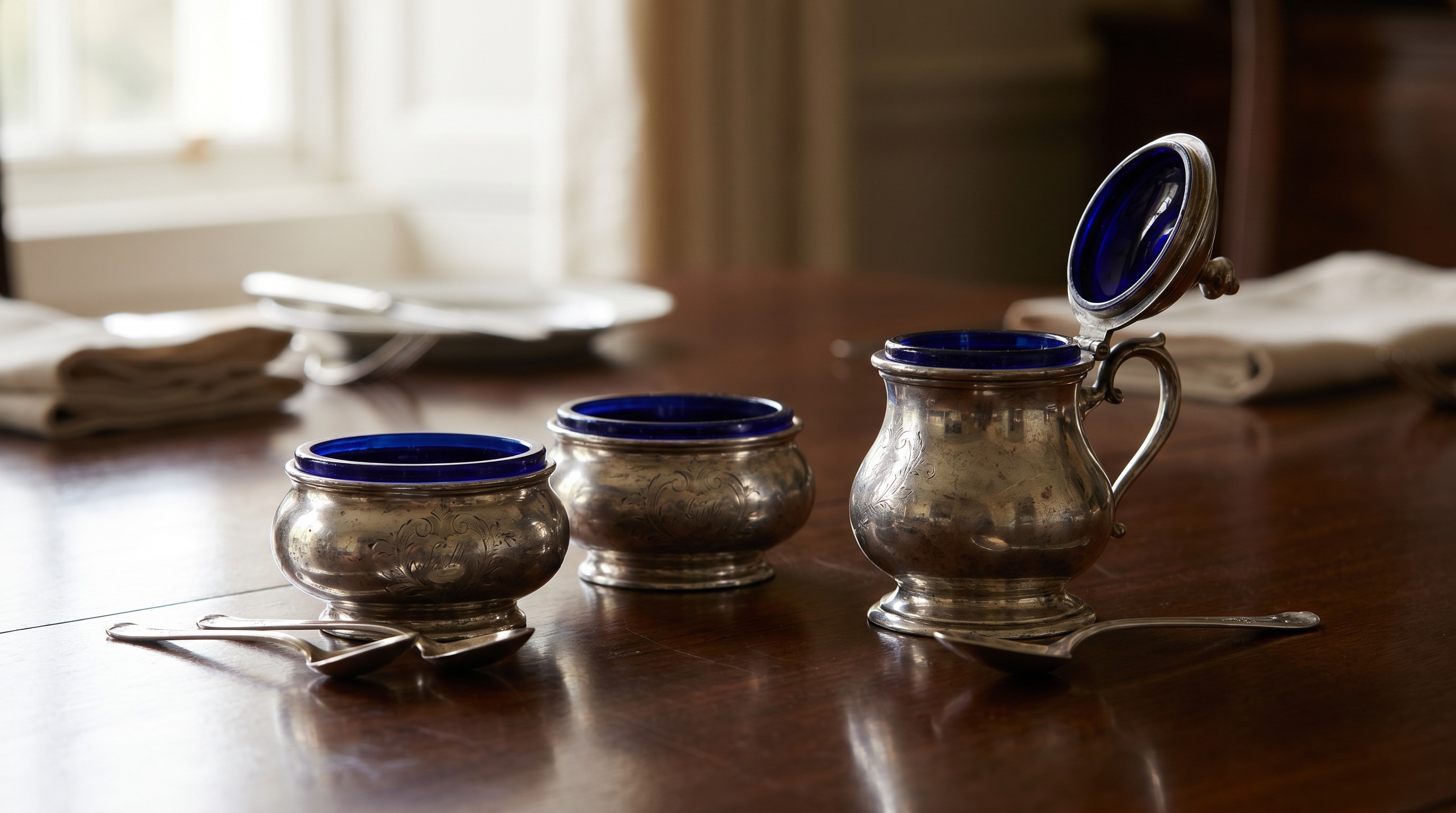
Open salts, salt cellars and mustard pots with their cobalt blue glass liners are among the most charming small pieces of antique table silver. A guide to identifying, dating, valuing and selling antique silver salts and mustards in the UK.
What Are Your Silver Salts & Mustards Worth?
Send a photo, including the marks on the base, and we'll value them free, with no obligation. We reply within one working day.
Salt was once precious enough to deserve its own silver. From grand Georgian cellars to dainty Victorian sets with blue glass liners and matching spoons, silver salts and mustard pots are a charming, affordable and very collectable corner of antique table silver, and, by maker and date, can be surprisingly valuable.
Silver salt cellars & mustard pots: what they are
Silver salt cellars and mustard pots are small table pieces, often pierced and fitted with blue glass liners and their own spoons.
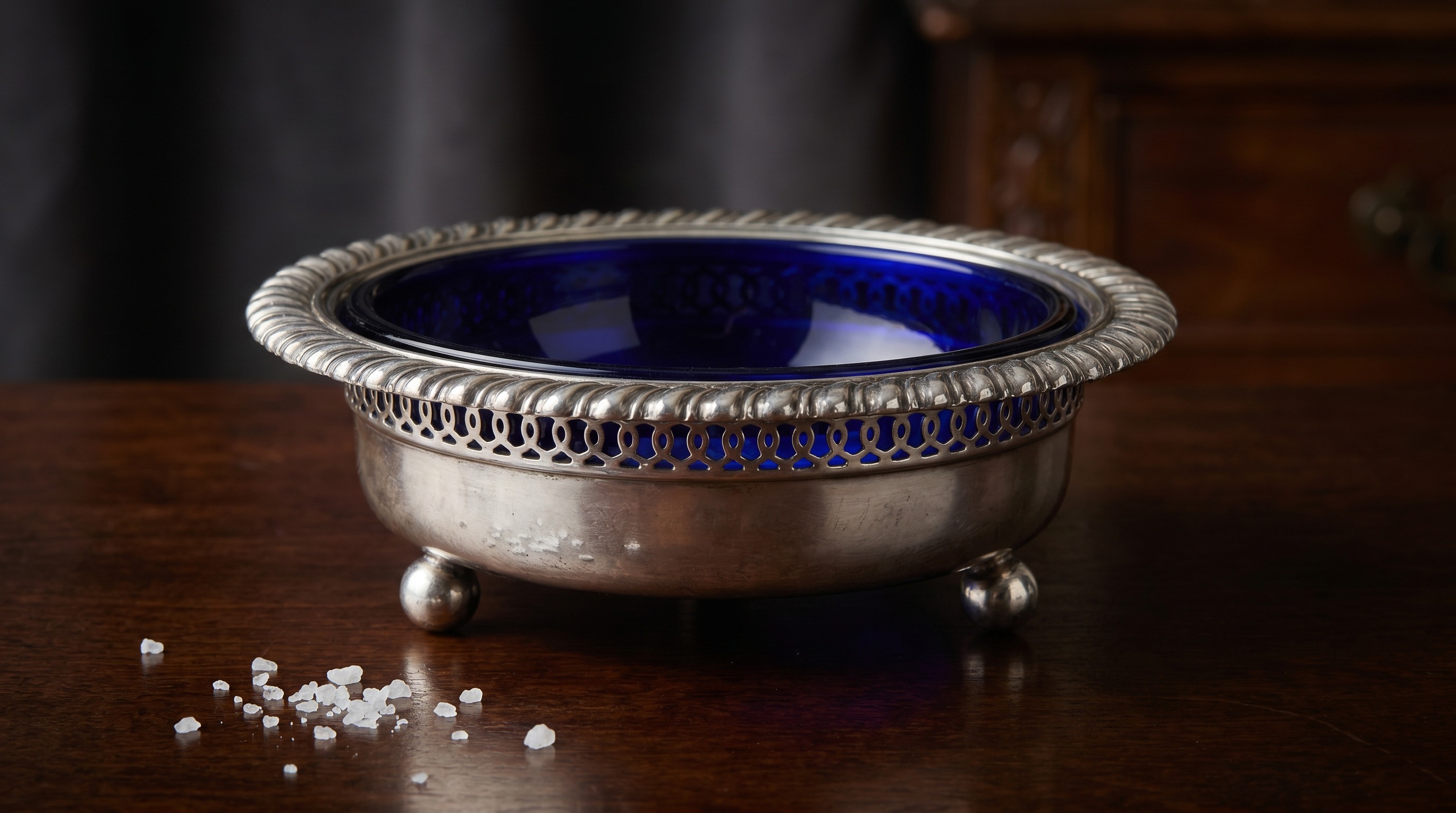
A salt cellar (or open salt) is a small bowl, often raised on feet, holding salt: usually with a cobalt blue glass liner to stop the salt corroding the silver, and a tiny matching salt spoon.
A mustard pot is a small lidded silver pot, also with a blue glass liner and a mustard spoon. Both were made from the 18th century onward in huge variety (pierced, gadrooned, beaded and cast forms) and the best are by named makers such as Hester Bateman and Paul Storr.
"Condition of the glass liners, presence of the original spoons and a named maker are what lift a set from scrap value to collector value."
What collectors look for
Collectors of silver salts look for a noted maker, a Georgian date, completeness, pierced or cast forms and good liners.
- Named makersHester Bateman, Paul Storr and noted Georgian makers are keenly collected.
- Complete setsMatched sets of four or six cased salts with spoons, or a salt-pepper-mustard cruet, beat odd singles.
- Original linersIntact, uncracked blue glass liners and original spoons greatly increase value and desirability.
- Fine formsPierced, cast and figural salts over plain bowls. Crisp gadrooned or beaded borders are best.
What are antique silver salts & mustards worth?
Every piece is valued individually. These are the things we look at:
What drives value
- MakerHester Bateman, Paul Storr and noted makers, against unmarked pieces.
- DateGeorgian examples are the most collected.
- CompletenessOriginal spoons and liners, and matched sets.
- Form and qualityPierced, cast and figural salts, against plain bowls.
- Glass linersLiners in good condition, with no chips or cracks.
Every piece is different. Send us a few photos and we will tell you what your salts is worth, free and with no obligation. Get a free valuation
What Determines Value
The value of silver salts and mustard pots is decided by the maker, the date, completeness, form and quality, and weight.
The factors we assess on silver salts and mustards:
- Maker: Bateman, Storr and noted makers over unmarked pieces.
- Date: Georgian examples most collected; the hallmark dates it.
- Completeness: Original spoons, liners and matched sets.
- Form & quality: Pierced, cast and figural over plain bowls.
- Weight: Heavier gauge sterling carries more value.
- Condition: Uncracked liners, no splits, repairs or worn feet.
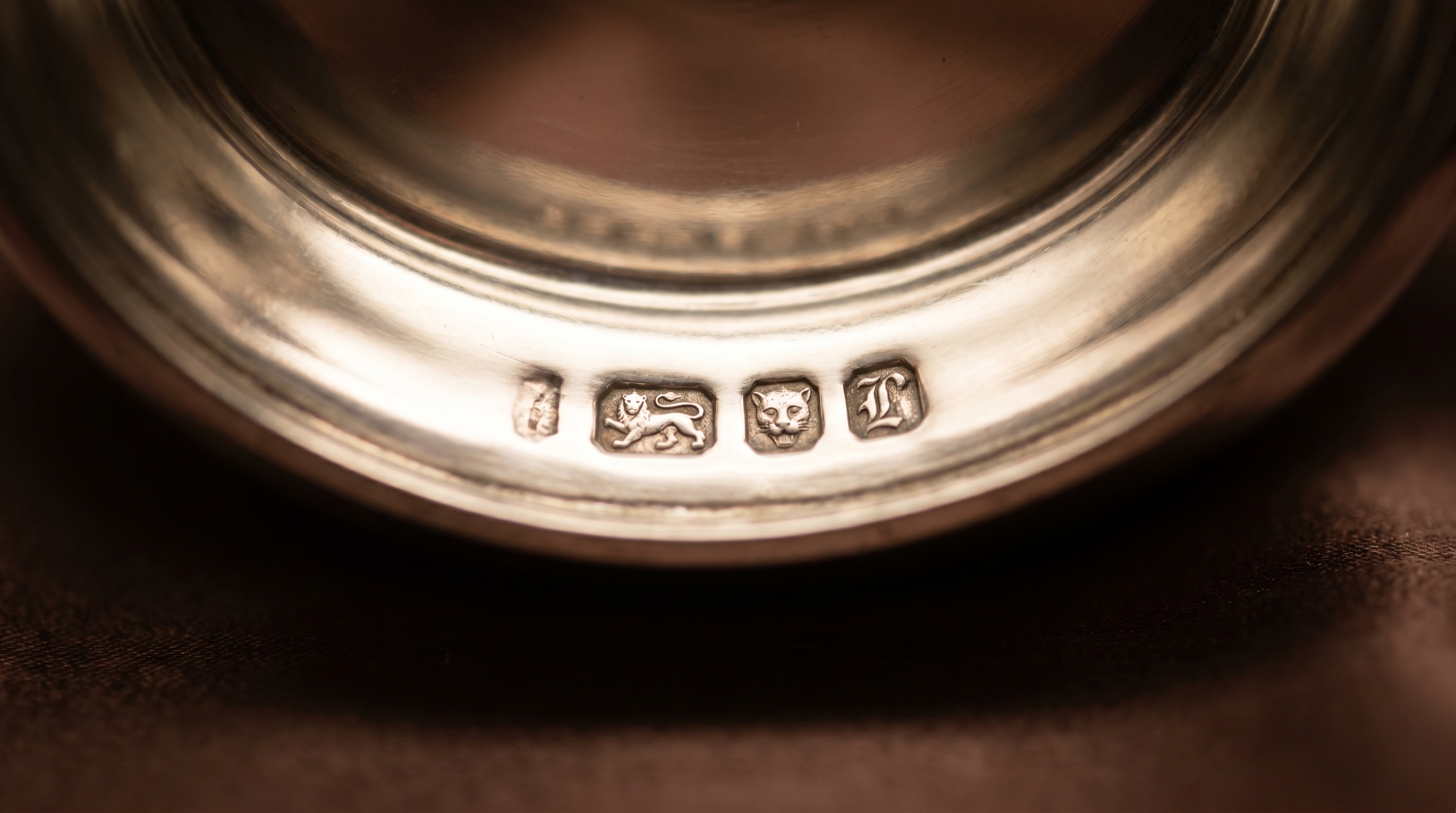
Marks are on the base or rim. Look for the lion passant for sterling. Plate is marked EPNS.
What We Look For When Silver Salts Arrive
When salts and mustard pots arrive we turn each piece over and read the marks, confirming sterling first, since plated salts are marked EPNS or A1.
Then we check that the liners and spoons are present and undamaged, look for splits in pierced sides, and note whether the pieces form a matched set.
How selling works
- Send photosUse the form on this page, or email them to us.
- A specialist reviews itMaker, marks, age and condition.
- Free estimate by emailWithin one working day.
- You decidePaid once agreed. No obligation.
Free valuation
Request a free valuation
Send us a few photos of your salts. A specialist looks at every request personally and replies by email with an estimate within one working day. There is no obligation to sell.
What to photograph
- The whole piece. Each salt or mustard pot, with its liner and spoon.
- The underside. The base of each piece.
- The hallmarks, close up. Underneath each piece.
Prefer email? Send photos to info@mozerisfineantiques.com or call 01376 334 482.
Ways to sell
- Mayfair (by appointment)
- Braintree (by appointment)
- Royal Mail Special Delivery
- Free FedEx collection
We buy directly, with payment once you accept our offer, and we can also sell for you by consignment or in our own auctions.
How to identify and date your silver salts
Turn each piece over and look for the lion passant with the town mark, the date letter and the maker's mark.
| Mark | What it tells you |
|---|---|
| Maker's mark | The initials of the maker or firm, in a shield. |
| Lion passant | The English mark for sterling silver. |
| Town mark | The assay office: leopard's head for London, anchor for Birmingham. |
| Date letter | The year of assay. The letter style and shield change with each cycle. |
First confirm it is sterling, not plate. Turn the piece over and look for the lion passant (sterling) alongside the town mark, date letter and maker's mark; plated salts are stamped EPNS or "A1" and are worth far less: our EPNS vs sterling silver guide explains the difference. The date letter then tells you the year. Use our how to read silver hallmarks guide. For lighter, plainer pieces, our silver price valuation guide explains how silver is valued.
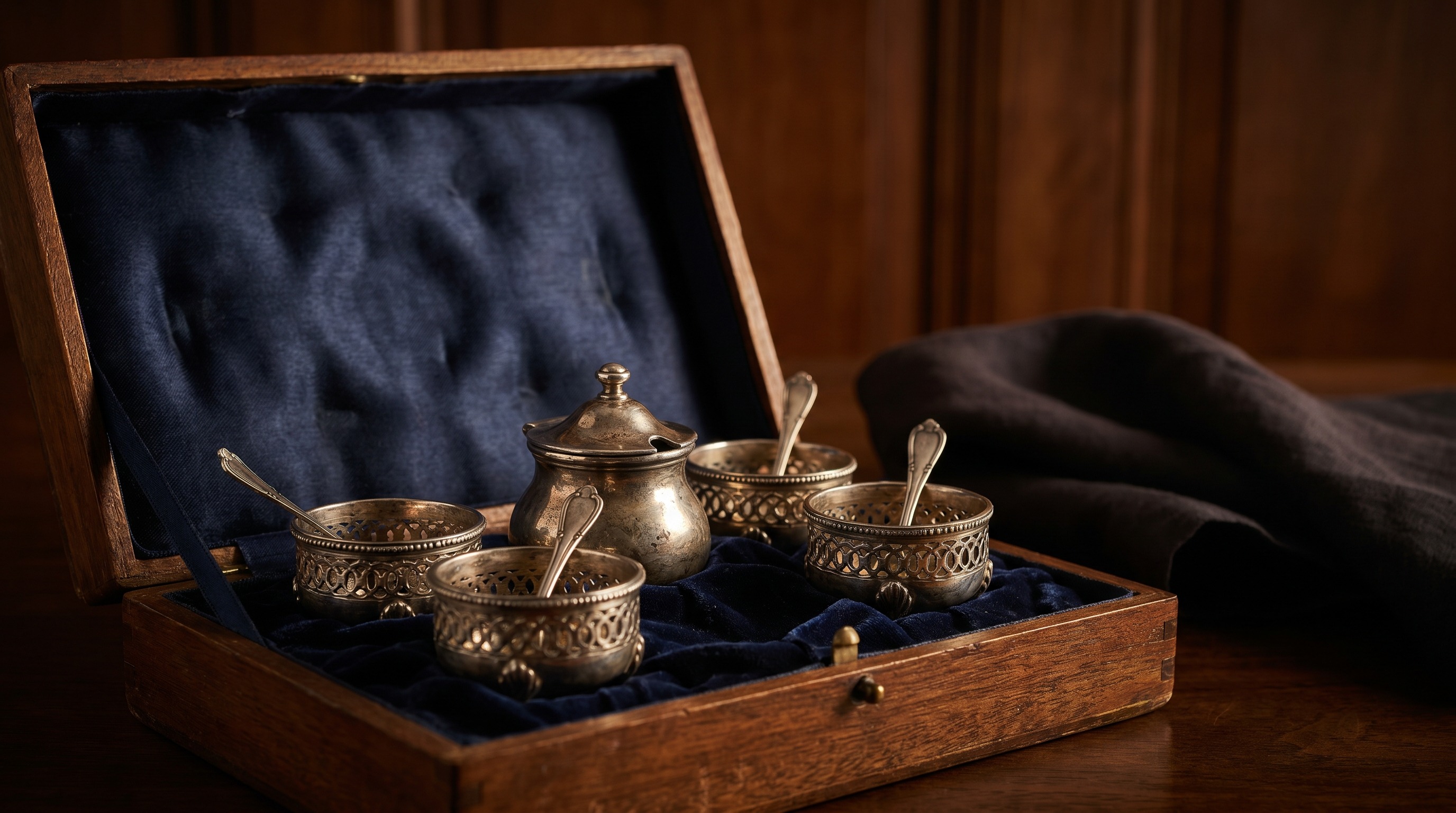
Salts and mustards sit alongside the rest of the condiment and breakfast silver. See our guides to cruet & condiment sets, toast racks and Paul Storr silver. When you're ready to sell, visit sell your silver.
Sterling or plate?
Sterling silver
- Lion passant: the English sterling mark
- A town mark, a date letter and a maker's mark
- Valued as antique silver: maker, date, form and condition
Silver plate (EPNS)
- Stamped EPNS or A1, with no lion passant or date letter.
- The marks often imitate hallmarks, so check each one
- Worth far less: decorative value only
Value Your Silver Salts & Mustards
Send photographs of the pieces and the marks on the base, and we'll give you an honest, no-obligation valuation.
Strictly by appointment only: no walk-ins at either office.
Frequently Asked Questions
Antique silver salt cellars and mustard pots: common questions.
What is a silver salt cellar?
How much are antique silver salts and mustards worth?
Why do they have blue glass liners?
How do I tell sterling from plate?
Are matched sets worth more?
Where can I sell antique silver salts in the UK?
Send Us Your Photographs
Attach photos of the salts, mustards and the marks on the base. We'll respond within one working day.
Sell Your Antique Silver Salts & Mustards
We buy antique sterling silver salt cellars, open salts and mustard pots (singles, cased sets and named makers) valued as antique silver, not as scrap. Free valuation, no obligation.