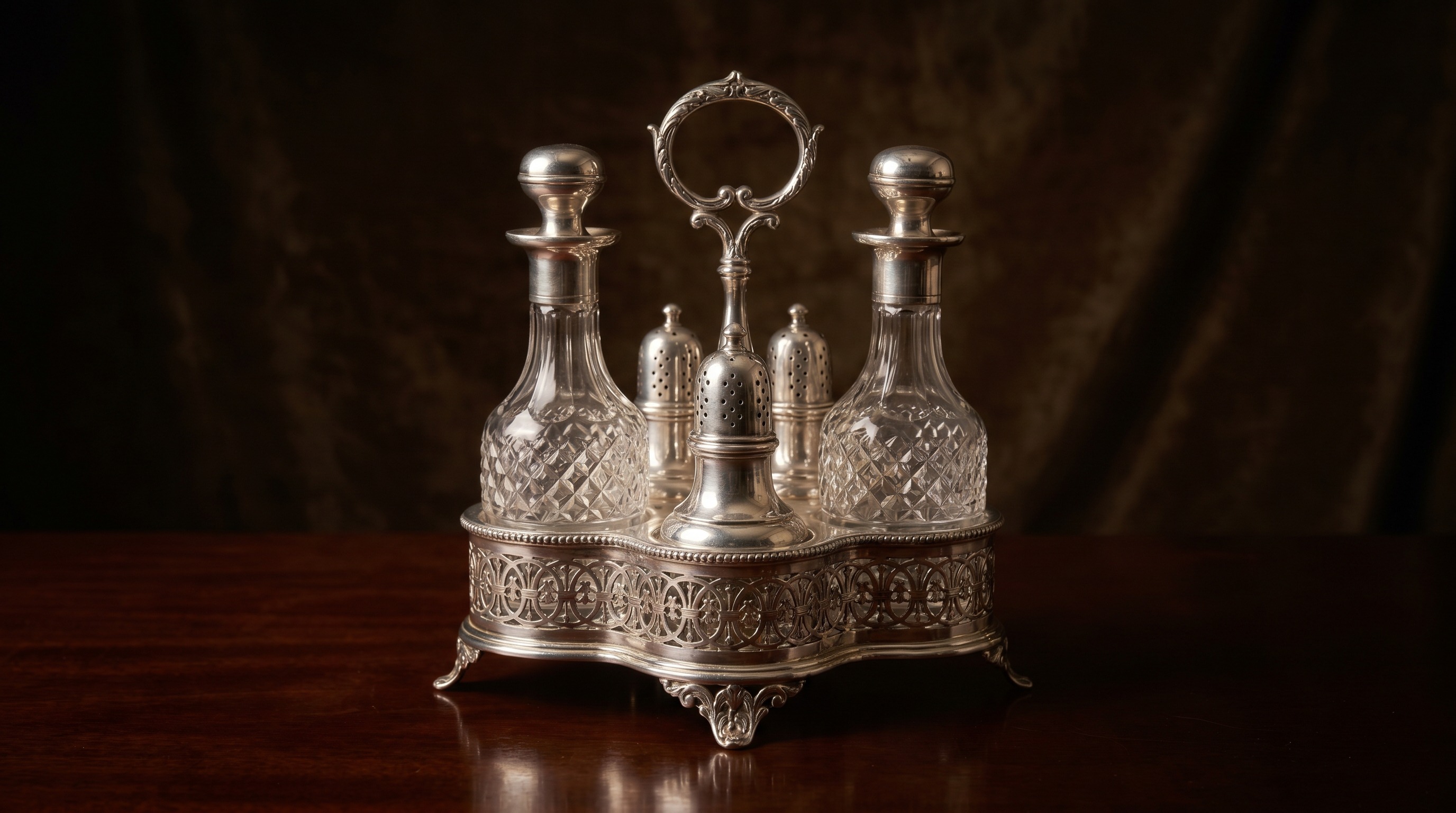
Antique Silver Cruet & Condiment Sets
From Georgian cruet frames to Victorian condiment sets with their cut-glass bottles and pierced casters — a guide to identifying, dating and valuing these characterful pieces of dining silver.
Not Sure What Your Silver Is Worth?
Send a photo of your cruet or condiment set — including the base marks — and we'll value it free, with no obligation. We reply within one working day.
For two centuries, no well-dressed dining table was complete without a cruet — the silver frame that held the oils, vinegars and condiments within easy reach. Survive in good order and these sets are charming, useful and genuinely collectable today. Many people inherit one without quite knowing what it is, or what it's worth. Here's how to read yours.
What is a cruet or condiment set?
A cruet is a silver stand or frame holding glass bottles for oil and vinegar, often with matching casters (pierced shakers for salt, pepper and sugar) and a mustard pot with a blue glass liner. Early Georgian examples are tall "Warwick" frames; Victorian sets are often lower and more ornate. A complete, matched set with all its original bottles and liners is far more desirable than a frame missing pieces.
The parts to check for
The frame & bottles
The silver stand plus original cut-glass oil and vinegar bottles with silver collars and stoppers. Matching, undamaged glass adds real value.
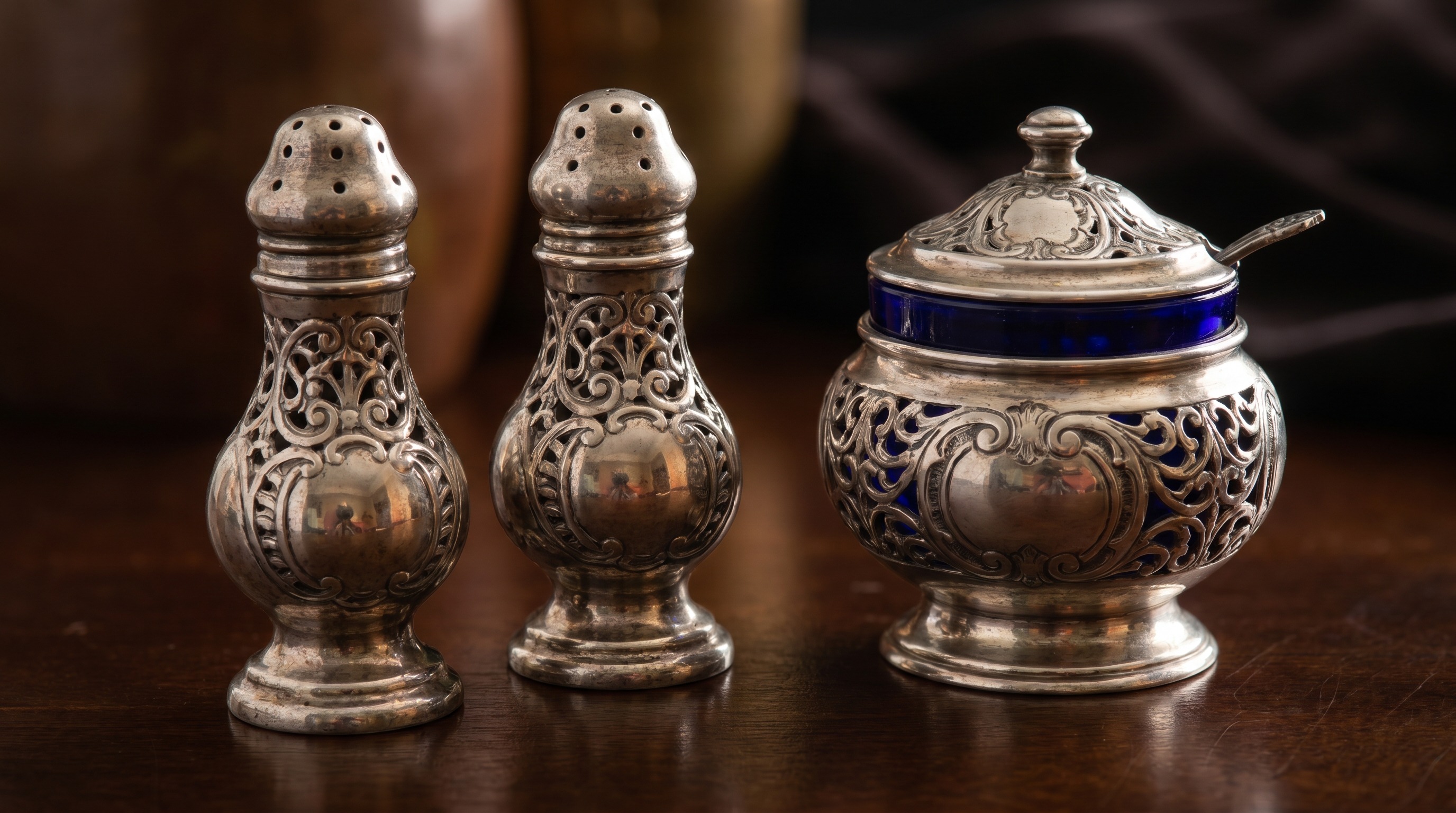
Casters
Pierced silver shakers for salt, pepper and sugar. Crisp, undented piercing and matching marks are what to look for.
Mustard pot & liner
A hinged silver pot, usually with a blue glass liner to protect the silver from the mustard. The original liner matters.
Salts & spoons
Open or lidded salt cellars with liners, and any original condiment spoons — small details that complete the set.
What Determines Value
We weigh up several things before making an offer on a cruet or condiment set:
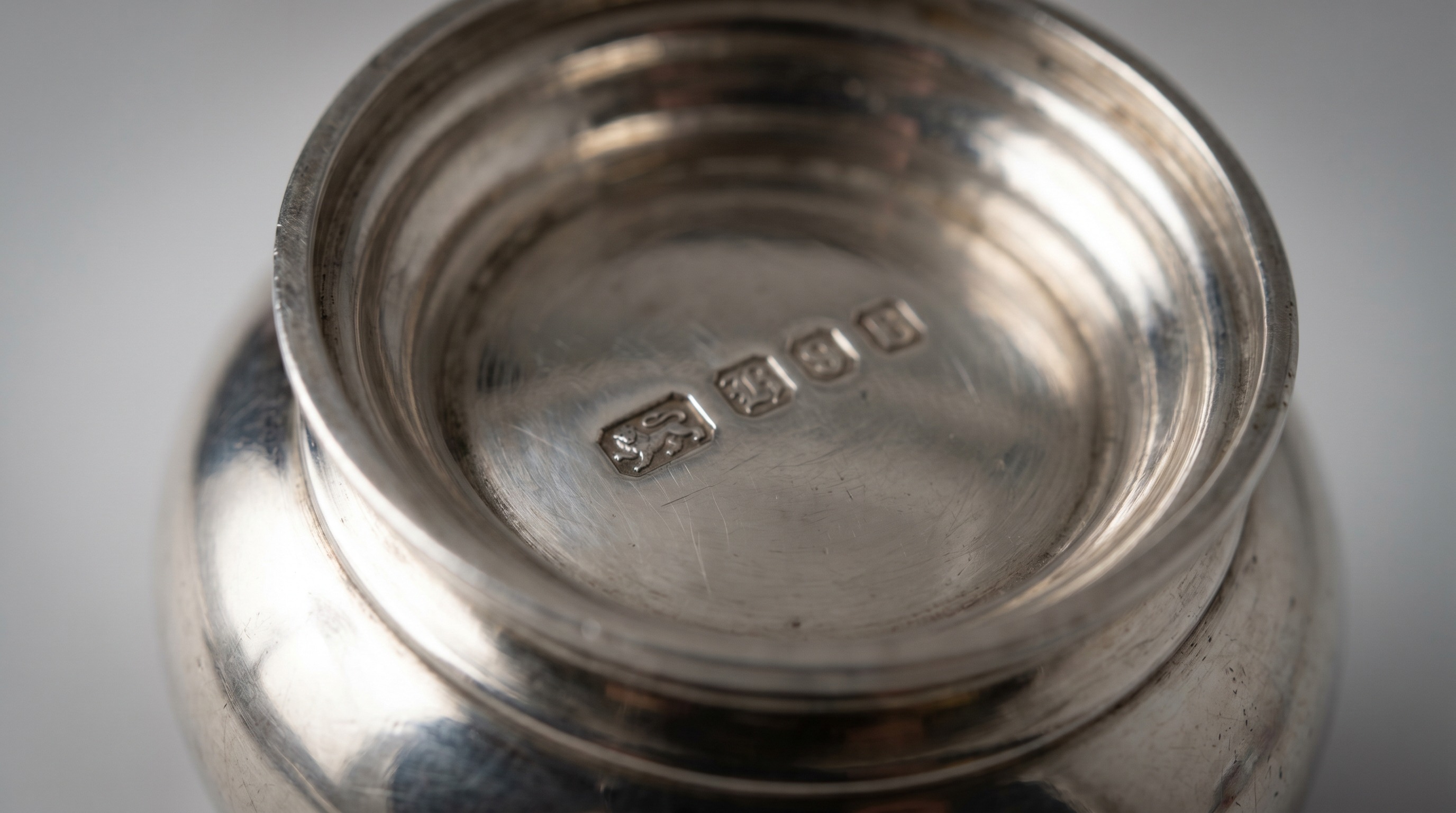
- Sterling vs plate — Hallmarked sterling (lion passant) is worth far more than EPNS plate.
- Completeness — All original bottles, casters, liners and spoons present.
- Maker & date — Georgian and good-maker sets command premiums; the date letter pins the year.
- Weight & quality — Heavier-gauge silver and fine piercing or chasing.
- Condition — No splits, dents or repaired piercing; original glass undamaged.
- Matching marks — All silver parts marked to the same maker/date is ideal.
Check for the lion passant — see our silver hallmark guide if unsure.
Sterling or plate? The decisive check
As with all silver, the single biggest value factor is whether the set is solid sterling or electroplate. Look for the lion passant hallmark on each silver component; if you find EPNS or A1 instead, it's plated — still collectable, but valued very differently. Our guides to reading silver hallmarks and EPNS vs sterling explain exactly what to look for.
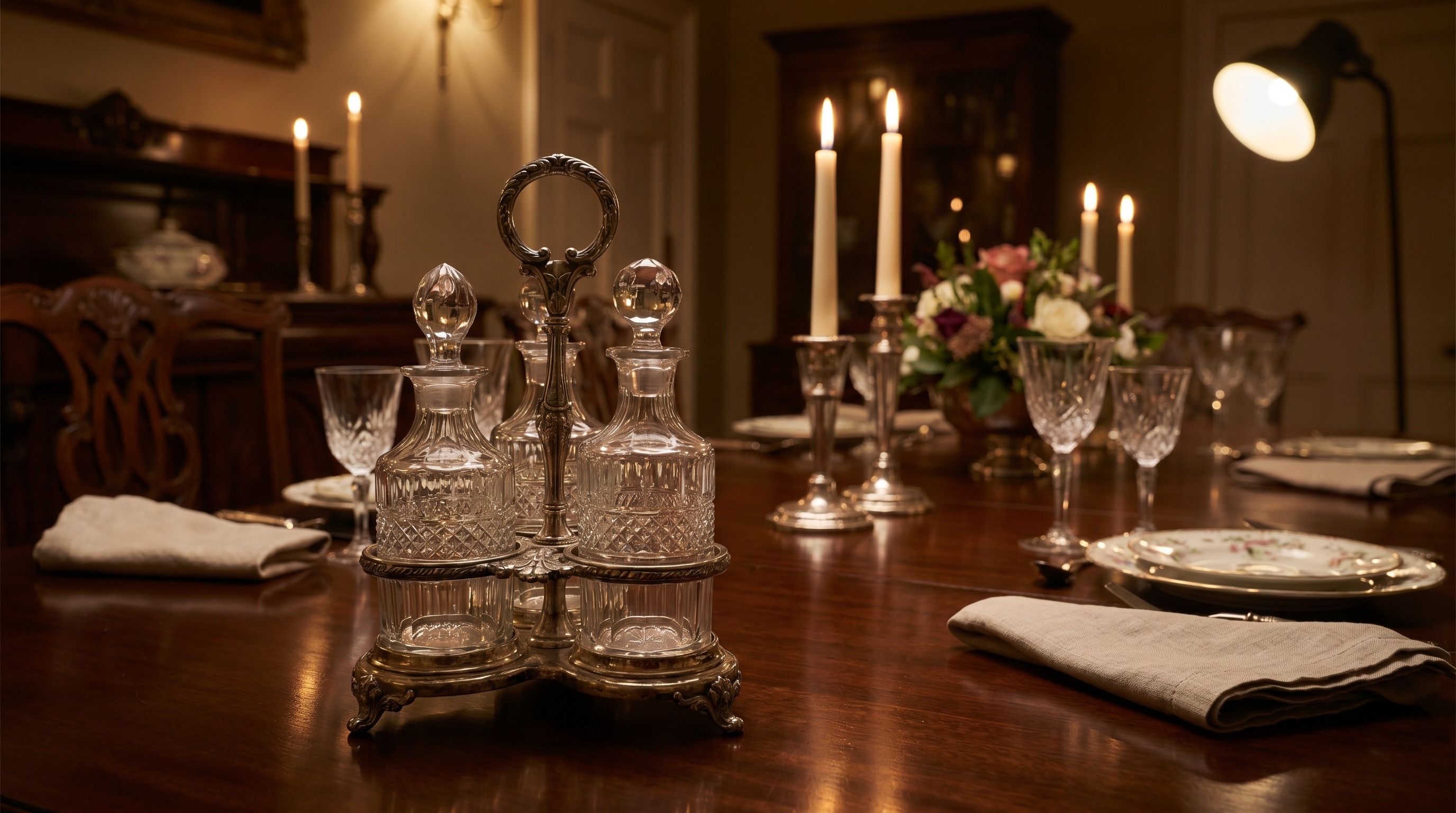
Got more silver? See our inkstands and photograph frames guides, and when ready sell via sell your silver.
Value Your Cruet or Condiment Set
Send photographs of the set and the base marks and we'll give you an honest, no-obligation valuation.
⚠️ Strictly by appointment only — no walk-ins at either showroom.
Frequently Asked Questions
Antique silver cruet and condiment sets — common questions.
What is a silver cruet set?
It's a silver frame or stand holding glass bottles for oil and vinegar, usually with pierced casters for salt, pepper and sugar and a mustard pot. Georgian and Victorian examples are the most collected.
Is my cruet set worth more complete?
Yes, considerably. A complete, matched set with all its original bottles, casters, liners and spoons is worth far more than a frame with missing or replaced parts.
How do I know if it's sterling or plated?
Look for the lion passant hallmark on each silver part. EPNS or A1 means electroplate. Sterling is worth significantly more. We can confirm from a photo of the marks.
Does damaged glass reduce the value?
It can. Original, undamaged cut-glass bottles and liners add value; cracked, chipped or replaced glass reduces it. The silver still holds its value either way.
Should I polish it before selling?
Light cleaning is fine, but avoid heavy polishing, which wears the silver and can soften crisp piercing and hallmarks. We prefer to assess pieces largely as they are.
Send Us Your Silver Photographs
Attach photos of the set and the base marks. We'll respond within one working day.