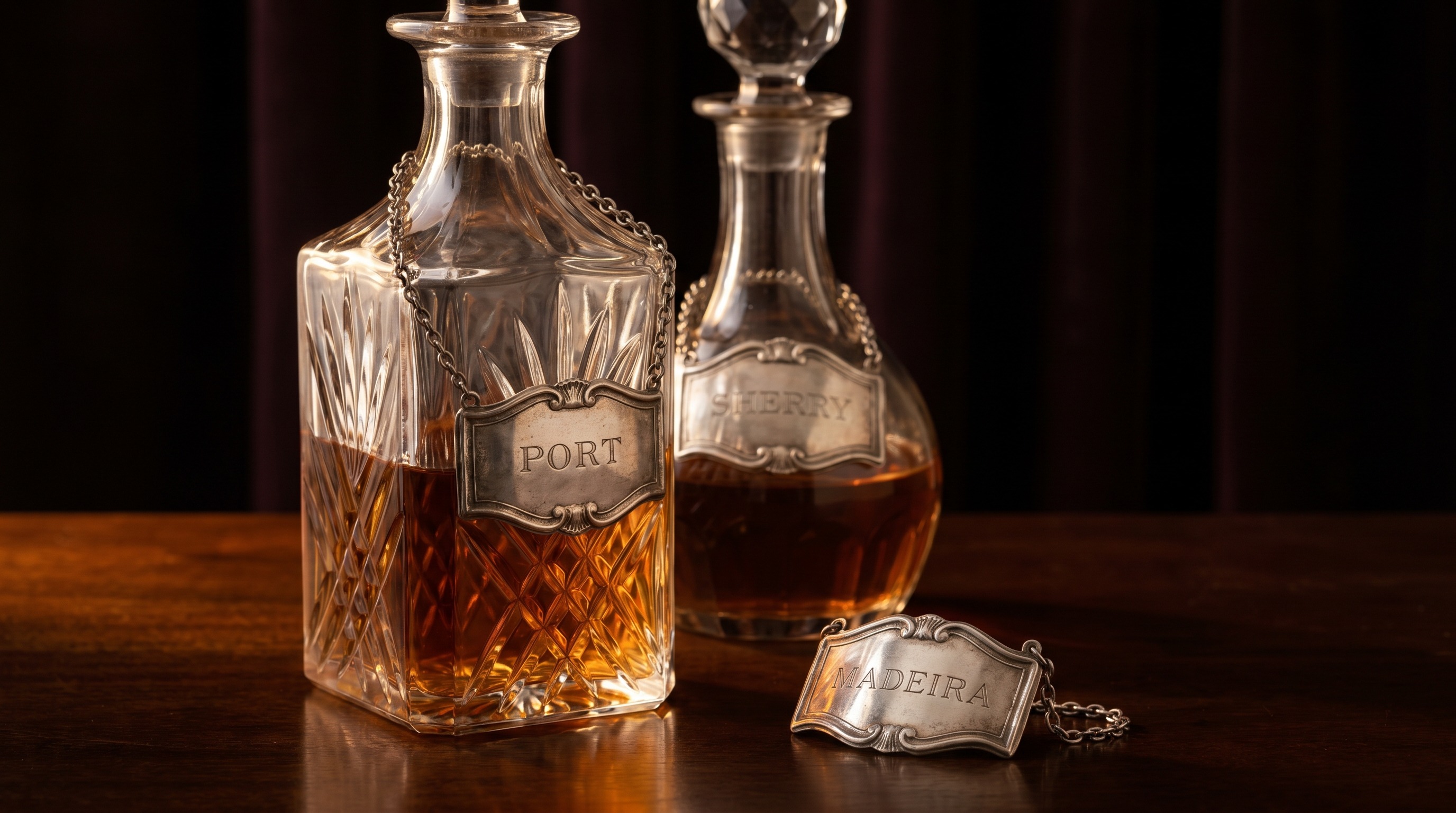
Antique Silver Wine Labels
The "bottle ticket" — a small engraved silver label hung on a decanter to name its contents. Charming, collectable and often by celebrated makers. A guide to identifying, dating and valuing antique silver wine labels.
Not Sure What Your Wine Labels Are Worth?
Send a photo — including the marks on the back — and we'll value them free, with no obligation. We reply within one working day.
Before printed bottle labels, the contents of a decanter were named by a small silver label hung on a chain around its neck — a "bottle ticket". Made from the 1730s and through the Victorian age, these little engraved labels are a charming, very collectable corner of antique silver, with a devoted following and a society devoted to studying them.
What is a silver wine label?
A small silver plaque, pierced for a chain, engraved or die-stamped with the name of a wine or spirit — PORT, SHERRY, CLARET, MADEIRA, BRANDY, WHISKY and many more, including rarities and abbreviations. Forms range from plain rectangles and crescents to elaborate vine-leaf, shell and armorial designs. Named makers such as Hester Bateman, Sandylands Drinkwater and the Phipps & Robinson workshop are especially collected, and a rare or unusual title can lift value sharply.
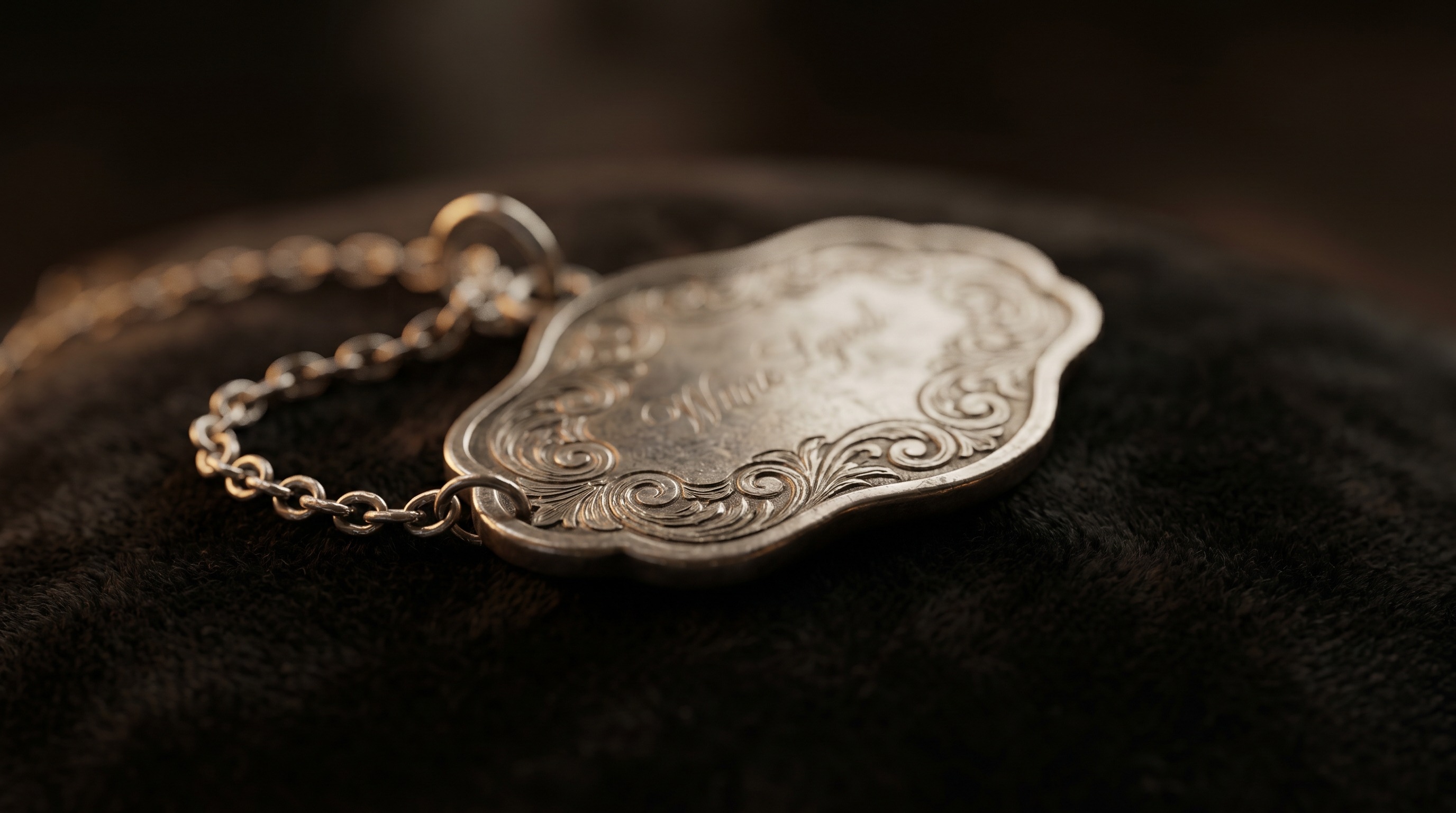
What collectors look for
Rare titles
Common names (PORT, SHERRY) are modest; unusual or curious titles (obscure wines, spirits, sauces) command premiums.
Named makers
Hester Bateman, Sandylands Drinkwater, Phipps & Robinson and other noted makers add value.
Fine forms
Vine-leaf, shell, scroll and armorial labels over plain rectangles. Cast and crisply engraved pieces are best.
Sets
Matched sets or cased groups of labels are worth more than the same labels sold singly.
What Determines Value
The factors we assess on a silver wine label:
- Title — Rare or curious names over common PORT/SHERRY.
- Maker — Bateman, Drinkwater, Phipps & Robinson and other noted makers.
- Form & quality — Cast vine-leaf, shell, armorial and finely engraved designs.
- Date — Georgian labels most collected; the hallmark dates it.
- Condition — Crisp engraving, intact chain, no splits or repairs.
- Sets — Matched or cased sets carry a premium.
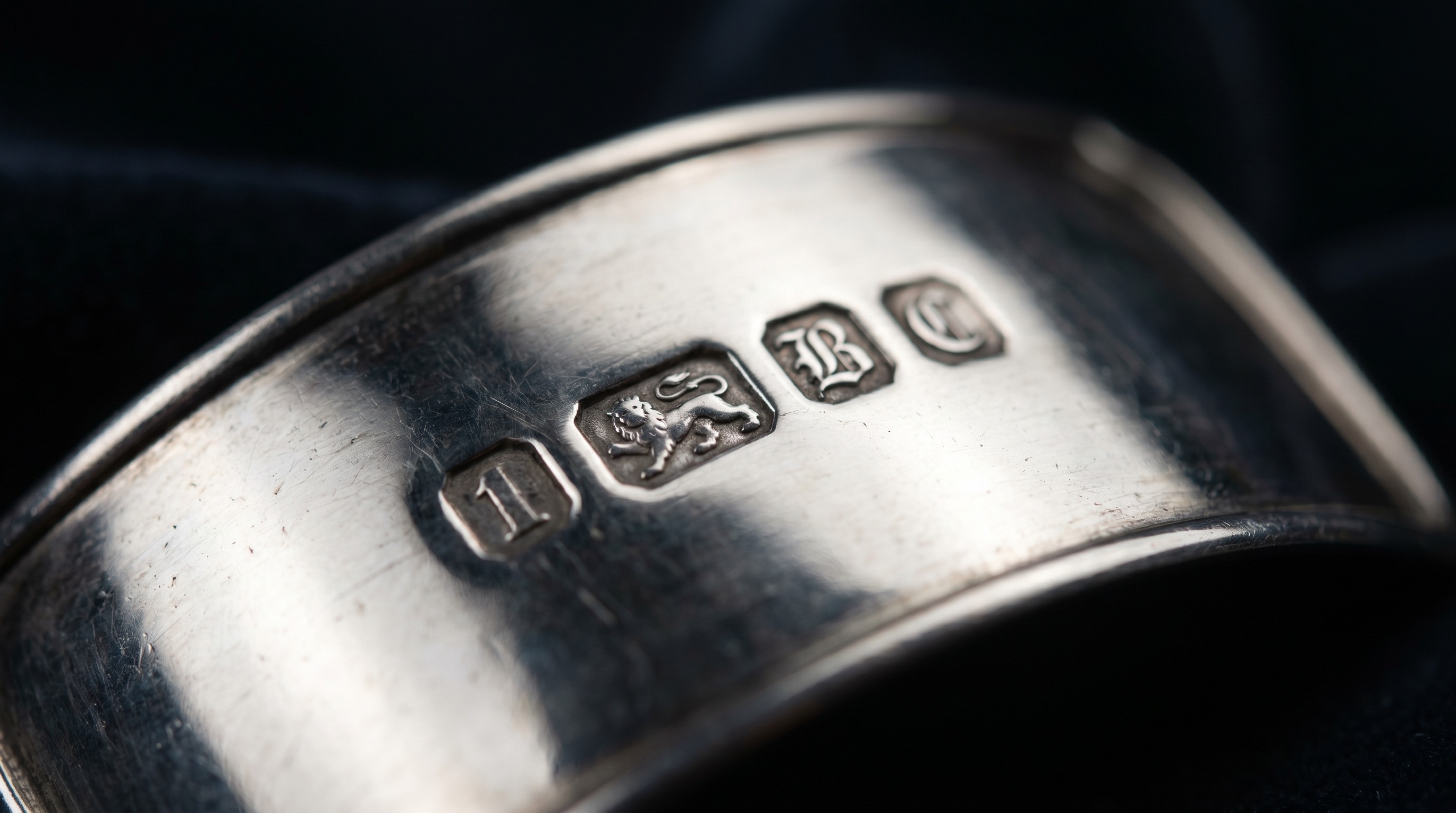
Marks are on the back — find the lion passant for sterling.
Sterling, maker and title
Confirm sterling via the lion passant on the back; later or novelty labels can be plated. Then the combination of maker and title drives value — a Hester Bateman label, or a rare title, far outvalues a plain Victorian PORT. Our silver hallmark guide helps with the small marks.
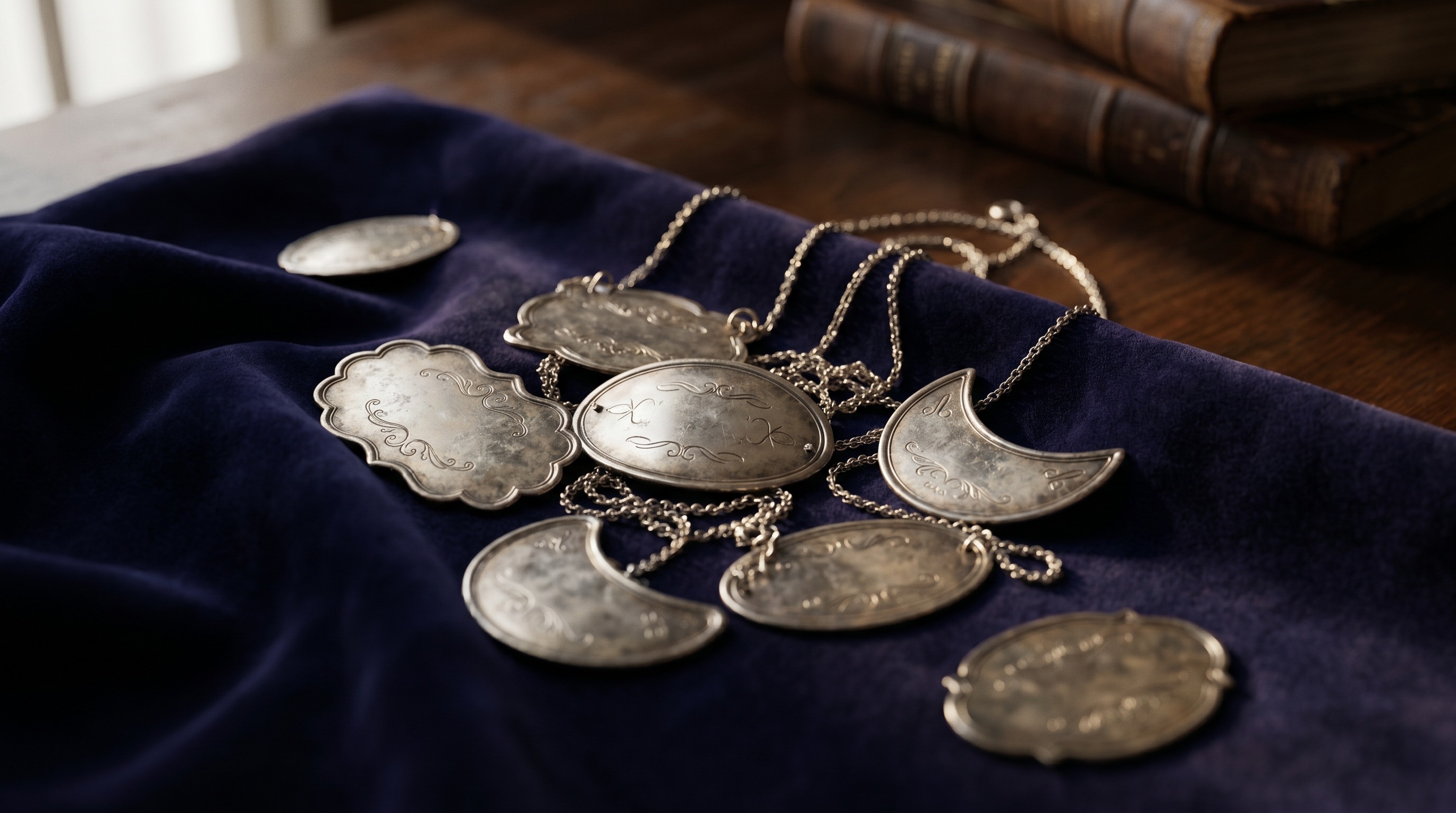
Goes hand in hand with decanters and claret jugs — see your claret jugs guide. Related small silver: snuff boxes. Sell via sell your silver.
Value Your Wine Labels
Send photographs of the labels and the marks, and we'll give you an honest, no-obligation valuation.
⚠️ Strictly by appointment only — no walk-ins at either showroom.
Frequently Asked Questions
Antique silver wine labels — common questions.
What is a silver wine label?
A small engraved silver plaque (a "bottle ticket") hung on a chain round a decanter to name its contents — PORT, SHERRY, CLARET and so on. Made from the 1730s through the Victorian age.
Are silver wine labels valuable?
They can be. Value depends most on the maker and the named title — rare or curious titles and pieces by makers like Hester Bateman command strong prices, while a plain Victorian PORT is modest.
Why does the name on the label matter?
Collectors prize unusual titles. Common names are plentiful; a rare wine, spirit or curious title is scarce and can be worth many times more.
How do I tell sterling from plate?
Look for the lion passant hallmark on the back. Plated or later labels are worth far less. Send a photo of the marks and we'll confirm.
Are sets worth more?
Yes. A matched or cased set of labels is worth more than the same labels sold individually.
Send Us Your Wine Label Photographs
Attach photos of the labels and the marks on the back. We'll respond within one working day.