Antique Silver Guides · Mozeris Fine Antiques
Antique Silver Meat Domes & Dish Covers
An antique silver meat dome, or dish cover, is a large domed silver cover placed over a platter to keep the joint warm, made from the late 18th century and often in graduated sets. Weight, a leading maker such as Paul Storr, and Georgian or Regency dates matter most; many covers are Sheffield plate.
Updated October 2026
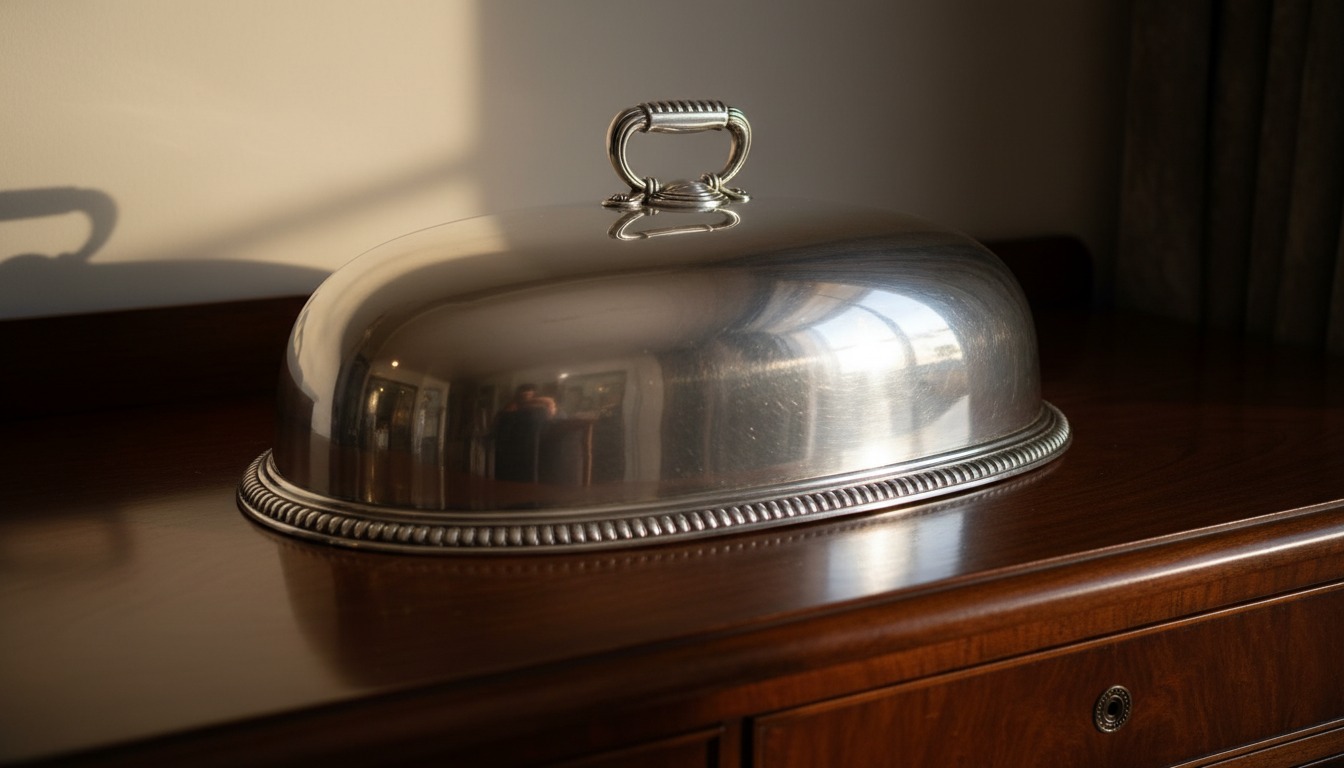
The meat dome, a great domed silver cover that kept the joint warm and made a flourish at the table, is among the largest and heaviest pieces of dining silver. A guide to identifying, dating, valuing and selling antique silver meat domes and dish covers in the UK.
What Is Your Silver Meat Dome Worth?
Send a photo, including the marks on the rim, and we'll value it free, with no obligation. We reply within one working day.
A silver meat dome, or dish cover, was the grand gesture of the Georgian and Victorian dinner: a great polished dome lifted away to reveal the joint beneath. Large, heavy and frequently made in graduated sets, they carry serious silver weight, and fine examples by named makers are valuable pieces of dining silver.
Silver meat domes & dish covers: what they are
A meat dome is a large domed cover, usually oval, with a gadrooned or reeded rim and a detachable handle, placed over a platter.
A meat dome (dish cover or cloche) is a large domed silver cover, usually oval, with a gadrooned or reeded rim and a detachable ring or cast handle on top, placed over a platter to keep food warm and dust-free. Made from the late 18th century, often in graduated sets of two to four, and frequently engraved with a crest or armorial. Weight, maker and date drive value heavily; these are big pieces of silver. See our silver collection.
"Few pieces carry as much silver as a meat dome. Between weight and a great maker, a fine example or a graduated set is a substantial piece."
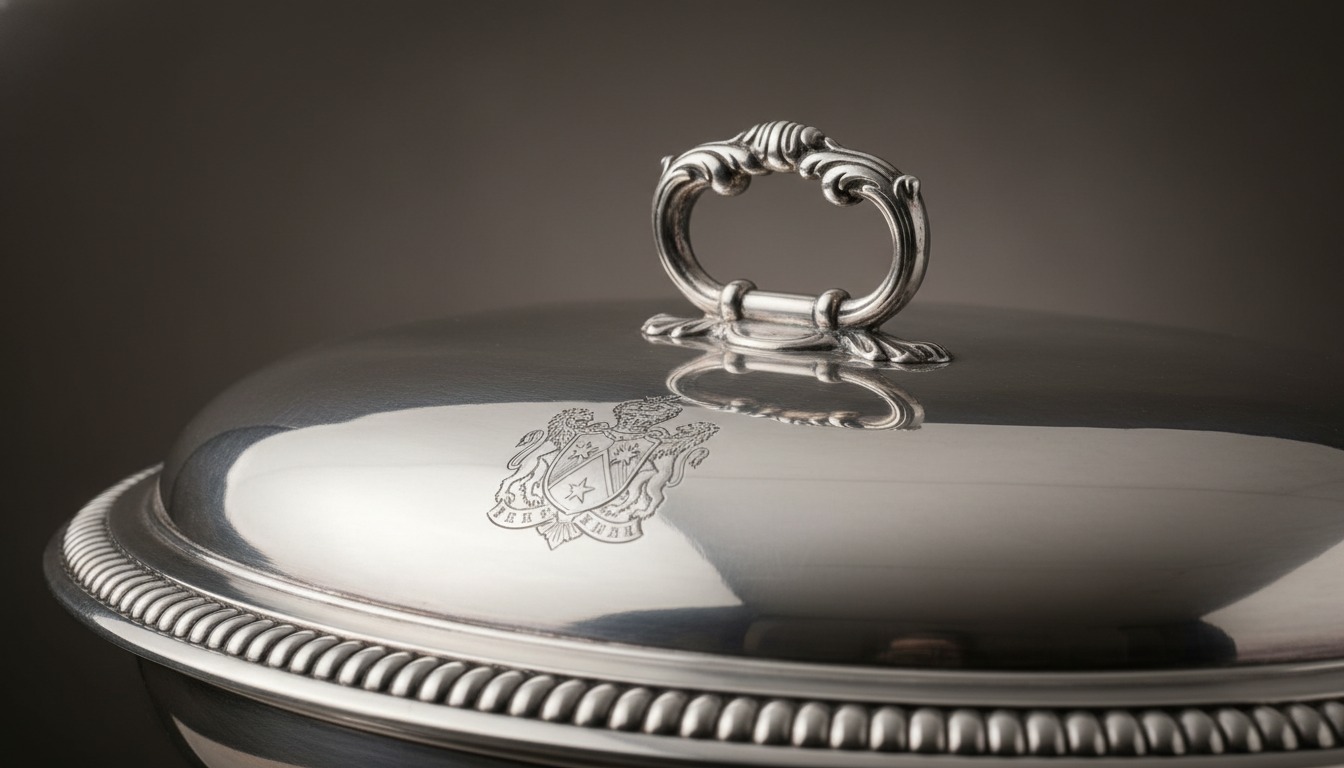
What collectors look for
Collectors of meat domes look for heavy silver, a leading maker, a Georgian or Regency date and graduated sets.
- WeightDomes carry significant silver; heavy gauge lifts both metal and collector value.
- Named makersPaul Storr and the leading Georgian and Regency makers are the most keenly collected.
- Graduated setsMatched sets of two, three or four covers far outvalue a single dome.
- ArmorialsA fine period crest or armorial adds provenance and interest; later or erased ones detract.
What are antique silver meat domes worth?
Every piece is valued individually. These are the things we look at:
What drives value
- WeightHeavy, thick-gauge silver.
- MakerPaul Storr and leading makers, against unmarked pieces.
- DateGeorgian and Regency examples are the most prized.
- A graduated setA graduated set, against a single cover.
- Silver or plateOld Sheffield plate and EPNS covers are worth far less than solid silver.
Every piece is different. Send us a few photos and we will tell you what your meat dome is worth, free and with no obligation. Get a free valuation
What Determines Value
The value of a silver meat dome is decided by weight, maker, date, whether it is part of a set, matching marks and condition.
The factors we assess on a silver meat dome:
- Weight: Heavy, thick-gauge silver lifts value markedly.
- Maker: Paul Storr and leading makers over unmarked pieces.
- Date: Georgian and Regency examples most prized.
- Set: Graduated sets over single covers.
- Marks: Cover and handle both marked to one maker/date.
- Condition: No splits, dents, repairs or erased armorials.
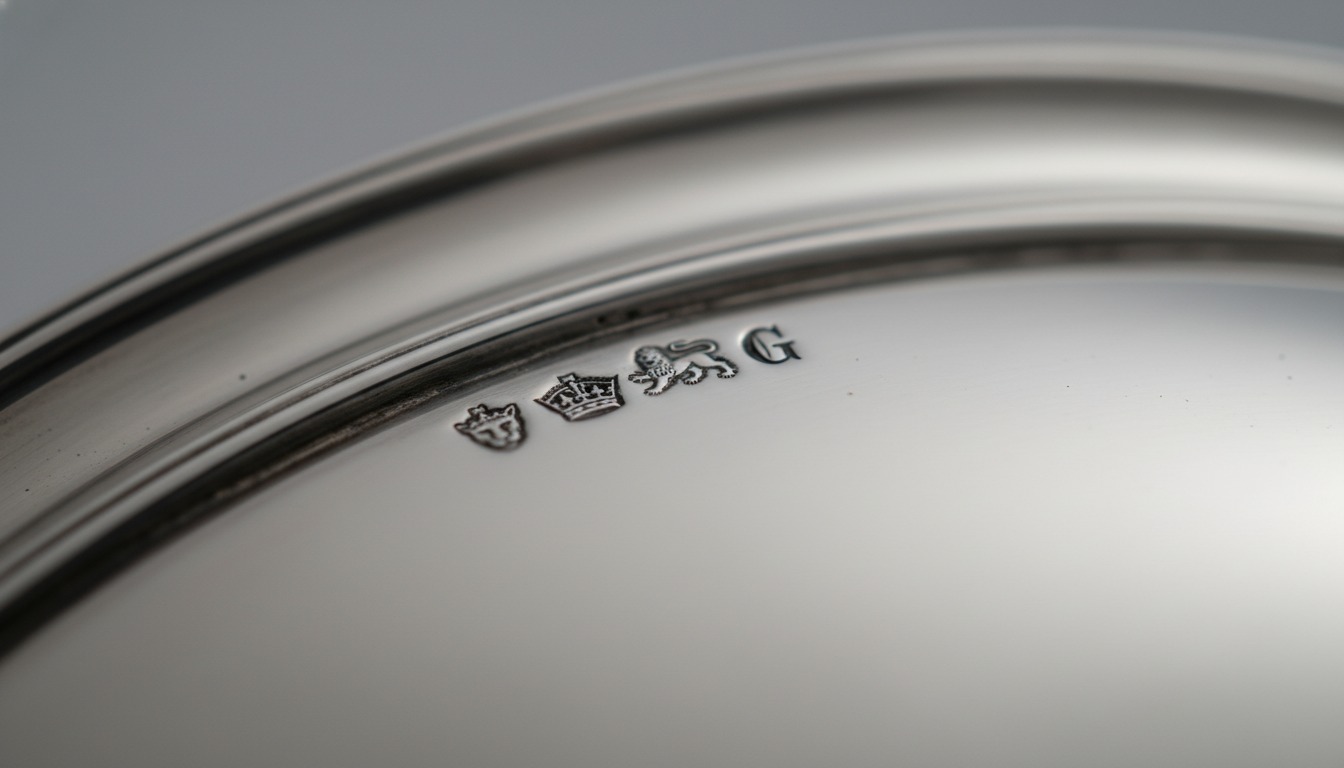
Marks are on the rim and handle. Look for the lion passant for sterling. Plate is marked EPNS (or is unmarked Sheffield plate).
What We Look For When a Meat Dome Arrives
When a meat dome arrives we first confirm it is solid silver: many large covers are Old Sheffield plate or EPNS, and the lion passant on the rim settles it.
Then we check that the cover and handle are marked alike, look for splits, dents, repairs and erased armorials, and note the weight and maker.
How selling works
- Send photosUse the form on this page, or email them to us.
- A specialist reviews itMaker, marks, age and condition.
- Free estimate by emailWithin one working day.
- You decidePaid once agreed. No obligation.
Free valuation
Request a free valuation
Send us a few photos of your meat dome. A specialist looks at every request personally and replies by email with an estimate within one working day. There is no obligation to sell.
What to photograph
- The whole piece. The dome from the side, with its handle.
- The inside. The inside of the dome and the rim.
- The hallmarks, close up. On the rim and on the handle.
Prefer email? Send photos to info@mozerisfineantiques.com or call 01376 334 482.
Ways to sell
- Mayfair (by appointment)
- Braintree (by appointment)
- Royal Mail Special Delivery
- Free FedEx collection
We buy directly, with payment once you accept our offer, and we can also sell for you by consignment or in our own auctions.
How to identify and date your meat dome
Check the rim and the handle for the lion passant, the town mark, the date letter and the maker's mark; ideally both share the same marks.
| Mark | What it tells you |
|---|---|
| Maker's mark | The initials of the maker or firm, in a shield. |
| Lion passant | The English mark for sterling silver. |
| Town mark | The assay office: leopard's head for London, anchor for Birmingham. |
| Date letter | The year of assay. The letter style and shield change with each cycle. |
Check the rim and the handle for the lion passant (sterling), town mark, date letter and maker's mark; ideally both share the same marks. Many large covers are Old Sheffield plate (fused, usually unmarked or with a maker's device) or EPNS: worth far less than solid silver; see our EPNS vs sterling silver guide.
The date letter dates a sterling dome. Use our how to read silver hallmarks guide. As domes are heavy, the weight of silver counts, but maker, date and condition decide the rest. Our silver price valuation guide explains how silver is valued.
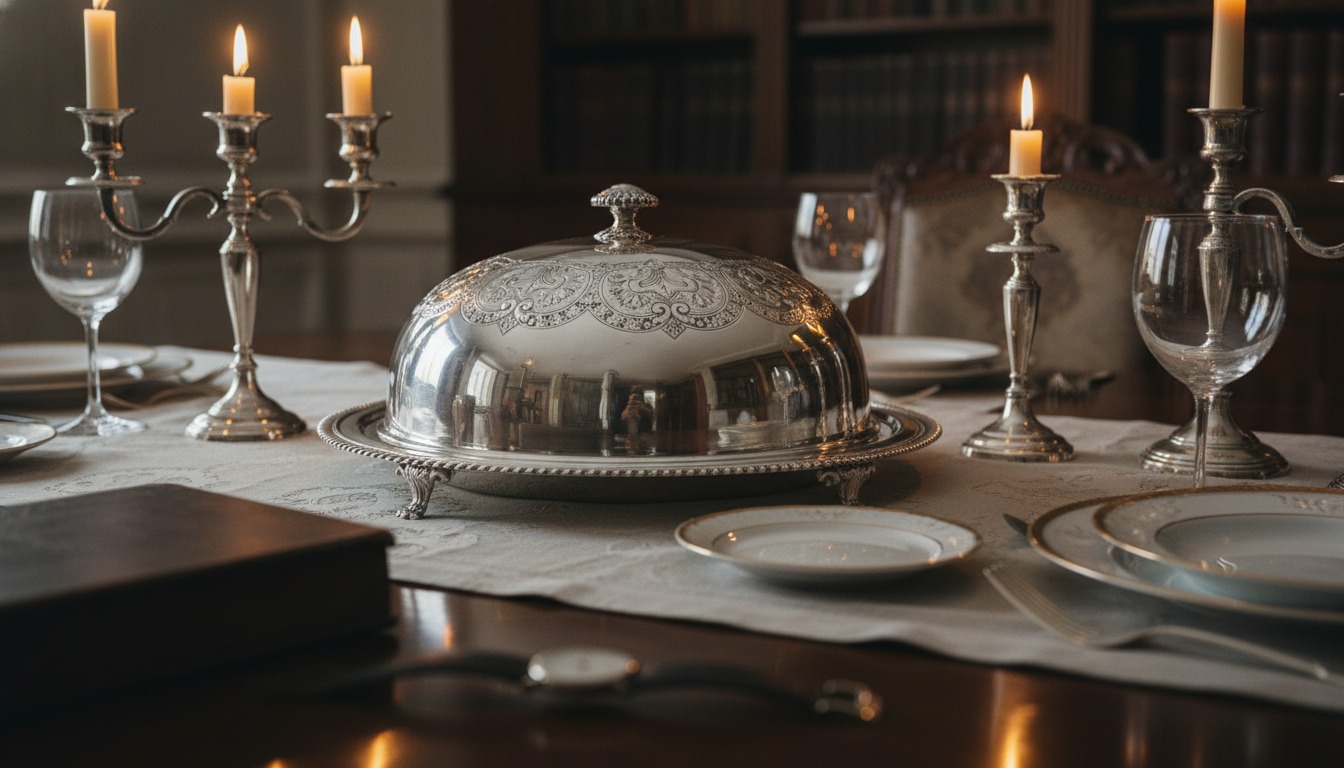
Meat domes sit with the grandest dining silver. See our guides to soup tureens, entrée dishes and browse our silver for sale. When you're ready to sell, visit sell your silver.
Sterling or plate?
Sterling silver
- Lion passant: the English sterling mark
- A town mark, a date letter and a maker's mark
- Valued as antique silver: maker, date, form and condition
Silver plate (EPNS)
- Stamped EPNS or A1, with no lion passant or date letter.
- The marks often imitate hallmarks, so check each one
- Worth far less: decorative value only
Value Your Meat Dome
Send photographs of the dome and the marks on the rim, and we'll give you an honest, no-obligation valuation.
Strictly by appointment only: no walk-ins at either office.
Frequently Asked Questions
Antique silver meat domes and dish covers: common questions.
What is a silver meat dome?
How much is an antique silver meat dome worth?
Is mine silver or Sheffield plate?
Are graduated sets worth more?
Does an armorial affect value?
Where can I sell an antique silver meat dome in the UK?
Send Us Your Photographs
Attach photos of the meat dome and the marks on the rim. We'll respond within one working day.
Sell Your Antique Silver Meat Dome
We buy antique sterling silver meat domes and dish covers (Georgian, Regency, named makers and graduated sets) valued as antique silver, not as scrap. Free valuation, no obligation.