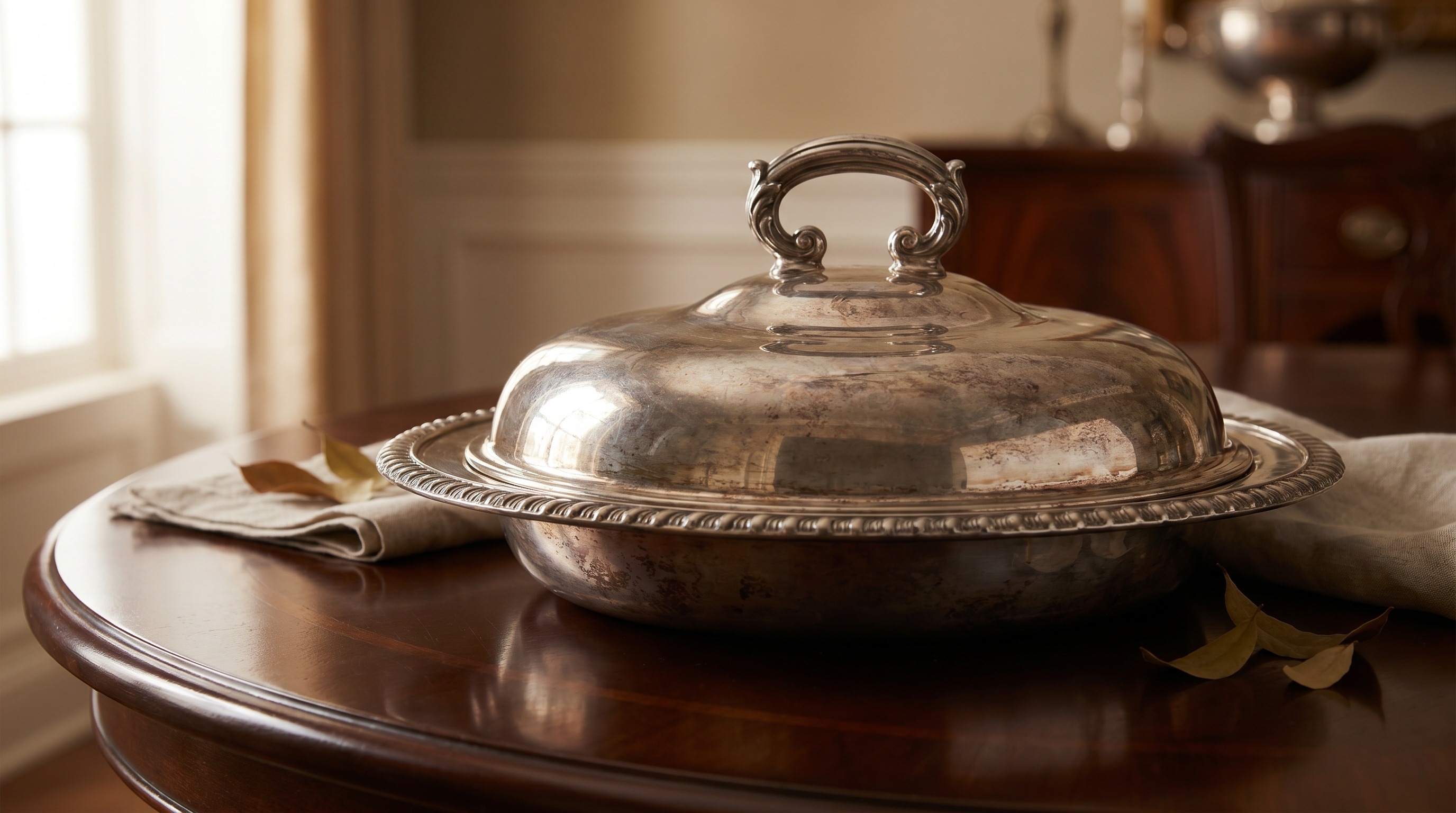
Antique Silver Entrée Dishes
The covered entrée dish — a deep silver dish with a domed lid and a detachable handle — kept the dinner courses warm and was almost always made in pairs or sets. A guide to identifying, dating, valuing and selling antique silver entrée dishes in the UK.
What Are Your Silver Entrée Dishes Worth?
Send a photo — including the marks on the base and cover — and we'll value them free, with no obligation. We reply within one working day.
A covered entrée dish is dining silver at its most useful and handsome — a deep rectangular or oval dish with a close-fitting domed cover and a detachable ring handle, so the lid doubles as a second dish. Made in pairs and sets of four for the great Georgian and Victorian table, and by weight and maker they are among the most valuable everyday silver.
Silver entrée dishes: what they are
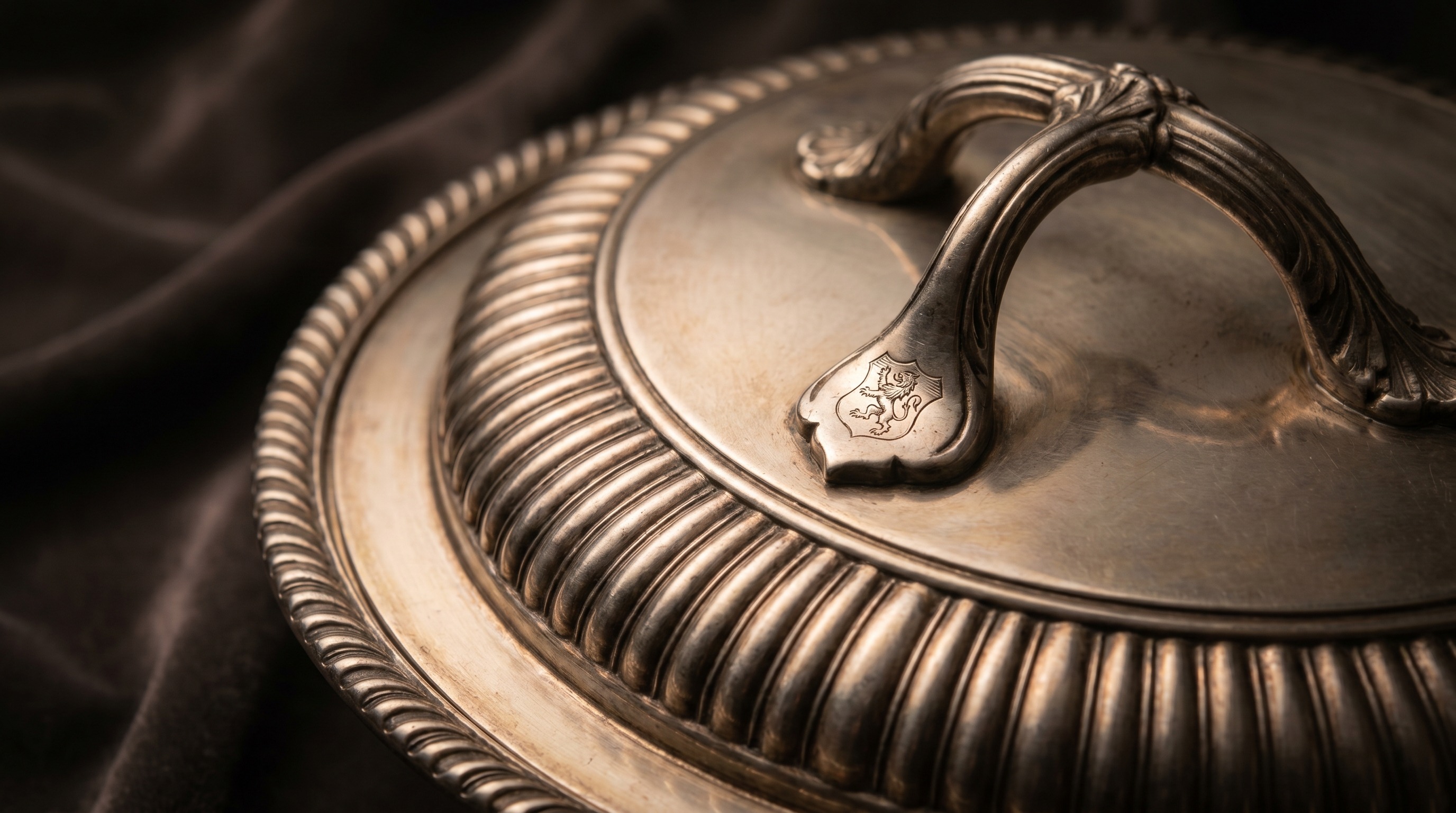
An entrée dish (or second-course dish) is a deep, lidded silver serving dish, usually rectangular with rounded corners, a gadrooned or reeded rim and a detachable handle on the cover so it lifts off and inverts as a second dish. Many sat on a hot-water "Sheffield" base to keep food warm. They were made in pairs and sets of four; named makers such as Paul Storr, good weight and matching sets drive value. Browse our silver collection.
What collectors look for
Pairs & sets
Matched pairs and sets of four, all marked to one maker and date, far outvalue singles.
Named makers
Paul Storr and noted Georgian makers carry a strong premium; check base and cover marks.
Weight
Heavy-gauge silver lifts both metal and collector value — dishes can be substantial.
Complete & matching
Covers, handles and any warming bases present and matching; crests adding provenance.
What are antique silver entrée dishes worth?
Value runs with maker, date, weight and set:
Indicative only — your dishes depend on maker, hallmark date, weight, set and condition. Send a photo for a free, accurate valuation.
What Determines Value
The factors we assess on silver entrée dishes:
- Set — Pairs and sets of four over singles.
- Maker — Paul Storr and noted makers over unmarked pieces.
- Weight — Heavy-gauge silver lifts value markedly.
- Date — Georgian examples most collected.
- Matching marks — Base, cover and handle marked alike.
- Condition — No splits, dents, repairs or erased crests.
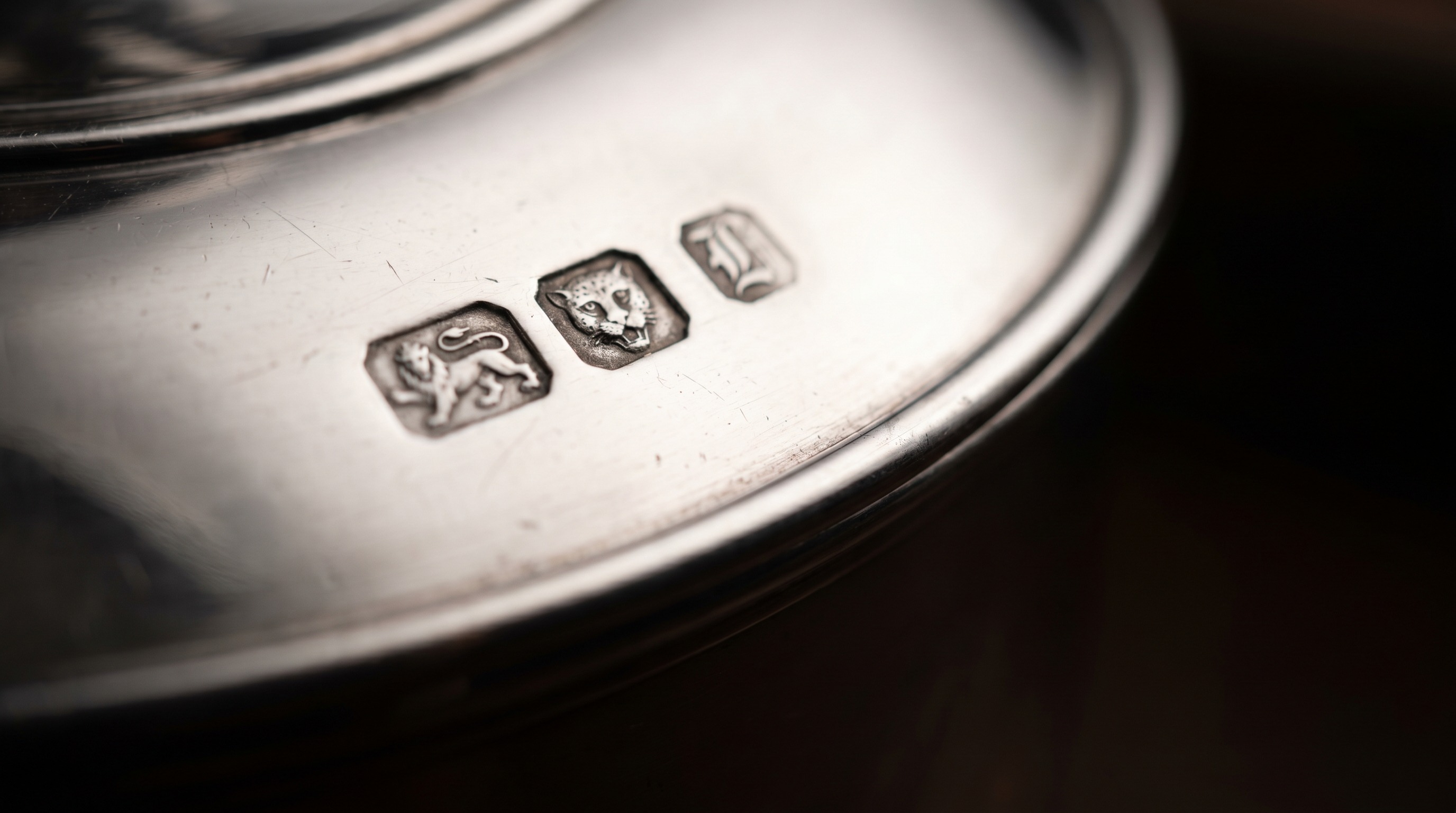
Marks are on the base, cover and handle — look for the lion passant for sterling. Plate is marked EPNS.
How to identify and date your entrée dishes
Check the base, cover and detachable handle for the lion passant (sterling), town mark, date letter and maker's mark; ideally all parts and, on a set, all dishes share the same marks. Plated dishes stamped EPNS are worth far less — see our EPNS vs sterling silver guide. The date letter dates them — use our how to read silver hallmarks guide. Because dishes carry weight, the silver price valuation guide sets a metal-value baseline.
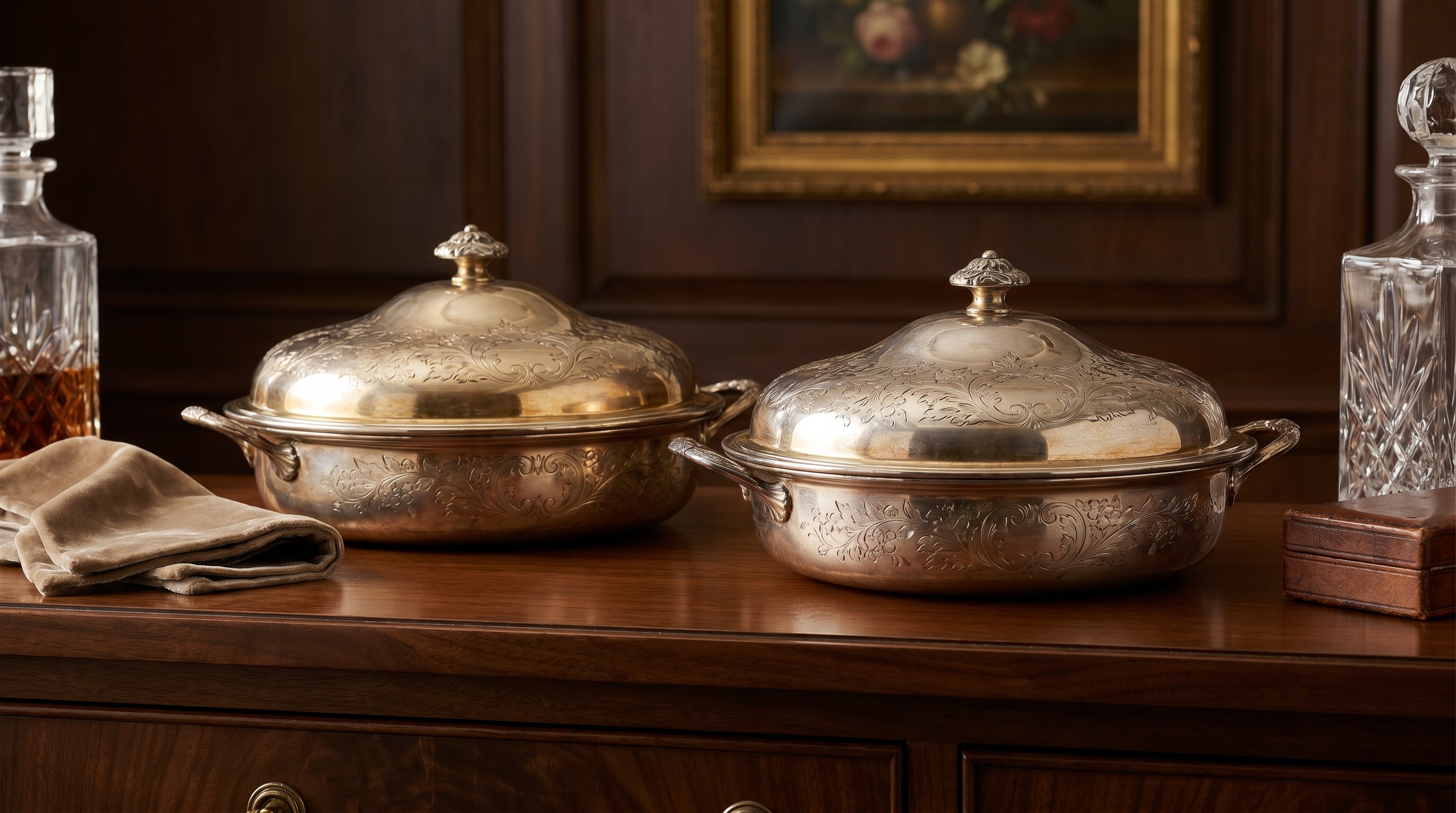
Entrée dishes sit with the grandest dining silver. See our guides to soup tureens, Paul Storr silver and browse our silver for sale. When you're ready to sell, visit sell your silver.
Value Your Entrée Dishes
Send photographs of the dishes and the marks on the base and cover, and we'll give you an honest, no-obligation valuation.
⚠️ Strictly by appointment only — no walk-ins at either showroom.
Frequently Asked Questions
Antique silver entrée dishes — common questions.
What is a silver entrée dish?
A deep, lidded silver serving dish with a detachable handle on the cover, so the lid inverts to form a second dish. Used for the second course and made from the late 18th century, usually in pairs or sets.
How much are antique silver entrée dishes worth?
From moderate (strong silver weight) for a plain single up to a high premium for Georgian pairs and named-maker sets of four. Maker, date, weight and set decide. Send a photo for a free valuation.
Why does the handle detach?
So the domed cover can be lifted off and turned over to serve as a second dish, doubling the serving capacity. Original, matching detachable handles support value.
Are sets worth more than singles?
Yes, considerably. Entrée dishes were made in pairs and sets of four; a matched set all marked to one maker is far more valuable than the same dishes split up.
How do I tell sterling from plate?
Look for the lion passant hallmark on the base and cover. Plated dishes are marked EPNS or A1 and worth far less. Send a photo of the marks and we'll confirm.
Where can I sell antique silver entrée dishes in the UK?
Mozeris Fine Antiques are specialist silver buyers with showrooms in Mayfair, London and Braintree, Essex. We offer free, no-obligation valuations — send photos or visit by appointment.
Send Us Your Photographs
Attach photos of the entrée dishes and the marks on the base and cover. We'll respond within one working day.