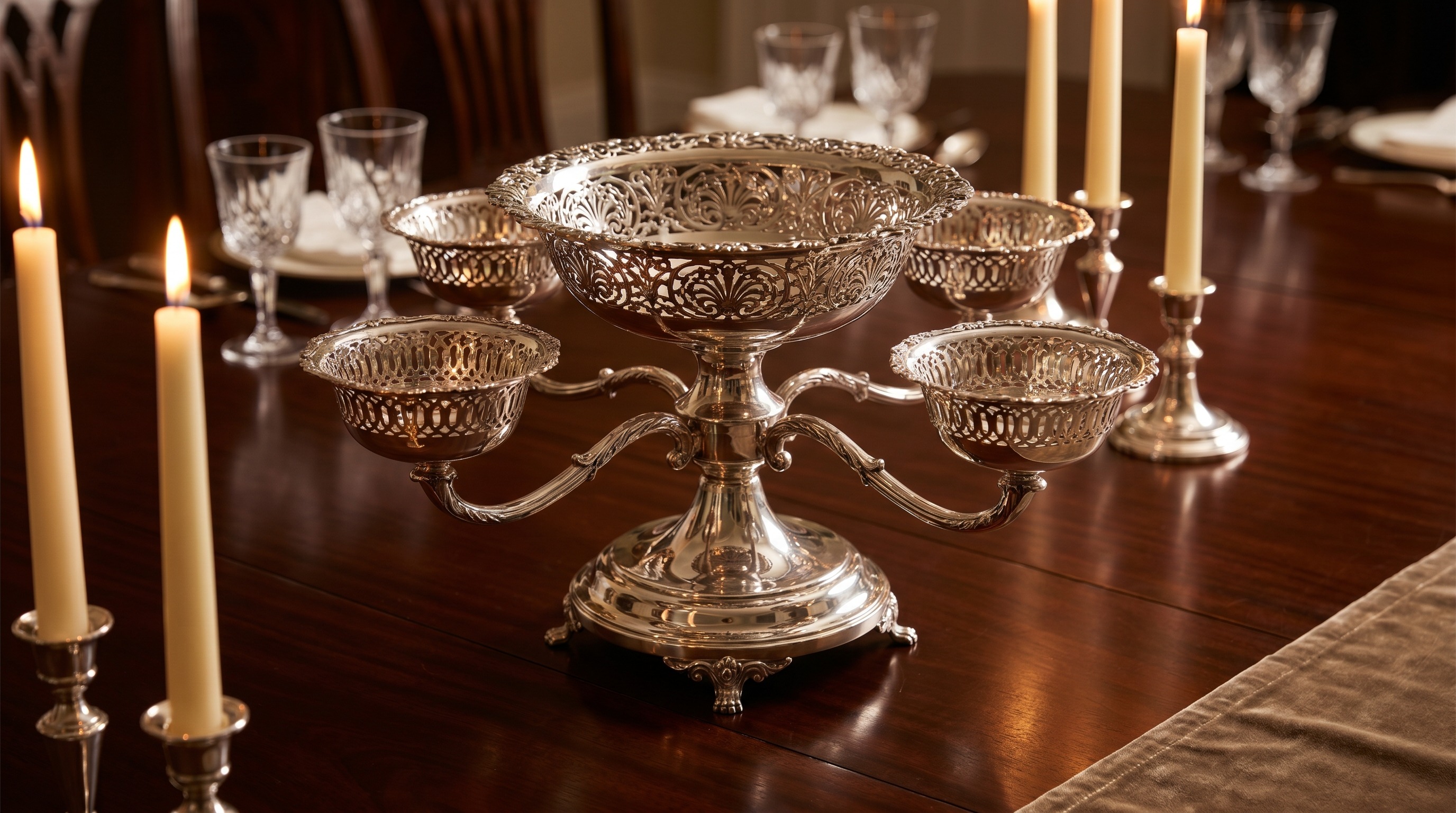
Antique Silver Epergnes
The grandest of all table silver — a branched centrepiece holding baskets of fruit and sweetmeats. From Georgian Rococo masterpieces to Victorian glass-and-silver displays. A guide to identifying, dating and valuing antique silver epergnes.
Not Sure What Your Epergne Is Worth?
Send a photo — including the marks on the base and each basket — and we'll value it free, with no obligation. We reply within one working day.
The epergne was the showpiece of the Georgian dining table — a tall, branched silver centrepiece carrying baskets and dishes of fruit, nuts and sweetmeats. The finest are Rococo masterpieces by makers like Thomas Pitts; later Victorian and Edwardian examples combine silver frames with cut glass. As the most ambitious form of table silver, a good epergne can be among the most valuable pieces in a collection.
What is a silver epergne?
A large centrepiece with a central bowl or basket and a number of branched arms, each holding a smaller detachable basket or dish. Georgian examples (1750s–1770s) in the Rococo taste — pierced, scrolled and cast — by makers such as Thomas Pitts and Emick Romer are the pinnacle. Victorian and Edwardian epergnes often pair a silver or silver-plate frame with cut-glass flutes and dishes. Maker, date, weight and completeness all heavily affect value.
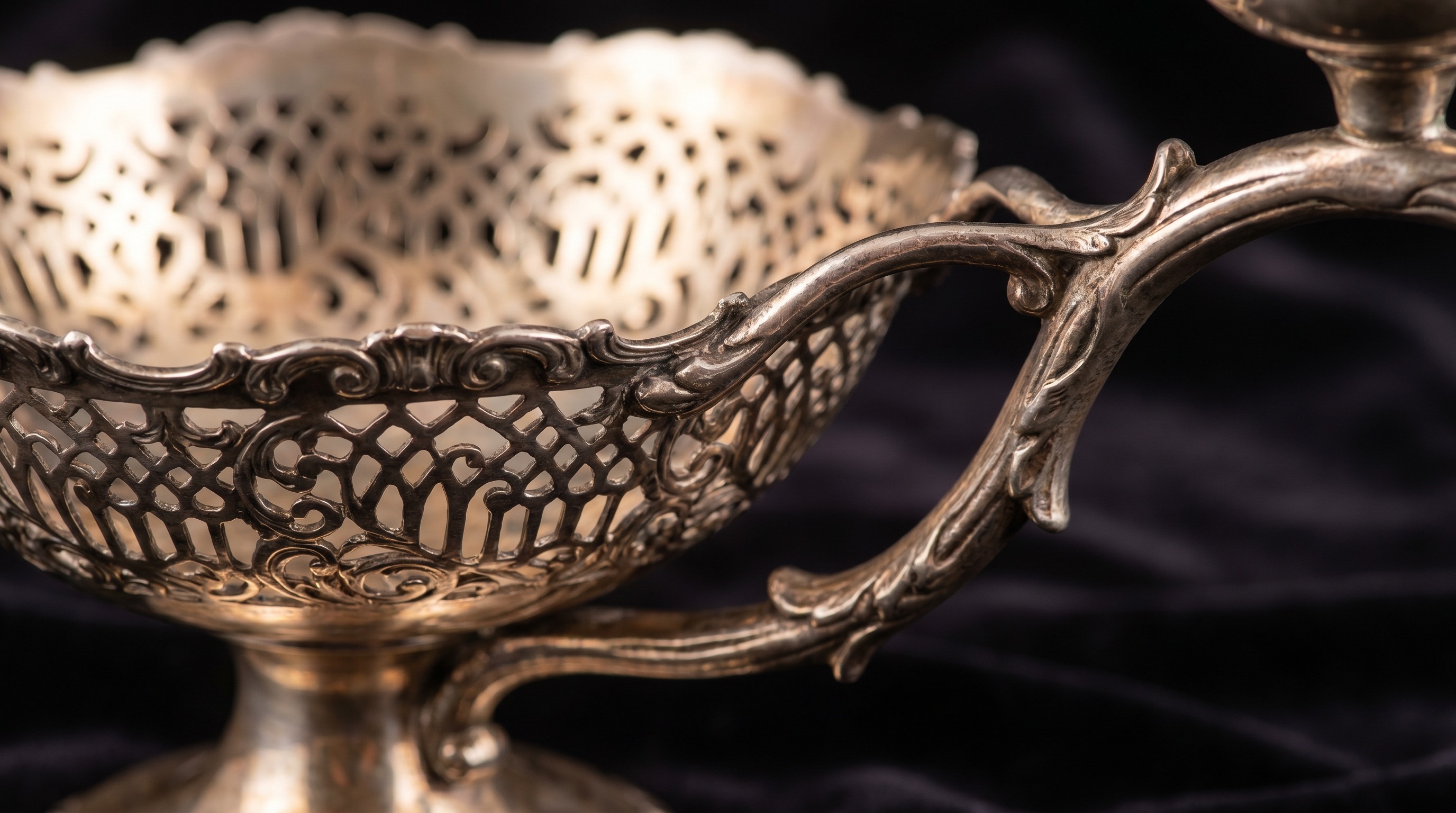
What collectors look for
Great makers
Thomas Pitts, Emick Romer and the leading Georgian specialists command the strongest prices.
Georgian Rococo
Mid-18th century pierced and cast examples are the most prized; the hallmark dates the piece.
Completeness
All original baskets, branches and glass present and matching. Missing or replaced parts hurt value sharply.
Weight & scale
Large, heavy all-silver epergnes far outvalue small or part-plated glass examples.
What Determines Value
The factors we assess on a silver epergne:
- Maker — Thomas Pitts, Emick Romer and leading makers over unmarked pieces.
- Date — Georgian Rococo examples most prized; the hallmark dates it.
- Completeness — All original baskets, branches and glass present.
- Weight — Heavy all-silver epergnes carry far more value.
- Condition — Crisp piercing, no splits, unbent branches, no loss.
- Matching marks — Baskets and frame ideally marked to one maker and date.
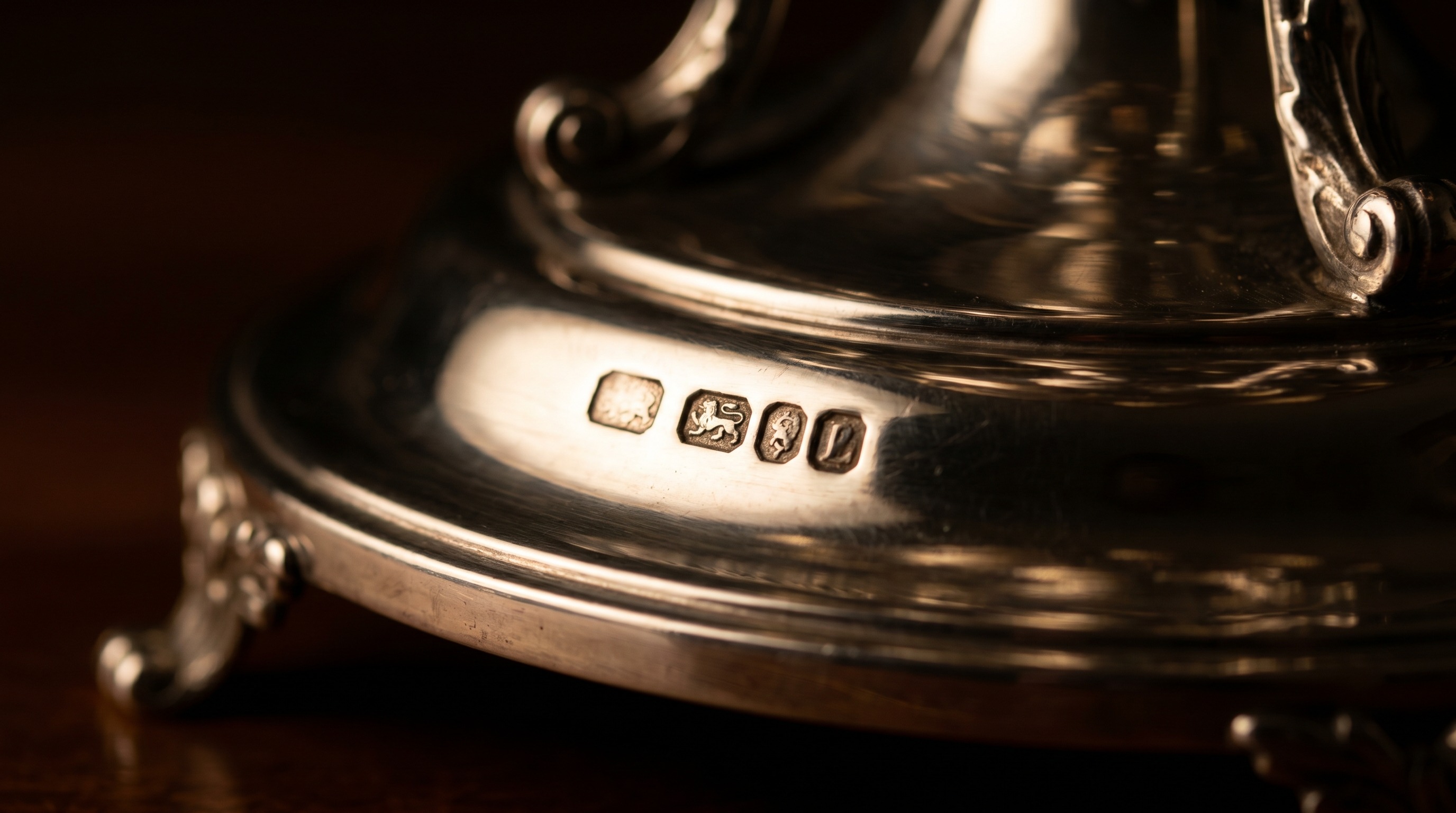
Marks are on the base and each basket — find the lion passant for sterling.
Sterling, maker and completeness
Confirm sterling via the lion passant — ideally the frame and every basket carry matching marks; later Victorian frames may be silver plate with glass dishes. Then maker, date and completeness drive value — a complete Georgian Rococo epergne by Thomas Pitts is a major piece, while a part-glass Edwardian example with replaced dishes is modest. Our silver hallmark guide helps with the small marks.
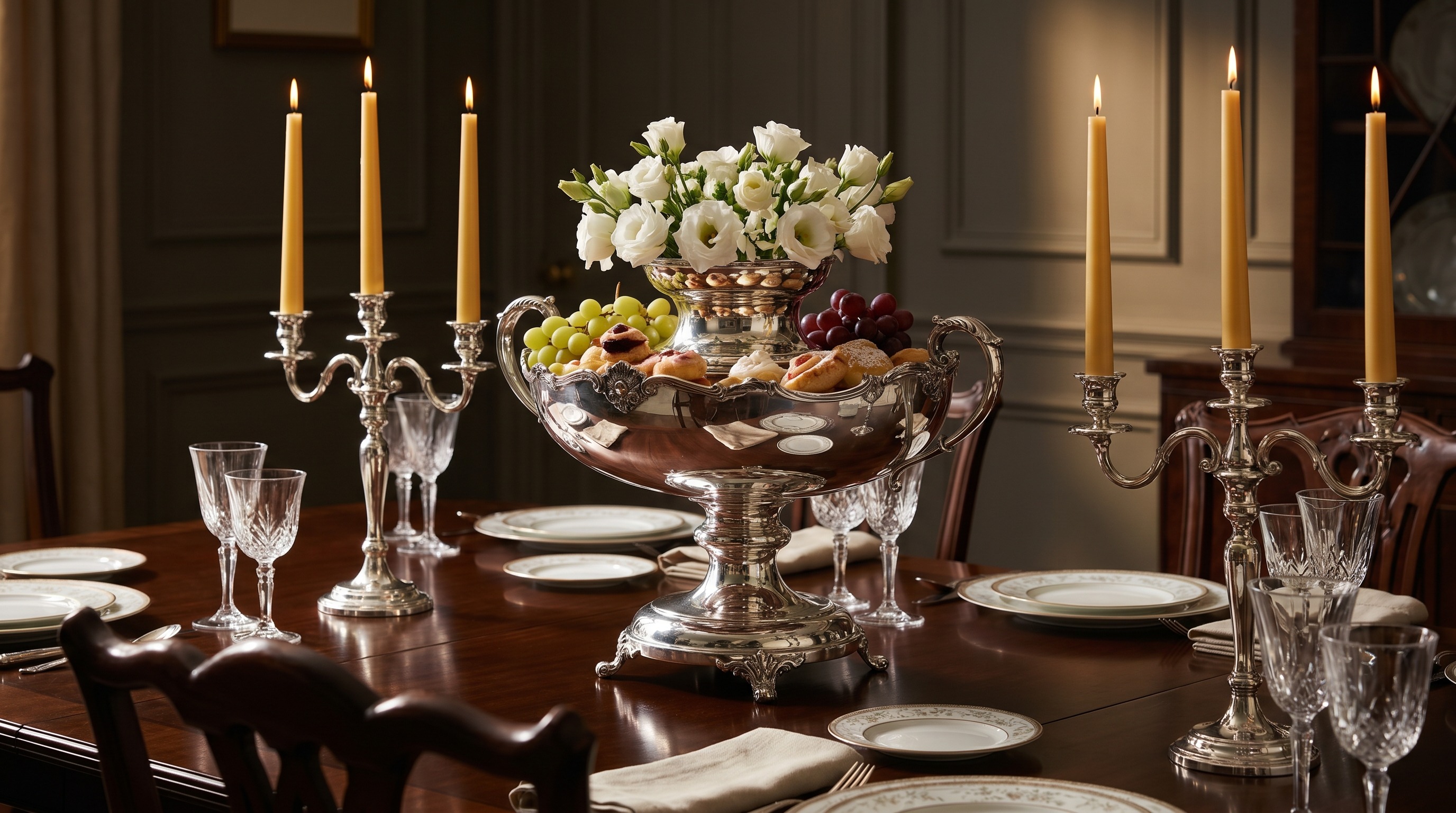
The grandest of the table silver — see your cruet & condiment sets and toast racks guides. Sell via sell your silver.
Value Your Epergne
Send photographs of the epergne and the marks on the base and baskets, and we'll give you an honest, no-obligation valuation.
⚠️ Strictly by appointment only — no walk-ins at either showroom.
Frequently Asked Questions
Antique silver epergnes — common questions.
What is a silver epergne?
A large branched table centrepiece with a central bowl and arms carrying detachable baskets or dishes for fruit and sweetmeats. The grandest form of table silver, made from the mid-18th century onward.
Are silver epergnes valuable?
The best can be very valuable. A complete Georgian Rococo epergne by a great maker like Thomas Pitts is a major piece; a small part-glass Edwardian example is more modest. Maker, weight and completeness decide.
Why does completeness matter so much?
Epergnes have many detachable parts — baskets, branches and glass. Missing, replaced or non-matching parts reduce value sharply, so an all-original, fully-marked example is worth far more.
How do I tell sterling from plate?
Look for the lion passant on the base and each basket. Many Victorian and Edwardian epergnes are silver-plate frames with cut glass, worth far less than solid silver. Send photos of the marks and we'll confirm.
Should the baskets all match?
Ideally the frame and every basket carry the same maker's mark and date letter. Matching marks throughout confirm an original, undisturbed piece and support the strongest value.
Send Us Your Epergne Photographs
Attach photos of the epergne and the marks on the base and baskets. We'll respond within one working day.