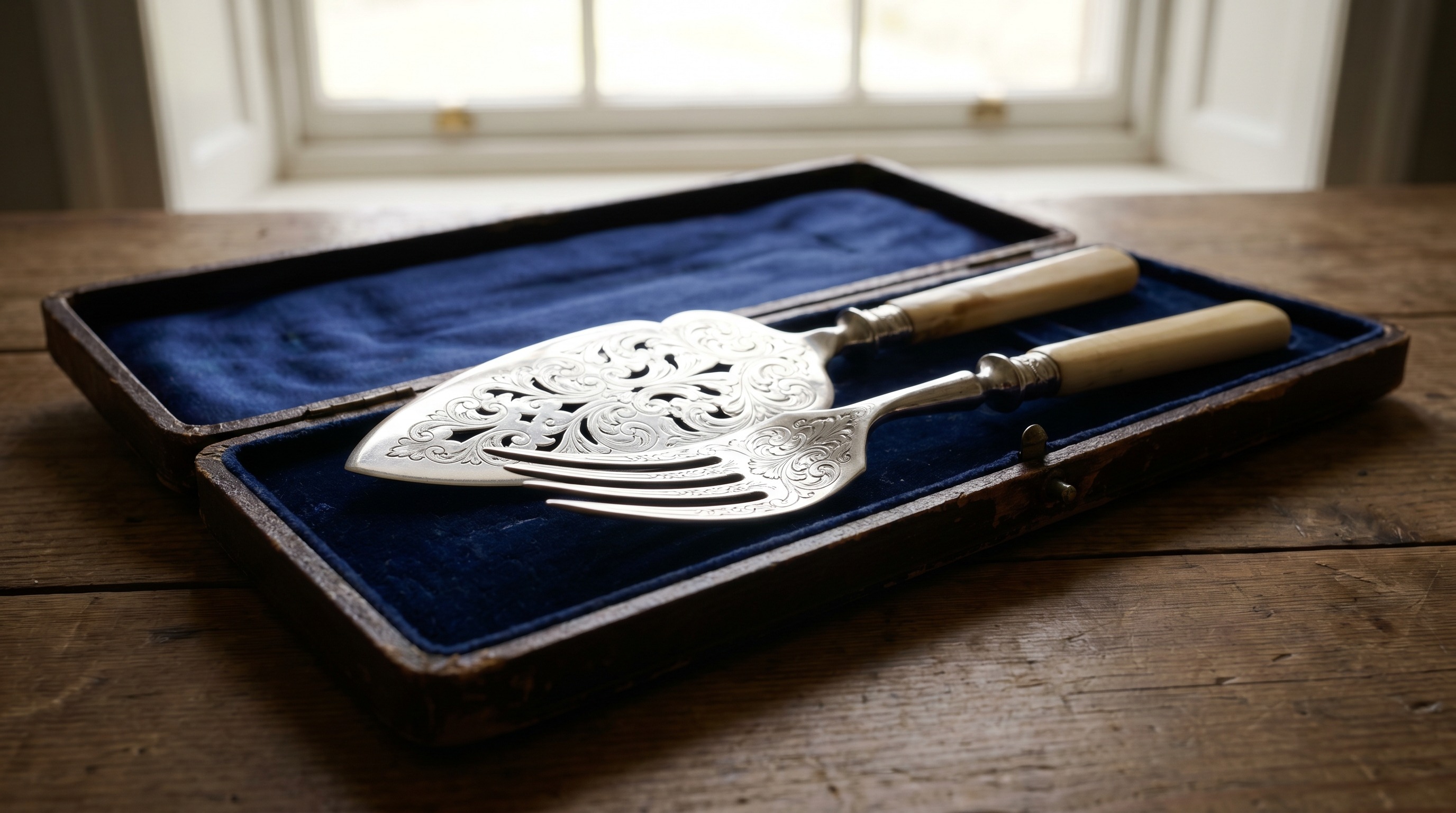
Antique Silver Fish Servers
The fish slice and matching fork — beautifully pierced and engraved, often boxed as a cased pair — were among the most decorative pieces of Victorian and Georgian serving silver. A guide to identifying, dating, valuing and selling antique silver fish servers in the UK.
What Are Your Silver Fish Servers Worth?
Send a photo — including the marks on the handles — and we'll value them free, with no obligation. We reply within one working day.
A fish slice and fork were the showpiece of the serving canteen — broad, pierced and engraved with fish, scrolls and shells, and frequently presented in a velvet-lined case. From elegant Georgian slices to richly decorated Victorian sets, fish servers are decorative, useful and a steady favourite with collectors.
Silver fish servers: what they are
A fish server set is a broad fish slice (server) and a matching fish fork, used to serve fish at table. The blades are typically pierced and engraved — often with fish, marine motifs, scrolls or a crest — with handles of silver, ivory or mother-of-pearl. The earliest are 18th-century slices alone; matched cased pairs are mostly Victorian. Named makers, fine piercing and the original fitted case all drive value. Browse our silver collection.
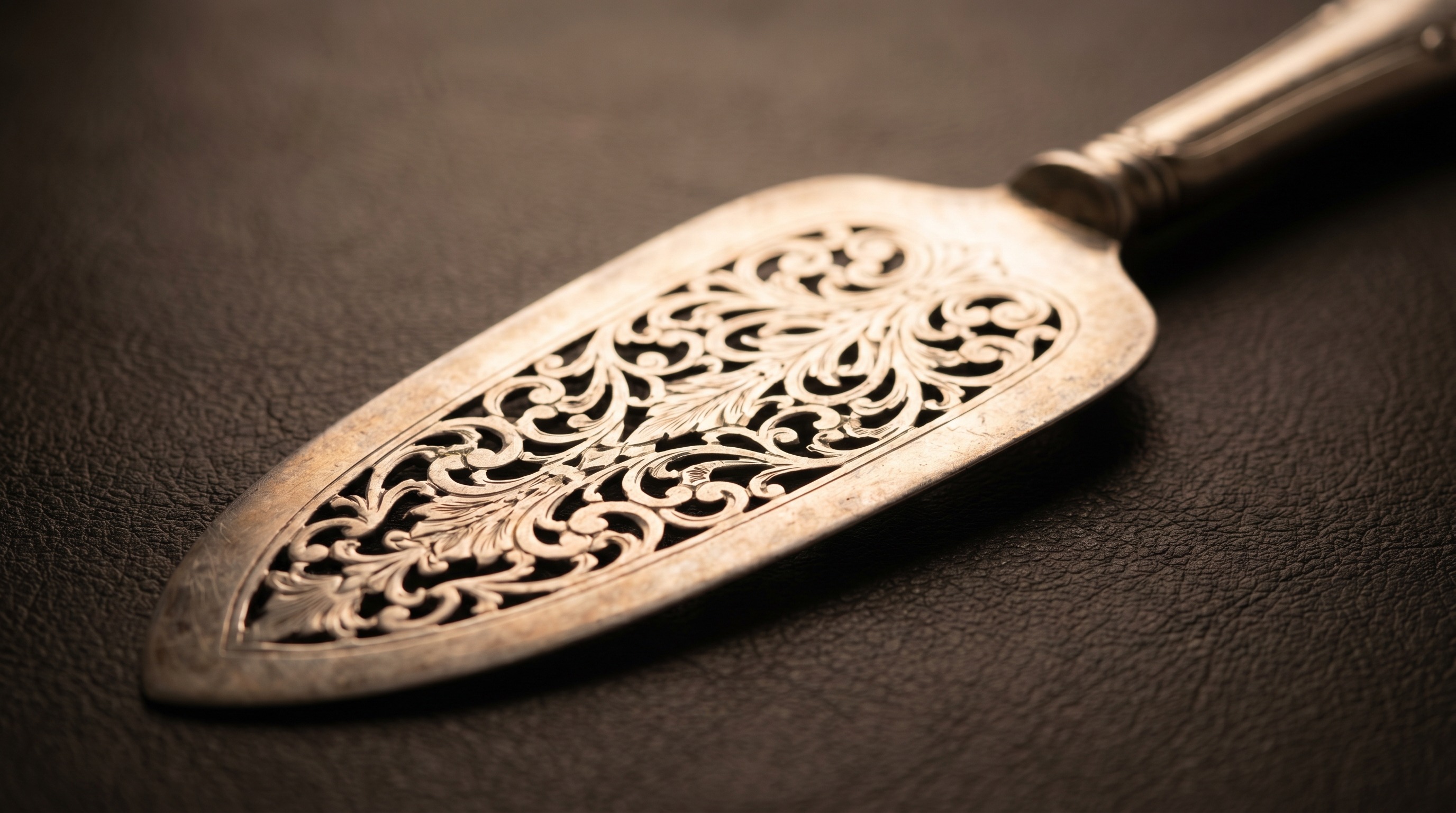
What collectors look for
Cased pairs
A matched slice and fork in their original fitted case far outvalue a single slice.
Named makers
Noted Georgian and Victorian makers carry a premium; check the marks on the handles.
Fine piercing
Crisp, detailed pierced and engraved blades — fish and marine motifs — over plain ones.
Condition
No splits to the pierced blade, sound handles (silver, ivory or pearl), clear hallmarks.
What are antique silver fish servers worth?
Value depends on maker, date, piercing and whether cased and complete:
Indicative only — your servers depend on maker, hallmark date, piercing and condition. Send a photo for a free, accurate valuation.
What Determines Value
The factors we assess on silver fish servers:
- Cased pair — Matched slice and fork in original case.
- Maker — Noted makers over unmarked pieces.
- Date — Georgian slices and fine Victorian sets most collected.
- Piercing — Crisp, detailed fretwork and engraving.
- Handles — Sound silver, ivory or mother-of-pearl handles.
- Condition — No splits, repairs, worn engraving or cracked handles.
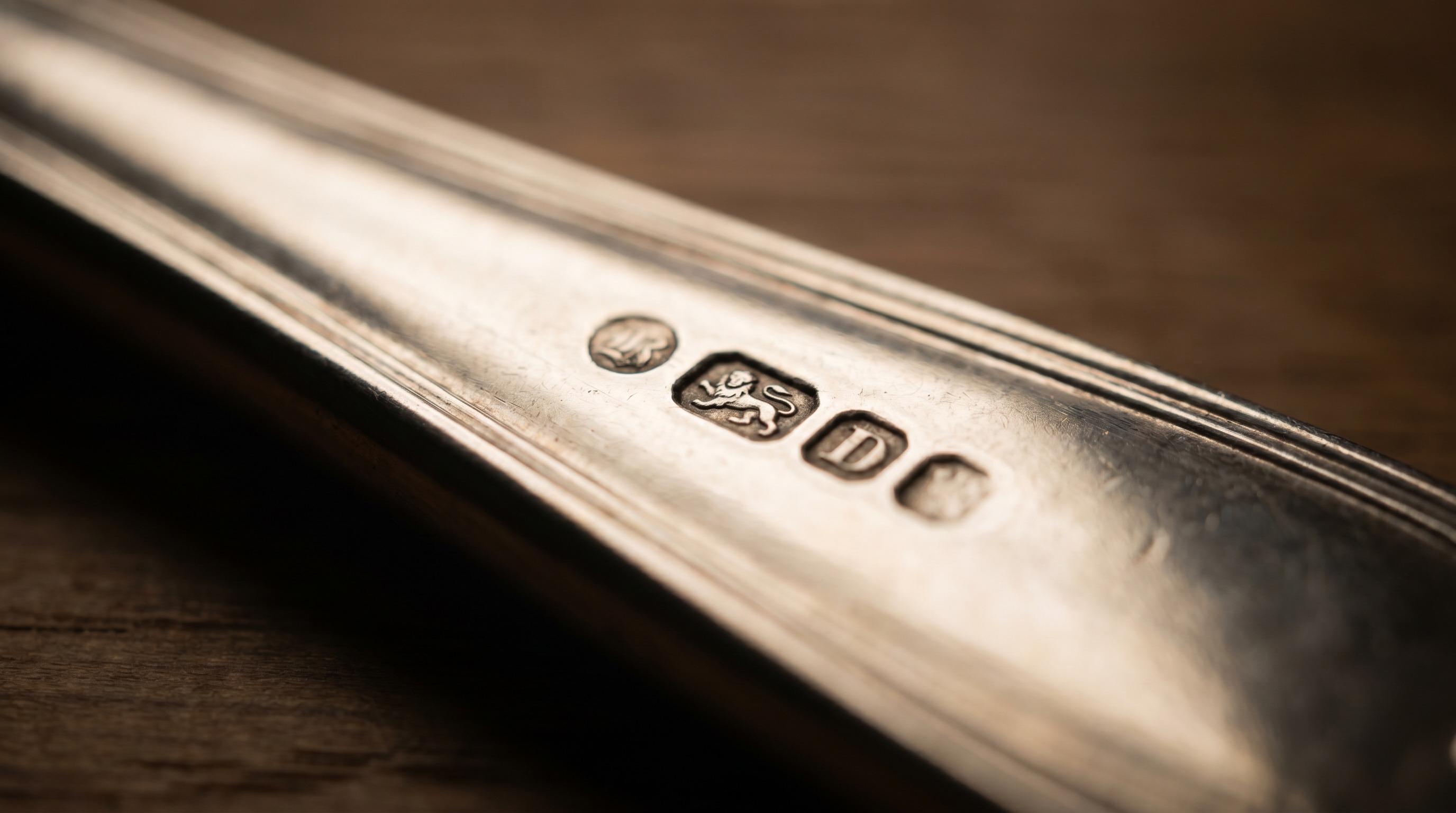
Marks are on the blade or handle — look for the lion passant for sterling. Plate is marked EPNS.
How to identify and date your fish servers
Look on the blade or handle for the lion passant (sterling), town mark, date letter and maker's mark; on a pair, slice and fork should match. Plated servers stamped EPNS are worth far less — see our EPNS vs sterling silver guide. The date letter dates them — use our how to read silver hallmarks guide. Note: ivory-handled servers face sale restrictions under UK ivory rules — we can advise. The silver price valuation guide sets a metal-value baseline.
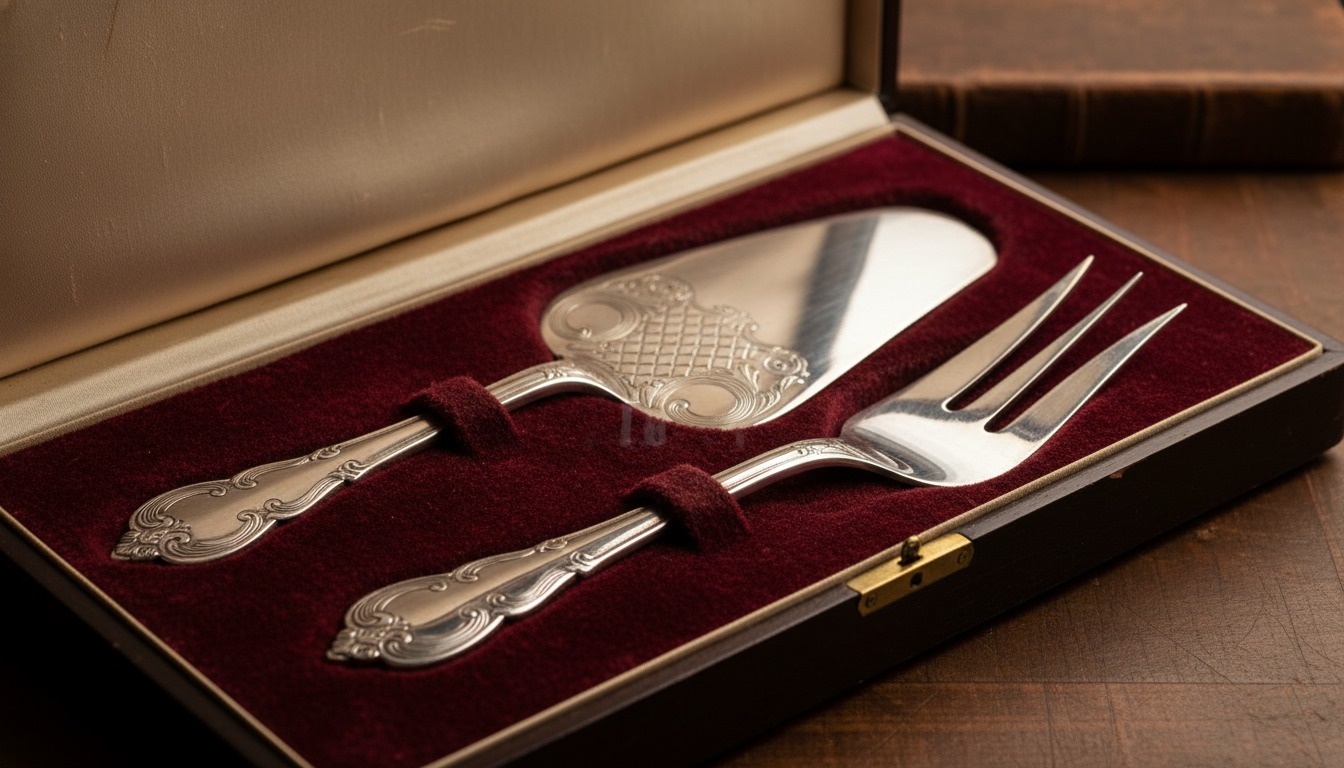
Fish servers sit with the serving and flatware silver. See our guides to silver flatware, silver canteens and browse our silver for sale. When you're ready to sell, visit sell your silver.
Value Your Fish Servers
Send photographs of the servers and the marks on the handles, and we'll give you an honest, no-obligation valuation.
⚠️ Strictly by appointment only — no walk-ins at either showroom.
Frequently Asked Questions
Antique silver fish servers — common questions.
What is a silver fish server?
A broad, pierced and engraved fish slice — and usually a matching fish fork — used to serve fish at table. Often presented as a cased pair. The earliest are 18th-century slices; matched sets are mostly Victorian.
How much are antique silver fish servers worth?
From a modest sum for a plain single slice up to a strong premium for Georgian or named-maker cased pairs with fine piercing. Maker, date, piercing and whether cased decide. Send a photo for a free valuation.
Are cased pairs worth more?
Yes. A matched slice and fork in their original fitted case are far more desirable and valuable than a lone slice or an unboxed, mismatched pair.
What about ivory or mother-of-pearl handles?
Both were used. Ivory-handled pieces are subject to UK ivory-sale rules, which can restrict resale; mother-of-pearl and silver handles are unaffected. We can advise from a photo.
How do I tell sterling from plate?
Look for the lion passant hallmark on the blade or handle. Plated servers are marked EPNS or A1 and worth far less. Send a photo of the marks and we'll confirm.
Where can I sell antique silver fish servers in the UK?
Mozeris Fine Antiques are specialist silver buyers with showrooms in Mayfair, London and Braintree, Essex. We offer free, no-obligation valuations — send photos or visit by appointment.
Send Us Your Photographs
Attach photos of the fish servers and the marks on the handles. We'll respond within one working day.