Antique Silver Guides · Mozeris Fine Antiques
Antique Silver Inkstands & Inkwells
An antique silver inkstand, or standish, is a tray holding inkwells, a place for pens and often a taperstick or pounce pot, the centrepiece of the Georgian and Victorian desk. Value turns on whether it is hallmarked sterling, on the maker and date, and on the original glass wells surviving.
Updated October 2026
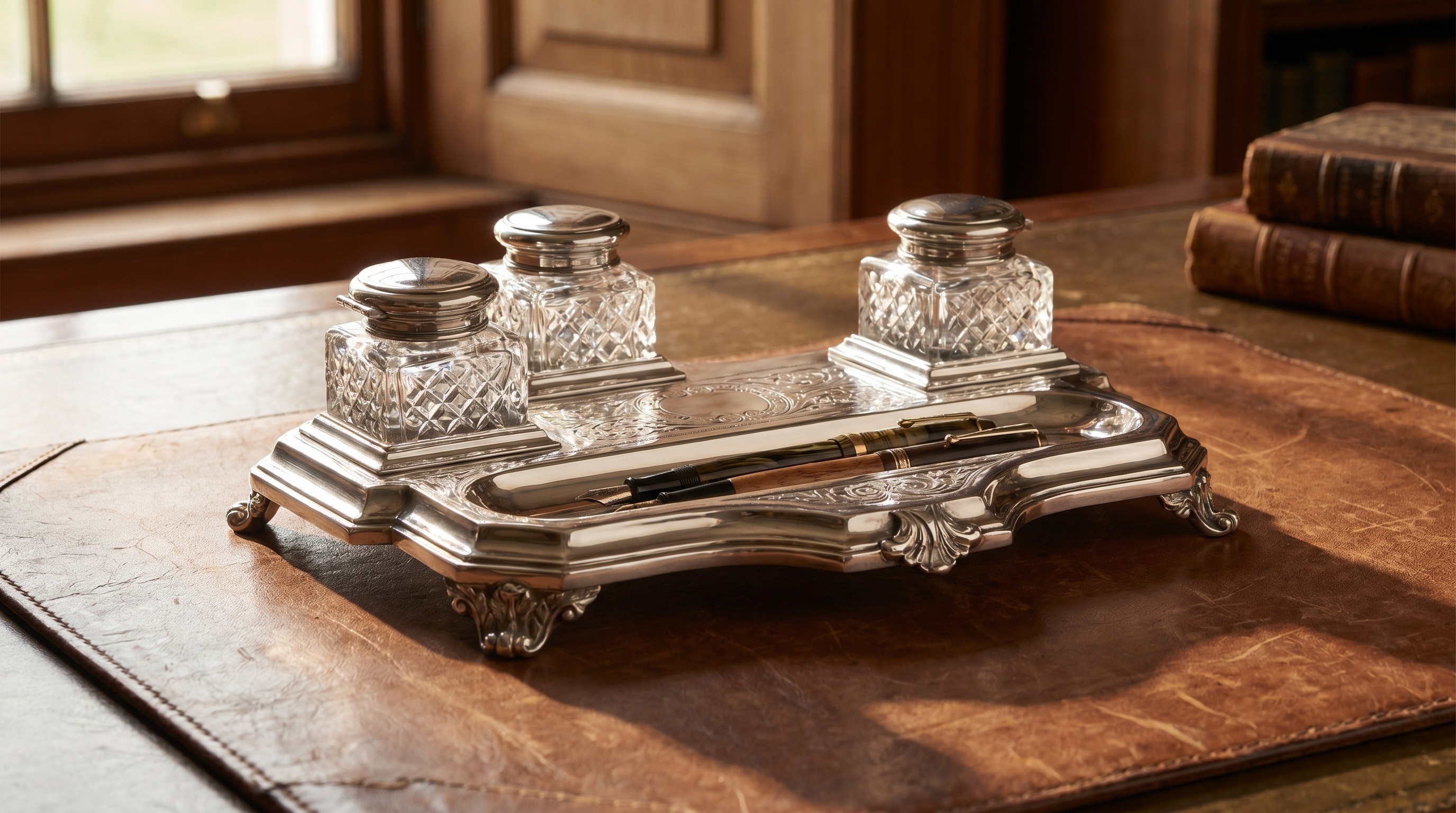
The silver inkstand, or "standish", was the centrepiece of the Georgian and Victorian writing desk. A guide to identifying, dating and valuing these handsome desk pieces and their cut-glass inkwells.
Not Sure What Your Silver Is Worth?
Send a photo of your inkstand, including the marks, and we'll value it free, with no obligation. We reply within one working day.
Before fountain pens and biros, every desk of substance carried a silver inkstand: a tray holding inkwells, a place for pens, and often a taperstick or pounce pot. Finely made and frequently presented as gifts, these "standishes" are among the most decorative pieces of antique desk silver, and the best examples are keenly collected.
What is a silver inkstand?
A silver inkstand is a tray fitted with inkwells and a pen rest, and often a taperstick or pounce pot, made for the writing desk.
An inkstand (or standish) is a silver stand or tray, usually on small feet, holding one or two inkwells: cut-glass bottles with hinged silver lids, one for ink and sometimes one for pounce (a sand used to dry ink). Many have a central pen tray or recess, and grander examples add a taperstick (for melting sealing wax) or a small bell or box.
"An inkstand is judged on its completeness and its presence, original glass wells with matching silver lids, a good maker, and a crisp, undamaged tray."
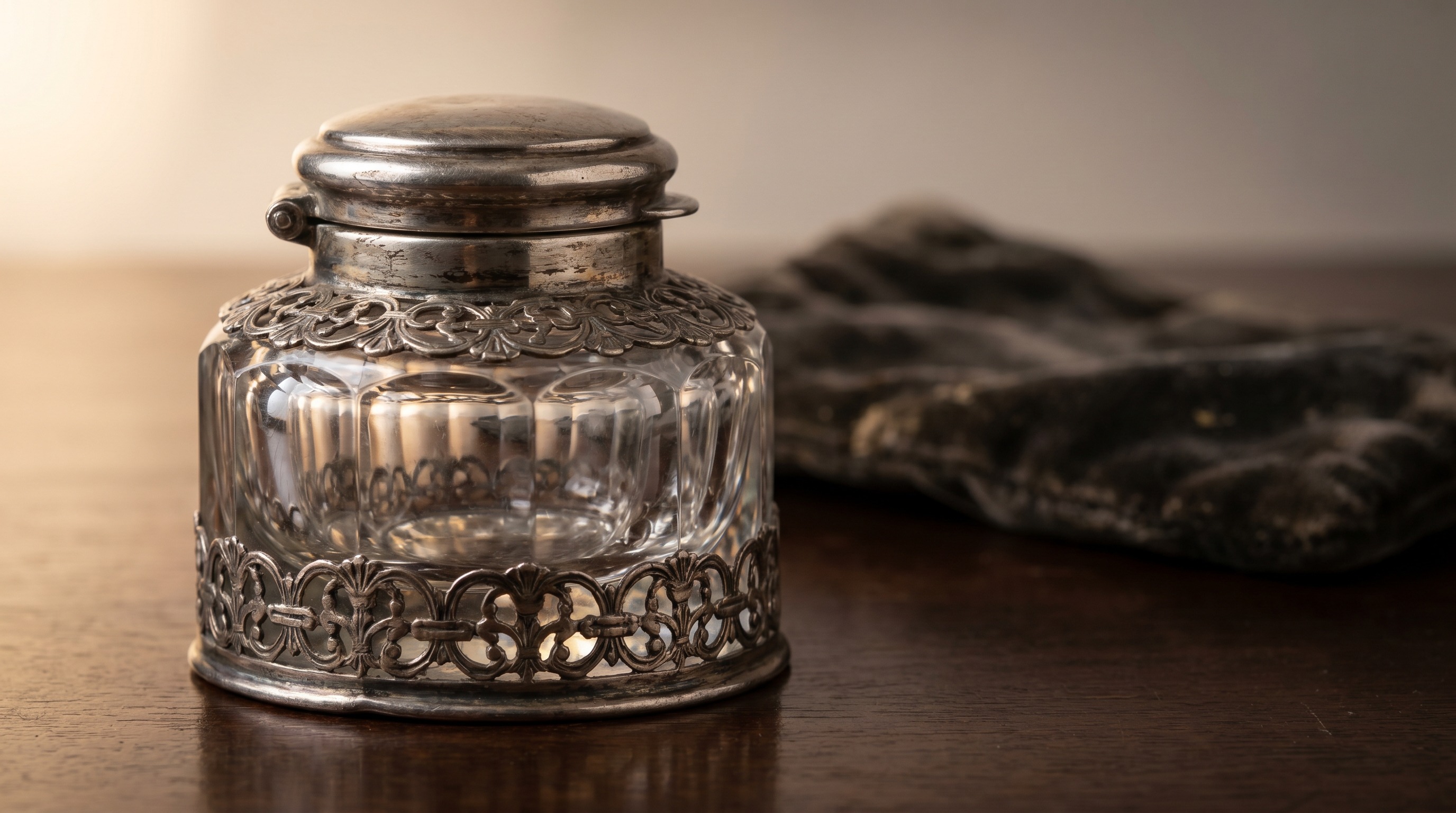
The parts to check for
The parts to check on an inkstand are the tray, both original glass inkwells with their silver lids, and any taperstick or pounce pot.
- The tray & feetThe silver base, usually footed, often with a gallery or pierced border. Look for crisp edges and no splits at the feet.
- Inkwells & lidsCut-glass wells with hinged silver mounts. Original, undamaged glass with matching lids is a major value factor.
- Taperstick / pounce potGrander stands add a wax taperstick or a pierced pounce pot, desirable extras that complete the piece.
- InscriptionsMany were presentation pieces; a clear, attractive inscription can add interest and provenance.
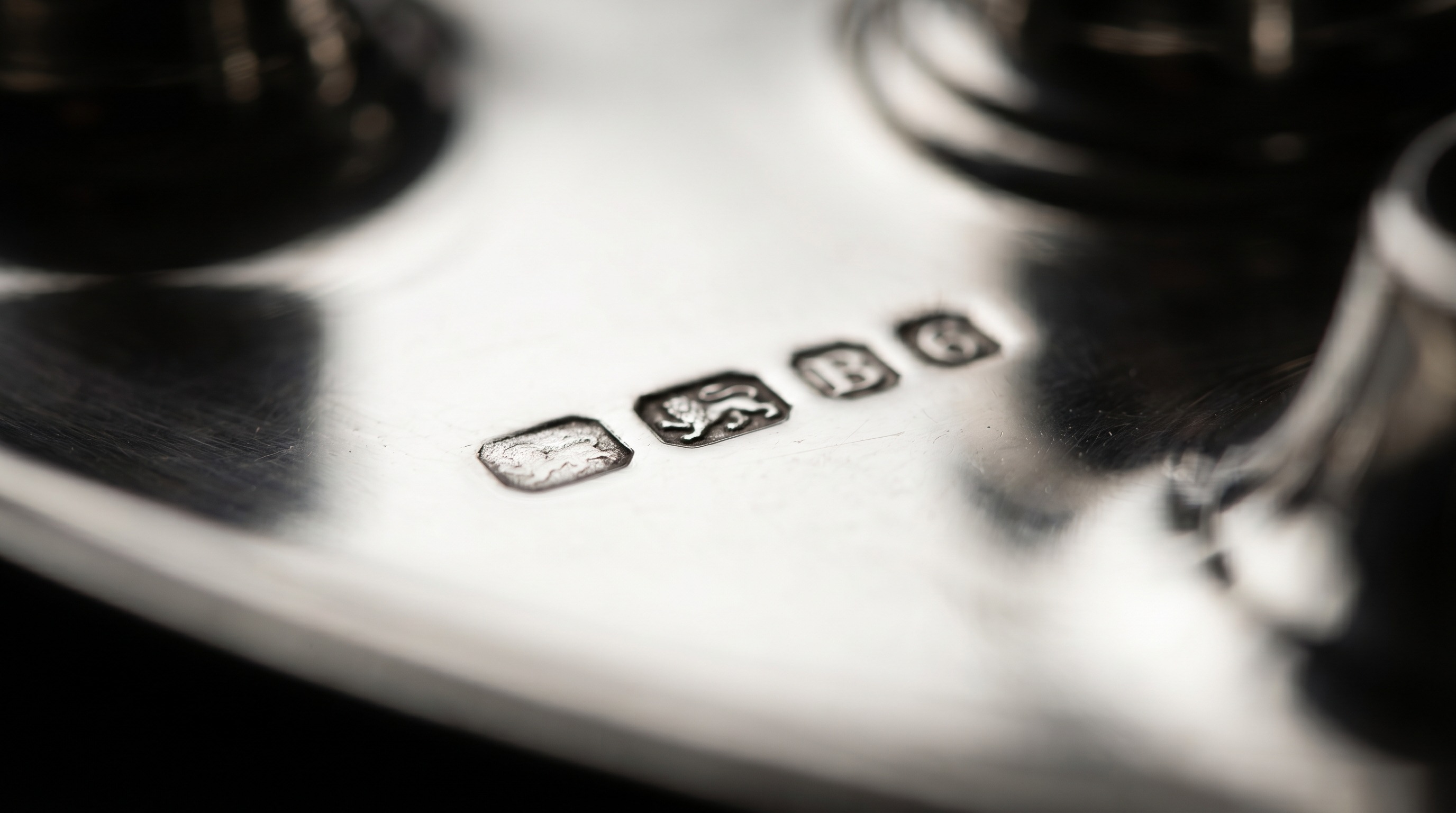
What Determines Value
The value of a silver inkstand is decided by sterling or plate, the maker and date, completeness, weight and condition.
The factors we assess on an inkstand:
- Sterling vs plate: Hallmarked sterling (lion passant) over EPNS; a big value difference.
- Maker & date: Georgian and good-maker stands are keenly collected; the date letter dates it.
- Completeness: Both original inkwells with matching lids, plus any taperstick or pounce pot.
- Weight & quality: Heavier-gauge silver, fine casting, piercing and chasing.
- Condition: Sound feet and hinges, no splits, original undamaged glass.
- Inscription: A tasteful presentation inscription can add to the story.
Find the lion passant on the tray. See our hallmark guide if unsure.
What We Look For When an Inkstand Arrives
When an inkstand arrives we look for the lion passant on the tray and on each silver lid first, then check that both glass wells are original and that the lids match.
Then we look at the tray for dents and splits, check for a taperstick or pounce pot, and read the date letter and maker's mark.
How selling works
- Send photosUse the form on this page, or email them to us.
- A specialist reviews itMaker, marks, age and condition.
- Free estimate by emailWithin one working day.
- You decidePaid once agreed. No obligation.
Free valuation
Request a free valuation
Send us a few photos of your inkstand. A specialist looks at every request personally and replies by email with an estimate within one working day. There is no obligation to sell.
What to photograph
- The whole inkstand. The tray with its wells, lids and any taperstick or pounce pot.
- The underside. The underside of the tray and the base of each well.
- The hallmarks, close up. On the tray, and on each silver lid or mount.
Prefer email? Send photos to [email protected] or call 01376 334 482.
Ways to sell
- Mayfair (by appointment)
- Braintree (by appointment)
- Royal Mail Special Delivery
- Free FedEx collection
We buy directly, with payment once you accept our offer, and we can also sell for you by consignment or in our own auctions.
Sterling or plate? Check first
The lion passant on the tray settles it: hallmarked sterling is worth far more than EPNS plate.
| Mark | What it tells you |
|---|---|
| Maker's mark | The initials of the maker or firm, in a shield. |
| Lion passant | The English mark for sterling silver. |
| Town mark | The assay office: leopard's head for London, anchor for Birmingham. |
| Date letter | The year of assay. The letter style and shield change with each cycle. |
As with all silver, confirm whether it's solid sterling or electroplate before anything else. Look for the lion passant on the tray and ideally on the inkwell mounts; EPNS or A1 means plated. Our guides to reading silver hallmarks and EPNS vs sterling walk you through it.
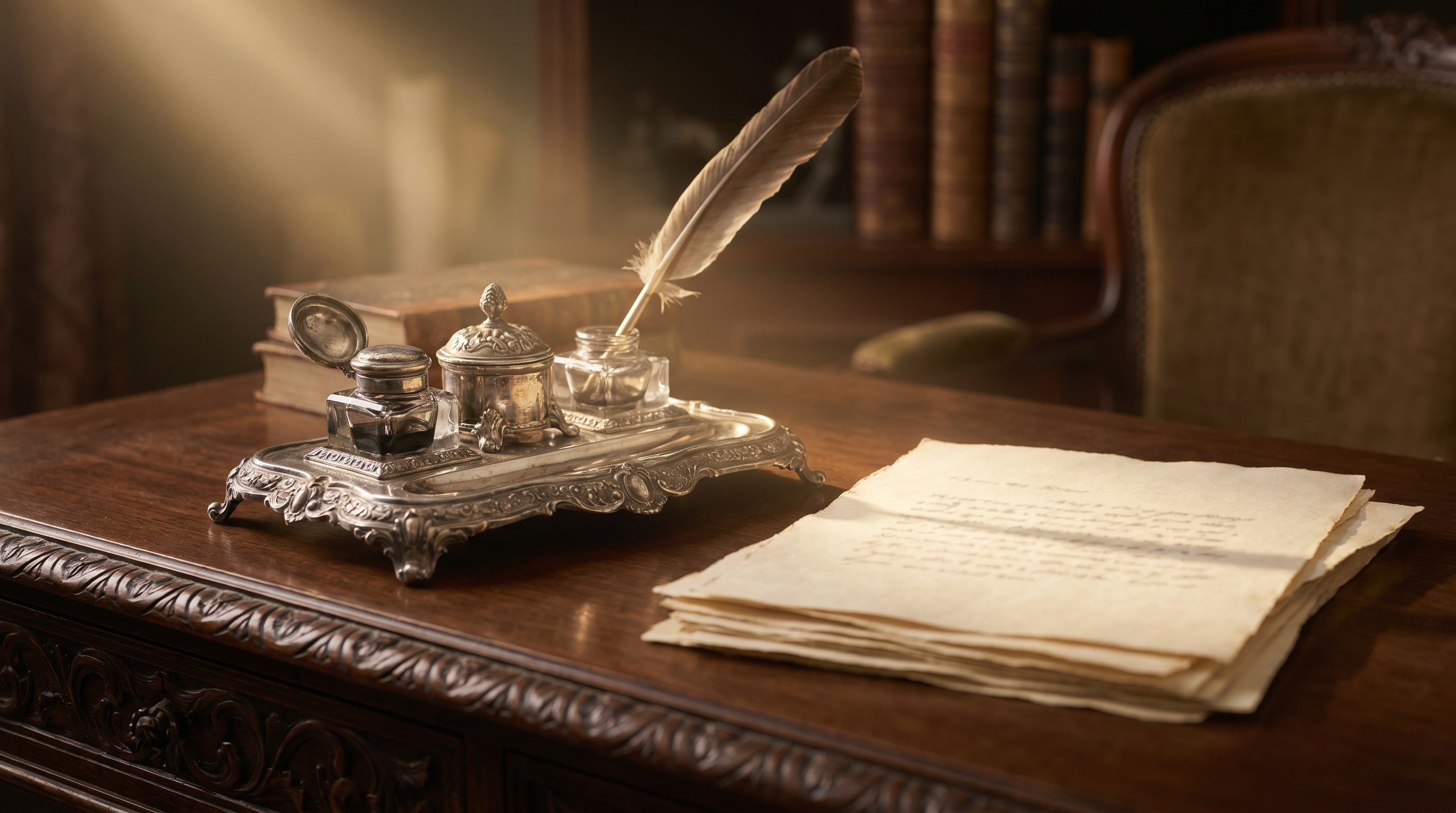
More desk and table silver: our cruet sets and photograph frames guides. When ready, sell via sell your silver.
Sterling or plate?
Sterling silver
- Lion passant: the English sterling mark
- A town mark, a date letter and a maker's mark
- Valued as antique silver: maker, date, form and condition
Silver plate (EPNS)
- Stamped EPNS or A1, with no lion passant or date letter.
- The marks often imitate hallmarks, so check each one
- Worth far less: decorative value only
Value Your Inkstand or Inkwell
Send photographs of the piece and the marks and we'll give you an honest, no-obligation valuation.
Strictly by appointment only: no walk-ins at either office.
Frequently Asked Questions
Antique silver inkstands and inkwells: common questions.
What is a silver standish?
Are silver inkstands valuable?
Does it matter if the glass inkwells are missing or chipped?
How do I tell sterling from plate?
Does an inscription affect value?
Send Us Your Silver Photographs
Attach photos of the inkstand and the marks. We'll respond within one working day.
Sell Your Antique Silver Inkstand
We buy antique sterling silver inkstands, standishes and inkwells valued as antique silver, not as scrap. Free valuation, no obligation.
Thinking of selling? Find out how to sell your silver with a free valuation from photographs.