Antique Silver Vesta Cases: A Collector's Guide
Pocket-sized, beautifully made and produced in a remarkable range of forms, silver vesta cases are among the most collectable small objects of the Victorian and Edwardian age. Here is how to identify what you have and what it is realistically worth.
A vesta case is a small hinged box that once held friction matches. Sterling examples carry British hallmarks, most often the Birmingham anchor, and their value turns on form and condition. Plain engine-turned cases are common, typically £30 to £120, while fine enamelled and novelty figural cases in original condition can reach several hundred pounds.
If you have inherited a small silver box with a ribbed strip on its base, found one in a junk-shop tray, or are thinking of building a collection, you are looking at a vesta case. These objects belong to a period when even everyday items were made with real care, which is part of their lasting appeal.
At Mozeris Fine Antiques we buy and value antique silver vesta cases regularly. The advice below reflects what we actually see in the market: an honest, accurate picture rather than an inflated figure that disappoints later.
Key takeaways
- A vesta case held friction matches and was carried, often on a watch chain, before pocket lighters arrived around the 1920s.
- Most sterling examples were assayed in Birmingham (the anchor). Check the marks against our guide to reading silver hallmarks.
- Plain engine-turned cases are abundant and modest in value. Fine decorative enamelled and novelty figural cases are the ones collectors compete for.
- No British hallmark usually means silver plate. The value gap is large, as our EPNS versus sterling guide explains.
- Condition decides everything: dents, weak springs, missing loops and chipped enamel all cut value sharply. For a tailored figure, ask a specialist.
What a Vesta Case Is
A vesta case is a small, pocket-sized container made to hold friction matches, which were known as vestas after Vesta, the Roman goddess of the hearth. Before reliable cigarette lighters became common in the twentieth century, the vesta case was an essential daily accessory, above all for smokers.
Loose matches in a pocket were both impractical and risky, since early friction matches could ignite from the slightest abrasion. The case solved that neatly. Production ran from roughly the 1860s to the early 1920s, when petrol lighters slowly made them redundant.
The finest examples were made in silver, though many cheaper versions appeared in silver plate, brass or base metal. Today it is the sterling silver cases that draw serious collector attention.
How Vesta Cases Work
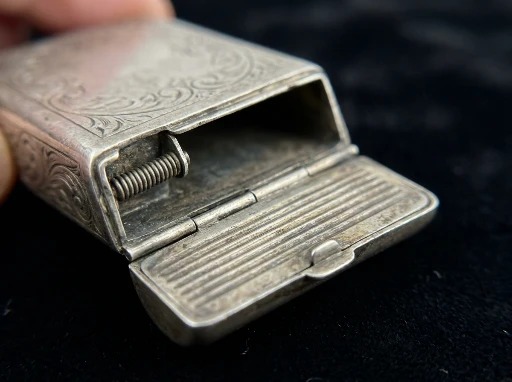
The design is simple and clever. The body is a small hinged box, usually rectangular, although oval, curved and shaped examples also turn up. The lid is spring-loaded so it snaps firmly shut, keeping the matches from spilling and, just as important, from being struck by accident in the pocket.
The base carries a ribbed or cross-hatched strip that gives the friction surface for striking a match. Many cases also have a small ring loop at one end, so the owner could attach the case to a watch chain and keep it in a waistcoat pocket. An intact ring loop matters when you assess condition.
The Main Types and Their Values
Not all vesta cases are equal in appeal or value. Knowing the main categories keeps expectations realistic.
Plain and engine-turned cases
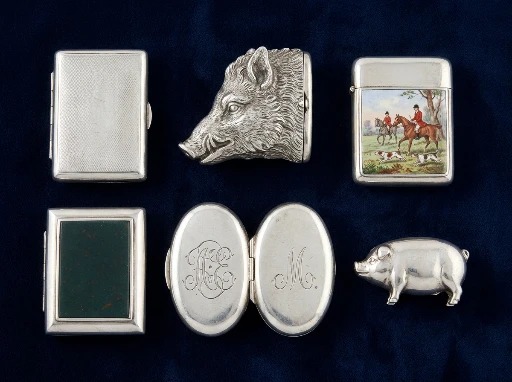
The most common type by far. Engine-turned decoration, the regular geometric patterning cut by a mechanical lathe, was applied to thousands of cases across the late Victorian and Edwardian years. They are handsome objects, but their sheer abundance means they are not rare. A plain sterling engine-turned case in average condition typically fetches between £30 and £120 at auction, depending on date, weight and maker. Do not expect much more for a standard example.
Engraved and initialled cases
Many cases were personalised with initials, crests or decorative engraving. Personal initials usually reduce desirability for collectors, unless the recipient was notable, while fine pictorial engraving of hunting scenes, sporting images or landscapes can add modest value. Quality of execution matters enormously here.
Enamelled scenic cases
Cases decorated with enamel, especially those showing pictorial scenes, landscapes or figures, sit in a different bracket of desirability. Good enamel work on a sterling body lifts both the appeal and the price. Condition is decisive, though: chipped, cracked or faded enamel slashes worth, and restoration is expensive. Treat any seller's claim of "exceptional" enamel with caution until you have examined the piece yourself.
Novelty and figural cases
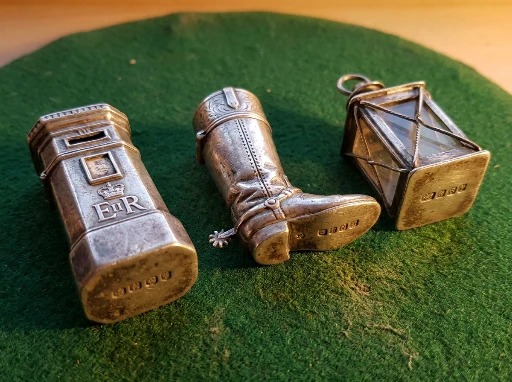
Figural and novelty cases, made in the shape of animals, boots, figures, horseshoes, skulls and other objects, are the most sought-after and command the highest prices. A well-made novelty case shaped as a fox, a pig or a jockey's boot, in fine original condition, can reach several hundred pounds with the right buyer. The catch is condition: dented bodies, damaged mechanisms or later repairs fall well short of those figures.
Some cases combined two functions, pairing the match compartment with a sovereign case, a card holder or a stamp compartment. These dual-purpose pieces tend to be more collectable than single-function examples.
| Type | Collector appeal | Typical value (good condition) |
|---|---|---|
| Plain / engine-turned | Low, very common | £30 to £120 |
| Engraved / initialled | Modest; pictorial engraving helps | Modest premium over plain |
| Enamelled scenic | Strong, condition-dependent | Well above plain examples |
| Novelty / figural | Highest | Often several hundred pounds |
Not sure what you have?
Send us a clear photo of the case and its marks. We value vesta cases regularly and will give you an honest figure at no charge.
Reading the Hallmarks
If you believe your case is silver, the first step is to check for British hallmarks. The great majority of sterling vesta cases were assayed at the Birmingham Assay Office, identified by the anchor mark. On a fully marked case you should expect to see:
- The lion passant, the sterling silver standard mark
- The Birmingham anchor, the assay office mark
- A date letter, giving the year of assay
- The maker's mark, the initials of the manufacturing silversmith
Birmingham date letters run from the 1860s through the whole period of vesta production, so it is usually possible to date a piece precisely. Our guide to how to read silver hallmarks explains the full system in detail.
Birmingham makers whose marks appear on vesta cases include Sampson Mordan & Co, George Unite, and Hilliard & Thomason. A respected maker's mark on a piece in fine condition can attract a modest premium, though attribution alone never guarantees high value.
Sterling or Silver Plate?
A large share of vesta cases on the market are silver-plated rather than sterling. Plated examples, often marked EPNS (electroplated nickel silver) or carrying no British hallmarks at all, are worth considerably less than their sterling counterparts. Some sellers, and even a few auction houses, list plated cases loosely as "silver", which can mislead buyers.
If a case carries no clear British hallmarks, treat it as plated until proven otherwise. The gap is real: a plated engine-turned case priced at £20 to £40 might be worth two or three times that in sterling, if it sells at all. Our guide to EPNS versus sterling silver explains how to tell them apart, and the silver price valuation guide sets out how a sterling figure is reached.
What Reduces Value
The antique silver market is unforgiving on condition. The following faults all cut the value of a vesta case:
- Dents or splits to the body, which are hard to repair without trace
- A broken or weak spring, when the lid should snap shut cleanly
- A damaged or missing ring loop, a particular problem on figural cases
- Worn or chipped enamel, since restoration is costly and rarely invisible
- Over-polishing that has softened the decoration or worn away the marks
- Splits or cracks at the hinge
Plain cases with any of these faults are rarely worth repairing, because the cost of professional silversmithing usually outweighs the gain. More decorative pieces may justify careful restoration, but always get an honest appraisal before you commit. The same hard-headed approach applies to larger silver, as we explain in our piece on antique silver claret jugs.
Are Vesta Cases a Good Buy?
Vesta cases keep a loyal collector following, and the novelty and figural end of the market stays healthy. The common engine-turned examples, though, are genuinely abundant: huge numbers were made and many survive in reasonable order. If you are hoping a standard case will fund a holiday, manage that expectation now. Most plain examples are modest.
The pieces that fetch real money are the exceptions: fine enamelled scenic cases in undamaged condition, exceptional novelty figural cases by known makers, and unusual dual-purpose examples in sterling silver. These are what collectors chase.
If you are building a collection, buy the best you can afford on quality and condition rather than piling up average pieces. In this corner of the market, condition is everything. When you are ready to part with pieces, a specialist gives a far more accurate figure than an online calculator: see how we work on the sell your silver page.
Frequently Asked Questions

Faustas has over ten years' experience in antique silver and jewellery, specialising in Georgian, Victorian and Regency pieces. He works with private clients and estates from the Mozeris showrooms in Mayfair and Braintree, Essex.
Have Vesta Cases to Value?
Send us a few photographs, including the hallmarks, and our specialists will give you an honest, no-obligation assessment. Free valuation, same-day payment, showrooms in Mayfair and Braintree.
Thinking of Selling Antique Silver?
Mozeris Fine Antiques are specialist buyers of antique and sterling silver. Send us photographs — including the hallmarks — for a free, no-obligation valuation. Payment on agreement.
📍 47 Maddox Street, Mayfair · Braintree, Essex · 📞 01376 334 482 · Strictly by appointment