Silver Gilt & Vermeil — Complete Guide
A specialist's guide to silver gilt — what "vermeil" actually means, how mercury gilding differs from electrogilding, how to tell true silver gilt from gold-plated brass, and what antique gilded silver is worth.
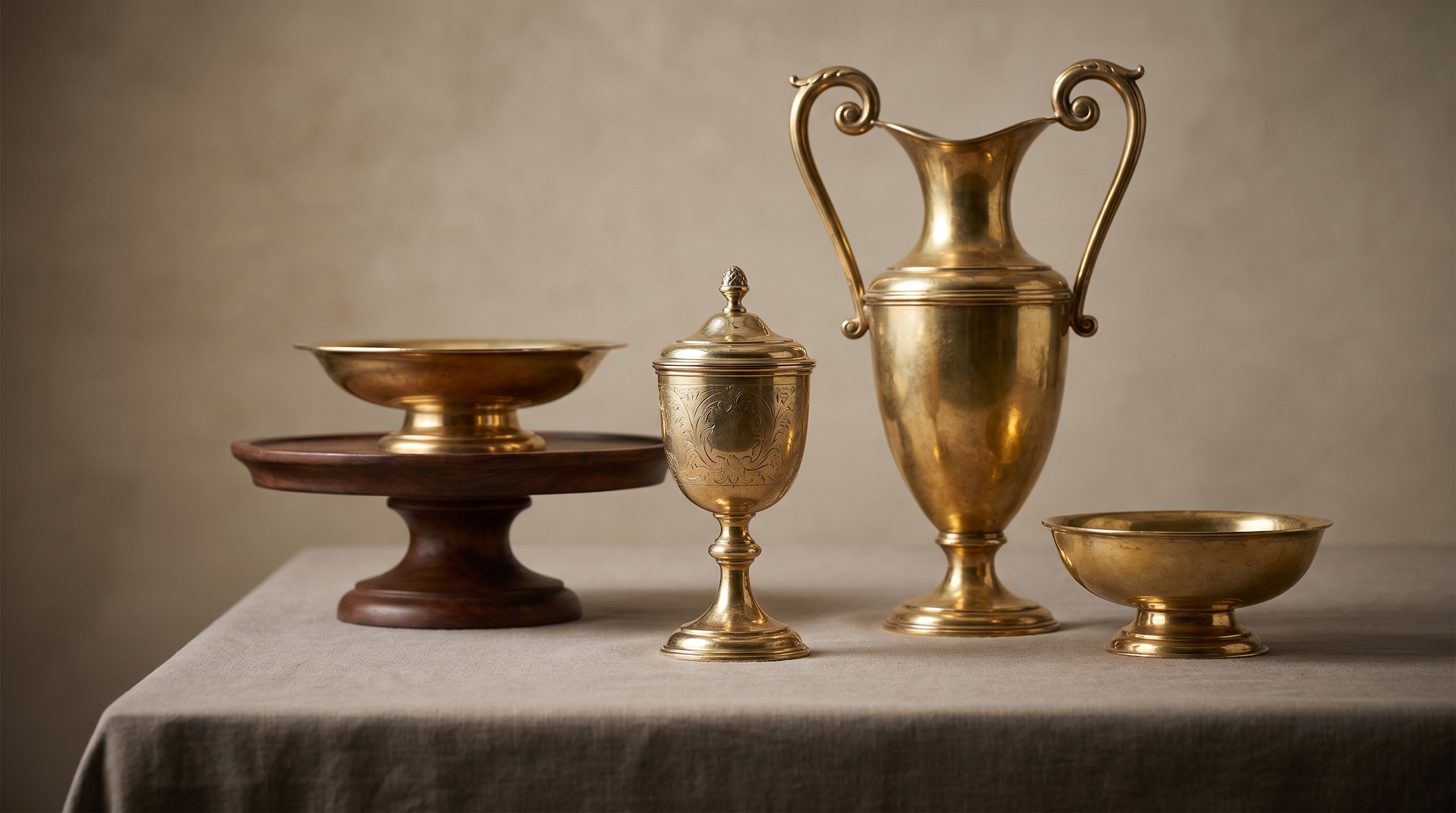 ✦ Silver gilt = fire-gilded sterling silver
Got Silver Gilt? We'll Identify and Value It Free
Send photos of the marks and the piece. We will confirm whether it is true silver gilt, electrogilded plate or gilded base metal — and quote a price. Reply within one working day.
Silver gilt — also called vermeil (French, pronounced "ver-may") — is sterling silver covered with a thin layer of gold. It is not gold-plated brass, and it is not solid gold. Genuine silver gilt is a fully hallmarked sterling silver object whose surface has been gilded by one of two historical processes. Identifying which process, judging the gilding's condition and matching that to the maker and period is what determines value.
This guide explains the two principal gilding methods, what "vermeil" technically means under hallmarking law, how to spot fakes (gilded base metal masquerading as vermeil), and what antique silver gilt is worth.
What Is Silver Gilt?
Silver gilt is sterling silver (.925) — fully hallmarked with the standard mark, town mark, date letter and maker's mark like any other piece of silver — onto which a layer of gold has been applied. The gilding can be just a few microns thick (modern electroplating) up to a substantial fire-gilt layer on important early pieces. Underneath, the metal is genuine sterling silver, with all the value that implies.
Vermeil is the French and US trade term for silver gilt. Under US Federal Trade Commission rules, "vermeil" requires sterling silver (.925 or better) covered with at least 2.5 microns of gold of at least 10 carat fineness. In British antique trade, "silver gilt" and "vermeil" are used interchangeably and pre-modern pieces almost always exceed the 2.5-micron minimum.
The Two Historical Gilding Processes
1. Fire Gilding (Mercury Gilding) — pre-1840
The traditional process. An amalgam of powdered gold and mercury was painted onto the cleaned silver surface. The piece was then heated in a furnace — the mercury vaporised (highly toxic; many gilders died young) and left a fused gold film bonded to the silver. The result is a particularly warm, mellow, slightly soft gold tone with characteristic micro-pitting under magnification.
Fire-gilded pieces are durable and the gold layer is substantial. This is the gilding on Georgian, Regency and most early Victorian silver gilt — Paul de Lamerie, Paul Storr, Garrard, Hennell.
2. Electrogilding — from c.1840 onward
Electroplating allowed gold to be deposited from solution via electric current. Invented commercially by Elkington & Co in Birmingham in 1840, it rapidly replaced mercury gilding (Britain banned mercury gilding c.1850 on health grounds). Electrogilding produces a thinner, more uniform layer that can be applied very precisely. Most late-Victorian, Edwardian and 20th-century silver gilt is electrogilded.
Both are genuine silver gilt. Fire gilding generally commands a small premium for its mellower colour and historical association, but well-preserved electrogilt on important pieces is no less valuable.
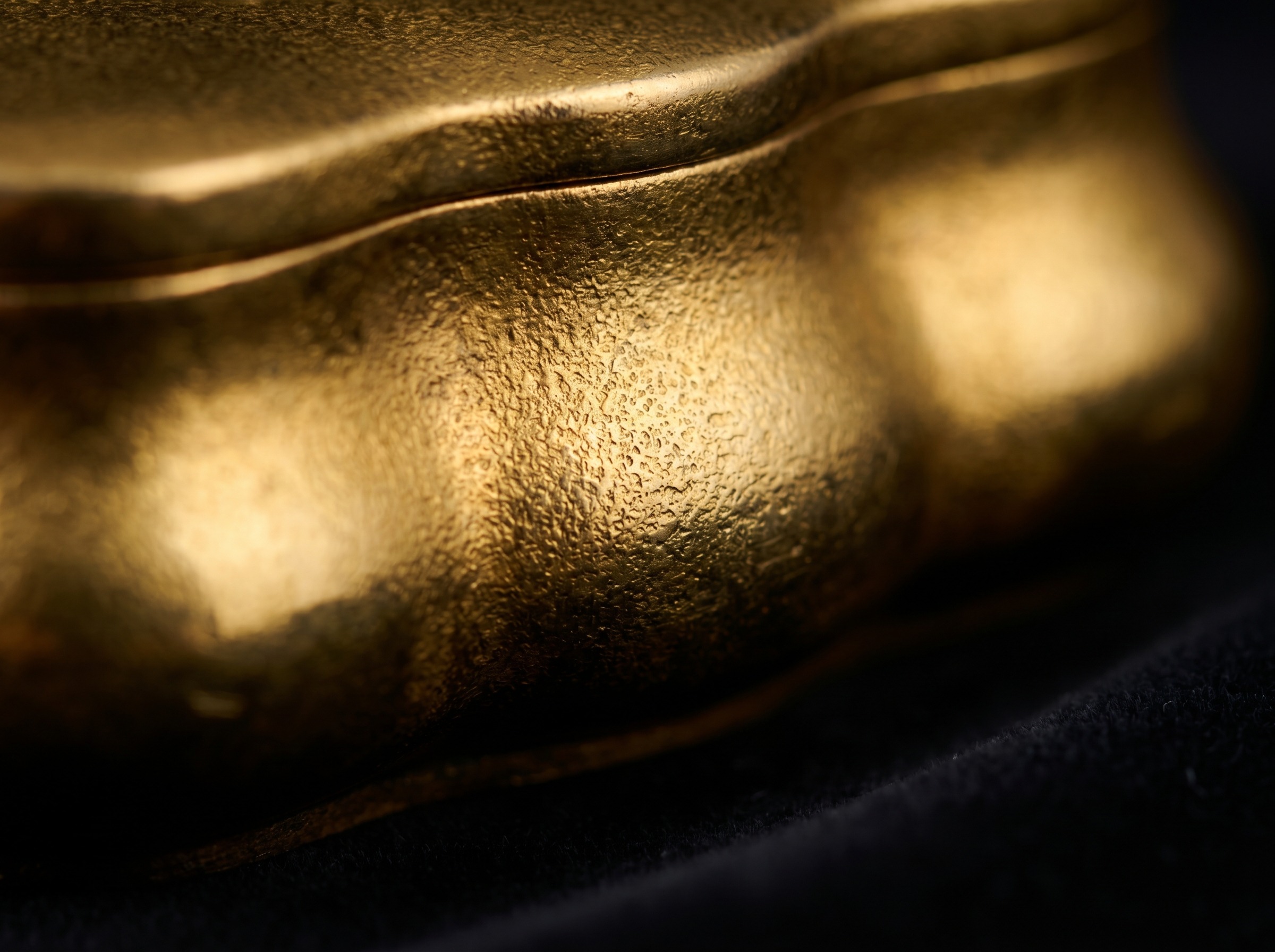
Fire-gilded silver — the characteristic warm mellow gold tone.
How to Tell Silver Gilt from Gold or Gold-Plated Brass
- Check the hallmarks first. Silver gilt always carries the full sterling hallmark — lion passant, town mark, date letter, maker's mark. If there is no silver hallmark, it is not silver gilt — most likely gilded brass or modern gold-plated base metal.
- Pure gold pieces are gold-hallmarked with a fineness number (375, 585, 750, 916, 999) and a crown. They never carry a lion passant.
- Worn areas are diagnostic. On silver gilt, where the gilding has rubbed (the high points — rim, foot edge, top of a handle) the bright white silver shows through. On gilded brass, the worn area exposes yellow brass. On gold over copper, copper red.
- Acid test — a small testing-acid touch on a worn high point reveals the base metal. Silver under gilt does not react to gold-testing acid. Brass under gilt turns green.
- Weight — silver-gilt feels heavy for its size because the body is silver (10.5 g/cm³). Brass is lighter.
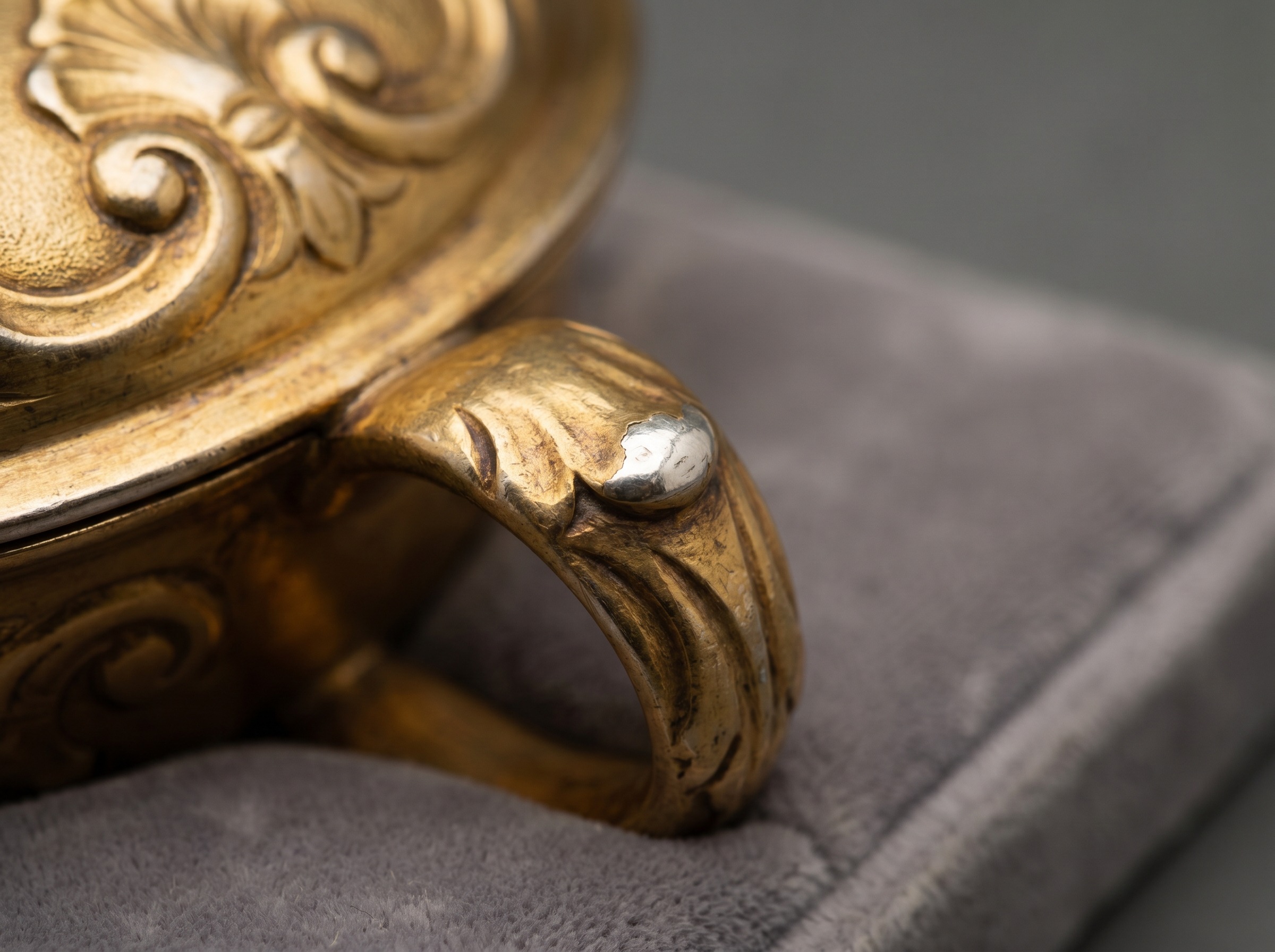
A worn point — gold gilt above, white sterling silver showing through where the gilding has rubbed.
What Silver Gilt Was Used For
Gilding was applied to silver for three reasons:
- Practical — gilt-lined interiors of salt cellars, mustard pots and condiment vessels prevent salt corroding the silver and discolouring the food. Almost all 18th and 19th-century salts are interior-gilt.
- Ecclesiastical — chalices and patens are gilt-lined for liturgical reasons (the consecrated wine and host must not touch base metal). Many are gilt overall.
- Presentation & display — major presentation cups, race trophies, civic plate, Royal commissions are gilt overall for visual impact.
Interior-only gilt (salts, mustard pots, sugar bowls, tea caddies, christening cups) is by far the most common form. "All-over" silver gilt is rarer and consequently more valuable.
What Silver Gilt Is Worth
A general rule: silver gilt is usually worth more than the equivalent ungilded silver because of the additional craftsmanship, gold content, and (often) the fact that gilt pieces tend to be presentation grade with named makers. Indicative values:
- Pair of small silver-gilt salts: £200–£500.
- Interior-gilt sugar bowl, Georgian: £300–£900.
- Silver-gilt christening cup: £400–£1,500.
- Silver-gilt chalice, Victorian ecclesiastical: £500–£2,500.
- Silver-gilt presentation cup, named maker: £1,500–£6,000.
- All-over silver-gilt covered ewer, Regency, Paul Storr / Garrard: £8,000–£40,000+.
- Royal commission silver gilt: £20,000–£100,000+.
Caring for Silver Gilt
The single most important rule: never use silver polish on silver gilt. Polish abrasives will wear the gilding straight off. Clean only with a soft cloth and warm soapy water. Dry immediately. If a piece needs serious cleaning, take it to a specialist. Damaged gilding can usually be replated, but it changes the piece's collector profile, so think before regilding.
Pitfalls and Fakes
- Modern gold-plated brass costume jewellery — sometimes labelled "vermeil" without sterling hallmarks. Always check for the silver mark.
- EPNS gilt (gilded electroplate) — silver-plated nickel that has then been gilded. No solid silver content.
- "Silver-gilt" with worn gilt revealing yellow base — that's gilded brass, not silver gilt.
- Regilded antiques — modern regilding restores appearance but reduces collector value. Look for unusually uniform, bright gilding on a piece that is otherwise heavily worn.
Got Silver Gilt to Sell? We Pay Full Premium
We buy all genuine silver-gilt and vermeil pieces — interior-gilt salts and condiment silver, ecclesiastical chalices, presentation cups, important Regency and Victorian silver gilt. Mayfair showroom by appointment or free insured nationwide courier. Same-day payment.
- Send photos via our online valuation form — include the hallmarks and any worn point clearly.
- We email an instant indicative price (usually within one working day).
- Visit our Mayfair showroom by appointment, or we book a free insured collection.
- Your silver gilt is independently verified at our office.
- You're paid by same-day bank transfer once you accept our offer.
All courier collections insured up to £25,000 per parcel. Higher-value pieces collected by specialist secure courier at no cost.
Related Reading
Frequently Asked Questions
What is the difference between silver gilt and vermeil?
None in practical terms — vermeil is the French / US term for silver gilt. Both mean sterling silver with a gold surface. US trade rules require at least 2.5 microns of gold for the term "vermeil".
Is silver gilt worth more than plain silver?
Usually, yes. The gilding adds craftsmanship and a small amount of gold; gilt pieces are typically presentation grade with named makers, which adds value. Important all-over gilt sells for multiples of the equivalent plain piece.
Can I polish silver gilt?
No. Silver polish wears the gilding off. Use a soft cloth and warm soapy water only. Take important pieces to a specialist.
My piece has worn gold showing yellow underneath — is it silver gilt?
No — that's gilded brass. Silver gilt shows white silver underneath worn gold, not yellow.
Is "vermeil" jewellery the same as antique silver gilt?
Technically yes, but modern vermeil jewellery is usually electrogilded at the minimum 2.5 micron thickness, while antique fire-gilt silver carries a much heavier gold layer.
Will you tell me what my silver gilt is worth?
Yes — free, no obligation. Email info@mozerisfineantiques.com with photos of the marks and the piece.
⚠️ Strictly by appointment only — no walk-ins at either location.
Antique Silver We Specialise In
Click any category for our specialist buying guide — then send photos for a free valuation. We also have a full Sell Your Silver overview.