UK Hallmark Authority · Tree, Fish & Bell
The Glasgow Assay Office: Complete Guide
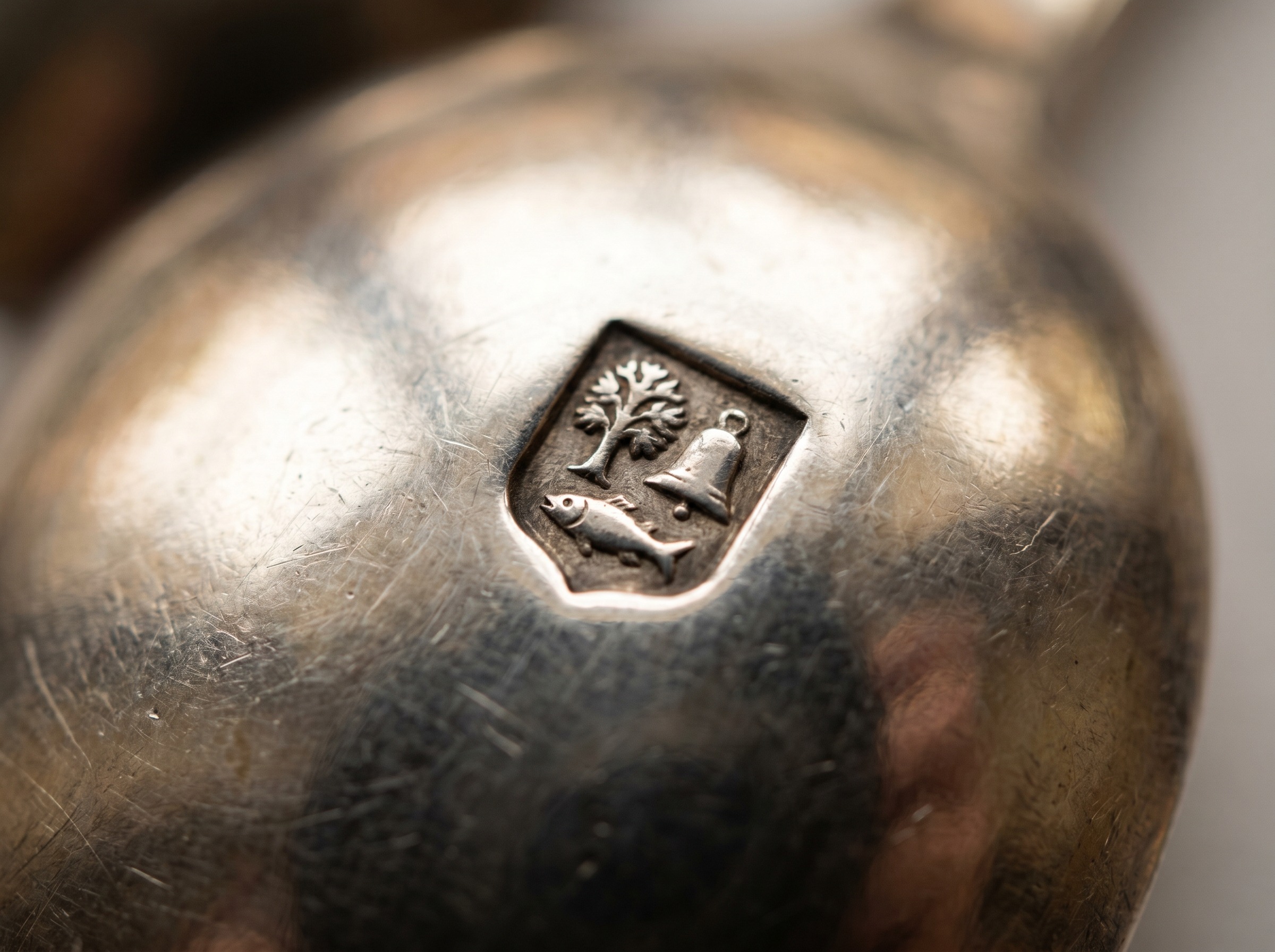
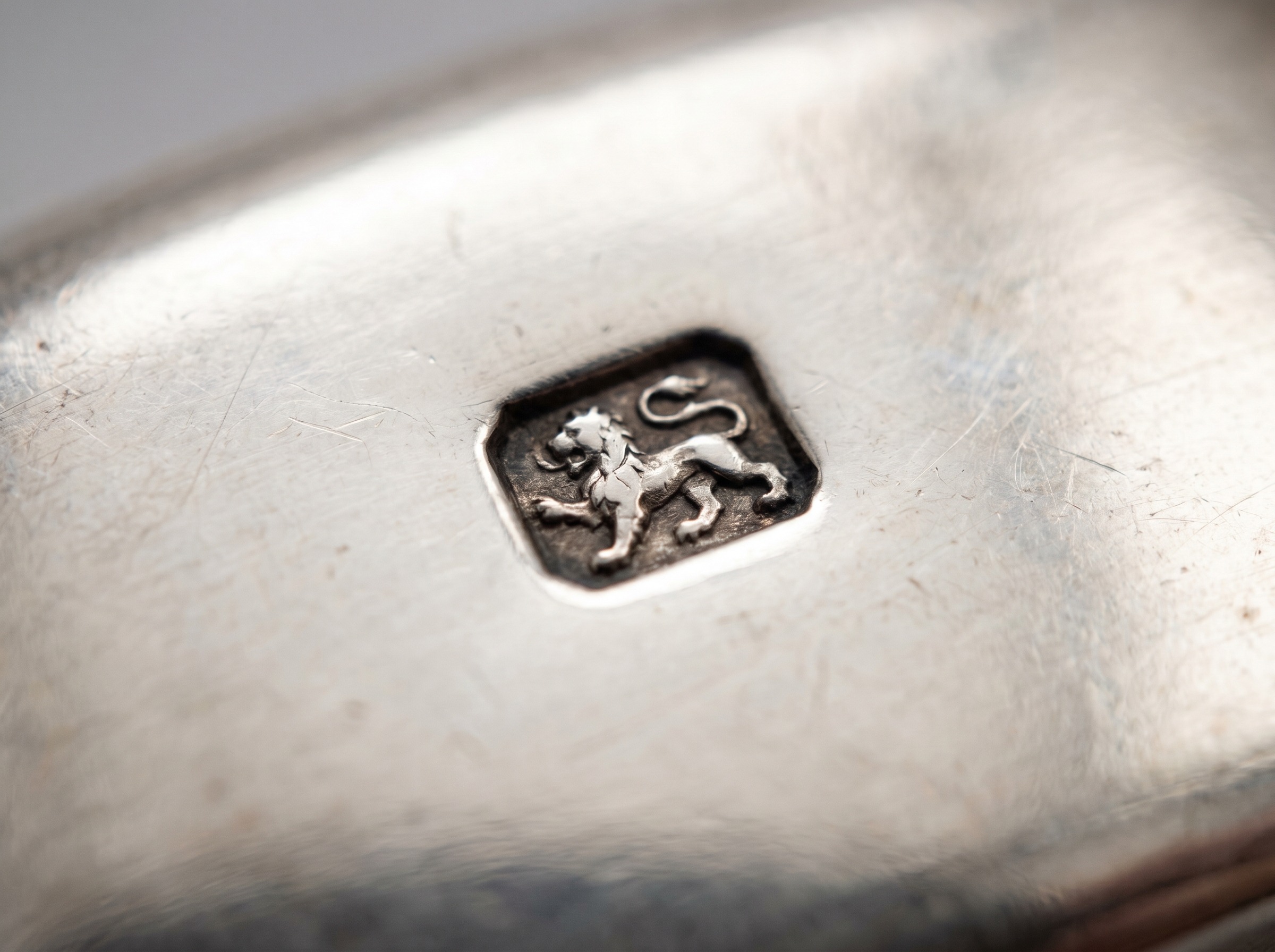
The Glasgow Assay Office marked silver from 1819 until it closed in 1964. Its town mark is a tree with a fish and a bell, and its sterling mark is a lion rampant, with a thistle added from 1914 to 1964. A full Glasgow hallmark also shows a maker's mark and a date letter.
Reviewed by Faustas Svencionis, Mozeris Fine Antiques, since 2015 · Updated October 2026
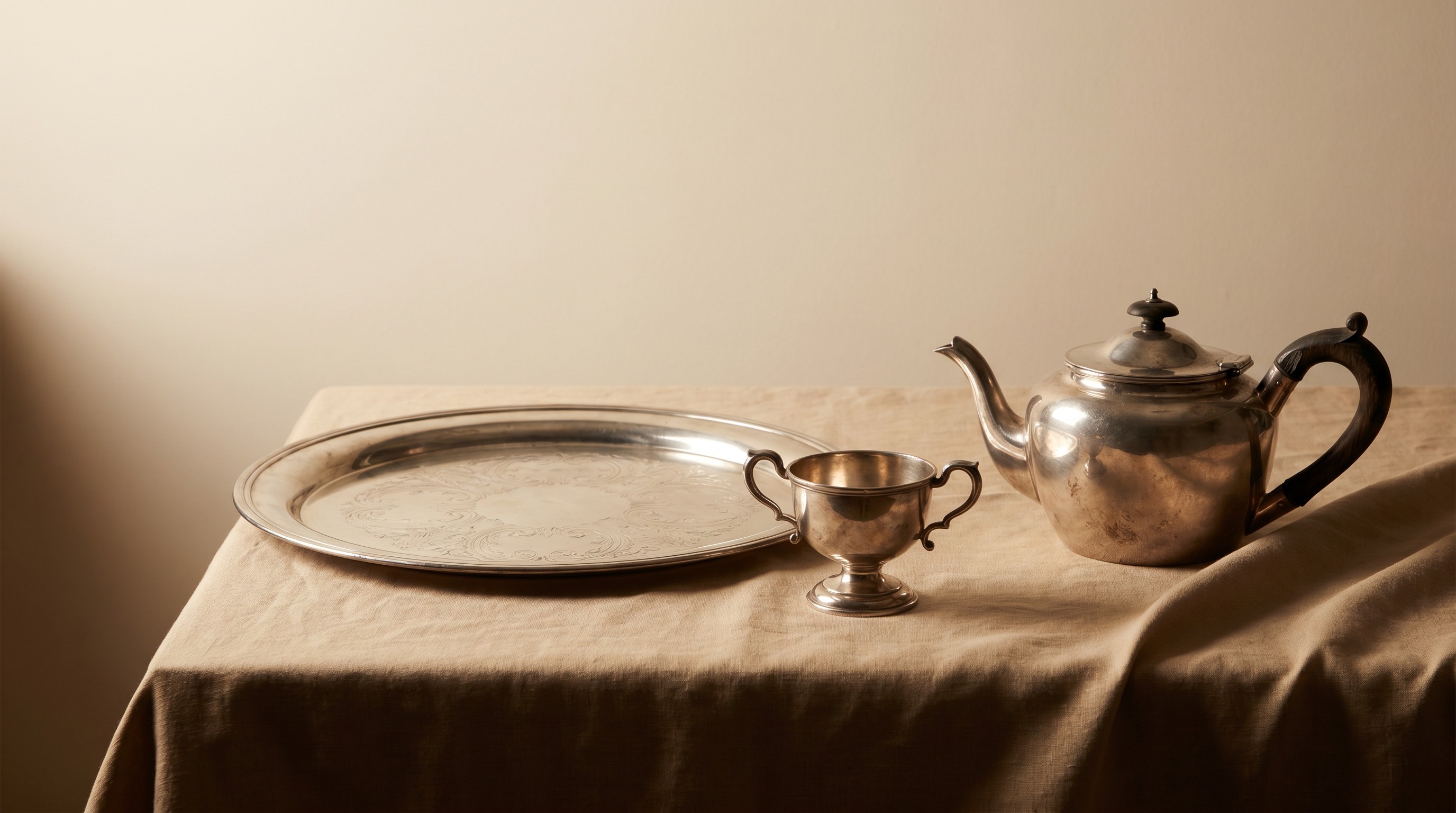
A specialist's guide to the closed Glasgow Assay Office, the tree, fish and bell town mark, the lion rampant standard, its 1964 closure, why collectors seek it and reading a full Glasgow hallmark.
Got Glasgow-Marked Silver? We'll Identify and Value It Free
Glasgow silver is a closed Scottish set: finite supply, active collector market. Send photos and we'll identify the date, maker and value, with no obligation.
The Glasgow Assay Office was Scotland's western hallmarking authority for over two centuries. Its closure in 1964: only two years after Chester's: closed the final chapter on regional UK assay outside the four offices still active today (London, Birmingham, Sheffield and Edinburgh). Glasgow's town mark is one of the most charming in British hallmarking: a tree with a fish and a bell, taken directly from Glasgow's city arms and the legend of St Mungo. Combined with the Scottish lion rampant standard mark, a Glasgow hallmark is unmistakable once you know what you are looking at.
A Brief History
The Glasgow Assay Office served the west of Scotland from 1819 until it closed in 1964.
Glasgow's silversmiths had been working under their own assay arrangements since the 17th century, but the formal Glasgow Assay Office was constituted by the Hallmarking Act of 1819. From that date Glasgow silver carries a dated, sequenced hallmark in the standard four-mark format. The office had a relatively short formal life, less than 145 years, but in that window it served the silversmiths of Glasgow, the west of Scotland, Ayrshire, Argyll and the western Highlands.
Glasgow was a major industrial centre, and the assay office handled large volumes of presentation silver, civic plate, shipping line commissions and ecclesiastical work for Scottish churches. By the mid-20th century, however, the volume had collapsed. Glasgow makers increasingly sent work to Edinburgh or Birmingham, and the Glasgow Assay Office struck its last hallmark in 1964 before closing permanently.
How to Read a Full Glasgow Hallmark
Read a Glasgow hallmark as the maker's mark, the tree, fish and bell, the lion rampant, the date letter and, before 1890, the duty mark.
| Mark | What it tells you |
|---|---|
| Maker's mark | The silversmith's registered initials. |
| Tree, fish and bell | The Glasgow town mark, 1819 to 1964. |
| Lion rampant | The Scottish sterling mark (a thistle was added 1914 to 1964). |
| Date letter | The year of assay. |
| Duty mark | A sovereign's head, 1819 to 1890. |
The Glasgow sequence follows the standard British four-mark system, with the Scottish standard mark in place of England's lion passant. From left to right:
- Maker's mark: the silversmith's registered initials.
- Town mark: a tree with a fish across its trunk and a bell hanging from a branch, in a shaped shield. Used from 1819 to 1964.
- Standard mark: a lion rampant (sterling, .925): the Scottish equivalent of the English lion passant.
- Date letter: a single letter in a shaped shield, marking the year of assay.
- Duty mark (1819 to 1890): a sovereign's head.
- Thistle mark: Glasgow added a thistle from 1914 to 1964, alongside the lion rampant, to confirm the sterling standard.
"Closed in 1964. Scottish silver, from a closed office. Glasgow silver is a finite collector set."
The Tree, Fish and Bell: Glasgow's Town Mark
The tree with a fish across its trunk and a bell on a branch, from the city's arms, is the Glasgow town mark.
The mark is heraldic shorthand for four medieval Glasgow miracles attributed to St Mungo (St Kentigern), the city's patron saint. The full mnemonic, still taught in Glasgow schools, runs:
"Here is the bird that never flew, here is the tree that never grew, here is the bell that never rang, here is the fish that never swam."
The bird (often a robin) is omitted from the smaller hallmark version, but the tree, fish and bell are all present, packed into a single shaped shield. The shield outline varies through the decades: useful for narrowing the period when the date letter is worn.
The Lion Rampant: Scotland's Sterling Mark
The lion rampant is the Scottish sterling mark on Glasgow silver, joined by a thistle from 1914 to 1964.
Unlike England (lion passant: walking, looking sideways), Scotland uses the lion rampant: standing on its hind legs, facing left, taken from the Royal Standard of Scotland. The lion rampant is the sterling standard mark for both Glasgow and Edinburgh on silver since 1975, but Glasgow used the lion rampant as its sterling mark throughout its formal life from 1819. From 1914 the thistle was added as an additional standard mark on Glasgow pieces, alongside the lion rampant.
Date Letters
Glasgow date letters change each year, with the last letters used in 1962 to 1964.
Glasgow used the standard cyclical date letter system from 1819. Each cycle ran approximately 25 letters, with the shield shape and font changing at the start of the next cycle. Final cycle: 1949 to 1964 used letters A through P before closure. A Glasgow hallmark dated 1962, 1963 or 1964 (letters N, O, P) represents some of the very last Scottish western silver: increasingly sought-after.
Why the 1964 Closure Matters
Because Glasgow closed in 1964, Glasgow-marked silver is a finite set, which is why collectors seek it.
Like Chester (closed 1962), Glasgow is a closed Scottish set. No new Glasgow-hallmarked silver will ever exist. For collectors of Scottish silver this matters twice over: Scottish silver already has its own long-standing collector following, and Glasgow pieces add the scarcity of a closed office. Late Victorian and Edwardian Glasgow silver, particularly Arts & Crafts work, is now actively chased at auction.
Notable Glasgow Silversmiths
- Robert Gray & Son: leading early Glasgow firm, fine Regency and William IV silver.
- Edward & Sons: long-running Glasgow retailer/maker.
- James Reid & Co: late 19th and early 20th century, prolific.
- Mitchell & Russell, Hamilton & Inches (Edinburgh, but with Glasgow trade), Brook & Son.
- Margaret Gilmour and the Glasgow School of Art metalworkers: Arts & Crafts pieces with Glasgow marks are particularly collectable.
- James Anderson, Wm Crouch & Sons, R & W Sorley: Edwardian Glasgow makers.
What Glasgow Silver Looks Like
Glasgow assayed the full range of silver categories, but is particularly associated with:
- Presentation and civic plate: Glasgow's shipping, banking and industrial wealth generated enormous quantities of inscribed presentation silver.
- Ecclesiastical silver: communion sets and church plate for Scottish western churches.
- Glasgow School Arts & Crafts: distinctive, design-led pieces from the 1890s to 1910s, often featuring stylised foliage and Celtic motifs.
- Tea and coffee silver: Glasgow's Victorian middle class was a major market for tea services, hot water jugs, sugar bowls and cream jugs.
- Trophy and golfing silver: Scottish golf clubs commissioned heavily from Glasgow silversmiths.
Pitfalls
- Misreading worn marks: the tree, fish and bell can look confused on heavily polished or worn silver. The bell shape is usually the most legible.
- Confusing Glasgow with provincial Scottish marks: Aberdeen, Inverness, Perth and other Scottish provincial silversmiths used their own town marks but often had pieces sent to Glasgow for assay. The town mark tells you the office, not the maker's location.
- 1819 cut-off: silver that looks Glasgow-style but lacks the tree, fish and bell mark is either pre-1819 (sent elsewhere for assay) or unmarked. Pre-1819 Glasgow attributions need specialist research.
- Arts & Crafts forgeries: Glasgow School pieces are valuable enough that hand-stamped fakes occasionally surface. The hallmark depth and date letter cycle should be carefully checked.
What We Look For When Glasgow-Marked Silver Arrives
When Glasgow-marked silver arrives we read the tree, fish and bell, the lion rampant and the date letter, and check for a thistle on pieces from 1914 to 1964.
Then we look at the maker and the style, including Glasgow School Arts and Crafts work, and at condition.
Got Glasgow-Hallmarked Silver to Sell?
Active buyer of Glasgow-marked silver: presentation pieces, Arts & Crafts silver, ecclesiastical plate, golfing trophies, Victorian and Edwardian tableware. By appointment in Mayfair or by free FedEx collection. Same-day payment.
- Send photosUse the form on this page, or email them to us.
- A specialist reviews itMaker, marks, age and condition.
- Free estimate by emailWithin one working day.
- You decidePaid once agreed. No obligation.
Four ways to sell: Mayfair (by appointment), Braintree (by appointment), Royal Mail Special Delivery, free FedEx collection.
Free valuation
Request a free valuation
Send us a few photos of your Glasgow silver. A specialist looks at every request personally and replies by email with an estimate within one working day. There is no obligation to sell.
What to photograph
- The whole piece. The whole piece, from the front and the side.
- The underside. The base or reverse, where the marks usually are.
- The hallmarks, close up. Every mark in the group, in focus, including the maker's mark.
Prefer email? Send photos to info@mozerisfineantiques.com or call 01376 334 482.
Ways to sell
- Mayfair (by appointment)
- Braintree (by appointment)
- Royal Mail Special Delivery
- Free FedEx collection
We buy directly, with payment once you accept our offer, and we can also sell for you by consignment or in our own auctions.
Related Reading
Frequently Asked Questions
What is the Glasgow Assay Office hallmark?
When did the Glasgow Assay Office close?
What is the lion rampant mark?
Is Glasgow silver worth more than English silver?
How do I tell Glasgow from Edinburgh marks?
Will you tell me what my Glasgow silver is worth?
Selling Glasgow-Hallmarked Silver?
Active buyer of Glasgow silver. Mayfair showroom by appointment or free FedEx collection. Same-day payment.
Strictly by appointment only: no walk-ins at either location.
Items we buy
Antique Silver We Specialise In
Click any category for our specialist buying guide, then send photos for a free valuation. We also have a full Sell Your Silver overview.