UK Hallmark Authority · The Three-Towered Castle
The Edinburgh Assay Office: Complete Guide
The Edinburgh Assay Office marks Scottish silver with a three-towered castle. A full Edinburgh hallmark shows the maker's mark, the castle, the thistle for sterling from 1759 to 1975, or a lion rampant from 1975, and a date letter; earlier pieces carry an assay master's mark.
Reviewed by Faustas Svencionis, Mozeris Fine Antiques, since 2015 · Updated October 2026
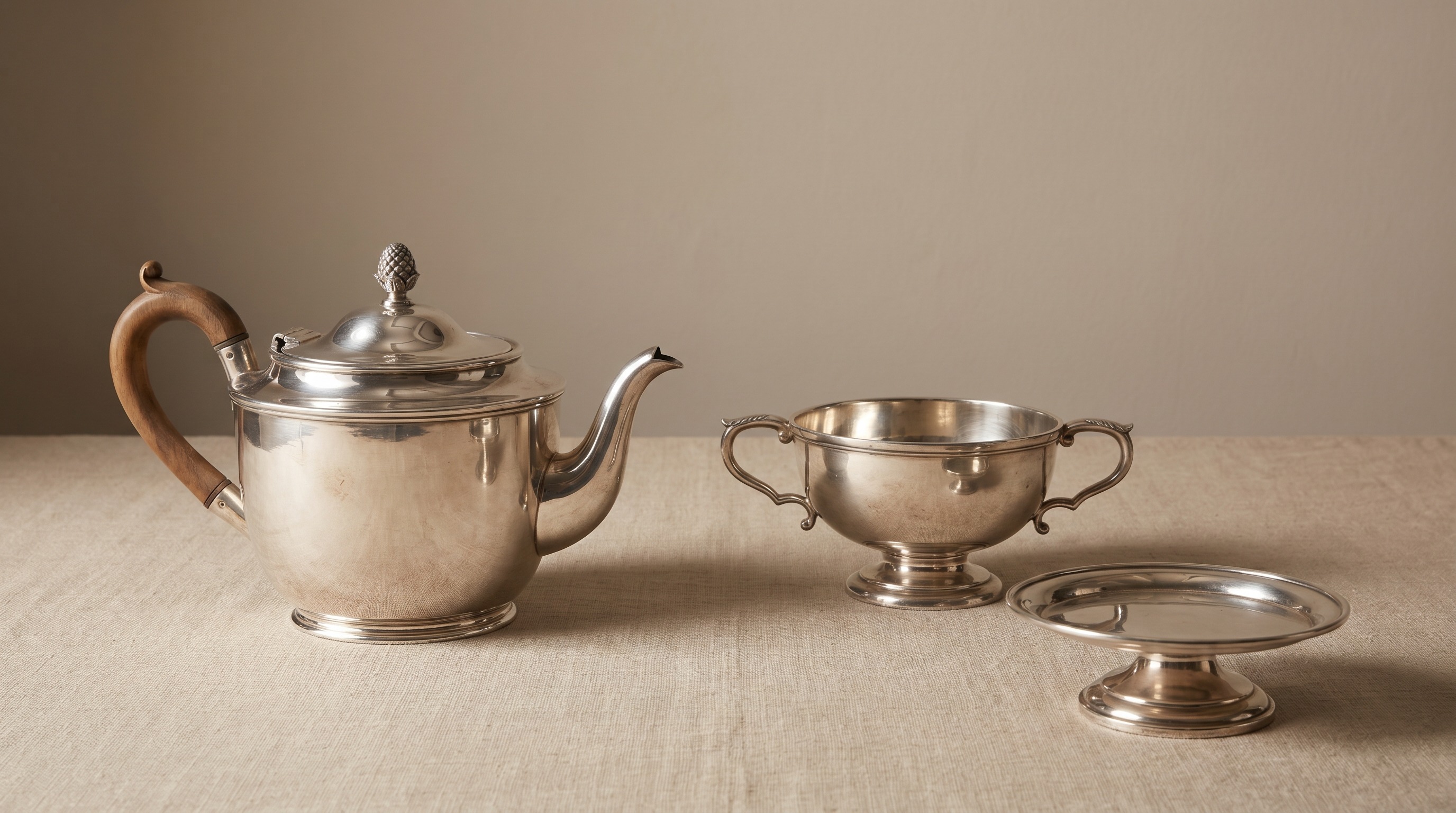
A specialist's guide to Scotland's oldest assay office: the three-towered castle town mark, the thistle and lion rampant standard marks, deacon's marks, Scottish provincial silver and reading a full Edinburgh hallmark.
Got Edinburgh-Marked Silver? We'll Identify and Value It Free
Scottish silver is its own world: different marks, different makers, often valued differently from English silver of the same date. Send photos and we'll identify it.
The Edinburgh Assay Office is Scotland's senior assay office, with a hallmarking tradition dating to the 15th century. Its three-towered castle town mark (taken from Edinburgh's city arms) is one of the most recognisable hallmarks in British silver. Scottish silver runs to its own rules: different standard marks, an extra "deacon's mark" or "assay master's mark" in earlier centuries, and a distinct Scottish design vocabulary, quaichs, snuff mulls, thistle finials. Reading an Edinburgh hallmark correctly is essential to identifying and valuing Scottish silver.
A Brief History
The Edinburgh Assay Office is Scotland's oldest and, since Glasgow closed in 1964, its only assay office.
The Incorporation of Goldsmiths of the City of Edinburgh received its founding seal in 1457. From 1483, silver assayed in Edinburgh was struck with a three-towered castle and the maker's mark. From 1485, the maker's mark was joined by the deacon's mark (the elected head of the Incorporation guaranteeing the assay).
From the late 17th century the deacon's mark was replaced by an assay master's mark (also a personal punch, but for the official who actually assayed the piece). Date letters were added in 1681.
The 1973 Hallmarking Act unified UK assay procedure, replacing the historic Scottish system with the standard four-mark sequence used elsewhere. The Edinburgh Assay Office remains active today on Broughton Street.
How to Read a Full Edinburgh Hallmark
Read an Edinburgh hallmark as the maker's mark, the castle, the thistle or lion rampant, and the date letter.
| Mark | What it tells you |
|---|---|
| Maker's mark | The silversmith's initials or device. |
| Castle | The three-towered castle: Edinburgh. |
| Thistle | Sterling, 1759 to 1975; a lion rampant from 1975. |
| Date letter | The year of assay, from 1681. |
| Duty mark | A sovereign's head, 1784 to 1890. |
The Edinburgh sequence is slightly different from England's. From left to right:
- Maker's mark: the silversmith's initials or device.
- Town mark: a three-towered castle, confirming Edinburgh assay.
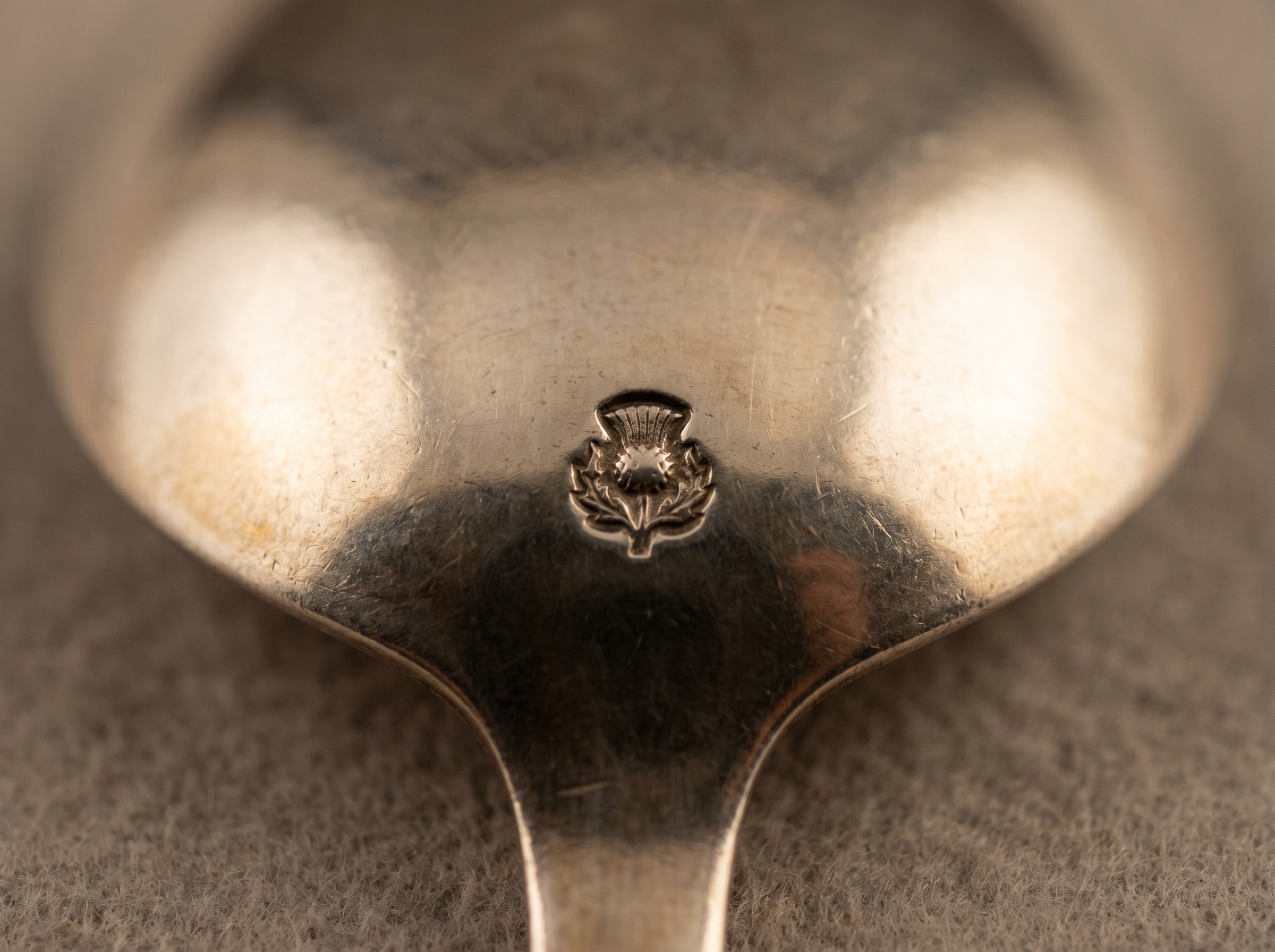
- Standard mark: a thistle (sterling, .925) from 1759 to 1975, or a lion rampant (sterling) from 1975 onward.
- Date letter: added from 1681.
- Assay master's mark (1681 to 1759, before the thistle replaced it): a personal punch of the official assay master.
- Duty mark (1784 to 1890): a sovereign's head.
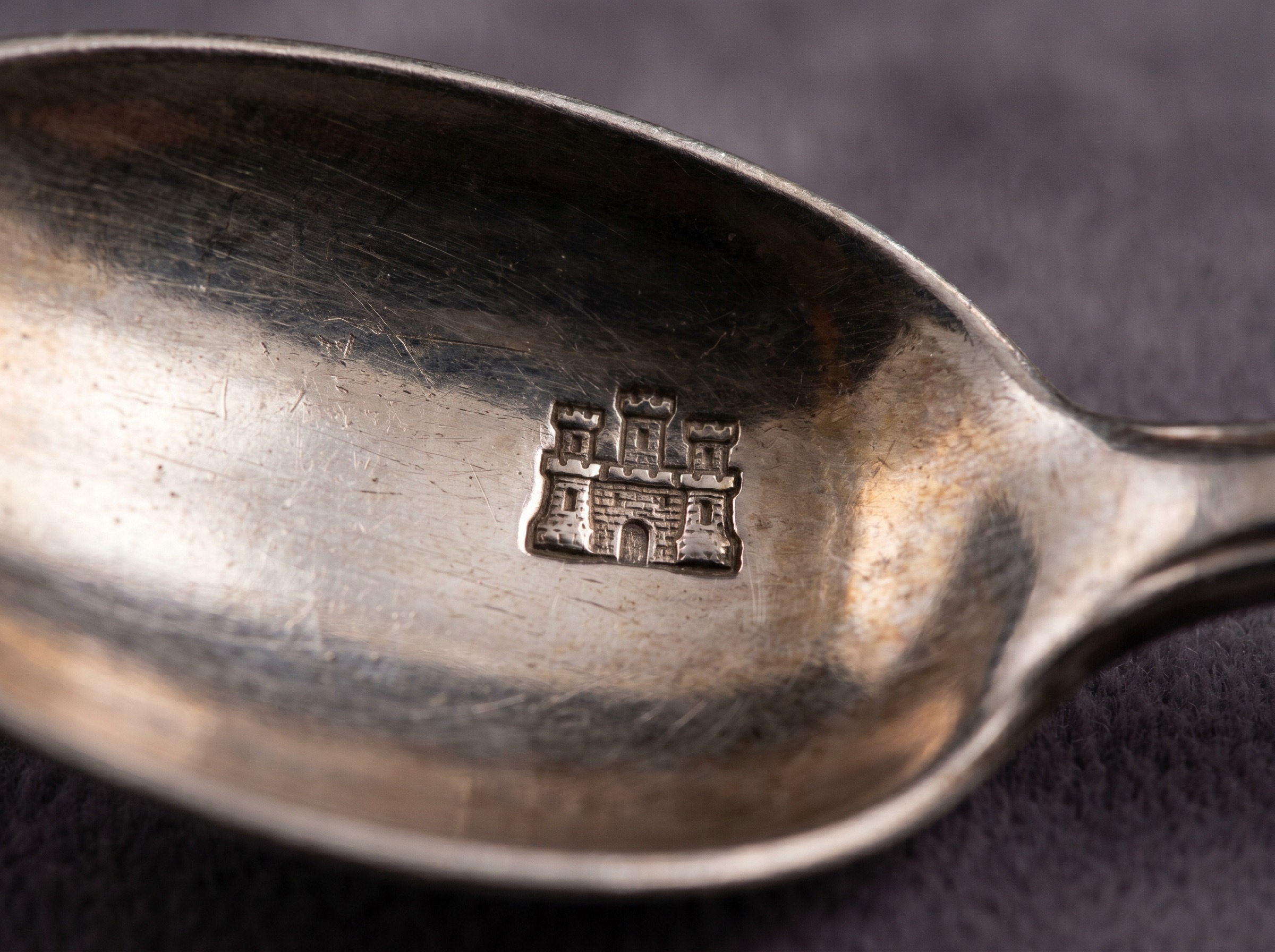
"Castle for Edinburgh, thistle for sterling, lion rampant from 1975. Three marks tell you Scotland."
The Castle, the Thistle and the Lion Rampant
The castle marks Edinburgh assay, the thistle marked sterling from 1759 to 1975 and the lion rampant has done so since 1975.
Three Scottish marks to know:
- Three-towered castle: the constant. Edinburgh town mark from 1483 to today.
- Thistle: sterling standard mark from 1759 until 1974. The single most recognisable Scottish standard mark.
- Lion rampant: sterling standard mark from 1975 onward, replacing the thistle as part of UK unification (the thistle moved to indicate fineness elsewhere on jewellery).
Before 1759: The "Deacon's Mark" and "Assay Master's Mark"
Edinburgh silver before 1759 does not carry a thistle. Instead, the standard was guaranteed by a personal punch:
- 1485-c.1681: the deacon's mark: the elected head of the Incorporation. Marks change as the deacon changes (so dating relies on knowing which deacon was in office).
- 1681 to 1759: the assay master's mark: the official assayer's personal punch. Again dated by knowing which assay master was in post.
For 17th and early 18th century Edinburgh silver, an attribution involves identifying both the maker's mark and the deacon's/assay master's mark: specialist territory. Pieces from this period are valuable and we are happy to identify them.
Date Letters
Edinburgh date letters run from 1681, each cycle with its own letter style and shield.
Edinburgh has used date letters since 1681: earlier than Sheffield and Birmingham. Each cycle is 25 letters (J skipped) with the shield shape and font changing at the start of the next cycle. Combined with the standard mark (deacon's mark, assay master's mark, thistle, lion rampant) the date letter pins the year of assay precisely.
Edinburgh's Speciality: Distinctly Scottish Silver
Edinburgh marks distinctly Scottish forms such as quaichs, snuff mulls and thistle-pattern flatware.
Edinburgh assayed all categories of Scottish silver (domestic tea services, salvers, candlesticks, presentation cups, ecclesiastical pieces) but the marks particularly belong to a few recognisably Scottish forms:
- Quaichs: shallow two-handled drinking bowls. Distinctly Scottish; no English equivalent. Edinburgh-marked quaichs are highly collectable.
- Snuff mulls: Scottish snuff boxes, often made from a ram's horn mounted in silver.
- Thistle-pattern flatware: late Victorian and Edwardian table silver.
- Communion plate: Edinburgh was a major supplier of Scottish ecclesiastical silver.
- Sgian-dubh and dirk handles: silver-mounted Highland dress items.
Notable Edinburgh Silversmiths
- Hugh Gordon (active 1727 to 1761): leading mid-Georgian Edinburgh silversmith.
- James Ker (1723 to 1747): fine Georgian.
- James McKay / Mackay dynasty: long-running Edinburgh family workshop.
- Hamilton & Inches: established 1866, still trading on Edinburgh's George Street, Royal Warrant holders.
- Brook & Son: late Victorian / Edwardian.
Scottish Provincial Silver: Linked to Edinburgh
Many Scottish provincial silversmiths (Aberdeen, Inverness, Perth, Dundee, Banff) sent work to Edinburgh for assay when they had no local assay office, or struck their own provincial marks. We cover the provincial offices in separate guides, but a piece carrying the Edinburgh castle plus a Scottish provincial maker's punch is often more valuable than the same piece would be from Edinburgh itself.
Pitfalls
The common Edinburgh pitfalls are the castle confused with Newcastle's three castles, misread date letters and provincial Scottish marks.
- "Scottish style" silver without Edinburgh marks: a thistle finial does not make a piece Scottish. Always check the actual hallmark row.
- Worn deacon's mark on early pieces: frequent, and key to dating. Specialist identification needed.
- Misreading the castle as Newcastle: Newcastle used three separate castles in a row; Edinburgh uses one three-towered castle in a single shield. Don't confuse them.
What We Look For When Edinburgh-Marked Silver Arrives
When Edinburgh-marked silver arrives we read the castle, the standard mark and the date letter, and on earlier pieces the assay master's mark.
Then we look at the form, whether a distinctly Scottish piece such as a quaich, and at condition.
Got Edinburgh-Hallmarked Silver to Sell?
Active buyer of Scottish silver: Edinburgh-marked tea services, quaichs, snuff mulls, presentation cups, communion plate and all provincial Scottish pieces. By appointment in Mayfair or by free FedEx collection. Same-day payment.
- Send photosUse the form on this page, or email them to us.
- A specialist reviews itMaker, marks, age and condition.
- Free estimate by emailWithin one working day.
- You decidePaid once agreed. No obligation.
Four ways to sell: Mayfair (by appointment), Braintree (by appointment), Royal Mail Special Delivery, free FedEx collection.
Free valuation
Request a free valuation
Send us a few photos of your Scottish silver. A specialist looks at every request personally and replies by email with an estimate within one working day. There is no obligation to sell.
What to photograph
- The whole piece. The whole piece, from the front and the side.
- The underside. The base or reverse, where the marks usually are.
- The hallmarks, close up. Every mark in the group, in focus, including the maker's mark.
Prefer email? Send photos to info@mozerisfineantiques.com or call 01376 334 482.
Ways to sell
- Mayfair (by appointment)
- Braintree (by appointment)
- Royal Mail Special Delivery
- Free FedEx collection
We buy directly, with payment once you accept our offer, and we can also sell for you by consignment or in our own auctions.
Related Reading
Frequently Asked Questions
What is the Edinburgh Assay Office hallmark?
What does the thistle mean?
What is a deacon's mark?
Is Scottish silver worth more than English silver?
How do I tell Edinburgh from Newcastle?
Will you tell me what my Edinburgh silver is worth?
Selling Edinburgh-Hallmarked Silver?
Active buyer of Scottish silver. Mayfair showroom by appointment or free FedEx collection. Same-day payment.
Strictly by appointment only: no walk-ins at either location.
Items we buy
Antique Silver We Specialise In
Click any category for our specialist buying guide, then send photos for a free valuation. We also have a full Sell Your Silver overview.