Famous Silversmiths · Founder of Garrard · London 1698 to 1761
George Wickes: Complete Guide to the Silversmith
George Wickes (1698 to 1761) was a London silversmith and Goldsmith to Frederick, Prince of Wales, whose Panton Street business became Garrard. Wickes silver carries his GW mark with a London hallmark, and documented royal provenance from the Prince of Wales commissions matters most.
Reviewed by Faustas Svencionis, Mozeris Fine Antiques, since 2015 · Updated October 2026
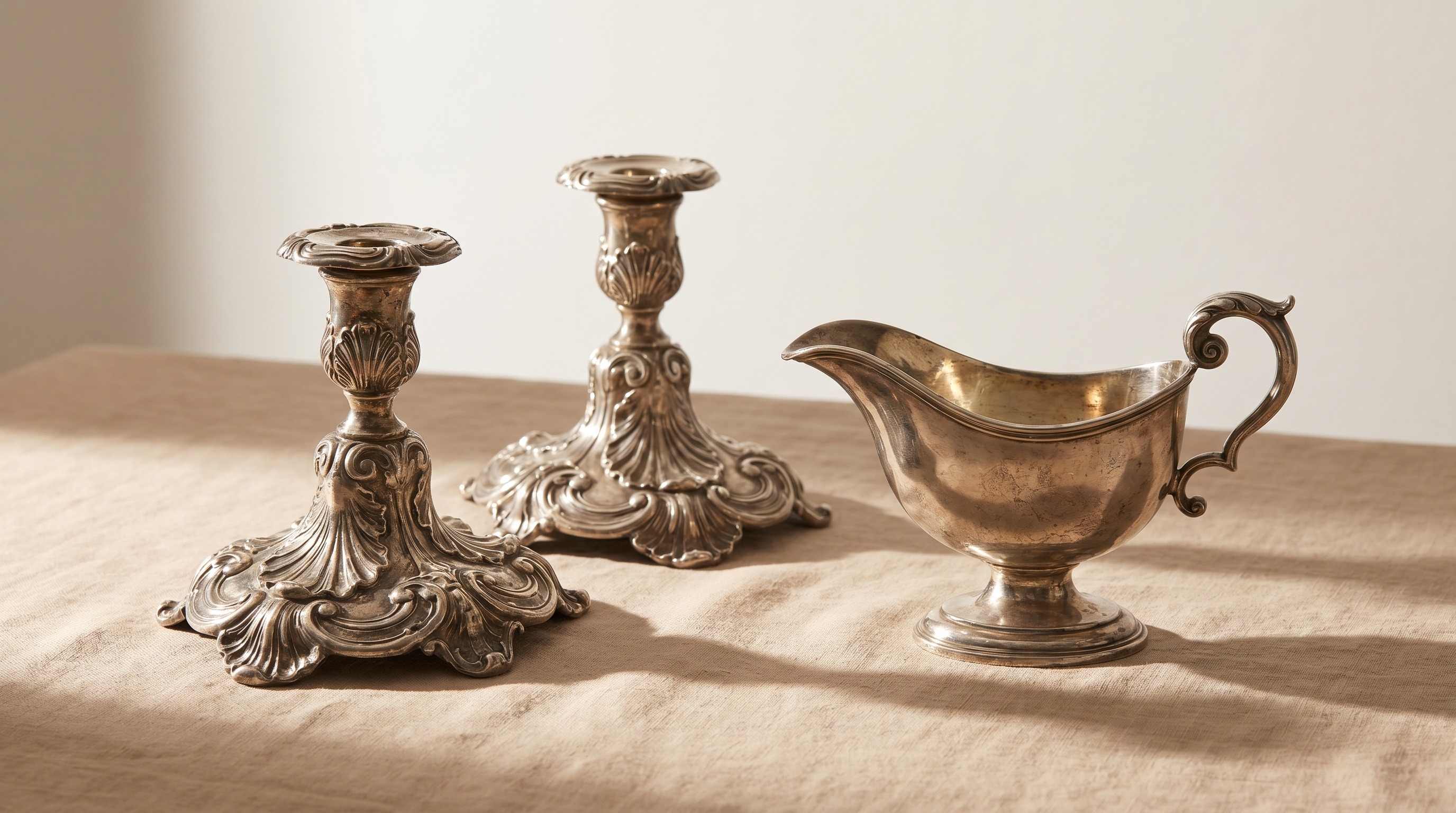
A specialist's guide to George Wickes: Goldsmith to Frederick Prince of Wales, the founding figure of the dynasty that became Garrard & Co, and one of the great early Rococo silversmiths working in London in the first half of the 18th century.
Think You Have George Wickes Silver? We'll Tell You: Free
Wickes silver is rare and seriously valuable: royal appointment, documented client list, foundational name in British silversmithing. Send photos and we'll give a professional opinion with no obligation.
George Wickes (1698 to 1761) is the founding figure of what became Garrard & Co, the Crown Jewellers: making him the patriarch of the longest continuous luxury silversmithing dynasty in British history. As Goldsmith to Frederick Prince of Wales (son of George II), Wickes was at the centre of English court patronage in the 1730s and 1740s. His work defines the best of English early Rococo silver, heavy gauge, exuberant cast ornament, shells, scrolls and naturalistic detail executed with total mastery. A genuine Wickes piece is among the most sought-after of all Georgian silver.
Biography
George Wickes was a London silversmith whose appointment as Goldsmith to Frederick, Prince of Wales, in the 1730s transformed his business.
George Wickes was born in Bury St Edmunds, Suffolk, in 1698, the son of a local craftsman family. He trained as a silversmith in London, registered his first maker's mark at Goldsmiths' Hall in 1720, and established himself at the sign of the King's Arms on Panton Street, near Haymarket, in the heart of fashionable London.
His royal appointment as Goldsmith to Frederick, Prince of Wales came in the early 1730s and transformed his business. Frederick's household was one of the great cultural and social patronage centres of Georgian England, and Wickes produced an extraordinary sequence of important silver for the Prince and his circle over nearly two decades. The shop accounts for this period (like Wakelin's Gentlemen's Ledgers later) survive and allow detailed attribution.
Wickes took Samuel Netherton into partnership in 1747, forming Wickes & Netherton. He retired in 1759, passing the business to his apprentice Edward Wakelin, who in turn passed it to Tayler and Garrard. The Wickes → Wakelin → Garrard succession is direct and unbroken.
Maker's Marks
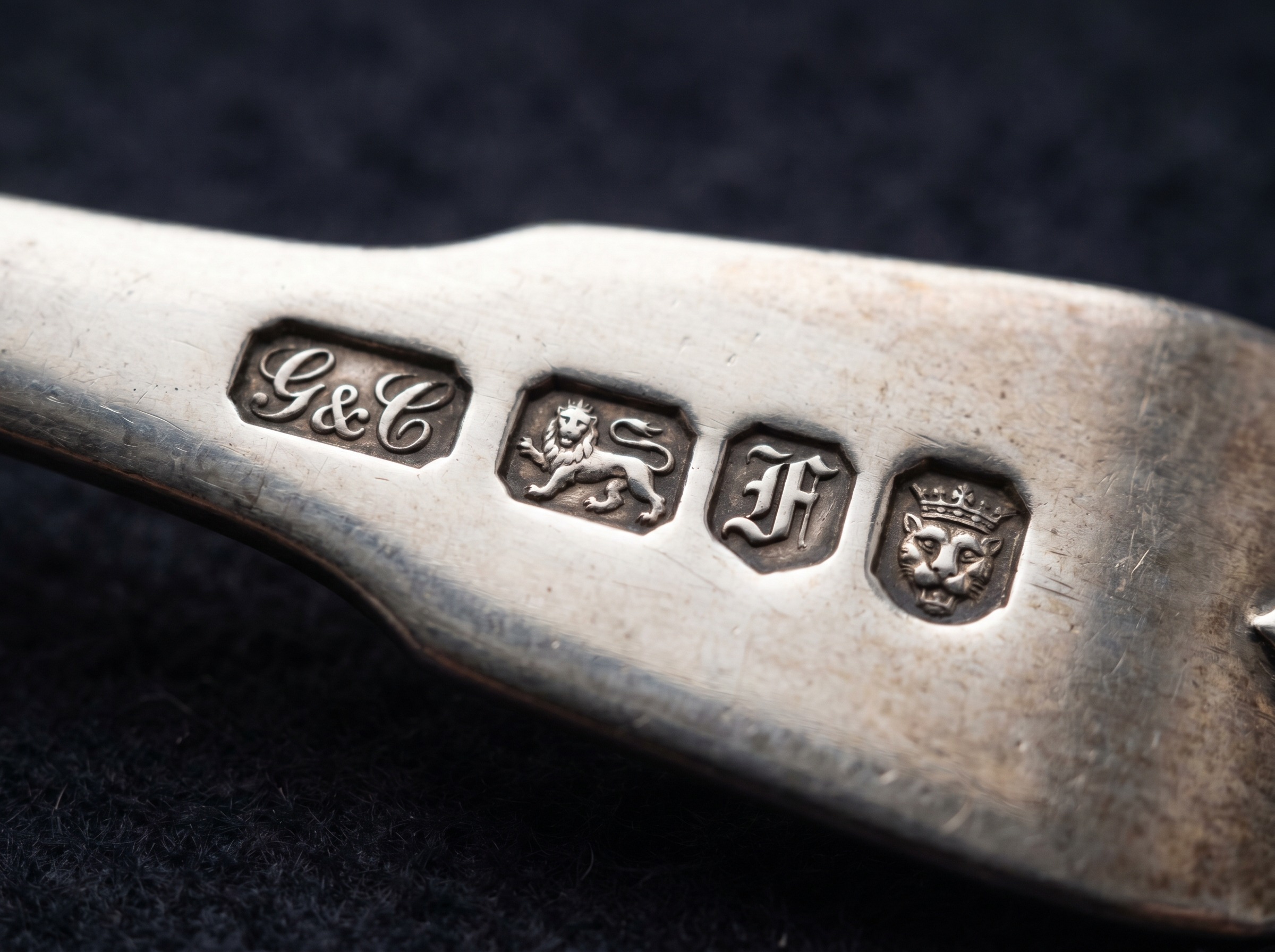
George Wickes silver carries his GW maker's mark with a full London hallmark.
| Mark | What it tells you |
|---|---|
| Maker's mark | GW, the mark George Wickes registered at Goldsmiths' Hall. |
| Lion passant | Sterling silver, assayed in England. |
| Leopard's head | The London town mark (crowned until 1821). |
| Date letter | The year of assay; London changed its letter each May. |
- GW in a cartouche (registered 1720): earliest mark.
- GW in a shaped punch, various forms: used through the 1720s to 1740s solo work.
- W&N (Wickes & Netherton) (registered 1747): partnership mark used 1747 to 1759.
All genuine pieces carry full London hallmarks: leopard's head, lion passant, date letter. Pieces date 1720 to 1759; none carry the sovereign's head duty mark (not introduced until 1784).
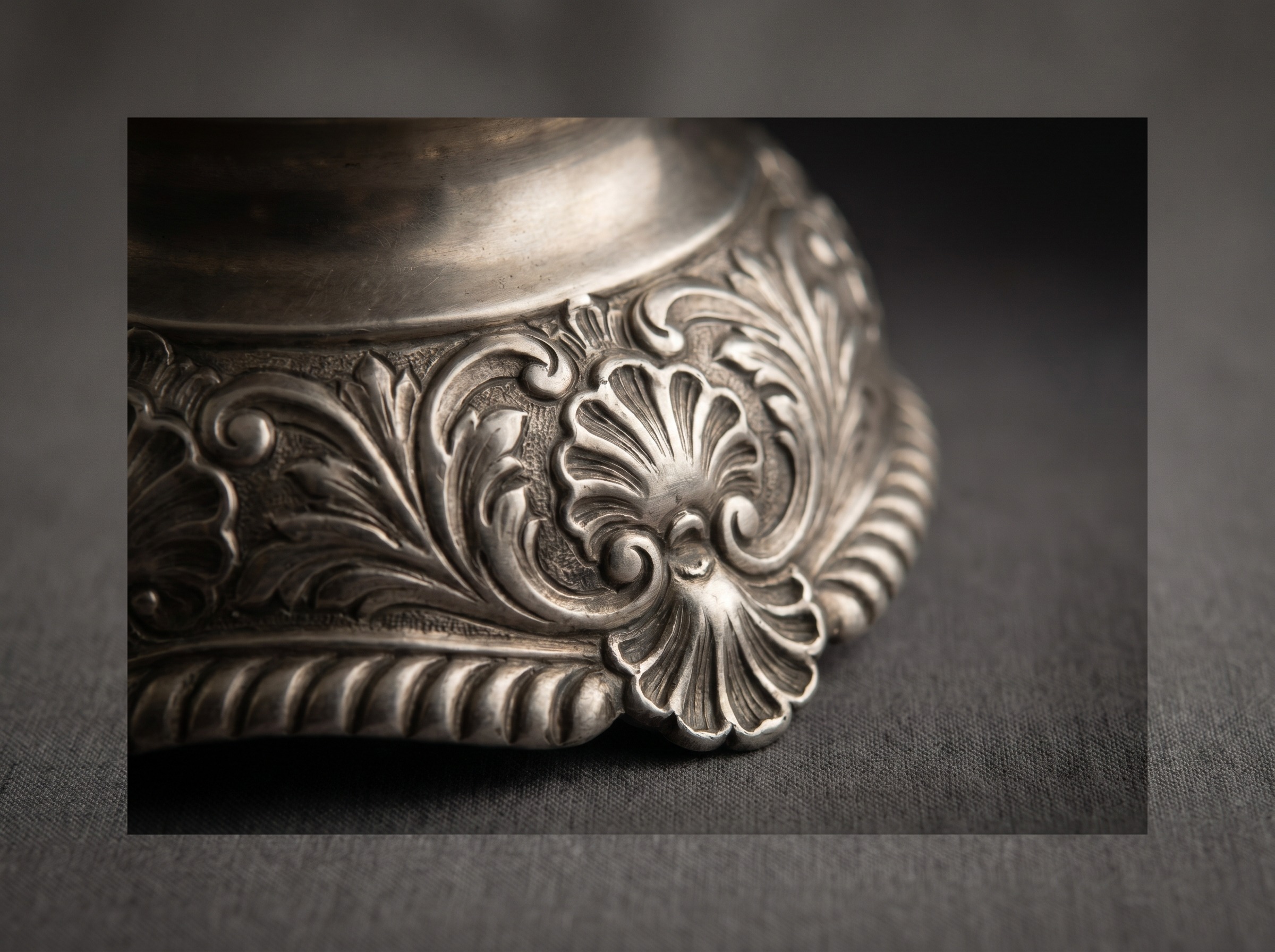
"Wickes taught Wakelin, who preceded Garrard. One line, 300 years. All British court silver flows through this name."
Style
Wickes silver ranges from restrained early Georgian forms to rich Rococo ornament made for the Prince of Wales and his circle.
Wickes worked primarily in the English Rococo idiom: the native English interpretation of the French Rococo that arrived via the Huguenot craftsmen (de Lamerie, Crespin) in the 1710s to 1720s. Wickes's Rococo is slightly more restrained than de Lamerie at his most exuberant, but no less competent. Key characteristics:
- Heavy gauge: Wickes made for royal and aristocratic clients who expected maximum metal weight and permanence.
- Cast shells and gadrooning: applied borders and feet with shell-and-scroll or gadrooned profiles are a consistent Wickes signature.
- Flying scroll handles: the high-arching scroll handle on sauce boats and jugs, often with a shaped thumb rest at the top, is particularly associated with Wickes.
- Applied armorials: most important Wickes pieces carry engraved or applied royal or aristocratic arms.
Key Piece Types
Wickes made candlesticks, tureens, epergnes and toilet services as well as salts, ladles and small waiters.
- Candlesticks: Wickes candlesticks, particularly pairs and sets of four, are landmark pieces. Cast bases with shell and scroll ornament, knopped stems, detachable nozzles.
- Sauce boats: high cast quality, flying scroll handles, shell-decorated feet.
- Tureens and covers: grand Rococo forms for dining service.
- Salvers and waiters: shell-and-scroll borders, applied arms.
- Epergnes: centrepiece stands with detachable baskets, some of the most complex pieces in Wickes's output.
- Toilet services: complete dressing table sets in fitted cases, for royal and aristocratic ladies.
How We Value George Wickes Silver
We value George Wickes silver on the mark, royal provenance, the form and scale, the ornament and condition.
Wickes silver is among the most important of all Georgian silver. Every piece is valued on its own merits; these are the things we look at:
What drives value
- The markWickes's registered mark, confirmed against the full London hallmark and date letter.
- Royal provenancePieces made for Frederick, Prince of Wales, and his circle, documented in the shop accounts.
- Form and scaleCandlesticks, tureens, epergnes and toilet services, against salts, ladles and small waiters.
- OrnamentThe quality of the casting, chasing and original armorials.
- ConditionNo erased armorials, repairs or replaced parts.
Every piece is different. Send us a few photos and we will tell you what your Wickes silver is worth, free and with no obligation. Get a free valuation
What We Look For When Wickes Silver Arrives
When silver that may be by George Wickes arrives we read the maker's mark and London date letter, and look for armorials that might tie it to the Prince of Wales's circle.
Then we check for erased armorials, repairs and replaced parts, and judge the casting and chasing.
Pitfalls
- GW mark confusion: other makers shared GW initials. The exact punch cartouche shape and date letter combination are essential for correct attribution.
- Wickes & Netherton vs solo Wickes: both are equally valuable; the W&N mark simply indicates 1747 to 1759.
- Later engraving: arms sometimes added in the 19th century to increase a plain piece's apparent importance. Style of engraving should match the date.
- Royal provenance claims: always verify against the surviving shop accounts before attributing a piece specifically to a royal commission.
Selling George Wickes Silver?
Active buyer of the finest 18th century London silver, Wickes, Wakelin, Crespin, de Lamerie and all leading Georgian court silversmiths. Direct to serious collectors; no auction commission. By appointment in Mayfair or free FedEx collection. Same-day payment.
- Send photosUse the form on this page, or email them to us.
- A specialist reviews itMaker, marks, age and condition.
- Free estimate by emailWithin one working day.
- You decidePaid once agreed. No obligation.
Four ways to sell: Mayfair (by appointment), Braintree (by appointment), Royal Mail Special Delivery, free FedEx collection.
Free valuation
Request a free valuation
Send us a few photos of your Wickes silver. A specialist looks at every request personally and replies by email with an estimate within one working day. There is no obligation to sell.
What to photograph
- The whole piece. The whole piece, from the front and the side.
- The underside. The base or reverse, where the marks usually are.
- The hallmarks, close up. Every mark in the group, in focus, including the maker's mark.
Prefer email? Send photos to info@mozerisfineantiques.com or call 01376 334 482.
Ways to sell
- Mayfair (by appointment)
- Braintree (by appointment)
- Royal Mail Special Delivery
- Free FedEx collection
We buy directly, with payment once you accept our offer, and we can also sell for you by consignment or in our own auctions.
Related Reading
Frequently Asked Questions
Who was George Wickes?
What is George Wickes's maker's mark?
How does Wickes connect to Garrard?
How much is George Wickes silver worth?
What style did Wickes work in?
Will you value my Wickes silver?
Selling Wickes or Georgian Court Silver?
Active buyer at full market value. Mayfair showroom by appointment or free FedEx collection. Same-day payment, no auction commission.
Strictly by appointment only: no walk-ins at either location.
Items we buy
Antique Silver We Specialise In
Click any category for our specialist buying guide, then send photos for a free valuation. We also have a full Sell Your Silver overview.