Famous Silversmiths · Huguenot Rococo · London 1694 to 1770
Paul Crespin: Complete Guide to the Silversmith
Paul Crespin (1694 to 1770) was a Huguenot silversmith working in London and, with Paul de Lamerie, one of the two finest Rococo silversmiths in England. His work is known for naturalistic cast and chased ornament, and a secure attribution from his PC mark and London hallmark decides everything.
Reviewed by Faustas Svencionis, Mozeris Fine Antiques, since 2015 · Updated October 2026
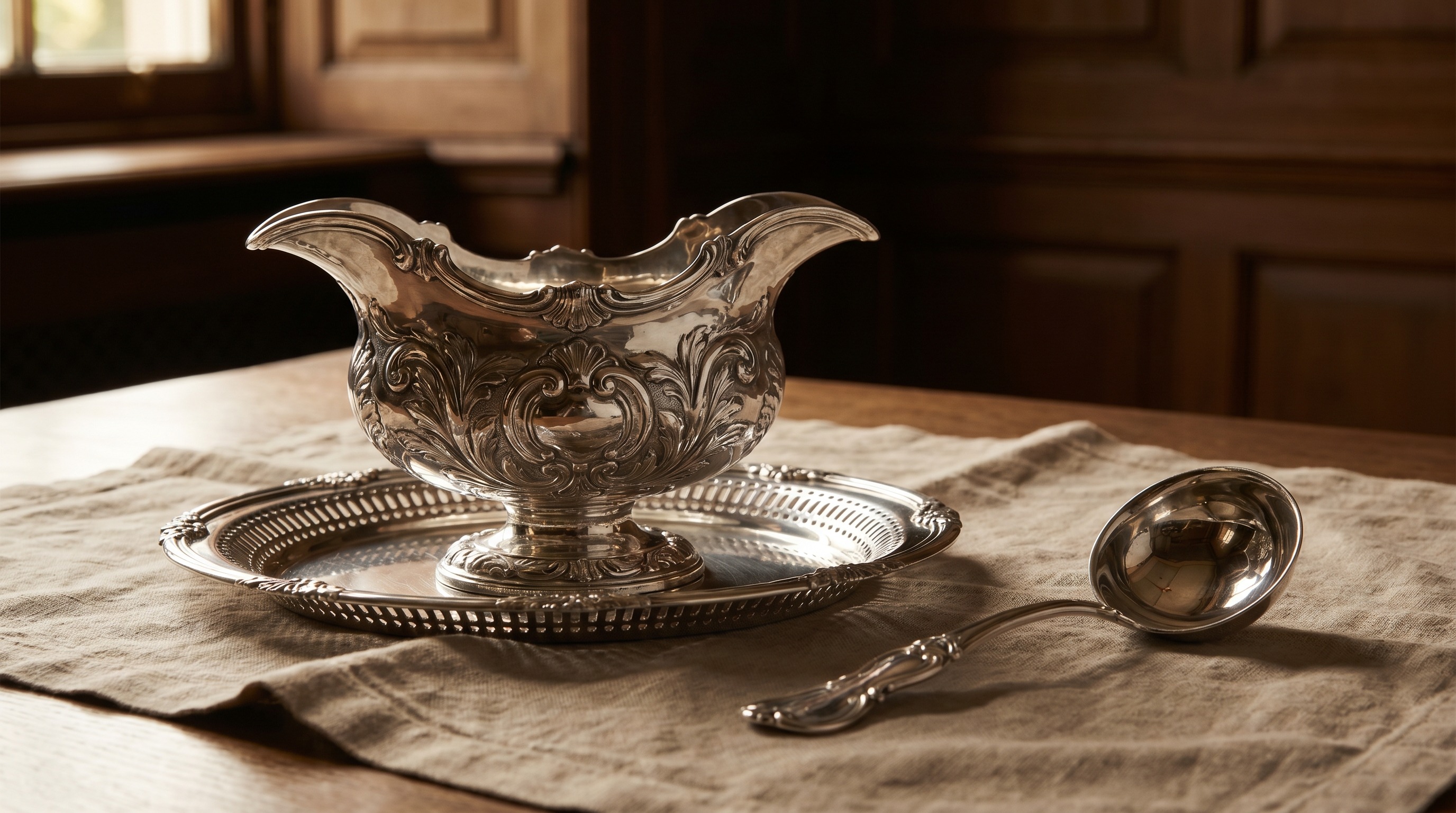
A specialist's guide to Paul Crespin: the greatest Huguenot Rococo silversmith working in London, rival to de Lamerie, maker of royal and aristocratic silver, and one of the most collectable names in 18th century British silversmithing.
Think You Have Crespin Silver? We'll Tell You: Free
Genuine Crespin pieces are rare and valuable. Send photos of the piece and its maker's mark and we'll give you a professional opinion with no obligation.
Paul Crespin (1694 to 1770) is the second great name of the Huguenot silversmithing tradition in London, ranked alongside Paul de Lamerie as one of the two finest Rococo silversmiths working in England in the first half of the 18th century. Crespin's work is characterised by extraordinary naturalistic cast and chased ornament: shells, scrolls, foliage, figures and marine motifs executed at the highest level of the craft. He worked for royalty, the aristocracy and the most important patrons of his day. A genuine Crespin piece at auction is keenly collected in the tens of thousands of pounds; important pieces regularly exceed six figures.
Biography
Paul Crespin was a London-born Huguenot silversmith who worked for royalty, the aristocracy and leading patrons of his day.
Paul Crespin was born in London in 1694, the son of French Huguenot refugees who had fled France following the Revocation of the Edict of Nantes in 1685. His background was identical to de Lamerie's: a second-generation Huguenot craftsman trained in the French tradition of high ornamental silversmithing, working in London where the Huguenot community had resettled.
Crespin registered his first maker's mark at the London Assay Office in 1720. He worked from addresses in Compton Street and later Soho, the heart of London's Huguenot craftsman quarter. His career ran continuously until he retired in the late 1750s, and he died in 1770. He never sought the high-profile royal appointments that de Lamerie pursued, but he was no less productive or skilled, and his finest pieces are widely considered de Lamerie's equal.
Paul Crespin's Maker's Mark
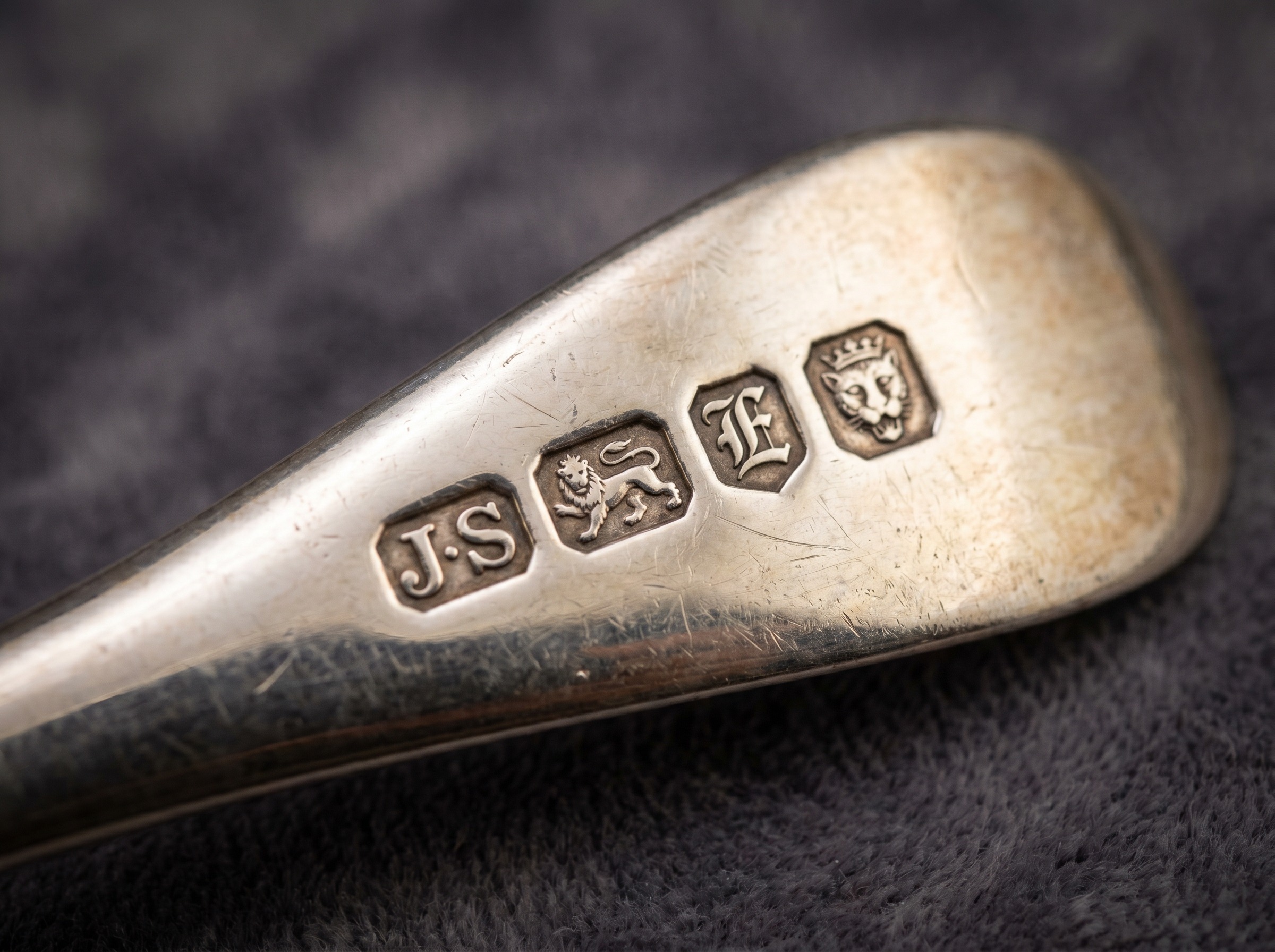
Paul Crespin's silver carries his PC maker's mark with a full London hallmark.
| Mark | What it tells you |
|---|---|
| Maker's mark | PC, the mark Paul Crespin registered at Goldsmiths' Hall. |
| Lion passant | Sterling silver, assayed in England. |
| Leopard's head | The London town mark (crowned until 1821). |
| Date letter | The year of assay; London changed its letter each May. |
Crespin registered several maker's marks during his career. The principal marks to know are:
- PC in a shaped cartouche (registered 1720): earliest mark, used through the mid-1720s.
- PC in a shaped oval with pellet below (registered 1730): the mark most commonly associated with his mature Rococo output of the 1730s to 1750s.
All genuine Crespin pieces will carry the London Assay Office hallmarks alongside the maker's mark: leopard's head (London town mark), lion passant (sterling standard), date letter, and from 1784 a sovereign's head duty mark: though Crespin's activity ended before 1784, so duty marks do not appear on his pieces.
"De Lamerie's peer. Crespin's Rococo is as fine, but rarer at auction, which makes identification more consequential."
Style and Technique
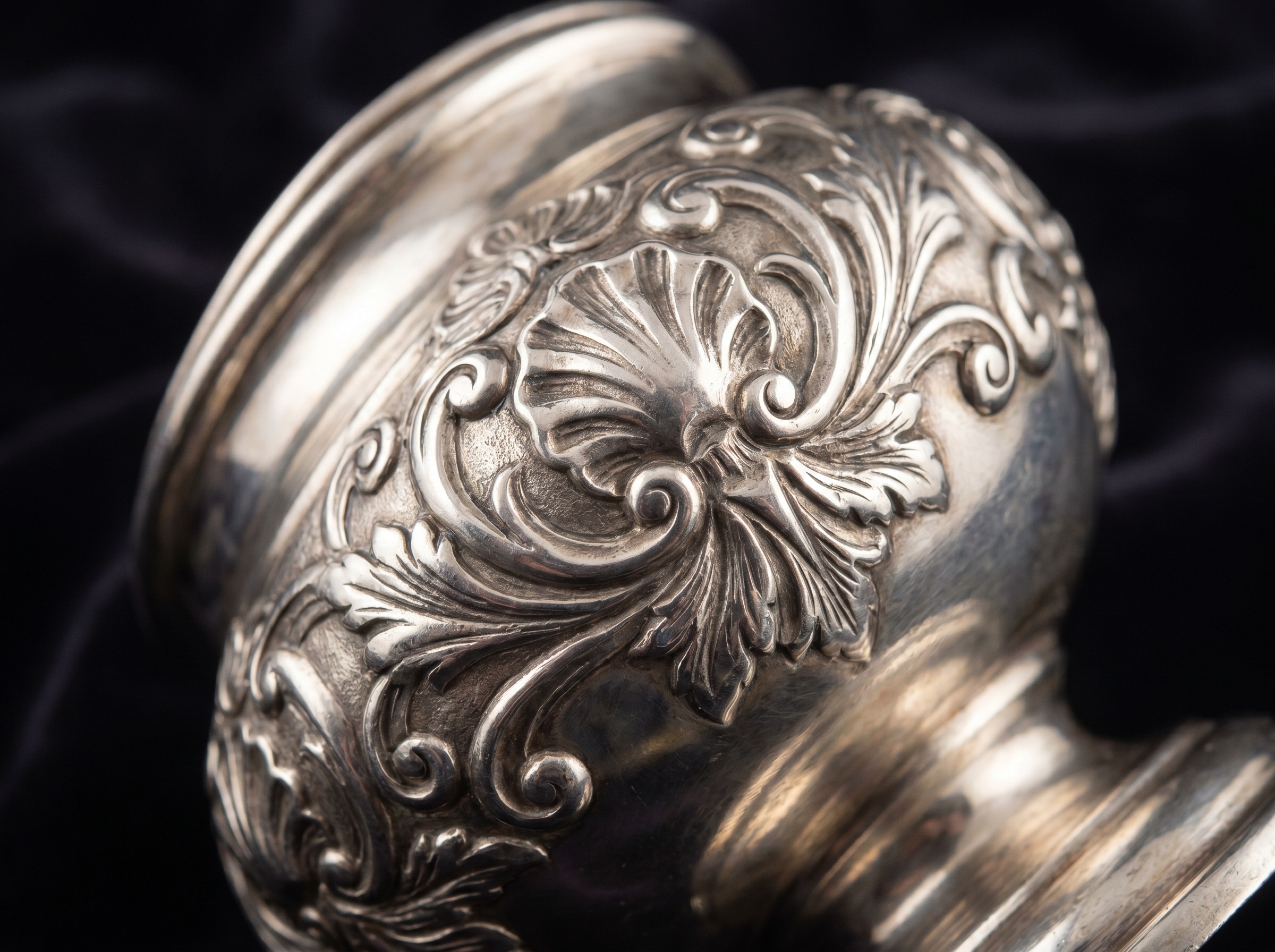
Crespin silver is recognised by naturalistic cast and chased shells, scrolls, foliage, figures and marine motifs.
Crespin's work spans the transition from the Baroque formalism of the early 18th century into full Rococo exuberance by the 1730s and 1740s. Key stylistic characteristics:
- Cast and chased ornament: Crespin's applied decoration is of foundry quality. Shells, scrolls, acanthus leaves, swags and figural elements are typically cast separately and applied, then chased (refined by hand with punches after assembly). The result has a three-dimensional depth that die-struck ornament cannot match.
- Asymmetry: fully mature Rococo design deliberately avoids the mirror symmetry of Baroque. Crespin's Rococo pieces balance visual weight without mirroring it exactly.
- Marine and naturalistic motifs: shells, seahorses, sea gods, coral and waves appear frequently on Crespin's finest pieces, particularly sauce boats, tureens and centerpieces.
- Weight and gauge: Crespin made to order for wealthy clients who expected heavy gauge. His pieces have substantial metal weight and a solidity that later, more commercially driven production lacked.
Key Piece Types
Crespin's output covers the full range of Georgian domestic and presentation silver. The most important categories:
- Sauce boats: among the finest in English silversmithing. Crespin sauce boats with full cast shell-and-scroll ornament are landmark pieces.
- Tureens and covers: grand scale, heavy gauge, full Rococo ornament.
- Salvers and waiters: shell-and-scroll borders, gadrooned edges, applied arms and crests.
- Candelabra and candlesticks: cast and chased column shafts, multi-light branches.
- Tea services and coffee pots: pear-shaped forms with applied ornament and cast spouts.
- Presentation pieces: cups, vases and race cups for aristocratic and royal clients.
Crespin vs de Lamerie: The Key Differences
Crespin and de Lamerie both worked in the Huguenot Rococo style; the maker's mark, the handling of ornament and the surviving record of work tell them apart.
Collectors and dealers regularly compare Crespin and de Lamerie. Both are Huguenot, both Rococo, both London, both active c.1715 to 1755. The differences:
- Royal patronage: de Lamerie held a royal appointment from 1716; Crespin did not seek equivalent high-profile appointments, though he worked for aristocratic patrons at the same level.
- Volume: de Lamerie ran a larger workshop and produced more pieces. Crespin's surviving corpus is smaller.
- Auction frequency: de Lamerie pieces appear at major auction several times a year; Crespin pieces are rarer, which means attribution is more specialist work.
- Quality ceiling: at their best, most specialists consider the quality equal. Some major pieces are now known to have been collaborative between the two makers.
How We Value Paul Crespin Silver
We value Paul Crespin silver on a secure attribution, the form and scale, the ornament, provenance and condition.
Crespin's work is sold at the major London auction houses (Christie's, Sotheby's, Bonhams). Every piece is valued on its own merits; these are the things we look at:
What drives value
- AttributionA confirmed Crespin mark with the full London hallmark; attribution decides everything.
- Form and scaleTureens, large salvers, candlesticks and presentation cups, against spoons and small waiters.
- Cast and chased ornamentThe quality of the naturalistic shells, scrolls, foliage and figures.
- ProvenanceRoyal or aristocratic commissions, and original armorials.
- ConditionNo erased armorials, repairs or later additions.
Every piece is different. Send us a few photos and we will tell you what your Crespin silver is worth, free and with no obligation. Get a free valuation
What We Look For When a Crespin Piece Arrives
When a possible Crespin piece arrives we check the maker's mark against his registered punches and read the London hallmark and date letter.
Then we look closely at the ornament, check for later decoration, repairs and erased armorials, and weigh the case for the attribution before anything else.
How to Identify a Crespin Piece
Identify a Crespin piece by its PC mark and London hallmark, checked against his known punches, and by the quality of its cast and chased ornament.
- Check the maker's mark: PC in a cartouche or oval. The exact form varies; compare against reference sources (Jackson's Silver & Gold Marks, Grimwade's London Goldsmiths).
- Check the London hallmarks: leopard's head, lion passant, date letter all present and consistent with a date between 1720 and c.1758.
- Style consistency: Crespin's ornament is always cast and chased, never die-struck. Flat or repetitive ornament on a piece attributed to Crespin is a red flag.
- Weight: Crespin made to high gauge. Unexpectedly light weight for the apparent scale of a piece should prompt re-examination.
- Provenance: documented auction house history, sale catalogue entries or inscribed arms help confirm attribution.
Pitfalls
- Misread maker's marks: PC can be confused with PC marks for other makers. Exact punch shape, surround and size all matter.
- Later additions: 19th century Rococo-revival ornament is sometimes added to plain 18th century pieces. Check that chased ornament matches the metal gauge and hallmark date.
- Transposed marks: a known problem in Georgian silver generally: original hallmarks from a small piece (spoon, snuffer) cut out and let into a larger later piece. The hallmark sits proud of the surrounding metal.
Selling Paul Crespin Silver?
Active buyer of 18th century London Huguenot and Rococo silver, Crespin, de Lamerie, Wakelin, Wickes, Sprimont and their contemporaries. We work directly with the auction houses and private collectors and pay competitive prices without auction commission. By appointment in Mayfair or by free FedEx collection. Same-day payment.
- Send photosUse the form on this page, or email them to us.
- A specialist reviews itMaker, marks, age and condition.
- Free estimate by emailWithin one working day.
- You decidePaid once agreed. No obligation.
Four ways to sell: Mayfair (by appointment), Braintree (by appointment), Royal Mail Special Delivery, free FedEx collection.
Free valuation
Request a free valuation
Send us a few photos of your Crespin silver. A specialist looks at every request personally and replies by email with an estimate within one working day. There is no obligation to sell.
What to photograph
- The whole piece. The whole piece, from the front and the side.
- The underside. The base or reverse, where the marks usually are.
- The hallmarks, close up. Every mark in the group, in focus, including the maker's mark.
Prefer email? Send photos to info@mozerisfineantiques.com or call 01376 334 482.
Ways to sell
- Mayfair (by appointment)
- Braintree (by appointment)
- Royal Mail Special Delivery
- Free FedEx collection
We buy directly, with payment once you accept our offer, and we can also sell for you by consignment or in our own auctions.
Related Reading
Frequently Asked Questions
Who was Paul Crespin?
What is Paul Crespin's maker's mark?
How does Crespin compare to de Lamerie?
How much is Paul Crespin silver worth?
How do I tell if a piece is genuinely by Crespin?
Will you value my Crespin silver?
Selling Paul Crespin or 18th Century Silver?
Active buyer of Huguenot and Rococo London silver. Mayfair showroom by appointment or free FedEx collection. Same-day payment, no auction commission.
Strictly by appointment only: no walk-ins at either location.
Items we buy
Antique Silver We Specialise In
Click any category for our specialist buying guide, then send photos for a free valuation. We also have a full Sell Your Silver overview.