Famous Silversmith Series · The Queen of English Silver
Hester Bateman: Complete Silversmith Guide
Hester Bateman (1708 to 1794) was the most celebrated woman silversmith in English history, running a London workshop from 1761 to 1790. Her own silver carries the cursive HB mark with a London hallmark; pieces marked PB AB or WB are by later members of the Bateman family.
Reviewed by Faustas Svencionis, Mozeris Fine Antiques, since 2015 · Updated October 2026
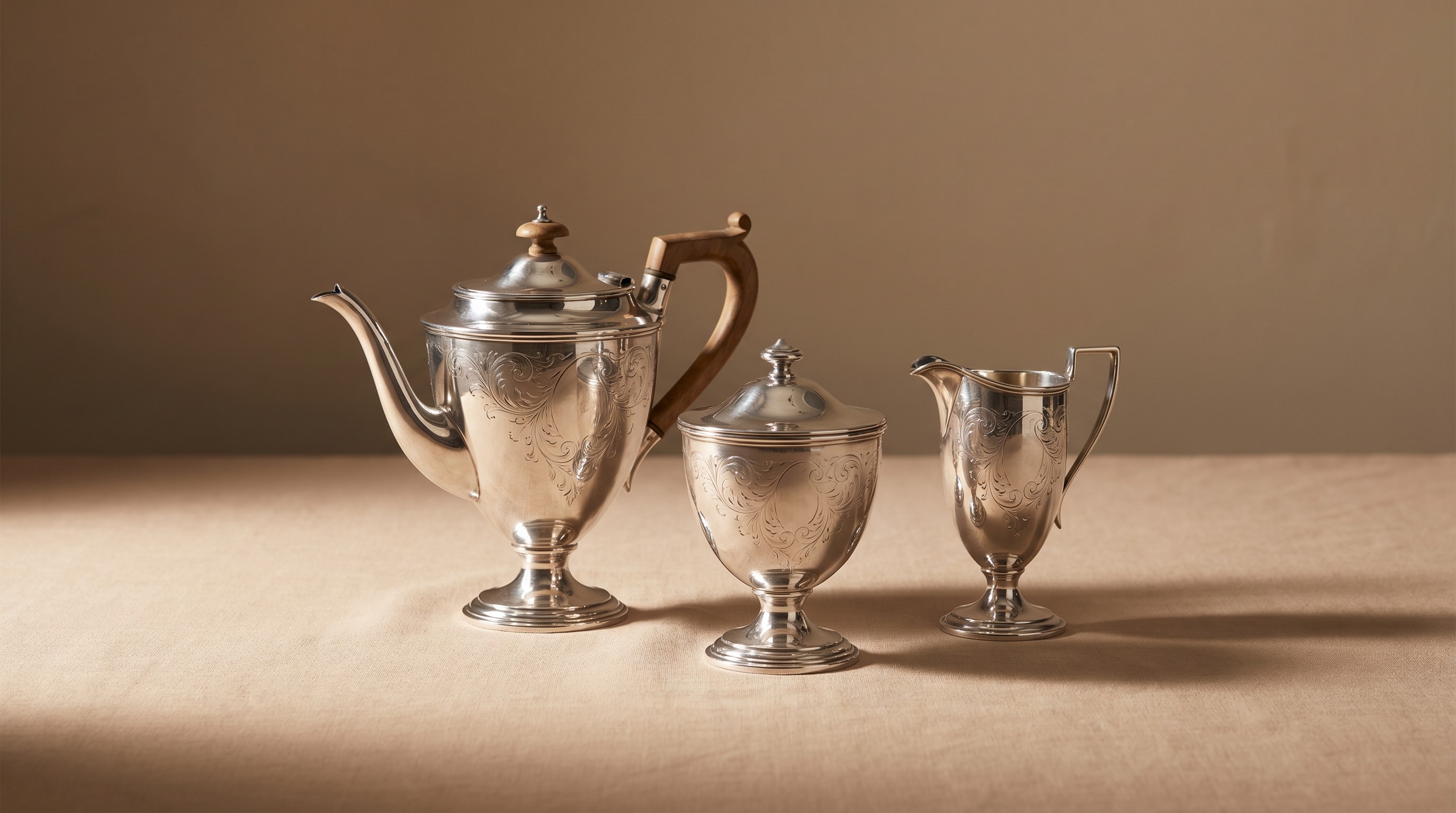
A specialist's guide to Hester Bateman (1708 to 1794), the most celebrated woman silversmith in English history. Identify her maker's marks, recognise her bright-cut neoclassical style and value Bateman family silver accurately.
Got Hester Bateman Silver? We'll Identify and Value It Free
Send photos of your marks and your piece. We'll confirm whether it's Hester herself, Peter & Ann, William or one of the later Batemans, and quote a price. Reply within one working day.
Hester Bateman is the most famous woman silversmith in the history of English silver. From her workshop at 107 Bunhill Row in Clerkenwell she ran a London silver business that, between 1761 and her retirement in 1790, produced some of the most graceful and best-judged Georgian domestic silver ever made, and she did it as an illiterate widow in a trade dominated by men. Her pieces (teapots, sugar urns, cream jugs, salts, candlesticks, flatware) are recognisably elegant, technically refined and consistently sought after at auction.
"Hester Bateman" is one of the most-Googled silversmith names in the world. It is also one of the most misattributed: she registered her mark in 1761 but the wider Bateman family continued working in silver into the early 19th century, and many pieces marked "Bateman" are by her sons, daughter-in-law or grandsons rather than Hester herself. This guide explains exactly which marks belong to whom, what to look for, and what genuine Hester Bateman silver is worth.
Who Was Hester Bateman?
Hester Bateman was a Clerkenwell widow who took over her husband's workshop in 1760 and built one of the most productive silver businesses in London.
Hester Needham was born in 1708 in Clerkenwell, London. In 1732 she married John Bateman, a goldsmith and chain-maker. They lived and worked at 107 Bunhill Row, where John ran a modest silver workshop. When he died of consumption in 1760, Hester, then 52 and unable to read or write, took over the business outright. She registered her first maker's mark, the cursive script "HB", at Goldsmiths' Hall on 16 April 1761.
What followed was remarkable. Over the next thirty years she built one of the most productive workshops in London, employing her sons John, Peter and Jonathan and later daughter-in-law Ann. The workshop adopted and helped popularise the new neoclassical style championed by Robert Adam: slender forms, fluted urns, beaded edges and bright-cut engraving. Hester retired in 1790 at the age of 82 and died in 1794, by which point "Hester Bateman" was already a luxury byword.
The Bateman Family Marks: Who's Who
Only the cursive HB mark, registered between 1761 and 1790, is Hester Bateman's own; PB AB, PB WB and WB belong to her son, daughter-in-law and grandson.
| Mark | What it tells you |
|---|---|
| Maker's mark | HB in cursive script: Hester's own mark, 1761 to 1790. |
| Leopard's head | The London town mark. |
| Lion passant | Sterling silver. |
| Date letter | Between 1761 and 1790 for Hester herself. |
| Duty mark | The sovereign's head, struck from 1784. |
Identifying a Bateman piece correctly means knowing the maker's mark for the right family member. The principal registered marks at Goldsmiths' Hall are:
| Mark | Maker | Dates Registered |
|---|---|---|
| HB (cursive script) | Hester Bateman (alone) | 1761 to 1790 |
| PB · AB (paired) | Peter & Ann Bateman | 1791 to 1805 (some Wm Bateman partnership from 1800) |
| PB · AB · WB | Peter, Ann & William Bateman | 1800 to 1805 |
| PB · WB | Peter & William Bateman | 1805 to 1815 |
| WB | William Bateman I | 1815 to 1840 |
| WB (2) | William Bateman II | 1840s |
Critical point: only the cursive "HB" mark, registered between 1761 and 1790, is silver actually made under Hester's own personal direction. Pieces with PB · AB or any William Bateman mark are Bateman family silver, often in Hester's neoclassical style, but they are not by Hester herself, and the market values them differently.
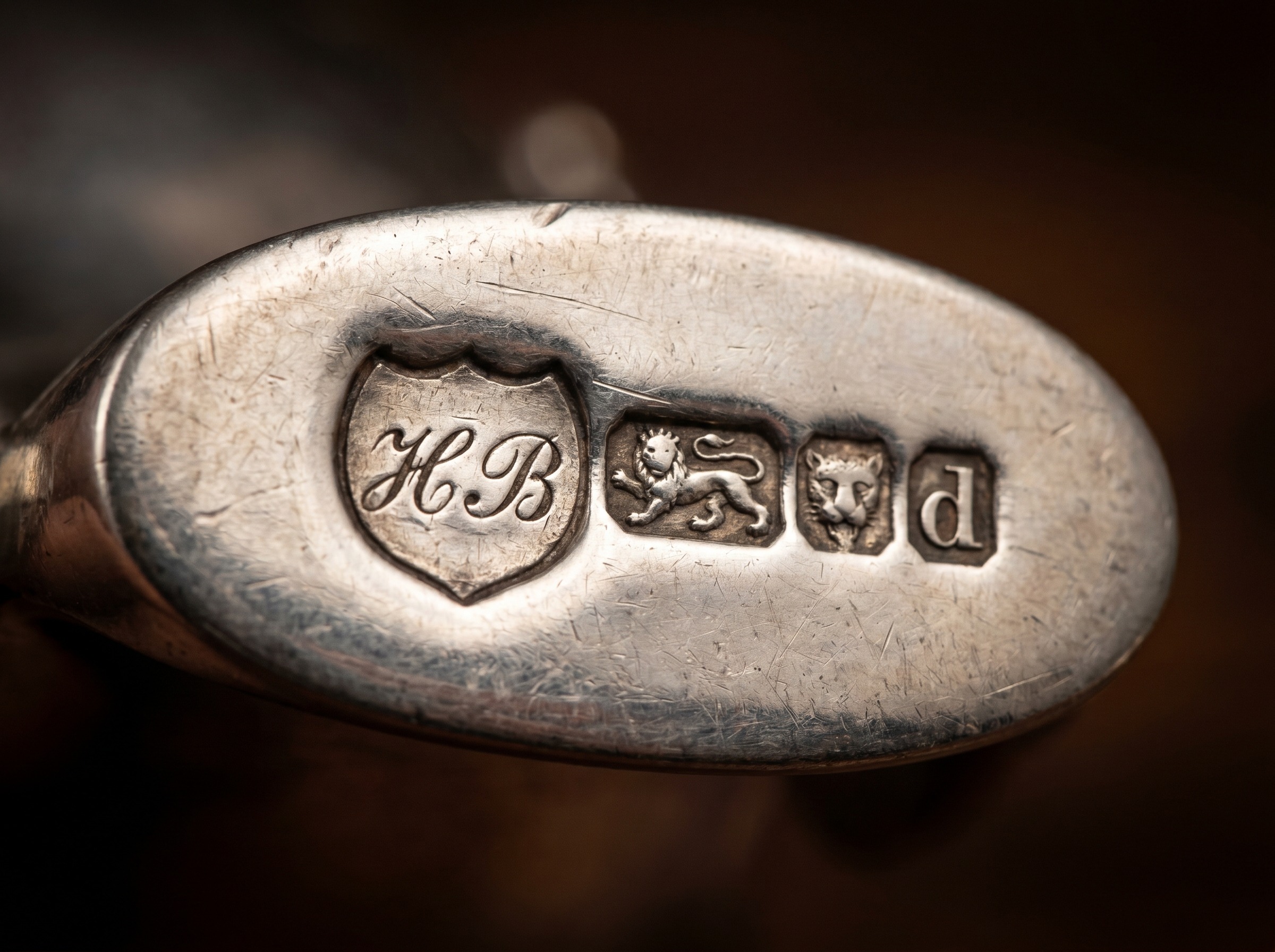
"Only the cursive 'HB' is Hester herself. Everything else is family: beautiful, but not the same market."
The Bateman Style: What to Look For
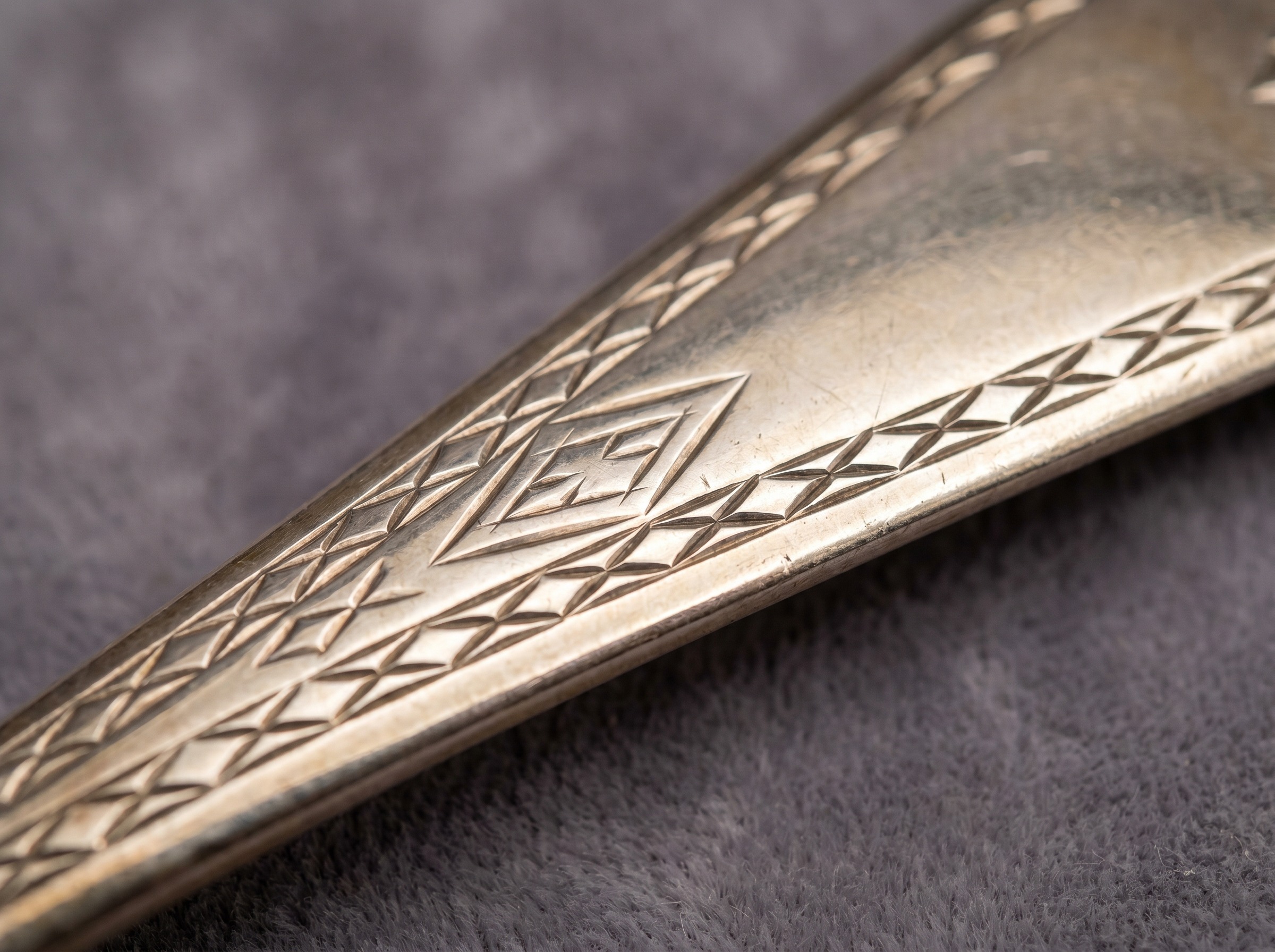
Hester Bateman silver is recognised by slender neoclassical forms, bright-cut engraving, beaded borders and light-gauge silver.
Hester Bateman silver is consistent and easy to recognise once you have seen a few examples. The hallmarks of her workshop's output:
- Slender, attenuated forms: pedestal teapots with elongated bodies, tall covered sugar urns, slender cream jugs.
- Bright-cut engraving: finely cut zig-zag and feathered bands at the shoulder, with prismatic facets that catch the light. Bright-cut engraving was a signature of her workshop and is the single most recognisable Bateman feature.
- Beaded borders: neat strings of small beads around rims, lids and feet.
- Reeding and fluting: vertical pencil-thin reeding on bodies of teapots, sugar urns and casters.
- Engraved cartouches: a clean shield-shaped engraved reserve, usually empty or holding an original armorial, surrounded by bright-cut work.
- Light gauge silver: Bateman silver is delicate. The metal is thinner than mid-Georgian production. This is part of why it looks elegant, but it also means pieces dent and weigh less than they look.
- Wooden fruit-wood handles on teapots, often replaced over the centuries.
What Hester Bateman Made
Hester Bateman's workshop made mostly domestic silver: flatware, cream jugs, sugar tongs, wine labels, salts, teapots, sugar urns and candlesticks.
Genuine Hester Bateman pieces, in roughly descending order of frequency in today's market:
- Flatware: Old English pattern tablespoons, dessert spoons and teaspoons. The most commonly encountered Bateman silver; affordable entry point for collectors.
- Teaspoons in sets: boxed sets with bright-cut handles are particularly attractive.
- Cream jugs & pap boats: small, elegant, very characteristic.
- Sugar tongs: bright-cut bowed tongs.
- Wine labels: small pierced or bright-cut labels for decanters.
- Salt cellars & mustard pots: beaded oval and circular forms.
- Teapots & sugar urns: the showpiece category.
- Coffee pots & tea services: full services are rare and are keenly collected.
- Candlesticks: pairs of fluted neoclassical candlesticks.
What Hester Bateman Silver Is Worth
The value of Hester Bateman silver depends on which Bateman made it, the bright-cut engraving, the cartouche, the form and condition.
Values vary enormously by category and condition. These are the things we look at:
What drives value
- Which BatemanHester's own cursive HB mark, against Peter & Ann, William or later family pieces.
- Bright-cut engravingCrisp bright-cut engraving that has not been softened by polishing.
- The cartoucheAn original engraved cartouche that has not been erased or re-engraved.
- ConditionNo splits or replaced parts, and an original handle on teapots and other hot-wares.
- Form and completenessTeapots, sugar urns, coffee pots and complete tea services are the rarer forms.
Every piece is different. Send us a few photos and we will tell you what your Bateman silver is worth, free and with no obligation. Get a free valuation
What We Look For When Bateman Silver Arrives
When Bateman silver arrives we read the maker's mark first, to tell Hester's cursive HB from the later family punches, and check the date letter against her working years of 1761 to 1790.
Then we look for a faint solder line around the marks, check the cartouche for erasure or re-engraving, and examine teapot handles, seams and bright-cut work for repairs and wear.
Pitfalls and Forgeries
The common Hester Bateman pitfalls are family pieces sold as Hester's own, erased cartouches, transposed marks and replaced handles.
- "Bateman" misattributions: a piece with PB · AB or WB marks is family Bateman silver, not Hester herself. Both are fine; values differ.
- Erased and re-engraved cartouches: common. The cartouche on Hester Bateman silver often held a contemporary armorial; later "improvements" with new initials or a Victorian re-engraving knock value substantially. Look for a slightly dished, thinned area where silver has been worked.
- Cast hallmarks on the wrong piece: a genuine Bateman mark cut from a damaged spoon and soldered into a new piece. Look for a faint solder line around the marks.
- Modern "Bateman style" silver: perfectly legal pieces made in the 19th and 20th centuries in Hester's manner but without her marks. Always check the full hallmark, not the style.
- Replaced handles: Bateman teapots almost always had fruit-wood handles, often broken and replaced. A replacement reduces value by 20 to 40%.
Got Hester Bateman Silver to Sell? We Pay Full Maker Premium
We are active buyers of Hester Bateman and the wider Bateman family, single spoons through to complete tea services. Mayfair showroom a short walk from where she registered her mark at Goldsmiths' Hall. By appointment in Mayfair or by free FedEx collection. Same-day payment.
- Send photosUse the form on this page, or email them to us.
- A specialist reviews itMaker, marks, age and condition.
- Free estimate by emailWithin one working day.
- You decidePaid once agreed. No obligation.
Four ways to sell: Mayfair (by appointment), Braintree (by appointment), Royal Mail Special Delivery, free FedEx collection.
Free valuation
Request a free valuation
Send us a few photos of your Bateman silver. A specialist looks at every request personally and replies by email with an estimate within one working day. There is no obligation to sell.
What to photograph
- The whole piece. The whole piece, from the front and the side.
- The underside. The base or the reverse of the stem.
- The hallmarks, close up. The full group of marks, with the HB mark in focus.
Prefer email? Send photos to info@mozerisfineantiques.com or call 01376 334 482.
Ways to sell
- Mayfair (by appointment)
- Braintree (by appointment)
- Royal Mail Special Delivery
- Free FedEx collection
We buy directly, with payment once you accept our offer, and we can also sell for you by consignment or in our own auctions.
Related Reading
Frequently Asked Questions
Identifying Hester Bateman silver: common questions.
How do I tell genuine Hester Bateman silver?
What's the difference between Hester Bateman and Peter & Ann Bateman?
How much is a Hester Bateman teaspoon worth?
Why are some Bateman pieces so light?
My Bateman teapot's handle has been replaced; does it matter?
Will you tell me what my Bateman silver is worth?
Selling Hester Bateman Silver?
Active buyer of genuine Hester Bateman and Bateman family silver. Mayfair showroom by appointment or free FedEx collection. Same-day payment.
Strictly by appointment only: no walk-ins at either location.
Items we buy
Antique Silver We Specialise In
Click any category for our specialist buying guide, then send photos for a free valuation. We also have a full Sell Your Silver overview.