Christopher Dresser — Complete Silver Guide
A specialist's guide to Christopher Dresser (1834–1904) — the design reformer whose radically minimal, geometric metalwork anticipated modernism by half a century. Identify the maker's marks, recognise his angular forms, and value Dresser pieces accurately.
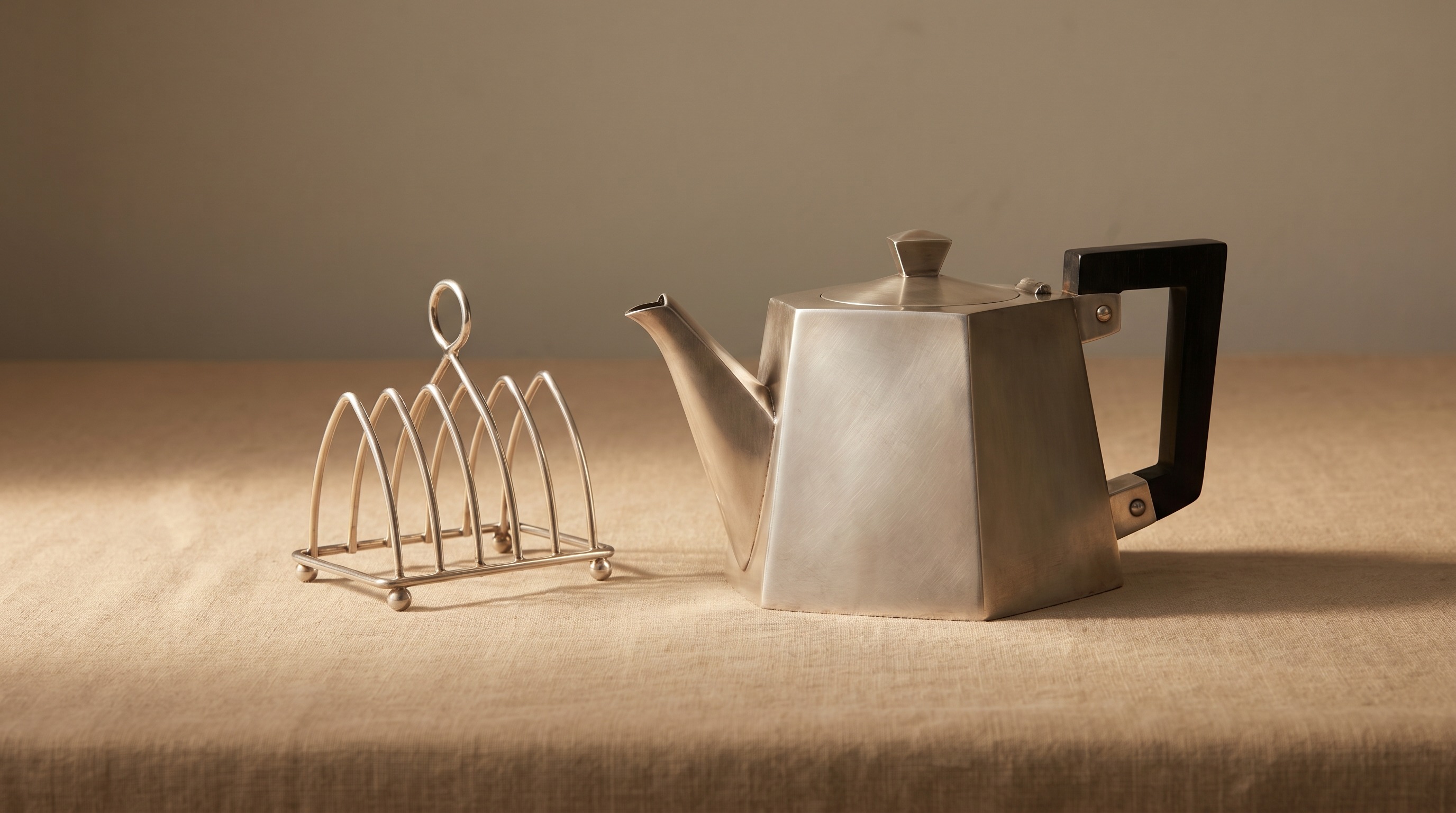 C. Dresser · designs from c.1870s–1880s
Got Christopher Dresser Metalwork? We'll Identify and Value It Free
Send photos of the marks and the form — genuine Dresser designs are rare and highly sought after, well beyond their metal content. Reply within one working day.
Christopher Dresser is often called the first industrial designer — a professional who designed for manufacture rather than making by hand. His metalwork of the 1870s and 1880s is astonishing: stark geometric teapots on spindly legs, angular toast racks, claret jugs with ebonised handles and exposed rivets. Where his Victorian contemporaries piled on ornament, Dresser stripped it away in pursuit of function and form. The result looks more like 1930s modernism than the 1870s, and the best pieces are among the most valuable design objects of the 19th century.
Who Was Christopher Dresser?
Dresser was born in Glasgow in 1834 and trained as a botanist before turning to design — a scientific eye for plant structure runs through all his work. He became the leading commercial designer of his generation, supplying patterns for ceramics, glass, textiles, wallpaper and metalwork to many manufacturers. A formative visit to Japan in 1876–77 deeply influenced his taste for asymmetry, restraint and pure form.
Crucially, Dresser did not make silver himself. He designed for manufacturers, the most important being James Dixon & Sons of Sheffield, Hukin & Heath of Birmingham, and Elkington & Co. Most of his designed metalwork is therefore electroplate or sterling produced by these firms, carrying their marks — sometimes with a Dresser facsimile signature or a design registration lozenge. His angular, functional aesthetic was decades ahead of its time and is now seen as a direct ancestor of 20th-century industrial design.
Dresser Marks & Attribution
| Mark | Meaning | Notes |
|---|---|---|
| Maker's mark of Dixon, Hukin & Heath or Elkington | the manufacturer | Dresser designed, did not make |
| Facsimile "Chr. Dresser" signature | designer attribution | on some pieces; strong value-adder |
| Design registration lozenge / Rd No. | registered design date | helps confirm date and design |
| EP / EPNS or Birmingham/Sheffield hallmark | electroplate or solid silver | both exist; silver is rarer |
Because Dresser worked through manufacturers, attribution rests on a combination of the maker's mark, the registered design number, any facsimile signature, and — above all — the unmistakable design itself, matched to documented Dresser patterns. The presence of a "Chr. Dresser" signature is the strongest single indicator and adds significantly to value.
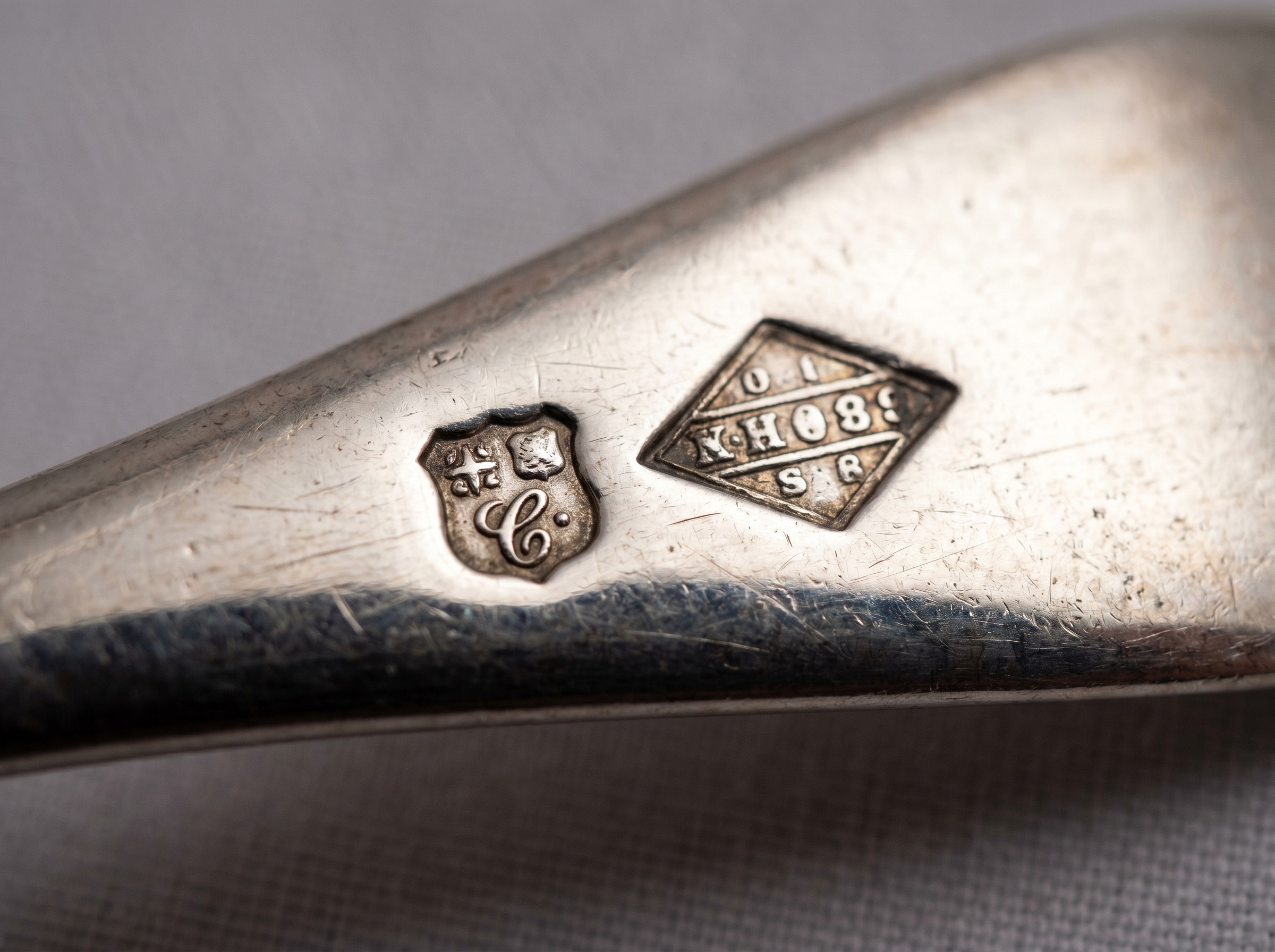
Attribution rests on the maker's mark, a registered design number and any facsimile Dresser signature.
The Dresser Style
Dresser's metalwork is unmistakable to anyone who knows it:
- Radical geometry — cylinders, cones and flat planes; pure functional shapes with no applied ornament.
- Exposed construction — visible rivets and joints treated as design features, not hidden.
- Ebonised (blackened) wooden handles — set away from the body to stay cool, a functional and visual signature.
- Spindly legs and economical form — teapots raised on thin legs; the famous angular toast racks.
- Japonisme — asymmetry and restraint drawn from Japanese design.
- Designed for manufacture — simple shapes suited to factory production, the essence of his "industrial design" approach.
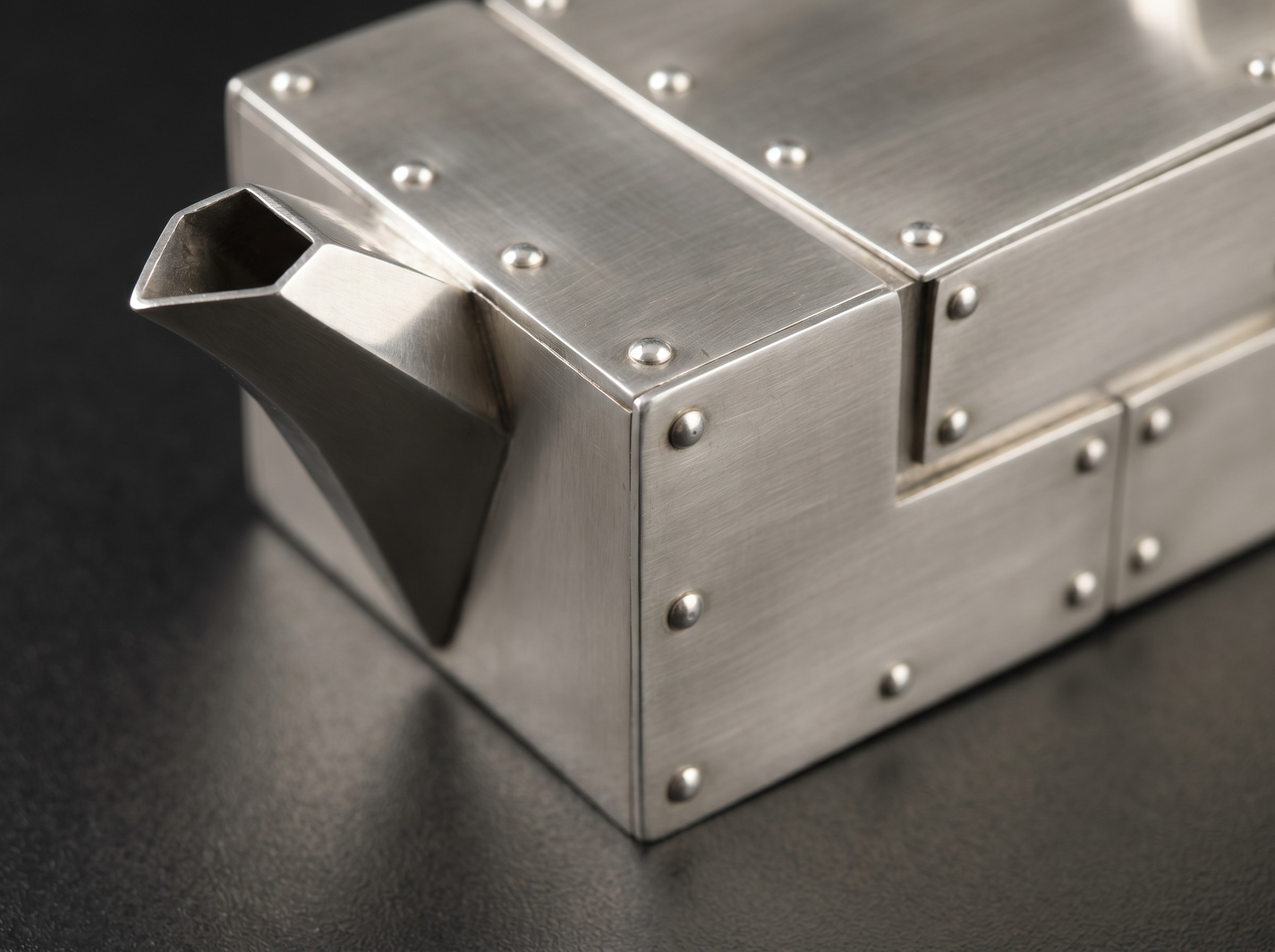
The Dresser signature — clean planes and exposed rivets in a radically minimal aesthetic.
What Dresser Designed
- Teapots and coffee pots — the iconic geometric forms on legs, his most celebrated designs.
- Toast racks — angular, architectural; among the most recognisable Dresser objects.
- Claret jugs and decanters — glass bodies with minimal silver or plated mounts.
- Sugar basins, cruets and bowls — pared-down functional forms.
- Baskets and dishes — geometric, often with thin handles.
- Electroplated tableware — the bulk of surviving designed pieces, made by Dixon, Hukin & Heath and Elkington.
What Dresser Is Worth
- Attributed plated cruet or small ware: £300–£1,500.
- Toast rack, documented design: £1,000–£6,000.
- Claret jug, Dresser design: £1,500–£8,000.
- Geometric teapot / coffee pot, electroplate: £3,000–£20,000.
- Rare iconic teapot in fine condition with signature: £15,000–£60,000+.
- Solid silver Dresser pieces: rarer, often command a further premium.
Dresser is valued almost entirely as design, not metal — many of his most valuable objects are electroplate worth a tiny fraction of their price by weight. The market rewards documented designs, original condition and any "Chr. Dresser" signature. Iconic teapots and toast racks are the headline lots.
Pitfalls
- Later reproductions — Dresser's designs have been reissued in modern times. Period maker's marks and registration numbers separate originals from reproductions.
- "In the style of" — many anonymous geometric Victorian wares resemble Dresser but are not documented designs. Attribution needs evidence, not just an angular shape.
- Electroplate, not silver — most genuine Dresser metalwork is plated. That does not reduce its value as design, but it must not be sold as solid silver.
- Over-polishing — worn plate and softened edges reduce both appearance and value; crisp original surfaces matter.
Got Christopher Dresser Metalwork to Sell?
Active buyer of genuine Christopher Dresser designs — teapots, toast racks, claret jugs and tableware made by Dixon, Hukin & Heath and Elkington, in electroplate or silver. By appointment in Mayfair or by free insured nationwide courier. Same-day payment, strong offers for documented Dresser pieces.
- Send photos of your piece, its form and all marks via our online valuation form. Include any registration number or facsimile signature.
- We email an instant indicative price (usually within one working day).
- Visit our Mayfair showroom by appointment, or we book a free insured collection.
- Your piece is independently verified at our office.
- You're paid by same-day bank transfer once you accept our offer.
All courier collections insured up to £25,000 per parcel. Higher-value pieces collected by specialist secure courier at no cost.
Related Reading
Frequently Asked Questions
Did Christopher Dresser make silver himself?
No — Dresser was a designer, not a silversmith. His metalwork was manufactured by firms such as James Dixon & Sons, Hukin & Heath and Elkington, and carries their marks, sometimes with a Dresser facsimile signature.
How do I know a piece is a genuine Dresser design?
Match the form to a documented Dresser pattern, then check the manufacturer's mark, any registered design number, and any "Chr. Dresser" facsimile signature. The signature is the strongest single indicator.
Is most Dresser metalwork silver or electroplate?
Most is electroplate. That does not reduce its value as design — many of his most valuable pieces are plated — but it should never be described as solid silver. Solid silver examples are rarer.
Why is Dresser so valuable?
His radically minimal, functional designs anticipated 20th-century modernism by decades, making him a landmark figure in design history. The best teapots and toast racks are among the most valuable Victorian design objects.
Will you tell me what my Dresser piece is worth?
Yes — free, no obligation. Email info@mozerisfineantiques.com with photos of the marks and the piece.
⚠️ Strictly by appointment only — no walk-ins at either location.
Antique Silver We Specialise In
Click any category for our specialist buying guide — then send photos for a free valuation. We also have a full Sell Your Silver overview.