What were pre-decimal coins worth?
Before decimal day, 15 February 1971, a pound was 20 shillings and a shilling was 12 pence, so a pound was 240 pence. A half crown was two shillings and sixpence, a florin two shillings, and a crown five shillings. Smaller coins were the sixpence, threepence, penny, halfpenny and farthing.
| Coin | Pre-decimal value | Decimal equivalent |
|---|---|---|
| Crown | 5 shillings | 25 pence |
| Half crown | 2 shillings and 6 pence | 12.5 pence |
| Florin | 2 shillings | 10 pence |
| Shilling | 12 pence | 5 pence |
| Sixpence | 6 pence | 2.5 pence |
| Threepence | 3 pence | 1.25 pence |
| Penny | 1 penny | about 0.42 pence |
| Halfpenny | half a penny | about 0.21 pence |
| Farthing | a quarter of a penny | about 0.10 pence |
Which pre-decimal coins are silver?
Check the date. Half crowns, florins, shillings, sixpences and threepences dated 1919 or earlier are 92.5% sterling silver, and those dated 1920 to 1946 are 50% silver. From 1947 they were struck in cupronickel with no silver. Pennies, halfpennies and farthings were copper or bronze and never silver.
Sterling before 1920
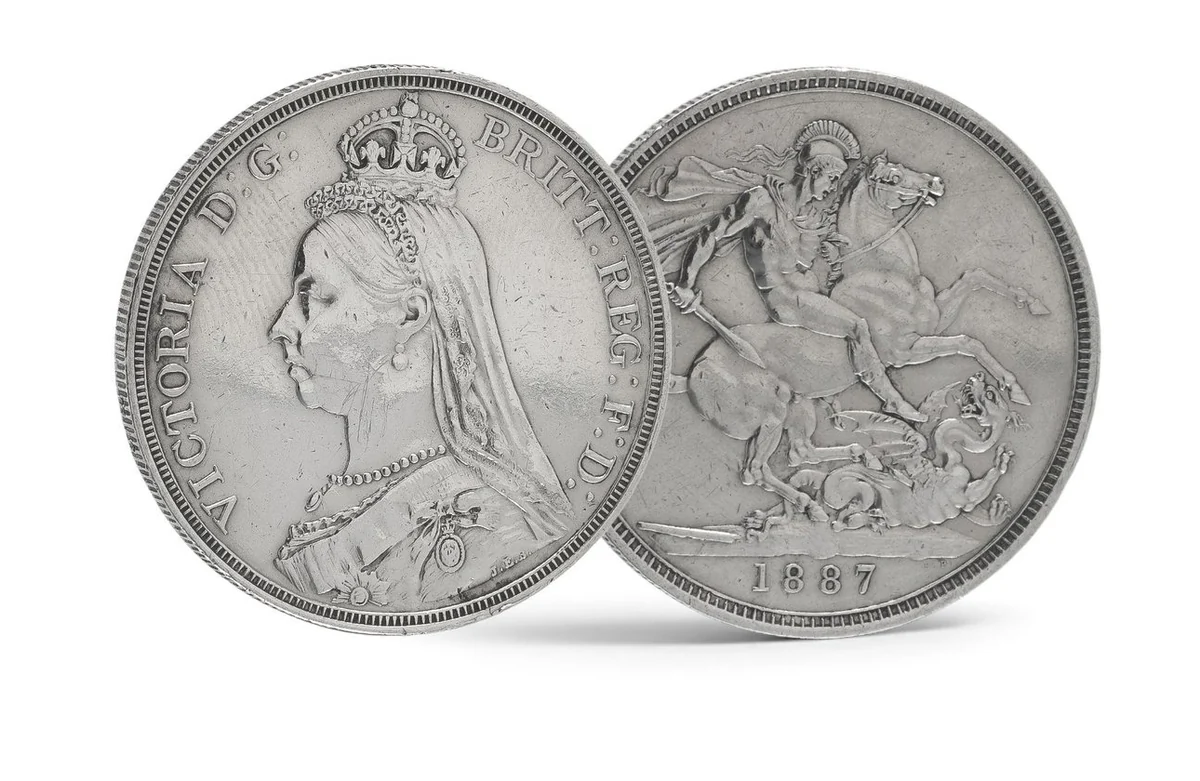
Victorian and Edwardian silver coins, like this 1887 crown, are sterling. They are always worth more than face value, whatever their condition.
British coins in stock
Shop all 10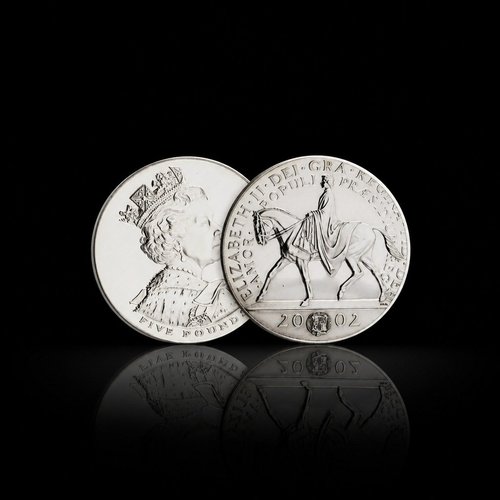
 Golden Jubilee 2002 Five Pound Crown, Queen Elizabeth II Equestrian Portrait£195
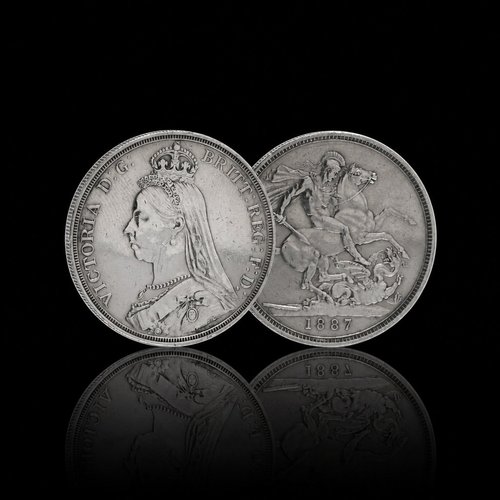
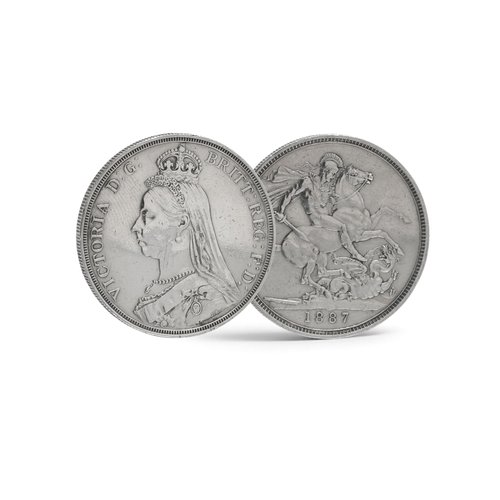 Queen Victoria Jubilee Head Silver Crown 1887, First Year British Sterling Silver Coin£195
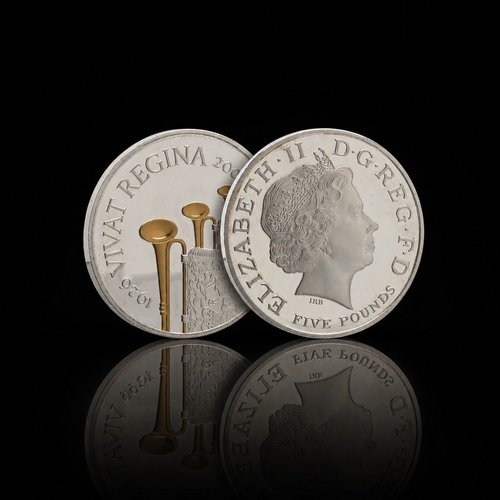
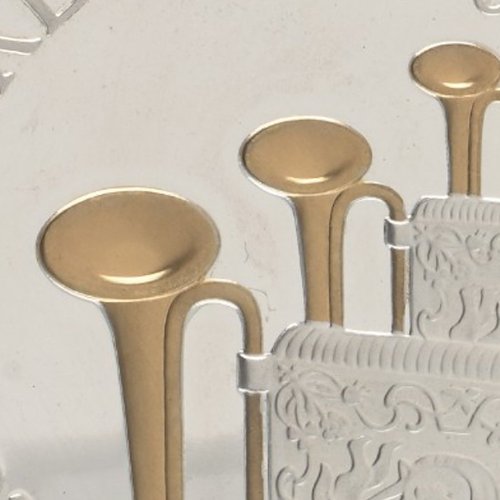 Queen Elizabeth II 80th Birthday 2006 Silver Piedfort Five Pounds, Gold Plated Proof£595
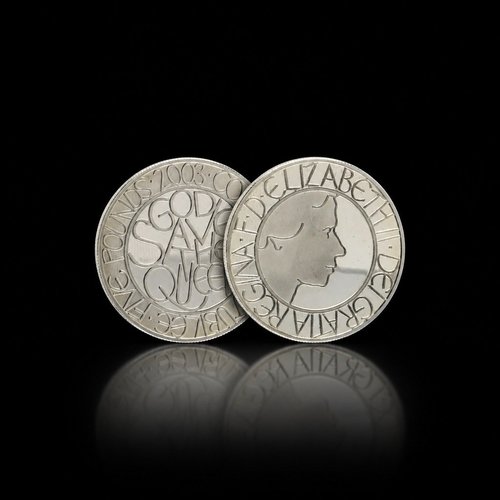
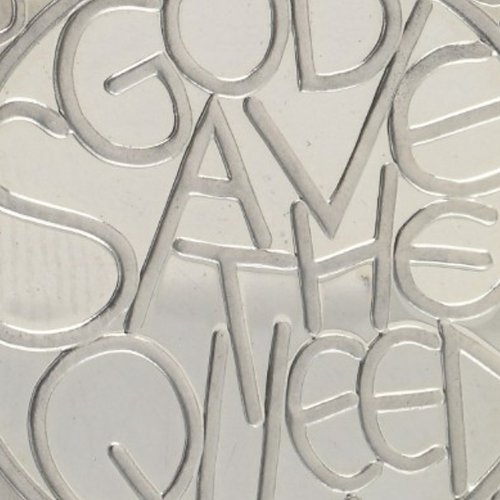 Coronation Jubilee 2003 Five Pound Crown, Queen Elizabeth II Golden Jubilee of Coronation£195
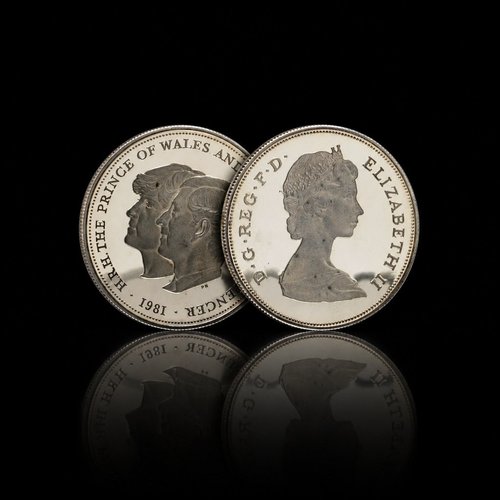
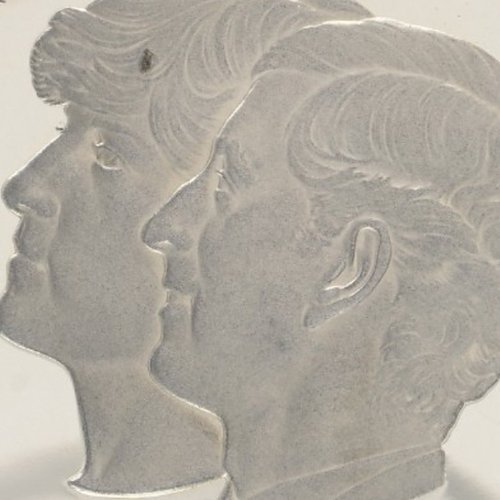 Charles and Diana Royal Wedding Crown 1981, Prince of Wales Commemorative Coin£195
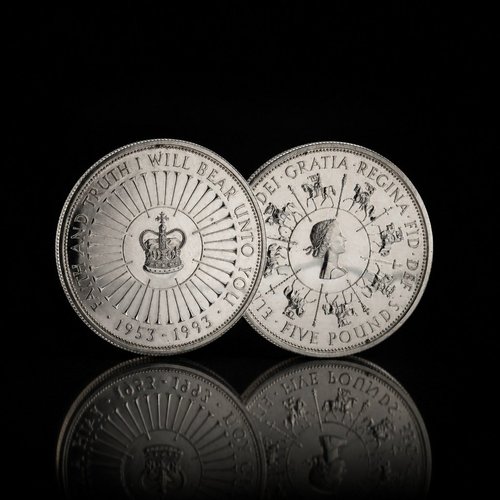
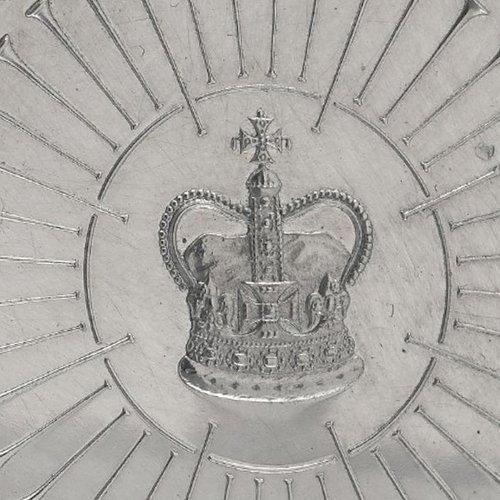 Coronation 40th Anniversary 1993 Five Pound Crown, Queen Elizabeth II£195
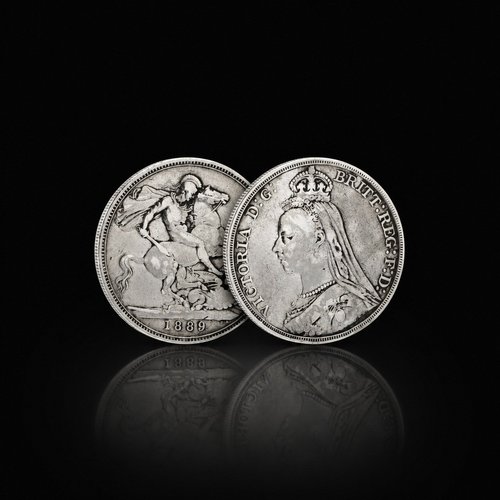
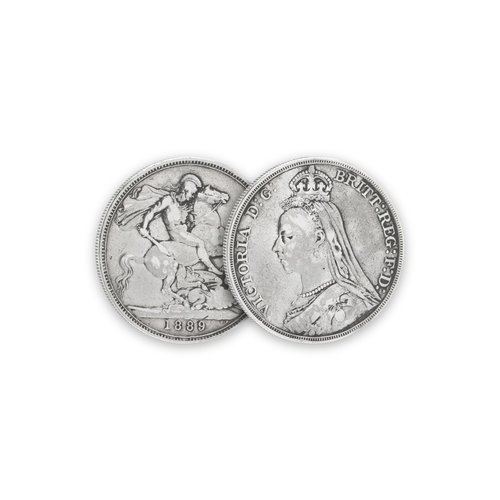 Queen Victoria Jubilee Head Silver Crown 1889, British Sterling Silver Coin£195
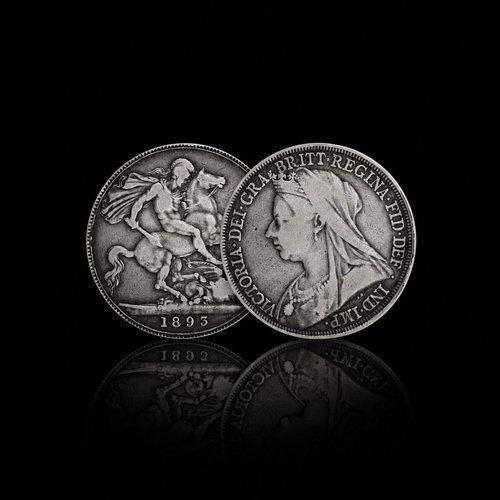
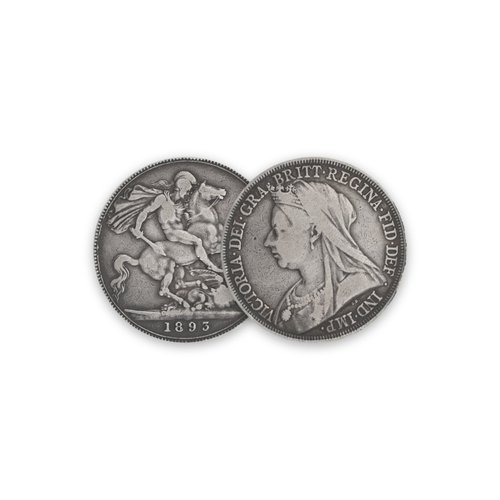 Queen Victoria Old Head Silver Crown 1893, First Year British Sterling Silver Coin£450
Are half crowns worth anything?
Half crowns dated 1946 or earlier contain silver, so they are worth more than face value: those to 1919 are sterling and those from 1920 to 1946 half silver. Half crowns from 1947 to 1967 are cupronickel and common. Low-mintage dates, such as 1905 and 1930, and coins in exceptional condition are sought by collectors.
Send us photos for a free valuation
What are half crowns made of?
Half crowns were sterling silver from 1816 to 1919, 50% silver from 1920 to 1946, and cupronickel, an alloy of copper and nickel, from 1947. All three weigh the same, so weight cannot tell a silver half crown from a cupronickel one; the date can. Earlier half crowns go back to 1551.
When was the half crown withdrawn?
The half crown stopped being legal tender on 1 January 1970, before decimal day, because it had no exact decimal equivalent. The last half crowns for general circulation were dated 1967, and 1970 dated half crowns were struck only for proof sets. Eight half crowns made a pound.
Are florins and two shilling coins worth anything?
Florins dated 1946 or earlier contain silver and are worth more than face value. Two shilling coins from 1947 to 1967, including the 1947, 1948, 1949 and 1966 dates, are cupronickel and were made in very large numbers, so they are common. The florin carried on as the decimal 10 pence until 1993.
Are old shillings worth anything?
Shillings dated 1946 or earlier contain silver: the 1929 shilling, for example, is 50% silver. Shillings from 1947 onwards, including 1948 and 1949, are cupronickel and common. From 1937 to 1966 shillings came in English and Scottish designs. The shilling became the decimal five pence and was withdrawn in 1990.
What is a sixpence worth?
A sixpence was half a shilling and became two and a half new pence in 1971. Sixpences dated 1946 or earlier contain silver; those from 1947, such as 1950, 1953 and 1963, are cupronickel and very common. Sixpences stayed legal tender until 1980. Brides keep the tradition of a silver sixpence in the shoe.
Where to get a sixpence for a wedding: any silver sixpence dated 1946 or earlier carries the tradition best. We sell silver coins on our silver coins page.
Are silver threepences worth anything?
Yes. Silver threepences contain silver, sterling to 1919 and 50% from 1920, and they are small, so they were often saved and baked into Christmas puddings. Silver threepences for circulation were made until 1945, and almost all 1945 coins were melted, so that date is scarce. The twelve-sided brass threepence has no silver.
Is a 1943 threepence valuable?
A 1943 silver threepence is 50% silver, so it is worth more than face value, and wartime silver threepences were among the last made for circulation. Condition decides the rest: a coin with full detail on the portrait is worth more than a worn one. The 1943 brass threepence is common. Send photos of both sides for a free valuation.
How many old pennies were in a shilling and a florin?
Twelve old pennies made a shilling, and a florin, worth two shillings, was 24 old pennies. A half crown was 30 pennies and a crown 60. Twenty shillings, or 240 pennies, made a pound, which is why decimal day in 1971 turned the shilling into 5 new pence and the florin into 10 new pence.
What florins are silver and which are rare?
Florins dated 1946 or earlier are silver: sterling to 1919 and 50% silver from 1920. The first florin of 1849 is known as the Godless florin because its legend left out DEI GRATIA. Low-mintage dates and coins in exceptional condition are the ones collectors want; florins from 1947 are cupronickel.
Which George V and George VI coins are valuable?
George V coins of 1911 to 1919 are sterling silver and those of 1920 to 1936 half silver; George VI silver coins of 1937 to 1946 are half silver. Collectors look for the 1912, 1918 and 1919 pennies struck at Heaton or Kings Norton, marked H or KN beside the date, and for coins in exceptional condition.
Why did George VI coins drop IND IMP?
From 1949 British coins no longer carried IND IMP, short for Emperor of India, because India had become independent in 1947. Coins dated 1937 to 1948 carry the old legend and those from 1949 do not, which is a quick way to date George VI coins. It does not change their value on its own.
Are old pennies and halfpennies worth anything?
Most are common. Bronze pennies from 1860 onwards, including 1967 and the decimal 1971 new penny, were made in huge numbers. The rarities are the 1933 penny, of which about seven are known, and certain dates and varieties in exceptional condition. The 1942 halfpenny is a common date.
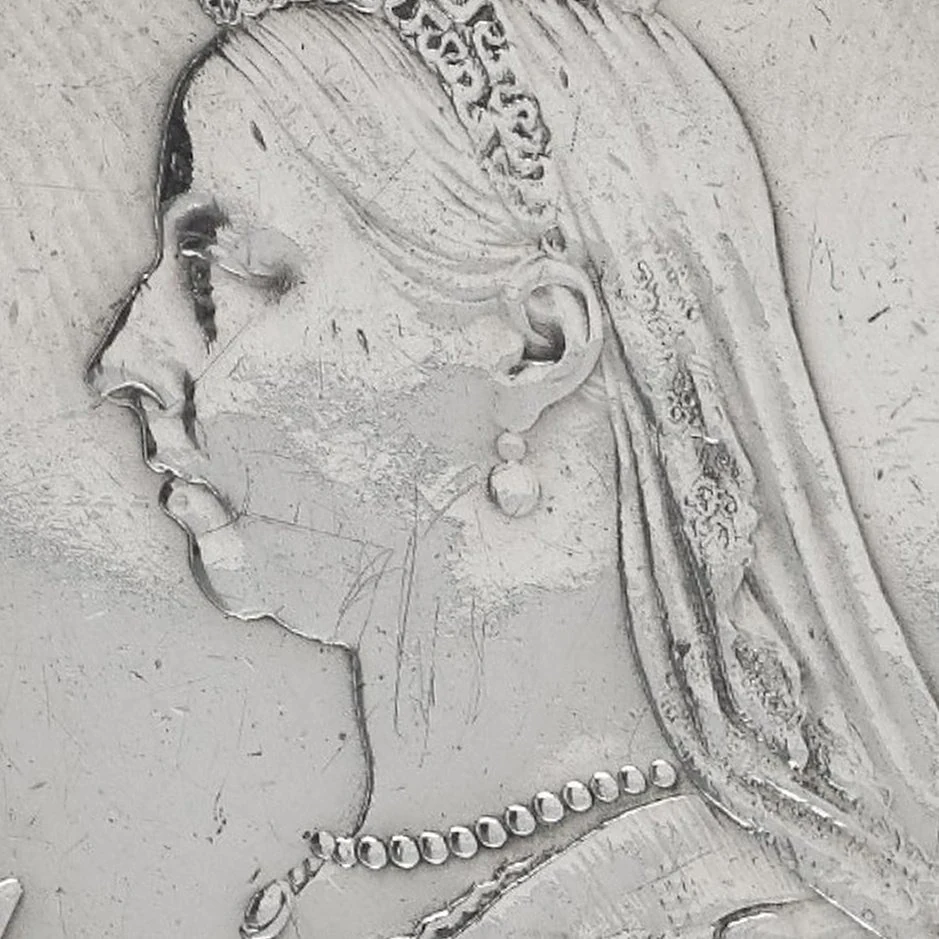
Condition decides
On any old coin, look at the high points of the portrait. Full detail and original lustre can make a common date worth more than face value.
Are old farthings worth anything?
Most farthings are worth little. Farthings, a quarter of a penny, were bronze from 1860; the wren design ran from 1937 until the last farthings in 1956, and they were withdrawn on 31 December 1960. Wartime dates such as 1942 and 1944 are common. Coins with full red mint colour are collected.
What is a five shilling coin from 1951 or 1953 worth?
The 1951 Festival of Britain and 1953 Coronation five shilling coins, or crowns, are cupronickel with no silver, and nearly six million 1953 crowns were made, so both are common. They remain legal tender at 25 pence. Cased examples in original boxes are worth slightly more than loose ones.
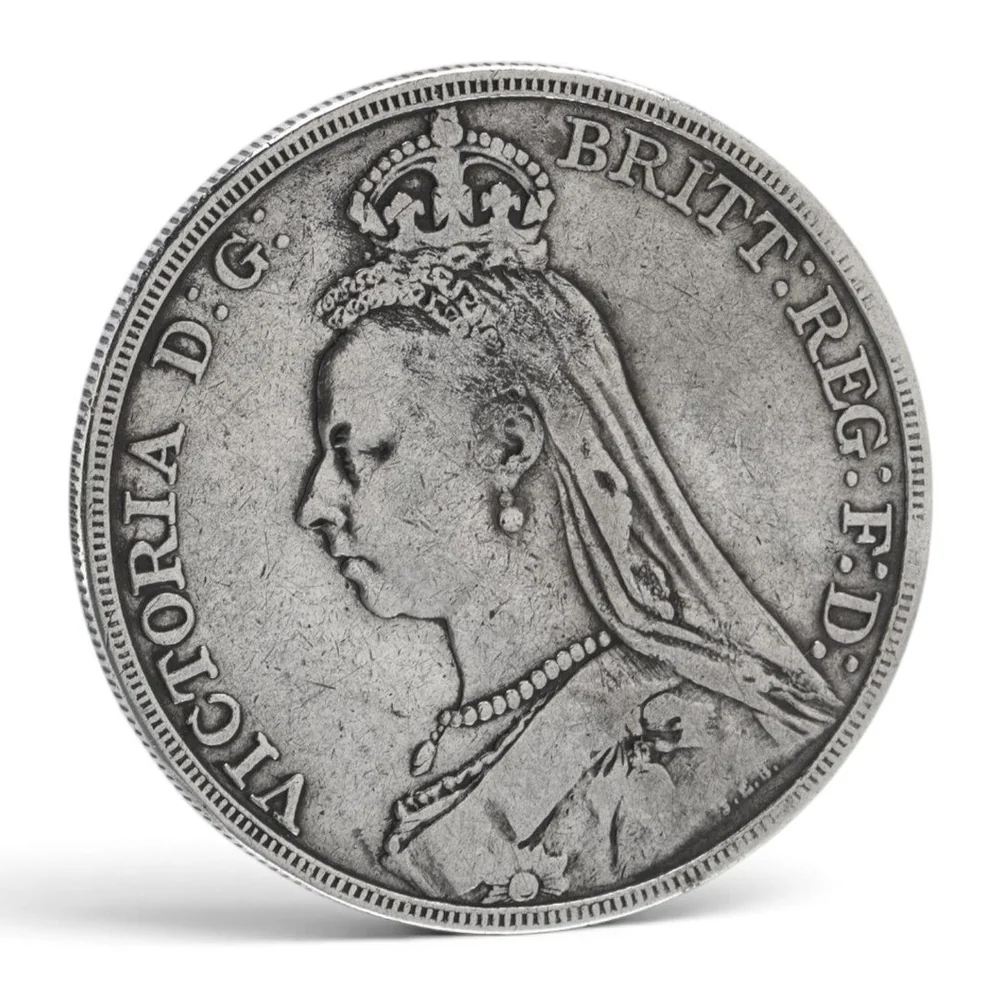
Silver crowns
Crowns from before 1947, like this 1889 Victorian crown, are silver. Our old British coins page covers every commemorative crown.
Every piece is different. Send us a few photos and we will tell you what yours is worth, free and with no obligation. Request a free valuation.
Request a free valuation
Sources
- Decimal day 15 Feb 1971; crown 25p; 1951 and 1953 crowns cupronickel, 1953 5,962,621
- Half crown 2s 6d, eight to the pound, silver periods, 14.14 g throughout, last circulation 1967, 1970 proofs, demonetised 1 Jan 1970, 1905 a
- Threepence: silver for circulation to 1945, 1945 mostly melted, brass from 1937
- Florin as 10p until 1993
- Shilling English and Scottish reverses 1937-1966, withdrawn 1990
- Sixpence legal tender to 1980, wedding tradition
- Farthing wren 1937-1956, demonetised 31 Dec 1960
- 1947 change to cupronickel to repay US wartime silver
- 1933 penny, about seven known
- Godless florin 1849
- Heaton (H) and Kings Norton (KN) pennies 1912, 1918, 1919
- IND IMP dropped 1949
- Irish coinage, Metcalfe designs 1928, ÉIRE from 1938
- US gold recall 1933
- £sd, d for denarius
- 1967 pennies struck into 1970
- Cartwheel penny 1797