Jewellery Resale Value: Does Jewellery Hold Its Value, and What Affects It?
Why some jewellery holds its value and some does not, what a second buyer actually pays for, and how to keep the value of what you own.
Does jewellery hold its value?
- Resale value is what a second buyer pays for: metal, stones, maker, age and condition.
- Retail margin, making costs and VAT are not recovered when a piece is sold on.
- Signed, antique and certified pieces hold value best; altered pieces least.
- Keep boxes and papers, avoid alterations, and do not clean a piece before a valuation.
In this article
Does jewellery hold its value?
Some jewellery does and some does not, and the difference is predictable. A piece holds its value when the things a second buyer pays for (the metal, the stones, the maker, the age and the condition) are a large part of what the first buyer paid. It loses value when most of the price was retail cost.
| Tends to hold value | Tends to lose value |
|---|---|
| Signed pieces by houses with steady demand, with boxes and papers | Unsigned modern pieces bought at full retail |
| Antique jewellery of a clear period, in original condition | Altered, repaired or heavily worn pieces |
| Natural stones with a laboratory report | Stones of unknown origin or treatment |
| High-carat gold and platinum | Plated, rolled or gold-filled jewellery |
| Classic designs that stay in demand | Fashion pieces tied to one season |
For named houses, see does designer jewellery hold its value? and does Cartier hold its value?
Why resale is lower than the price you paid
A new piece's shop price pays for more than the piece. It covers the retailer's margin, the shop and staff, marketing, the making of the piece and, in the UK, VAT at the standard rate (GOV.UK). None of that is recovered when the piece is sold on: a buyer pays for what the piece is, not what it cost to sell it the first time.
- Retail costs
Margin, premises, staff and marketing are part of every new price, and none is resold.
- VAT
Paid on a new purchase and not refunded to a private seller.
- Making costs
Labour for a modern, unsigned design is rarely valued separately on resale.
- The buyer's resale
A dealer must be able to sell the piece on, so the offer allows for the dealer's own costs and the time to sell.
This is why an insurance valuation, which is the cost of replacing a piece new, is higher than any offer. See our expert valuation for what a selling valuation includes.
What affects the resale value of jewellery
Maker and signature
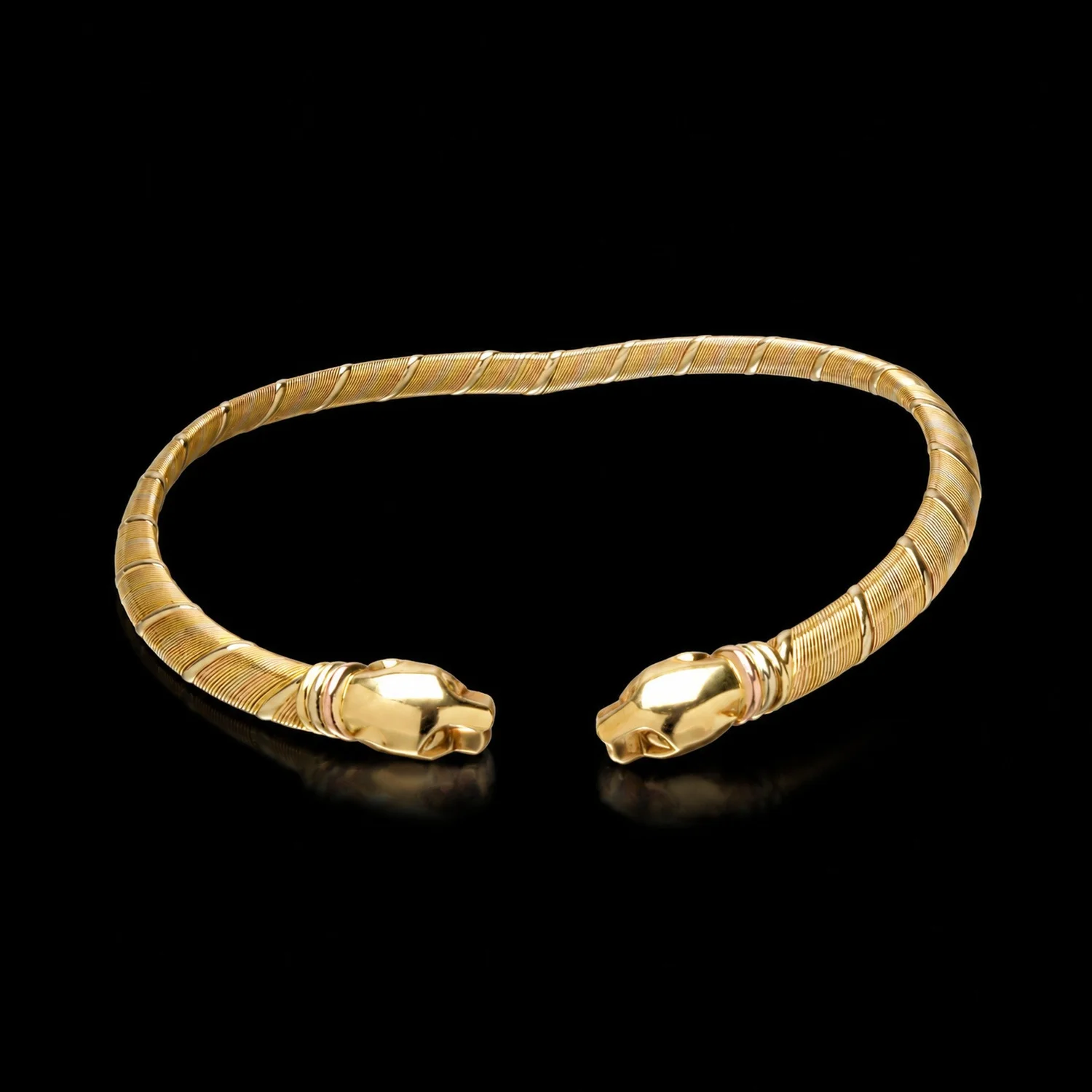
A signature and serial number from a house with steady demand (Cartier, Van Cleef & Arpels, Bulgari, Tiffany & Co.) is often the single largest factor. Buyers check the signature first.
Our Cartier Panthère choker came with its original box. See sell designer jewellery.
Age, period and originality
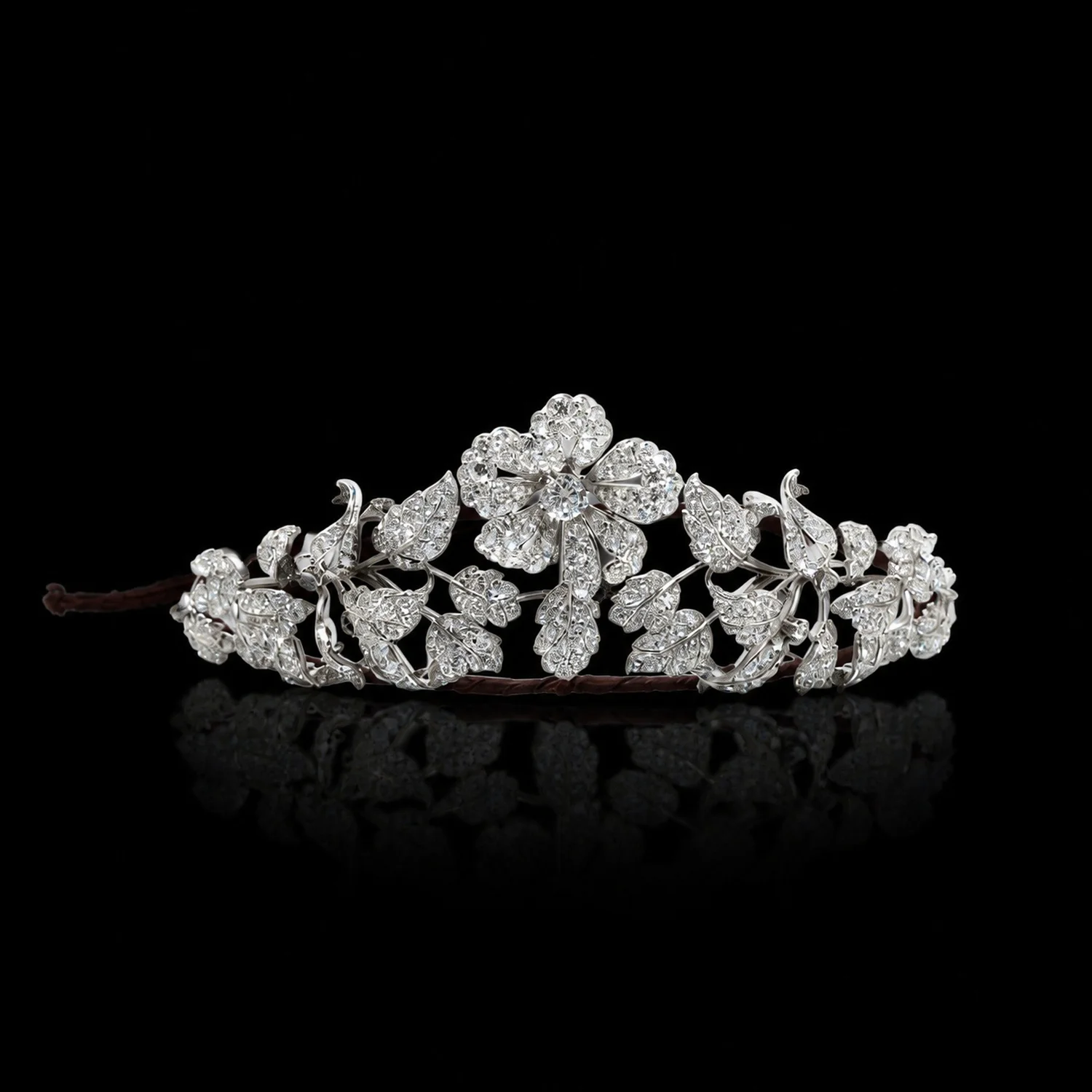
Antique jewellery is valued on its period and workmanship as well as its materials: a Georgian, Victorian or Edwardian piece in original condition is sought for what it is, not only for its gold and stones.
Dating comes first: see how to date antique jewellery.
The stones
Diamonds are judged on cut, colour, clarity and carat weight, the four Cs set out by GIA. Coloured stones are judged on colour, clarity, size, treatment and origin. A laboratory report from GIA, GRS, SSEF or a similar laboratory removes doubt, and doubt lowers offers. Old cuts such as rose, old mine and old European cuts are valued in antique pieces for their period.
The metal and hallmarks
A hallmark confirms the metal and its fineness, and a British hallmark also dates the piece (Goldsmiths' Company Assay Office). Higher-carat gold and platinum carry more metal value than 9KT gold or silver. See gold hallmarks explained and platinum or white gold?
Condition
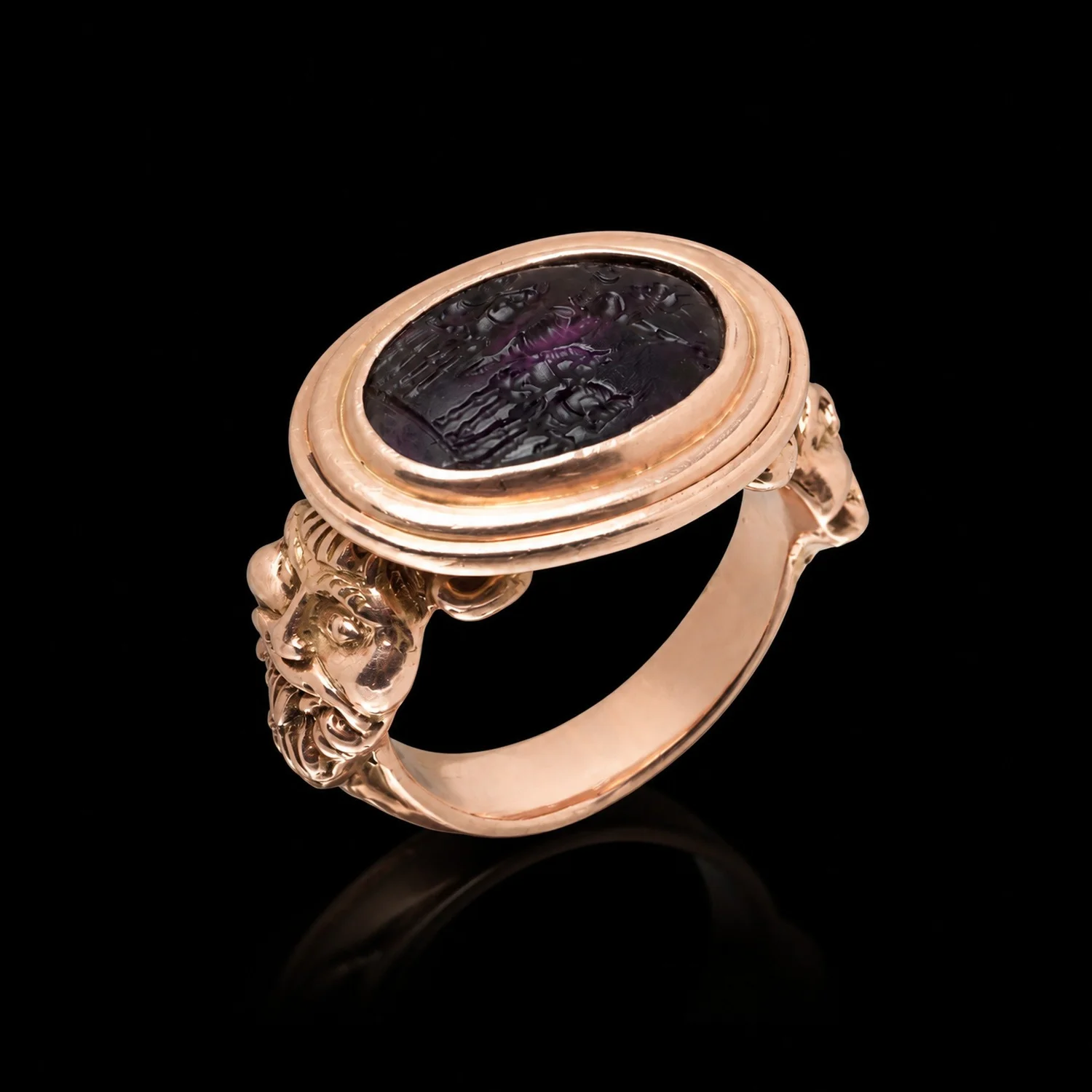
Worn claws, chipped stones, broken clasps, solder repairs, thinned shanks and resizing all lower a price, because the next buyer must pay to put them right or accept them.
Original condition matters most in antique pieces, such as our 19th century intaglio ring.
Boxes, papers and history
Original boxes, certificates, receipts and service records confirm what a piece is and when it was sold, and they help buyers resell it. For antique pieces, a fitted case from a known jeweller adds to the story: see how to date an antique jewellery box.
Demand
Some designs stay in demand for decades; others fall out of fashion. A dealer's offer reflects how quickly a piece is likely to sell to the next buyer.
Request a free valuation
How to protect the resale value of your jewellery
- Keep everything: boxes, pouches, receipts, certificates and service records, together.
- Do not alter it: resizing, re-setting or engraving a signed or antique piece can lower its value. If a ring must be resized, use a jeweller experienced with that maker or period.
- Clean gently or not at all: warm soapy water and a soft brush for modern pieces; nothing on antique pieces, foil backs, pearls or porous stones before a valuation.
- Repair properly: loose claws and worn clasps are worth fixing early, but have the work done with the right materials, not with lead solder.
- Store pieces apart: diamonds scratch other stones and metal; pearls need air.
Selling well
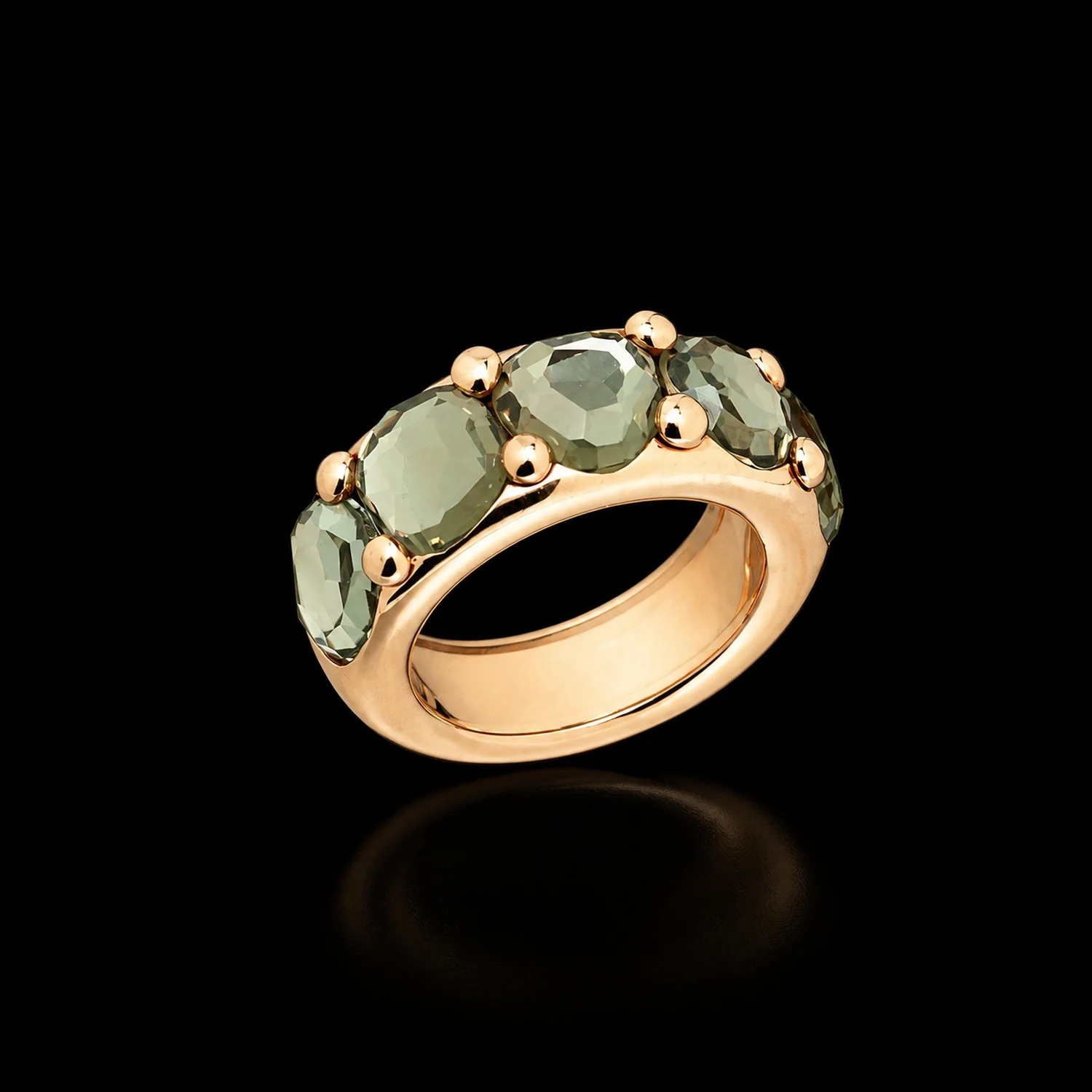
Sell a signed or antique piece to a specialist who values the maker and the period, not only the metal. Compare more than one free valuation, and sell when you are ready rather than in a hurry.
See is your old jewellery worth money? and dealer or auction?
Every piece is different. Send us a few photos and we will tell you what yours is worth, free and with no obligation. Request a free valuation.
Selling from anywhere in the UK? Sell jewellery by post or book a free FedEx collection, insured in transit at our cost.
Send us photos for a valuation
- A second buyer pays for what a piece is, not what it cost to sell new.
- Maker, period, stones, metal, condition, papers and demand decide resale value.
- Signed, antique and certified pieces hold value best.
- Protect it: keep the papers, avoid alterations, do not clean before a valuation.
Questions we are asked
Does jewellery hold its value?
Some jewellery does. Signed pieces from houses with steady demand, antique jewellery in original condition, natural stones with laboratory reports and high-carat gold or platinum tend to hold value. Unsigned modern pieces bought at full retail usually resell for much less, because most of their price was retail cost.
Why is the resale value of jewellery lower than the price I paid?
A new piece's shop price includes the retailer's margin, premises, staff, marketing, making costs and VAT. None of that is recovered on resale: a buyer pays for the metal, stones, maker, age and condition, and a dealer must allow for the cost and time of selling the piece on.
What affects the resale value of jewellery?
The maker and signature, the age and period, the stones and any laboratory report, the metal and hallmarks, the condition and any repairs or alterations, the original box and papers, and how much demand there is for the design. A specialist weighs all of these together, not only the gold weight.
Do boxes and papers increase the resale value of jewellery?
Yes, especially for signed jewellery and watches. Original boxes, certificates, receipts and service records confirm the maker and the date of sale, which reassures the next buyer and makes the piece easier to resell. Keep them together with the piece and send photographs of them with a valuation request.
Does resizing a ring reduce its value?
It can. Resizing cuts and solders the shank, and on signed or antique rings buyers prefer the original size and work. A well-made resize on a modern ring makes little difference, but a poor one, or several, lowers the price. Keep any evidence of who did the work.
Should I clean jewellery before selling it?
No. Cleaning, polishing or repairing a piece before it is seen can damage antique surfaces, foil-backed stones, pearls and enamel, and buyers want to see it as it is. Leave it as it is, photograph it in daylight, and let the buyer decide what work, if any, it needs.
Does antique jewellery hold its value better than modern jewellery?
Antique jewellery is valued on its period, workmanship and rarity as well as its materials, and none of its price is retail cost, so good pieces in original condition hold value well. Modern unsigned jewellery loses its retail costs on resale. Condition and originality decide how well an antique piece holds up.
What jewellery has the best resale value?
Signed pieces from houses with steady demand, such as Cartier, Van Cleef & Arpels and Bulgari, with their boxes and papers; antique jewellery of a clear period in original condition; and natural diamonds or coloured stones with laboratory reports. Every piece is valued on its own merits.
Where can I sell my jewellery for the best price?
Sell each piece to the buyer who can resell it best: antique, signed and gem-set jewellery to a specialist who values the maker, period and stones, and everyday gold to a reputable gold buyer after comparing offers. Get free valuations from photographs, and do not clean or repair pieces before they are seen.
How can I sell a diamond for the best price?
Get a laboratory report if the diamond is large or the ring is signed, keep the box and receipt, and sell to a specialist who grades the stone rather than pricing the ring on its gold. Compare more than one free valuation, and sell when you are ready rather than in a hurry.
How much can I get for jewellery at a pawn shop?
A pawnbroker lends a share of what they could resell the piece for, so a pawn loan is normally less than an outright sale, and you pay interest to redeem it. Pawnbrokers often price mainly on the metal. A specialist's free valuation shows what the piece would sell for outright.
Why do buyers offer different prices for the same jewellery?
Because they resell it differently. A specialist who can sell an antique or signed piece to a collector pays for its period and maker, while a general gold buyer who sends everything to a refiner pays for metal only. Overheads, testing and how quickly they can resell also differ.
How do I get the best price when selling silver or sovereigns?
Show each piece to a specialist who checks the maker, date and condition rather than weighing everything together. Keep silver unpolished and sets together, and keep sovereigns uncleaned, because rare dates, mint marks and good condition are worth more than the metal alone.
Want to know what your jewellery is worth?
Send photos and any papers. We buy directly, pay the same day after inspection, and have a 5.0 rating on Google.
- Free valuation from photos, within one working day
- Paid the same day after inspection
- Insured in transit, at our cost
- Mayfair and Braintree by appointment
New pieces reach our list first: join the Mozeris list.