Princess Diana's Jewellery: The Sapphire Ring, the Tiaras and What Has Sold
Her sapphire engagement ring, the tiaras, the choker and the cross, what has actually sold at auction, and a jeweller's guide to the oval sapphire cluster ring.
What was Princess Diana's engagement ring?
- An oval Ceylon sapphire of about 12 carats within 14 diamonds, in 18ct white gold, by Garrard, 1981. Catherine, Princess of Wales, has worn it since 2010.
- It was a design from Garrard's range, reported to cost £28,000, and it has never been sold.
- Her best-known jewels include the Spencer and Lover's Knot tiaras, a sapphire and pearl choker, the Swan Lake necklace and the Attallah cross.
- Named sales: the Swan Lake necklace, $1 million in 1999; the Attallah cross, £163,800 in 2023.
- Antique and vintage oval sapphire clusters give the same look in sizes most people wear.
In this article
Latest: October 2026
Diana is back in the headlines. In September 2026 a new memoir by her brother, Earl Spencer, was widely reported, including by the BBC.
The black silk dress she wore on 29 June 1994, known as the revenge dress, goes to Sotheby's in New York on 9 December 2026 with an estimate of $150,000 to $300,000, the Associated Press reported in September 2026. Designed by Christina Stambolian, it was one of the dresses Diana sold in 1997 to raise money for AIDS charities.
That has sent people searching for her jewels, above all the sapphire engagement ring. Below: the pieces, what has sold and for how much, then a jeweller's guide to how an oval sapphire cluster ring is made, dated, valued and bought.
Her six most famous jewels
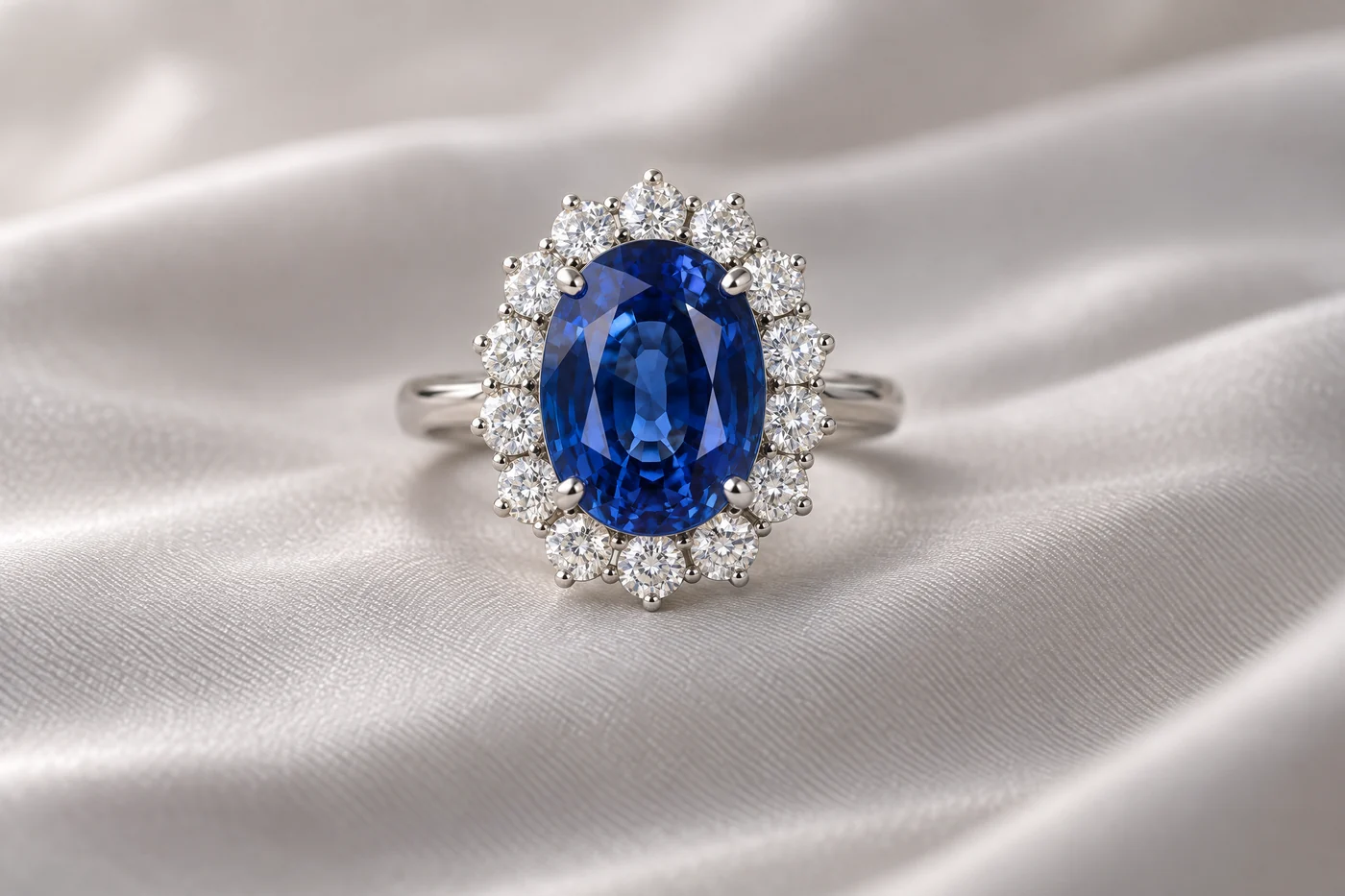
Each picture is an illustration of that type of jewel, not the piece itself.
The sapphire engagement ring, 1981
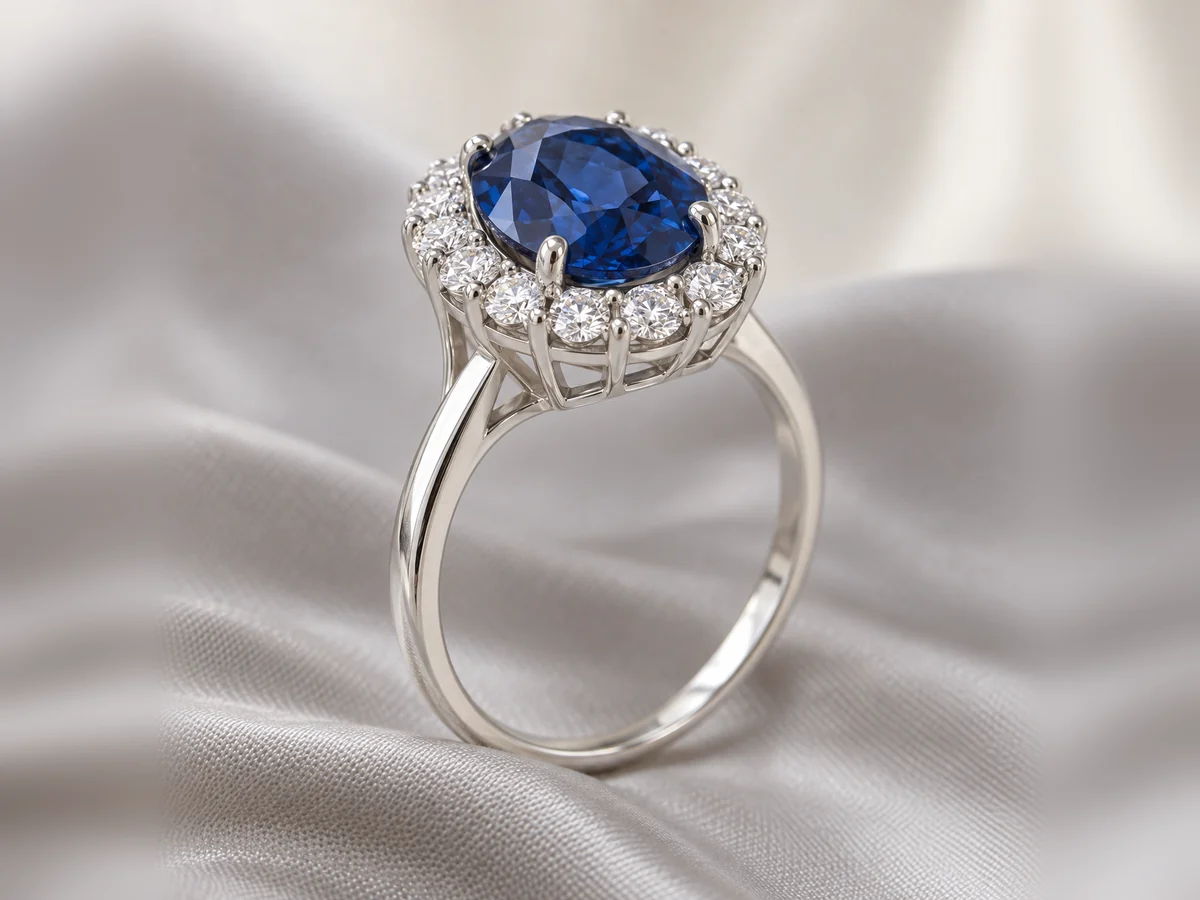
An oval Ceylon sapphire of about 12 carats within 14 diamonds, set in 18ct white gold by Garrard. The surprise is that it was not made for her: it was a design in the Garrard range that anyone could buy, and it cost £28,000, the Yorkshire Post reported in 2010.
The design looks back to the sapphire and diamond cluster brooch Prince Albert gave Queen Victoria in 1840. Prince William gave the ring to Catherine Middleton when he proposed in Kenya in 2010. It has never been sold, so it has no market price, whatever figures appear online.
The Spencer tiara
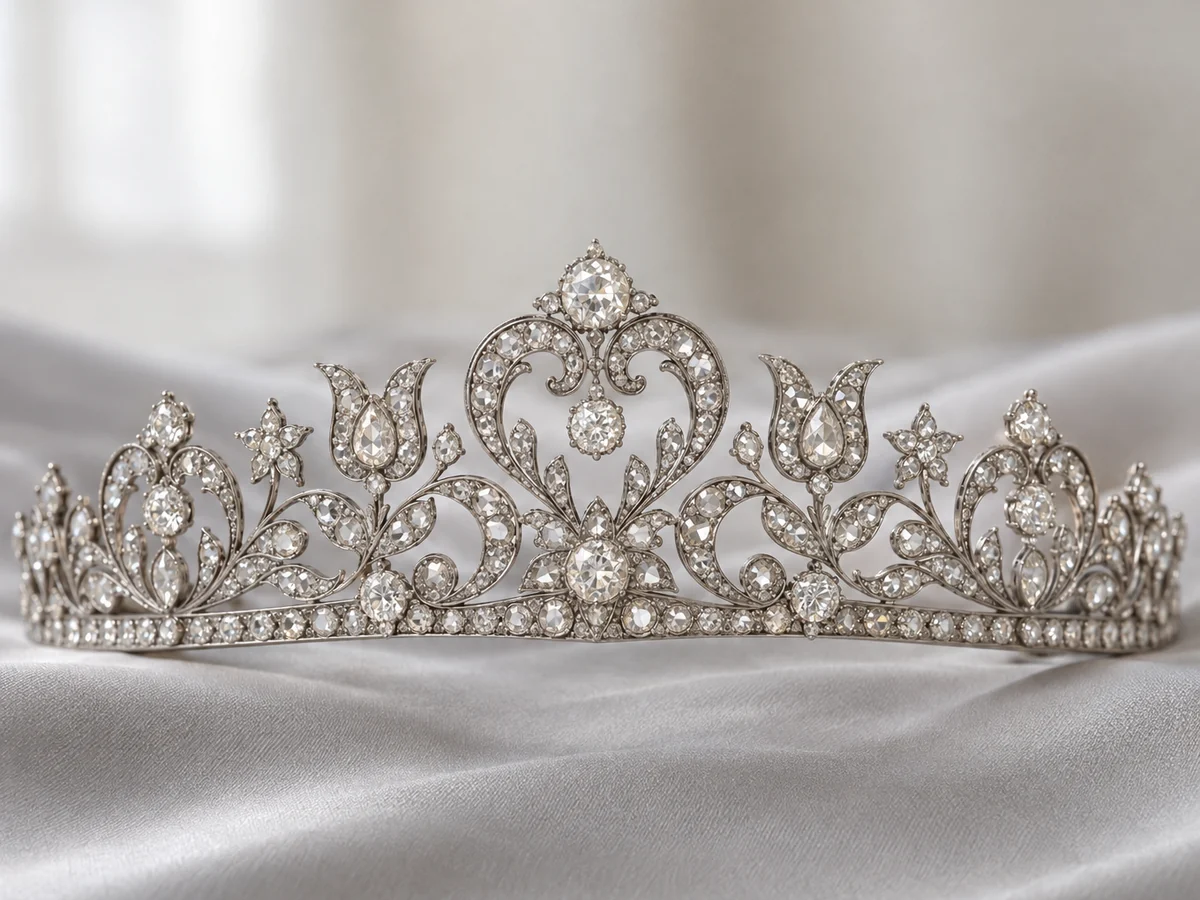
A Spencer family heirloom built up over time: pieces left to Lady Sarah Spencer in 1875, a centre given as a wedding present in 1919, and four matching sections added by Garrard in 1937.
Diana wore it at her wedding in 1981, chosen over the Lover's Knot partly because it was lighter. It belongs to the Spencer family, and went on public view at Sotheby's in London in 2022, in an exhibition of royal and aristocratic tiaras.
The Cambridge Lover's Knot tiara
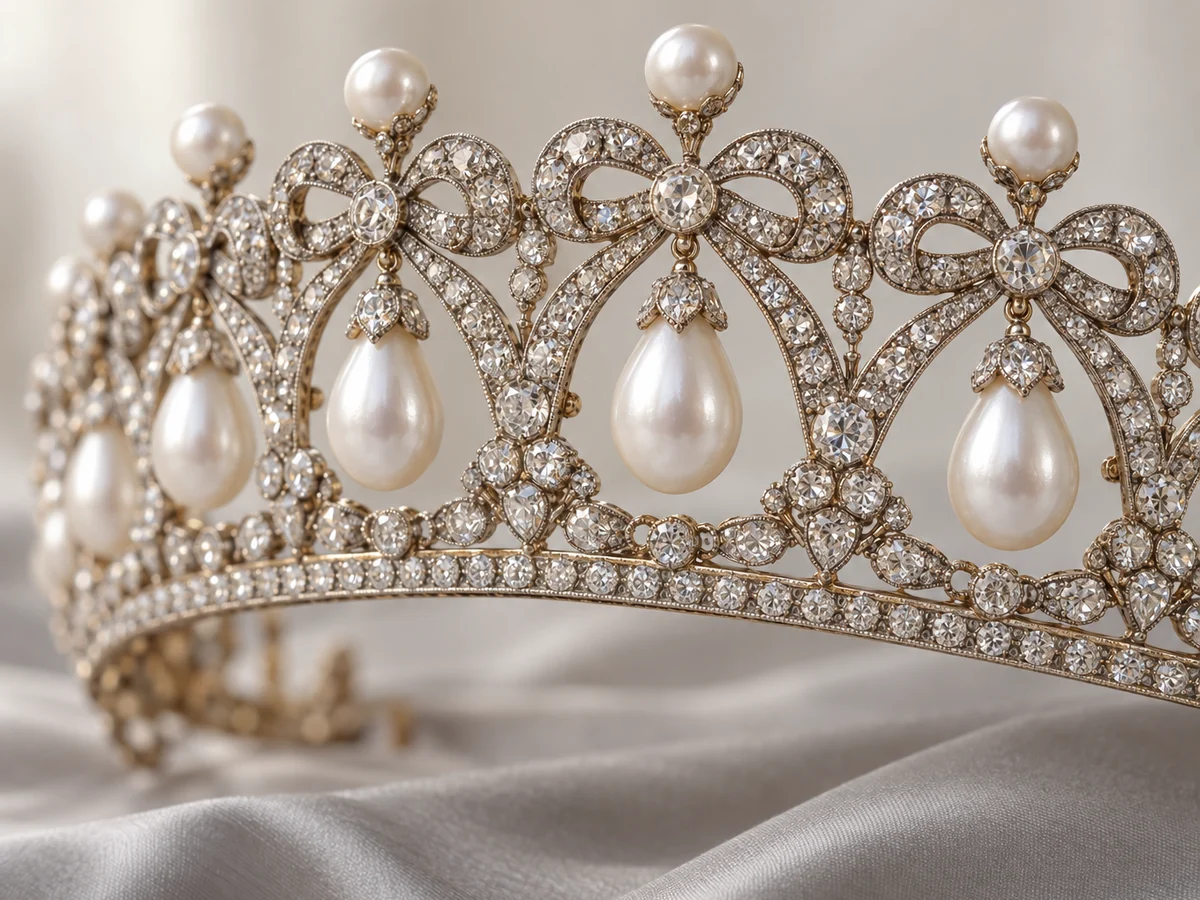
Made by Garrard for Queen Mary: diamond lover's knot bows with 19 hanging pearls. The Queen gave it to Diana as a wedding present in 1981. It was returned after the divorce, and Catherine, Princess of Wales, has worn it since 2015.
The sapphire and pearl choker
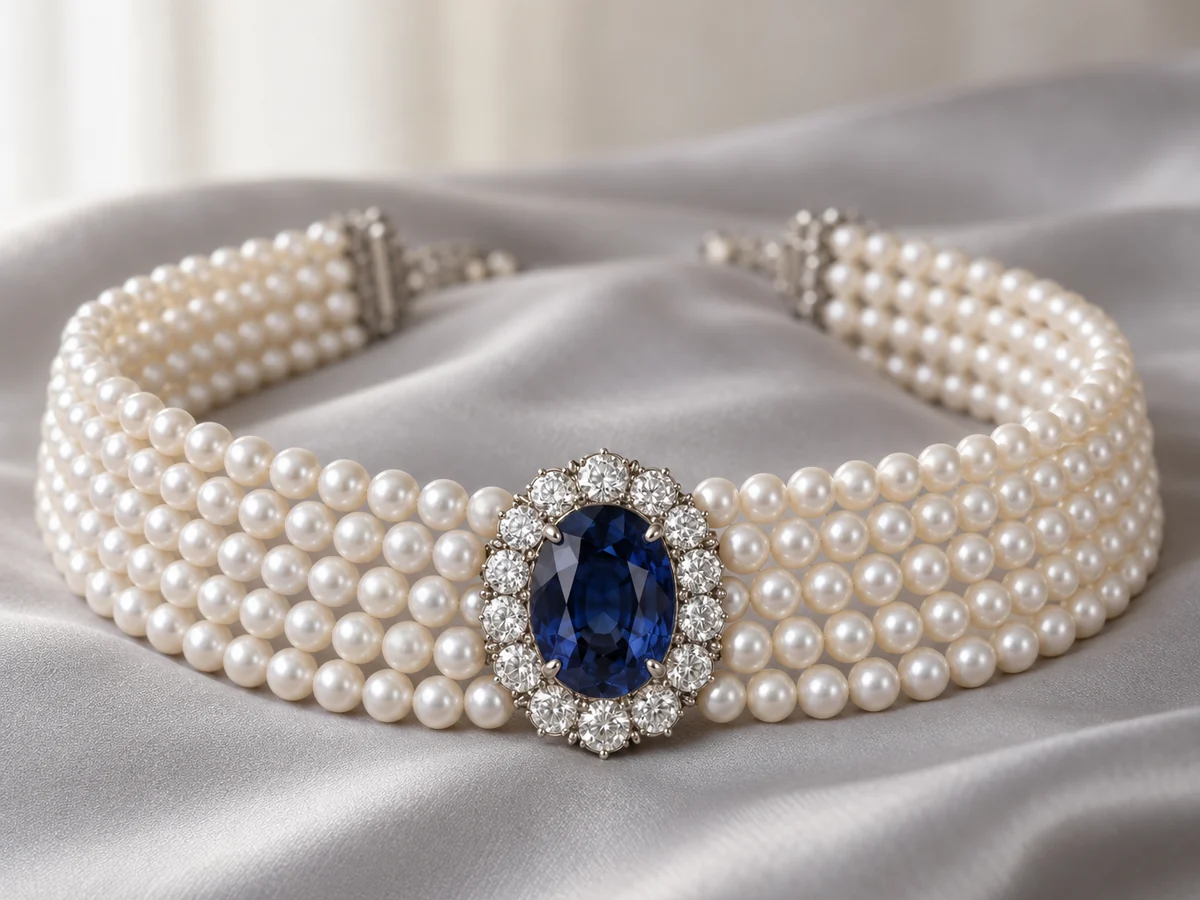
A large oval sapphire and diamond brooch, a wedding present from the Queen Mother, used as the clasp of a seven-strand pearl choker. Diana wore it at the White House in 1985, and with the revenge dress in June 1994.
The Swan Lake necklace
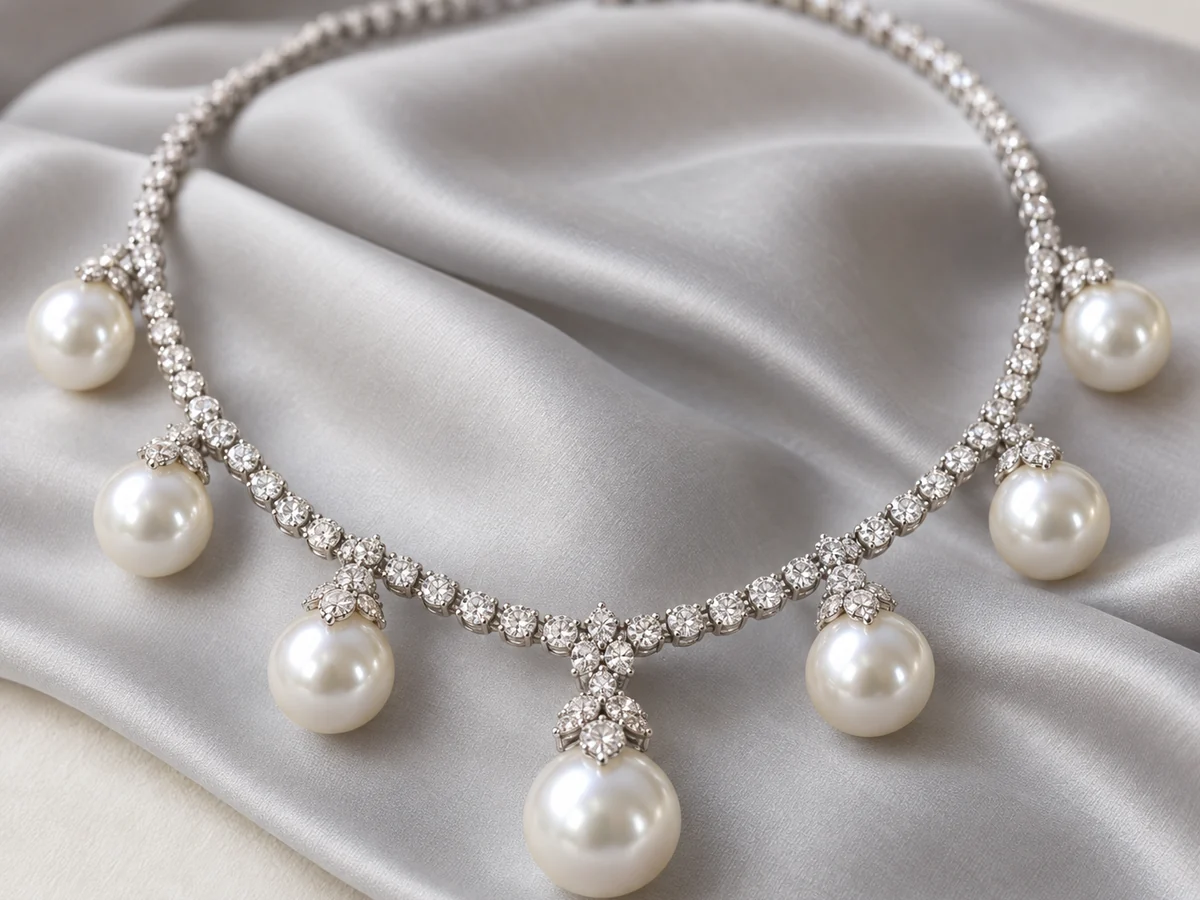
Made by Garrard in platinum with 178 diamonds and South Sea pearls. Diana wore it on 3 June 1997 at the Royal Albert Hall. It sold at Guernsey's in December 1999 for $1 million, and in 2023 went privately to a museum.
The Attallah cross
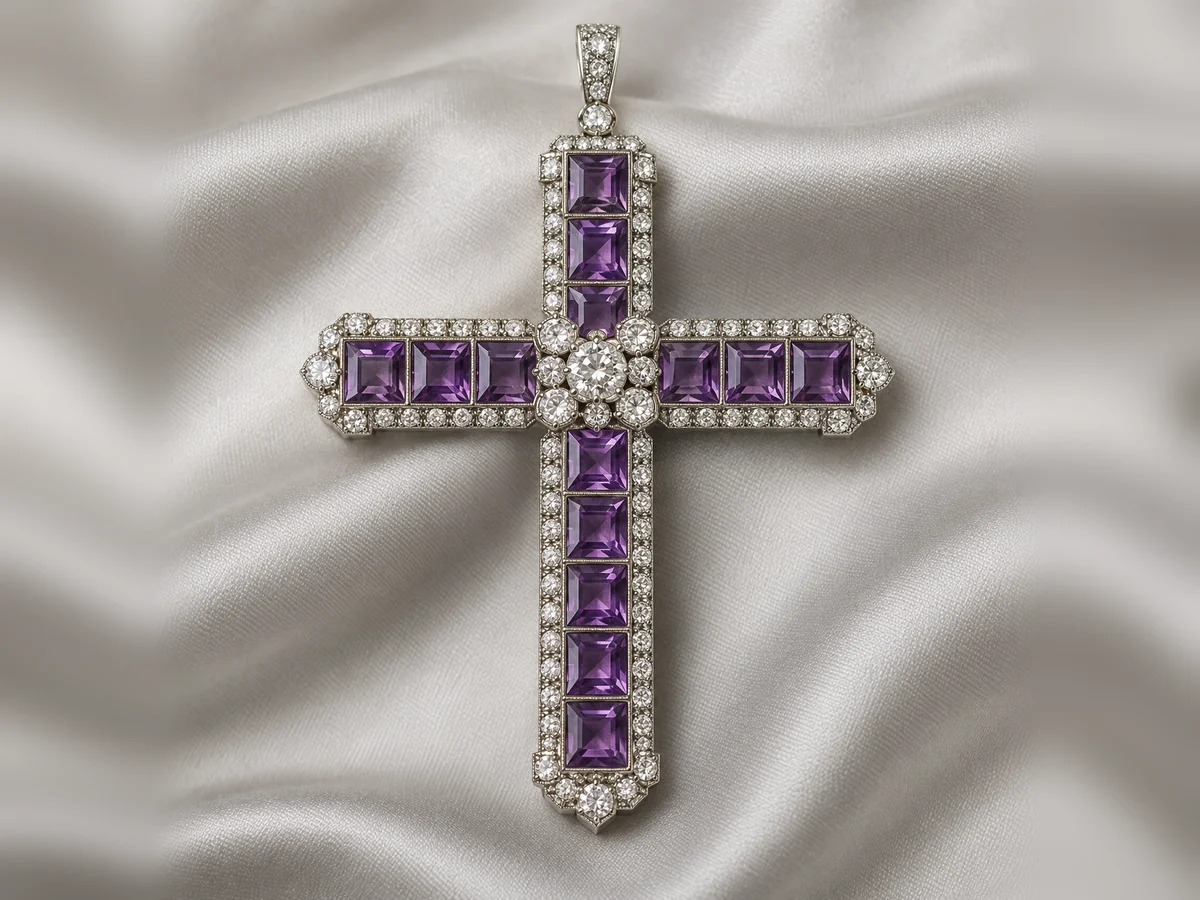
A Garrard pendant of about 1920, set with square-cut amethysts and about 5.25 carats of diamonds. Naim Attallah lent it to Diana, who wore it to the Birthright gala in 1987. It came to Sotheby's from his estate and sold in London in January 2023.
Twelve carats is a very large sapphire. Most sapphire cluster rings, antique or modern, have far smaller centre stones, often a carat or two, which is why the look is within reach.
Sources: Wikipedia, the engagement ring and Jewels of Diana, Princess of Wales; National Jeweler on the Swan Lake necklace (June 2023) and the Attallah cross (January 2023).
What has sold, and why provenance adds value
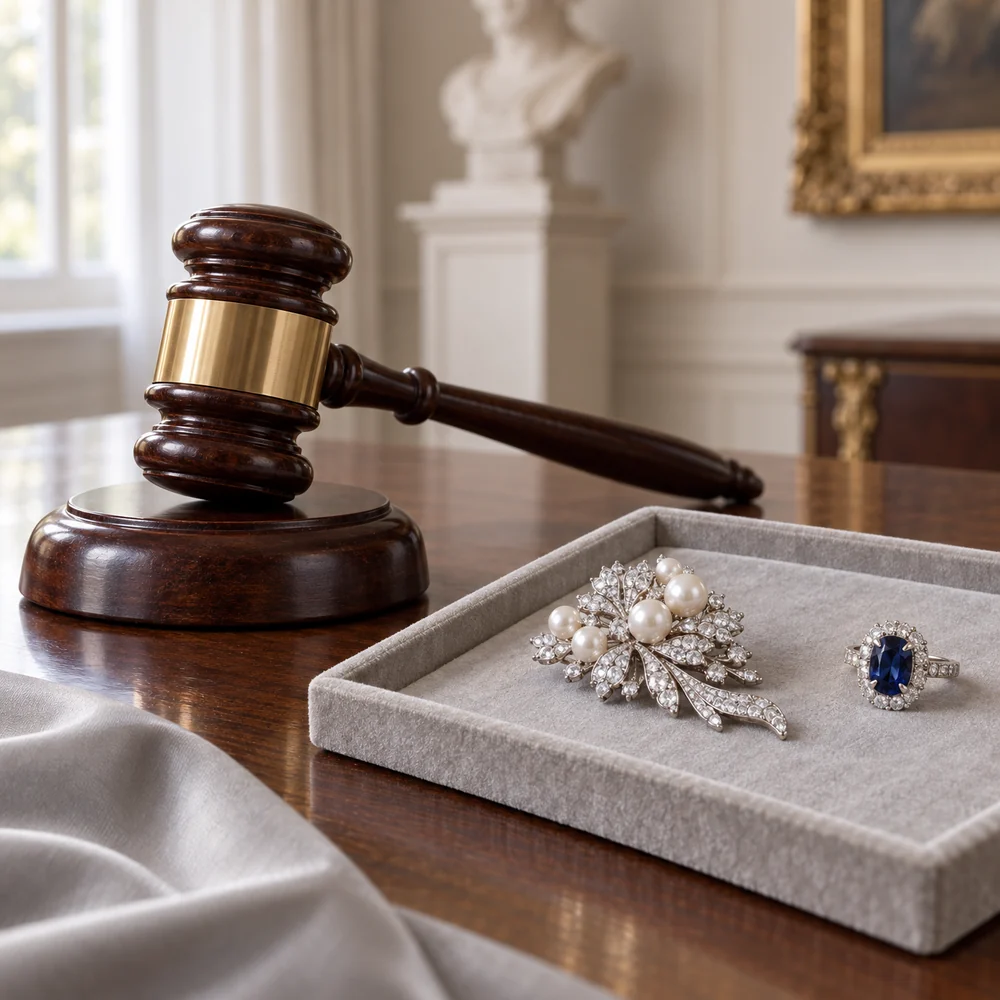
The named sales
Very little of Diana's jewellery has ever been sold. These are the named sales with published figures.
The Swan Lake necklace has now changed hands twice, and the Attallah cross made more than its top estimate. For scale, a jumper she wore in 1981 sold for nearly 14 times its estimate.
| What | Sale | Result |
|---|---|---|
| Swan Lake necklace | Guernsey's, December 1999 | $1 million |
| Swan Lake necklace | Sold by private treaty to a museum before Guernsey's sale, June 2023 | Not disclosed; estimate was $5 million to $15 million |
| Attallah cross | Sotheby's Royal and Noble sale, London, January 2023 | £163,800 against an estimate of £80,000 to £120,000 |
| For comparison: her 1981 black sheep jumper | Sotheby's, September 2023 | $1.1 million against an estimate of $80,000 |
Sources: National Jeweler on the Swan Lake sales (June 2023) and the Attallah cross (January 2023); KTVU, September 2023.
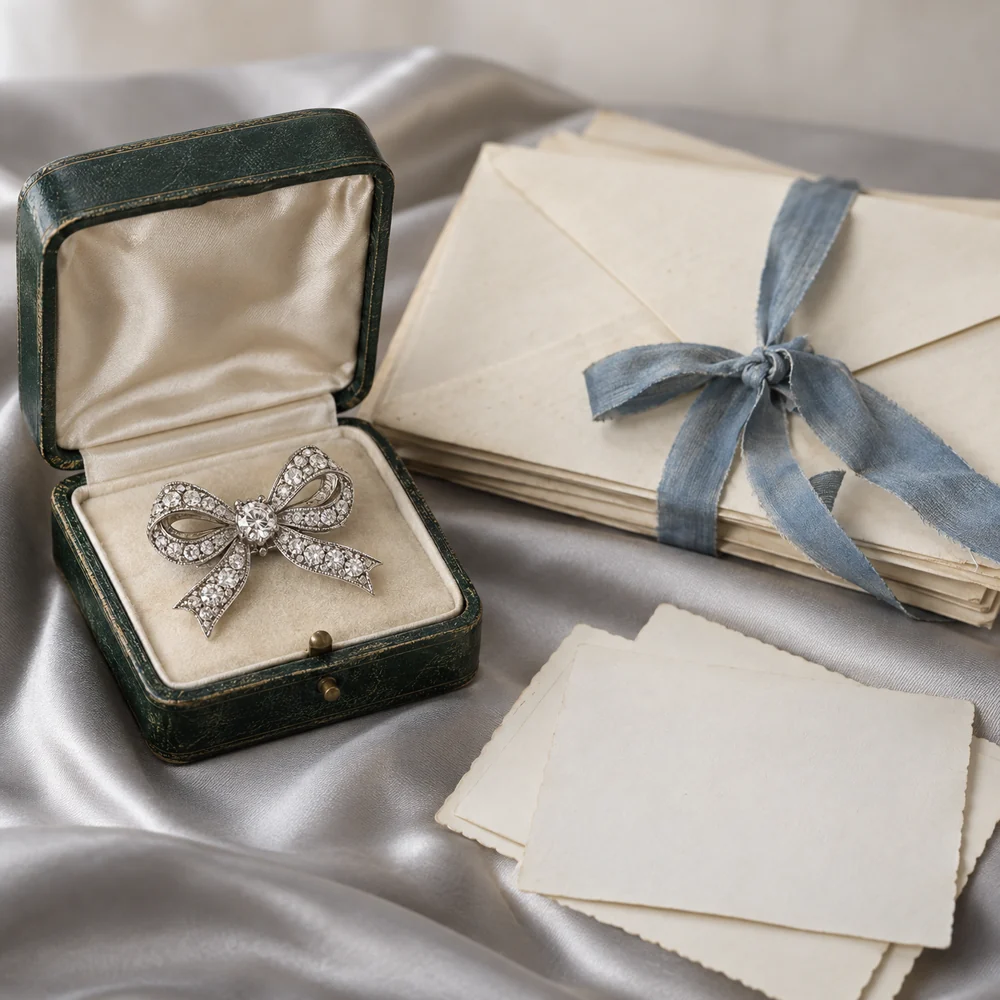
What counts as provenance
Provenance is the documented history of a piece: who owned it, who wore it, and the paper that proves it.
A sapphire is valued on its own qualities. A sapphire Diana is documented to have worn is also a piece of history, and collectors pay for the history.
- Photographs
Dated press or family photographs showing the piece being worn.
- Paper
Invoices, letters, insurance schedules and the maker's archive records.
- Exhibition and sale history
Earlier catalogues, such as the 1999 Guernsey's sale of the Swan Lake necklace, which later buyers can check.
- A clear chain of ownership
The Attallah cross came to Sotheby's from the estate of the man who had lent it to Diana.
A family story is not provenance. "Belonged to a duchess" adds nothing to a valuation without documents, and we value the jewel on its own merits until the paper is there.
Oval sapphire and diamond cluster rings, explained
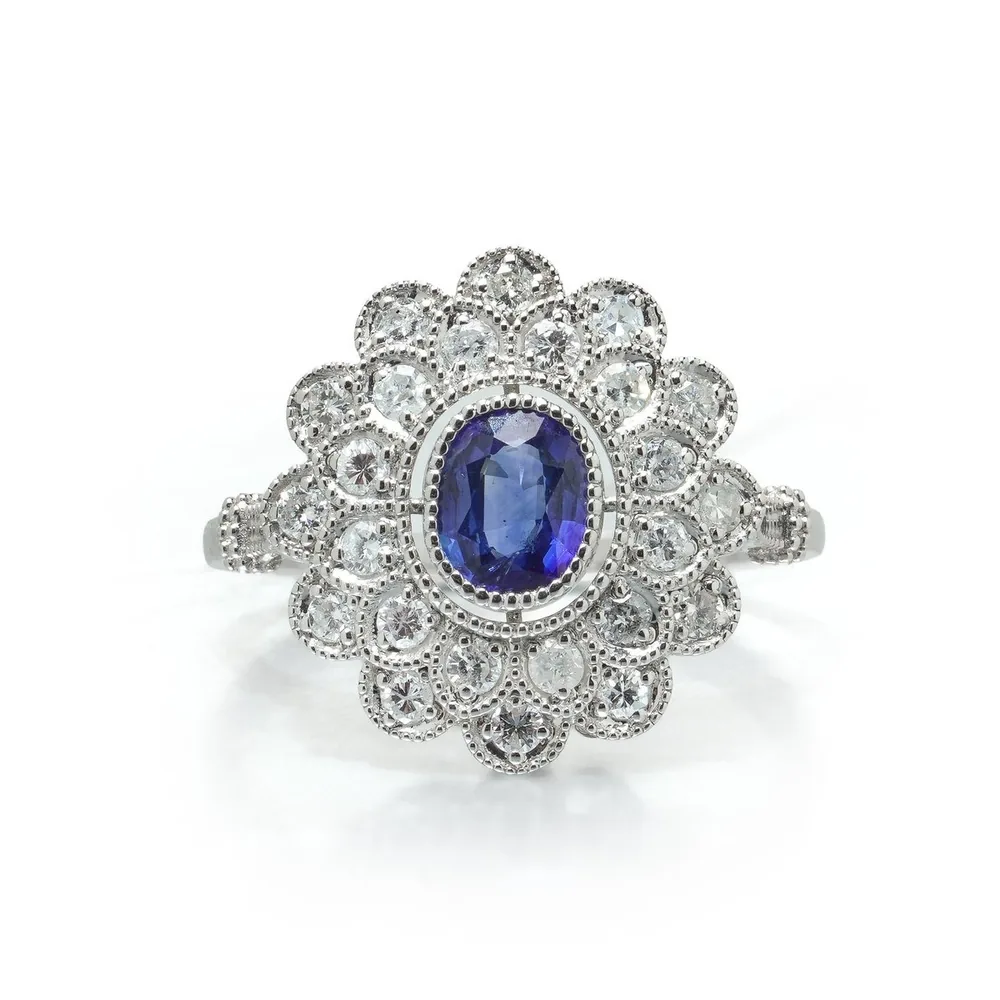
What a cluster is
A cluster ring sets a centre stone inside a frame of smaller stones, so the head looks bigger and brighter than the centre alone. The oval sapphire with a diamond surround is the classic version, made in every period since the 19th century.
This one is newly made in the 1920s manner and sold as "Art Deco style": a 0.64 ct heated oval Ceylon sapphire, rub over set, inside two rows of diamonds (0.46 ct) in milgrain-edged platinum, with an AIG report of April 2026. See the ring.
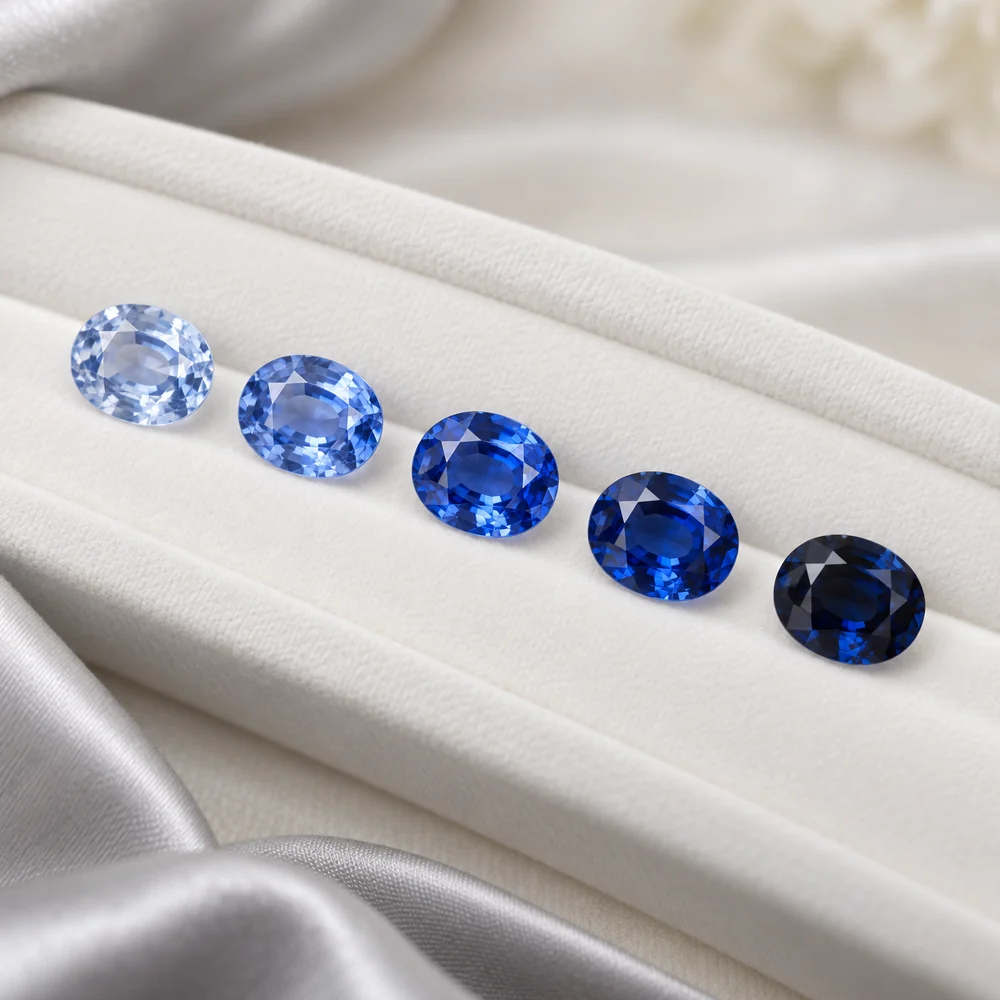
What "Ceylon sapphire" means
Ceylon is the old name for Sri Lanka, changed in 1972, and the trade still uses it for sapphires mined there. Sri Lankan stones are known for bright, clear blues, often lighter than the darker stones from some other sources.
Sapphire is corundum, 9 on the Mohs hardness scale, which is why it survives daily wear in a ring (GIA).
Most sapphires have been heated to improve their colour. It is a stable, accepted treatment, but an unheated stone of good colour is worth more, and only a laboratory report can confirm which you have.
See our cluster rings and sapphire cluster rings.
How to date and value a sapphire cluster ring
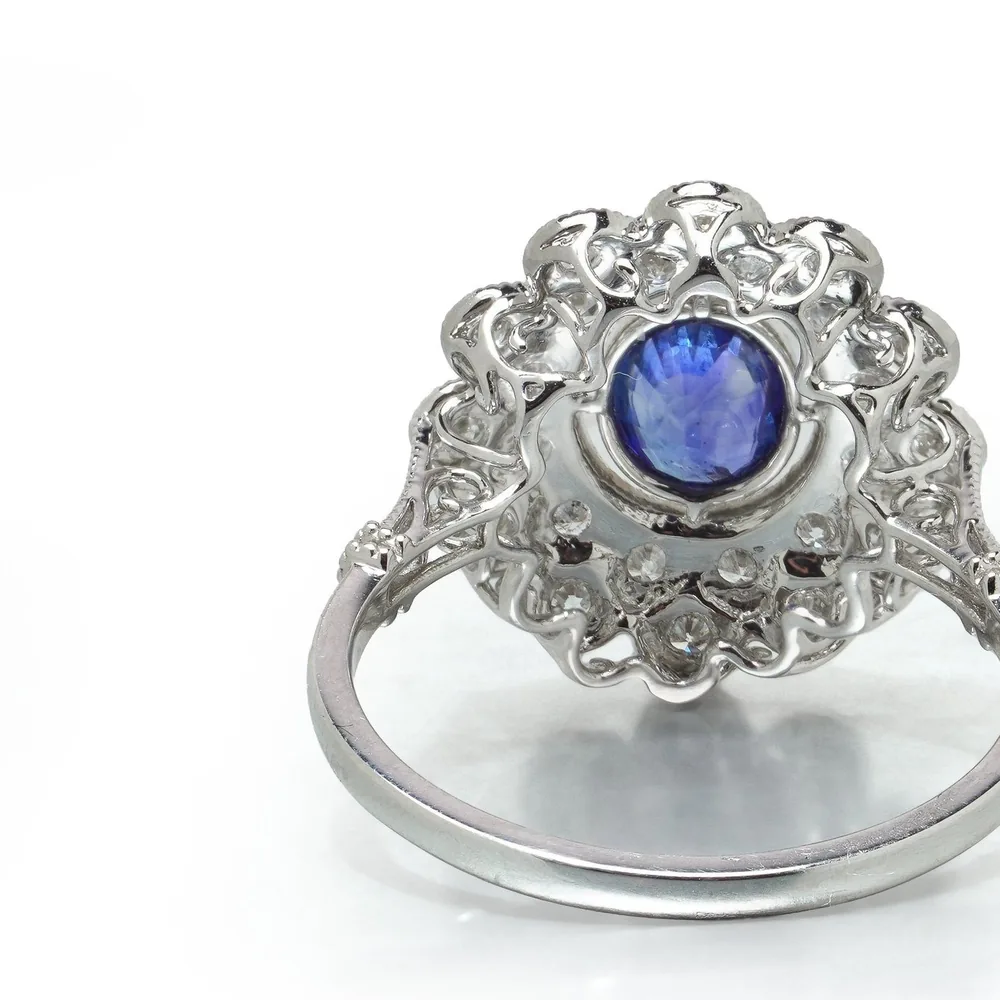
Start underneath
Turn the ring over. The back, the metal and the cut of the diamonds date a cluster far better than the front.
Georgian clusters have closed backs, often foiled. Later galleries open up to let light into the stones, and Edwardian and Art Deco makers pierced them into lace, as on this modern ring in the Deco manner.
| Period | Metal and setting | Diamonds |
|---|---|---|
| Georgian, 1714 to 1837 | Closed backs, often foiled; silver on gold | Rose cut, early old mine cut |
| Victorian, 1837 to 1901 | Gold shank with silver-topped settings for the diamonds | Old mine and rose cut |
| Edwardian, 1901 to about 1915 | Platinum or platinum on gold, light open galleries, milgrain edges | Old European cut |
| Art Deco, about 1920 to 1939 | Platinum, geometric outlines, millegrained collets, cabochon and calibré stones | Old European cut |
| 1950s to 1980s | 18ct white or yellow gold, raised claw-set clusters, British hallmarks with a date letter | Modern round brilliant |
| Recent, in an older style | Crisp modern milgrain, Pt950 or 750, often a laboratory report | Modern round brilliant |
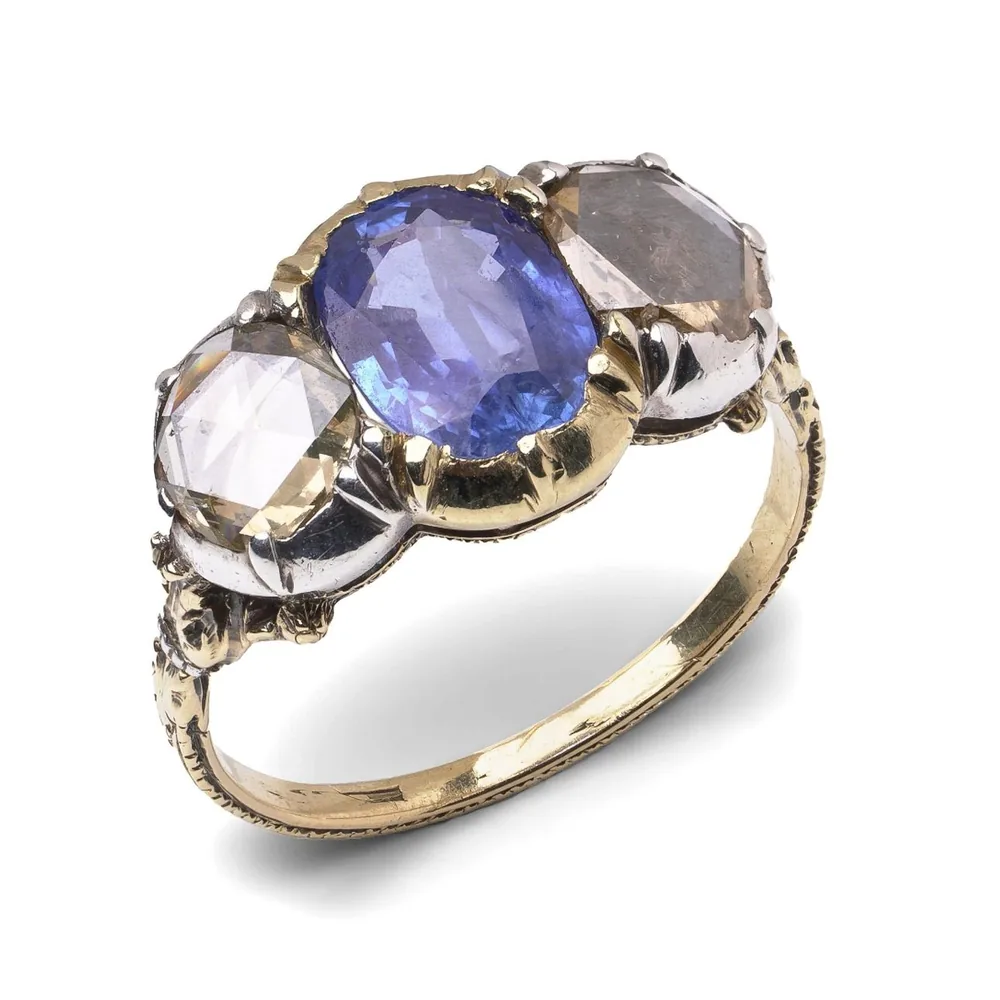
Victorian: rose cuts on silver-topped gold
Victorian rings set their diamonds in silver on a gold shank, and the diamonds are rose or old mine cut.
Here an unheated oval Ceylon sapphire sits between two rose cut diamonds in silver-topped 18ct gold: our Victorian three-stone ring.
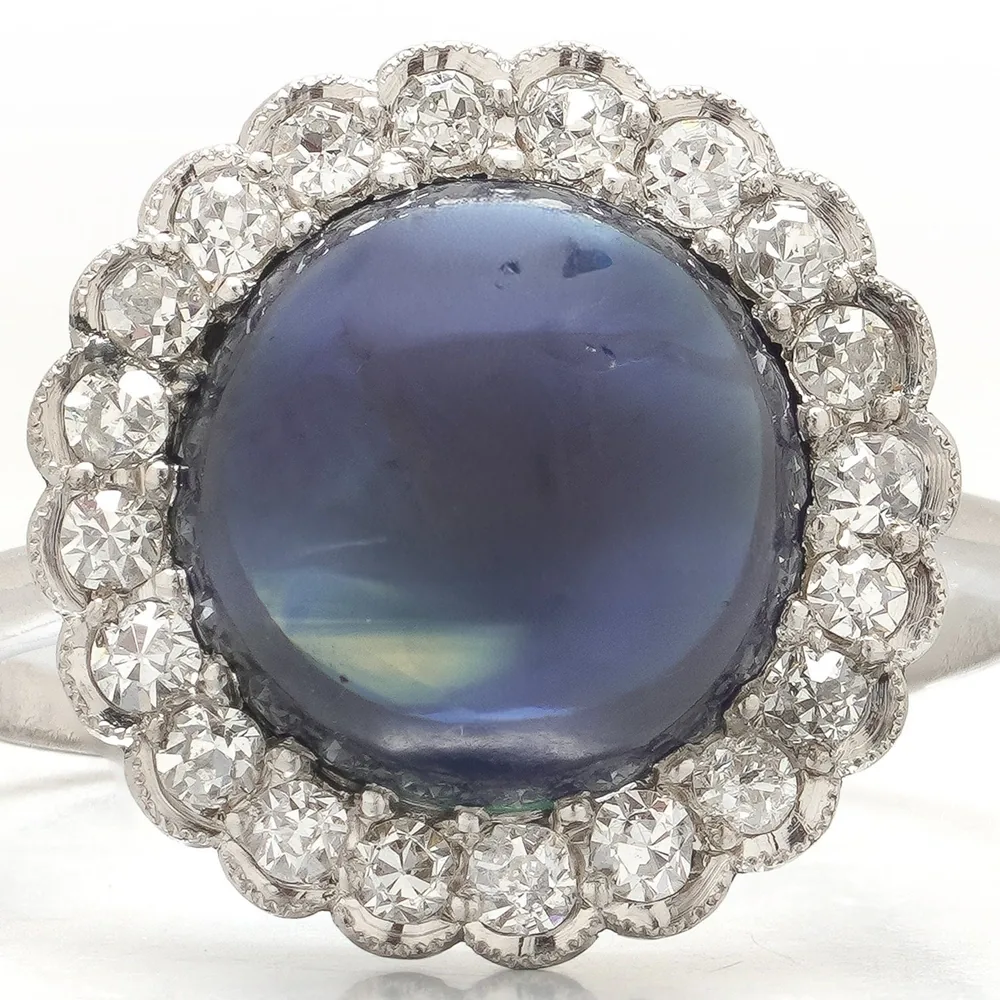
Art Deco: platinum and millegrain
Art Deco clusters are platinum, with millegrained collets, geometric outlines and cabochon or calibré stones. The diamonds are still old cuts.
This Art Deco cabochon cluster rings a domed sapphire with twenty-two old cut diamonds, each in its own millegrained collet.
Synthetic sapphire has been made commercially since the early 1900s, so an old mount can hold a lab-grown stone; under magnification, curved growth lines give the early ones away. And some antique "sapphires" are doublets, a thin top of garnet fused to blue glass.
British platinum has carried its own hallmark only since 1975 (platinum hallmarks explained), so an unmarked white ring is not automatically gold: see platinum or white gold?. Our guide to antique rings by era goes further, period by period.
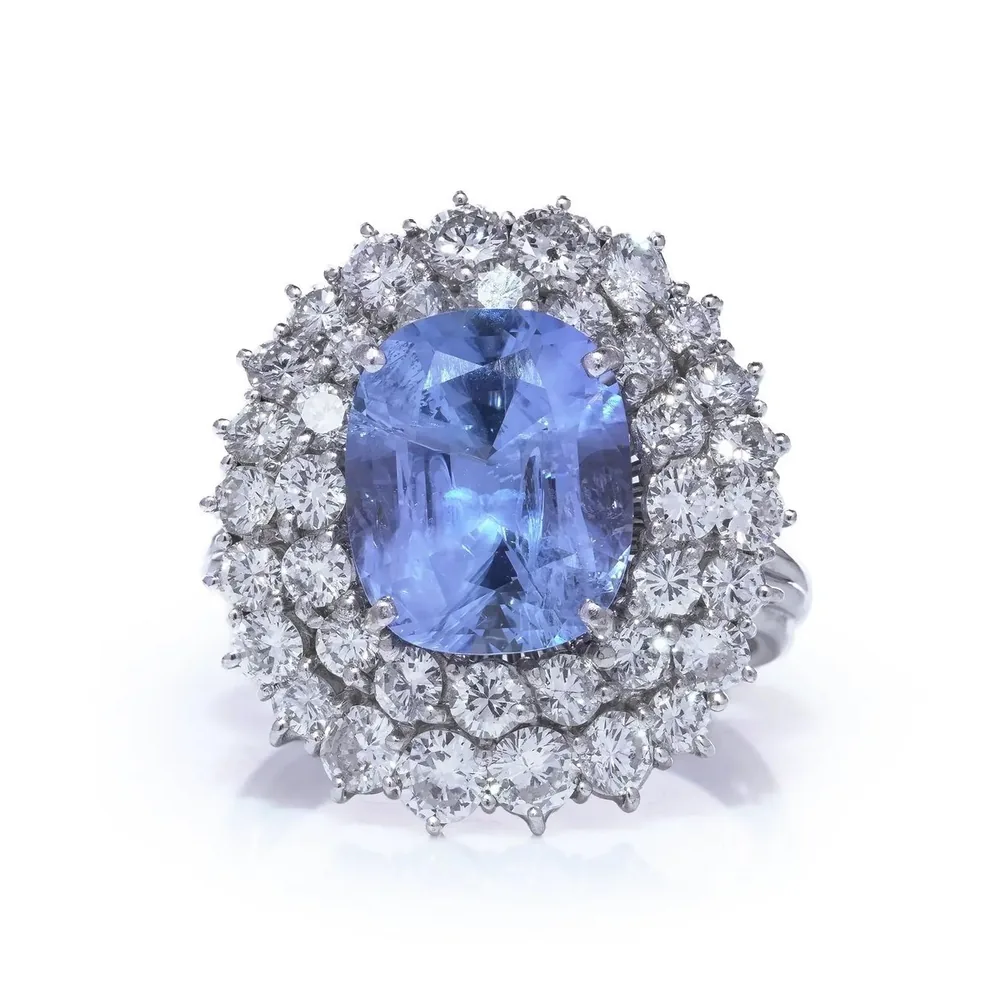
Value: the centre stone carries the price
Most of a cluster's value sits in its sapphire. Colour comes first: an even, saturated blue that is neither pale nor too dark to show light.
Then size, cut, treatment and origin, and only after that the diamonds, the period and the condition.
| What we check | Why it moves the price |
|---|---|
| Sapphire colour | Saturated, even blue is worth most; pale or blackish blue much less |
| Heat or no heat | A report confirming no heat adds a premium |
| Size and cut | Value per carat rises with size; a well-cut stone shows colour across the face |
| Origin | A report naming Sri Lanka, Burma or Kashmir can add value |
| The diamonds | Old cuts in good condition suit antique rings; chipped or missing stones cost money |
| Period and maker | A genuine Edwardian or Art Deco mount, or a known maker, adds to the stones |
| Condition | Worn claws, thin shanks and resized rings all count |
Without a laboratory report, stone weights and treatment are careful estimates, and we say so. A report from a recognised laboratory is worth having on any sapphire of a carat or more before you sell.
Send us photos of your sapphire ring
Get the look, or sell a sapphire ring
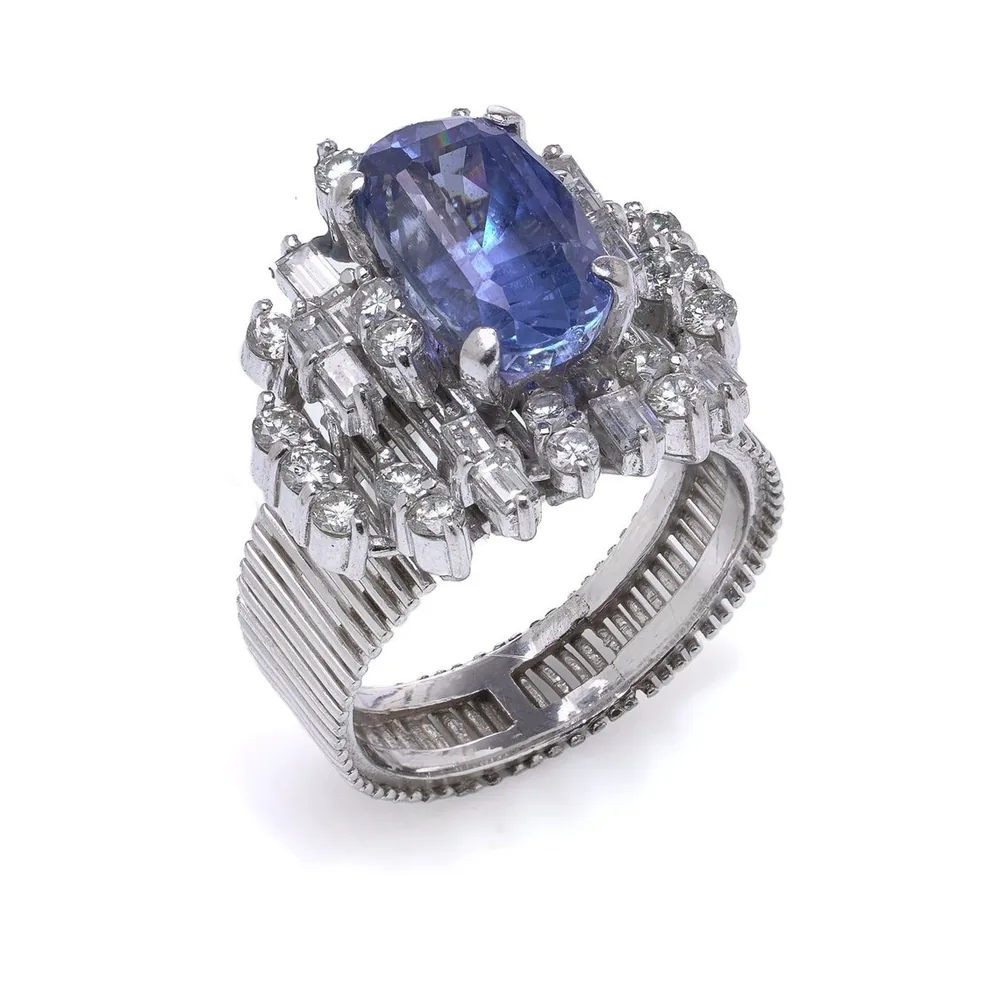
The closest look
You do not need 12 carats. What makes the ring recognisable is the oval, the white diamonds round it and the white metal. Choose the blue you love, then the period you like.
The closest look is an oval sapphire inside diamonds, like our 3 ct oval Ceylon cluster. Browse sapphire cluster rings and sapphire engagement rings.
- The antique route: an Edwardian or Art Deco engagement ring with old cut diamonds, such as the Art Deco cabochon cluster above.
- A Victorian alternative: an oval sapphire with rose cut diamonds, like the Victorian three-stone ring above.
- Pearls: a 1960s double strand or our pearl necklaces; read natural vs cultured pearls first.
Sapphire is also the September birthstone. More in our sapphire engagement ring guide and what sapphire means.
How we can help
We buy and sell antique and vintage sapphire jewellery, and we value it free from photographs. Send the front, the back, the inside of the shank and any report, and we will tell you what you have and what it is worth, without obligation.
Selling? See selling vintage jewellery, selling Art Deco jewellery and dealer or auction?. Inherited a ring? Start with what to do with inherited jewellery. Every piece we sell is checked first: how we authenticate antique jewellery.
Call 01376 334482, message us on WhatsApp, or book a viewing in Mayfair (47 Maddox Street, by appointment) or Braintree.
Request a free valuation
- Diana's ring is a 12 carat oval Ceylon sapphire in 14 diamonds, by Garrard: a catalogue design, never sold.
- Only a handful of her jewels have sold; the named results are $1 million in 1999 and £163,800 in 2023.
- Provenance adds value only when it is documented: photographs, paper and sale records.
- Date a cluster from the back: metal, setting and diamond cut. Value it on colour, treatment, size and period.
Questions we are asked
What is Princess Diana's engagement ring made of?
An oval Ceylon sapphire of about 12 carats surrounded by 14 diamonds, set in 18ct white gold. It was made by Garrard and chosen in 1981.
How much did Diana's engagement ring cost?
It was reported to cost £28,000 in 1981. It came from Garrard's range rather than being made specially. It has never been sold, so it has no market price today.
Who has Princess Diana's engagement ring now?
Catherine, Princess of Wales. Prince William gave it to her when he proposed in Kenya in 2010.
Has any of Diana's jewellery been sold at auction?
A few pieces. The Swan Lake necklace sold at Guernsey's in 1999 for $1 million and went privately to a museum in 2023. The Attallah cross, lent to her by Naim Attallah, sold at Sotheby's in January 2023 for £163,800.
What is a Ceylon sapphire?
A sapphire from Sri Lanka, which was called Ceylon until 1972. Sri Lankan sapphires are known for bright, clear blues. Most are heated to improve colour; unheated stones of good colour are worth more.
How can I tell if my sapphire cluster ring is antique?
Look at the back and the diamonds. Silver-topped gold and old mine or rose cut diamonds suggest Victorian; platinum, milgrain and old European cuts suggest Edwardian or Art Deco. Modern brilliants and a Pt950 or 750 mark point to a recent ring.
How much is a sapphire and diamond cluster ring worth?
It depends on the sapphire's colour, size, treatment and origin, the diamonds, the period and the condition. Send us photos for a free valuation.
Do you buy sapphire cluster rings?
Yes. We buy antique, vintage and modern sapphire jewellery directly and value it free from photos.
Want to know what your sapphire ring is worth?
Send photos of the ring and any report. We buy antique and vintage sapphire jewellery directly, and the valuation is free.
- We buy directly
- Free valuation from photos
- Appointments in Mayfair and Braintree
- Insured postage or collection
New pieces reach our list first: join the Mozeris list.