Platinum Hallmarks Explained (UK)
From the pentagon-shaped 950 mark to the platinum orb, UK platinum hallmarks tell you the purity, the maker and the year. Here's how to read every stamp on your platinum — and what each one means for value.
Can't Read Your Hallmark?
Send us a close-up photo of the marks on your platinum and we'll identify them — and tell you what the piece is worth — free, with no obligation. Our specialists reply within one working day.
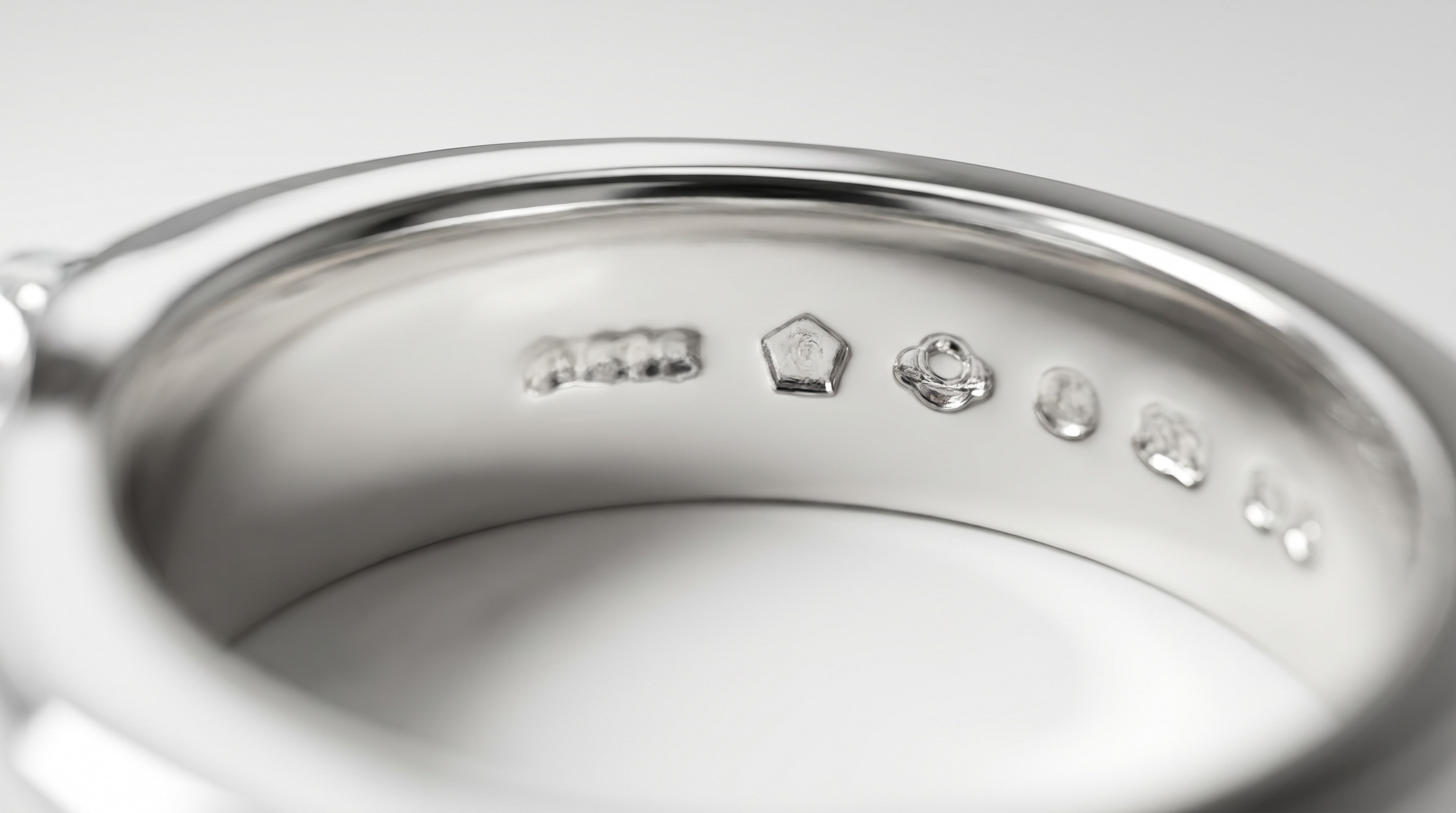
A hallmark is a small thing with a lot to say. On a piece of British platinum it certifies the purity of the metal, identifies the maker, names the assay office that tested it, and — through a date letter — tells you the year it was hallmarked. Learn to read the handful of marks involved and you can confirm, date and begin to value almost any platinum piece in seconds.
At Mozeris Fine Antiques we read platinum hallmarks every day. This guide explains each mark in turn. To compare with the other metals, see our gold hallmarks and silver hallmarks guides.
The fineness mark: 950, 900, 850, 999
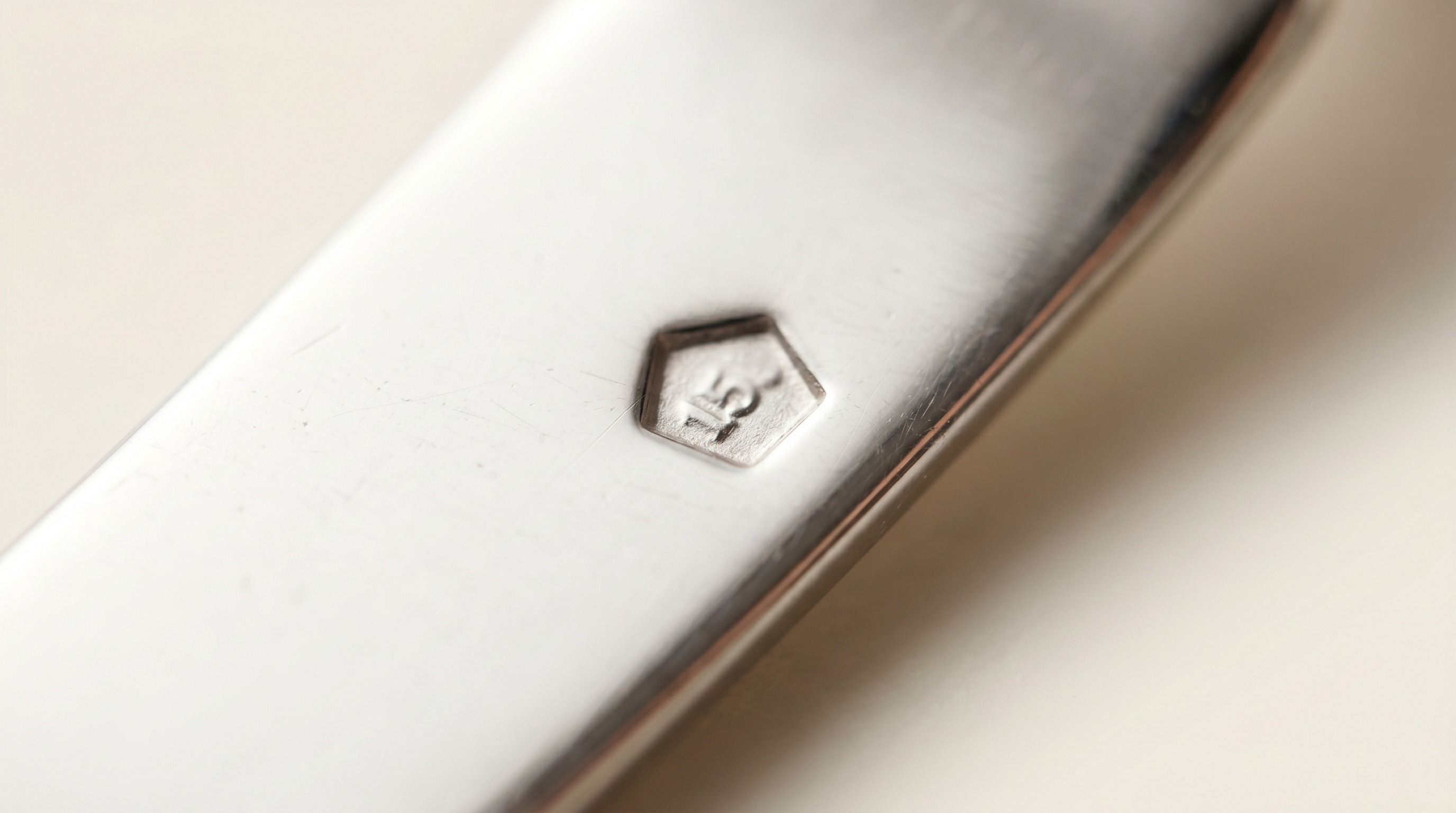
The most important stamp is the fineness mark — the number that states how pure the platinum is, in parts per thousand. Crucially, on platinum this number sits inside a distinctive five-sided (pentagon) shape, which instantly sets it apart from gold (oval) and silver (other shapes).
| Mark | Purity | Notes |
|---|---|---|
| 950 | 95% platinum | The UK standard for fine platinum jewellery |
| 900 | 90% platinum | Recognised in the UK, mainly on imported pieces |
| 850 | 85% platinum | Recognised in the UK, mainly on imported pieces |
| 999 | 99.9% platinum | Investment-grade; used for bullion |
You may also see the words PLAT or PT, sometimes combined with the number as PT950. On a UK piece, a 950 mark in a pentagon shield is the sign of standard fine platinum.
The Full Set of Marks
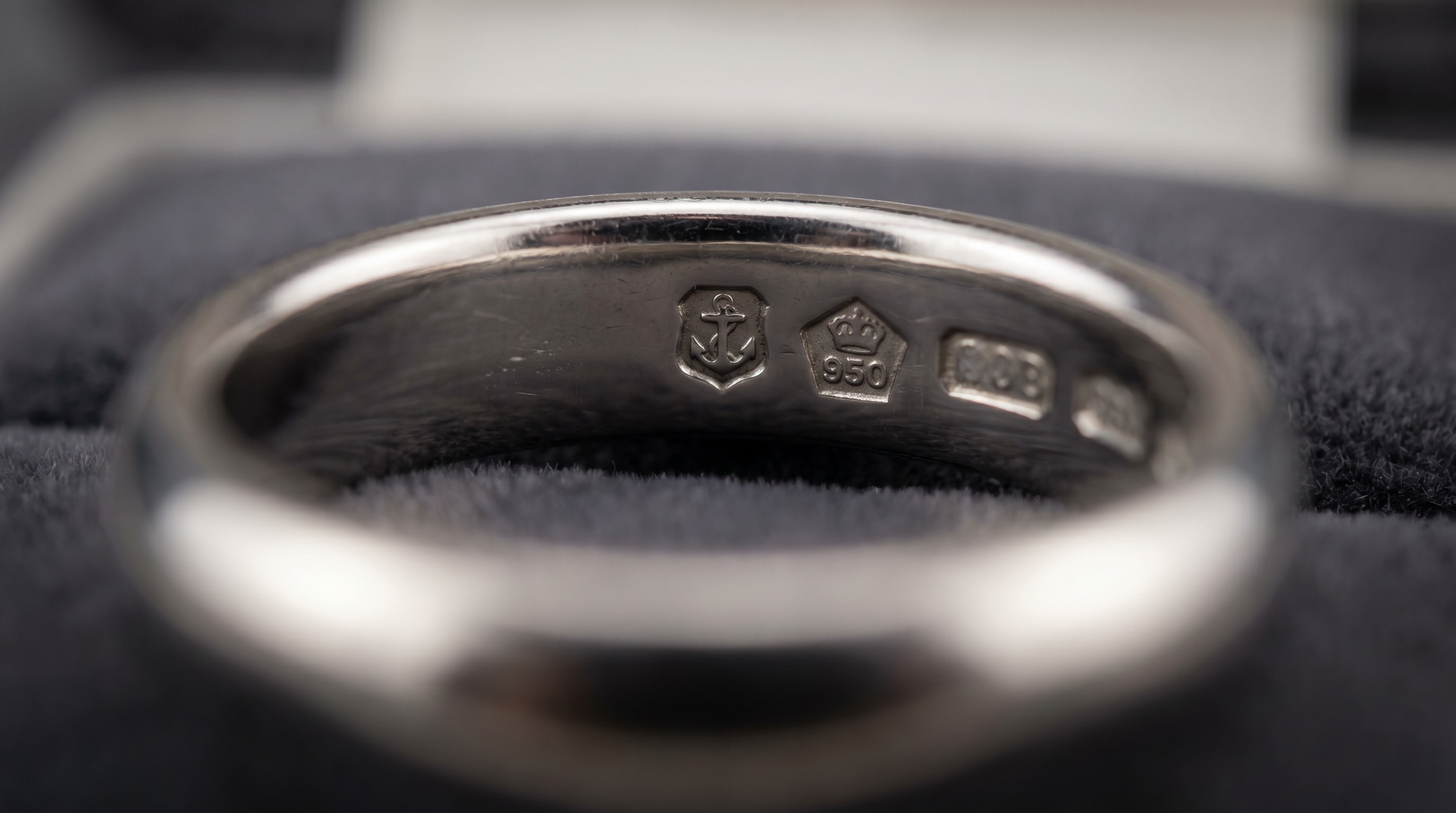
A complete British platinum hallmark is a short row of punches. Reading left to right you'll typically find:
- Sponsor's mark — The maker's or company's registered initials.
- Fineness mark — 950, 900, 850 or 999 in the five-sided platinum shield.
- Assay office mark — Where it was tested: London (leopard's head), Birmingham (anchor), Sheffield (rose), Edinburgh (castle).
- Date letter — A single letter giving the exact year of hallmarking (optional since 1998, but usually present).
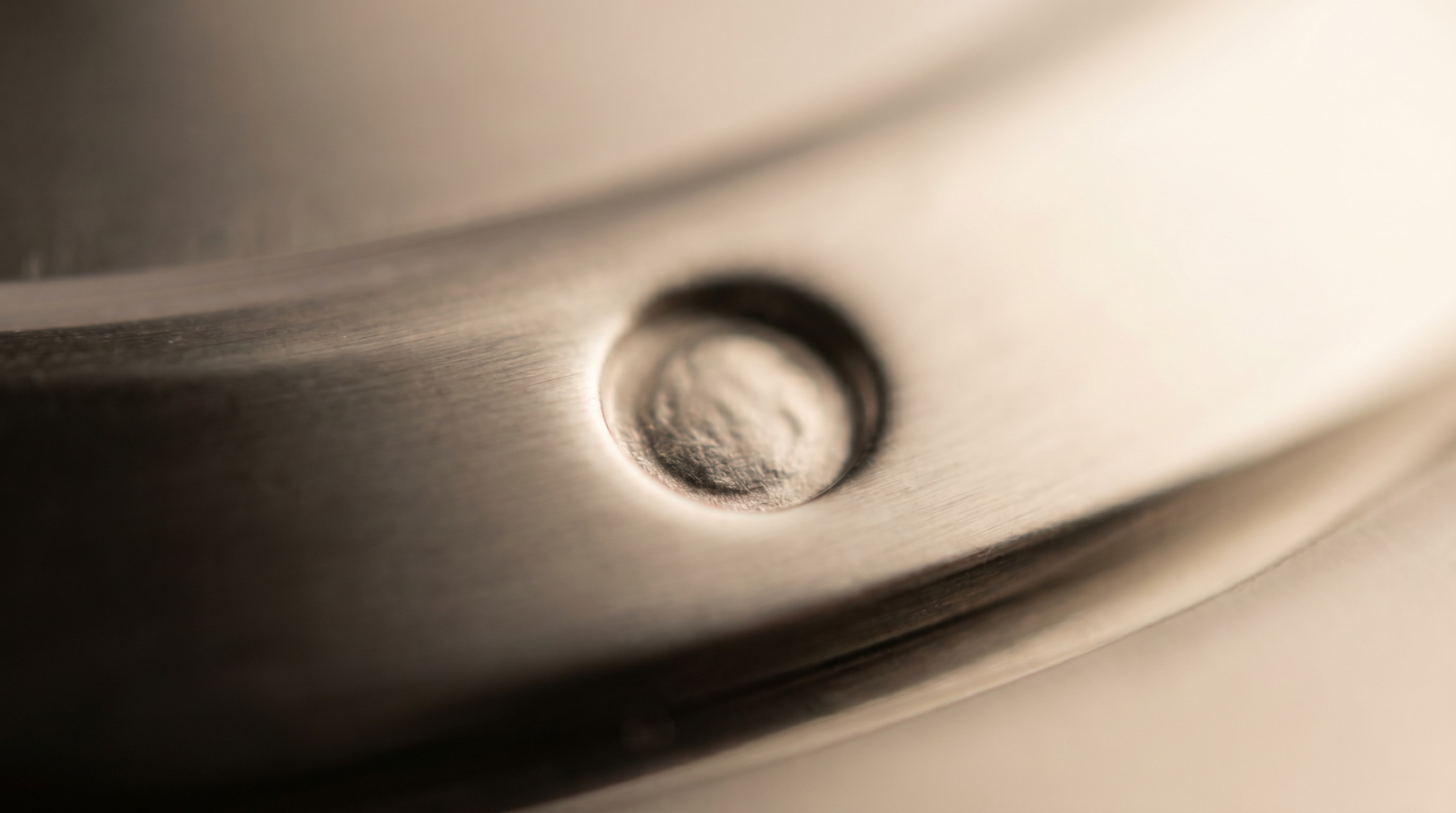
- The orb mark — A traditional commemorative platinum mark, seen on 950 and 999 pieces.
Together these confirm purity, maker, assay office and year — everything a valuer needs to begin.
The orb mark, and dating your platinum
The platinum orb is a distinctive mark you'll find on 950 and 999 pieces — a small heritage symbol unique to the metal. As for dating: UK platinum hallmarking only began in 1975, with 950 the sole standard at first. The 850, 900 and 999 standards were added in 1999. That history is itself a dating tool — a piece marked only "PLAT" with no fineness number is likely pre-1975, while the presence of an 850 or 900 mark points to 1999 or later.
Once you've read the marks, the value follows from the purity, the weight and any stones. To understand worth and sell, see our sell your platinum jewellery page, and if you're trying to work out whether a white ring is platinum at all, our guide to platinum vs white gold will settle it.
Send Us Your Hallmark
Photograph the marks inside the band as clearly as you can and we'll identify them and value the piece — free and with no obligation.
⚠️ Strictly by appointment only — no walk-ins at either showroom.
Frequently Asked Questions
Reading UK platinum hallmarks — common questions.
What does a 950 hallmark mean on platinum?
950 means the item is 95% pure platinum — the UK standard for fine platinum jewellery. On a British piece the number sits in a five-sided shield, often alongside "PLAT" or "PT". Other recognised marks are 900, 850 and 999.
How do I tell a platinum hallmark from a gold one?
By the shape. Platinum fineness marks sit in a five-sided (pentagon) shield, gold marks in an oval, and silver in other shapes. So even before reading the number, the shield shape tells you the metal.
What is the platinum orb mark?
The orb is a traditional commemorative hallmark unique to platinum, seen on 950 and 999 pieces. It doesn't change the purity but confirms the item is fine platinum.
My platinum only says "PLAT" with no number — what does that mean?
UK platinum hallmarking began in 1975, and pieces made before then were often stamped simply "PLAT" or "PT" without a fineness number. So a PLAT-only mark usually indicates an older, pre-1975 piece. It is still platinum.
Does the hallmark tell me how old my platinum is?
Yes. The date letter gives the exact year of hallmarking, and the standards themselves help: 950 only until 1999, with 850, 900 and 999 added that year, while a PLAT-only mark suggests pre-1975. We can date your piece from a clear photo of the marks.
Send Us Your Platinum Photographs
Attach a clear close-up of the hallmark and the piece. We'll respond within one working day.