Natural Pearls vs Cultured: The £49,500 Difference
Two pearl earrings can look identical. One pair is £950. The other is £49,500. Here's what your eye can't see — and why it matters.
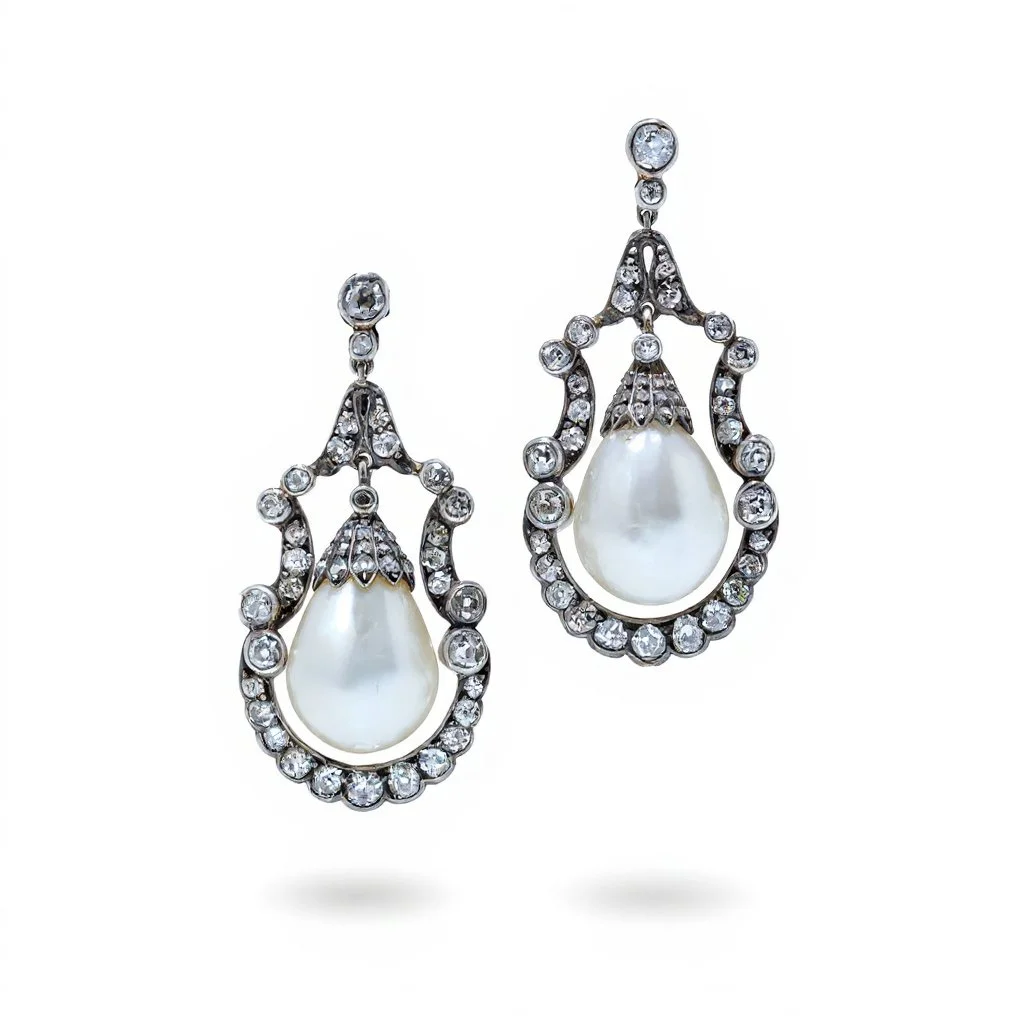
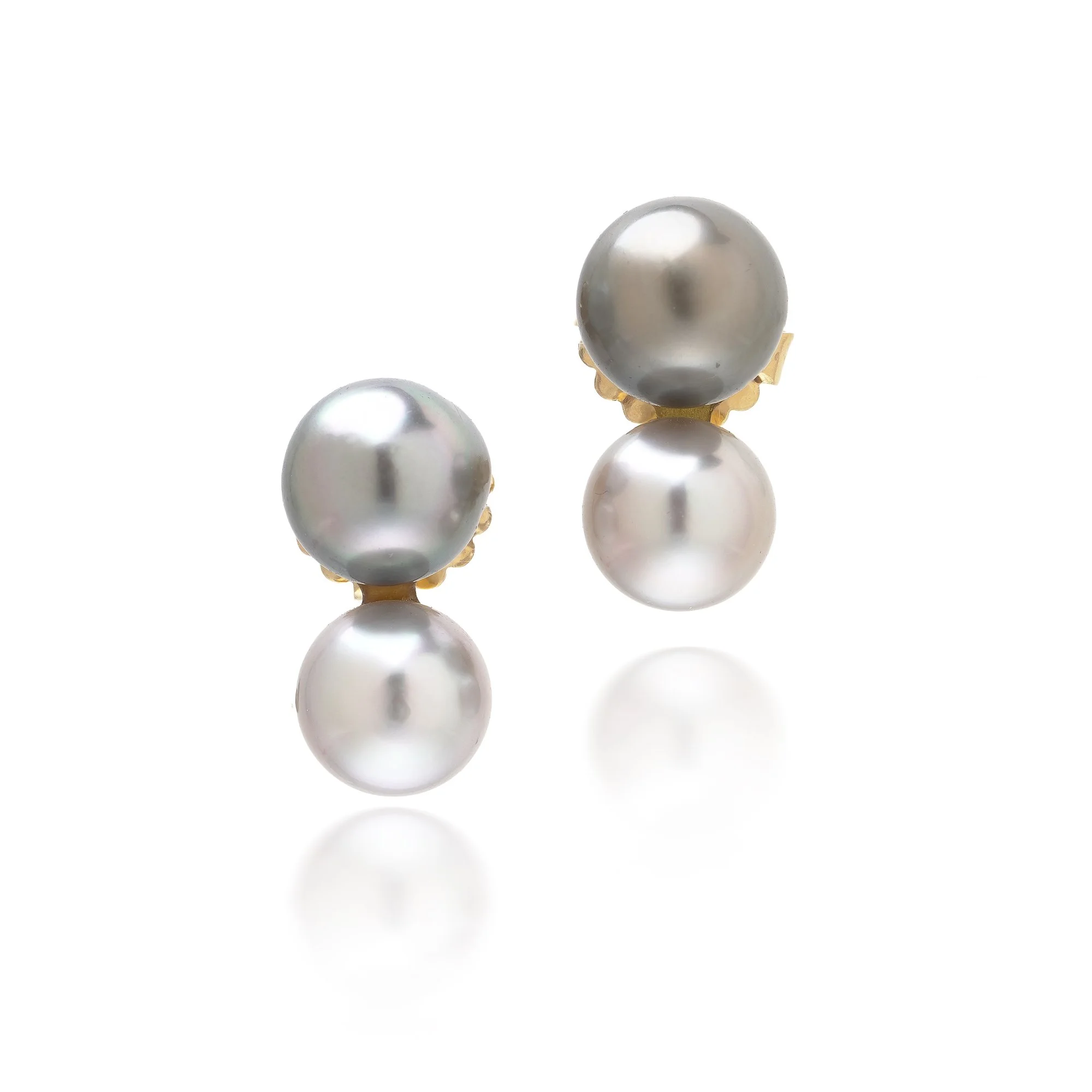
Hold two pearl earrings side by side and your eye may find no difference at all. Yet one pair, our Tahitian and South Sea cultured studs, is £950 — and the other, a pair of Victorian natural pearl drops, is £49,500. The gap isn't about beauty. It's about rarity, and it's the single most misunderstood thing in the pearl market.
Quick answer: what's the difference?
A natural pearl formed by chance in a wild oyster, with no human involvement — almost all pre-date 1920 and they are extraordinarily rare, which is why fine natural pearls reach tens of thousands of pounds. A cultured pearl is farmed: a bead is inserted to start the process. Cultured pearls are beautiful and accessible; natural pearls are a rarity asset.
Both are real pearls. The value gap is entirely about how they were formed — and it can be enormous.
The two pieces that tell the story
£950 — Cultured
Our Tahitian & South Sea double stud earrings: farmed pearls of lovely colour and lustre, in 18kt gold. Beautiful, wearable, accessible — the right choice for everyday elegance.
£49,500 — Natural
Our Victorian natural pearl & diamond drop earrings: wild pearls formed before pearl farming existed, paired with old-cut diamonds. A museum-grade rarity, and an asset that has appreciated for over a century.
Natural vs cultured, side by side
| Natural pearl | Cultured pearl | |
|---|---|---|
| How formed | By chance in a wild oyster, no human help | Farmed — a bead nucleus is inserted |
| Era | Almost all pre-1920 (pre-farming) | Post-1920s (Mikimoto onward) |
| Rarity | Extremely rare; finite supply | Produced in quantity |
| Certification | X-ray confirms no bead nucleus | Not usually certified |
| Typical price | Thousands to tens of thousands | From under £1,000 |
| Investment case | Scarcity-driven; fine examples have held value well | Value in beauty, not appreciation |
Both are genuine pearls; the difference is origin and rarity, which drives the price.
How you actually tell them apart
You cannot reliably tell a fine natural pearl from a cultured one by eye — even experienced jewellers don't try. The definitive test is an X-ray, which reveals whether there is a bead nucleus inside (cultured) or the concentric growth of a natural pearl. Provenance helps too: a pearl in genuine pre-1920 Georgian or Victorian mounts is far more likely to be natural. This is exactly the kind of assessment we carry out before any pearl piece is listed — see how we authenticate.
Real or imitation: the ten-second test
Before natural-versus-cultured comes a simpler question: is it a pearl at all? Run the pearl gently along the biting edge of a front tooth. A real pearl — natural or cultured — feels slightly gritty, like fine sandpaper, because nacre is built from microscopic crystal platelets. Glass and plastic imitations feel perfectly smooth. It is not infallible, but it instantly rules out most costume pieces. Other tells: imitations are often too perfect (identical spheres, flawless surfaces) and drilled holes on fakes show flaking coating around the rim.
What drives pearl value — natural or cultured
- Lustre — the sharpness of light reflected from the surface. The single biggest factor; a high-lustre pearl seems lit from within.
- Surface — spotting, wrinkles and blemishes reduce value; a clean skin is rare and paid for.
- Size and shape — value rises steeply with size; perfectly round is rarest, though baroque shapes have their own collectors.
- Matching — for pairs and strands, evenness of colour, size and lustre across every pearl multiplies value. A well-matched natural strand took decades to assemble, which is why fine ones are so valuable.
- Certification — for anything potentially natural, a laboratory X-ray report (SSEF, GIA or Gem-A) is what converts "probably" into the full price. Without papers, the market discounts heavily.
Caring for pearls — both kinds
Pearls are organic and soft (around 2.5–4 on the Mohs scale). The rules: last on, first off — perfume, hairspray and cosmetics attack nacre, so pearls go on after all of them; wipe with a soft damp cloth after wearing; never ultrasonic-clean them; store separately from harder jewellery that will scratch them; and have strands restrung every few years (knotted between pearls, so a break loses one pearl, not the strand). Antique pearls that have survived a century deserve the same courtesy.
Think you own one? Find out what it’s worth.
Inherited pearls? They could be natural and worth far more than you think — or fine cultured pieces worth having valued properly. Send a photo for a free, no-obligation assessment.
✓ Free expert valuation in 24h ✓ Same-day payment ✓ 10,000+ items traded · 5★ rated
First look at new arrivals
Join our list to see new antique and signed jewellery before it reaches the site — one email when something worth your time arrives, nothing more.
Get first look →Shop both tiers
Whether you want accessible everyday pearls or a natural-pearl rarity, we hold both. Beyond the two earrings above, see our Victorian turquoise & pearl necklace (£19,850) and pearl & amethyst necklace (£9,850), or browse the full pearl jewellery collection. Baroque and natural pearls are having a major moment in 2026 — the market has moved decisively to "not your grandmother's pearls".
Explore Further
Frequently Asked Questions
Natural vs cultured pearls, valued.
How can you tell a natural pearl from a cultured one?
Not by eye — even specialists don't try. The definitive test is an X-ray, which shows whether there is an inserted bead nucleus (cultured) or the concentric growth rings of a natural pearl. Age and original mounts are strong supporting clues.
Are natural pearls a good investment?
Fine natural pearls are genuinely scarce — almost all pre-date pearl farming — and have appreciated over decades. They are one of the few gem materials with a real rarity-driven investment case. Cultured pearls are valued for beauty, not appreciation.
Why are Victorian pearls so valuable?
Because they are almost always natural — wild pearls formed before farming existed. Set with old-cut diamonds in period mounts, a Victorian natural pearl piece combines rarity, craftsmanship and provenance.
Do cultured pearls hold their value?
Cultured pearls hold value modestly at the fine end, but they are produced in quantity, so they don't appreciate like natural pearls. They are the right choice for beautiful, wearable jewellery at an accessible price.